Apportioning Indirect System Level Requalification Liabilities across Multi Tier Distributed Automotive Component Consortia
System level requalification liabilities pass down automotive supply tiers through strict delta change thresholds and contractually capped cost ledgers.

Origin
Physical modifications at sub-tier component levels frequently trigger system re-testing requirements. Package silicon shrinks from 180 nm to 90 nm alter thermal dissipation pathways and pin-to-pin cross-talk profiles across automotive printed circuit boards. Mold compound resin swaps change moisture sensitivity levels from MSL 1 to MSL 3, introducing package pop-corning risks during secondary surface-mount technology reflow cycles.
Silicon revisions carry costs.

Physical Package Alterations and Silicon Revisions
Modifications at sub-tier component levels frequently cascade into system re-testing requirements. Solder joint stress increases when die pad dimensions shift within bottom-terminated Quad Flat No-lead (QFN) or Land Grid Array (LGA) footprints. A 0.05 mm shift in terminal lead placement alters stencil aperture calculations, leading to solder bridging or insufficient wetting under automated optical inspection.
The tolerance stack widens.
Thermal expansion mismatches between modified mold compounds and FR-4 substrate materials introduce mechanical strain on internal bond wires. Under thermal cycling tests spanning minus forty degrees Celsius to one hundred fifty degrees Celsius, micro-cracks form at the package interface, shifting analog signal offsets beyond initial system specifications. Automotive electronic control units (ECUs) operating in harsh powertrain environments experience baseline sensor drift.
Reflow profiles alter timing.
Interface Jitter and Bus Integrity Shifts
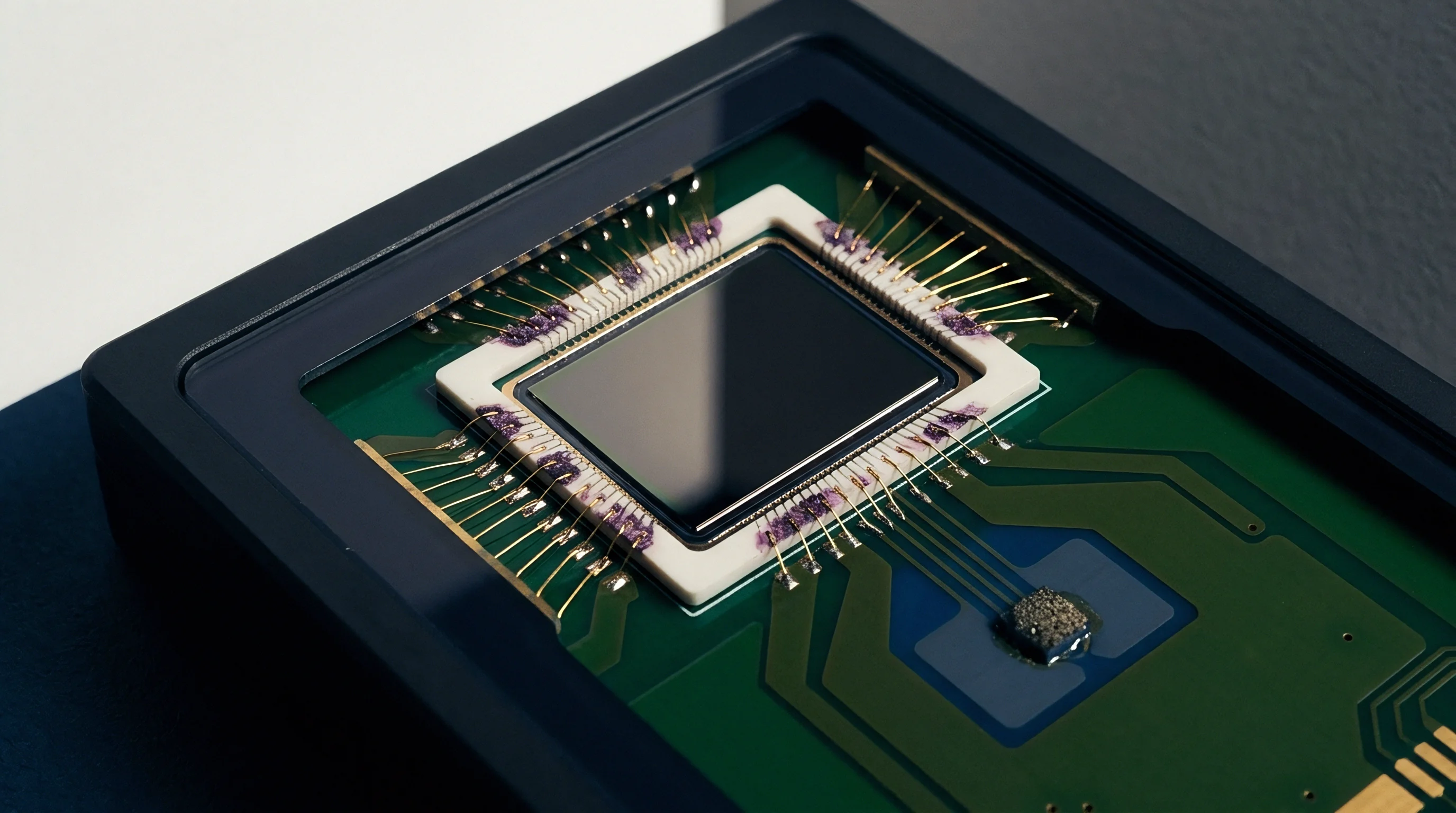
Digital signaling behavior transforms when component die revisions replace legacy input-output pad cells. Output drive strength increases from 4 mA to 12 mA create ground bounce on unshielded two-layer sensor printed circuit boards. Serial Peripheral Interface (SPI) clock rise times accelerating from 15 ns to 4 ns introduce signal reflections across 30 cm wiring harnesses.
Host microcontrollers miss serial frame synchronization pulses, triggering unrecoverable bus fault interrupts. Data proves the shift.
Sub-tier physical component changes degrade system stability long before electrical continuity fails on the production bench.
Register mapping changes alter internal state machines within integrated sensor controllers. Firmware written for revision A silicon expects status bit 4 to clear upon reading, whereas revision B requires an explicit write-one-to-clear command. Unannounced register updates cause host microcontrollers to hang in continuous polling loops, rendering ECU nodes non-responsive during cold boot sequences.
Firmware patches fix timing.
Sub-tier vendors frequently contend that pin-compatible silicon die shrinks fall within baseline data sheet tolerances and require no customer notification.


Trace
Sub-tier change detection depends on structured engineering change notification protocols and automated verification pipelines. Tier-two module manufacturers execute automated register diffing tools against incoming sample lots to detect unannounced die stepping updates before placing parts on surface-mount lines. Component buyers inspect traces.

Protocol Diffing and Hardware Provenance
Logged serial data streams reveal internal die revision identifiers stored in read-only registers. Automated hardware test benches poll address space 0x3F during power-up verification runs to validate vendor die IDs against signed bill-of-materials databases. Discrepancies generate automatic inventory holds, isolating unverified components before board assembly starts.
Physical failure analysis techniques confirm structural change claims when electrical signatures deviate from qualification baselines. X-ray inspection isolates die bond footprint adjustments, while acoustic microscopy reveals delamination risks in altered encapsulation resins. Unannounced changes fail audits.

Escalation Triggers in Delta Qualification Matrices
ZVEI PCN Delta Process standards categorize component modifications into distinct impact tiers. A change in die fabrication location or package mold compound mandates an automatic escalation to level 3 delta testing under AEC-Q100 standards. Tier-one integrators cross-reference vendor notification documents against system-level functional safety requirements established under ISO 26262.
| ZVEI Change Category | Technical Trigger Event | Mandated Testing Level | Indirect Escalation Exposure |
|---|---|---|---|
| Semiconductor Process | Die shrink from 180 nm to 90 nm node | AEC-Q100 Grade 1 Full Suite | High: Host MCU software and EMC re-qualification |
| Package Assembly | Mold compound resin replacement | MSL 3 Reflow & Thermal Shock | Medium: SMT line profile recalibration |
| Interface Logic | I/O pad drive strength alteration | Signal Integrity & Jitter Analysis | High: Harness EMC and bus protocol validation |
| Pin Output Assignment | NC pin re-assigned to test mode | Functional Pinout Verification | Critical: PCB redesign and system harness swap |
System integrators mapping technical change triggers to contractual escalation paths prevent uncoordinated production rollouts. Failure to track die stepping changes exposes automotive networks to silent corruption, where hardware operates within nominal parameters during bench testing but fails under multi-node bus congestion. Validation bench testing starts.
Annex 4 of the ZVEI Delta Qualification Matrix mandates full 1000-hour high-temperature operating life re-validation whenever active silicon area diminishes by more than fifteen percent.

Bench
System-level validation requires re-running environmental, electrical, and functional safety tests across integrated electronic control units. Testing facilities run continuous thermal cycling, electromagnetic compatibility (EMC) sweeps, and automated hardware-in-the-loop (HIL) simulations to verify that sub-tier component changes have not compromised vehicle operating margins. OEMs reject untested silicon.

Who Absorbs Secondary Requalification Costs Following Unannounced Silicon Revisions?
Unannounced sub-tier changes force integrators to re-commit automated test beds for multi-week validation sweeps. Automated HIL test beds simulate sensor bus fault conditions, voltage spikes, and temperature extremes from minus forty degrees Celsius to one hundred twenty-five degrees Celsius. The contract defines exposure.
- Ground Bounce Invalidation occurs when faster I/O transition speeds induce transient voltage spikes across board ground planes, triggering false reset vectors in host microcontrollers.
- Firmware State Lockup arises when modified register response timing breaks hard real-time execution loops in distributed control networks.
- Thermal Dissipation Drift emerges when reduced package silicon die area generates concentrated thermal hotspots, degrading thermal margin under full load conditions.
- Electromagnetic Immunity Degradation occurs when modified internal bonding geometry converts trace layouts into effective antennas at high clock frequencies.
Anechoic chamber testing evaluates radiated emissions and bulk current injection susceptibility across complete vehicle harness assemblies. When a sub-tier component change increases high-frequency emissions by 3 dB at 450 MHz, system integrators must re-engineer board shielding or add inline ferrite filtering components to meet OEM requirements. Line stoppages drain capital.
Radiated emissions re-testing consumes eighty engineering hours in a certified anechoic chamber when sensor I/O rise times accelerate beyond five nanoseconds.
Functional safety re-validation demands complete software regression testing to verify Automotive Safety Integrity Level (ASIL) compliance under ISO 26262. System engineers evaluate fault injection response times, diagnostic coverage ratios, and fail-silent behavior across distributed bus nodes. Secondary testing expenses compound rapidly across multi-tier supply networks.
The tier-two vendor pays.
Bypassing secondary system validation risks field failures that trigger expensive vehicle recall campaigns and OEM commercial penalties.


Split
Apportioning financial exposure across distributed supply networks demands structured liability allocation frameworks. Contracts distinguish between direct component replacement costs and indirect system-level validation expenses incurred by downstream integrators. The audit trail holds.

Contractual Division of Liability across Tiers
Component vendors routinely seek to limit financial exposure to net purchase prices. Tier-one integrators push to expand liability caps to cover complete ECU re-validation, assembly line downtime, and OEM audit expenses. Multi-tier consortia contracts utilize tiered liability allocation matrices to establish clear financial boundaries based on notification compliance and change severity.
- Record the initial engineering change notice timestamp and component trace code upon receipt of modified hardware.
- Perform initial laboratory signal integrity and thermal profiling to establish technical deviation limits.
- Map observed component deviations against the ZVEI Delta Qualification Matrix to define required system re-testing scope.
- Issue a formal freeze notice on affected module assembly lines while calculating hourly line stoppage expenses.
- Audit downstream host firmware build dependencies and initiate hardware-in-the-loop regression test suites.
- Aggregate direct laboratory, software engineering, and line downtime costs into a standardized consortium dispute ledger.
| Consortium Tier Level | Standard Liability Cap | Unannounced Change Penalty | Indirect Cost Absorption |
|---|---|---|---|
| Tier 3 (Silicon Vendor) | 100% of lot purchase price | 10x lot price + direct lab costs | Capped at $250,000 per PCN event |
| Tier 2 (Module Maker) | 2x annual module volume cost | Full redesign & SMT tooling fees | 50% of HIL re-qualification costs |
| Tier 1 (ECU Integrator) | 5x system contract value | Line stoppage & recall indemnification | 100% of initial OEM validation audit |
| OEM (Vehicle Manufacturer) | Platform warranty pool reserve | Commercial contract termination | Uncapped vehicle recall liabilities |
| Liability limits apply strictly to qualified components possessing valid ZVEI PCN documentation and verified batch traceability. | |||
Clear contractual thresholds govern liability transfers when sub-tier suppliers alter component specifications without prior agreement. When a Tier-3 vendor provides timely written notice six months before implementing a silicon change, the Tier-1 integrator assumes responsibility for scheduling secondary system validation. Failure by the Tier-3 vendor to issue formal change notification shifts complete financial responsibility for downstream system validation, line downtime, and software regression testing onto the component manufacturer.
The price tier drops.
Liability caps anchored strictly to individual component unit costs expose Tier-1 integrators to catastrophic system validation expenses.
Establishing binding notification periods aligns component change cycles with scheduled vehicle platform firmware releases. Component suppliers adhering to standardized notification timelines minimize unbudgeted validation overhead across consortium partners.
Clear contractual definitions of notification lead times protect multi-tier consortium members from unrecoverable system re-testing expenses.


Ledger
Financial accounting of indirect validation expenses demands transparent tracking of engineering labor, facility utilization, and line downtime. Consortium accounting mechanisms quantify every technical step in the re-qualification pipeline, converting bench hours and design modifications into auditable commercial claims.

Worked Case Arithmetic for a Component Redesign
Consider a realistic consortium scenario where a sub-tier sensor vendor modifies an SPI sensor die pad layout and internal oscillator timing. Assume a production volume of 250,000 vehicle units across a three-year platform cycle.
The original sensor component carries a unit price of $0.42. The redesigned sensor die package introduces no net unit price increase. The technical change forces a Tier-2 circuit layout revision, a Tier-1 hardware-in-the-loop validation re-run, anechoic EMC chamber testing, host firmware patch regression testing, and four hours of vehicle assembly line stoppage during initial software re-flashing.
| Cost Category | Engineering / Facility Effort | Unit Rate | Total Indirect Expense |
|---|---|---|---|
| Tier 2 PCB Redesign | 120 Engineering Hours | $140 / hour | $16,800 |
| SMT Stencil & PCB Tooling | 2 Fabrication Spins | $4,250 / spin | $8,500 |
| Tier 1 HIL Test Bench | 240 Automated Test Hours | $250 / hour | $60,000 |
| Anechoic EMC Chamber | 60 Certification Hours | $450 / hour | $27,000 |
| Host Firmware Regression | 300 Software Engineering Hours | $160 / hour | $48,000 |
| OEM Assembly Line Stoppage | 4 Hours (180 Vehicles Impacted) | $1,200 / minute | $288,000 |
| Total Indirect Liability | Consortium Accounting Summary | Cumulative Claim | $448,300 |
Summing the indirect expense categories yields a total liability of $448,300. Dividing this total indirect expense by the production volume of 250,000 units yields an indirect qualification cost of $1.793 per unit. The indirect re-qualification expense exceeds the original $0.42 component purchase price by 426 percent.
Direct component pricing fails to capture true system integration exposure.
Compliance with AEC-Q100 Revision H qualification timing prevents automatic invoice rejection during OEM warranty audits.
Consortium financial ledgers record these indirect claims against contractual indemnity funds established during initial vendor selection. Quantifying labor rates and chamber rental fees under pre-agreed auditing standards eliminates subjective billing disputes during claim settlement phases.
- Direct Engineering Hours record dedicated circuit redesign, layout modification, and firmware debugging time spent by engineering teams.
- Test Chamber Rental Rates document accredited facility fees for environmental, vibration, and anechoic EMC certification runs.
- Production Line Downtime Charges capture verified hourly factory stoppage costs incurred during unannounced component change cutovers.
- Software Regression Validation Costs quantify automated hardware-in-the-loop execution hours required to re-certify system functional safety under ISO 26262.
Whether commercial courts will continue enforcing component purchase price liability caps when silent die revisions force systemic vehicle software updates remains an active area of dispute.


Toll
Long-term commercial stability in automotive electronics supply chains relies on proactive contract risk engineering and interface specification discipline. Sourcing practices that establish clear technical change boundaries prevent unexpected indirect liability transfers across multi-tier supplier networks.

Sourcing Specifications and Standardized Change Clauses
Procuring component dies with rigid interface contracts limits downstream liability exposure. Sourcing specifications must define maximum allowed rise times, fixed bus capacitance ceilings, exact register read-write behavior, and strict physical package land-pattern tolerances.
Dual-sourcing strategies reduce single-vendor reliance but demand identical pin-out, thermal, and register map execution. Second-source components require pre-qualification under identical HIL regression test suites to prevent unannounced behavioral variance during production ramps.
Procurement desks that enforce binding change notification windows alongside audited delta qualification matrices maintain commercial leverage when component modifications cascade through multi-tier electronic systems.