Silicon Sensor Die Packaging Stress Relaxation Mechanisms
Polymer die attach viscoelastic relaxation causes long-term zero offset drift in silicon sensors; thermal stabilization baking at 150°C eliminates early strain.
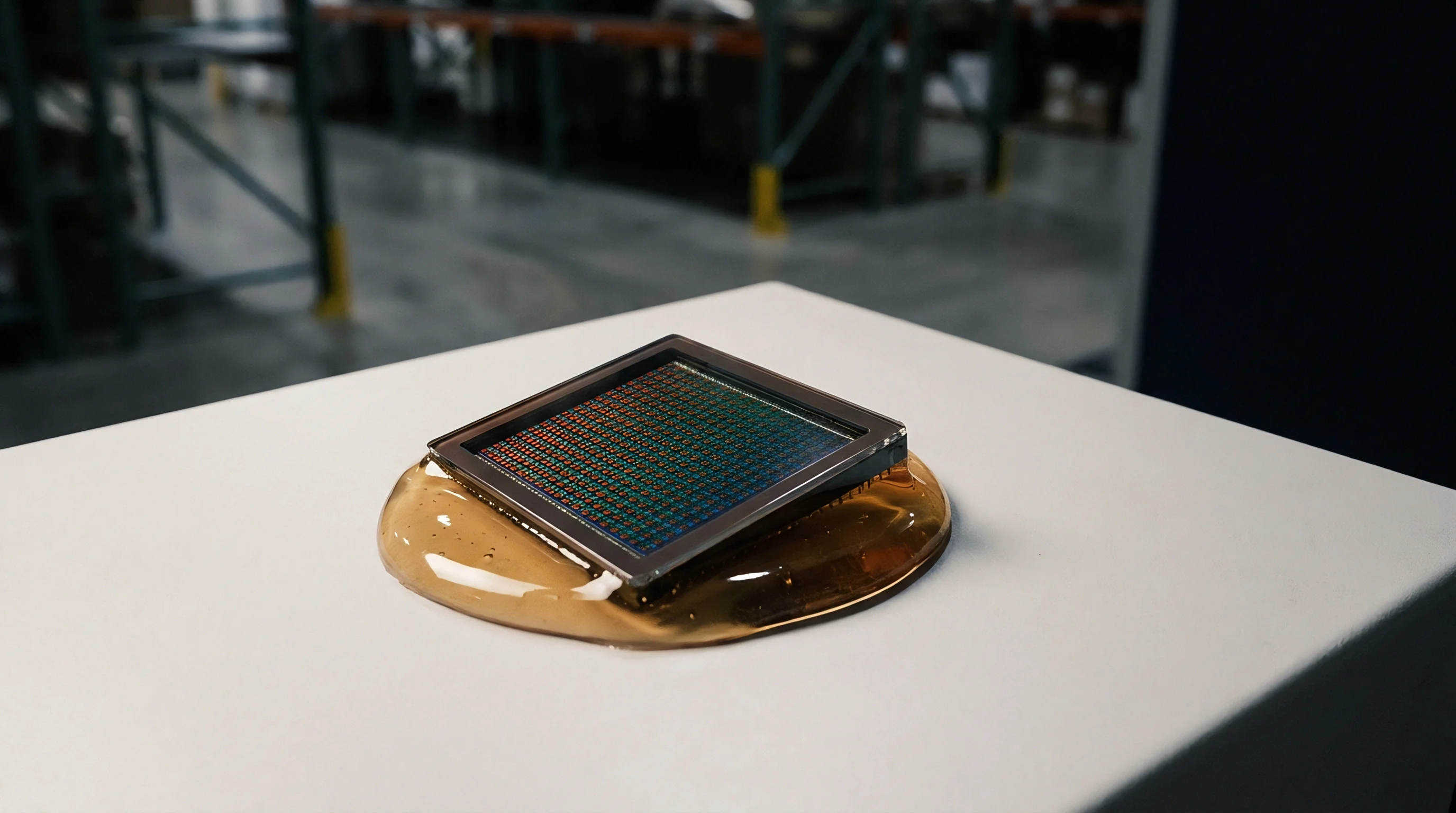

Gel
Organic potting gels protect delicate micro-electromechanical structures from ambient media while transmitting mechanical force down to the sensing elements. In pressure transducer assemblies, soft silicone gels fill the cavity over micro-machined silicon diaphragms. Under ideal hydrostatic conditions, the elastomeric matrix behaves like a fluid, but real compounds have non-zero shear moduli between 1 kilopascal and 50 kilopascal, depending on temperature and crosslinking density.
That finite shear resistance mechanically constrains the outer perimeter of the silicon die.
Curing soft encapsulation compounds produces localized strain gradients at the silicon interface. As the gel undergoes thermal polymer crosslinking and shrinks by 0.1 percent to 0.8 percent by volume, the linearly elastic single-crystal silicon lattice resists contraction, building up residual interfacial shear stress. Over time, physical rearrangement and creep in uncrosslinked polymer chains redistribute this stress field.
As localized shear forces decay, the mechanical baseline of the underlying diaphragm shifts, showing up as zero-point wander on the test bench.
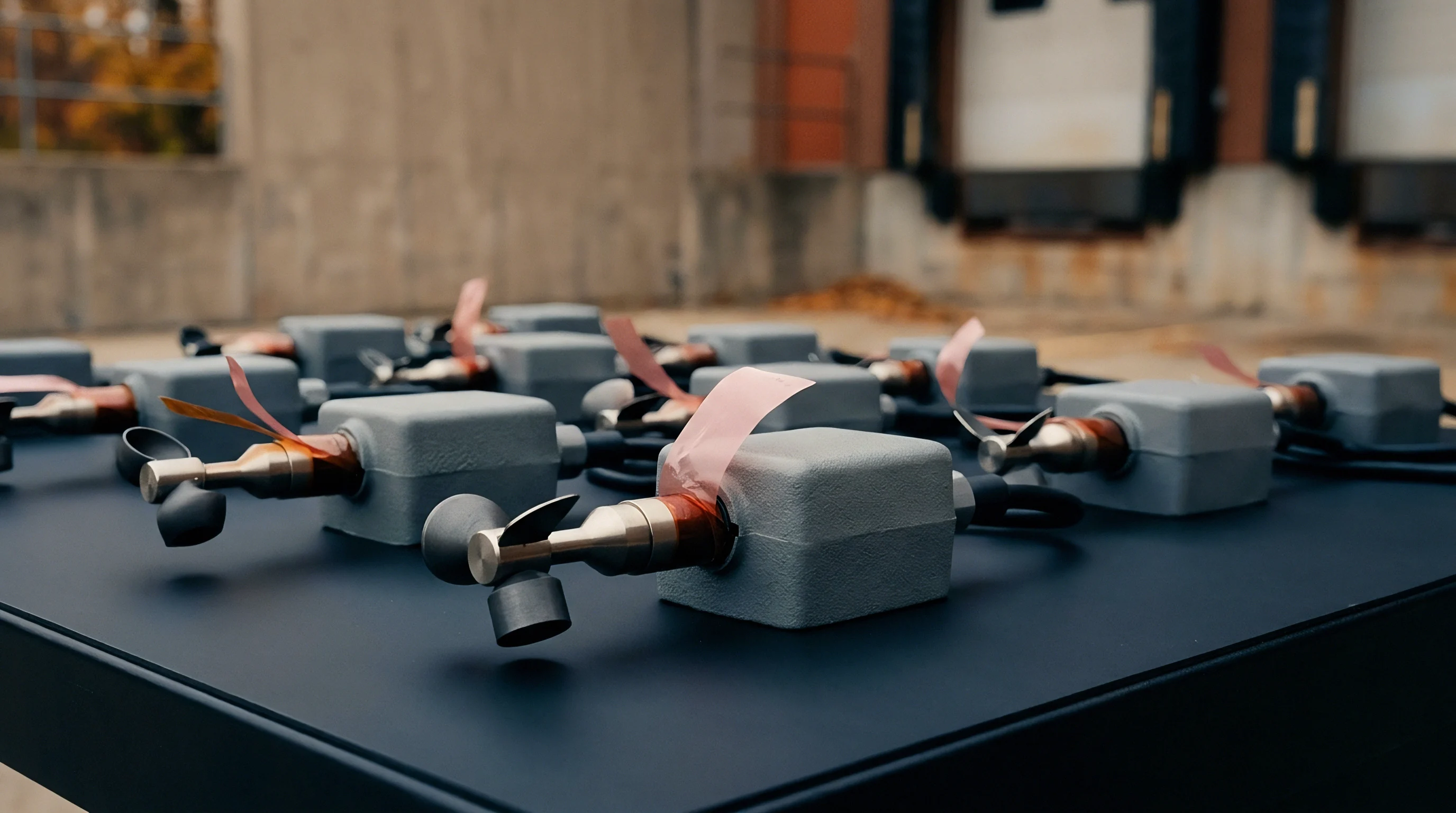
Encapsulant Potting Dynamics and Isotropic Pressure Transfer
Flexible gels transfer uniform hydrostatic force across micro-machined silicon diaphragms under external fluid pressure. Non-isotropic stress develops when thermal expansion mismatches force the gel against rigid package sidewalls; silicone gels have volumetric thermal expansion coefficients near 300 ppm per kelvin, compared to 2.6 ppm per kelvin for silicon. Thermal excursions thus force the gel to bulge both vertically and laterally against housing constraints.
How quickly these localized lateral forces return to isotropic equilibrium depends on stress relaxation within the gel. Near the glass transition threshold of dimethyl silicone (minus 120 degrees Celsius) or fluorosilicone (minus 65 degrees Celsius), shear modulus jumps by three orders of magnitude. In that hardened state, the gel transfers structural package distortion straight into the piezoresistive Wheatstone bridge elements.
Higher temperatures lower the shear modulus through viscoelastic relaxation, gradually relieving structural loads on the sensing membrane over hours or days.
Fluorosilicone potting gels under constant immersion at 125 degrees Celsius exhibit offset relaxation rates exceeding 0.04 percent of full scale span per thousand hours.

Silicone Crosslinking Density Effects on Zero Stability
Polymer network architecture governs how internal strain gradients dissipate over long-term storage. Under-cured silicone gels retain high fractions of unattached linear chains that move through the crosslinked matrix, speeding up stress relaxation through chain slipping. Fully crosslinked siloxane networks resist structural rearrangement, holding their initial cure stress for much longer.
This creates a direct trade-off between the magnitude of the initial offset shift and long-term signal stability.
Low-modulus gels minimize initial thermal expansion loading on the die, though they undergo prolonged low-rate viscoelastic decay. High-modulus gels reach equilibrium quickly after thermal transients, but leave a permanent mechanical bias on the silicon diaphragm. Selecting a gel formulation comes down to balancing these drift window limits.
- Volumetric Shrinkage Decay appears as a continuous drop in compressive surface loading across the first five hundred hours post-cure.
- Thermal Expansion Hysteresis occurs when rapid temperature cycling causes gel volume changes faster than the matrix can relax.
- Moisture-Induced Swelling introduces mechanical strain as atmospheric water molecules bind to active sites in the siloxane matrix.
- Plasticizer Migration alters matrix shear modulus over operating life through the evaporation of volatile, low-molecular-weight siloxanes.
Baseline sensor offset migration often stems from continuous stress relaxation in the internal silicone potting gel over operating temperature cycles, rather than external harness tension.
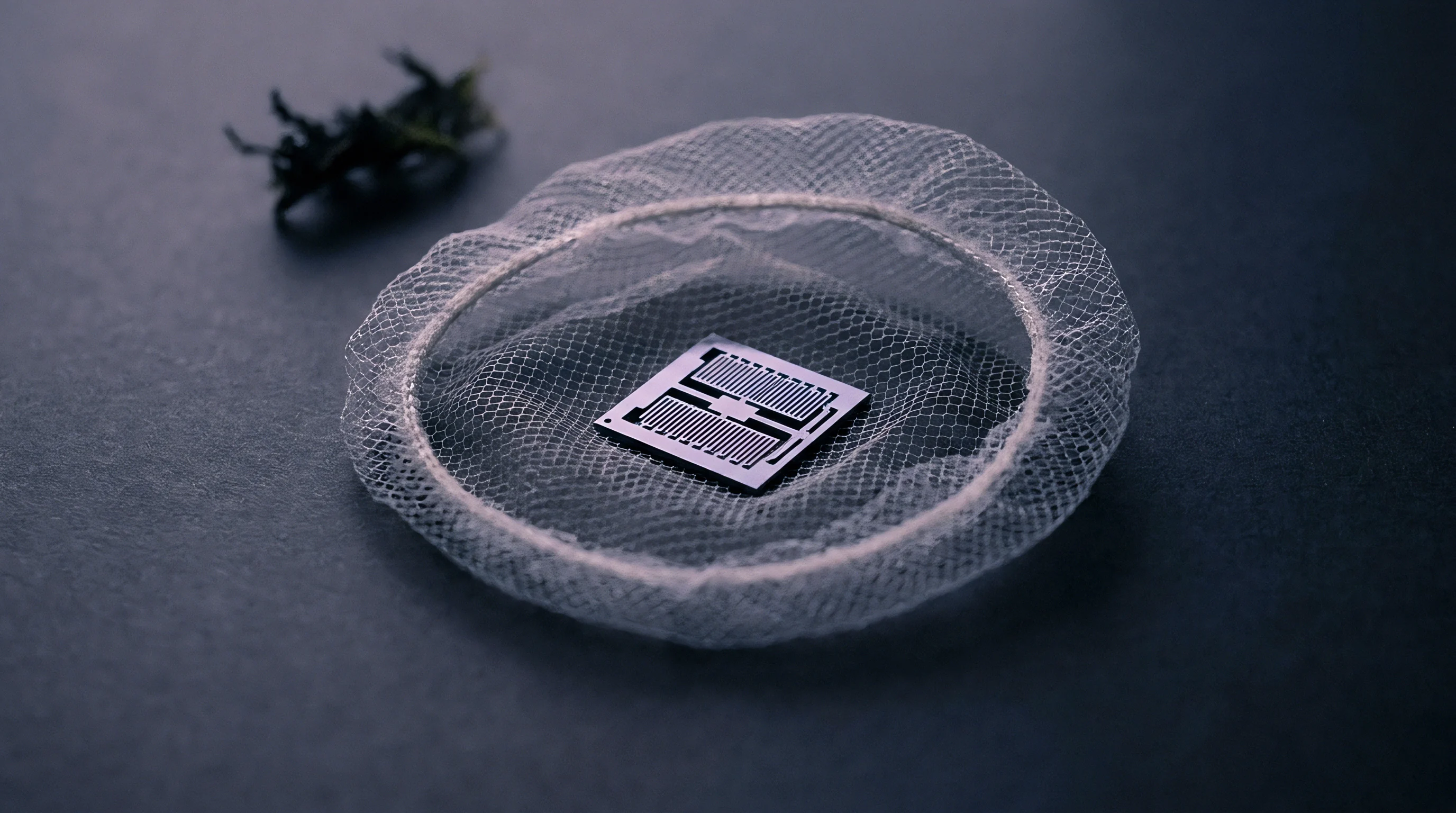
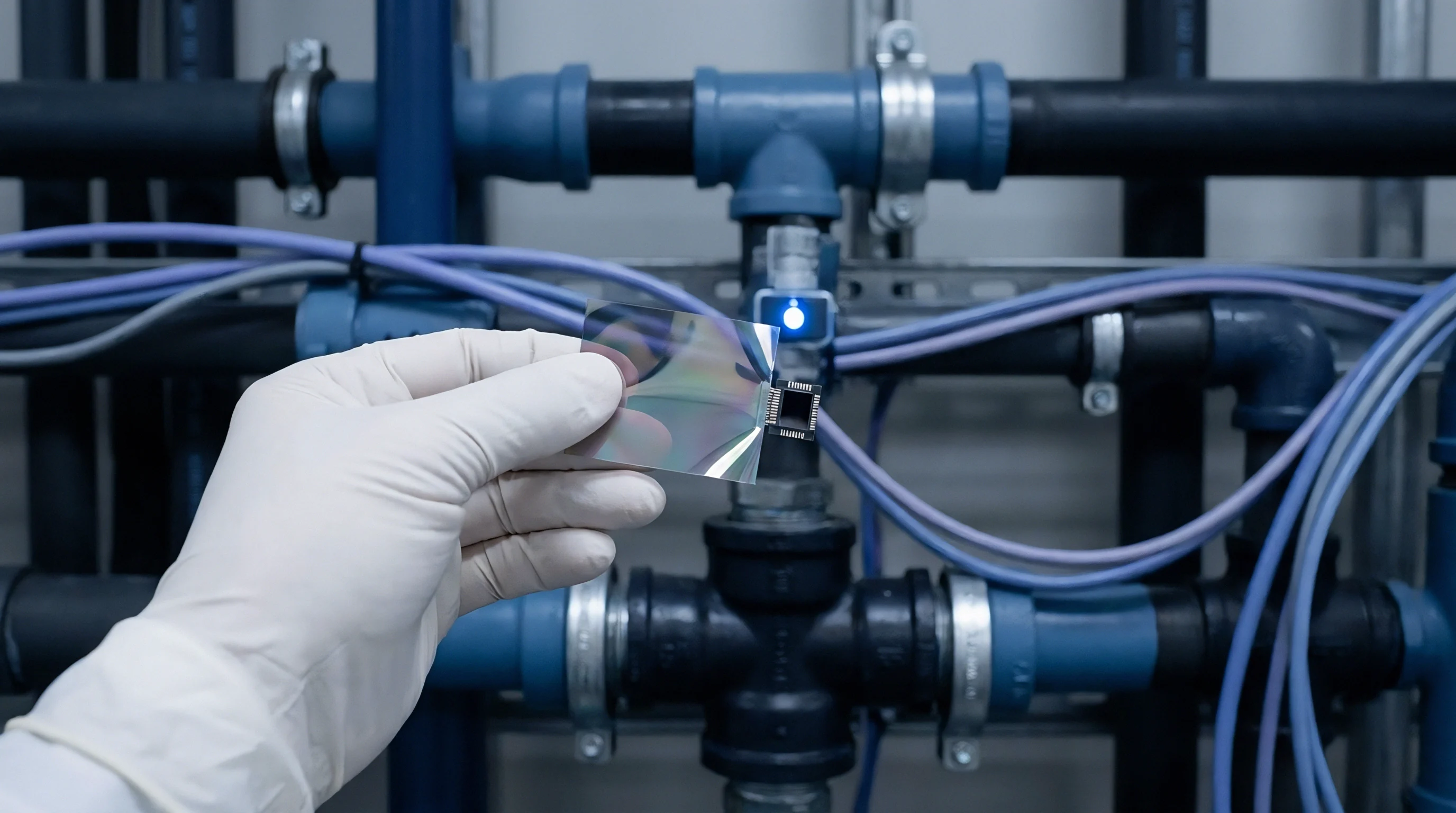
Viscoelasticity
Polymeric adhesives used in microelectronic substrate bonding undergo time-dependent mechanical deformation under constant strain. Epoxy die-attach formulations, polyimide pastes, and silver-filled conductive resins all feature crosslinked networks under persistent mechanical loads driven by thermal contraction mismatches. Silicon has a thermal expansion coefficient of 2.6 ppm per kelvin, compared to 6.5 ppm per kelvin for alumina headers and 15 ppm per kelvin for FR4 substrates.
Because curing takes place at elevated temperatures ~ typically between 150 degrees Celsius and 175 degrees Celsius ~ cooling the package down to 25 degrees Celsius builds up substantial interfacial shear stress.
Stress relaxation gradually lowers internal mechanical strain, shifting the baseline of the silicon sensor die. How quickly this occurs depends heavily on ambient temperature relative to the adhesive’s glass transition temperature. Above glass transition, polymer chain segments move freely and dissipate internal stress within minutes or hours.
Below that threshold, secondary relaxation mechanisms dominate, leading to slow stress decay that can degrade sensor accuracy across years of bench storage or field service.
Prony Series Formulations for Die Attach Shear Modulus Decay
Modeling time-dependent relaxation mathematically uses Maxwell elements arranged in parallel, expressing the shear modulus over time through a Generalized Maxwell formulation as a Prony series:
G(t) = G_infinity + sum_{i=1}^{N} G_i exp(-t / tau_i)
Here G_infinity represents the long-term equilibrium shear modulus, G_i is the relaxation strength of individual polymer chain modes, and tau_i defines the relaxation time constant for mode i. Temperature influences the relaxation time constant via the Arrhenius relationship above sub-ambient regimes, or the Williams-Landel-Ferry equation near the glass transition threshold:
log10(a_T) = -C1 (T – T_g) / (C2 + T – T_g)
In this expression, a_T represents the temperature shift factor, T_g is the glass transition temperature, and C1 and C2 are empirical material constants. Operating temperature shifts accelerate or decelerate internal stress relaxation by altering these effective time constants.
| Adhesive Chemistries | Glass Transition (deg C) | Initial Modulus at 25 deg C (GPa) | Equilibrium Modulus G_infinity (GPa) | Primary Time Constant tau_1 (Hours) |
|---|---|---|---|---|

Thermal Expansion Mismatch and Residual Cure Contraction
Cooling an assembly from cure temperature locks substantial mechanical strain into the silicon lattice. Thermoset die-attach polymers undergo chemical crosslinking shrinkage between 0.5 percent and 2.5 percent by volume. As the resin cures from liquid to gel point and vitrifies into a solid, these shrinkage forces induce baseline strain that translates directly into interfacial shear strain between the silicon die and its ceramic or metallic substrate.
The net force on the bottom surface of the silicon die combines thermal contraction and chemical polymerization shrinkage. Peak shear stress at the corners of a square silicon die follows Suhir’s solution for bi-material assemblies:
tau_max = (delta_alpha delta_T G_a) / (k cosh(k l))
Here delta_alpha represents the differential thermal expansion coefficient, delta_T is the temperature change from cure, G_a is the adhesive shear modulus, l is half the die length, and k is the interface stiffness parameter. Because stress relaxation continuously lowers G_a, tau_max declines over time while shear stress redistributes unevenly across the bond line.
ISO 16750 Part 4 specifies mechanical strain stability protocols after continuous exposure to maximum storage temperature for 1000 hours.
Worked Modulus Shift Model across Temperature Bands
Consider a micro-electromechanical pressure sensor bonded to an alumina header using silver-filled epoxy cured at 150 degrees Celsius. Die dimensions are 3.0 mm by 3.0 mm with a thickness of 0.4 mm, over a 25-micrometer die-attach layer. At room temperature after cure, initial shear stress at the die corners reaches 45 megapascals, with an initial shear modulus G_0 of 8.5 gigapascals.
Operating temperature is maintained at 85 degrees Celsius continuously for 2000 hours.
Using a two-term Prony series where G_1 = 1.8 GPa with tau_1 = 50 hours at 85 deg C, and G_2 = 0.6 GPa with tau_2 = 500 hours at 85 deg C, long-term shear modulus G(2000) decays as follows:
G(2000) = 6.1 + 1.8 exp(-2000/50) + 0.6 exp(-2000/500)
Evaluating the exponential terms yields exp(-40) near zero and exp(-4) at approximately 0.0183, giving G(2000) = 6.1 + 0.6 0.0183 = 6.111 gigapascals. That represents a 28.1 percent drop in shear modulus from its initial unrelaxed state post-cure. Lower joint stiffness reduces the bending moment transferred from the alumina substrate to the silicon diaphragm, shifting surface strain across piezoresistive bridge elements and driving zero-offset voltage drift by 0.35 millivolts per volt of bridge excitation over the test period.
Choosing die-attach adhesives with glass transition temperatures well above peak operating limits prevents rapid viscoelastic relaxation modes from causing early field drift.
Hysteresis
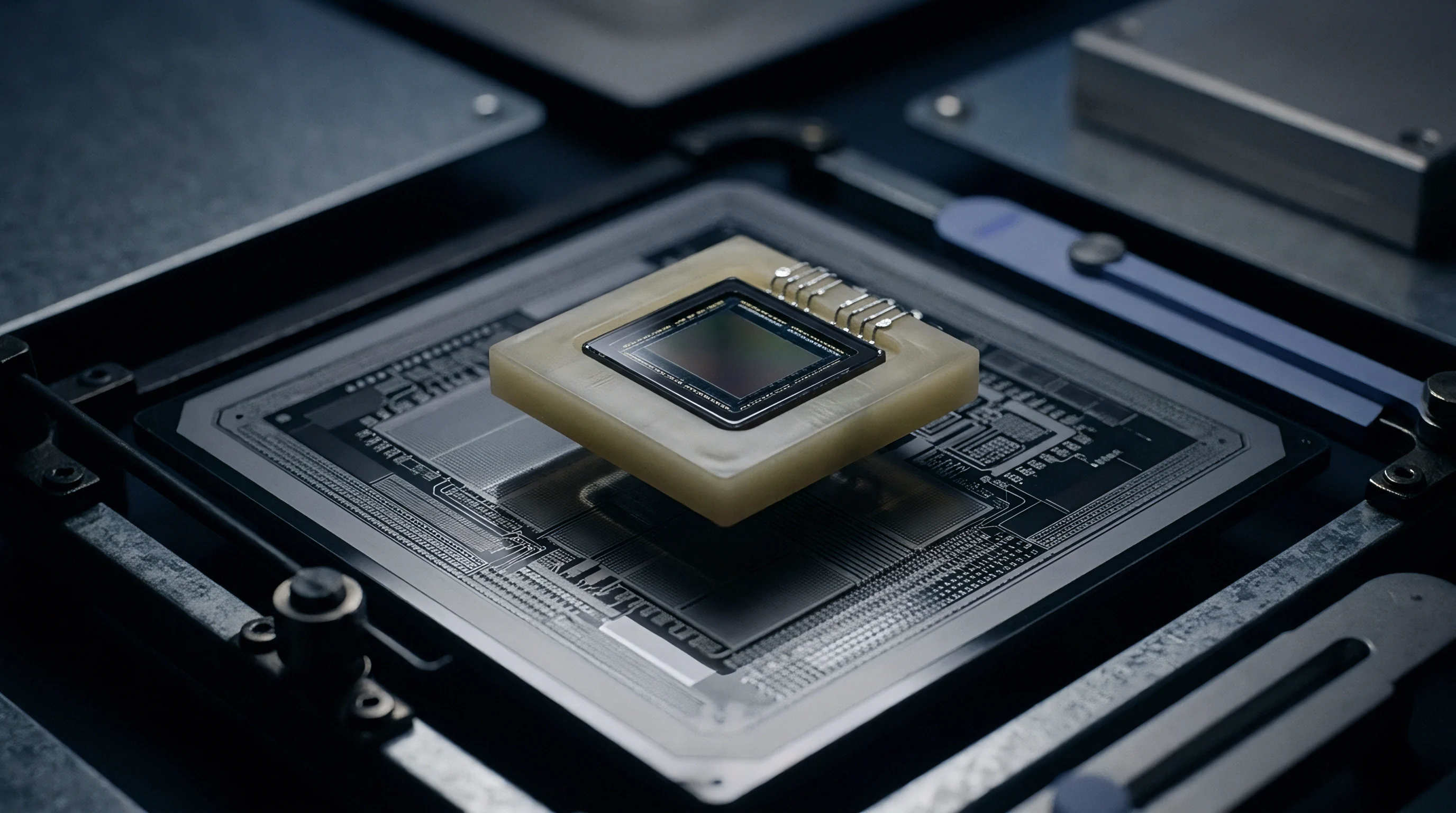
Unstable stress in packaging materials causes systematic measurement offsets in piezoresistive Wheatstone bridges. Below 500 degrees Celsius, single-crystal silicon remains linearly elastic with no intrinsic material hysteresis, meaning any zero-offset hysteresis measured during thermal cycling comes entirely from surrounding packaging layers. As an encapsulated sensor cycles through temperature ramps, non-linear viscoelastic decay in organic die-attach pastes establishes path-dependent internal strain states.
During heating phases, polymer shear modulus drops rapidly, softening the adhesive and easing tensile and compressive strains on the silicon die. On cooling, the polymer stiffens while trapped in this lower-stress configuration, causing sensor output to trace different calibration paths during upward and downward temperature runs. Thermal cycling accelerates these relaxation rates, pushing zero offset along with the decay in strain.
Piezoresistive Signal Shift Driven by Substrate Shear Decay
Transducer piezoresistors convert crystallographic strain gradients into electric potential imbalances. In micro-machined silicon pressure sensors, four piezoresistors positioned at the membrane edge form a Wheatstone bridge. The fractional change in electrical resistance follows the strain relationship:
delta_R / R = pi_l sigma_l + pi_t sigma_t
Here pi_l and pi_t are the longitudinal and transverse piezoresistive coefficients, while sigma_l and sigma_t are surface stress components. As viscoelastic relaxation in the die attach lowers substrate shear stress, sigma_l and sigma_t decay over time. Because of asymmetric die geometry and uneven adhesive thickness, longitudinal and transverse stress components decay at different rates.
This unequal decay unbalances the Wheatstone bridge. A differential strain decay of just 1 microstrain across the membrane shifts zero-offset voltage by roughly 10 to 15 microvolts per volt. For high-precision pressure sensors operating across a 10 millivolt full-scale span, even a fraction of a megapascal of stress decay in the die attach produces unacceptable offset drift in service.
| Packaging Architecture | Die Attach Material | Thermal Cycle Range (deg C) | Zero Offset Drift (percent FSS) | Thermal Hysteresis (percent FSS) |
|---|---|---|---|---|

Thermal Hysteresis Loop Separation and Zero Drift
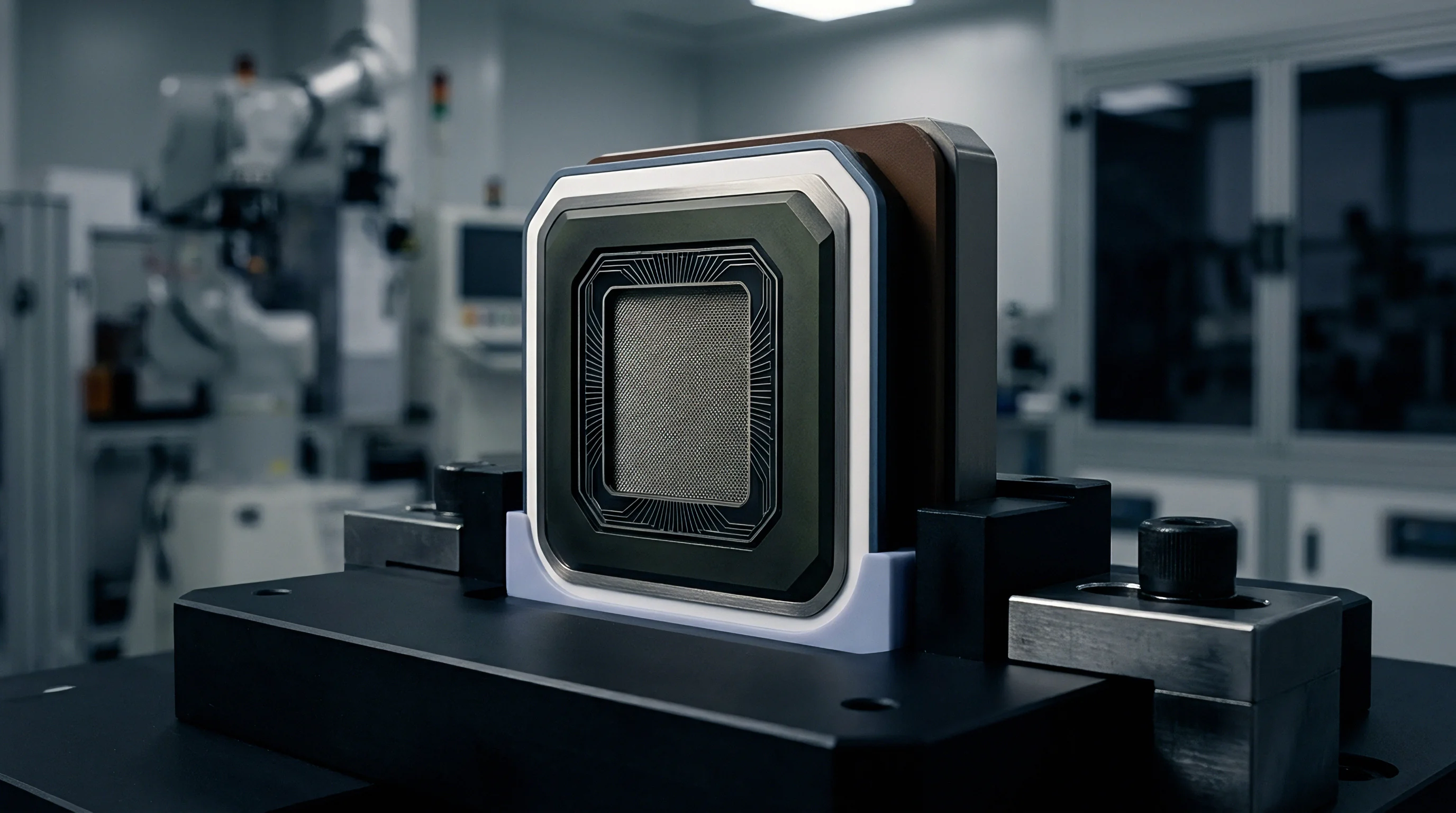
Exposing microelectronic assemblies to thermal cycling reveals path-dependent output curves. Plotting offset voltage against ambient temperature yields closed or open hysteresis loops, where loop separation indicates unrelaxed viscoelastic energy trapped in packaging materials. Higher peak temperatures widen these loops by crossing polymer glass transition thresholds and accelerating short-term stress relaxation.
Continuous thermal cycling drives the assembly toward a steady-state stress envelope. Initial cycles show wide loop separation and rapid zero drift, while later cycles yield narrower loops as transient stress components settle. Achieving full stability requires deliberate thermal pre-conditioning before final factory calibration trim routines.
Curing a polymeric die attach adhesive above its glass transition temperature creates residual room temperature stress that decays continuously throughout the sensor lifetime.
Standard procurement specifications require verifying offset thermal hysteresis limits per MIL-STD-883 Method 1010 Condition B, which mandates thermal cycling stabilization before recording baseline zero-offset data for lot acceptance.
Drift
Long-term zero-offset instability degrades measurement accuracy over years of deployment. Industrial transducer specifications routinely require maintaining calibration limits over five to ten years. In un-aged sensors, stress relaxation within packaging layers is the primary physical cause of non-recoverable calibration drift, following a logarithmic relationship over time:
V_offset(t) = V_0 + S_drift log10(1 + t / t_0)
Where V_0 is the initial post-calibration offset voltage, S_drift is the logarithmic drift coefficient, and t_0 is the characteristic stabilization time constant. Offset changes occur rapidly during early operating hours, then slow down as residual packaging stress moves toward equilibrium.
Moisture Plasticization and Glass Transition Temperature Suppression
Moisture absorption into organic packaging materials lowers their effective molecular mobility threshold. Under ambient conditions, epoxy adhesives absorb between 0.5 percent and 3.0 percent water by weight. Absorbed water molecules break hydrogen bonds between polymer chains and act as internal plasticizers, depressing the glass transition temperature by 10 to 30 degrees Celsius per weight percent of moisture.
This lower glass transition temperature accelerates viscoelastic stress relaxation even at standard room temperature. A sensor that remains stable in dry storage can drift rapidly when exposed to 85 percent relative humidity. Hygroscopic swelling adds volumetric strain on top of existing thermal strain, altering both the magnitude and the time constant of packaging stress relaxation.
Unstabilized epoxy die attach layers transfer residual manufacturing strain directly to the piezoresistive bridge elements during field thermal cycles.
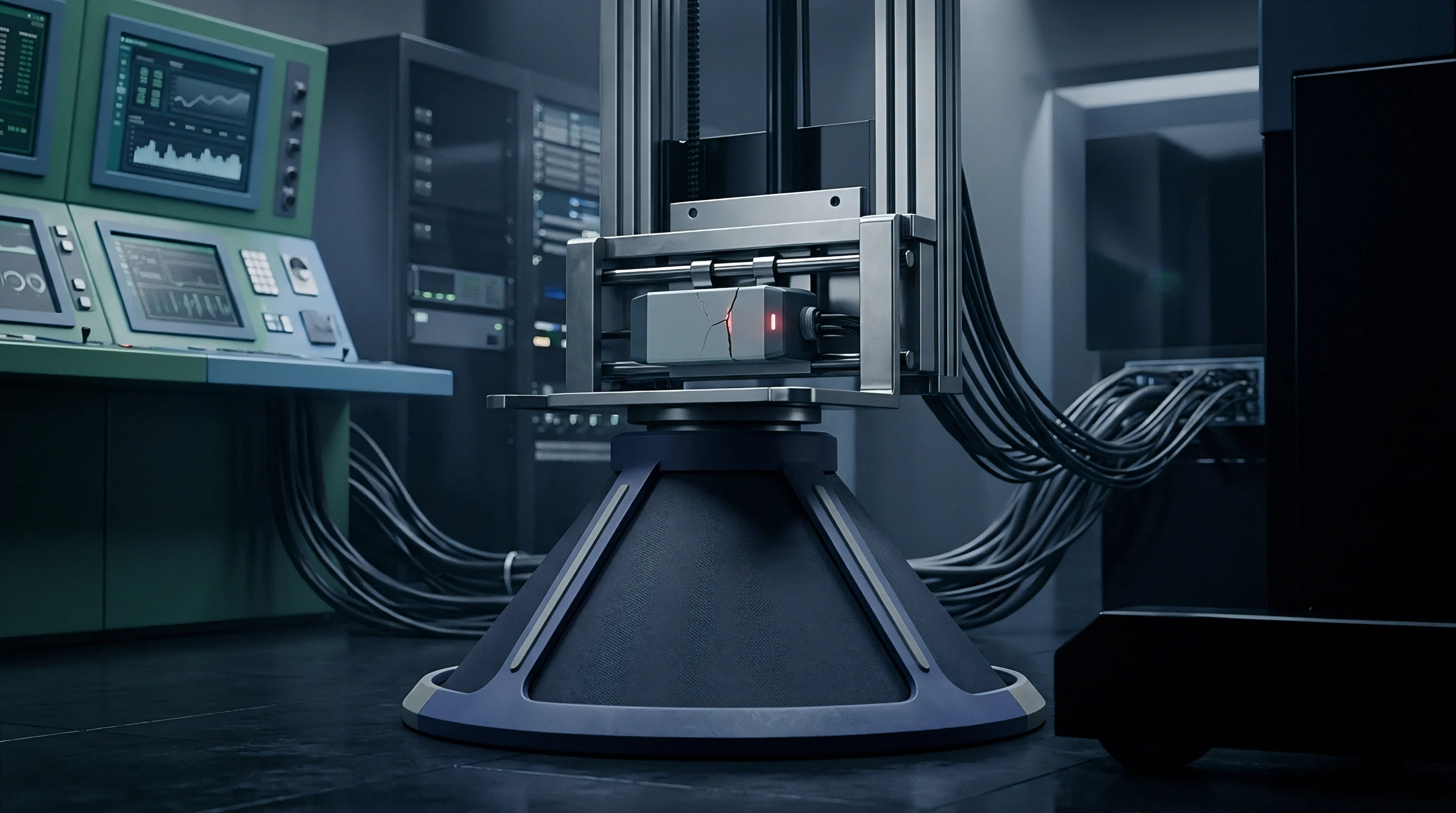
Accelerated Thermal Bake Profiles for Strain Stabilization
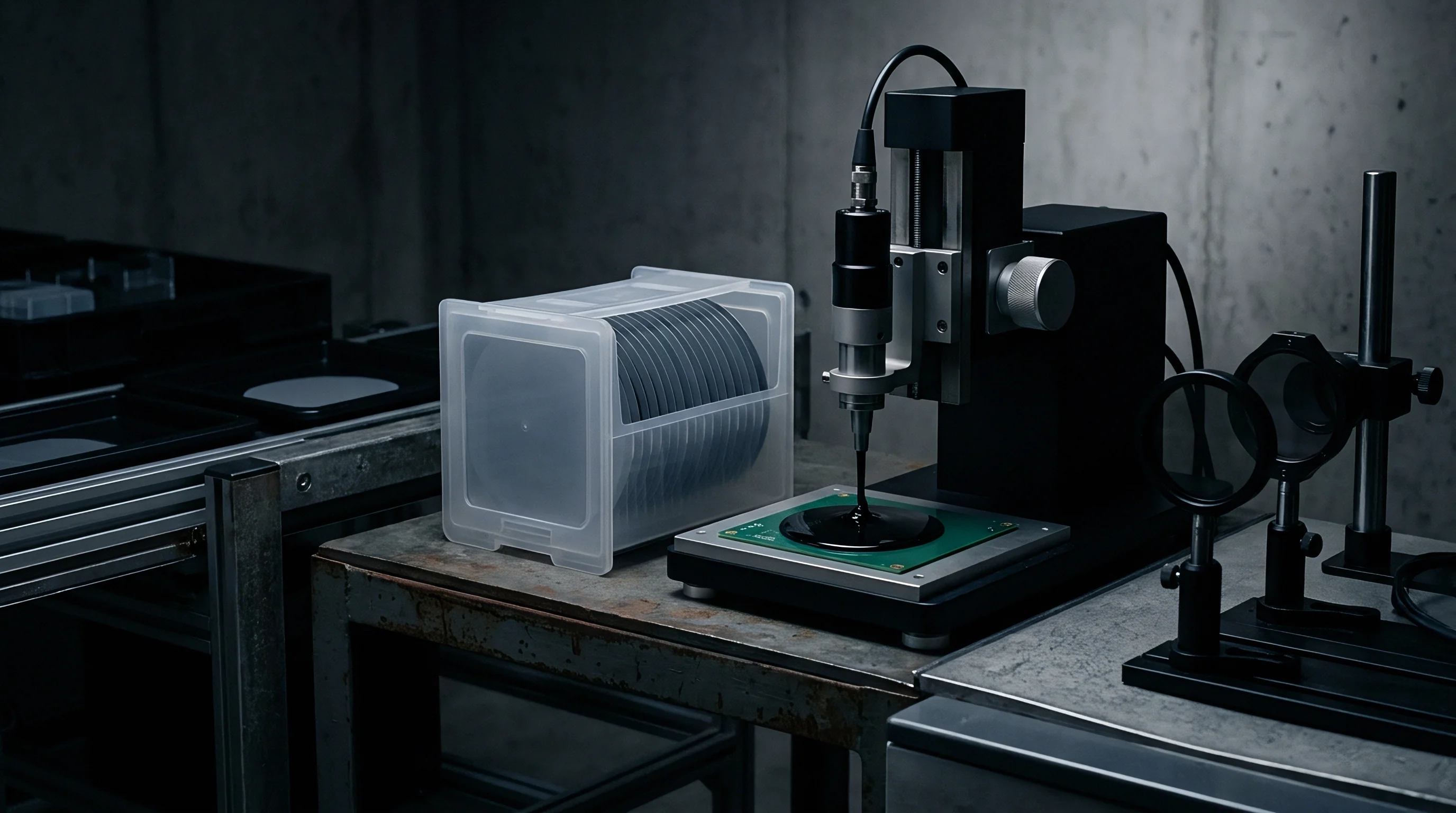
Subjecting assembled sensing elements to controlled thermal aging eliminates initial high-rate mechanical relaxation. High-temperature storage bakes push packaging polymers past their steep early viscoelastic decay region before final calibration trimming. Developing these bake protocols requires balancing effective stress relief against polymer thermal degradation.
- Assemble the silicon sensor die to the substrate using controlled epoxy volume and cure profile parameters.
- Hold at room temperature for an initial resting period of 24 hours to settle assembly strain gradients.
- Bake for elevated-temperature stabilization at 150 degrees Celsius for 168 continuous hours in a dry nitrogen atmosphere.
- Cool back to room temperature at a rate not exceeding 1.0 degree Celsius per minute to prevent thermal shock.
- Perform five full-range thermal cycles between minus 40 degrees Celsius and plus 125 degrees Celsius to relieve localized interfacial friction.
Bypassing stabilization bakes leaves post-cure stress relaxation to occur in customer applications, leading to early warranty returns when field zero-drift exceeds contract limits.

Screening
Quality assurance teams establish physical acceptance criteria to filter out unstable packaging lots before final transducer assembly. Sourcing high-precision silicon sensor dies requires auditing supplier packaging lines, die-attach adhesive rheology, and thermal conditioning protocols. Datasheet accuracy values represent initial un-aged performance unless explicit stability duration guarantees accompany the test certificate.
Uncertainty budgets must factor residual package stress relaxation drift into overall calibration system uncertainty, reference standard drift, and environmental line noise. For a sensor rated at 0.1 percent full scale accuracy over a five-year calibration interval, packaging stress relaxation drift must stay below 0.015 percent full scale span per year.
Incoming Batch Verification and Post Bake Drift Audits
Receiving inspection for microelectronic sensor components relies on statistical sampling after thermal conditioning. Sample units from each incoming wafer lot and package run undergo accelerated life testing: technicians measure initial zero-offset voltage, store parts at 125 degrees Celsius for 500 hours, and re-measure zero-offset voltage under identical bench conditions.
Lots showing zero-offset shifts above allowable statistical limits are rejected or sent for mandatory re-baking. Audits also confirm that adhesive curing ovens maintain thermal uniformity within plus or minus 2.5 degrees Celsius across assembly frames, since localized under-curing leaves residual stress that shifts Wheatstone bridge symmetry.

Commercial Cost Mechanics of Stress Stabilized Die Attach
Component pricing for high-stability sensors reflects longer processing times and specialized die-bonding materials. Eutectic gold-tin (AuSn) bonding eliminates viscoelastic polymer creep entirely, but raises raw material costs and processing complexity. High-temperature thermosetting polyimides offer lower creep than standard epoxies while working with automated dispensers, though stabilization baking ties up furnace capacity.
| Bonding Technology | Stress Relaxation Susceptibility | Thermal Stabilization Time (Hours) | Relative Unit Packaging Cost | 5-Year Drift Risk Class |
|---|---|---|---|---|
| Costs indexed relative to standard conductive epoxy die-attach assembly baseline. Stabilization time reflects standard factory pre-calibration bake protocols. | ||||
- Glass Transition Verification testing via differential scanning calorimetry confirms that die-attach adhesive reaches full crosslinking density during cure.
- Bond Line Thickness Control limits total viscoelastic polymer volume, reducing total stress relaxation force transfer.
- Hygroscopic Aging Screening verifies that zero-drift remains within tolerance under combined heat and humidity exposure.
- Post-Bake Calibration Trimming performs offset adjustment only after packaging materials finish early high-rate relaxation phases.
How can procurement teams verify that a supplier performed an extended thermal stabilization bake correctly when factory certificates cover only room-temperature electrical functionality at shipping?