Mechanics of Polymeric Stress Relaxation in Transducer Packaging
Polymeric stress relaxation in packaging compounds relieves assembly preloads, causing persistent transducer zero-shift drift that mimics process measurand changes.
Preload
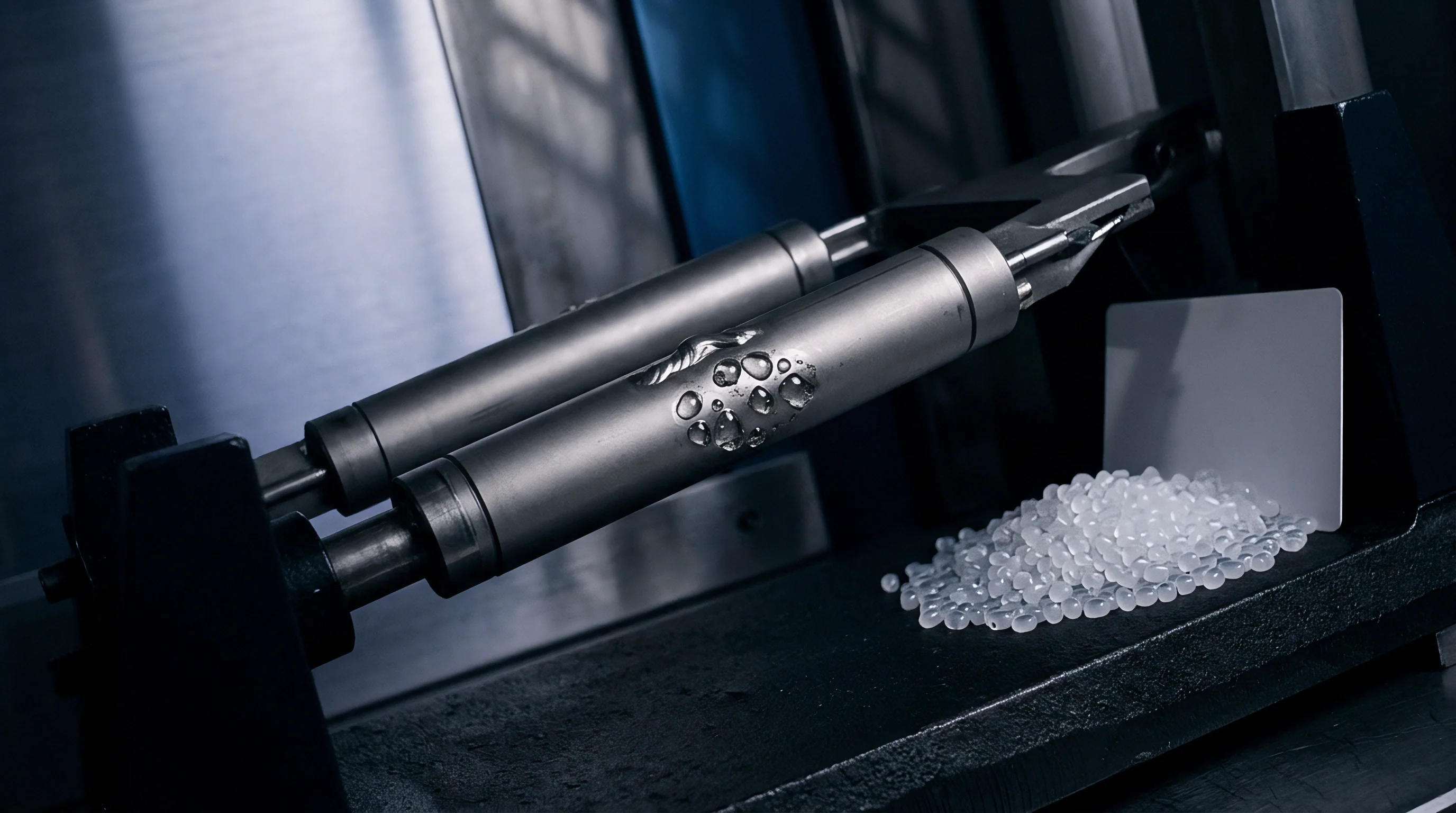
Mechanical assemblies in precision sensors experience continuous decay of internal holding forces whenever elastomeric seals, structural adhesives, or polymeric potting compounds sit within the load path. A bolted diaphragm housing torqued to four newton meters against a fluoroelastomer O-ring experiences an initial clamping pressure that begins decaying the moment assembly ceases. The polymer chains slide past one another under constant mechanical strain, converting elastic strain energy into viscous dissipation through conformational rearrangement.
The output signal of an uncompensated silicon piezoresistive pressure cell tracks this structural relaxation as a progressive zero-point shift, often misidentified during incoming qualification as semiconductor gauge instability.
Transducer packaging engineers position adhesives and potting matrices to isolate sensitive die elements from media ingress and assembly shocks. Polymeric materials exhibit a time-dependent decrease in stress under constant deformation, governed by their relaxation modulus. The rate of relaxation accelerates exponentially as ambient operating temperatures approach the polymer glass transition temperature.
When a packaging joint sits between a high-modulus alumina substrate and a low-expansion titanium housing, the intervening epoxy layer absorbs the differential thermal expansion. Over months of service, the shear stress within the adhesive relaxes, permanently altering the mechanical boundary conditions that define the diaphragm neutral axis.
A sixty-durometer fluoroelastomer gasket clamped at twenty-five percent compression sheds one-third of its initial sealing force within seventy-two hours at eighty-five degrees Celsius.
Strain gauge load cells and piezoresistive pressure transducers register package-induced stress as direct output span and offset anomalies. The initial factory calibration trims out static residual stresses present at room temperature immediately following thermal cure. As the adhesive bond lines relax over operational life, the residual stress field dissipates.
The transducer zero point migrates across the operational window in response to this relaxation, introducing non-recoverable calibration errors that regular two-point span adjustments fail to eliminate entirely.
Can Packaging Strain Emulate Measurand Pressure?
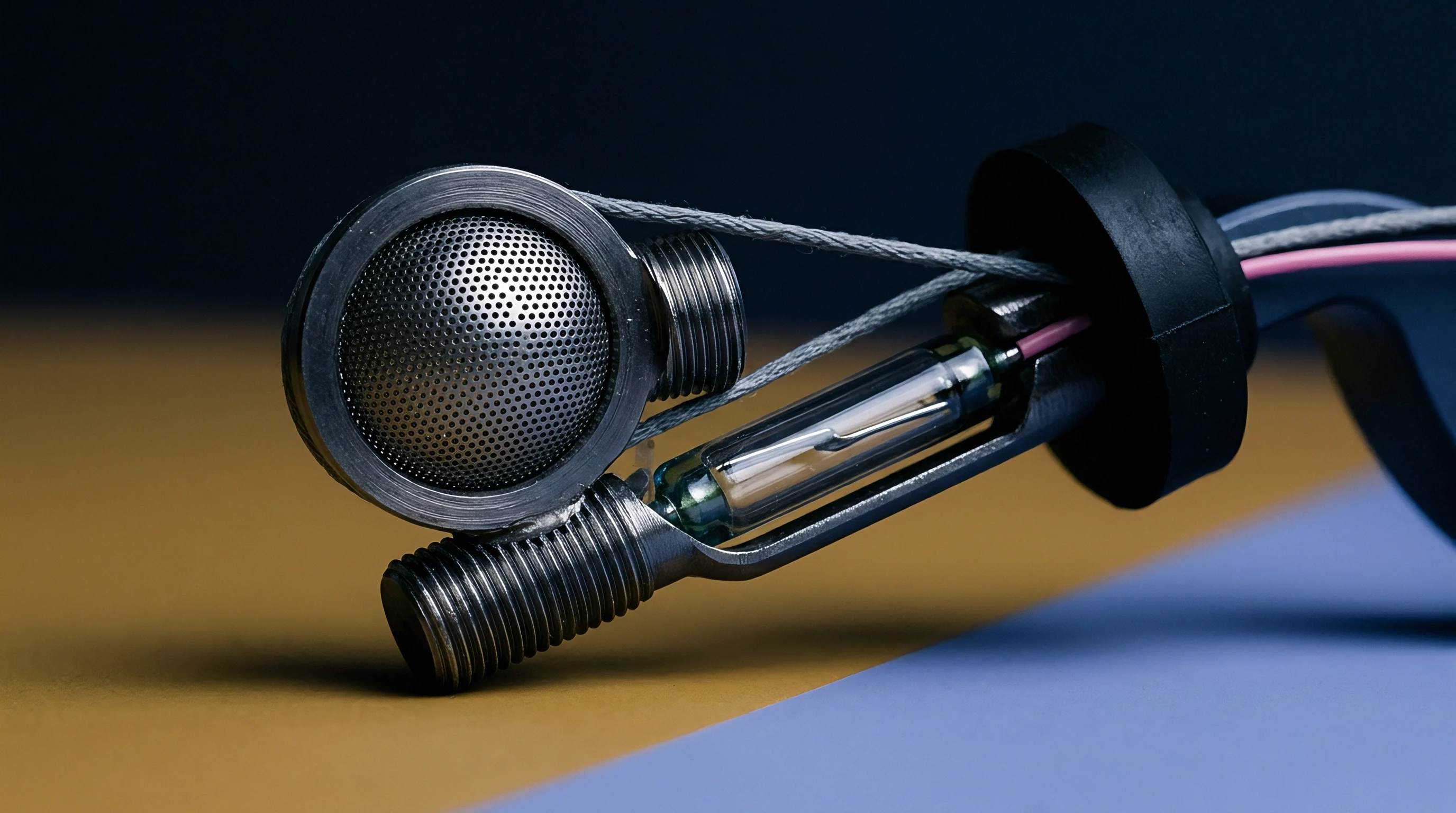
Piezoresistive bridge elements cannot differentiate between mechanical strain induced by process fluid pressure and parasitic strain transferred from the packaging shell. Silicon dies bonded directly to metallic headers via filled epoxy adhesives absorb shear stresses generated during adhesive cure shrinkage and thermal cycling. The epoxy layer continuously sheds this shear stress over time through molecular slip mechanisms, relieving the compressive preload on the silicon substrate.
The bridge circuit detects this declining packaging stress as an apparent negative pressure drift, corrupting long-term measurement integrity across automated monitoring systems.
Package designers mitigate this stress transfer by inserting intermediate decoupling submounts fabricated from silicon, pyrex, or ceramic materials matching the substrate coefficient of thermal expansion. Even with intermediate pedestals, the compliant adhesive layers securing the assembly to the outer stainless steel housing continue to relax. The drift velocity peaks during the first several hundred hours of operation before stabilizing onto a logarithmic decay curve.
Quantifying this decay rate requires continuous logging under controlled thermal conditions over thousands of test hours.
The operational cost of failing to account for relaxation dynamics appears as widespread zero-point wander across field-installed instrumentation, forcing unscheduled maintenance shutdowns and unbudgeted recalibration cycles.

Spectrum
Polymeric relaxation in packaging compounds does not operate on a single time constant. Viscoelastic response models construct a discrete relaxation spectrum using generalized Maxwell-Wiechert networks composed of multiple spring-dashpot Maxwell elements arranged in parallel with a static equilibrium spring. Each Maxwell element represents a discrete relaxation mechanism, characterized by a distinct relaxation time and elastic weight.
High-frequency chain segment vibrations operate across millisecond intervals, while coordinated reptation of entangled polymer backbones requires months or years of sustained mechanical constraint to complete relaxation.
The time-dependent relaxation modulus follows a Prony series representation, combining isolated exponential terms that cover the operational lifetime of the transducer package. Engineers extract these Prony series coefficients directly from dynamic mechanical analysis or sustained stress relaxation bench measurements performed across isothermal steps. The continuous relaxation spectrum spans several decades of logarithmic time, linking short-term thermal shock transients to multi-year drift profiles.
| Polymer Chemistry | Initial Modulus (MPa) | Equilibrium Modulus (MPa) | Primary Time Constant (h) | Ten-Year Relaxation (%) |
|---|---|---|---|---|
| Die-Attach Epoxy (Anhydride Cured) | 4200 | 3100 | 140 | 26.2 |
| Die-Attach Epoxy (Amine Cured) | 3100 | 1850 | 45 | 40.3 |
| Potting Polyurethane (Two-Part) | 45 | 12 | 8.5 | 73.3 |
| Sylgard 184 Silicone Elastomer | 1.8 | 1.1 | 1.2 | 38.9 |
| Filled Epoxy Underfill (Silica 65%) | 8500 | 7100 | 320 | 16.5 |
Time-temperature superposition enables the transformation of short-term high-temperature relaxation data into multi-year operational predictions. The Williams-Landel-Ferry formulation governs modulus shift factors within the transition zone above the glass transition temperature. Below the glass transition region, secondary sub-Tg relaxations govern stress decay, demanding Arrhenius activation energy formulations to construct Master Curves of relaxation.
Applying incorrect shift equations yields non-conservative drift estimates that underestimate field degradation rates by orders of magnitude.
Where Does Unrecovered Strain Settle?
Viscoelastic materials divide mechanical strain into three discrete components: instantaneous linear elastic strain, recoverable delayed elastic strain, and permanent viscous flow. In crosslinked thermosets like structural epoxies, covalent crosslinks prohibit true steady-state viscous flow below thermal decomposition limits. Incomplete crosslinking, high moisture absorption, and plasticizer migration introduce pseudo-plastic unrecoverable deformation.
When mechanical packaging constraints deform the polymer, internal network rearrangement traps a portion of the input strain, preventing the transducer structure from returning to its original baseline state upon load release.
The balance between reversible viscoelastic relaxation and irreversible mechanical hysteresis determines the baseline stability of the complete sensing assembly. Transducer manufacturers counter early-life transient relaxation by subjecting finished assemblies to thermal conditioning protocols. Exposing the packaging to elevated temperatures under mechanical constraint accelerates the consumption of the initial high-rate Maxwell relaxation elements, leaving only long-time-constant mechanisms active during customer operation.
Uncertainty remains regarding the precise molecular mechanism that triggers secondary sub-Tg activation shifts under combined multi-axis packaging stress fields.

Potting
Encapsulating electronics in dense elastomeric or thermoset resins protects wire bonds and passive components from harsh industrial environments, but it couples packaging stress directly into the transducer sensing core. Polyurethane and silicone potting gels exert three-dimensional hydrostatic and deviatoric stress fields on internal components during cure contraction and subsequent thermal cycling. As the potting compound undergoes molecular relaxation, the magnitude and directional bias of these internal stress fields drift.
The changing stress distribution alters the mechanical boundary conditions surrounding micro-machined diaphragms, creating subtle offset errors that resist standard temperature compensation algorithms.
Crosslink density directly dictates the relaxation rate in potting formulations. Stoichiometric imbalances during mixing shift the ratio of hard segments to soft segments in polyurethanes, altering the distribution of relaxation times. Silica, alumina, and glass bead fillers added to lower the coefficient of thermal expansion introduce complex filler-matrix boundary interactions.
Micro-scale dewetting and interfacial slippage between the polymer chains and filler particles generate localized relaxation zones, accelerating bulk modulus decay under cyclic mechanical strain.
A packaging resin mixed three percent off its stoichiometric ratio doubles its long-term zero drift rate across a forty-degree thermal window.
Moisture absorption represents a prominent catalyst for accelerated polymeric relaxation inside potted transducers. Water molecules penetrate the polymer matrix, disrupting intermolecular hydrogen bonds and plasticizing the network. The glass transition temperature drops substantially as moisture concentration increases, shifting the operating regime closer to the rubbery plateau.
The relaxation spectrum shifts toward shorter timescales, increasing the magnitude of zero-point drift observed during seasonal humidity cycles.
- Vacuum Degassing eliminates trapped micro-bubbles that act as localized stress concentrators and unpredictable compliance voids within the cured assembly.
- Stepwise Thermal Baking drives uniform crosslinking throughout thick potting sections to prevent residual cure gradient stresses across the die.
- Controlled Ambient Stabilization allows the polymer network to complete primary physical aging before zero-offset calibration points are permanently written to memory registers.
- Baseline Ingress Verification confirms the cured matrix maintains hermetic isolation against fluid penetration under rated atmospheric pressures.
Material datasheets consistently quote initial young modulus and tensile strength without disclosing relaxation coefficients or long-term modulus retention curves under continuous mechanical load.

Distortion
Package warpage develops directly from asymmetric relaxation across multi-layered planar structures. In silicon pressure transmitters and MEMS accelerometers, thin adhesive bond lines secure silicon substrates to ceramic headers, which in turn anchor to metallic outer packages. Thermal excursions create severe bimetallic bending moments due to mismatched thermal expansion coefficients.
The polymeric adhesive relaxes dynamically to relieve these interfacial shear stresses, causing the planar substrate to warp over time. This out-of-plane distortion propagates directly into the active micromachined sense elements, bending piezoresistive diaphragms or tilting capacitive comb fingers.
The time-dependent radius of curvature in warped die assemblies shifts the sensitivity span of the transducer. The piezoresistive coefficients of silicon depend on crystal orientation and baseline mechanical stress. As warpage relaxes, the piezoresistive coefficients undergo subtle shifts, altering the output voltage generated per unit of applied pressure.
Calibrating the transducer immediately after high-temperature solder reflow or adhesive cure captures a highly stressed, rapidly shifting geometric state that degrades rapidly over the first months of operational deployment.
| Package Component | Stress Mechanism | One-Year Offset Shift (% FSO) | Temperature Sensitivity Shift (%/10K) | Recovery After 125 °C Bake (%) |
|---|---|---|---|---|
| Die-Attach Adhesive | Interfacial Shear Relaxation | 0.35 | 0.08 | 45 |
| Silicone Gel Encapsulant | Hydrostatic Bulk Relaxation | 0.12 | 0.02 | 85 |
| Housing O-Ring Seal | Compressive Preload Decay | 0.05 | 0.01 | 15 |
| PCB Mounting Underfill | Substrate Asymmetric Warpage | 0.22 | 0.04 | 30 |
| Combined Assembly Stack | Total Vectorial Strain Drift | 0.74 | 0.15 | 43.8 |
Quantifying distortion drift requires isolating the packaging effects from intrinsic semiconductor degradation. Testing transducers fabricated on identical die lots with varying adhesive thicknesses isolates the volumetric influence of the polymer. Thicker adhesive layers provide greater compliance to absorb initial assembly shock, but their increased volume multiplies the absolute magnitude of geometric shift caused by bulk stress relaxation.
Packaging engineers must optimize adhesive bond line thickness to balance stress decoupling capability against long-term geometric creep stability.
- Asymmetric Adhesive Fillets introduce uncompensated torsional moments across the sensor die, bending the diaphragm along off-axis crystal planes.
- Non-Uniform Cure Thermal Fields create localized crosslink density gradients that relax at divergent rates across the substrate surface.
- Moisture Swelling Gradients induce differential volume expansion through the thickness of the potting matrix, twisting internal interconnections.
Soft adhesives isolate initial thermal stresses while multiplying long-term dimensional instability.
Qualification
Validating transducer packaging against polymeric stress relaxation requires rigorous accelerated aging protocols grounded in the physics of polymer degradation. Standard forty-eight-hour factory burn-in schedules fail to activate the long-term Maxwell-Wiechert relaxation elements that dominate multi-year drift. Environmental qualification profiles combine elevated temperature soaks, deep thermal cycling, and continuous pressure cycling to accelerate both physical aging and viscoelastic relaxation within the adhesive and potting matrices.
Test regimes must record baseline sensor offsets continuously under controlled isothermal conditions to map the true relaxation trajectory.
Incoming quality agreements specify drift boundaries after simulated lifetime exposures. Procurement specifications that define accuracy exclusively at the moment of factory delivery expose buyers to severe long-term measurement risk. Procurement documentation must bind suppliers to drift ceilings following standardized aging profiles, such as one thousand hours of exposure at eighty-five degrees Celsius and eighty-five percent relative humidity.
Transducers exceeding defined zero-shift limits during accelerated screening indicate improper formulation, deficient cure scheduling, or inadequate mechanical decoupling within the internal packaging stack.
Per IEC 60770-1 clause 6.3, long-term drift evaluations require baseline stability monitoring across minimum intervals of one thousand operating hours under stabilized reference ambient conditions.
Acceptance testing protocols isolate package relaxation from electronics drift by deploying unpowered storage controls alongside powered endurance units. If unpowered units exhibit identical baseline offset shifts following thermal aging, the error originates entirely within packaging mechanics rather than semiconductor dopant migration or analog front-end resistor aging. Identifying the packaging root cause allows engineering teams to modify adhesive chemistries, adjust dispense volumes, or implement targeted pre-calibration bake cycles before locking production baselines.
Supply agreements incorporating specific maximum permissible drift rates under ISO 10012 measurement management standards establish unambiguous liability boundaries for out-of-tolerance field failures, transferring the economic cost of unverified packaging stability back to the manufacturer.