Predictive Dynamic Kinetic Compensation Models for High Temperature Strain Piezoresistors Operating under Simultaneous Variable Thermal Profiles
Dynamic kinetic compensation models suppress thermal transient strain errors in high-temperature piezoresistors by tracking real-time internal spatial gradients.


Kinetics
High temperature piezoresistive strain sensors encounter severe measurement distortions when subjected to simultaneous mechanical loads and rapid ambient thermal shifts. Solid-state piezoresistors function through the deformation of crystalline semiconductor lattices, which alters the band structure and changes carrier mobility. In silicon, silicon-on-insulator, and silicon carbide piezoresistors operating above three hundred degrees Celsius, thermal energy excites intrinsic charge carriers across the bandgap, modifying the base resistivity independently of applied mechanical strain.
This temperature-dependent resistivity shift combines with variations in the piezoresistive gauge factor to generate complex output errors during unsteady thermal states.
Static calibration models assume thermal equilibrium across the transducer membrane, Wheatstone bridge, and substrate. Real industrial environments subject sensors to transient thermal ramps exceeding fifty degrees Celsius per second, creating steep internal spatial gradients. These transient spatial gradients cause differential expansion across the bridge arms before thermal diffusion equalizes internal temperatures.
The resulting signal distortion, termed dynamic apparent strain, mimics mechanical strain and invalidates static temperature compensation techniques.
High Temperature Piezoresistive Response Mechanics
Piezoresistors shift under heat. Mechanical strain induces asymmetric deformation in the crystal lattice, shifting the energy conduction valleys in n-type material or valence sub-bands in p-type material. The piezoresistive coefficient governs this transformation, decreasing non-linearly as temperature rises.
At six hundred degrees Celsius, the gauge factor of heavily doped p-type silicon drops by more than forty percent relative to its room-temperature baseline. Silicon carbide maintains higher mechanical gauge factors at elevated temperatures, yet still exhibits significant thermal coefficient of resistance shifts that alter bridge output balances.
Heat drives carrier drift. Thermal excitation increases intrinsic carrier density, overwhelming intentional dopant concentrations at extreme temperatures. This intrinsic conduction threshold sets the maximum operating limit for accurate piezoresistive strain sensing.
Piezoresistive elements optimized for room-temperature sensitivity lose linear strain responses when intrinsic carrier generation alters the total effective doping density. Predicting the sensor response under dynamic conditions demands modeling both the immediate strain-induced mobility change and the thermal generation-recombination dynamics of free carriers.
Rapid thermal transients generate false strain signals through uneven lattice expansion before heat reaches the compensating elements.

Dynamic Thermal Gradient Coupling
Thermal lag creates signal errors. When a sensor surface experiences a sudden temperature flux, thermal energy propagates through the protective passivation layer, the piezoresistive trace, and the underlying insulating oxide at rates determined by their respective thermal diffusivities. Differential thermal expansion between the piezoresistive element and the structural substrate introduces secondary mechanical stresses.
These thermally induced structural stresses pass directly into the piezoresistor as real mechanical strain, confounding external strain measurements.
Simultaneous changes in ambient temperature and applied structural strain produce coupled non-linear output signals. Uncompensated thermal transients alter the instantaneous gauge factor while simultaneously generating dynamic apparent strain offsets. A sensor calibrated exclusively under steady-state thermal conditions yields zero-point errors exceeding thirty percent of full-scale output when exposed to rapid thermal shocks.
Ignored dynamic gradients destroy measurement traceability in combustion testing, aerospace propulsion monitoring, and high-temperature processing equipment.

Wafer
Substrate selection dictates the physical boundary conditions under which solid-state sensing elements convert mechanical deformation into electrical signals. Silicon-on-insulator architecture isolates active piezoresistive traces from the bulk handle wafer using a buried oxide layer, preventing junction leakage at temperatures up to five hundred degrees Celsius. Above five hundred degrees Celsius, silicon carbide substrates provide superior lattice stability and higher bandgap energy, suppressing intrinsic carrier activation.
The physical dimensions, thermal expansion coefficients, and crystal orientation of the structural substrate govern the spatial gradient distribution across the Wheatstone bridge during dynamic heating events.
| Substrate Material | Bandgap Energy (eV) | Thermal Conductivity (W/m·K) | Thermal Expansion Coefficient (10⁻⁶/K) | Gauge Factor Retention at 500°C (%) |
|---|---|---|---|---|
| Bulk Silicon (p-type) | 1.12 | 35 to 42 | 4.1 | 52 to 58 |
| Silicon-on-Insulator (SOI) | 1.12 | 32 to 38 | 4.1 | 60 to 65 |
| 3C-Silicon Carbide (3C-SiC) | 2.36 | 70 to 90 | 4.5 | 78 to 84 |
| 4H-Silicon Carbide (4H-SiC) | 3.23 | 120 to 140 | 4.3 | 88 to 94 |

Doping Density and Gauge Factor Degradation
Boron dopant concentration sets both the absolute resistivity and the thermal coefficient of resistance in p-type piezoresistors. Lower doping levels yield higher initial gauge factors, reaching values above one hundred at room temperature, but suffer extreme thermal sensitivity and rapid gauge factor degradation as temperature increases. Doping levels exceeding ten to the twentieth power atoms per cubic centimeter stabilize the thermal coefficient of resistance, maintaining predictable piezoresistive behavior up to six hundred degrees Celsius.
This stabilization reduces absolute sensitivity, dropping the room-temperature gauge factor to approximately thirty.
High doping levels minimize intrinsic carrier interference at elevated temperatures. Heavy impurity doping introduces degenerate semiconductor behavior, causing the Fermi level to reside near the valence band edge. This energy state distribution suppresses the temperature dependence of carrier concentrations, forcing electrical conductivity to depend primarily on carrier mobility.
Tailoring the dopant profile through ion implantation creates a tailored depth gradient that balances sensitivity against thermal stability across expected operating bands.

Bridge Geometry under Non-Uniform Heating
Spatial gradients warp the output. Standard Wheatstone bridge configurations place four piezoresistors on a common diaphragm or cantilever beam to isolate mechanical strain components. When a directional thermal flux strikes the sensor face, heat diffuses unevenly across the four bridge arms.
A spatial temperature difference of two degrees Celsius between opposing bridge arms creates a zero-drift offset equivalent to several hundred microstrain.
| Bridge Arm Orientation | Thermal Diffusion Time Constant (ms) | Transient Delta T (°C) | Apparent Strain Peak (µε) | Recovery Time to Baseline (s) |
|---|---|---|---|---|
| Parallel Long-Axis | 1.4 to 1.8 | 3.2 | 410 | 0.85 |
| Transverse Cross-Pattern | 2.1 to 2.6 | 5.8 | 720 | 1.40 |
| Symmetric Ring Layout | 0.8 to 1.1 | 1.1 | 130 | 0.35 |
Symmetrical serpentine trace layout reduces spatial thermal imbalances by packing opposing bridge arms into close thermal proximity. Silicon dioxide expands unevenly when coupled to metal interconnects, adding localized strain fields directly above the piezoresistive regions. Advanced sensor designs utilize thin-film platinum or polysilicon integrated thermistors co-located directly adjacent to each piezoresistive arm.
These localized thermistors provide real-time spatial thermal data required for dynamic dynamic compensation models.
Factory representatives frequently claim that four-arm symmetric bridge layouts eliminate thermal drift without external mathematical correction. Physical testing reveals that symmetrical geometry handles uniform steady-state heating, but fails during asymmetric thermal transients.


Algorithms
Real-time mathematical filter architectures separate thermal transient artifacts from real structural deformation during high-speed process ramps. Conventional static compensation employs polynomial surface fits that map bridge output voltage and bulk sensor temperature to mechanical strain. These static surfaces assume the sensor operates at thermal equilibrium, completely ignoring internal rate-of-change dynamics.
Dynamic kinetic compensation models incorporate dynamic differential equations that account for thermal mass, heat flux, carrier relaxation phenomena, and structural expansion rates.
Dynamic model formulation models heat flow across sensor layers using continuous heat transfer state equations. The dynamic model estimates internal temperature gradients using real-time measurements from embedded micro-thermistors or structural resistance tracking. By computing the instantaneous temperature differential between the piezoresistors and the base substrate, the kinetic algorithm predicts dynamic apparent strain and subtracts it from the raw signal in real time.
Kinetic ODE Integration for Thermal Lag
Continuous ordinary differential equations track thermal energy accumulation within active sensor zones. The fundamental energy balance relates surface flux to internal heat conduction, substrate heat storage, and convective exchange with surrounding fluids. Modeling the dynamic temperature field requires solving coupled transport equations that account for temperature-dependent thermal conductivity and specific heat capacity in each microstructural layer.
- Thermal Mass Capacitance Term calculates the energy absorption rate within the active piezoresistive trace layer during rapid surface heating events.
- Interfacial Thermal Resistance Coefficient governs heat transport delay across the dielectric insulating interface separating piezoresistors from handle substrates.
- Dynamic Gauge Factor Function continuously updates the strain conversion scalar as a function of instantaneous local temperature and dopant activation states.
- Rate-Dependent Apparent Strain Derivative predicts structural strain generated by differential thermal expansion rates between sensor thin films and structural housings.
Integration of these kinetic differential equations inside edge DSP hardware requires low-latency numerical solvers. First-order Euler approximations incur phase lag errors during severe thermal shock events exceeding one hundred degrees Celsius per second. Runge-Kutta numerical integration schemes eliminate phase lag, providing accurate zero correction at computational frame rates exceeding ten kilohertz.

Can Real-Time State Space Filters Decouple Transients?
Extended Kalman filters process raw bridge signals and auxiliary temperature inputs to simultaneously estimate structural strain and internal spatial temperature distribution. The process model includes physical differential equations describing heat conduction across sensor layers and piezoresistive strain response mechanics. The state vector contains real mechanical strain, local piezoresistor temperature, core substrate temperature, and instantaneous thermal flux.
Static offsets miss dynamic transients. The state-space matrix continuously updates the covariance of sensor measurement noise based on rate-of-change indicators derived from high-frequency thermal sensors. When thermal rate sensors detect rapid temperature shifts, the Kalman filter shifts weight toward the internal kinetic thermal model, discounting raw bridge shifts attributable to thermal expansion.
This adaptive weighting suppresses dynamic apparent strain spikes without attenuating real structural strain events occurring at similar frequency bands.
State-space filter design requires precise empirical determination of system noise covariance matrices and thermal conduction time constants. Small variations in thermal contact resistance across assembly joints alter internal conduction pathways, degrading filter accuracy over extended operational cycles. The sensitivity of the model to subtle physical parameter shifts raises fundamental questions regarding long-term calibration retention in field applications.
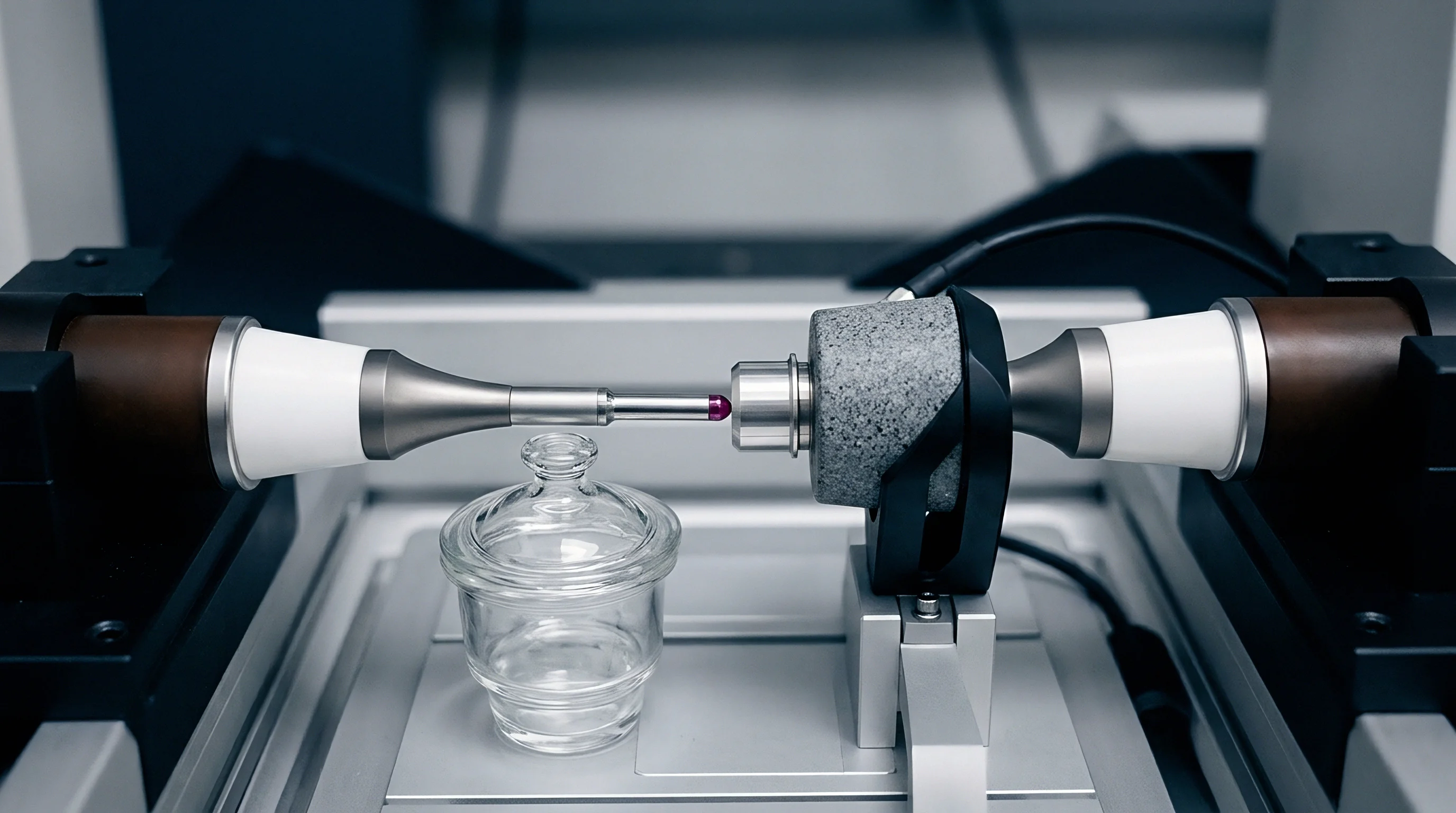
Profiling
Laboratory evaluation of high-temperature strain transducers requires environmental test chambers capable of applying mechanical loads while driving rapid ambient temperature ramps. Test setups combine high-speed infrared radiant heaters, liquid nitrogen cooling injection, and closed-loop servo-hydraulic mechanical actuators. Synchronizing mechanical load profiles with dynamic thermal ramps allows isolation of dynamic apparent strain from mechanical strain inputs.
- Mount the sensor onto a reference cantilever beam constructed from a material with known, certified thermal expansion properties.
- Attach laser Doppler vibrometers and non-contact optical strain measurement systems to record true mechanical beam deformation independently of the transducer signal.
- Apply a baseline mechanical strain profile under static room-temperature conditions to establish initial gauge factor scaling.
- Initiate controlled thermal ramps at rates of ten, twenty-five, and fifty degrees Celsius per second using radiant heat arrays while maintaining constant mechanical load.
- Record raw bridge voltage, auxiliary thermistor readings, optical strain reference data, and surface thermal images across five consecutive thermal cycles.
- Process raw data through the dynamic kinetic compensation algorithm to calculate residual dynamic apparent strain errors across all ramp rates.
Calibrating piezoresistive elements under dynamic thermal ramps of fifty degrees Celsius per second reduces transient signal errors to less than point two percent full scale.

Simultaneous Thermal and Mechanical Test Rigs
Dynamic testing requires specialized rigs. Designing test fixtures for combined environmental exposure requires managing severe mechanical strain transfer variations caused by thermal gradient expansion within the fixture itself. Servo-hydraulic actuators must actively compensate for thermal growth of the loading grips to maintain constant mechanical force across thermal ramps.
High-speed infrared pyrometers map two-dimensional surface thermal profiles across the sensor substrate during transient heating cycles, validating spatial gradient inputs used in dynamic models.
| Test Chamber Feature | Operating Range | Control Precision | Measurement Uncertainty |
|---|---|---|---|
| Radiant Heating Rate | 0.5 to 100 °C/s | ± 0.5 °C/s | ± 1.2 °C |
| Servo-Hydraulic Load | 0 to 50 kN | ± 5 N | ± 0.05 % Full Scale |
| Optical Strain Reference | 0 to 5000 µε | ± 0.5 µε | ± 2.0 µε |
| Environmental Atmosphere | 10⁻⁶ Torr to 2 bar | ± 10 mbar | ± 1.0 % Setpoint |
Consider a sensor subjected to a fifty degree Celsius per second thermal ramp combined with a one-kilohertz mechanical sinusoidal strain input. The raw signal contains low-frequency thermal offset expansion, mid-frequency dynamic apparent strain, and high-frequency mechanical strain. Standard two-point trims fail dynamically.
Processing this composite signal through a static polynomial model leaves a residual zero offset error of four hundred and twenty microstrain. Applying a dynamic kinetic model incorporating real-time differential thermal equations suppresses the residual transient error to fifteen microstrain, matching the intrinsic noise floor of the optical reference system.
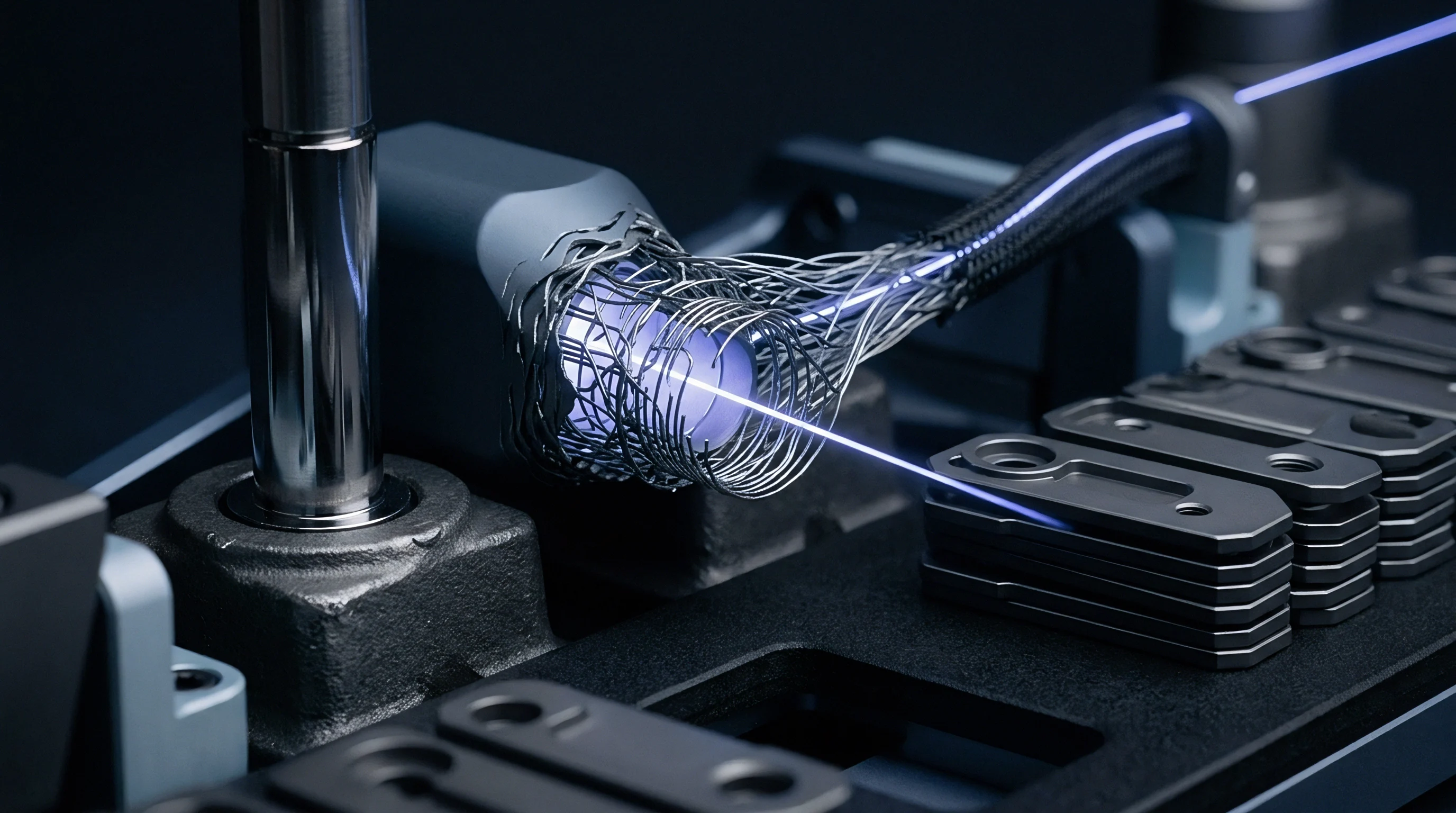
Calibration Protocol for Dynamic Apparent Strain
Dynamic apparent strain calibration requires mapping transducer output across continuous multi-axis rate matrices rather than static discrete temperature points. Calibration certificates stating accuracy solely at static thermal equilibrium steps miss dynamic errors completely. Test protocols specify thermal ramp rate steps, hold times, cooling rates, and simultaneous mechanical strain levels to establish matrix coefficient datasets.
Thermal shocks test signal fidelity. Matrix coefficient extraction uses non-linear least-squares optimization to fit empirical transient data to kinetic differential equations. System verification demands executing validation ramps at rates outside the initial calibration fit parameters to ensure model stability.
Certified metrology laboratories document coverage factors and expanded measurement uncertainties for both static gauge factor and dynamic thermal transit coefficients.
Calibration complexity increases significantly when multi-axis strain transducers experience dynamic thermal gradients along multiple spatial vectors simultaneously.

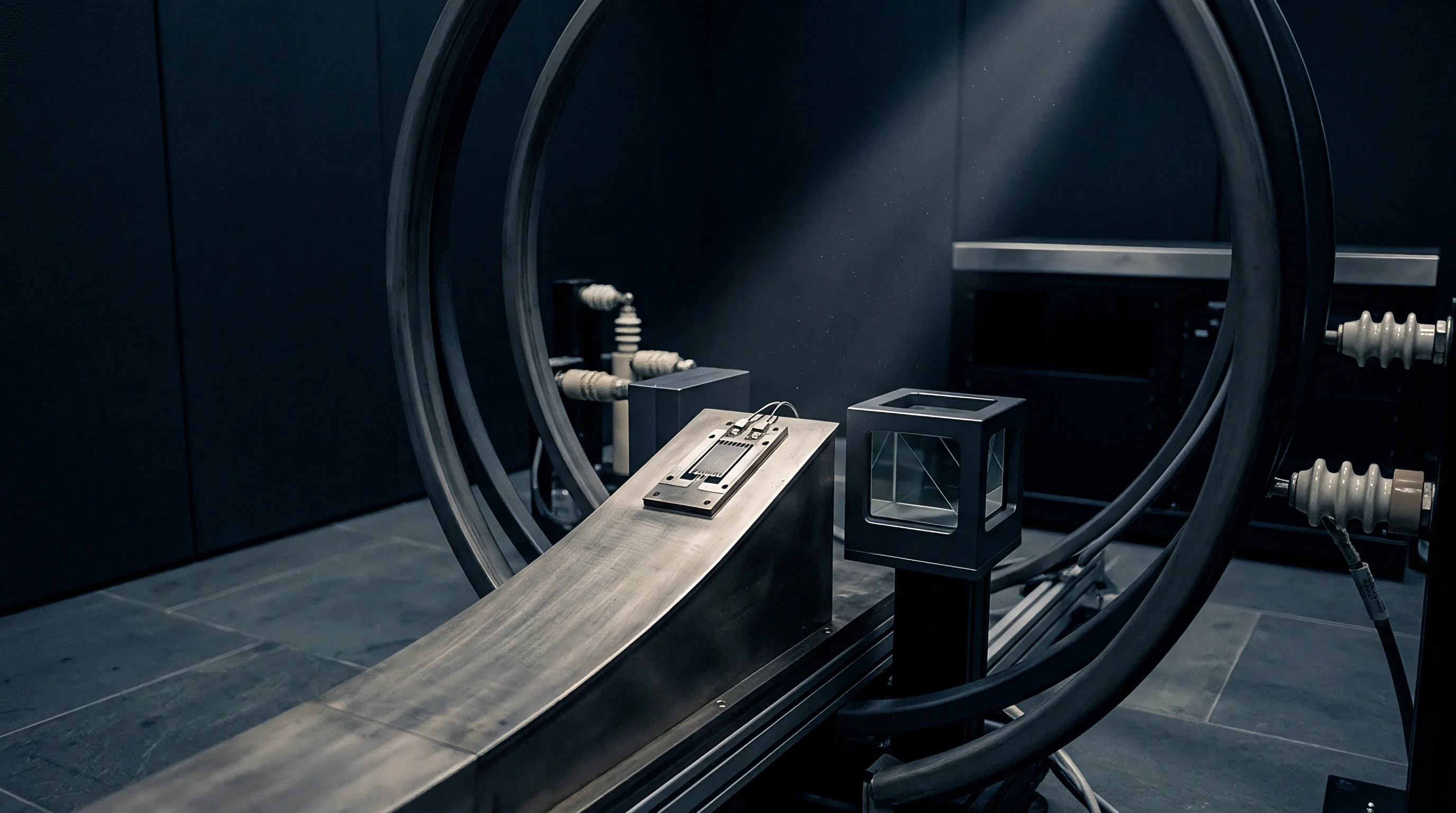
Decline
Elevated operating temperatures induce irreversible microstructural degradation within semiconductor sensing elements over extended exposure periods. Dopant atoms migrate within the crystal lattice, altering localized carrier concentration gradients and shifting baseline electrical resistance. At temperatures above five hundred degrees Celsius, high-energy oxygen molecules penetrate protective thin-film passivation layers, oxidizing active silicon piezoresistors and permanently reducing trace cross-sectional area.
Contact metallurgy degrades through interdiffusion between metal interconnects and semiconductor substrates, creating unstable Schottky barriers that manifest as severe zero-point wander.
| Degradation Mechanism | Physical Cause | Primary Signal Effect | Typical Drift Rate at 600°C | Irreversibility |
|---|---|---|---|---|
| Dopant Migration | Thermodynamic lattice diffusion | Zero-point wander, TCR alteration | 1.2 to 2.8 % FS per 1000h | Permanent |
| Passivation Oxidation | Oxygen diffusion through SiO2/Si3N4 | Base resistance increase | 0.8 to 1.5 % FS per 1000h | Permanent |
| Interdiffusion at Contacts | Metal-semiconductor reaction | Non-linear I-V curve, signal noise | 3.5 to 5.0 % FS per 1000h | Permanent |
| Substrate Stress Relaxation | Creep in ceramic mounting glass | Hysteresis shift, zero offset | 0.5 to 1.2 % FS per 1000h | Semi-Permanent |
High Temperature Drift Mechanisms
Dopant migration permanently shifts zero. Thermal annealing effects at elevated temperatures drive boron or phosphorus atoms out of active piezoresistive zones into surrounding dielectric oxides. This dopant depopulation increases trace resistance while simultaneously altering the temperature coefficient of resistance.
As the temperature coefficient of resistance changes over time, dynamic kinetic compensation models relying on factory-calibrated static coefficients introduce expanding correction errors.
Compliance with ISO IEC 17025 certification mandates explicit reporting of coverage factors alongside thermal drift uncertainty bounds.
Mechanical creep in joining glasses, braze alloys, and ceramic substrates releases mounting prestrain over time. When strain sensors operate under sustained mechanical loads at high temperatures, subtle stress relaxation within structural adhesives alters strain transfer efficiency from the test specimen to the piezoresistor. This efficiency drop manifests as a gradual decline in effective gauge factor, compounding microstructural drift mechanisms within the semiconductor material itself.
- Thermal Oxidation of Contacts increases contact resistance across metal-silicon interfaces, generating non-linear zero-point voltage shifts under thermal cycling.
- Dielectric Leakage Current short-circuits piezoresistive traces to handle substrates through compromised oxide layers at extreme operating temperatures.
- Micro-cracking in Passivation Layers exposes underlying silicon to ambient chemical contaminants, accelerating localized corrosion and structural degradation.
- Phase Instability in Thin Films induces lattice stress shifts that modify baseline resistance independently of external mechanical forces.
Arrhenius Aging Equations for Zero Drift
Arrhenius kinetic models quantify baseline zero-point drift as a function of thermal exposure time and operational temperature. The rate of physical degradation follows an exponential relationship governed by the activation energy of the specific failure mechanism. Calculating lifetime uncertainty budgets requires summing the individual drift rates of dopant diffusion, surface oxidation, and contact degradation.
Uncompensated drift ruins process control. Long-term field reliability depends on executing pre-service thermal burn-in procedures to settle early kinetic drift mechanics. Thermal stabilization aging at temperatures twenty degrees Celsius above maximum operational limits for one hundred hours promotes initial dopant relaxation and stabilizes interfacial oxide layers, drastically flattening early operational drift curves.
Under Clause 5.10 of ISO IEC 17025 accredited calibration protocols, laboratories must explicitly document drift uncertainties resulting from thermal aging when issuing recalibration certificates for high-temperature transducers.

Procurement
Commercial acquisition of high-temperature strain measurement systems demands rigorous evaluation of factory calibration protocols against actual field thermal envelopes. Datasheet accuracy specifications usually highlight performance achieved during static thermal equilibrium tests conducted in clean laboratory environments. Operating these devices under dynamic thermal shock conditions without verified kinetic compensation models frequently produces measurement errors ten times larger than published datasheet accuracy bands.
Uncompensated dynamic thermal errors frequently eclipse the primary strain measurement during rapid process start-up cycles.
Purchasing specifications must mandate dynamic thermal transient testing alongside traditional static temperature steps. Sensor grades defined by static calibration matrices incur lower initial purchase costs, yet introduce significant operational risk in dynamic thermal applications. Specifying factory dynamic dynamic calibration requires suppliers to deliver dynamic transfer function matrices, co-located thermistor arrays, and embedded DSP compensation algorithms tailored to target ramp rates.

Tolerance Pricing for Dynamic Compensation
Accuracy is bought. Grade selection directly impacts unit landed cost, sorting yield, and downstream recalibration schedules. Standard industrial piezoresistive sensors featuring static thermal trimming sell at moderate prices but lack capability for dynamic transient compensation.
Advanced dynamic-grade sensors incorporating multi-element spatial thermistor arrays, calibrated dynamic kinetic software models, and certified dynamic ramp test reports command significant price premiums.
| Sensor Precision Grade | Temperature Limit (°C) | Calibration Standard | Unit Base Cost Ratio | Factory Trim Fee Ratio |
|---|---|---|---|---|
| Standard Industrial (Static Trim) | 150 | 2-Point Static | 1.0 | 0.2 |
| High-Temp Static (SOI Trace) | 350 | 5-Point Static Equilibrium | 2.8 | 0.6 |
| High-Temp Dynamic (SOI Bridge) | 500 | Dynamic Ramp + ODE Model | 6.4 | 1.8 |
| Extreme Dynamic (SiC Array) | 750 | Multi-Axis Dynamic Ramp + EKF | 14.2 | 4.5 |
Procurement specifications demand explicit definition of acceptable dynamic apparent strain limits across specified heating rates. Standard purchase order terms requiring simple compliance with published datasheets leave buyers exposed when sensors fail under thermal shock. Inserting mandatory performance criteria based on dynamic ramp testing forces suppliers to verify dynamic compensation models prior to shipment.

Certificate Validation and Recalibration Schedules
Validation of calibration certificates requires verifying traceability chains back to national metrology institutes under actual dynamic operating conditions. A certificate providing static temperature calibration points carries zero metrological value for transducers exposed to rapid thermal transients. Inspection engineers examine calibration dossiers for explicit dynamic ramp testing data, specified thermal diffusivities, and stated mathematical model bounds.
- Dynamic Transient Test Records verifying model performance under thermal ramps matching actual target field application profiles.
- Co-Located Thermistor Calibration Data confirming temperature tracking accuracy across all integrated spatial monitoring channels.
- Arrhenius Burn-In Verification Reports demonstrating completion of high-temperature stabilization routines to suppress early operational zero drift.
- Model Coefficient Parameters providing calibrated state-space matrices and ODE constants for direct integration into client processing hardware.
Recalibration schedules protect field yields. High-temperature piezoresistors experience permanent microstructural degradation that systematically shifts baseline resistivity and dynamic kinetic coefficients over time. Establishing fixed recalibration intervals based on cumulative thermal exposure hours rather than simple calendar time prevents unexpected field drift failures in mission-critical applications.
Contracts specifying high-temperature strain transducers require clear allocation of liability for recalibration costs, certificate updates, and field replacement expenses when sensors drift beyond specified uncertainty bounds during normal operation.