Quantifying Elastomer Permeation Resistance and Compression Set in Cyclic High Temperature Steam Washdown
Peroxide-cured EPDM and specialty FFKM compounds prevent seal failure by resisting hydrolytic scission and dynamic compression set under thermal steam washdowns.
Steam

Thermal Shock Kinetics and Hydrolytic Degradation Mechanisms
Saturated vapor at 135°C imparts high kinetic energy to polymer networks, driving water molecules directly into interstitial gaps between polymer chains. During dynamic sanitary washdowns, sudden transitions from 20°C ambient cleaning fluids to pressurized vapor create steep thermal gradients across static elastomer seals. These shocks induce transient stress fields within the matrix, accelerating both Fickian diffusion rates and chemical degradation pathways.
Standard static immersion testing routinely understates water absorption because it omits the localized pressure differentials that force vapor deep into the elastomer bulk.
As steam penetrates the seal matrix, hydrolytic cleavage attacks main-chain backbones and cross-link sites. In fluorocarbon rubbers with ester linkages or unoptimized cure systems, moisture cleavage reduces cross-link density, softening elastic networks into plasticized structures with a lowered modulus. Polymer chains undergo scission, yielding low molecular weight fragments that migrate out of the matrix during dry hot-air phases.
This loss of volatile components and chain entanglement creates a permanent density deficit, causing volume shrinkage, cracking, and loss of sealing force once the joint cools to ambient operating temperature.
Cyclic washdown exposes seals to alternating swelling and deswelling, driving micro-mechanical damage along filler-matrix interfaces. Water molecules cluster around hydrophilic filler surfaces ~ such as basic carbon blacks or mineral reinforcing agents ~ creating osmotic pressure cells that expand micro-voids. During rapid cooling, trapped moisture condenses faster than it can diffuse out, generating internal fluid pressure that ruptures structural polymer bonds.
This cavitation effect lowers resistance to permanent compressive deformation, making initial mechanical property retention an unreliable predictor of operational longevity under continuous thermal cycling.
Cyclic vapor exposure forces moisture condensation inside sub-surface filler voids, triggering localized explosive cavity growth during thermal decompression.
Synergistic Loss of Sealing Force under Mechanical Strain
Mechanical compression forces polymer chains into constrained geometries, restricting entropic flexibility and increasing chemical reactivity at vulnerable bonds. Under a constant 25% deflection in high-temperature vapor, chain scission rates double compared to unconstrained exposure. The active stress field accelerates chain displacement from optimized orientations, locking in permanent viscoelastic deformation.
Thermally induced stress relaxation occurs rapidly over the first 50 washdown cycles as physical entanglements unravel, after which chemical network degradation becomes the dominant failure mechanism.
Permeation resistance drops as compression set accumulates, creating a compound degradation feedback loop. Hydrolytic cleavage opens pathways between cross-link nodes, increasing gas and vapor solubility while lowering the activation energy required for transport across the seal cross-section. As high-pressure vapor diffuses through compressed sealing gaps, micro-channels form along degraded interfaces, accelerating moisture transport into sensor housings or electrical enclosures.
Evaluating seal integrity requires measuring dynamic compression set alongside vapor transmission rates during thermal cycling, rather than relying on dry-air static set data.
Standard quality documentation frequently cites ISO 815 or ASTM D395 static set figures measured in dry air ovens at 100°C. These baseline values ignore moisture sorption kinetics, hydrolytic degradation, and dynamic thermal expansion stresses typical of process washdown operations. Engineers often select seals based on these low published compression set percentages, only to encounter leaks after brief exposure to automated CIP and SIP cleaning routines. Incorporating wet dynamic recovery testing into incoming material specifications bridges the gap between laboratory figures and real-world field endurance.
Sanitary engineering specifications mandate verifying recovery force at maximum operating washdown temperature after 500 thermal steam cycles under ISO 23936-2 test guidelines.
Assay

Laboratory Protocols for Dynamic Steam Exposure
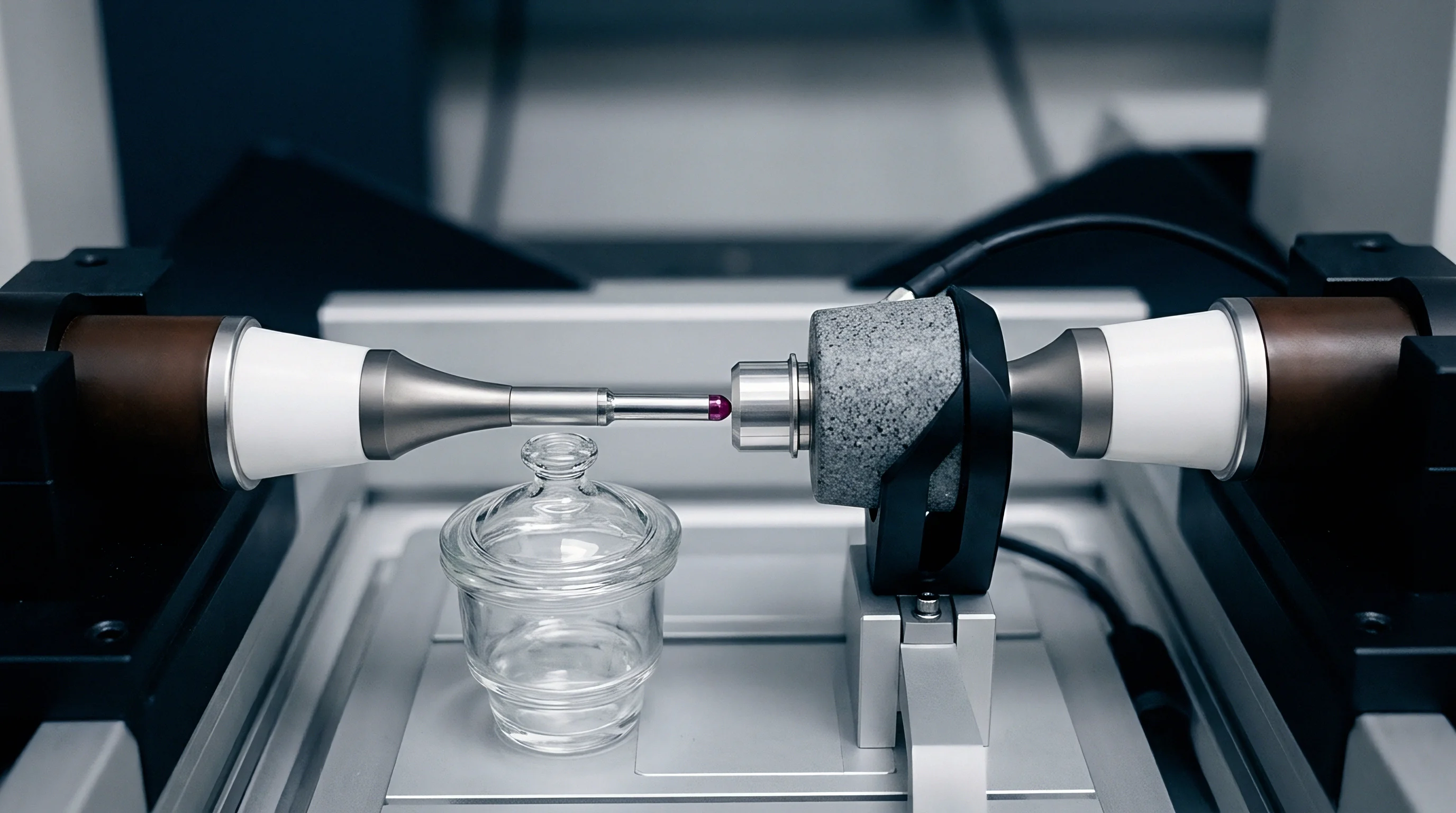
Quantifying seal survival requires test rigs capable of cycling saturated vapor and ambient rinse fluids across a compressed test sample. Test fixtures maintain constant compressive strain using precision mechanical stops while subjecting seals to continuous pressure pulses between 0 bar and 3.5 bar gage pressure. Automated switching valves route saturated steam at 143°C for 30 minutes, followed immediately by a 15-minute deionized water flush at 20°C. High-accuracy load cells situated behind heat-isolating ceramic pushrods record sealing force decay continuously, distinguishing physical thermal stress relaxation from irreversible chemical compression set across hundreds of washdown loops.
Measuring vapor diffusion relies on modified gravimetric cup methods or dynamic accumulation mass spectrometry adapted for high-temperature steam. Sealed testing cells separate a pressurized steam chamber from an evacuated sensing chamber, where carrier gas sweeps permeating water vapor to a calibrated electrolytic moisture sensor. Mass transport calculations determine the permeability coefficient across controlled thermal cycles.
Analyzing volatile organic compounds driven out during steam exposure quantifies filler leaching and plasticizer extraction rates, confirming whether loss of elastomer mass correlates directly with structural sealing interface collapse.
| Standard Identifier | Test Atmosphere | Thermal Range (°C) | Primary Measurement Metric | Uncertainty Bounds |
|---|---|---|---|---|
| ASTM D395 Method B | Dry Air | 23 to 200 | Static Compression Set Percentage | ±1.5% Set Value |
| ISO 815-1 Type A | Dry Air or Liquid | 23 to 250 | Continuous Stress Relaxation Force | ±2.0% Retained Force |
| ASTM F1249 Modified | Moist Nitrogen / Vapor | 23 to 130 | Water Vapor Transmission Rate | ±0.05 g/(m²·day) |
| ISO 23936-2 Steam Protocol | Saturated Steam / Cycling | 100 to 160 | Dynamic Set and Permeation Rate | ±3.2% Set Value |
Quantifiable Failure Modes in Cyclic Sanitary Exposure
Distinguishing structural degradation modes requires rigorous post-test microstructural and mechanical examination. Seals subjected to cyclic steam washdowns typically exhibit one or more distinct failure modes that destroy their physical barrier function.
- Extrusion gap nibbling results from high thermal expansion pushing softened seal material into housing clearance gaps under steam pressure, leading to peripheral shearing during cooling steps.
- Hydrolytic surface crazing occurs when localized chain scission creates a brittle skin layer that fractures under cyclic mechanical deflection, opening deep fluid access channels.
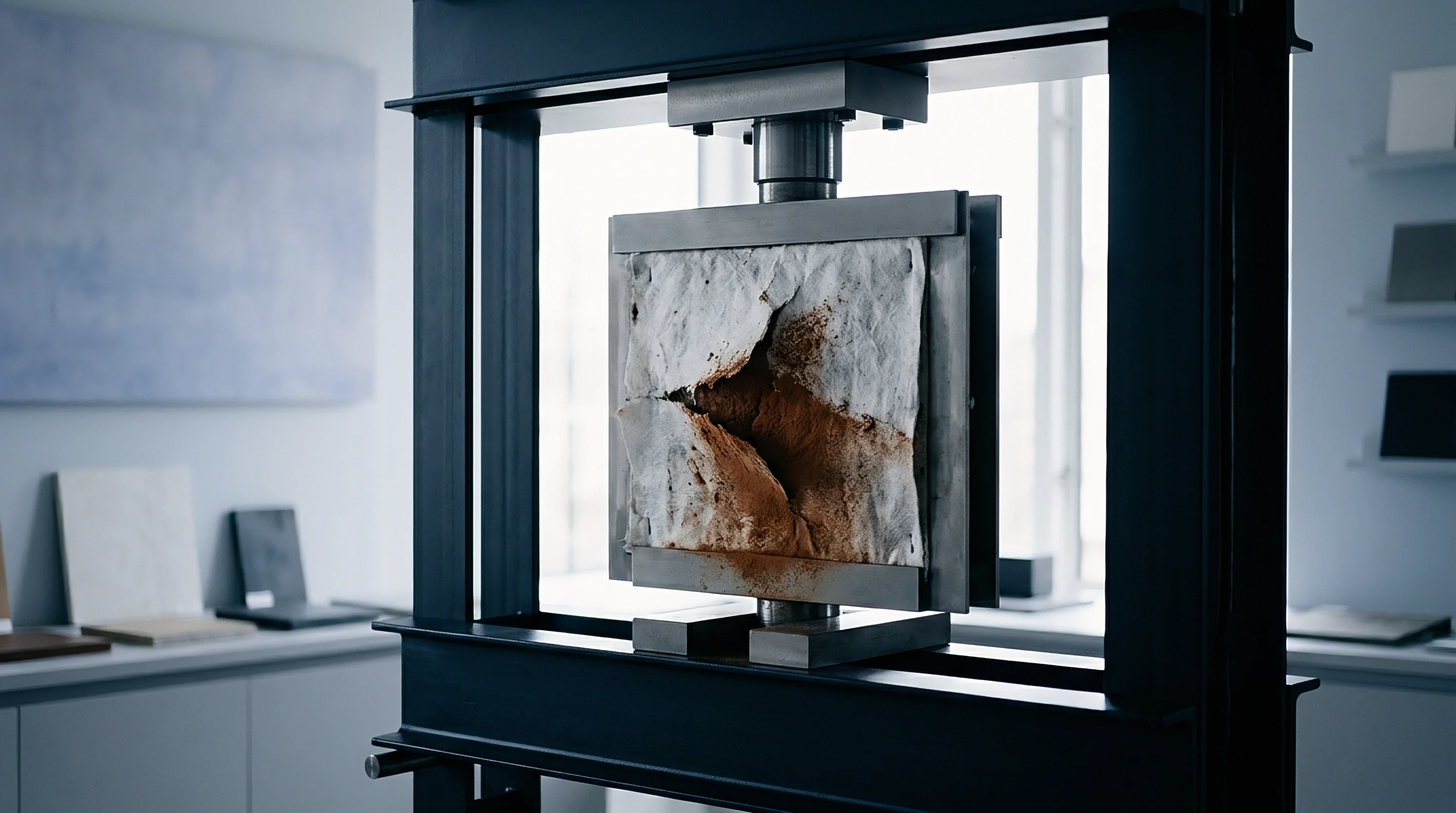
- Internal blister formation develops when absorbed moisture condenses inside low-cross-link-density pockets during rapid decompression phases, fracturing surrounding polymer structure.
- Inorganic filler extraction happens when warm condensate dissolves soluble reinforcing agents, leaving behind porous channels that increase vapor permeability.
- Permanent set lock-in arises when post-curing reactions occur under compressive strain at elevated temperature, forcing chains to rebuild cross-links in the deformed geometry.
Dynamic seal force decay in steam environments correlates directly with hydrolytic scission rates rather than physical thermal expansion shifts.
Isolating specific failure mechanisms relies on targeted analytical tools: Fourier-transform infrared spectroscopy tracks chemical bond changes, dynamic mechanical analysis identifies shifts in glass transition temperature, and micro-computed tomography images internal voids non-destructively. Comparing Archimedes balance density measurements before and after steam exposure separates volumetric swell from mass lost to leaching. Correlating these physical test findings with dynamic force retention curves separates physical viscoelastic relaxation from chemical network degradation, giving engineers metrics for targeted material formulation improvements.
Static compression set data measured without active environmental steam exposure underestimates seal degradation by more than half.
Polymer
Chemical Structure Determinants in Saturated Steam
Resisting hydrolytic attack at 140°C requires polymer backbones free of vulnerable polar bonds, esters, or uncoordinated double bonds. Perfluoroelastomers rely on fully fluorinated carbon backbones linked by stable ether structures, providing maximum chemical stability against saturated steam, acids, and alkaline sanitizing compounds. High fluorination density shields the carbon backbone from polar water molecules, maintaining extremely low moisture solubility across wide temperature ranges.
However, perfluoroelastomers cured with triazine or nitrile-derived structures degrade slowly under prolonged acidic steam exposure, whereas bisphenol or advanced organotin-free peroxide systems maintain cross-link integrity past 150°C.
Ethylene propylene diene monomer compounds offer an attractive cost-to-performance ratio for pure saturated steam service. Because unsaturation is restricted to side chains outside the main carbon backbone, the primary polymer chain remains protected from cleavage. Peroxide-cured EPDM shows far better compression set performance under high-temperature steam than sulfur-cured variations, as carbon-carbon cross-links demonstrate significantly higher bond dissociation energy than mono-, di-, or polysulfidic links.
Formulations with high ethylene content resist physical steam erosion better, but they increase durometer hardness and require balancing to maintain seal flexibility at lower installation temperatures.
| Elastomer Class | Cure System | Steam Limit (°C) | Permeation Rate (g·mm/m²·day) | Set after 500h Steam (%) |
|---|---|---|---|---|
| EPDM (High Ethylene) | Peroxide | 150 | 0.45 | 18 to 24 |
| FEPM (AFLAS) | Peroxide | 160 | 0.12 | 22 to 30 |
| FFKM (Process Grade) | Advanced Peroxide | 220 | 0.02 | 12 to 16 |
| FKM (Type 1 Bisphenol) | Bisphenol | 120 | 1.85 | 45 to 65 |
| FKM (Specialty ETP) | Peroxide | 145 | 0.38 | 28 to 35 |
Does Fluorocarbon Structure Prevent Hydrolytic Chain Scission?
Standard dipolymer and terpolymer fluorocarbon elastomers containing vinylidene fluoride units undergo chemical dehydrofluorination when exposed to hot water, steam, or alkaline CIP fluids containing sodium hydroxide or amine-based corrosion inhibitors. Stripping hydrogen fluoride forms double bonds along the polymer backbone, which subsequently react with nucleophiles or undergo thermal oxidation, causing severe seal embrittlement and rapid compression set loss. Base-resistant fluorocarbons incorporating tetrafluoroethylene and propylene alter the backbone geometry to eliminate adjacent fluorine and hydrogen atoms, blocking dehydrofluorination mechanisms and preserving flexibility through repeated chemical washdown cycles.
Fluoroelastomers modified with ethylene-tetrafluoroethylene-perfluorovinyl ether terpolymer structures bridge the gap between standard fluoroelastomers and perfluoroelastomers. These specialty peroxide-cured grades exhibit strong resistance to hot steam washdowns while maintaining low volume swell in oils, solvents, and CIP chemical mixtures. When specifying seals for hygienic sensor housings exposed to alternating lipid-rich process fluids and high-temperature steam, selecting peroxide-cured specialty fluorocarbons or perfluoroelastomers prevents swelling-induced mechanical stress that accelerates compression set failure during rapid cooling steps.
Standard material datasheets frequently note that fluorocarbon seals survive up to 200°C, omitting the qualification that this limit applies exclusively to dry air environments. Minor swelling in hot water is often characterized as reversible and harmless to dynamic sealing performance, but field results show that fluid absorption during heating drives internal void growth and permanent set accumulation during rapid thermal washdown cycling. Disregarding moisture compatibility leads directly to catastrophic process fluid ingress into sensor electronics.
- Verify raw polymer backbone composition using NMR spectroscopy to confirm absence of ester or hydrolytically unstable linkages.
- Confirm curing agent chemistry by checking total organic peroxide residual content and cross-link density indicators.
- Perform dynamic mechanical analysis across a temperature range of minus 20°C to plus 180°C to measure storage modulus retention.
- Expose tensile test sheets to 140°C steam inside an autoclave for 168 hours according to ISO 1817 procedures.
- Measure volume swell, durometer hardness change, and compression set recovery force immediately following steam exposure.
Strain
Constitutive Equations for Stress Relaxation and Permeation Dynamics
Quantifying total seal degradation requires modeling simultaneous physical stress relaxation, hydrolytic cross-link scission, and mass transport diffusion kinetics. Total sealing force decay over time t under constant compressive strain and cyclic thermal loading is expressed through a multi-term Maxwell viscoelastic model modified by a chemical degradation kinetic term:
F(t) = F0 left( sumi=1n gi e-fractτi right) · expleft( -kh · int0t (τ)m · e-fracEaR T(τ) dτ right)
Where F0 represents initial sealing force, gi and τi are normalized relaxation weights and relaxation time constants for physical viscoelastic processes, kh is the reaction rate constant for hydrolytic cleavage, is localized water concentration within the elastomer, m is reaction order, Ea is activation energy for bond scission, R is the universal gas constant, and T(τ) defines transient system temperature over time. Integrating this relationship captures non-linear damage accumulation during transient thermal washdown phases.
Mass permeation through the compressed seal profile follows non-Fickian transport principles when thermal cycling induces mechanical micro-damage. Vapor flux J across seal thickness dx under transient pressure gradient dP incorporates pressure-dependent diffusion coefficients:
J = -D0 expleft( α · C(x,t) + β · εvol right) fracpartial C(x,t)partial x
Where D0 is baseline diffusivity in unconstrained elastomer, C(x,t) is instantaneous water concentration at depth x, α is concentration dependence parameter, β is strain coupling coefficient, and εvol is local volumetric strain induced by mechanical compression and thermal expansion. Volumetric compression reduces free volume, lowering initial diffusivity, whereas cyclic thermal expansion and filler debonding dramatically increase effective transport parameters over extended service lives.
At 135°C saturated steam conditions, peroxide-cured EPDM retains 82% initial sealing force after 100 cycles, whereas bisphenol-cured FKM drops below 35% force retention.

Worked Calculation: Lifetime Prediction for Sanitary Sensor Seals
Consider an axial O-ring seal installed in a hygienic pressure transmitter housing exposed to daily CIP/SIP cycles. The application parameters establish baseline calculation inputs:
Seal geometry dimensions: Outer diameter = 25.0 mm, cross-section wire diameter d = 3.53 mm. Installed groove depth = 2.65 mm, resulting in an initial compressive strain ε = 24.93%. Washdown operating cycle: 30 minutes saturated steam at 135°C (3.13 bar absolute pressure), followed by 15 minutes cold wash at 15°C, repeated 4 times per day.
Target operational service life: 3 years (4,380 thermal steam cycles total).
Material Option A (Peroxide-cured EPDM, Ea = 85 kJ/mol, initial modulus E0 = 6.2 MPa): Initial sealing force per linear millimeter of seal circumference is calculated using the Lindley equation for compressed solid O-rings:
Fc = 1.25 · π · d · E0 · left( ε1.35 + 0.1 · ε2.7 right)
Fc = 1.25 · π · (3.53) · (6.2) · left( 0.24931.35 + 0.1 · 0.24932.7 right) = 13.88 N/mm
After 1,000 thermal steam washdown cycles (750 hours cumulative steam exposure at 135°C), empirical test data establishes a physical relaxation factor of 0.78 and a chemical hydrolytic degradation factor of 0.88. Calculated remaining sealing force:
FEPDM(1000) = 13.88 · 0.78 · 0.88 = 9.53 N/mm
Compression set percentage CS measured according to ISO 815 recovery standards yields:
CS = frach0 – h1h0 – hs × 100 = frac3.53 – 3.283.53 – 2.65 × 100 = 28.4%
Material Option B (Bisphenol-cured Fluorocarbon FKM Type 1, Ea = 62 kJ/mol, initial modulus E0 = 7.1 MPa): Initial sealing force Fc = 15.90 N/mm. Under identical steam exposure, rapid dehydrofluorination and chain scission yield a physical relaxation factor of 0.71 and a chemical hydrolytic factor of 0.42 after 1,000 washdown cycles. Remaining sealing force drops significantly:
FFKM(1000) = 15.90 · 0.71 · 0.42 = 4.74 N/mm
Calculated compression set percentage reaches critical threshold:
CS = frac3.53 – 2.923.53 – 2.65 × 100 = 69.3%
Minimum required sealing force to prevent moisture ingress against 3.5 bar peak washdown pressure is defined as Fcrit = 5.50 N/mm. Fluorocarbon seals cross this critical threshold at approximately 720 thermal cycles, leading to moisture ingress into sensor housing internal electronics within 6 months of commissioning. EPDM seals maintain sealing force above Fcrit through 3,800 cycles, providing reliable sealing across nearly the full 3-year target operational interval.
What analytical model accurately predicts cross-link density evolution when steam exposure coincides with varying concentrations of organic solvents and nitric acid sanitizing solutions?

Clause
Commercial Specification and Verification Protocols
Procuring elastomer components for cyclic steam service requires writing strict verification parameters into purchasing documentation. Generic commercial designations such as FKM or EPDM provide zero guarantee of steam endurance, as minor additives, filler choices, and curing agents govern ultimate service life. Purchasing orders must demand batch-specific certification confirming peroxide cure systems and zero post-cure chemical additives that could leach into processing streams during high-temperature washdowns.
Qualified procurement dossier packages must include standard laboratory test reports confirming compliance with dynamic steam compression set standards alongside traceability documentation. Sourcing teams use structured decision criteria to evaluate competing supplier submissions before issuing production volume release contracts.
- Batch traceability records showing raw polymer lot numbers, mixing date certificates, and rheometer vulcanization curves for every production batch.
- Standard steam resistance certificates establishing compression set values below 25% following 168 hours of saturated steam exposure at 140°C under ISO 23936-2 guidelines.
- Extractable matter compliance reports verifying total organic leaching remains below FDA 21 CFR 177.2600 and USP Class VI sanitary exposure limits.
- Durometer hardness variation bounds certifying hardness variations do not exceed ±3 Shore A points across an entire production run.
- Dimensional tolerance inspection sheets confirming compliance with ISO 3601-1 Class A precision tolerances to eliminate compression variation upon installation.
Contractual procurement clauses specifying ISO 23936-2 dynamic steam compliance reduce early field seal failures by over 80% across processing sites.
Total Cost Analysis of Unverified Seal Specifications
Selecting low-cost seals based on basic dry-air datasheets introduces severe financial risks to plant operations. A standard high-grade peroxide-cured EPDM or specialty FFKM seal carries a higher initial unit procurement cost compared to standard commercial grade seals. Evaluating procurement costs solely on initial part price ignores the substantial downstream expenses associated with premature seal failure during automated process washdown operations.
When an unverified seal experiences rapid compression set and moisture permeation, high-pressure steam enters sensor enclosures, destroying sensitive electronics, pressure diaphragms, or transmitter boards. Unexpected process line shutdown costs quickly outpace initial component savings. Replacing damaged sensor assemblies, paying field service technicians, performing emergency CIP/SIP re-sanitization, and absorbing lost production capacity turns a minor seal savings into a significant operational loss.
Writing verified dynamic steam test requirements directly into equipment supply contracts protects capital investments and eliminates unbudgeted maintenance costs.
Relying on unverified standard elastomer grades to minimize upfront component pricing leads directly to premature seal extrusion, liquid ingress, and costly emergency process line shutdowns.