Viscoelastic Epoxy Relaxation Governing Zero Rate Thermal Hysteresis in Gyroscopes
Viscoelastic epoxy relaxation causes path-dependent thermal zero rate hysteresis in gyroscopes, requiring strain-isolating packaging or memory-aware calibration models.
Stress
Thermal hysteresis in vibratory and optical gyroscopes manifests as a path-dependent zero rate output shift during temperature cycling. As an inertial sensor assembly warms or cools, mismatch in thermal expansion across the silicon micro-electromechanical system (MEMS) die, substrate, package housing, and structural adhesive builds up mechanical strain. Structural epoxies and underfills undergo time-dependent viscoelastic relaxation, meaning the instantaneous stress field within the bondline depends not just on current temperature, but on the assembly’s thermal history and its dwell time at preceding temperatures.
Silicon expands at approximately 2.6 parts per million per Kelvin, compared to 6.5 parts per million per Kelvin for standard alumina substrates and between 12 and 17 parts per million per Kelvin for organic printed circuit boards. Unfilled structural epoxies exhibit thermal expansion coefficients ranging from 40 to 80 parts per million per Kelvin below their glass transition temperature. That differential introduces direct shear forces across the die-attach interface whenever the assembly undergoes a temperature transition.
Viscoelastic Relaxation Kinetics and Time Spectra
Polymer chains within cured epoxy networks rearrange under applied strain toward dynamic equilibrium. This relaxation follows a time-dependent relaxation modulus, commonly expressed through the Kohlrausch-Williams-Watts stretched exponential formulation:
E(t, T) = E_infinity + (E_zero – E_infinity) exp(-(t / tau(T))^beta)
Here, E_zero represents the unrelaxed glassy modulus, E_infinity defines the long-term relaxed rubbery modulus, tau(T) is the temperature-dependent characteristic relaxation time constant, and beta is the stretching parameter between 0 and 1 that reflects the breadth of the relaxation spectrum. Above the glass transition temperature, alpha-relaxation dominates as main-chain segments become mobile. Below that threshold, structural relaxation proceeds through sub-glass transition processes, relieving stress over hours, days, or months.
The instantaneous mechanical shear stress within a structural die-attach bond depends on the integrated thermal path history rather than the instantaneous ambient reading.
Temperature shifts change the characteristic relaxation time tau(T) according to the Williams-Landel-Ferry equation near the glass transition temperature, or an Arrhenius rate relationship well below it. Rapid thermal ramps generate high peak stresses because strain develops much faster than the polymer can relax. Slow ramps or extended isothermal dwell periods, by contrast, give viscoelastic flow time to dissipate internal stress.
Consequently, when an assembly returns to a baseline operating temperature of 25 degrees Celsius after a soak at 85 degrees Celsius, the residual stress field differs substantially from its initial unconditioned state.
Whether sub-glass transition secondary relaxation mechanisms follow pure Arrhenius kinetics over operational temperature spans from minus 40 to plus 85 degrees Celsius without displaying localized physical aging steps remains an open question in long-term sensor drift prediction.

Formulation
Chemical composition dictates the extent of thermal hysteresis driven by adhesive relaxation. Cross-link density, monomer stoichiometry, curing agent chemistry, and inorganic filler loading determine how structural epoxies respond under thermal stress.

Glass Transition and Filler Dynamics
Selecting an epoxy formulation for gyroscope mounting requires evaluating the glass transition temperature against the full operational envelope. Epoxy cross-linking density sets the boundary where the material transitions from a rigid glass to a compliant elastomer. Operating near or through that transition causes orders-of-magnitude swings in storage modulus and loss tangent, aggravating viscoelastic drift.
Inorganic fillers like spherical fused silica reduce overall thermal expansion while raising the storage modulus. Higher filler loading decreases the volume fraction of polymer resin that undergoes stress relaxation.
| Epoxy Class | Filler Fraction (wt%) | Glass Transition (°C) | CTE Below Tg (ppm/K) | Storage Modulus at 25°C (GPa) | Zero Rate Output Shift (deg/hr) |
|---|---|---|---|---|---|
| Unfilled Bisphenol A | 0 | 65 | 68 | 2.8 | 14.20 |
| Standard Silica-Filled Novolac | 65 | 120 | 32 | 7.5 | 3.80 |
| High-Purity Spherical Silica | 78 | 155 | 18 | 14.2 | 0.65 |
| Capillary Underfill Low Modulus | 50 | 45 | 48 | 1.9 | 8.50 |
Moisture absorption introduces a secondary degradation route in structural underfills. Water molecules diffuse into the epoxy matrix, acting as plasticizers that reduce the effective glass transition temperature and increase chain mobility.
Polymer matrix stability breaks down through specific microstructural channels during thermal cycling:
- Plasticization matrix softening accelerates viscoelastic creep rates at lower ambient temperatures by disrupting inter-chain hydrogen bonding.
- Micro-void nucleation occurs at filler-matrix interfaces under repeated cyclic thermal strain, introducing localized stress concentrations.
- Post-cure cross-linking reaction alters the baseline glassy storage modulus when the assembly operates near its initial cure temperature for extended periods.
- Hydrolytic degradation cleaves susceptible polymer bonds during high-humidity exposure, permanently shifting the unrelaxed modulus.
Rigid epoxy chemistries with high glass transition temperatures minimize viscoelastic flow, but they transfer maximum thermal stress directly to the sensor element.

Distortion
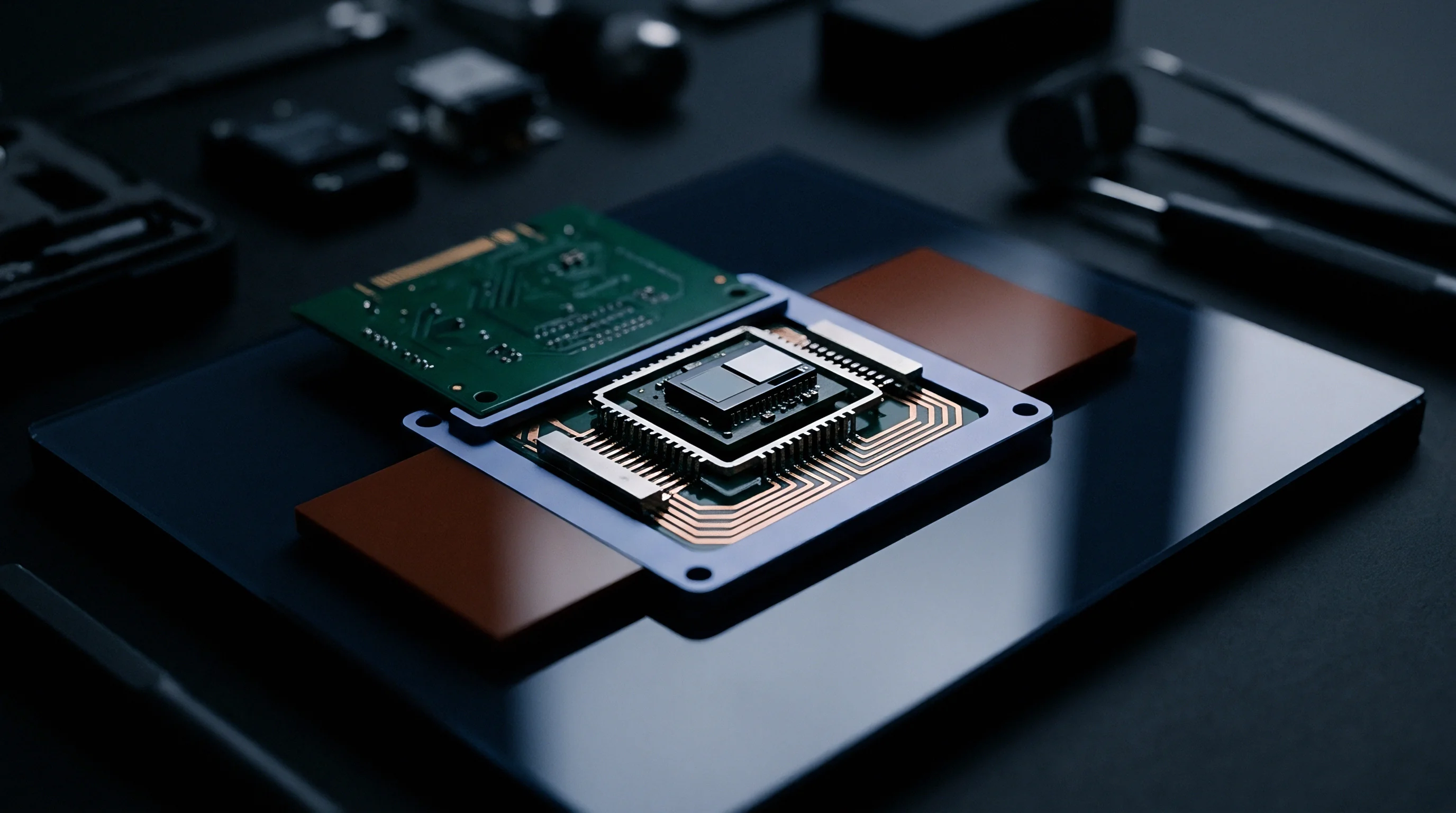
Residual shear stress generated inside the die-attach layer couples directly into the mechanical sensing element of a vibratory or optical gyroscope. In capacitive MEMS designs, anchored silicon structures transfer these package-level loads directly into the suspended proof masses and sensing combs.
Mechanical stress alters the physical dimensions of the capacitive sense gaps. A gap shift of only a fraction of a nanometer produces a measurable change in differential capacitance, which the analog front-end registers as an apparent angular rate.

Stress-Induced Quadrature and Bias Errors
Vibratory ring and tuning-fork gyroscopes rely on precise symmetry between drive and sense resonant modes. Non-uniform stress fields from epoxy relaxation disrupt this balance. Through piezoresistive and thermo-elastic coupling, stress gradients alter the stiffness matrix of the silicon flexures, pulling mode-matching frequencies apart and creating quadrature error.
When residual stress dissipates slowly during an isothermal dwell, quadrature bias shifts over time without any shift in ambient temperature. Demodulation stages attempt to strip out quadrature, but residual phase errors inevitably convert that drifting quadrature directly into zero rate output offset bias.
Failure to control adhesive stress relaxation transforms benign thermal ramps into permanent calibration offsets across inertial measurement units.
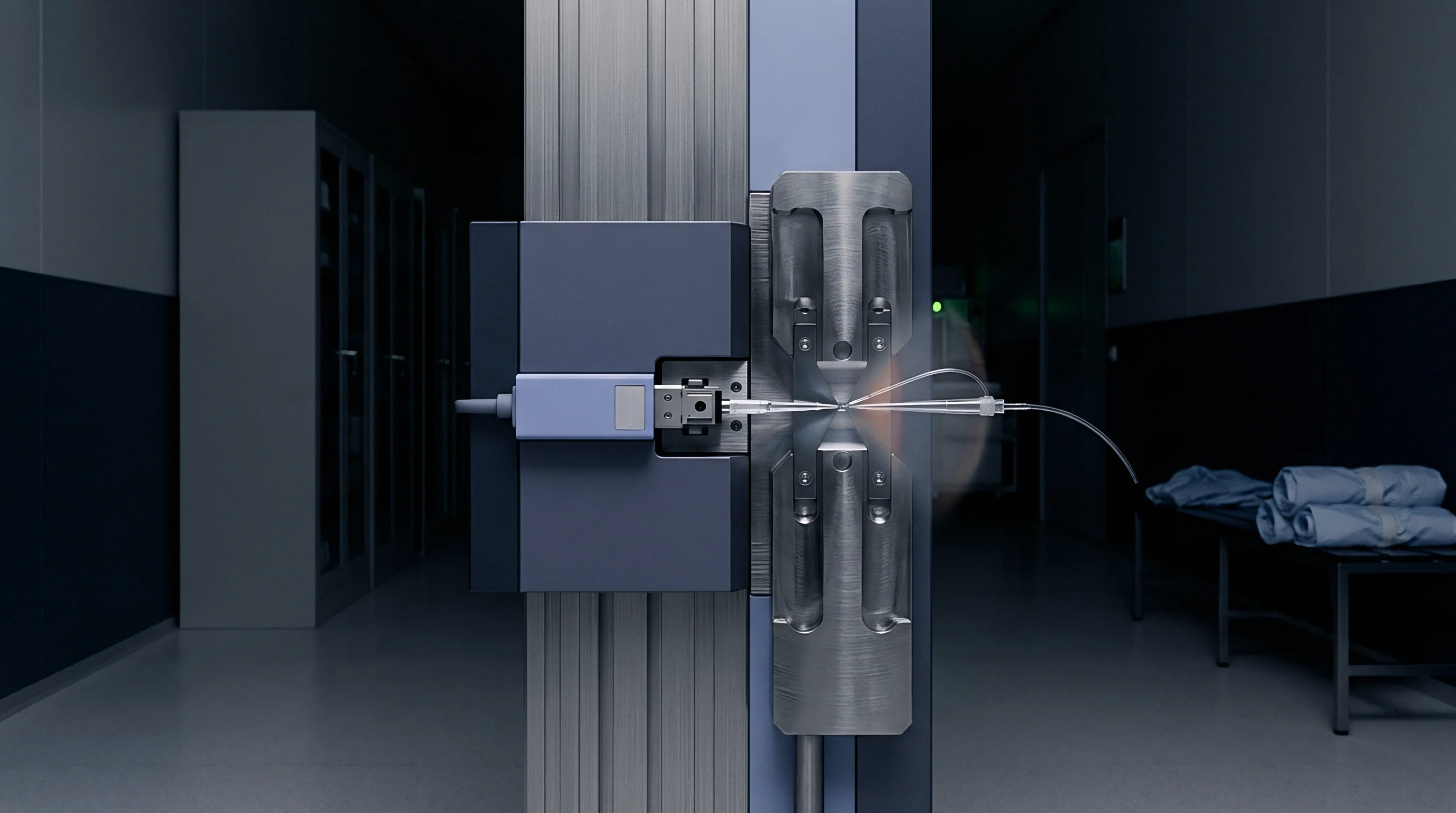
In surface acoustic wave and optical gyroscopes, structural adhesive relaxation deforms the substrate optical bench or fiber coil mount. In fiber optic gyroscopes, viscoelastic creep in the potting compound around the quadrupolar wound fiber coil generates localized photo-elastic stress. The resulting temperature-dependent birefringence shifts trigger zero rate bias instability through the Shupe effect during thermal transients.
Ignoring viscoelastic relaxation within the structural bond invalidates calibration, driving up costs through required field re-zeroing or assembly rejection during system qualification.

Measurement
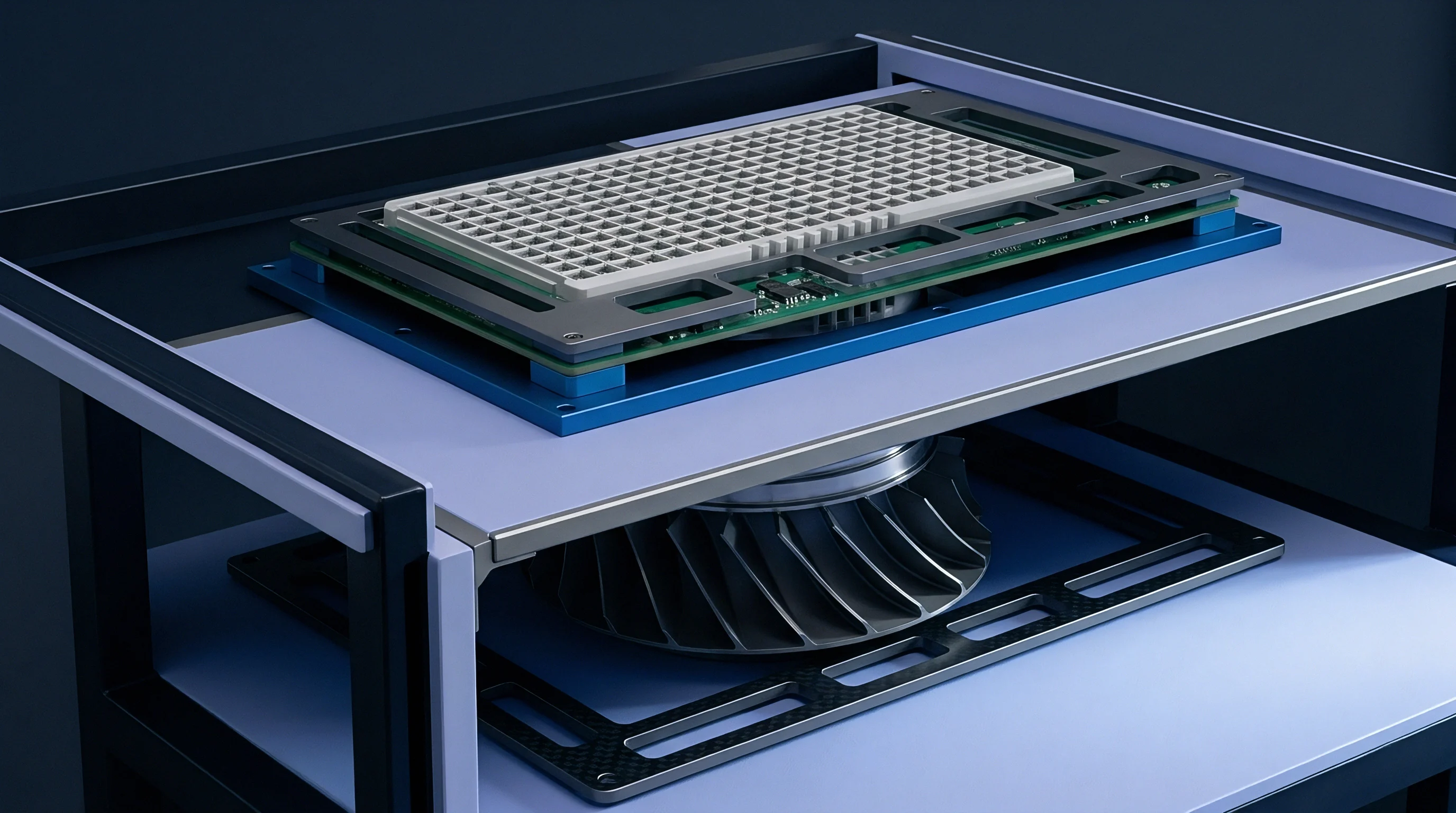
Quantifying zero rate thermal hysteresis requires environmental chamber profiles designed to distinguish purely temperature-dependent offsets from time-dependent viscoelastic relaxation.
Does Thermal Soak Duration Erase Viscoelastic Memory?
An extreme-temperature soak restores structural equilibrium in the polymer matrix and resets thermal memory, provided the dwell substantially exceeds the adhesive’s maximum relaxation time constant tau(T) at that temperature. If the soak falls short of tau(T), incomplete relaxation leaves residual strain states that offset the return curve during cooling.
Standard qualification routines often sweep temperatures too rapidly to expose viscoelastic behavior, masking field-level instability behind fast laboratory cycling.
- Mount the sensor inside a multi-axis rate table equipped with an integrated thermal chamber to maintain continuous zero-rate rotation monitoring.
- Establish thermal baseline equilibrium by holding the test assembly at 25 degrees Celsius for 4 hours until zero rate bias output settles within a window of 0.01 degrees per hour.
- Ramp temperature to maximum operating limit at a controlled rate of 0.5 Kelvin per minute while recording continuous zero rate bias output and raw die-mounted thermistor telemetry.
- Dwell at maximum operating temperature for 6 hours to allow viscoelastic stress relaxation to reach near-complete equilibrium within the adhesive layer.
- Cool the assembly to minimum operating temperature at the matching rate of 0.5 Kelvin per minute and hold for 6 hours.
- Return temperature to 25 degrees Celsius baseline at 0.5 Kelvin per minute and record the residual zero rate bias offset against the initial baseline reading taken in step two.
Measuring zero rate output hysteresis loops across multiple ramp rates (0.2 K/min, 0.5 K/min, 2.0 K/min) isolates the viscoelastic relaxation time spectrum from purely static thermal coefficients.
Thermal hysteresis values can appear within nominal datasheet limits during fast, continuous thermal ramps, even while substantial residual bias offsets emerge after extended isothermal soak periods in actual field deployments.

Compensation
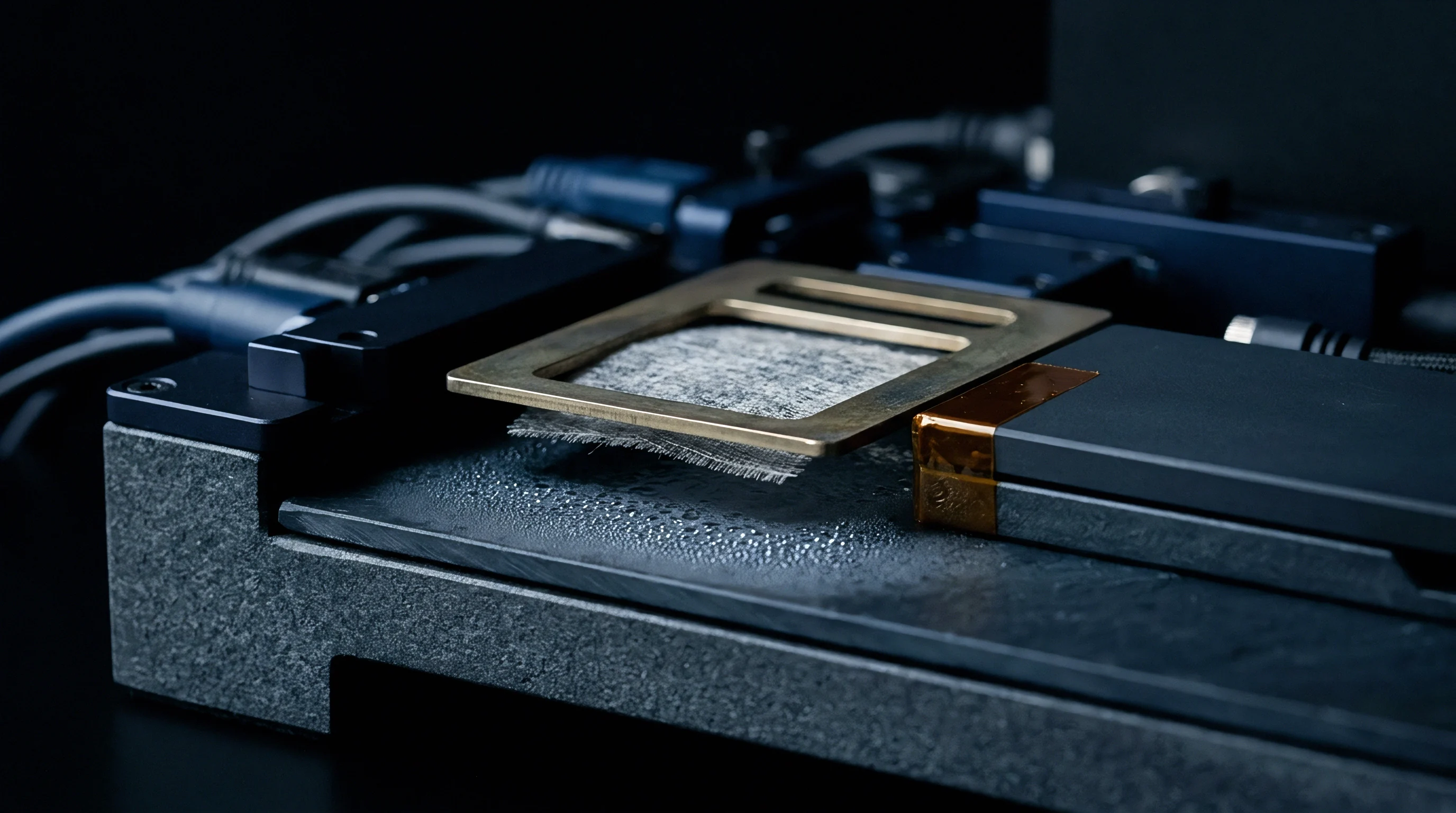
Mitigating zero rate thermal hysteresis requires pairing mechanical isolation with algorithmic compensation. Static lookup tables and simple polynomial models fail once viscoelastic relaxation introduces path dependency to the sensor response.

Algorithmic Memory Modeling and Hardware Decoupling
Traditional compensation calculates zero rate bias adjustment strictly from real-time temperature T and its derivative dT/dt. Capturing viscoelastic hysteresis instead requires tracking thermal memory through state-space representations or Prandtl-Ishlinskii play operators.
The state-space model updates internal strain states based on integrated thermal exposure histories:
d S_i / dt = – (S_i – S_eq(T)) / tau_i(T)
Bias_correction = Sum_i (c_i S_i(t)) + P(T)
Here, S_i represents the internal strain variable for relaxation mode i, S_eq(T) defines equilibrium strain at temperature T, tau_i(T) is the temperature-dependent relaxation time, and P(T) is the static thermal polynomial. Running real-time state estimates on embedded sensor microcontrollers demands expanded memory and processing overhead.
| Isolation Architecture | Strain Transfer Ratio (%) | Long-Term Tilt Drift (µrad) | Process Cost Impact | Thermal Resistance (K/W) |
|---|---|---|---|---|
| Direct Epoxy Die Attach | 85 to 95 | 120 | Baseline | 1.2 |
| Soft Silicone Intermediate Layer | 15 to 30 | 450 | Low | 8.5 |
| Etched Silicon Isolation Frame | 2 to 5 | 15 | High | 14.0 |
| Eutectic AuSn Wire-Bonded Mount | 90 to 98 | 5 | Moderate | 0.5 |
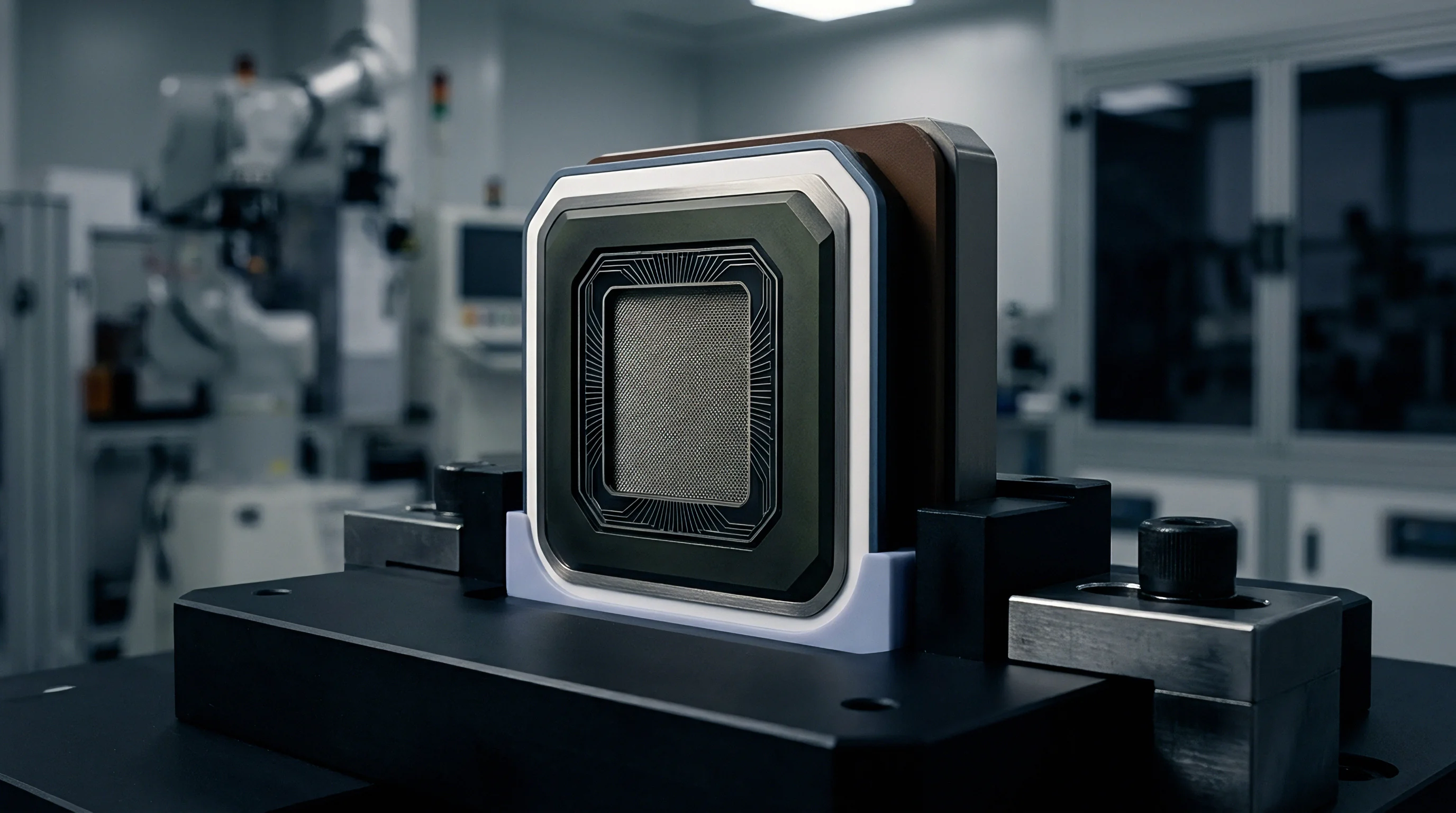
Hardware mechanical isolation attenuates packaging stresses before strain reaches the die. Etched silicon decoupling frames isolate the active MEMS anchor points from outer package deformation.
Integrating mechanical decoupling frames reduces epoxy shear stress transmission to the sense element by over ninety percent compared to direct adhesive mounting.
Selecting isolation mechanisms requires systematic evaluation of mechanical and thermal trade-offs:
- Mechanical shock transmission increases when using compliant silicone adhesives, elevating risk of die-substrate impact under high G forces.
- Thermal resistance penalties associated with low-modulus stress isolation layers delay sensor thermal stabilization, extending startup times.
- Parasitic tilt instabilities arise from non-uniform creep in soft elastomer mounts under constant gravitational loads over multi-year deployments.
- Eutectic gold-tin bonding eliminates polymer viscoelastic creep entirely, but introduces severe static thermal stresses requiring specialized low-expansion alloy packaging.
Procurement specifications for tactical-grade inertial units mandate that zero rate thermal hysteresis limits hold across full thermal cycling without relying on software resets, altering acceptance testing criteria from static temperature points to dynamic thermal history profiles.

Specification
Sourcing gyroscopes resistant to viscoelastic thermal hysteresis requires strict validation of adhesive materials, packaging design, and production screening procedures. Standard sensor datasheets often mask hysteresis performance behind average zero-rate temperature coefficient specs taken during rapid factory testing cycles.
Auditing Vendor Qualification and Screening Metrics
Evaluating vendor capability demands detailed inspection of incoming raw material controls and factory calibration protocols. Polymer lot-to-lot variance significantly impacts cross-link density, glass transition temperature, and viscoelastic relaxation kinetics.
| Test Identifier | Environmental Condition | Dwell Duration | Cycle Count | Pass/Fail Threshold |
|---|---|---|---|---|
| Thermal Soak Stability | 85°C Isothermal Dwell | 24 Hours | 1 | ZRO Drift < 0.1 deg/hr/hr |
| Hysteresis Loop Profile | -40°C to +85°C at 0.5 K/min | 4 Hours at Extremes | 5 continuous | Max Loop Spread < 0.5 deg/hr |
| Thermal Shock Exposure | -55°C to +125°C liquid-to-liquid | 15 Minutes | 100 | Zero Structural Delamination |
| Humid Aging Drift | 85°C / 85% RH Storage | 168 Hours | 1 | Post-test ZRO Shift < 1.0 deg/hr |
Verification protocols must specify maximum allowable zero rate output spread across multiple thermal cycles. Component engineers specify exact parameters in request-for-quote documentation to ensure delivered lots meet performance targets.
- Adhesive raw material tracking defines lot control limits on epoxy formulation, shelf-life expiration, and vacuum degassing procedures prior to dispense.
- Cure profile schedule verification specifies ramp rates, peak cure temperature, and post-cure thermal bake durations to lock cross-link density.
- Thermal history screening requirements enforce minimum thermal pre-conditioning cycles on all production units prior to factory calibration coefficient extraction.
- Maximum allowable hysteresis metrics define absolute zero rate offset windowing across full temperature sweeps including multi-hour isothermal dwell stops.
Procurement contracts incorporate thermal hysteresis limits as binding line-item criteria. Field failures originating from uncompensated viscoelastic stress relaxation trigger full lot re-inspection, transferring cross-qualification and screening expenses back to the component packaging vendor when batch-level resin anomalies alter stress relaxation kinetics beyond agreed tolerances.