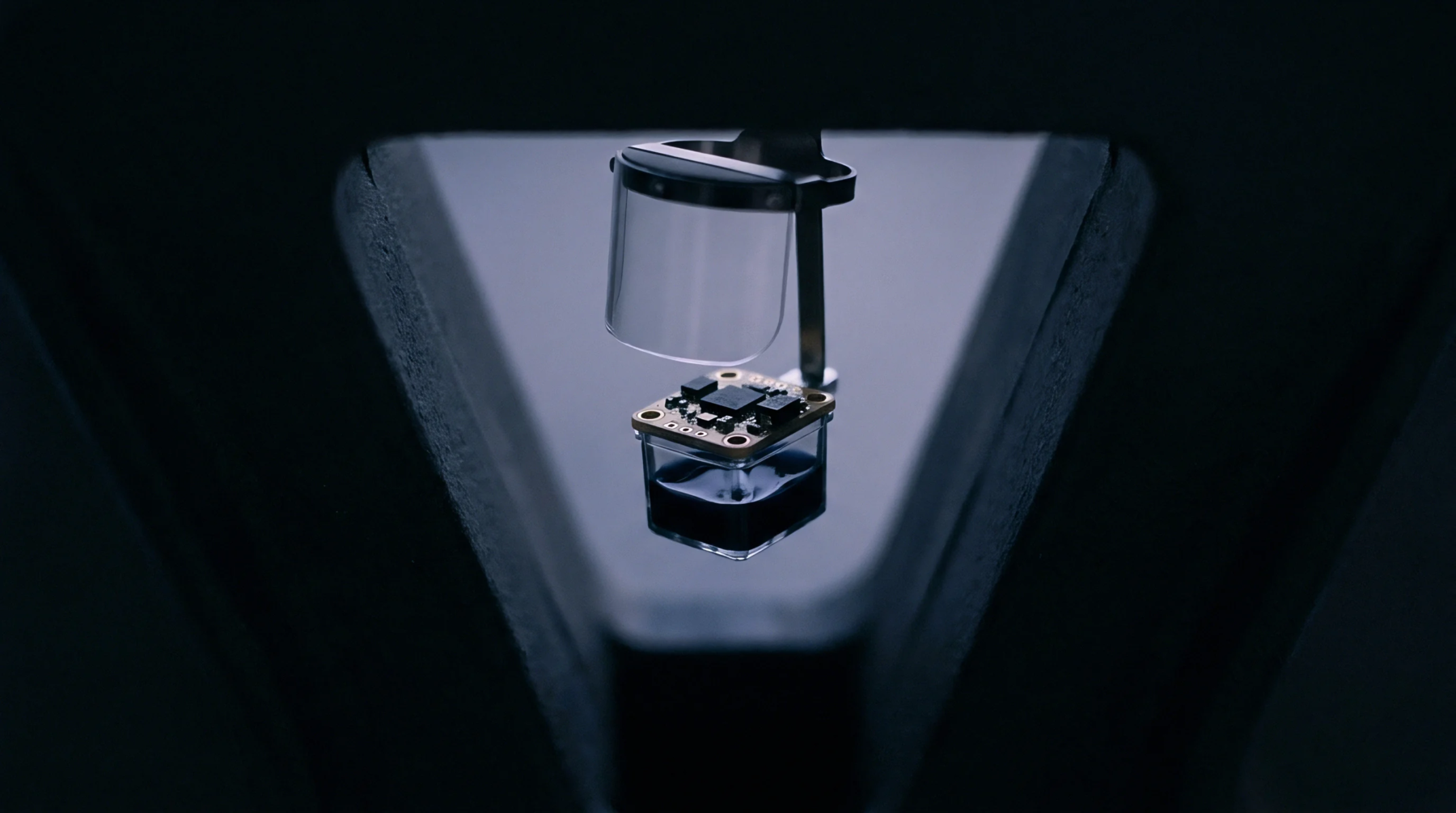
Temperature Plateau
Cure cycle profiles mandate a controlled period of constant elevated temperature designed to homogenize thermal distribution and stabilize chemical reactions across a sensor packaging assembly. The term isothermal dwell identifies the processing segment during which furnace or autoclave temperatures are held fixed to allow complete exothermic reaction or thermal stress relief. Differential thermal analysis verifies temperature uniformity across thick potted assemblies during this phase, preventing localized thermal runaway or uncured resin pockets.
Holding the assembly at an intermediate temperature plateau promotes volatile outgassing before resin gelation occurs. Process repeatability relies on tight furnace control loops maintaining setpoint temperatures within two degrees Celsius.
Thermal Equilibrium
Core temperature sensors confirm that heavy metal fixtures reach thermal parity with chamber atmosphere before timers start. Temperature gradients across complex enclosures induce uneven shrinkage and internal residual stress gradients.
Reaction Kinetics
Chemical reaction rates slow as reactive functional group concentration depletes during extended constant-temperature processing. Polymer chain mobility drops rapidly as the glass transition temperature of the curing matrix approaches the dwell setpoint temperature. Vitrification occurs if the glass transition temperature rises above the cure temperature, effectively arresting further chemical conversion.
Raising the dwell temperature reactivates chain mobility, allowing reaction kinetics to proceed toward full conversion. Extended exposure beyond complete cure risks thermal degradation of organic encapsulation materials and adhesive bonding layers. Calibrated thermocouples embedded at multiple package locations monitor heat absorption and confirm complete thermal soak throughout dense assemblies.
Soak Duration
Inadequate dwell durations leave core polymer regions under-cured, causing long-term zero-point drift in precision pressure transducers. Over-extended heat exposure causes oxidative breakdown of surface sealants and discolors optical window coatings.