Viscoelastic Fill Fluid Stress Relaxation Modeling of Metallic Isolation Diaphragms under Transient Thermal Cycles
Viscoelastic relaxation in fill fluids generates transient zero offset drift during thermal steps, necessitating Prony series modeling for active firmware correction.
Rheology
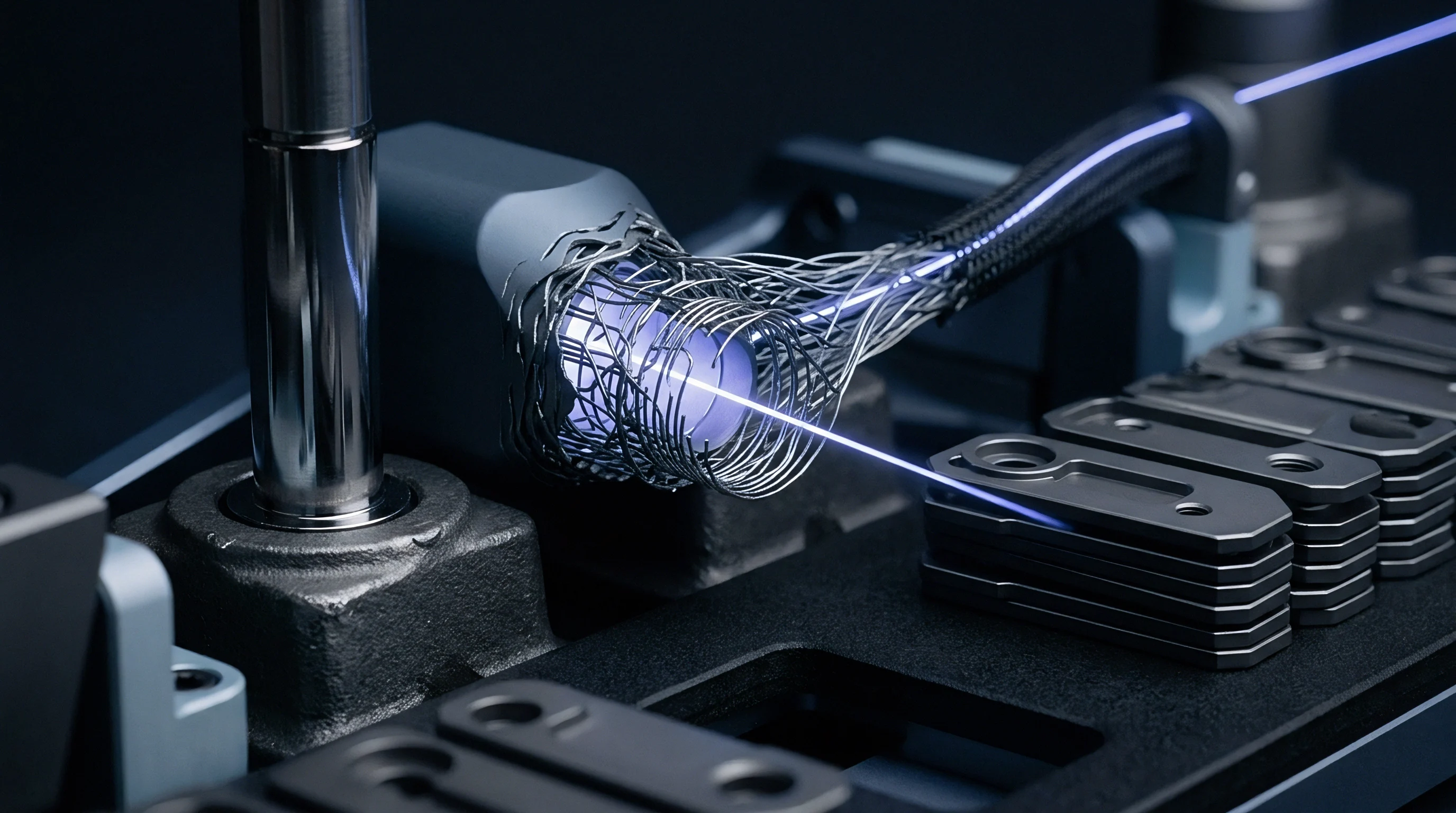
Fluid media confined within sealed measurement cells undergo complex shear stress responses when subjected to rapid thermal cycles. High-performance differential pressure transmitters and sealed absolute pressure sensors utilize synthetic oil fill media, predominantly dimethyl silicone fluids or fluorinated hydrocarbons, to transmit pressure forces from isolation diaphragms to internal silicon sensing dies. When temperature fluctuates rapidly, thermal expansion of the fill liquid generates significant internal hydraulic backpressure against the thin metallic membrane.
Because synthetic polymer fill fluids exhibit time-dependent viscoelastic properties, this induced hydraulic stress does not remain static. Stress relaxation occurs, causing the internal pressure field to decay asymptotically over time even while temperature remains elevated.
Viscosity governs internal hydraulic pressure. Under rapid thermal steps, the instantaneous stress response depends on both the elastic storage modulus and the viscous loss modulus of the fill liquid. Mathematically, modeling this behavior across wide temperature spans requires multi-mode relaxation spectra formulated through Prony series representations.
Representing the fluid shear relaxation modulus over time utilizes a summation of exponential decay terms mapped across discrete relaxation time constants.

Viscoelastic Constitutive Equations in Fluid Cavities
Mathematical representations of time-dependent stress behavior rely on spring and dashpot elements combined in series and parallel configurations. The Generalized Maxwell model, or Maxwell-Wiechert model, provides the foundational framework for modeling non-isothermal stress relaxation in sealed isolation cells. The time-dependent shear modulus is expressed through a Prony series formulation:
Shear Relaxation Modulus Expression ~ G(t) = G_infinity + sum_{i=1}^{N} G_i exp(-t / tau_i)
In this constitutive relation, G_infinity represents the long-term equilibrium shear modulus, G_i denotes the relaxation strength of individual material modes, and tau_i defines the characteristic relaxation time for mode i. For typical dimethyl silicone oils operating between -40 degrees Celsius and 150 degrees Celsius, a four-mode to six-mode Prony series delivers numerical convergence across transient thermal events. Rapid thermal shocks activate short relaxation modes governed by sub-second time constants, driving initial pressure spikes against the metallic isolation membrane.
Extended exposure to elevated temperatures engages longer relaxation modes, causing gradual pressure decay and zero-point offset migration.
Dynamic shear relaxation modulus measurements taken at 120 degrees Celsius demonstrate an 18.4 percent stress decay within 45 seconds of thermal step application in silicone oil fill cavities.
Bulk modulus temperature dependence further complicates hydro-mechanical modeling. While shear relaxation dominates shape deformation, volumetric compliance governs pressure build-up within the constrained sensor cavity. The isothermal bulk modulus drops nonlinearly as temperature rises, decreasing fluid stiffness while simultaneously increasing volumetric expansion rates.
Thermally induced cavity backpressure equations integrate both volumetric fluid expansion and time-dependent shear relaxation to predict net forces exerted on the sensing element.
Temperature Shift Factors and Relaxation Spectra
Dynamic mechanical testing reveals how thermal changes compress or extend the internal timescales of molecular motion inside sealed cavities. Thermorheologically simple fluids follow the Time-Temperature Superposition principle, allowing stress relaxation behavior across various temperatures to map onto a single master curve through horizontal time shift factors. For temperatures operating above the glass transition region, the empirical Williams-Landel-Ferry equation defines the shift factor:
WLF Shift Factor Relation ~ log10(a_T) = -C1 (T – T_ref) / (C2 + T – T_ref)
In this expression, a_T represents the shift factor relative to reference temperature T_ref, while C1 and C2 represent empirical material constants specific to the chosen fill liquid family. When thermal cycles extend near or below lower operating thresholds, Arrhenius kinetic rate equations replace the Williams-Landel-Ferry formulation to capture activation energy shifts in molecular mobility. Failure to account for temperature dependence in relaxation time constants leads to severe miscalculations in predicted sensor zero recovery times.
Fill fluid vendors frequently cite room-temperature kinematic viscosity values in product datasheets, offering minimal guidance regarding time-dependent stress relaxation spectra under transient thermal conditions.


Foil
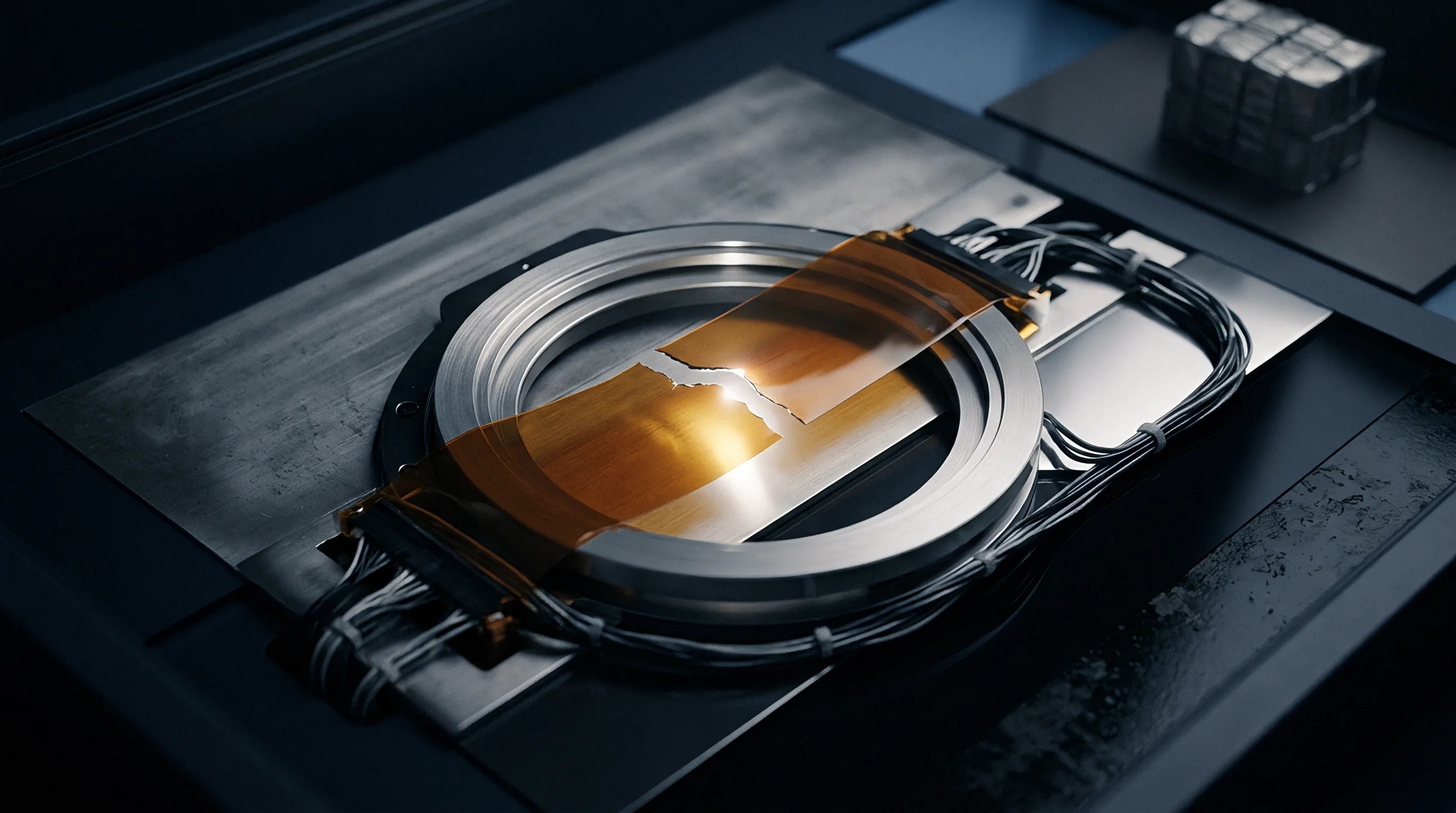
Isolation membranes manufactured from thin rolled alloys serve as physical barriers separating process media from internal sensing assemblies. Standard diaphragm designs incorporate concentric corrugation patterns stamped into high-grade metallic foils such as 316L stainless steel, Hastelloy C-276, Inconel 625, or Tantalum. Membrane thickness typically ranges from 20 micrometers to 75 micrometers depending on line pressure ratings and required volumetric displacement sensitivity.
When thermal transients occur, the metallic membrane expands at a significantly lower rate than the internal fill liquid. Stainless steel exhibits a coefficient of thermal expansion near 16.5 ppm per degree Celsius, whereas silicone fill fluids expand at rates exceeding 950 ppm per degree Celsius.
Thermal expansion mismatch places the isolation membrane under heavy hydraulic tension during temperature increases. The compliance of the corrugated membrane determines how much internal fluid expansion can occur before internal backpressure shifts the zero reading of the sensing die. Foil thickness dictates stiffness.
Structural Compliance and Corrugation Profile Mechanics
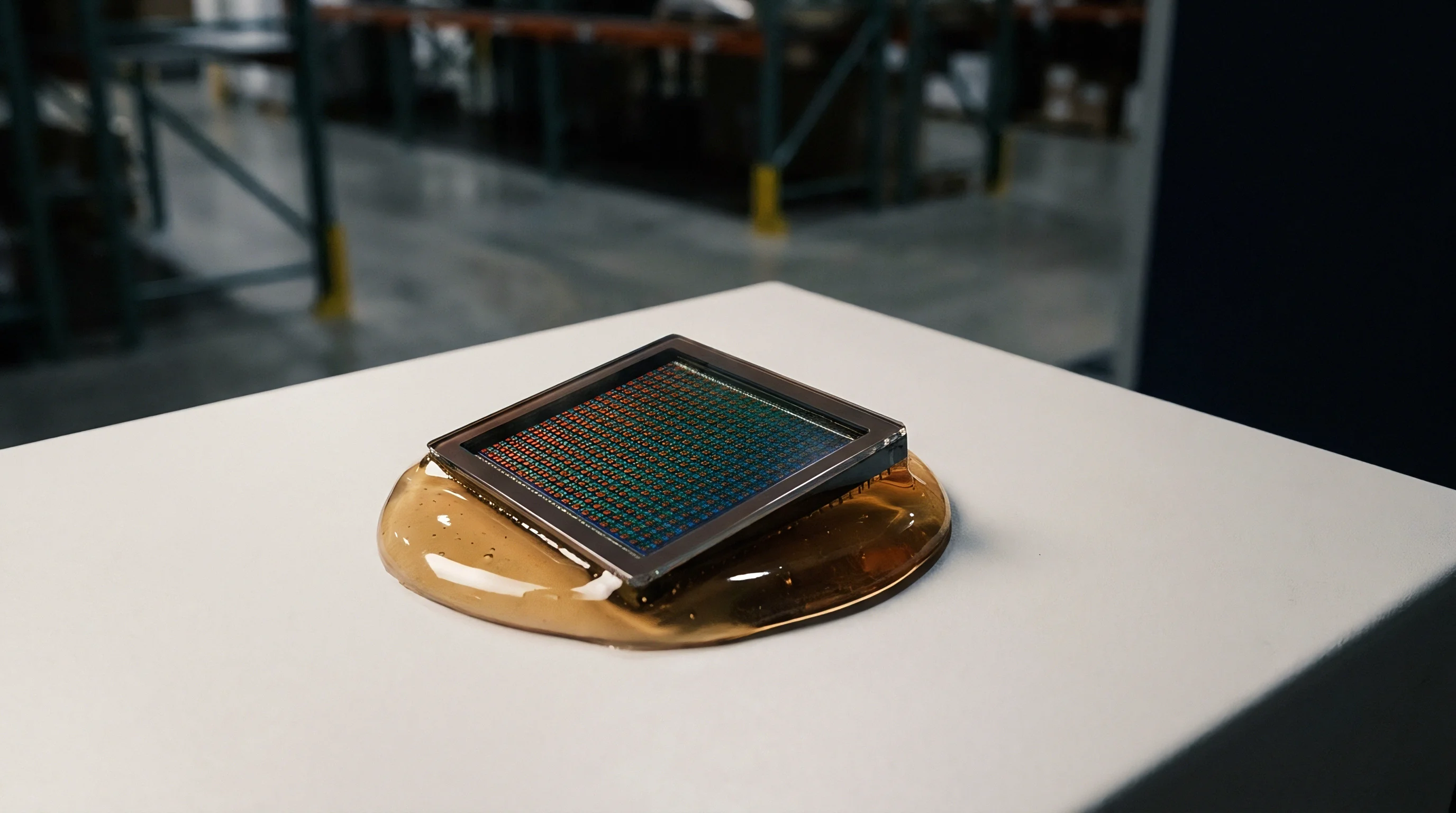
Deflection behavior under hydraulic backpressure depends heavily on concentric ridge patterns stamped into thin sheet metal elements. Flat diaphragms yield high spring rates and narrow linear deflection spans, rendering them prone to extreme thermal stress buildup. Concentric corrugations lower axial stiffness, enabling larger volumetric displacements without exceeding yield strength limits.
The volumetric compliance of a corrugated diaphragm is expressed as the change in enclosed cavity volume per unit of applied hydraulic pressure.
Deep corrugation profiles enhance volumetric compliance but increase local stress concentrations at ridge crests and root valleys. Under rapid thermal cycles, localized thermal gradients develop across the membrane profile. The outer rim, welded to the heavy metallic sensor housing, transfers heat faster than the thin central corrugated zone.
This differential expansion creates transient localized buckling stresses that alter the mechanical spring rate of the membrane mid-cycle.
Failure Mechanisms in Thermal Cyclic Strain
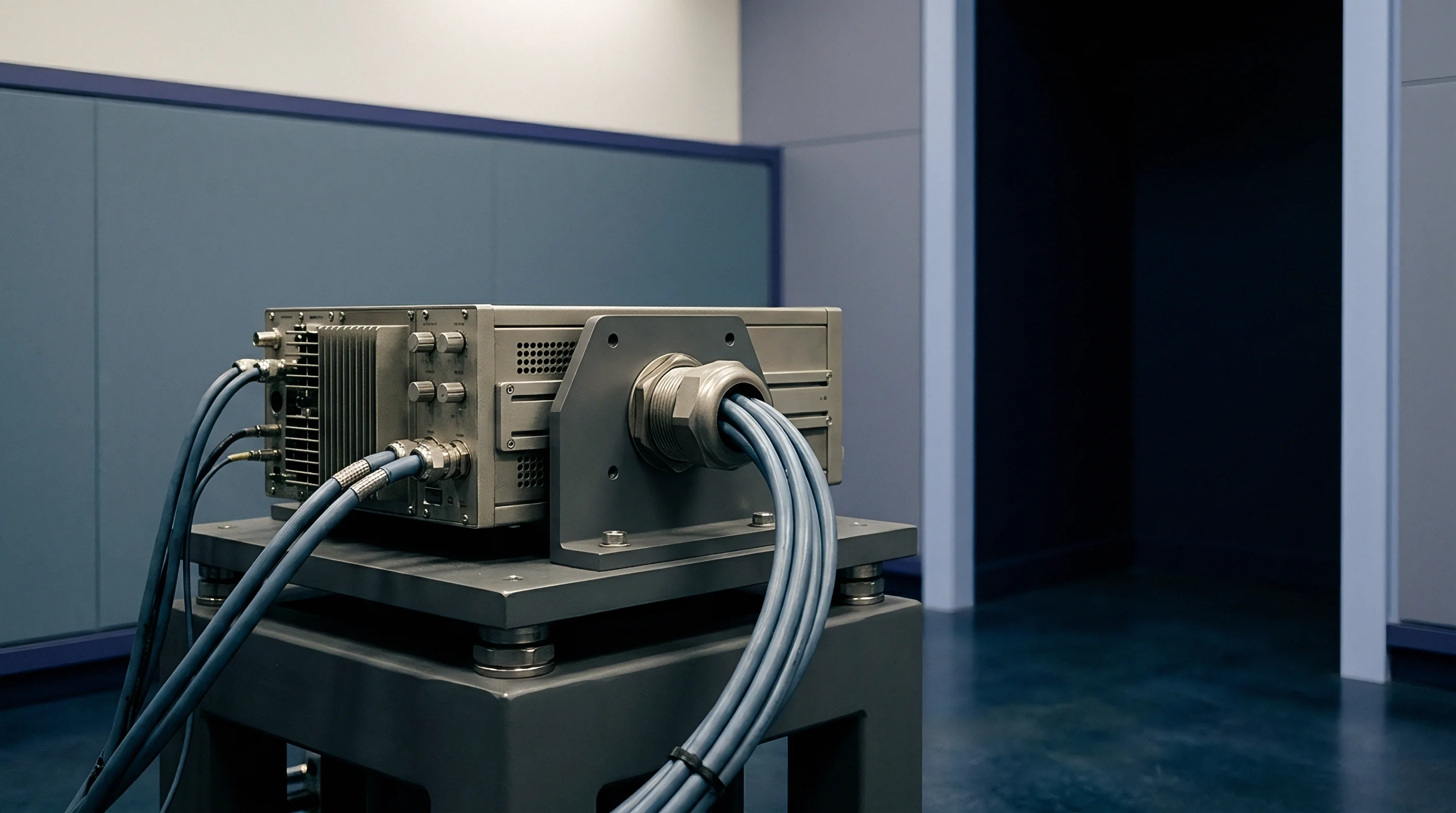
Repeated temperature excursions induce combined mechanical and hydraulic loading that degrades barrier geometry. Over extended operating lives, high-amplitude thermal steps drive cyclic strain accumulation at welded outer boundaries and internal corrugation radii.
- Plastic Strain Accumulation occurs when transient internal hydraulic backpressure forces local yield strength limits across thin corrugation radii during rapid temperature overshoots.
- Fluid Dynamic Cavitation develops during rapid cooling transients when internal fill liquid contracts faster than the corrugated barrier can rebound, pulling localized negative pressures.
- Zero Point Offset Shift manifests as permanent mechanical baseline drift caused by residual stresses locked into the stamped metallic profile following repeated thermal expansion cycles.
- Weld Boundary Fatigue initiates micro-cracking along outer circumferential laser seam welds subjected to continuous flexural thermal cycling.
- Diaphragm Oil Ingress Loss arises when internal volumetric expansion stretches thin foil boundaries beyond structural limits, causing microscopic seal weeping across sensor headers.
| Alloy Grade | Elastic Modulus (GPa) | Thermal Expansion (10⁻⁶ K⁻¹) | Yield Strength (MPa) | Recommended Foil Thickness (µm) |
|---|---|---|---|---|
| 316L Stainless Steel | 193 | 16.5 | 290 | 35 to 50 |
| Hastelloy C-276 | 205 | 11.2 | 355 | 25 to 40 |
| Inconel 625 | 208 | 12.8 | 517 | 25 to 38 |
| Tantalum Grade 1 | 186 | 6.5 | 140 | 50 to 75 |
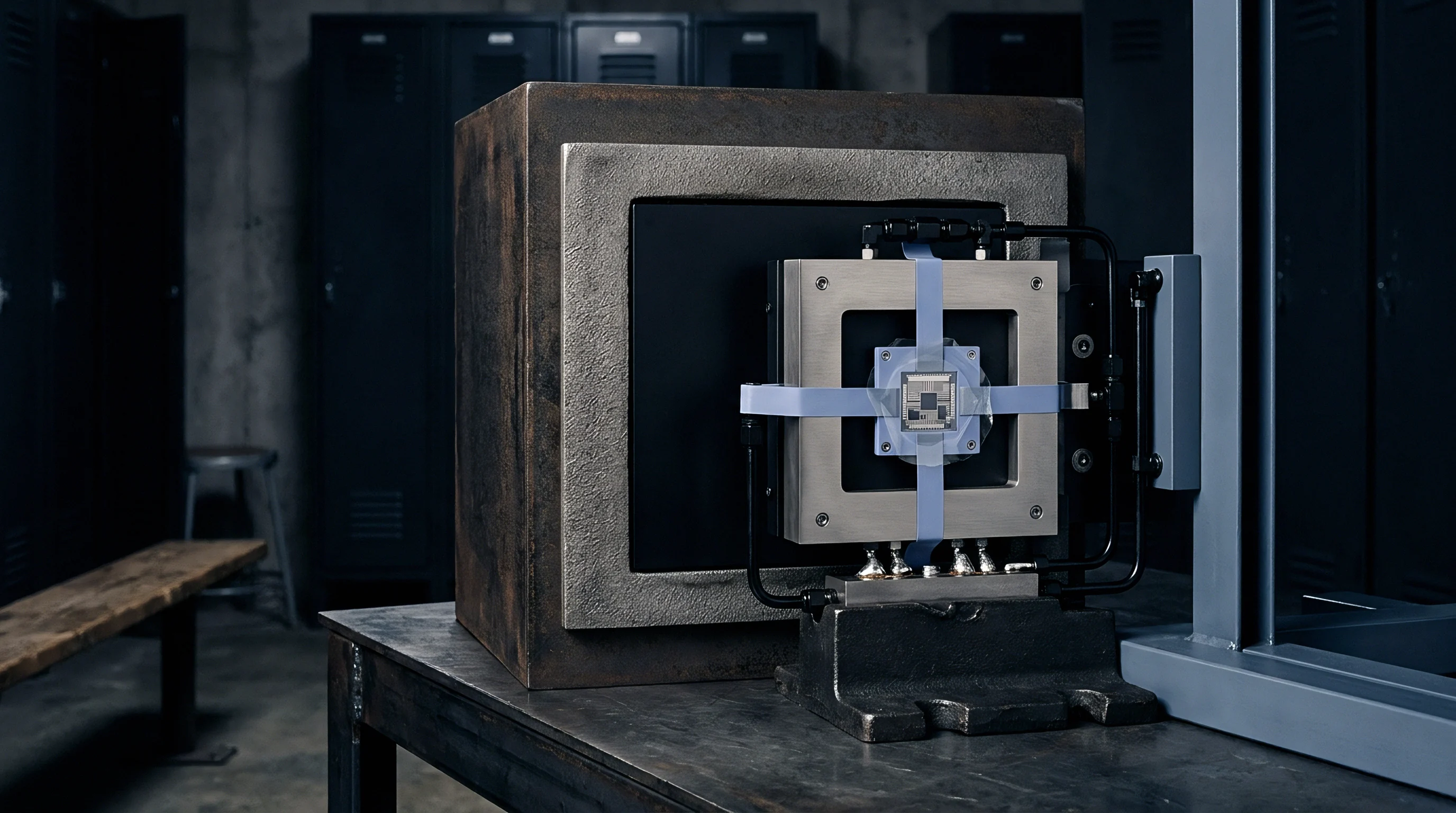
Standard qualification protocols in standard IEC 61298-2 require thermal cycle endurance testing, forcing manufacturers to demonstrate zero-point repeatability within tight percentage bounds of full-scale output across specified temperature limits.

Coupling
Internal hydraulic pressures result from simultaneous fluid expansion and membrane deflection within sealed sensor cavities. Hydro-mechanical fluid-structure interaction governs how viscoelastic fill fluid stress relaxation couples directly with thin-shell metallic deformation. When an isolated pressure transducer encounters an abrupt temperature rise, heat transfers through the outer metallic housing, penetrating the isolation barrier before reaching the bulk fill fluid volume.
Fluid expansion immediately pushes against the barrier membrane, inducing mechanical strain. As time progresses, internal shear stresses within the viscoelastic fluid relax, shifting internal hydraulic pressure distributions and modifying net displacement forces transmitted to the sensing diaphragm.
Accurate prediction of transient response requires fully coupled fluid-structure interaction algorithms. Cavity volume stays fixed.
Fluid-Structure Interaction in Sealed Sensor Cavities
Closed volume differential equations balance volumetric fluid expansion against elastic boundary displacement. The total fluid volume within a sealed sensor cavity varies as a function of average fluid temperature and hydrostatic pressure. The governing volumetric conservation equation balances thermal expansion against mechanical compliance:
Volumetric Balance Equation ~ V_fluid(T, P) = V_cavity(T_housing) + C_diaphragm P_internal
In this equation, V_fluid represents the expanding liquid volume, V_cavity denotes the thermally expanding metallic cavity volume, C_diaphragm defines the structural compliance coefficient of the corrugated metal barrier, and P_internal signifies internal hydraulic backpressure. When viscoelastic stress relaxation occurs, fluid shear stresses decay, causing the effective fluid viscosity and instantaneous pressure feedback to change dynamically over time. Incorporating viscoelastic relaxation functions directly into structural finite element codes resolves time-dependent pressure distribution maps across the silicon sensor element.
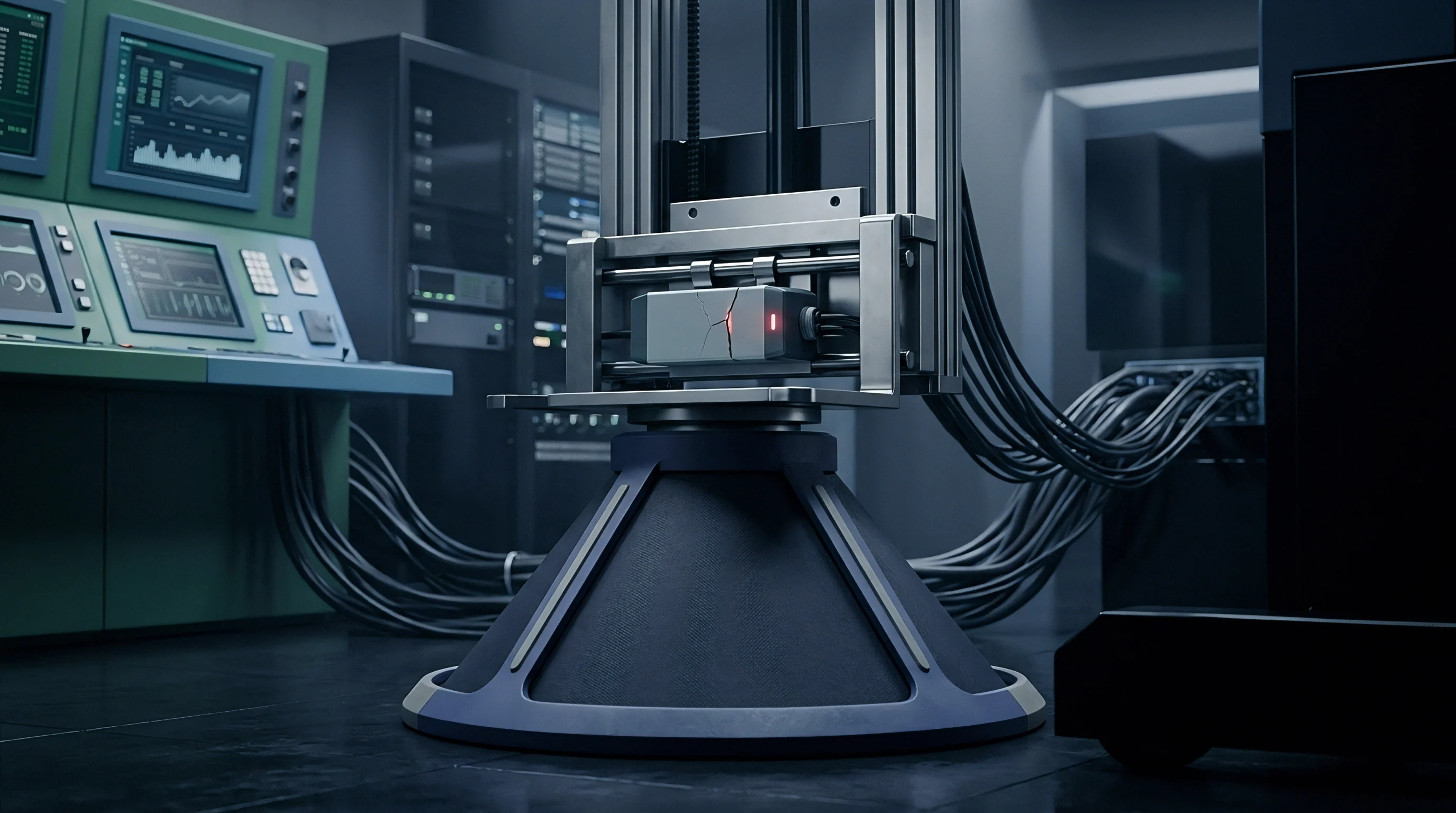
Compliance with standard IEC 61298-2 performance limits fails when uncompensated viscoelastic relaxation causes transient zero offset shifts exceeding 0.45 percent of span during rapid thermal transitions.
What Drives Transient Zero Offset Shift during Thermal Cycles?
Differential expansion rates between internal liquids and surrounding metal enclosures generate internal backpressure spikes during rapid temperature changes. If the fill fluid were purely elastic, internal pressure would track temperature changes instantaneously and recover completely upon returning to baseline temperatures. Because synthetic fill oils display marked viscoelasticity, internal pressure response lags behind temperature input ramps.
Pressure signals lag temperature shifts.
Numerical simulation of hydro-mechanical fluid-structure coupling follows a defined sequence to resolve time-dependent pressure errors on internal sensing dies:
- Extract temperature-dependent shear relaxation modulus parameters from dynamic mechanical analysis data across operating frequency ranges.
- Define internal fill cavity geometry alongside thin-shell structural finite element mesh representations of the corrugated diaphragm profile.
- Calculate total thermal volumetric expansion of fluid and housing elements at each discrete time increment during transient temperature ramps.
- Solve coupled fluid-structure equilibrium equations to determine instantaneous backpressure exerted on internal sensing surfaces.
- Invert viscoelastic relaxation functions to extract time-varying zero shift offsets across transient thermal recovery windows.
Viscoelastic decay alters sensor zero.
As a rule of thumb, maximizing diaphragm compliance while minimizing internal fill volume reduces transient zero errors caused by fluid stress relaxation during thermal steps.
Transient
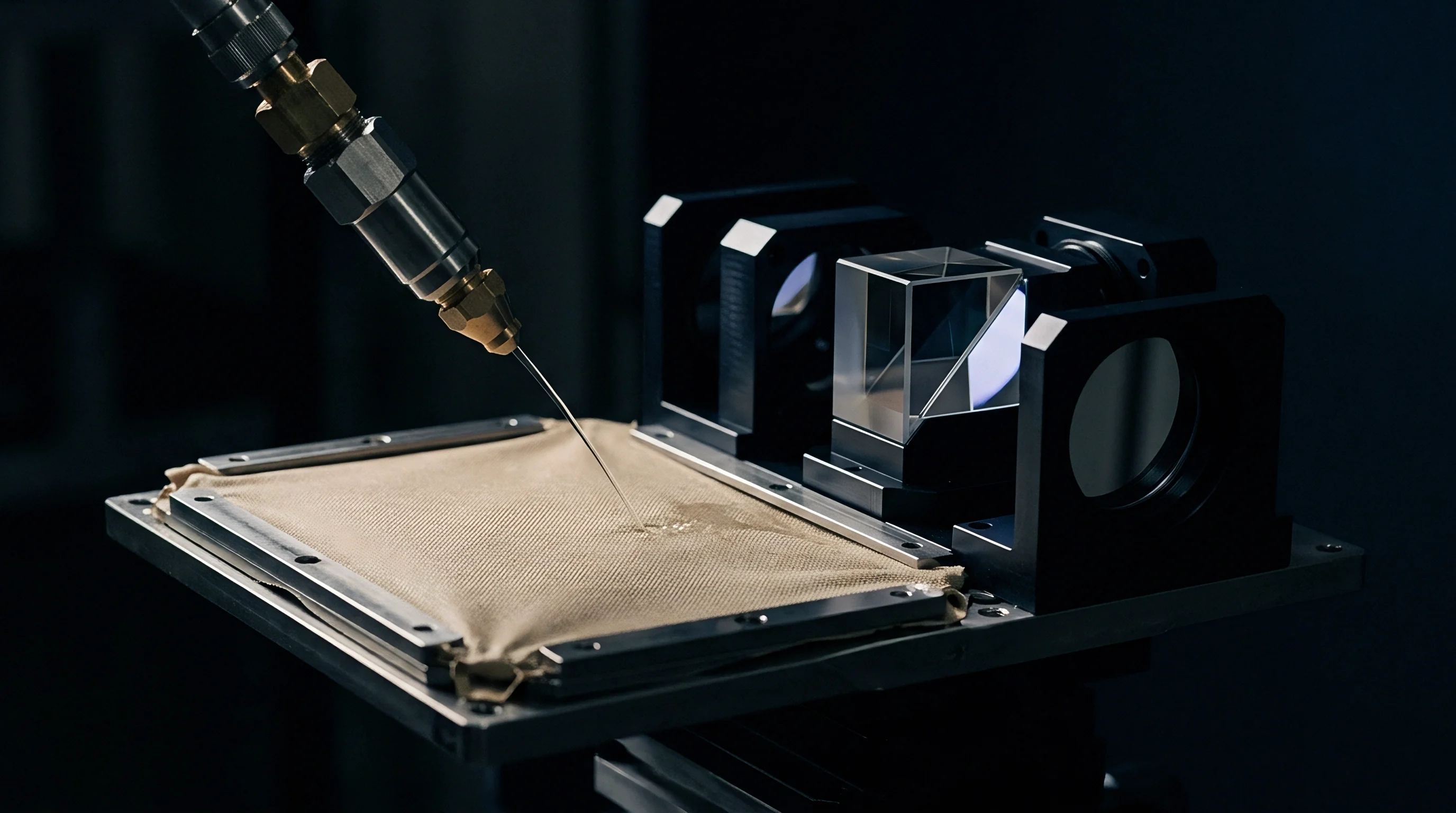
Time-varying thermal ramps induce rapid non-equilibrium stress states throughout the internal fluid cavity. During fast heat excursions, such as steam-in-place cleaning cycles in sanitary processing or fast environmental changes in aerospace applications, thermal gradients across fill cavities reach several degrees Celsius per millimeter. Fluid near the outer metallic barrier heats quickly, undergoing immediate thermal expansion and shear thinning, while fluid near the central silicon die remains cold.
This spatial gradient creates localized internal flow loops within sub-millimeter fill channels, superimposing hydrodynamic drag stresses onto hydrostatic expansion pressures.
Quantifying these transient phenomena demands structured environmental chamber bench testing coupled with high-speed digital data acquisition. Thermal steps induce transient stresses.
Thermal Chamber Testing and Step Response Extraction
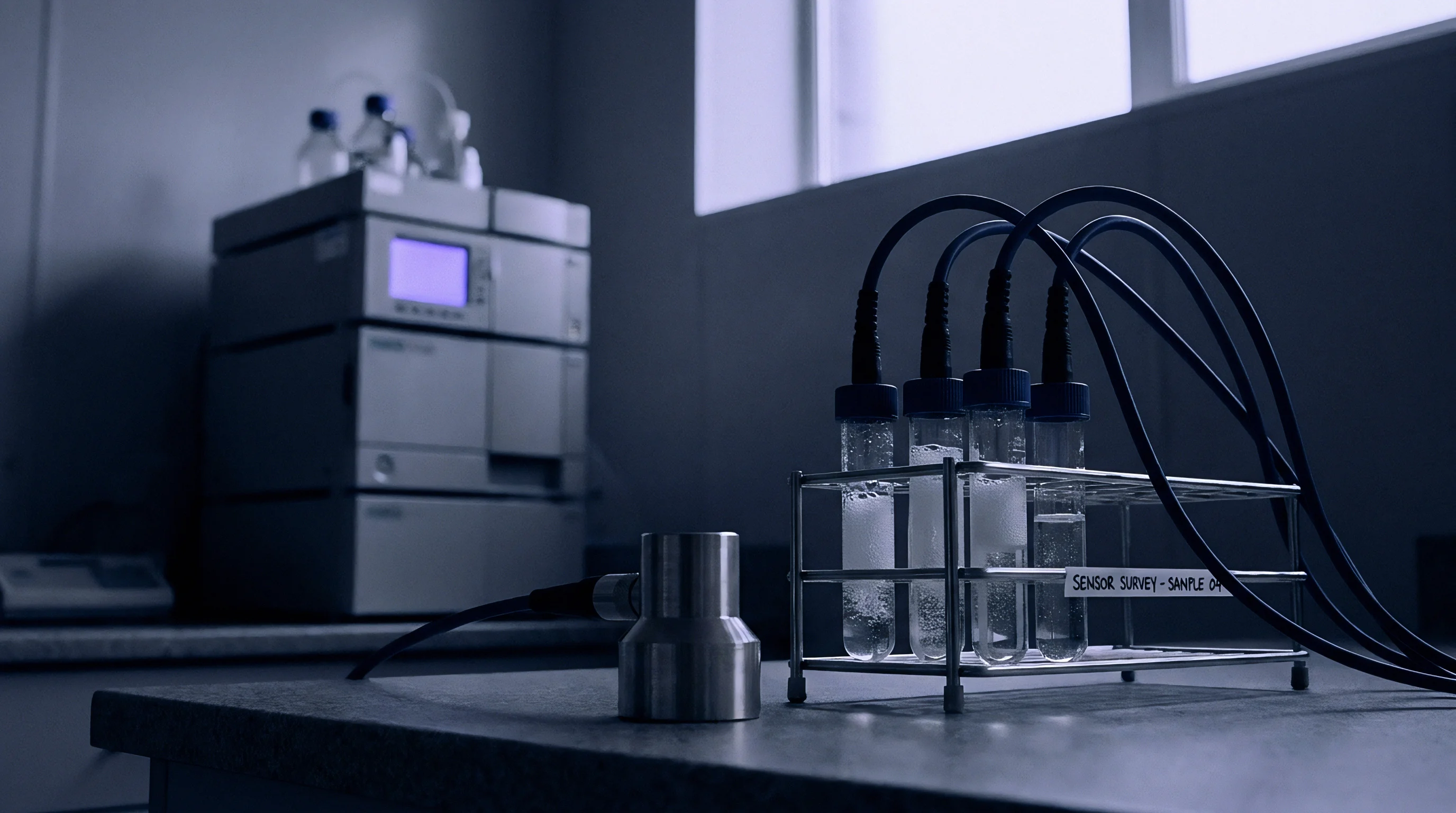
Bench validation procedures subject sealed sensing modules to controlled environmental steps while logging raw pressure and temperature outputs. The testing setup places the sensor inside an environmental chamber capable of thermal slew rates exceeding 15 degrees Celsius per minute. High-precision reference pressure sources hold process connections at flat baseline pressures while thermal steps cycle the sensor housing.
Automated data loggers sample bridge output voltages and internal temperature compensation sensors simultaneously at multi-kilohertz sampling rates.
Data processing isolates viscoelastic relaxation curves by subtracting predicted static thermal expansion offsets from raw transient pressure logs. The residual signal isolates time-dependent stress decay, allowing direct extraction of experimental Prony series constants for the specific fill fluid batch.
| Fill Fluid Compound | Kinematic Viscosity at 25 °C (cSt) | Thermal Expansion Coefficient (10⁻⁴ K⁻¹) | Primary Relaxation Time (s) | WLF Constant C1 |
|---|---|---|---|---|
| Dimethyl Silicone 200-50 | 50 | 9.6 | 1.2 | 17.4 |
| Dimethyl Silicone 200-10 | 10 | 9.2 | 0.3 | 16.1 |
| Fluorocarbon Halocarbon 6.3 | 6.3 | 8.1 | 0.15 | 14.8 |
| Synthetic Hydrocarbon Syltherm 800 | 9.5 | 9.8 | 0.45 | 15.7 |
Viscoelastic Fill Model Parameters and Thermal Constants
Quantifying mathematical constants for Prony series fits demands multi-frequency shear measurements across expected operating limits. Dynamic viscosity falls during thermal spikes. Combining dynamic mechanical analysis data with transient temperature response curves yields robust numerical parameter sets for finite element integration.
A comprehensive engineering dossier verifying fill fluid stress relaxation modeling contains specific technical deliverables:
- Relaxation Time Spectra detailing discrete Prony series amplitudes and characteristic time constants extracted across full temperature operating windows.
- Volumetric Expansion Profiles documenting high-pressure, high-temperature density curves measured via pycnometry and dilatometry methods.
- Transient Thermal Step Logs recording raw millivolt bridge outputs alongside high-speed thermal camera footage during rapid temperature step inputs.
- Diaphragm Stiffness Metrics defining non-linear force-deflection curves measured across corrugated barrier profiles using precision micro-indentation.
Failure to incorporate fluid stress relaxation models during sensor design leads to field recalibration failures, premature sensor rejections during thermal screening, and uncompensated measurement errors in critical process control loops.

Hysteresis
Sensor outputs during cooling phases frequently diverge from heating curves due to internal stress relaxation lags. This path dependence generates thermal hysteresis loops that static polynomial compensation matrices cannot eliminate. Conventional digital pressure transmitters rely on look-up tables or static temperature compensation polynomials programmed into onboard signal conditioning microcontrollers.
While static algorithms correct steady-state thermal zero shifts effectively, they remain completely blind to time-dependent relaxation history during active thermal ramps.
Mitigating transient thermal hysteresis demands dynamic firmware correction algorithms. Real-time digital filtering embedded within sensor microcontrollers can process measured temperature rate changes (dT/dt) through discretized Prony series mathematical filters.
Firmware Compensation for Time-Dependent Zero Drift
Embedded microcontrollers convert measured diaphragm temperatures into dynamic correction factors using discretized Prony series algorithms. The microcontroller samples an internal temperature sensor located adjacent to the fill cavity at fixed execution intervals. By calculating the discrete temperature derivative, the firmware updates recursive stress relaxation state variables representing instantaneous fluid backpressure.
Subtracting this dynamic backpressure estimate from raw bridge readings yields real-time corrected pressure values accurate even during rapid thermal transitions.
Implementation requires efficient numerical formulation to prevent processor starvation inside low-power 4-20mA loop-powered instrument designs. Recursive state formulation eliminates the need to store lengthy historical temperature logs in microcontroller memory, converting complex convolution integrals into simple single-step multiply-accumulate operations executed during each analog-to-digital converter sampling cycle.
Thinner diaphragm membranes reduce mechanical stiffness but increase total sensor zero drift when high-viscosity fill fluids undergo rapid temperature fluctuations.

Commercial Trade-Offs in Fill Fluid Selection
Procurement decisions balancing low thermal expansion coefficients against high operating temperature limits dictate system unit costs. Low-viscosity silicone fluids minimize relaxation time constants and lower transient zero spikes, but exhibit higher volatility and reduced thermal stability at elevated temperatures above 200 degrees Celsius. Fluorocarbon fill fluids offer outstanding chemical compatibility and oxygen safety, but present higher thermal expansion coefficients and greater temperature-dependent viscosity variations, increasing transient thermal hysteresis risks.
Alloy choice limits membrane deflection. Silicone oils possess high compressibility. Thermal gradients distort internal geometry.
Calibration offsets fail under transient steps. Hydraulic pressure decays over time. Firmware algorithms track relaxation curves.
Whether multi-field non-isothermal finite element models can predict long-term fluid degradation and subsequent shifts in Prony relaxation spectra after tens of thousands of thermal cycles remains an open question in sensor reliability research.