Nonlinear Elasto-Optic Phase Retardation across Transient Asymmetric Thermal Shock Profiles in Quadrupolar Spools
Quadrupolar fiber spool bias stability under thermal shock depends on symmetric potting resin stress relaxation to prevent non-reciprocal photoelastic retardance.

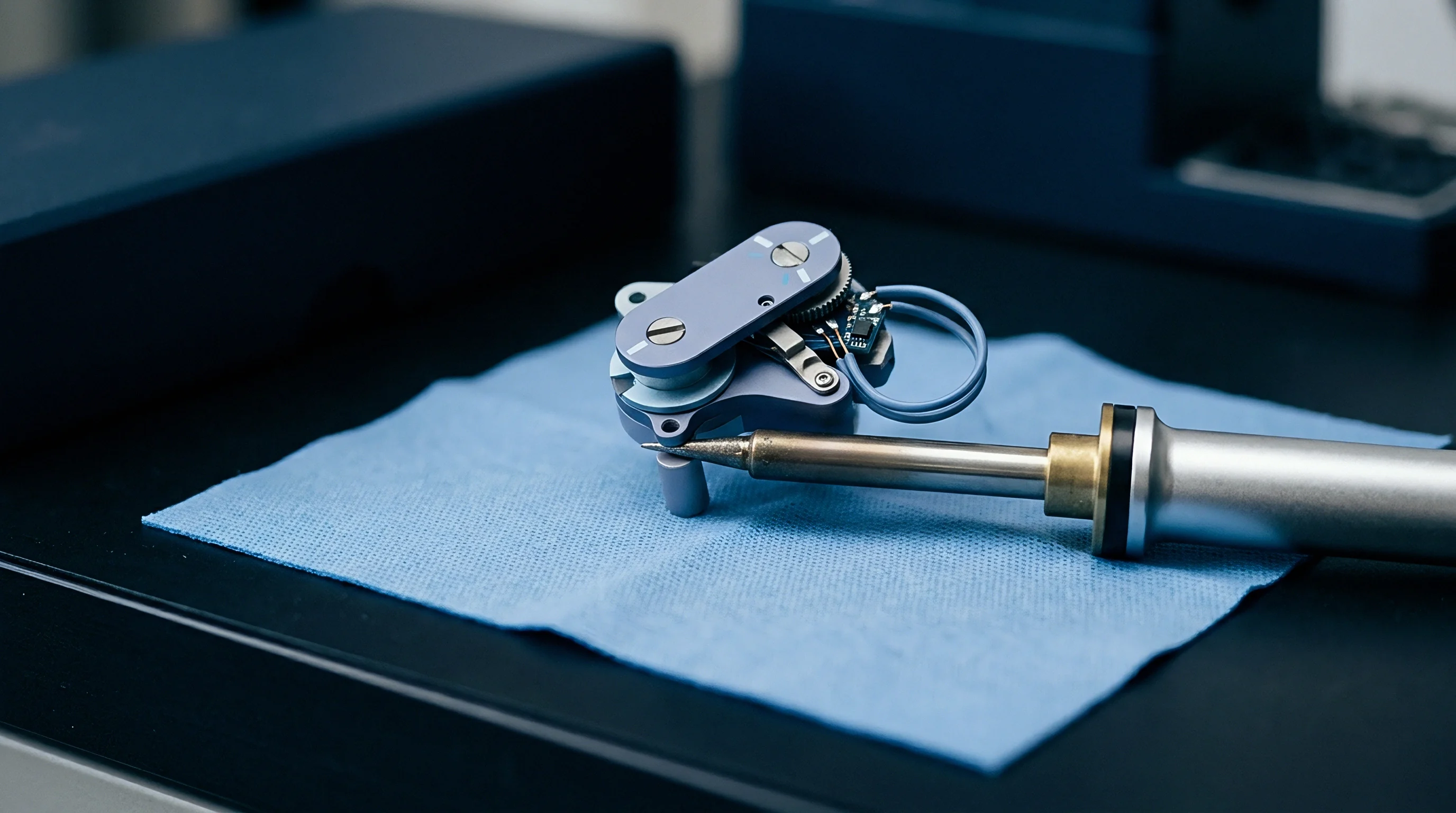
Heat
Rapid temperature transients on an optical fiber sensing spool generate steep internal spatial gradients. In high-precision Interferometric Fiber Optic Gyroscopes, these thermal non-uniformities distort optical path length, producing a false phase shift known as the Shupe effect. Standard quadrupolar winding architectures pair symmetric fiber turns from opposite halves of the spool within the same physical layer, ensuring that linear temperature changes affect counter-propagating optical beams identically to cancel net non-reciprocal phase delays.
In practice, heat diffusion through the spool matrix is rarely uniform.
Transient thermal shock disrupts this linear spatial assumption. When an unshielded spool undergoes an abrupt ambient temperature change, heat enters through the outer circumferential boundary and metal spool flanges simultaneously. Structural materials conduct thermal energy much faster than the surrounding polymer potting compounds and fiber buffer coatings.
This impedance mismatch causes asymmetric heat fronts that propagate radially and axially at different rates, forcing quadrupolar-paired fiber turns into disparate thermal environments during the transient phase.
Thermal Transient Dynamics inside Quadrupolar Coils
Spatial temperature distributions inside closely wound optical fiber packs follow non-linear conduction equations across layer boundaries. A coil’s effective thermal diffusivity depends on the volumetric ratio of silica glass, primary polymer coating, and interstitial potting adhesive. As thermal energy travels inward from the exterior surface, it encounters alternating layers of glass and elastomer.
Because silica possesses a thermal conductivity roughly five times higher than typical acrylate potting resins, heat moves preferentially along the axial fiber paths rather than through the radial thickness.
Thermal shock breaks the symmetry assumptions inherent in quadrupolar designs.
During an asymmetric shock event, outer turns heat rapidly while the spool core remains cold. The quadrupolar layout relies on geometric alignment where fiber section length z is paired with section length L – z at identical spatial coordinates. Thermal shock distorts this physical layout, expanding the outer layers while inner layers remain stationary and introducing structural shear forces alongside localized temperature variations.
- Radial gradient inversion occurs when outer coil layers absorb immediate thermal shock while the central aluminum spool hub acts as a delayed thermal sink.
- Axial thermal asymmetry develops because heat transfers faster through metal end-flanges than through the structural fiber matrix.
- Expansion mismatch stress arises from the disparity in thermal expansion coefficients between silica fiber, potting compound, and spool housing.
- Glass transition modulus shift introduces localized mechanical softening in polymer coatings when transient temperatures cross material transition points.

Mechanisms of Asymmetric Heat Diffusion
Boundary conditions at the inner hub and outer protective housing differ during environmental temperature ramps. Direct conduction through aluminum or carbon-composite structures governs heat transfer across the inner metal hub, whereas heat transfer at the outer boundary often involves complex free or forced convection depending on enclosure geometry. This structural asymmetry means thermal wave fronts moving inward from the perimeter do not match the profile of heat moving outward from the hub.
Quadrupolar winding geometry cancels linear thermal gradients across symmetric fiber turns but fails when non-linear elasto-optic stress fields distort the fiber refractive index.
Internal stress profiles shift rapidly during steep temperature transitions.
Conduction paths vary across the coil volume due to microscopic variations in potting void fraction and fiber packing density. A single air void or uneven adhesive pocket alters local thermal impedance, changing the local thermal ramp rate relative to the opposite half of the quadrupolar pair. The resulting phase delay differential evades passive geometric cancellation, producing significant zero-point bias instability.
Ignoring asymmetric thermal boundary conditions during spool design leads directly to uncompensated bias drift exceeding navigation-grade operational thresholds during tactical flight maneuvers.
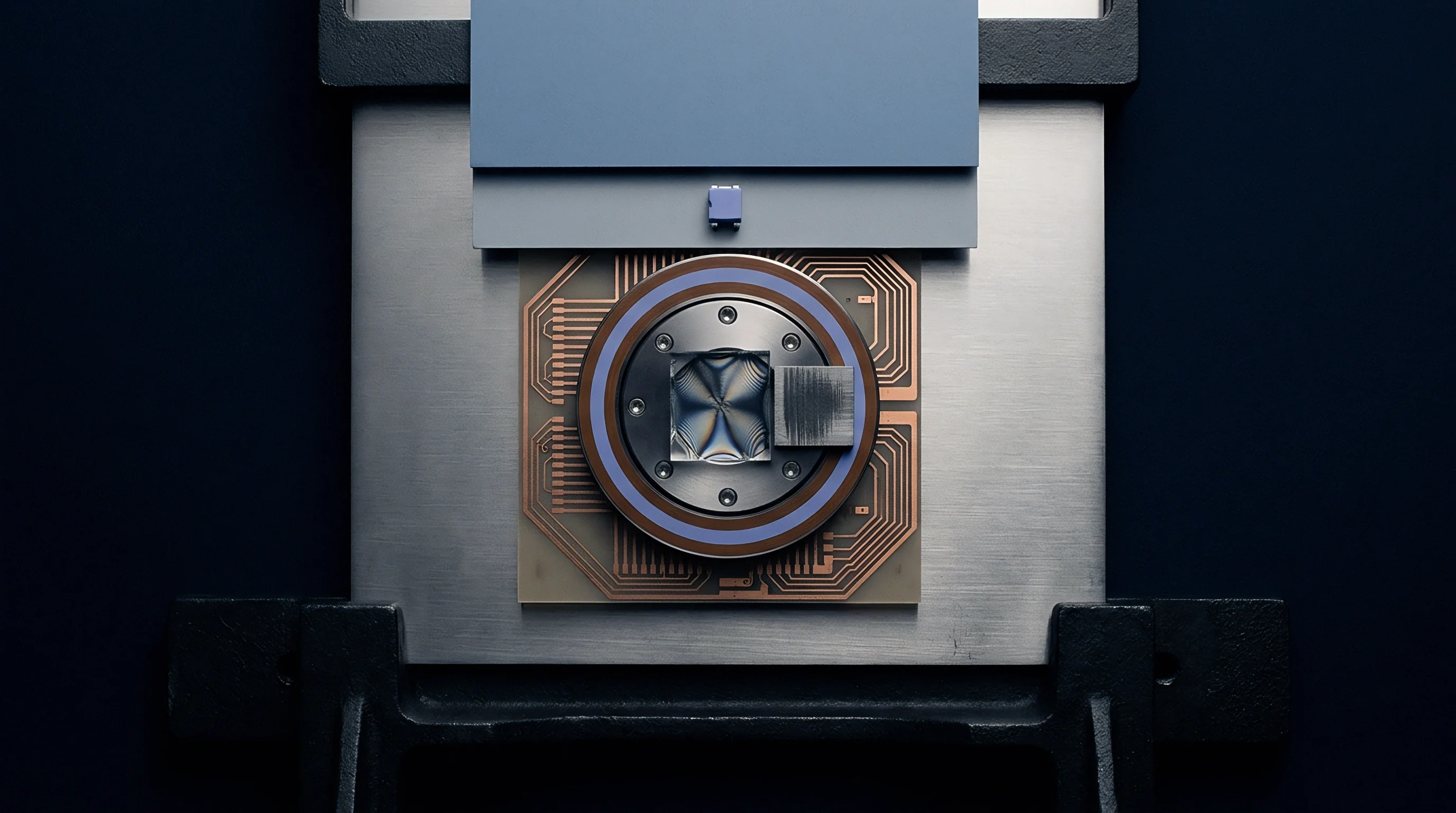

Retardation
Optical wave propagation through single-mode silica fiber depends directly on the localized refractive index tensor. Under uniform conditions, an isotropic fiber core exhibits identical refractive indices along orthogonal polarization axes. Mechanical stress alters this index distribution through the elasto-optic effect, introducing stress-induced birefringence.
When transient thermal gradients cross a quadrupolar spool, non-uniform thermal expansion generates complex three-dimensional stress fields throughout the fiber volume.
This stress distribution induces immediate bias drift in the optical signal.
The total optical phase shift experienced by light passing through a fiber turn under stress combines the physical elongation of the segment with changes in the optical refractive index. Non-linear elasto-optic retardation emerges because the photoelastic response varies non-linearly under severe localized strain. Normal stress components along the radial, tangential, and axial directions couple into the optical principal axes through the photoelastic tensor constants p11 and p12.

Elasto Optic Tensor Coupling under Thermal Stress
Mechanical stress fields inside the glass core alter light velocity via photoelastic coefficients. Radial stress σr and tangential stress σθ generated by thermal expansion mismatch compress or stretch the glass matrix. In a perfectly symmetric spool, equal stress on paired fiber turns produces identical phase delays in counter-propagating beams.
Transient asymmetric thermal shock breaks this equality by creating localized stress peaks that vary in magnitude and orientation along the fiber axis.
Under a thermal shock ramp of ten Kelvin per minute at eighty-five degrees Celsius, non-linear stress birefringence generates an uncompensated bias drift of zero point zero four degrees per hour in standard quadrupolar spools.
Steep thermal gradients introduce proportional mechanical strain across the fiber pack.
The interaction between stress components and the optical index tensor is expressed through the material strain-optic matrix. For fused silica glass, differential refractive index changes along orthogonal polarization axes depend on the strain tensor components:
Δnx = – (n3 / 2) ·
Δny = – (n3 / 2) ·
Asymmetric thermal expansion introduces shear strain εxy, rotating the principal optical axes away from the geometric axes of the fiber. This rotation leads to polarization cross-coupling, where optical energy transfers between orthogonal modes, generating non-reciprocal phase retardance that fluctuates during thermal transients.
- Mount the quadrupolar fiber spool inside the polarimetric test chamber.
- Stabilize the ambient temperature at twenty degrees Celsius for sixty minutes.
- Apply a thermal step change of ten Kelvin per minute up to eighty-five degrees Celsius.
- Record differential phase retardation using an optical frequency domain reflectometer.
- Extract photoelastic tensor cross-coupling parameters from temporal fringe shift logs.
Nonlinear Phase Retardation Mechanics
Differential propagation constants between orthogonal polarization modes evolve continuously during localized structural expansion. When thermal shock rates exceed five Kelvin per minute, polymer potting adhesives undergo non-linear viscoelastic deformation. Stress relaxation times in these polymers depend heavily on local temperature.
Cold interior regions retain high elastic moduli and resist deformation, while warm exterior layers soften and yield.
Selecting specific polymer formulations directly alters thermal error margins.
This non-uniform modulus distribution converts linear thermal expansion into non-linear spatial mechanical stress. The silica fiber core, bound tightly within this changing polymer matrix, experiences localized bending and compressive stresses that do not scale linearly with temperature. The optical phase retardation integrated across the full fiber length contains higher-order temporal derivatives of temperature, rendering standard linear calibration tables ineffective.
| Coating Material | Glass Transition Temp (°C) | Young Modulus at 25°C (MPa) | Thermal Expansion (ppm/K) | Peak Phase Retardation (rad) |
|---|---|---|---|---|
| Dual-Layer UV Acrylate | -10 / +60 | 850 | 110 | 0.084 |
| High-Temp Polyimide | +275 | 2400 | 40 | 0.021 |
| Soft Silicone Elastomer | -50 | 4.5 | 300 | 0.142 |
| Carbon-Jacketed Polyimide | +275 | 2600 | 35 | 0.012 |
Quantifying Differential Polarization Retardance
Mathematical modeling of accumulated Sagnac bias errors combines structural thermal finite element analysis with ray-tracing optical path integrals. The non-reciprocal phase shift Φerror resulting from asymmetric thermal shock is calculated across the total spool length L:
Φerror = (2π / λ) ∫0L/2 dz
When the localized index perturbation Δn(z, t) includes non-linear strain-optic contributions, the integral does not resolve to zero under quadrupolar index mapping. The residual value forms an instantaneous bias error that tracks the derivative of the localized thermal gradient rather than the global ambient temperature.
Selecting fiber coatings with glass transition temperatures well outside the operational range prevents non-linear stress spikes from overwhelming quadrupolar phase cancellation.

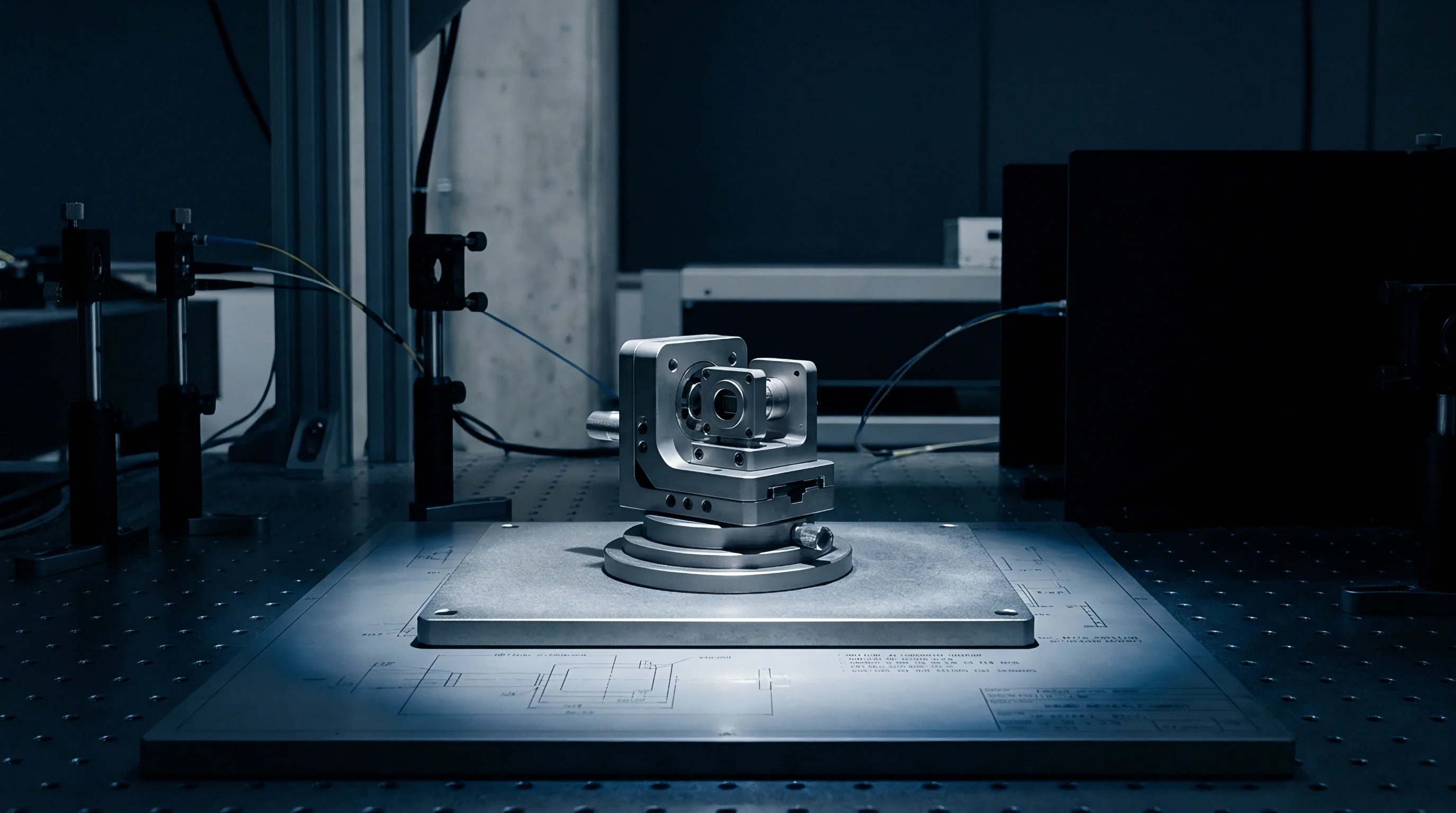
Bench
Laboratory verification of thermal shock immunity demands specialized environmental test fixtures. Standard environmental chambers ramp ambient air temperatures at rates up to two Kelvin per minute, which fails to excite the non-linear elasto-optic mechanisms observed during operational launch or atmospheric entry transients. High-rate testing requires liquid immersion systems or thermoelectric heating arrays capable of applying controlled asymmetric thermal shocks exceeding twenty Kelvin per minute.
Optical reflectometry can detect even minor phase shifts along the fiber length.
Measuring internal stress distribution during active thermal shock relies on polarization-resolving optical frequency domain reflectometry. By launching low-coherence light into the quadrupolar spool, reflectometry maps localized polarization mode coupling and optical phase retardation along the fiber length with millimeter spatial resolution. Test engineers correlate spatial retardance peaks directly with physical layers inside the winding pack.
Transient Thermal Shock Chamber Architecture
Dual-zone test systems transfer fiber optic spools between hot and cold liquid baths within three seconds. Silane oil or fluorinated hydrocarbon liquids provide high thermal coupling coefficients, delivering immediate thermal steps to outer spool surfaces. Thermocouples embedded at internal coil interfaces monitor axial and radial heat propagation, while polarization analyzers capture real-time optical drift.
Specifying test conditions per MIL-STD-810H Method 503.7 forces vendors to verify optical stability under active thermal shock rather than relying on static temperature soak data.
Physical coil geometry directly sets overall transient performance limits.
Data acquisition systems must log bias outputs at high sampling rates to capture fast transient phase shifts. Conventional averaging filters hide transient stress-induced retardance spikes that last only a few seconds but exceed operational error budgets. Sensor evaluation protocols enforce unfiltered raw data logging throughout the shock ramp and subsequent thermal stabilization phase.
- Immersion fluid circulation maintains uniform convective heat transfer across external spool surfaces without introducing mechanical vibration noise.
- Optical feedthrough strain relief prevents external cable tension from introducing parasitic birefringence into the fiber coil during fixture mounting.
- Multi-channel thermocouple placement tracks internal radial and axial heat flow across distinct quadrupolar winding layers.
- Sampling rate synchronization aligns optical phase measurements with instantaneous thermal boundary data for dynamic model verification.

Where Does Thermal Asymmetry Overpower Quadrupolar Cancellation?
Non-uniform heat transfer across spool flanges breaks the geometric phase balance when boundary ramps exceed five Kelvin per minute. As thermal energy diffuses inward, the boundary layers experience peak expansion while inner turns remain unheated. Quadrupolar symmetry assumes symmetric spatial conditions for paired turns, but the non-linear heat equation produces time-lagged temperature profiles across the layer thickness.
| Winding Symmetry | Shock Rate (K/min) | Peak Gradient (K/mm) | Max Bias Shift (°/h) | Recovery Time (s) |
|---|---|---|---|---|
| Standard Quadrupolar | 5 | 0.42 | 0.018 | 140 |
| Standard Quadrupolar | 15 | 1.25 | 0.085 | 310 |
| Advanced Octupolar | 5 | 0.40 | 0.004 | 85 |
| Advanced Octupolar | 15 | 1.21 | 0.019 | 195 |
| Test conditions: 80-millimeter outer diameter spool, 1000-meter PM1550 fiber, immersion shock test from -40°C to +71°C. | ||||
Empirical bench testing identifies transient failure modes before deployment.
Test data shows that peak optical retardance occurs not at the maximum temperature extreme, but at the instant of maximum rate-of-change of internal spatial gradients. This transient peak corresponds to the temporal maximum of shear stress within the adhesive matrix. Optical gyroscopes evaluated only under static thermal equilibrium pass qualification tests while remaining vulnerable to catastrophic field failures during rapid thermal events.
Compliance with IEEE 1431 Annex C mandates continuous bias data acquisition at sample rates exceeding one hundred Hertz during ambient temperature ramps, forcing suppliers to provide unaveraged transient error profiles.


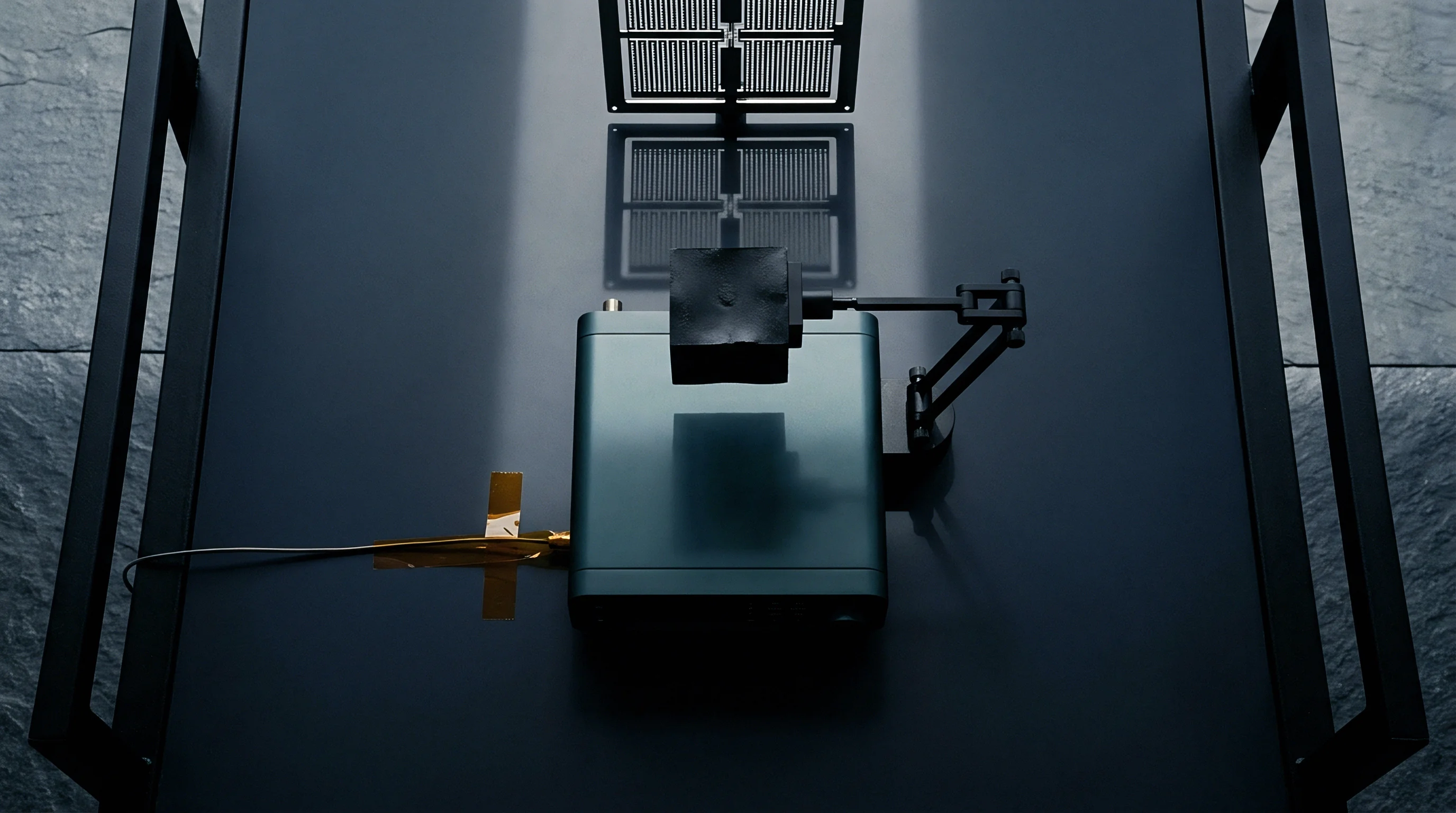
Jacket
Primary acrylate coatings on optical fibers serve as viscoelastic buffers between silica glass and structural adhesive matrices. The choice of coating formulation dictates how effectively mechanical stress transfers from the expanding spool body into the optical core. Standard dual-layer acrylates feature a soft inner primary coating to attenuate microbending and a stiff outer secondary coating for mechanical abrasion resistance.
Thermal shock alters this mechanical coupling by shifting the viscoelastic properties of both polymer layers.
Rapid thermal transitions highlight structural vulnerabilities in the coating configuration.
Below the glass transition temperature, polymer coatings harden, transmitting external shear forces directly into the silica cladding. Above this temperature, the coatings soften, allowing fiber turns to shift within the potting matrix under structural loads. Selecting a fiber coating with a glass transition temperature inside the operational thermal range guarantees severe, non-linear phase retardation shifts during thermal shock events.
Viscoelastic stress relaxation within fiber potting compounds creates a time-delayed optical phase retardation peak that appears long after ambient temperatures stabilize.

Polymer Buffer Compliance and Elastic Modulus
Glass transition temperature marks the boundary where polymer mechanical properties shift from rigid structural behavior to high-compliance rubbery elasticity. High-performance optical gyroscopes utilize polyimide or specialized silicone coatings to maintain stable mechanical compliance across military operating ranges from -55 °C to +85 °C. Polyimide maintains an ultra-high glass transition temperature well above maximum operating limits, providing predictable linear elastic stress transfer without sudden viscoelastic modulus steps.
A mismatch in material modulus accelerates long-term mechanical creep.
Thinner coatings reduce the total volume of expanding organic material within the spool matrix. Reducing primary coating thickness from thirty micrometers to ten micrometers decreases thermal expansion stress by more than sixty percent. This reduction suppresses non-linear elasto-optic phase retardation by limiting the radial displacement of adjacent fiber turns within the quadrupolar geometry.
- Viscoelastic creep rate determines the time-dependent relaxation of stress-induced birefringence following rapid thermal shock events.
- Coefficient of thermal expansion governs the volumetric changes in potting compounds that drive radial force imbalance.
- Young modulus stability prevents sudden shifts in mechanical compliance when ambient temperatures cross polymer transition limits.
- Photoelastic strain coefficient dictates the magnitude of refractive index changes induced by localized mechanical compression.

Potting Adhesive Stress Redistribution
Flexible silicone compounds dissipate asymmetric radial forces across adjacent fiber turns during rapid environmental temperature drops. Winding fiber spools requires an adhesive matrix to hold precise quadrupolar turn positioning and eliminate micro-vibration sensitivity. Hard epoxy adhesives transfer structural spool expansion directly to the glass, producing high strain optic phase shifts.
Soft silicone potting compounds absorb localized structural expansion through mechanical shear deformation.
| Adhesive Type | Viscosity at 25°C (cPoise) | Shore Hardness | Glass Transition (°C) | Stress Relaxation Half-Life (s) |
|---|---|---|---|---|
| Rigid Structural Epoxy | 12000 | D85 | +110 | 4500 |
| UV-Cured Acrylate Resin | 3500 | D55 | +45 | 380 |
| Two-Part Silicone Elastomer | 1800 | A35 | -115 | 12 |
| Solvent-Evaporative Rubber | 850 | A20 | -65 | 45 |
Choosing the right potting adhesive ultimately dictates structural stability under shock.
Silicone potting resins must balance mechanical compliance with structural rigidity. If the resin is too soft, centrifugal forces and vibration move the fiber turns out of their precise quadrupolar coordinates, degrading static bias stability. If the resin is too stiff, thermal expansion differences generate severe photoelastic phase retardation.
Optimizing adhesive cross-link density establishes a stable balance between shock damping and spatial turn positioning.
Unexpected thermal transient drift during spool winding often stems from uneven potting resin distribution rather than microbending losses within the fiber glass core.

Dossier
Procurement documents for strategic-grade inertial measurement units mandate comprehensive physical characterization of all fiber optic components. Standard component datasheets quote static attenuation, polarization crosstalk, and room-temperature scale factor tolerances. These static parameters fail to predict optical gyro performance under operational thermal shock conditions.
Procurement specifications for quadrupolar spools mandate dynamic transient testing to verify elasto-optic stability prior to system integration.
Uncompensated phase shifts severely compromise overall system accuracy.
Sourcing qualification protocols require vendors to certify fiber coating lot uniformity, potting resin void percentages, and precise quadrupolar winding symmetry. Thermal shock acceptance criteria specify maximum allowable zero-point bias drift during step-function environmental testing. Request-for-quotation documentation specifies explicit thermal shock profiles rather than relying on generic military standard reference codes.
Procurement Specifications for High Stability Fiber Coils
Technical requirements for high-performance gyro spools define tight bounds on acceptable zero-point drift during operational shock events. Contracts demand fully characterized material property dossiers for every batch of fiber and potting resin. This data includes thermal expansion coefficients, temperature-dependent Young moduli, and measured stress-optic coefficients across the complete operating temperature envelope.
Rigorous verification protects hardware investments before assembly.
Subsystem buyers mandate lot-level verification using polarimetric reflectometry to inspect internal winding uniformity. A single turn misplaced during automated winding disrupts the spatial symmetry of the quadrupolar pattern, creating localized stress concentration points. Thermal shock amplifies these geometric defects, converting minor spatial errors into large transient bias instabilities.
Acceptance Testing Criteria under Rapid Temperature Ramps
Receiving inspection procedures screen incoming spool lots using automated polarimetric screening systems prior to sensor subassembly integration. Acceptance testing subjects five percent of each delivery batch to automated thermal shock cycles while monitoring polarization extinction ratios and phase stability. Failure to meet transient bias specifications results in immediate lot rejection and mandatory root-cause analysis by the coil manufacturer.
Strict quality controls enforce contract performance compliance across production lots.
Commercial qualification agreements link milestone payments directly to empirical thermal transient performance. Supplier documentation must include finite element stress simulations validated by experimental shock chamber logs for each unique spool housing design. This requirement prevents suppliers from shipping modified spool geometries without re-qualifying elasto-optic thermal immunity.
Whether next-generation hollow-core photonic crystal fibers can completely eliminate elasto-optic phase retardance under extreme shock profiles remains an open question for optical sensor designers.