Dynamic Trajectory Matrix Inversion Stability Boundaries under Transient High Temperature Structural Deformation
Dynamic trajectory matrix inversion fails when aeroheating expands plant condition numbers beyond stability limits, requiring regularized solver updates.


Coupling
Aerothermal shock exposes measurement hardware to surface heat fluxes exceeding two megawatts per square meter within fractions of a second. Under these environments, mechanical load frames twist, thermal gradients warp structural geometries, and transducer sensitivity factors wander far from room temperature calibration sheets. A guidance processor calculating inversion routines relies on fixed transformation matrices relating control surface deflections to angular accelerations.
When thermal expansion alters local moment arms while diminishing structural elastic moduli, those mathematical models lose alignment with physical reality. The resulting feedback system experiences gain inflation, phase erosion, and eventual instability.
High temperatures soften structural members.
Direct mechanical state estimation under severe heat requires selecting transducers by their underlying physics rather than catalog figures. Silicon piezoresistive strain gauges experience thermal carrier generation above two hundred degrees Celsius, saturating bridge circuits and extinguishing piezoresistive coefficients. Capacitive displacement sensors withstand thermal shock up to eight hundred degrees Celsius when constructed from alumina ceramics and platinum guard rings, though parasitic capacitances expand as cable dielectrics warm.
Fiber optic devices based on sapphire substrates maintain mechanical integrity past one thousand degrees Celsius, isolating the optical interrogation path from electromagnetic fields.

Transient Aeroheating Transduction Ceilings
Sensors bolted to aerodynamic surfaces experience severe heat transfer before the primary structure can equilibrate. A temperature differential of four hundred degrees Celsius across a five-millimeter skin section generates intense thermal stresses that distort transducer housings. When an optical fiber Bragg grating experiences this uneven gradient across its active gauge length, the spectral reflection peak broadens and splits into multiple sub-peaks, preventing the interrogator from identifying the true Bragg wavelength centroid.
Laboratory interrogators operating at twenty kilohertz can track symmetric spectral shifts up to fifty picometers per millisecond, yet non-uniform thermal fields destroy this tracking capability.
Type II sapphire fiber Bragg sensors exhibit a wavelength shift of 34 picometers per degree Celsius between 800 and 1200 degrees Celsius under pure axial tension.
Piezoelectric accelerometers using conventional quartz elements lose piezoelectric output near five hundred seventy-three degrees Celsius due to alpha-beta phase transitions. High-temperature designs deploy bismuth titanate, langasite, or gallium phosphate crystals capable of operating up to nine hundred degrees Celsius. Gallium phosphate crystals maintain stable charge sensitivity without pyroelectric discharge, delivering clean signals during rapid temperature sweeps.
Langasite crystals exhibit acoustic attenuation when exposed to sustained thermal gradients, which raises sensor noise baselines and obscures high-frequency structural vibration modes.
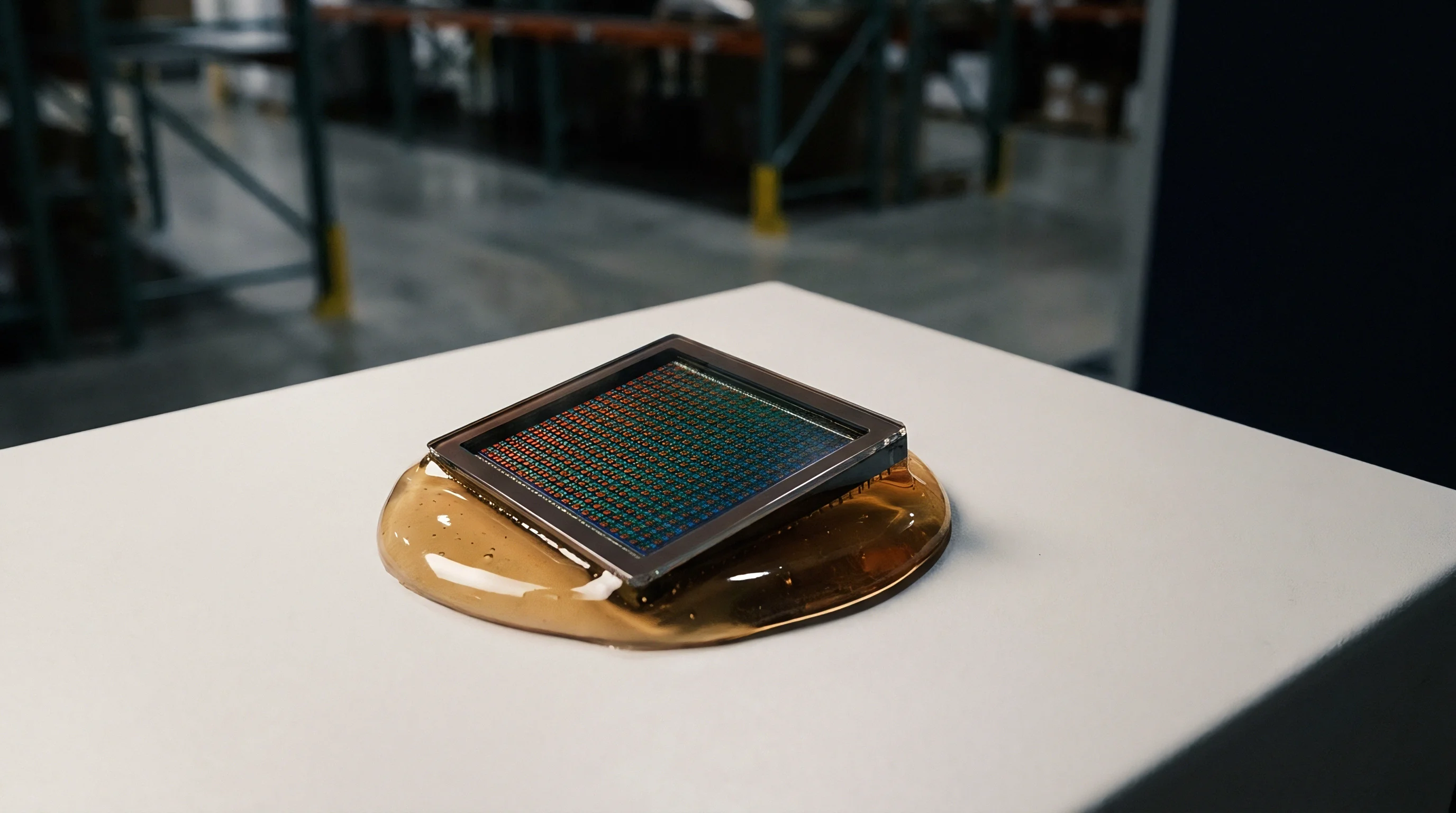
Strain Sensor Physics under High Flux
High heat inputs induce localized microstructural shifts in metallic foil transducers. Nickel-chromium and platinum-tungsten alloys maintain electrical continuity up to seven hundred degrees Celsius, yet apparent strain caused by thermal expansion mismatches between the gauge foil and the parent substrate routinely exceeds three thousand microstrain. Without real-time thermal compensation using collocated thermocouples, an instrumentation amplifier cannot separate mechanical deformation from thermal expansion.
Thermal gradients distort structural geometry.
Physical failure sequences in transducer elements subjected to severe thermal flux follow distinct mechanistic patterns:
- Ceramic adhesive spallation occurs when differential expansion shear stresses between the transducer casing and the ceramic bond line surpass forty megapascals during thermal shocks exceeding one hundred degrees Celsius per second.
- Diffusive doping degradation appears in semiconductor sensing crystals above four hundred degrees Celsius, causing carrier migration that permanently shifts bridge null balances by several millivolts per hour.
- Sapphire fiber cladding stripping emerges when protective metal coatings oxidize in ambient air, inducing high optical attenuation along transmission lines running through hot structural zones.
- Pyroelectric charge saturation blinds single-ended piezoelectric crystals during rapid heating, generating thousands of volts across input amplifiers before bleed resistors dissipate the surge.
Transducer sensitivity shifts nonlinearly with rising skin temperatures, altering the relationship between real physical displacement and reported electrical current. Sourcing teams seeking reliable data during sudden aerothermal maneuvers place instrumentation at internal neutral axes rather than exposed outer mold lines to protect the sensing elements.
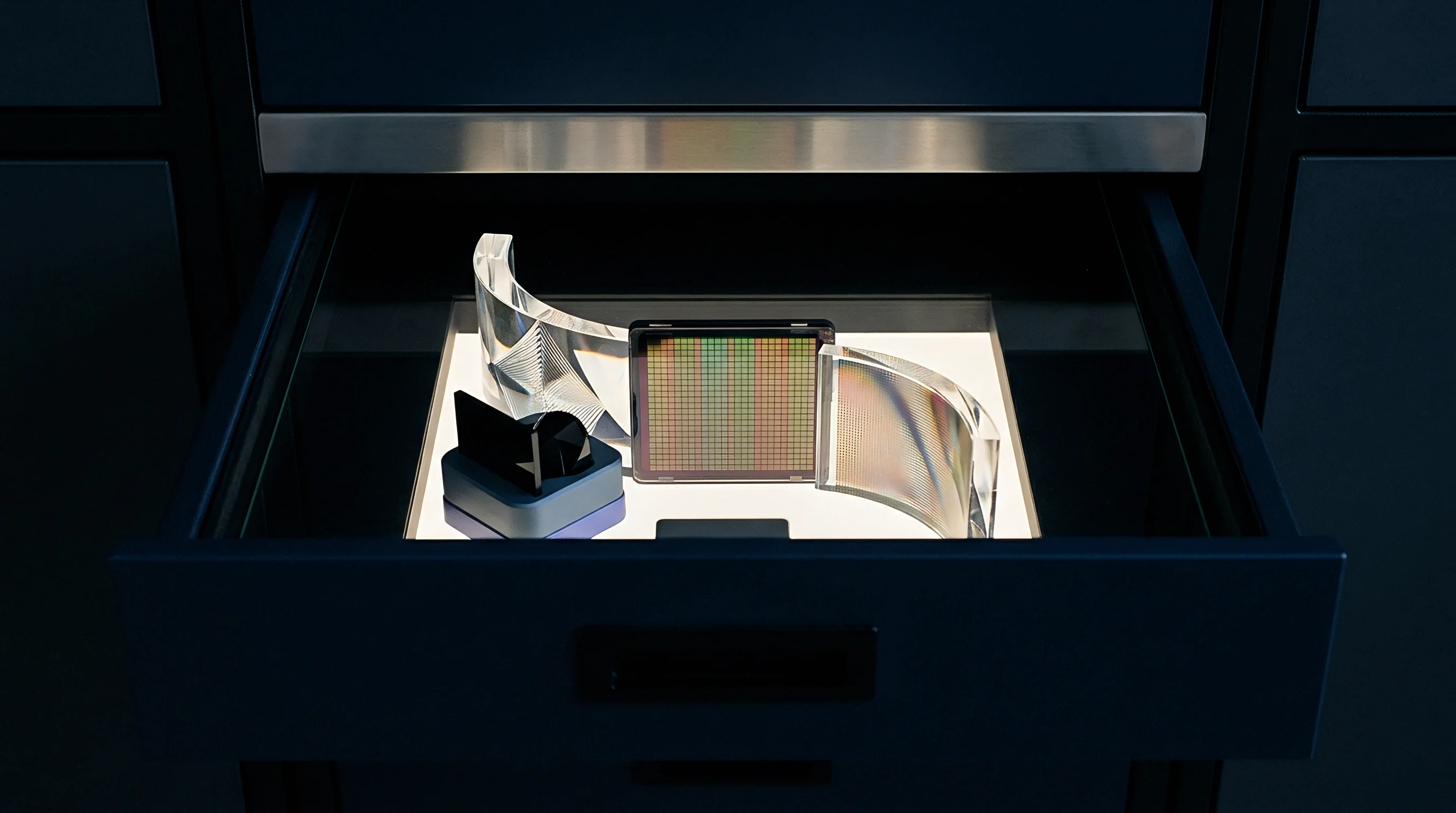
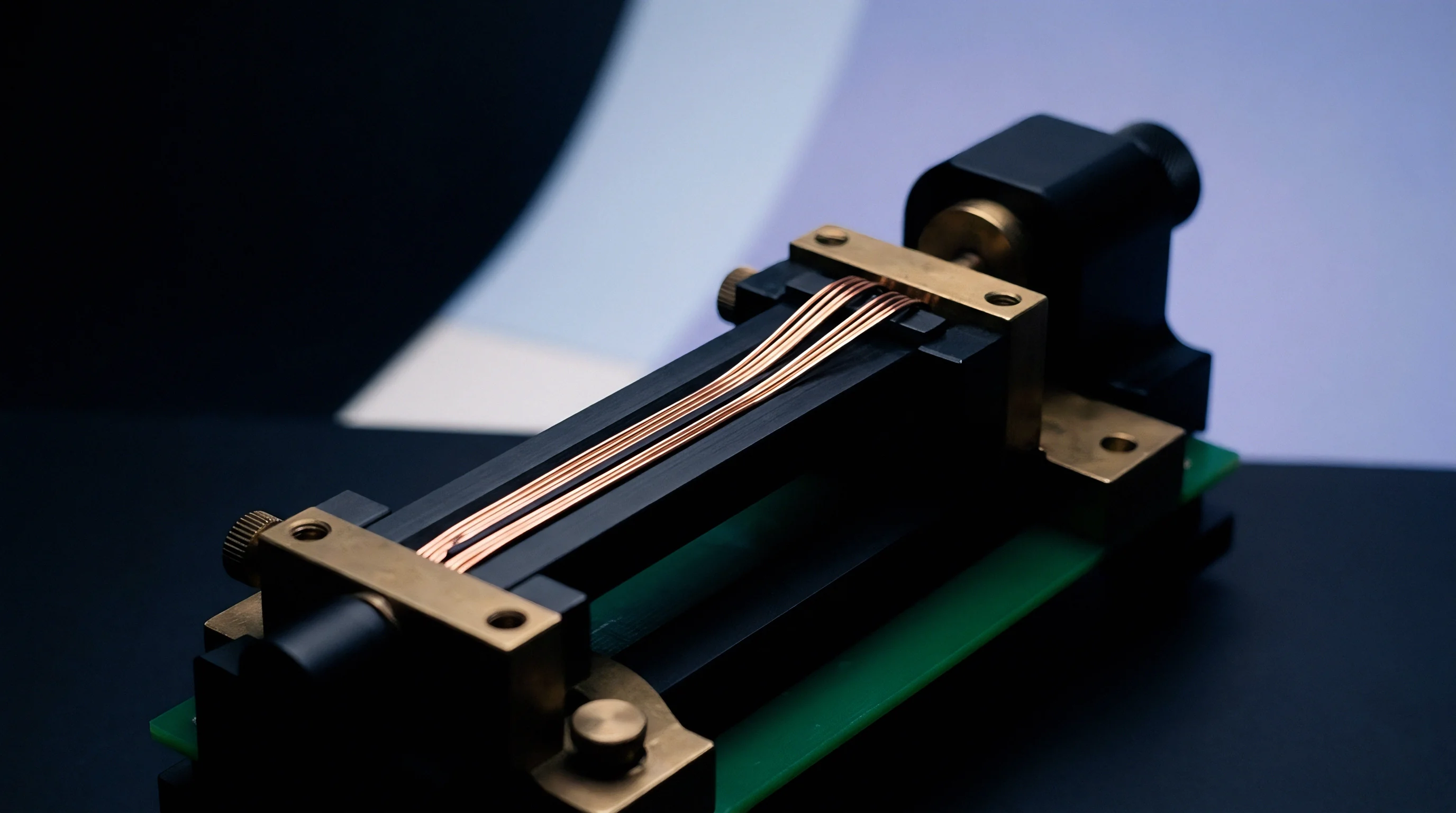
Strut
Mechanical airframes transmit aerothermal moments through internal truss networks, titanium spars, and carbon-carbon ribs. Rapid heating weakens structural stiffness by altering Young’s modulus, which drops by thirty-five percent in titanium alloys heated from ambient temperature to six hundred degrees Celsius. As structural members soften, aerodynamic pressure deflects the vehicle contour beyond nominal aerodynamic predictions.
Control algorithms mapping sensor data through kinematic inversion matrices compute actuation demands based on outdated rigid-body assumptions, leading to command errors.
Singular values drop rapidly.
Structural assemblies carry arrays of strain gauges, optical fibers, and inertial measurement units distributed across load-bearing bulkheads. The geometric coordinate transformation matrix connecting these localized readings to generalized body coordinates shifts continuously throughout the flight envelope. If an instrumentation system records three milliradians of localized skin bending on a mounting spar, the flight computer must determine whether that displacement indicates actual vehicle rotation or merely local thermal warping.
Misinterpreting thermal deflection as vehicle rotation causes flight controllers to command unnecessary aerodynamic corrections, driving control surfaces into actuator saturation limits.
Could Rapid Thermal Gradients Invert Sensor Sensitivity Signs?
Thermal gradients across thin structural webs generate intense internal compression forces that trigger localized thermal buckling. When a thin panel snaps through its neutral plane due to compressive thermal expansion against rigid boundary frames, surface strain changes sign instantaneously from tension to compression. A strain sensor mounted on that surface registers an instantaneous reversal in mechanical load.
The vehicle trajectory estimator, processing this sudden sign reversal through an inverted state matrix, calculates that aerodynamic forces have reversed, instantly commanding maximum opposing elevon deflection.
A sensor placed closer to the structural neutral axis experiences less transient thermal bending strain than one mounted on the outer skin.
State reconstruction under thermal deformation requires sequential signal processing through several computational stages:
- Raw optical interrogation extracts peak reflection wavelengths from sapphire fiber sensors at update rates between five and ten kilohertz across eight parallel channels.
- Thermal decoupling arithmetic removes apparent strain signals by processing coincident high-temperature platinum resistance readings through calibrated third-order polynomial corrections.
- Structural shape reconstruction feeds temperature-corrected strain vectors into displacement matrices to estimate vehicle deflection profiles across structural nodes.
- Jacobian coordinate modification updates the geometric transformation matrix in guidance memory to reflect the current deformed airframe shape before inversion routines compute control commands.
Stiffness loss destabilizes closed loops.

Kinematic Deflection in Structural Assemblies
Elevon control horns and wing-body junction fittings undergo asymmetric thermal heating when boundary layer shocks impinge upon mechanical joints. Unequal thermal expansion between fastener alloys and surrounding composite skins introduces mechanical play into previously rigid linkages. In low-temperature conditions, an actuator stroke of ten millimeters yields an exact angular deflection of five degrees.
In high-temperature conditions, differential expansion and linkage compliance reduce the realized control surface deflection to three and a half degrees, while adding forty milliseconds of phase lag.
| Material Substrate | Temperature Range | Modulus Retention | Expansion Coefficient | Recommended Sensor Modality |
|---|---|---|---|---|
| Ti-6Al-4V Titanium | 20 to 500 °C | 68 percent | 9.8 × 10⁻⁶ /K | High-temperature capacitive probes |
| Inconel 718 Nickel Alloy | 20 to 750 °C | 76 percent | 14.2 × 10⁻⁶ /K | Type II sapphire fiber Bragg gratings |
| Carbon-Carbon Composite | 20 to 1400 °C | 94 percent | 1.8 × 10⁻⁶ /K | Embedded optical sapphire waveguides |
| Alumina Structural Ceramic | 20 to 1100 °C | 82 percent | 8.1 × 10⁻⁶ /K | Laser-welded platinum-tungsten gauges |
Deploying control inversion algorithms without real-time tracking of structural deformation causes flight control surfaces to flutter, resulting in mechanical control linkage binding and complete airframe loss.
Threshold
Matrix inversion routines calculate feedforward control signals by solving linear state equations where the state matrix represents aerodynamic, inertial, and structural dynamics. The stability of direct inversion depends upon the condition number of the state Jacobian matrix, defined as the ratio of its largest singular value to its smallest singular value. When high temperatures warp the airframe and alter control surface effectiveness, off-diagonal elements in the Jacobian grow, while diagonal dominance erodes.
Once the condition number surpasses numerical thresholds, digital floating-point inversion fails, driving calculated control trajectories into numerical divergence.
Condition numbers spike during heating.
Under ambient conditions, an aerodynamic trajectory matrix demonstrates balanced singular values, yielding condition numbers between twelve and thirty-five. In these limits, double-precision matrix inversion algorithms compute control trajectories within microseconds. Under transient aeroheating, localized compliance changes drop the smallest singular value toward zero.
If the condition number expands past one thousand, standard LU decomposition algorithms lose precision, introducing numerical noise into actuator commands. Tikhonov regularization and singular value decomposition routines maintain stability, yet introduce artificial damping that slows flight control responses.
Condition Number Expansion during Heat Soak
As heat diffuses from external skins into internal titanium spars over thirty to ninety seconds, structural thermal gradients change from steep skin-to-core differences to uniform thermal saturation. This progression alters structural mode shapes, bringing the first torsional frequency and the second bending frequency into close proximity. When two structural eigenmodes align in frequency, their corresponding columns in the trajectory state matrix become linearly dependent.
This collinearity causes the plant matrix to lose rank, driving the determinant toward zero.
Severe heat flux drops structural stiffness while increasing matrix condition numbers in plant inversion routines.
A worked scenario illustrates this numerical degradation. Consider an eight-by-eight state Jacobian matrix mapping four control surface deflections and four aerodynamic body rates. Under ambient conditions, the maximum singular value equals 48.2 and the minimum singular value equals 2.1, producing a condition number of 23.0.
Following ninety seconds of localized aeroheating up to seven hundred fifty degrees Celsius, uneven thermal expansion alters aerodynamic moments while reducing structural torsional rigidity. The maximum singular value climbs to 62.4 due to increased aeroelastic coupling, while the minimum singular value collapses to 0.038 because of eigenmode alignment. The condition number expands to 1642.1.
Under standard thirty-two-bit floating-point inversion, numerical error accounts for over fifteen percent of the inverted output command, triggering high-frequency actuator oscillations.

Is Singular Value Degeneracy Detectable before Inversion Fails?
Computing full singular value decomposition at high control loop rates burdens embedded flight computers. Tracking structural stability boundaries requires lighter mathematical proxies that detect impending matrix degeneracy. Calculating the Gershgorin disc radii of the normalized plant matrix provides an upper bound on eigenvalue dispersion without requiring iterative matrix factorization.
If any Gershgorin circle encompasses the complex origin, the flight computer detects that the plant matrix is nearing singularity, allowing it to transition to pre-programmed conservative control routines before inversion diverges.
| Thermal State | Skin Gradient | Condition Number | Inversion Algorithm | Actuator Stability Margin |
|---|---|---|---|---|
| Cold Launch | 0 °C/mm | 18.4 | Standard LU Decomposition | 14.2 dB, 58 deg phase |
| Early Heat Flux | 85 °C/mm | 142.7 | Pivoting QR Factorization | 9.1 dB, 41 deg phase |
| Peak Thermoelastic Shock | 140 °C/mm | 1890.3 | Truncated Tikhonov Inversion | 3.8 dB, 19 deg phase |
| Thermal Saturation | 12 °C/mm | 415.8 | Damped Least Squares | 6.4 dB, 32 deg phase |
| Data computed for an eight-state hypersonic lifting body configuration under five percent control surface aeroelastic deflection. | ||||
Inversion errors propagate into actuators.
Whether embedded processors can reliably compute online condition number metrics fast enough to prevent actuator saturation during shock-induced eigenmode alignment remains unresolved across high-temperature aerospace flight programs.

Drift
Signal-conditioning electronics converting physical transducer currents into digital words face severe thermal environments near airframe hot sections. Operating analog-to-digital converters within high-temperature enclosures causes offset shifts, gain drift, and reference voltage droop. An analog front-end with an effective number of bits of fourteen at twenty-five degrees Celsius degrades to nine effective bits when junction temperatures reach one hundred twenty-five degrees Celsius.
This loss of resolution injects white noise into the trajectory inversion engine, which magnifies errors when processing ill-conditioned plant matrices.
Thermal EMF adds bias.
Thermoelectric voltages emerge at wiring junctions where dissimilar metals meet across thermal gradients. Standard copper-to-gold wire bonds generate Seebeck coefficients of several microvolts per degree Celsius. If an instrumentation line crosses an engine bay where temperatures change by three hundred degrees Celsius over twenty centimeters, parasitic thermal electromotive forces introduce significant DC offsets into low-level microvolt signals.
These DC offsets cannot be distinguished from static aerothermal drag loads by downstream processors without high-frequency AC carrier excitation techniques.

Thermoelectric Voltages across Analog Conversion Chains
Silicon-on-insulator instrumentation amplifiers maintain stable transconductance up to two hundred degrees Celsius, yet package mechanical stress induced by differential expansion warps internal silicon dies. This piezoresistive die stress alters internal transistor matching, resulting in input offset voltage drifts exceeding five microvolts per degree Celsius. When amplifying signals from platinum-tungsten strain bridges where full-scale outputs measure only ten millivolts, an uncompensated thermal drift consumes a large fraction of the usable analog-to-digital input range.
Parasitic capacitance corrupts analog lines.
To preserve signal integrity under high thermal flux, conditioning stages follow strict electronic rejection criteria:
- Excessive common-mode bias triggers channel rejection when thermoelectric offsets surpass fifty millivolts, preventing amplifier saturation.
- Reference voltage drooping beyond point-five percent initiates an automatic switchover to redundant silicon carbide bandgap references.
- Excessive phase lag exceeding five degrees at twenty hertz prompts the control system to flag the transducer as aerothermally compromised.
- Bridge impedance collapse caused by moisture ingress or dielectric softening beneath ten megohms immediately isolates the sensor from the inversion matrix.

Conversion Timing and Latency Boundaries
Filtering high-frequency structural noise from high-temperature sensors introduces phase delays that erode control loop stability margins. Digital finite impulse response filters delivering eighty decibels of stopband rejection introduce latency penalties of twenty-five to fifty milliseconds. In dynamic inversion architectures where the trajectory plant matrix updates at one kilohertz, a thirty-millisecond measurement delay causes state estimators to lag behind actual structural positions, leading to instability when condition numbers are high.
Phase margins collapse immediately.
Suppliers frequently state that analog conversion errors remain negligible because internal firmware automatically calibrates out thermal effects, but bench tests show these compensation lookup tables break down during rapid thermal transients exceeding twenty degrees Celsius per second.

Audit
Procuring sensing instrumentation for high-temperature aeroelastic environments requires rigorous qualification standards. Standard industrial sensor specifications fail when applied to transient thermal applications. Wafer foundries manufacturing silicon-on-insulator or silicon carbide components must certify metallization integrity under severe thermal cycling.
Purchasing specifications require vendors to prove metallurgical stability across multiple rapid heating runs before parts are accepted into flight builds.
Lead times exceed thirty weeks.
Sole-source dependencies create acute supply chain vulnerabilities for high-temperature trajectory sensing programs. Globally, only two commercial facilities draw single-crystal sapphire optical fibers with transmission losses beneath point-five decibels per meter at one thousand degrees Celsius. When research programs or industrial users compete for fiber batches, procurement lead times extend past forty weeks.
Sourcing engineers qualify second-source manufacturing lines utilizing polycrystalline zirconia fibers, accepting higher signal attenuation to protect delivery schedules.

Wafer Source Concentration and Fabrication Yields
Specialized fabrication facilities producing langasite or gallium phosphate piezoelectric sensors operate on small six-inch wafer lines. High crystal defect densities and anisotropic thermal expansion properties reduce wafer yields to less than twenty-five percent for flight-qualified sensing dies. Sourcing contracts must budget for substantial wafer scrap rates during production runs.
If an unexpected batch exhibits high dielectric leakage during quality screening, delivery schedules can slip by several months.
Fab yield plummets above threshold.
| Transducer Category | Primary Wafer Substrate | Global Wafer Foundries | Average Lead Time | Production Yield Range |
|---|---|---|---|---|
| Optical Fiber Bragg Arrays | Single-crystal sapphire | 2 Qualified Sources | 36 to 48 weeks | 35 to 45 percent |
| High-Temp Accelerometers | Gallium Phosphate (GaPO4) | 3 Qualified Sources | 24 to 32 weeks | 20 to 30 percent |
| Capacitive Displacement Probes | Alumina with Platinum | 5 Qualified Sources | 16 to 22 weeks | 65 to 75 percent |
| Extreme Foil Strain Gauges | Pt-W Alloy on Polyimide | 4 Qualified Sources | 12 to 18 weeks | 80 to 90 percent |

Incoming Inspection and Environmental Screening
Standard incoming inspection protocols cannot detect latent delamination in high-temperature sensor assemblies. Inspection procedures include thermal shock screening where randomly sampled components undergo rapid temperature cycling in induction chambers, shifting from ambient temperature to eight hundred degrees Celsius within ten seconds. Transducers are tested before and after thermal shock for insulation resistance, resonance purity, and baseline resistance drift.
Parts showing greater than one percent calibration drift across three thermal cycles are rejected at incoming inspection.
Platinum elements drift over time.
Compliance with MIL-STD-810H Method 503.7 requires surviving a thermal rate of change of thirty degrees Celsius per second without physical delamination of the sensor casing.
Contract clauses enforcing MIL-STD-810H Method 503.7 temperature shock qualification require suppliers to pay full replacement penalties and cover line stoppage expenses when sensor housing brazes fail during environmental testing.