Active Thermoelectric Substrate Equalization Algorithms for Multi Axis Thermal Transient Drift Cancellation
Active thermoelectric equalization cancels multi-axis sensor drift by actively eliminating spatial substrate gradients before packaging stress deforms the sensing die.

Gradient
Spatial Nonuniformity across Multi Axis Sensor Packages
Thermal transient events inside inertial measurement units and multi-axis force balances induce asymmetrical mechanical stress across sensitive micro-electro-mechanical dies. A step change in external temperature creates an immediate heat flux across the mounting substrate, driving localized expansion mismatches between silicon sensing structures and their ceramic or organic carriers. High-precision capacitive comb fingers deflect under package-induced warpage rather than genuine kinematic acceleration.
The resulting bias shift routinely reaches 15 to 80 milli-g on industrial accelerometers and 0.2 to 1.5 degrees per second on tactical-grade Coriolis vibratory gyroscopes during a 5 Kelvin per minute ramp. The instrument reports false motion until the mechanical structure reaches thermal equilibrium.
Traditional polynomial calibration compensates steady-state temperature changes by mapping sensor bias against an internal diode reading. That technique breaks down during rapid transients. Internal sensing diodes sit adjacent to processing logic rather than the mechanical suspension springs, introducing a spatial and temporal phase lag into the correction path.
The sensor core experiences peak thermomechanical distortion while the reporting diode has registered only a fraction of the thermal rise. Substrate equalizers prevent this failure mode by forcing the temperature distribution across the entire multi-axis package toward spatial uniformity through active thermoelectric actuators, neutralizing the mechanical moment before it deforms the transduction element.
A temperature differential of 0.1 Kelvin across a 5-millimeter silicon substrate generates sufficient mechanical strain to shift tactical MEMS bias beyond navigation specifications.
Active substrate equalization replaces open-loop digital subtraction with closed-loop physical flux balancing. Multiple miniature thermoelectric coolers operate beneath the carrier substrate, pumping thermal energy across spatial zones to counteract oncoming external waves. By governing the Peltier drive current through real-time thermal gradient tracking, the control system suppresses both lateral and normal temperature variances across the die perimeter.
Sourcing teams evaluating multi-axis platforms for guidance, robotics, or seismic monitoring evaluate the equalization loop as a primary hardware attribute, because mechanical stress cancellation at the die stage eliminates the numerical instabilities inherent in high-order derivative digital filters.


Actuator
Bismuth Telluride Micro Cooler Arrays
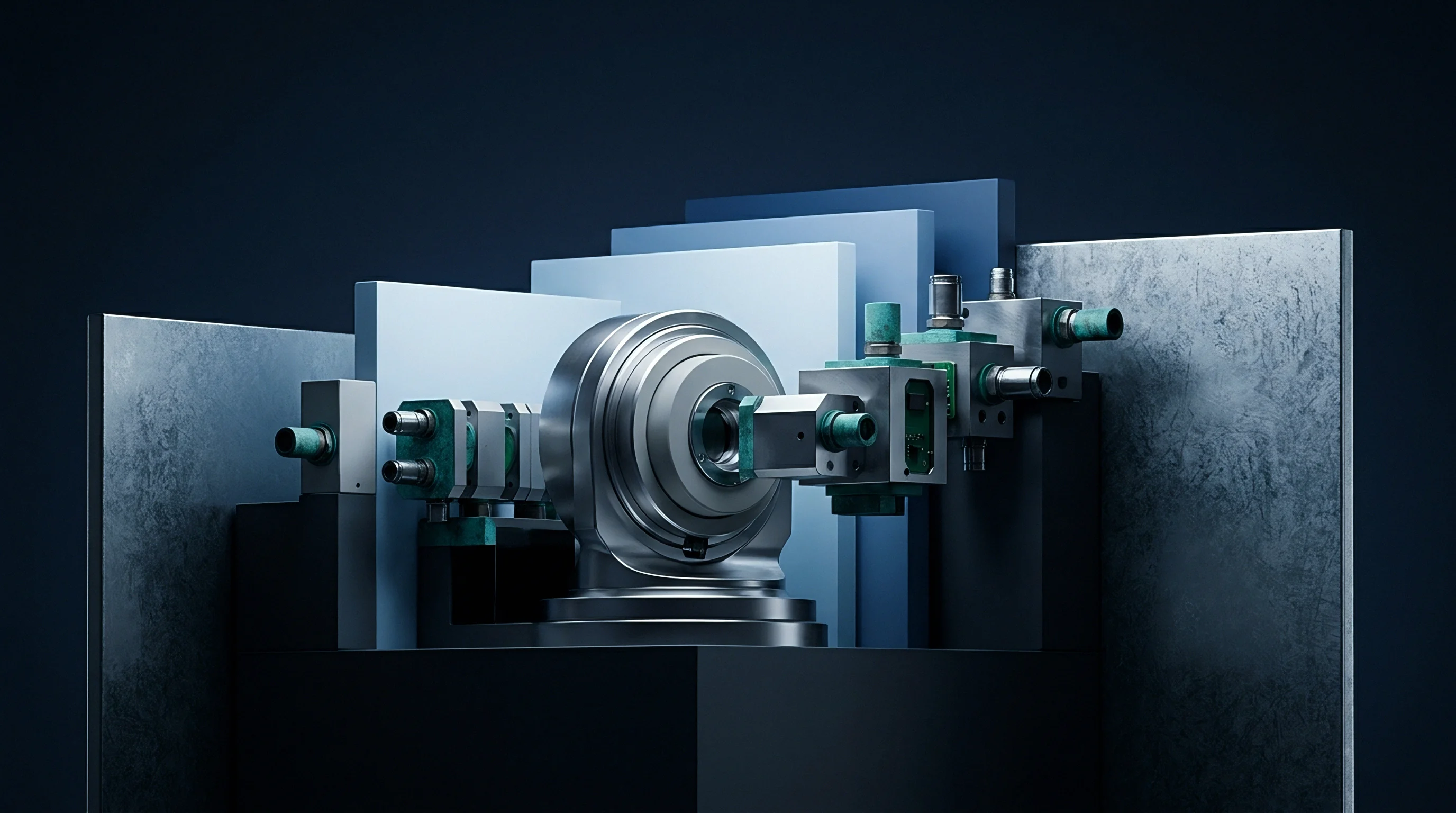
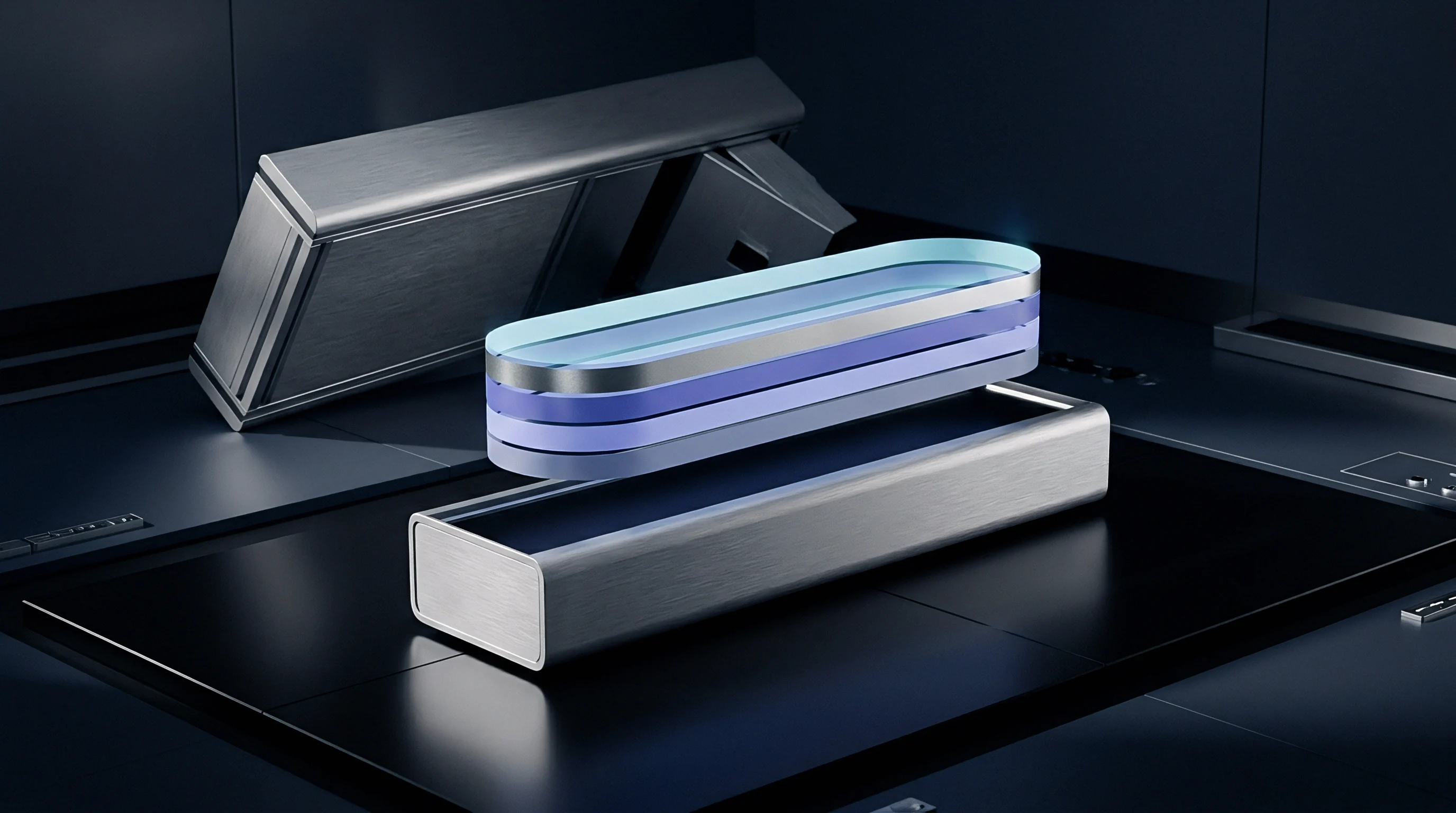
Physical execution of multi-axis thermal equalization relies on segmented bismuth telluride micro-thermoelectric cooler modules mounted directly below the sensor interposer. Standard single-stage Peltier modules apply uniform flux across their entire top plate, which fails to resolve directional heat plumes originating from adjacent power regulators or asymmetric chassis exposures. Segmented arrays divide the active interface into discrete quadrants or hex-cells, each driven by independent H-bridge current channels.
Micro-coolers manufactured via thin-film electrochemical deposition achieve module thicknesses below 300 micrometers, minimizing the added mechanical mass and acoustic compliance of the sensor stack.
Response latency distinguishes thin-film thermoelectric devices from conventional bulk pellet modules. Bulk coolers incorporate 1-millimeter pellets that exhibit thermal response time constants between 1.5 and 4.0 seconds, introducing phase lag that destabilizes predictive equalization loops. Thin-film couples exhibit response times under 15 milliseconds.
This temporal agility permits counter-flux generation that matches the rapid propagation rate of external thermal shock events through aluminum chassis walls.
| Technology Type | Couple Height (microns) | Response Time (ms) | Max Heat Flux (W/cm²) | Interposer Thermal Resistance (K/W) |
|---|---|---|---|---|
| Bulk Pellet Bismuth Telluride | 1200 | 2200 | 8.5 | 3.8 |
| Miniature Extruded Array | 500 | 450 | 18.0 | 2.1 |
| Thin Film Electroplated Bi2Te3 | 60 | 12 | 65.0 | 0.6 |
| Silicon Germanium Superlattice | 20 | 3 | 110.0 | 0.4 |
Electrical efficiency sets practical limits on active equalization. Thermoelectric coolers operate with low coefficients of performance when driven against steep thermal lifts. The design requirement here does not involve refrigeration below ambient, but rather spatial planar balance across the package footprint.
Maintaining zero differential between opposing package edges requires moving tiny fractions of a watt across millimetric distances. The control loop consumes minimal drive power under steady conditions, drawing peak currents only during violent environmental ramps.
Parasitic thermal conduction paths undermine active actuator authority if packaging interfaces remain uncontrolled. Ceramic substrates of high thermal conductivity, such as aluminum nitride with 170 Watts per meter-Kelvin, distribute lateral heat effectively but demand elevated drive current to establish regional thermal offsets. Silicon interposers with micro-machined isolation trenches offer superior spatial containment, restricting thermoelectric control effort strictly to the sensor perimeter.
System assemblers establish thermal resistance targets across the interposer plane to balance mechanical stiffness against zone isolation.
Lead times for specialized thin-film thermoelectric arrays run between 26 and 40 weeks due to concentrated wafer-level packaging capacity. Bulk pellet designs provide readily available supply alternatives across multiple global vendors, but impose a penalty in closed-loop equalization bandwidth. Component engineers balance this supply vulnerability against the dynamic requirements of the physical operating environment.
Topology
Distributed Thermistor Networks and Spatial Reconstruction
Direct spatial equalization requires temperature observation across the multi-axis substrate with sub-millikelvin precision. Single on-chip diodes yield no differential data. High-reliability topologies integrate resistance temperature detector arrays or negative temperature coefficient thermistor networks placed symmetrically along the outer mounting boundary of the sensor die.
Four sensing nodes placed at substrate corners and one central node under the proof mass enable reconstitution of both orthogonal lateral gradients and the normal through-plane gradient.
Spatial gradient extraction uses differential analog front ends to eliminate common-mode drift. Let temperature points along the X-axis be represented by sensors T1 and T2, while T3 and T4 govern the orthogonal Y-axis. The differential term across an axis exposes the external thermal wave front well before heat penetrates the central structural anchors of the proof mass.
An operational amplifier network digitizes these delta channels through high-resolution 24-bit delta-sigma converters running at 1 kilo-sample per second, yielding the gradient data feed necessary for state estimation.
Placing thermal sensors outside the mechanical anchor perimeter provides leading phase information for active feedforward equalization.
Interconnect parasitic resistances introduce significant measurement offsets across varying absolute temperatures. Standard practice dictates four-wire Kelvin connections or ratio-metric bridge architectures to suppress lead-resistance drift across wide operating envelopes ranging from minus 40 to plus 85 degrees Celsius. Calibration routines log the zero-gradient offset of the sensor array within an isothermal oil bath during initial component manufacturing.
Equalization

Predictive Spatial Flux Balancing Algorithms
Control software governing the multi-axis actuator matrix must cancel thermal stress without injecting high-frequency electrical switching noise into sensitive analog sensing pickoffs. Standard proportional-integral-derivative loops fail under transient conditions; their reactive mathematical structure demands an existing error before initiating control effort, guaranteeing a window of mechanical deformation during thermal ramps. Predictive state-space formulations resolve this limitation.
Thermal propagation through a multi-layer substrate follows linear diffusion kinetics modeled through lumped-parameter thermal networks. The thermal state vector incorporates the temperatures of each discrete micro-cooler zone, the interposer layers, and the structural die anchors. A Kalman filter estimates unmeasured core internal temperatures using surface-mounted thermistor array readings, while a feedforward compensation block calculates the necessary counter-flux profile based on incoming external gradient velocity.
The control algorithm calculates dynamic drive commands through explicit matrix operations:
- Spatial Gradient Extraction samples all peripheral resistance nodes simultaneously to compute instant differential vectors across package axes.
- Thermal Diffusion State Estimation maps measured surface vectors into the internal package state space using calibrated conduction matrices.
- Model Predictive Flux Calculation determines regional thermoelectric cooling and heating currents to drive internal mechanical stress to zero.
- Actuator Current Quantization translates continuous thermal power demands into filtered direct-current drive signals free of high-frequency ripple.
Pulse-width modulation of thermoelectric elements generates sharp electromagnetic transitions that couple directly into high-impedance capacitive MEMS charge amplifiers. High-performance substrate equalizers reject digital pulse-width modulation entirely. Linear drive circuits or low-pass LC-filtered current-mode buck stages supply pure direct current to the Peltier junctions.
This circuit architecture eliminates inductive noise spikes that would otherwise register as spurious acceleration or angular rate signals.
Thermal stability requires strict bounds on actuator slew rates. Driving a thermoelectric element with an instantaneous current step induces rapid thermal expansion at the cold-hot junction interface, transmitting high-frequency mechanical shock waves directly into the sensor mounting plane. Algorithms incorporate trajectory shapers that smooth control transitions within the mechanical bandwidth of the MEMS suspension system, preventing self-induced vibration rectifications.
System integrators qualify control algorithm stability through multi-axis thermal rate tests. The test envelope exposes the sensor assembly to combined heating and cooling profiles inside a climate chamber while monitoring output drift. An unstable predictive model introduces regenerative thermal oscillations that manifest as low-frequency sinusoidal drift in the inertial outputs, degrading measurement stability well below uncompensated hardware performance.
Dispute
Should Equalization Occur in the Physical or Numerical Domain?
An ongoing technical debate divides precision instrument architects regarding whether thermal transient bias shifts belong in the physical domain or the digital post-processing domain. Proponents of digital-only cancellation argue that high-order polynomial regression models incorporating instantaneous temperature derivatives compensate multi-axis drift entirely in software. This approach avoids the cost, board area, and power consumption of thermoelectric coolers and driver circuitry.
Software models characterize sensor bias across temperature and temperature rate-of-change, subtracting the predicted drift from raw output words inside the host digital signal processor.
Physical equalization advocates point to fundamental non-linearities and mechanical hysteresis that evade software modeling. High rate-of-change thermal transients induce structural micro-slip within die-attach adhesive layers and solder ball matrices. When thermal expansion stresses exceed adhesive shear limits, elastic compliance degrades, producing permanent mechanical strain shifts.
A digital model relying solely on temperature and temperature-derivative inputs cannot track unpredictable stress relaxation paths. Physical substrate equalization maintains uniform zero-gradient conditions across the mechanical frame, preventing stress from approaching adhesive yield thresholds.
| Evaluation Vector | Digital Derivative Modeling | Active Physical Equalization | Passive Thermal Isolation |
|---|---|---|---|
| Transient Bias Rejection (10 K/min) | 85 to 92 percent | 98 to 99.5 percent | 40 to 60 percent |
| Hysteresis Memory Suppression | Zero suppression capability | Total structural preservation | Moderate suppression |
| Subsystem Electrical Power | Under 15 milliwatts | 350 to 1800 milliwatts | Zero power requirement |
| Production Calibration Time | 8 to 24 hours per axis | 15 to 45 minutes | Zero calibration time |
| Package Volume Overhead | Zero added volume | 300 to 500 percent | 400 to 800 percent |
The manufacturing floor reveals the economic boundary between these positions. Multi-rate thermal chamber calibration for complex digital derivative models demands massive test infrastructure. Characterizing a 6-axis inertial sensor across temperature ramps from minus 40 to plus 85 degrees Celsius at varying slew rates ties up environmental chambers for multiple days per batch.
Physical substrate equalization relies on settled spatial tracking loops, reducing factory calibration to simple static alignment steps. The added bill of materials cost of the thermoelectric hardware is often recovered through diminished test time during high-volume production cycles.
Adhesive strain hysteresis under dynamic thermal shock forms an irreversible error floor that digital derivative software compensation cannot mathematically reconstruct.
Power budget remains the critical liability for physical equalization. Battery-operated systems, downhole logging sondes, and small satellite attitude controllers operate within strict thermal dissipation limits. Dumping two watts of thermal management power inside a sealed chassis to preserve milligram-level bias stability may overheat surrounding analog electronics.
In energy-constrained applications, engineers accept lower measurement bandwidth and residual hysteresis drift to respect the operational power ceiling.
Protocol

Bench Qualification and Dynamic Stress Testing
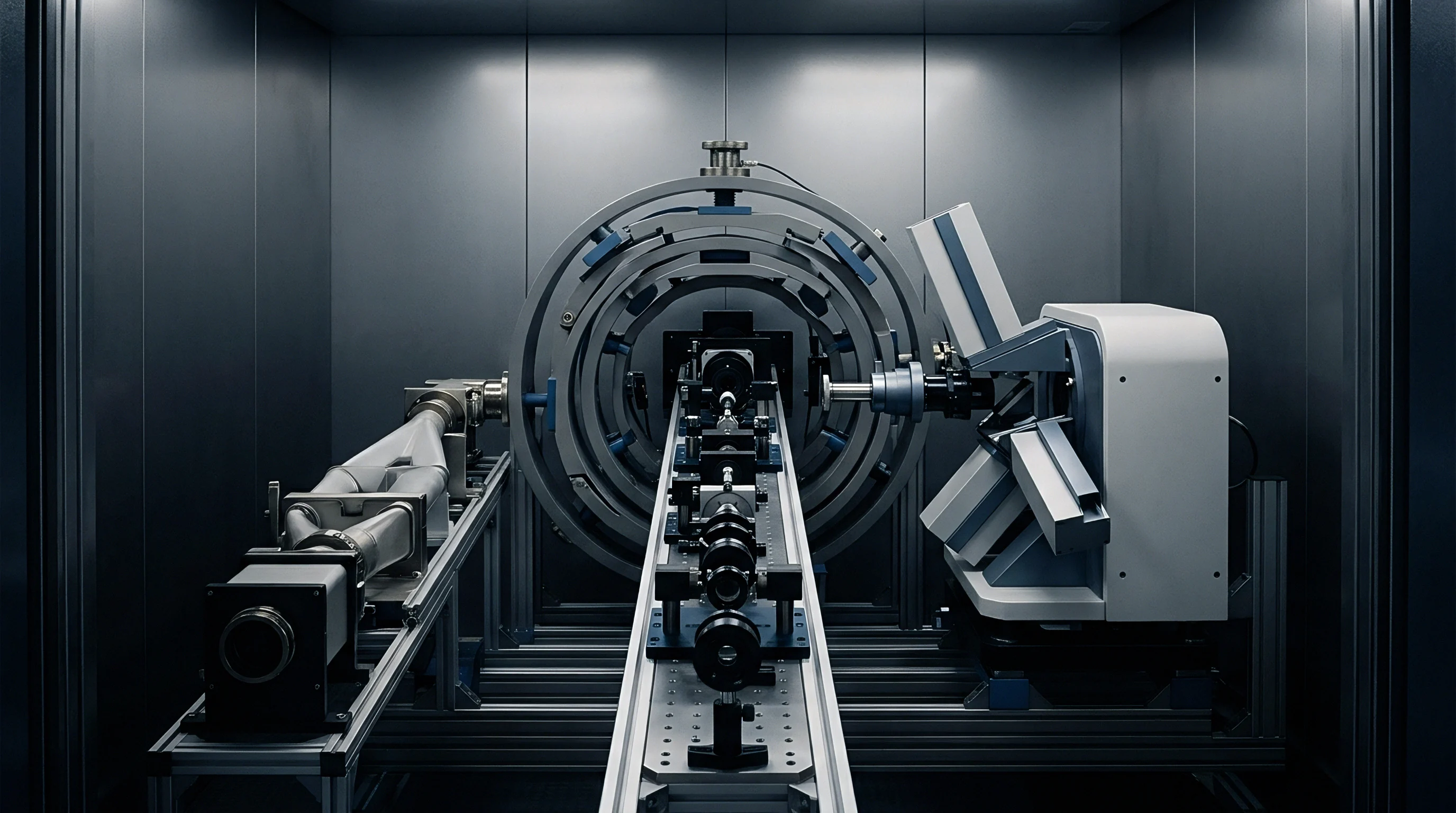
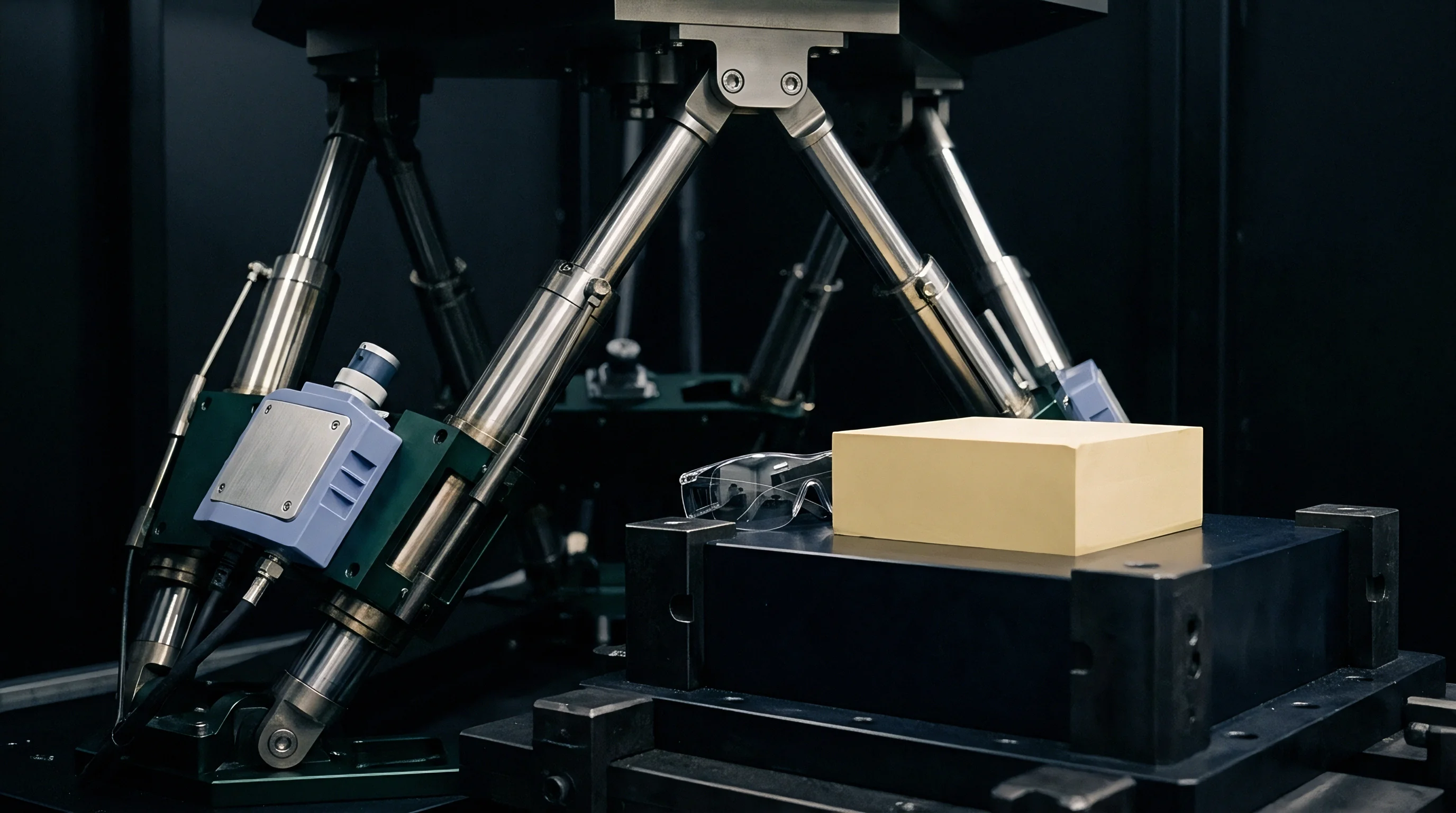
Verifying multi-axis thermal equalization requires rigorous test setups that isolate thermal gradient forces from mechanical vibrations. Standard environmental chambers circulate air using high-power convective fans, generating acoustic turbulence and floor vibrations that exceed the noise floor of precision inertial instruments. Verification benches utilize conductive liquid-cooled copper mounting blocks driven by internal resistive heaters, allowing direct conductive heat injection into the device under test within an acoustically isolated vacuum enclosure.
Incoming inspection protocols enforce strict transient profiles. Testing begins with an isothermal dwell at 25 degrees Celsius for two hours to establish base bias stability and Allan deviation characteristics. The test equipment then drives an asymmetric thermal shock into one edge of the sensor fixture via an embedded cartridge heater, generating a planar gradient of 15 Kelvin per minute across the mounting interface.
Sensor axis biases, differential thermistor voltages, and thermoelectric drive currents record continuously at high acquisition rates throughout the profile.
The verification sequence follows a strict hardware validation procedure:
- Baseline Noise Verification establishes sensor noise spectral density and bias in-run stability under isothermal conditions.
- Conductive Asymmetric Thermal Ramp applies an unmitigated 10 Kelvin per minute gradient wave to evaluate open-loop mechanical drift.
- Active Equalization Closed-Loop Activation initiates the predictive substrate controller to evaluate spatial gradient suppression efficiency.
- Thermal Shock Reversal switches heat injection points to quantify multi-axis cancellation symmetry and thermal loop settling latency.
Testing uncovers assembly defects that escape ambient functional checks. Voids inside the thermal interface material beneath the thermoelectric array distort heat transfer pathways, transforming a designed planar flux into irregular localized hotspots. These flux anomalies appear as sudden non-monotonic bias inflections during rapid thermal ramps.
Packaging technicians inspect all thermal bonds using acoustic micro-imaging before approving devices for production integration.
Settlement
Procurement Economics and Commercial Yield Risks
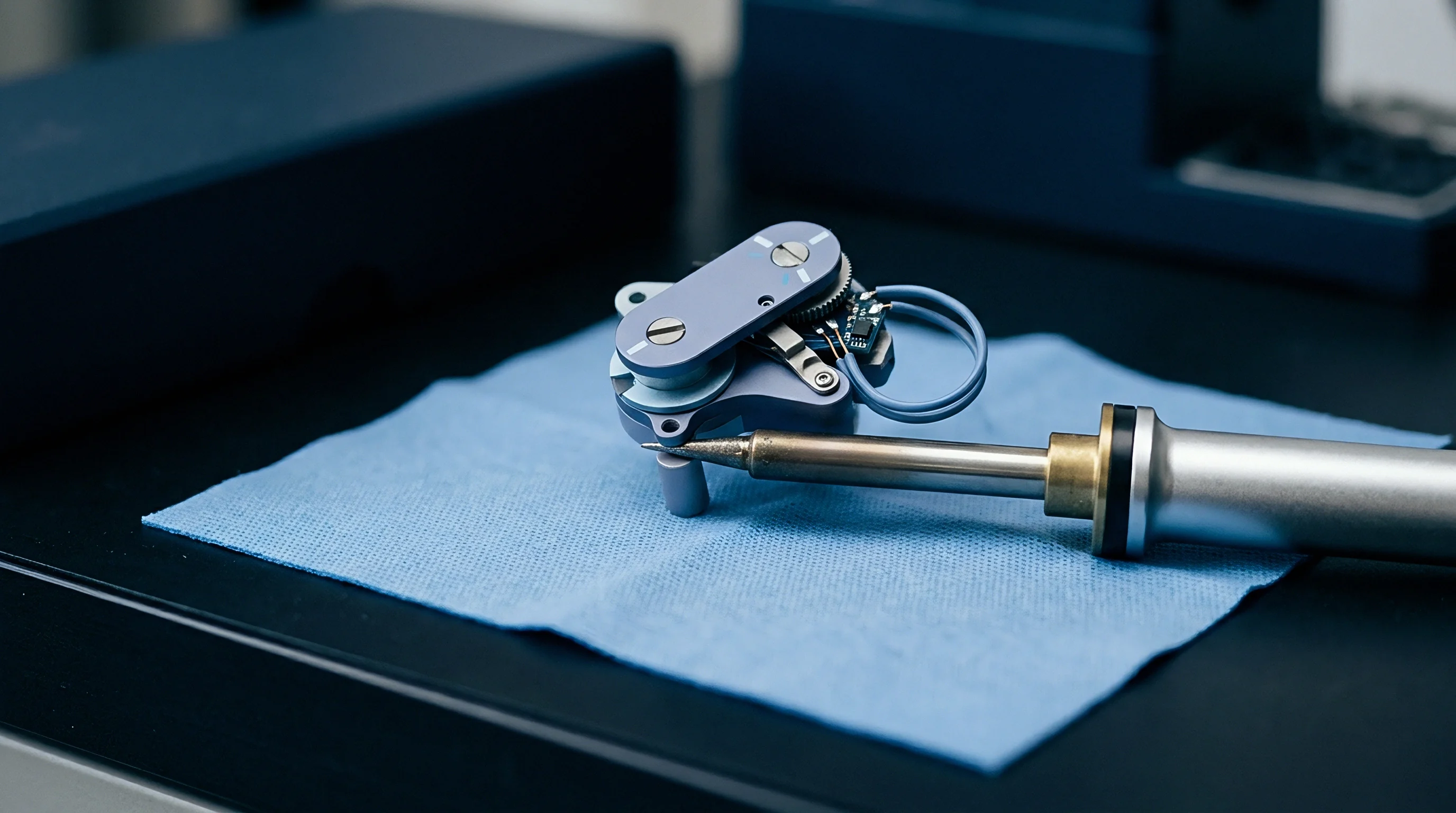
Specifying active thermoelectric substrate equalization shifts the commercial risk profile of precision instrumentation from software maintenance to component yield and assembly reliability. Thin-film thermoelectric arrays remain specialized components produced by a small number of global fabrication facilities. Lead times fluctuate based on specialty substrate wafer availability.
Procurement teams secure secondary sourcing through modular carrier designs that accept alternative bulk-pellet configurations, accepting documented performance deratings during supply allocation crises.
Incoming quality control standards for thermoelectric assemblies focus on junction resistance matching and ceramic substrate integrity. Micro-cracks within fragile thermoelectric legs propagate under repeated thermal cycling, causing gradual increases in internal electrical resistance. An increase in internal resistance above ten percent reduces available heat pumping capacity, forcing the drive circuit into saturation during maximum thermal ramps.
Quality agreements dictate automated four-point probe resistance screening of all incoming cooler arrays prior to interposer bonding.
Long-term field durability depends on the fatigue limits of interconnect solder joints exposed to high-frequency Peltier cycling. Continuous micro-reversals of current induce localized thermal expansion cycling at the copper-nickel-solder interfaces. Sourcing engineers require tier-one module suppliers to provide reliability test data conforming to Telcordia GR-468-CORE or AEC-Q102 standards, verifying that the sub-assembly survives a minimum of 5,000 thermal shock cycles without mechanical separation or thermal resistance degradation.
Subsystem warranty allocations frequently account for field failures driven by thermal interface material drying and delamination. Over extended operational lifespans spanning five to ten years, silicone-based phase-change compounds outgas and pump out under cyclical thermomechanical strain. The resulting loss of thermal contact between the thermoelectric cooler and the chassis sink destabilizes the feedback loop, leading to runaway driver saturation and elevated sensor drift.
Selecting sintered silver or metallic eutectic bonding eliminates outgassing risks, though it introduces a 15 to 25 percent cost premium on the structural assembly bill of materials.
A supplier will state that minor voids in the interfacial bond have no measurable impact on transient drift suppression.