Dynamic Allan Deviation Modeling of Sensor Noise Densities under Thermal Slew
Dynamic Allan deviation modeling under thermal slew isolates rate-dependent stochastic noise shifts from static calibration baselines in precision sensing elements.
Slew
Exposing microelectromechanical inertial sensors to rapid temperature changes in environmental chambers reveals severe corruption in their stochastic noise parameters. Static noise calibrations run at fixed isothermal steps hide the transient errors that dominate actual flight and automotive profiles. When ambient temperature drifts faster than 0.1 °C per minute, sensor noise becomes non-stationary, and standard time-domain variance metrics can no longer isolate high-frequency spectral components.
Noise Parameter Shift under Temperature Change
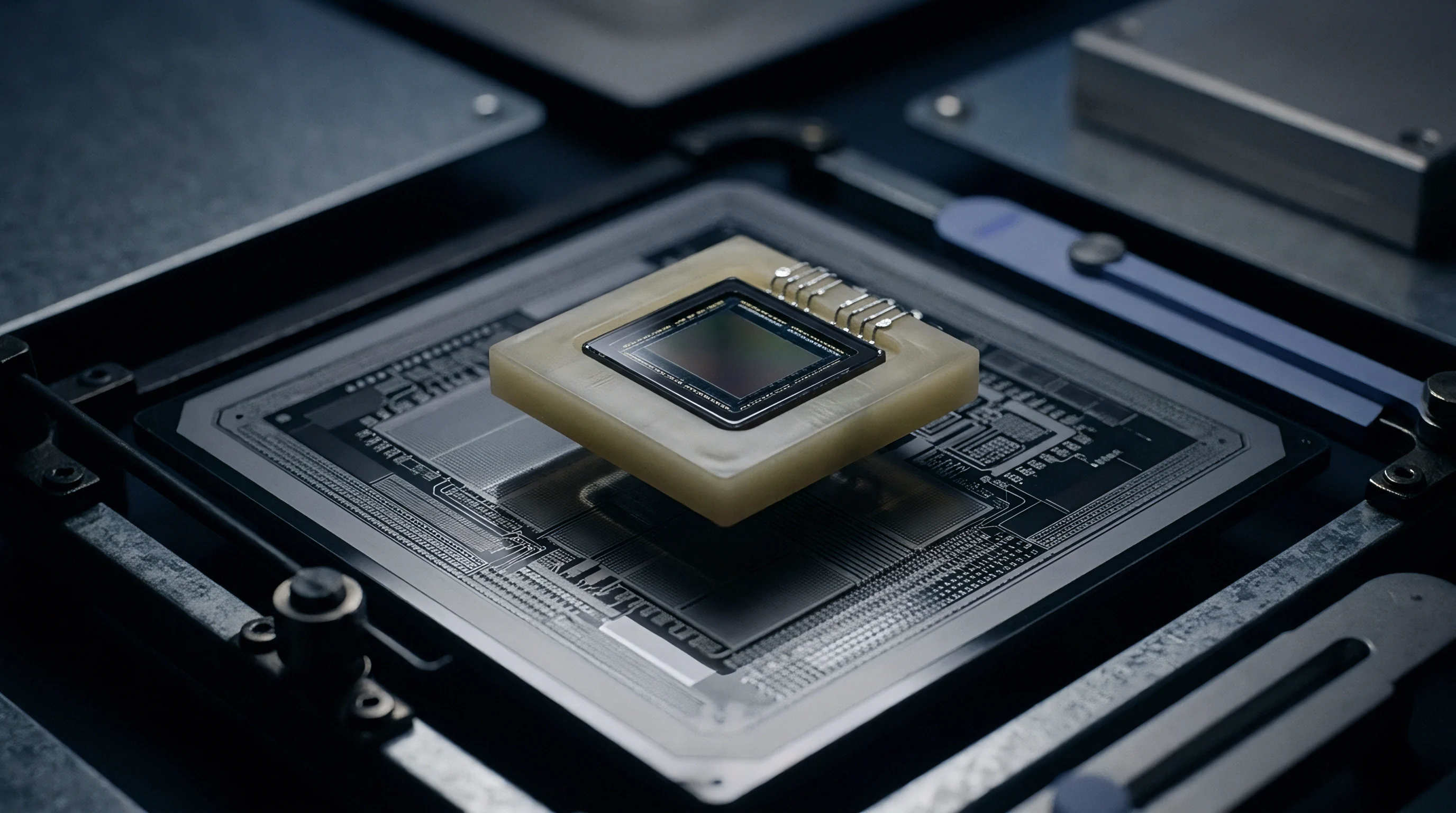
Zero-rate output data collected during isothermal bench runs yields clean log-log slope segments, where angle random walk, velocity random walk, and bias instability set clear baselines on Allan deviation plots. Introducing a non-zero thermal rate shifts these slope boundaries upward across multiple decadal integration spans.
Thermal slew rates induce differential expansion across silicon substrates, ASICs, and ceramic headers, shifting capacitive sensor comb gaps and altering piezoresistive strain bridge outputs. While white noise spectral densities remain largely invariant under moderate thermal rates, long-term bias stability degrades by more than an order of magnitude.
Isothermal Allan deviation calibrations fail whenever operational environments introduce spatial thermal gradients across sensor packages.
Quantifying noise density changes under rapid thermal transients requires tracking parameter drift against both instantaneous ambient temperature T and its derivative dT/dt. Piezoresistive sensing structures are particularly sensitive to stress profiles caused by expansion coefficient mismatches in external packaging materials.
Non-Isothermal Gradient Propagation across Sensor Die
Asymmetric packaging coefficients create localized expansion differences across silicon substrates. Heat entering through gold bond wires or ceramic base plates propagates unevenly through the die, creating differential strain that generates phantom rotational or acceleration outputs indistinguishable from real motion.
| Thermal Slew Rate (°C/min) | Angle Random Walk (deg/sqrt(hr)) | Bias Instability (deg/hr) | Rate Random Walk (deg/hr/sqrt(hr)) |
|---|---|---|---|
| 0.0 (Isothermal at 25 °C) | 0.035 | 0.8 | 0.12 |
| 0.5 | 0.038 | 2.4 | 0.85 |
| 2.0 | 0.045 | 8.9 | 4.30 |
| 5.0 | 0.062 | 27.5 | 18.60 |
Flicker noise scales with delta T as thermal gradients set up dynamic stress fields that alter micro-resonator mechanical Q-factors. These lower quality factors broaden mechanical noise power spectral densities around resonant frequencies. Consequently, designing state estimators around static noise figures produces overly optimistic Kalman filter covariance matrices, causing filters to diverge during rapid thermal transitions.

Partition
Standard two-sample variance calculations assume stationary stochastic processes whose mean and autocorrelation remain constant over the observation window. Applying static Allan deviation equations directly to sensor readings taken during thermal transients produces corrupted curves with distinct artifacts ~ notably thermal ramp drift, which appears on Allan variance plots as a steep quadratic slope at long cluster times. Disentangling true stochastic noise from this deterministic drift requires matrix partitioning methods.
What Distorts Allan Deviation Curves during Thermal Transients?
Ramping ambient conditions inject deterministic polynomial drift directly into time-series data. Because the classic Allan variance formula takes first differences of consecutive cluster averages, a constant acceleration or linear bias drift shows up as a tau-squared proportional line segment, masking the underlying rate random walk and flicker noise terms.
Discerning white noise from ramp artifacts requires higher-order difference operators or sliding window formulations. Standard Allan deviation processing cannot separate thermal ramp rates from intrinsic noise floors unless thermal trends are explicitly subtracted before calculating variance, as uncompensated drift corrupts angle random walk while mechanical mounting adds further package strain.
Bias instability in tactical-grade MEMS accelerometers degrades from 5 micro-g to 120 micro-g when thermal change exceeds 1.5 degrees Celsius per minute.
Dynamic Allan Variance Windowing Mechanics
Shortening the integration tau span isolates localized spectral densities before thermal shifts alter baseline parameters. Dynamic Allan Deviation calculates variance across short, moving temporal windows centered at discrete time points t, where window length establishes the direct trade-off between time resolution and statistical confidence.
- Deterministic Drift Ramp creates a tau-plus-one slope on Allan deviation log-log plots, obscuring rate random walk parameters during continuous temperature changes.
- Thermal Spatial Asymmetry introduces differential expansion vectors that shift capacitive comb structures, generating false bias instability signatures inside short window estimators.
- Temperature Coefficient Non-Linearity produces higher-order derivative noise components that corrupt long-term integration accuracy across variable ambient ramps.
- Substrate Material Mismatch generates localized stress waves that shift resonant frequency baselines, adding spurious flicker noise power to signal outputs.
Resolving dynamic noise parameters requires selecting window widths that contain enough samples for statistical validity while remaining brief enough to approximate isothermal conditions. Standard window selection balances estimator uncertainty against thermal rate magnitude. Isothermal noise performance figures reflect controlled laboratory conditions, though field failures under thermal slew often stem from intrinsic sensor limitations rather than improper user mounting.
Simulation
Constructing predictive stochastic models under time-varying thermal inputs requires explicit mathematical coupling between temperature rates of change and sensor spectral densities. Dynamic Allan deviation behavior can be modeled by expressing noise coefficients as functions of instantaneous thermal rates and acceleration vectors, enabling real-time tuning of state estimation algorithms during sharp environmental shifts.
State-Space Formulations for Non-Stationary Noise
Augmenting state vectors with first and second thermal derivative terms captures dynamic drift. While standard continuous-time models represent sensor noise through linear state equations driven by zero-mean Gaussian white noise, process noise covariance matrices become time-varying state functions during thermal slew.
The driving white noise spectral density matrix acquires additional diagonal and off-diagonal terms scaled by instantaneous values of dT/dt as resonant frequency drops during heating. Dynamic modeling then constructs discrete-time state transitions where propagation matrices update at every integration interval using external thermistor readings.
Quantization noise masks low integration times, and mathematical formulations couple velocity random walk and bias instability terms to thermal slew rates using second-order polynomial expressions:
N(t) = N_0 + k_N1 |dT/dt| + k_N2 (dT/dt)^2
B(t) = B_0 + k_B1 |dT/dt| + k_B2 (d^2T/dt^2)
The parameter N(t) represents instantaneous angle or velocity random walk, B(t) is dynamic bias instability magnitude, N_0 and B_0 are baseline isothermal values, and the k_i terms represent thermal noise coupling coefficients derived from bench calibration sweeps.
Extraction Mechanics for Sliding Allan Metrics
Sequential data frames pass through moving rectangular or Hamming temporal filters prior to sample variance computation. Computing Dynamic Allan Deviation across continuous data streams relies on a structured sequence to isolate dynamic noise shifts from deterministic trends:
- Sample sensor zero-rate output concurrently with calibrated micro-Kelvin resolution surface thermistor channels at fixed sampling frequencies.
- Apply a high-pass sliding polynomial filter to remove low-frequency deterministic thermal bias ramps over window length N.
- Partition the detrended temporal window into contiguous sub-clusters of length tau.
- Calculate two-sample Allan variance values across cluster pairs inside the moving window frame.
- Step the temporal window forward by delta t samples and repeat variance evaluation across the entire operational sequence.
- Map calculated Allan deviation curves against instantaneous thermal slew rates to extract thermal noise coefficients.
| Evaluation Condition | Window Tau (s) | Isothermal Value | Dynamic Slew Value (3 °C/min) |
|---|---|---|---|
| Velocity Random Walk | 1.0 | 12.5 micro-g/sqrt(Hz) | 14.8 micro-g/sqrt(Hz) |
| Bias Instability | 100.0 | 3.2 micro-g | 45.1 micro-g |
| Acceleration Random Walk | 500.0 | 0.4 micro-g sqrt(s) | 18.9 micro-g sqrt(s) |
| Ramp Noise Coefficient | 1000.0 | 0.01 micro-g/s | 8.70 micro-g/s |
IEEE Standard 1554 mandates explicit reporting of ambient thermal slew rates during inertial sensor noise characterization runs.
Because internal strain alters silicon piezoresistive coefficients, empirical parameter extraction demonstrates that bias instability scales non-linearly whenever thermal acceleration exceeds zero. Modeling tools must account for phase delays between surface temperature readings and internal thermal core temperatures; models relying solely on external package sensors fail to track internal gradient shifts. This leaves system architects with the challenge of accurately modeling sensor noise density when micro-scale internal thermal propagation delays remain unmeasurable during flight operations.
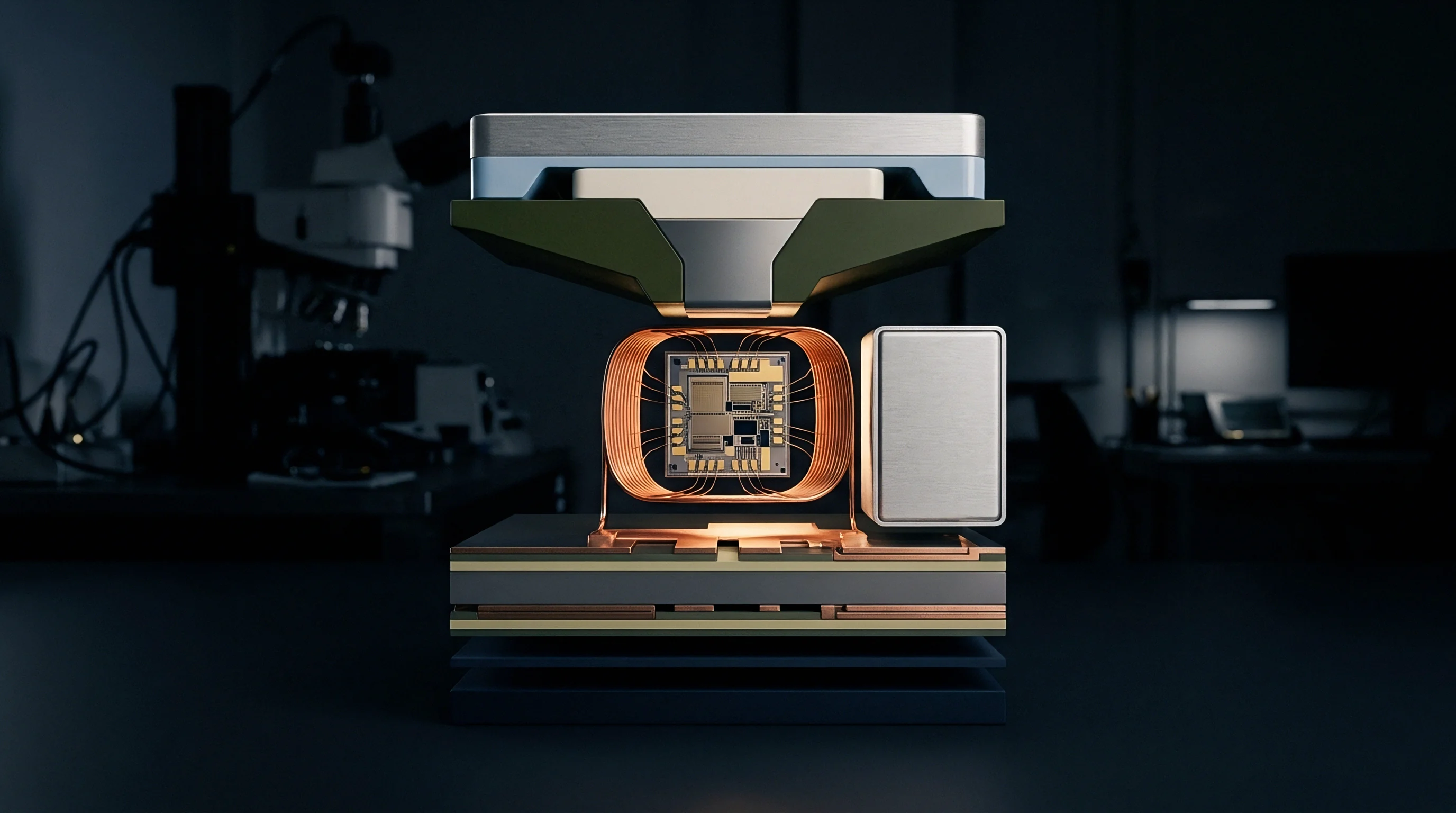
Audit
Verifying sensor datasheets requires bench testing inside programmable environmental control chambers. Sourcing teams evaluating sensor elements for aerospace, automotive, or industrial applications must audit components against realistic dynamic operational profiles rather than static catalog claims, as isothermal noise benchmarks fail to predict performance during rapid ambient shifts.
Laboratory Test Conditions versus Real Operations
Allan variance curves on datasheets are typically measured under strict isothermal soaking at room temperature, often in controlled oil baths or thermally stabilized vacuum chambers that eliminate ambient temperature change. These static setups yield low noise density figures ideal for promotional materials, but tell only part of the story.
Discrepancies appear as soon as systems encounter operational thermal slew rates in flight or ground transport. An uncompensated MEMS gyroscope with 0.5 degrees per hour bias instability at isothermal equilibrium degrades rapidly under a 2.0 °C per minute thermal ramp, where dynamic Allan deviation analysis reveals hidden flicker noise floors that exist exclusively during transients.
Thermal gradients induce structural bending moments that alter micro-resonator mechanical quality factors.
Operational qualification requires auditing sensor noise across dynamic thermal profiles that mimic target installation environments ~ where symmetric layouts help reduce spatial gradient magnitudes ~ using automated test scripts to ramp chamber temperatures across operating ranges while recording high-rate sensor outputs.
Datasheet Discrepancies and Operating Bounds
Auditing incoming batches requires verifying noise characterization under verified slew profiles, meaning procurement specifications must include explicit dynamic noise density bounds alongside traditional static metrics.
- Thermal Rate Verification measures noise spectral density shifts across standardized thermal ramp profiles from negative 40 °C to positive 85 °C.
- Gradient Latency Mapping determines the delay between package thermistor response and stress saturation at the internal sensor element.
- Cross-Axis Thermal Sensitivity evaluates whether orthogonal thermal gradients induce spurious off-axis rotational or acceleration outputs.
- Hysteresis Characterization quantifies whether noise density parameter paths differ between heating and cooling cycles.
| Transduction Principle | Primary Thermal Slew Failure Mode | Isothermal Bias Instability | Dynamic Slew Bias Instability (2 °C/min) |
|---|---|---|---|
| Capacitive MEMS Silicon | Asymmetric comb finger thermal expansion | 2.0 deg/hr | 22.0 deg/hr |
| Piezoresistive Silicon | Substrate expansion coefficient mismatch strain | 15.0 deg/hr | 140.0 deg/hr |
| Quartz Resonator | Thermoelastic Q-factor damping degradation | 0.1 deg/hr | 1.5 deg/hr |
| Optical Fiber Gyroscope | Shupe effect thermal phase shift across coil | 0.01 deg/hr | 0.08 deg/hr |
Although active thermal control limits gradient slopes, modern procurement contracts increasingly incorporate specific verification clauses dictating that sensor lots failing dynamic Allan deviation bounds under specified thermal slew conditions face total batch rejection at supplier expense.

Mitigation
Suppressing thermal slew noise corruption requires parallel advances in hardware isolation and real-time algorithmic processing. Integrating multi-point thermal sensing arrays directly onto silicon dies lets compensation algorithms track spatial gradients in real time, while packaging improvements minimize heat flux transmission from system circuit boards into sensitive transducer cores.
Real-Time Algorithmic Drift Compensation
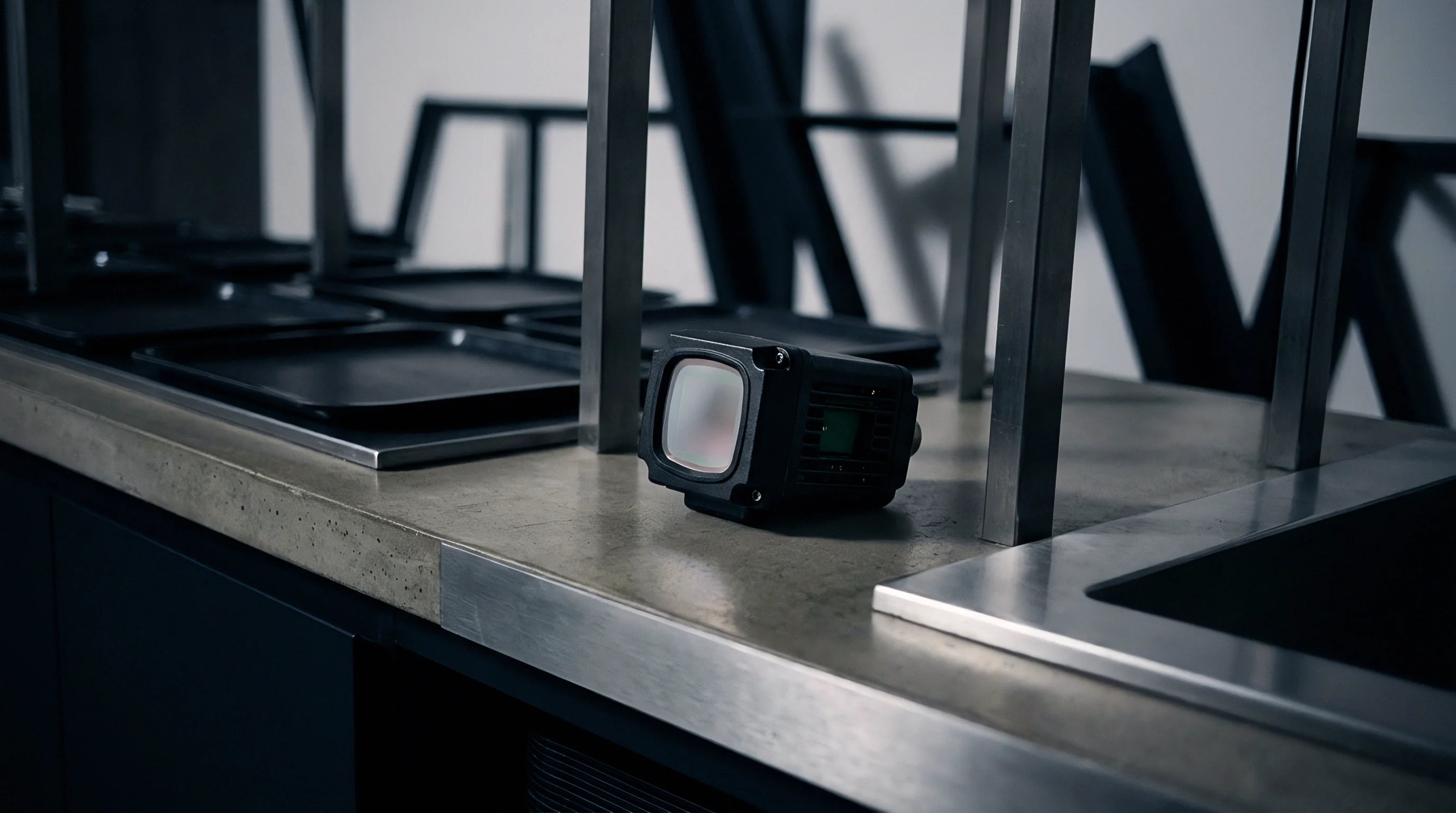
Firmware routines calculate the instantaneous rate of temperature change to subtract deterministic bias vectors prior to Allan variance estimation. Implementing Dynamic Allan Deviation modeling in real time requires embedded signal processors to maintain sliding temporal buffers, allowing sensor microcontrollers to compute real-time polynomial corrections based on live dT/dt and d^2T/dt^2 inputs.
Higher-order Kalman filters incorporate dynamic thermal noise scaling directly into measurement noise covariance matrices (R-matrices). When thermistors detect high thermal rate vectors, the filter expands noise covariance values, placing less weight on inertial sensor inputs and relying more on external aiding sources like GNSS or optical flow. This prevents thermal slew noise bursts from corrupting integrated navigation state solutions.
Structural Thermal Decoupling and Packaging
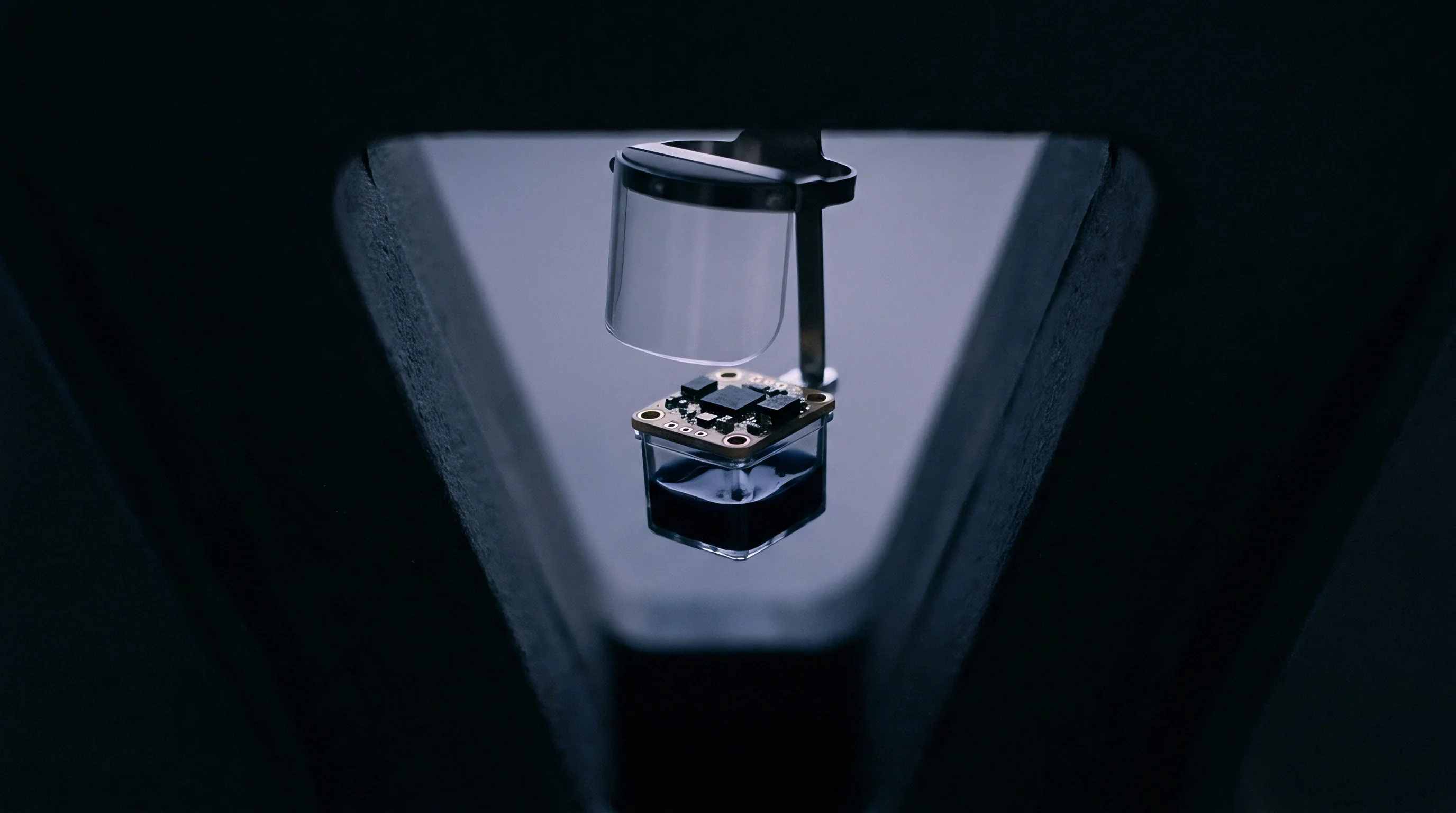
Vacuum insulation shells around silicon sense elements reduce internal spatial gradients caused by rapid surface heating. Symmetrical mechanical layouts route incoming heat evenly around central proof masses to cancel localized thermal expansion forces, while substrate isolation slots etched directly into silicon dies impede lateral conductive heat transfer.
Integrating micro-heaters directly onto sensor substrates maintains constant isothermal conditions regardless of external ambient temperature fluctuations. Active thermal control consumes power, but it eliminates thermal slew noise degradation entirely. System designers must weigh active thermal power penalties against algorithmic compensation latency and residual noise figures.
Sensors combining physical thermal insulation and symmetric layout geometry with dynamic compensation firmware reliably hold baseline Allan deviation parameters across severe operational temperature slews.