Non Fickian Dual Phase Polymer Sorption Kinetics Modeling for Long Term Sensor Stability Predictions
Non-Fickian dual-phase models isolate dissolved penetrant from microvoid entrapment, establishing defensible three-year calibration limits for polymer sensors.
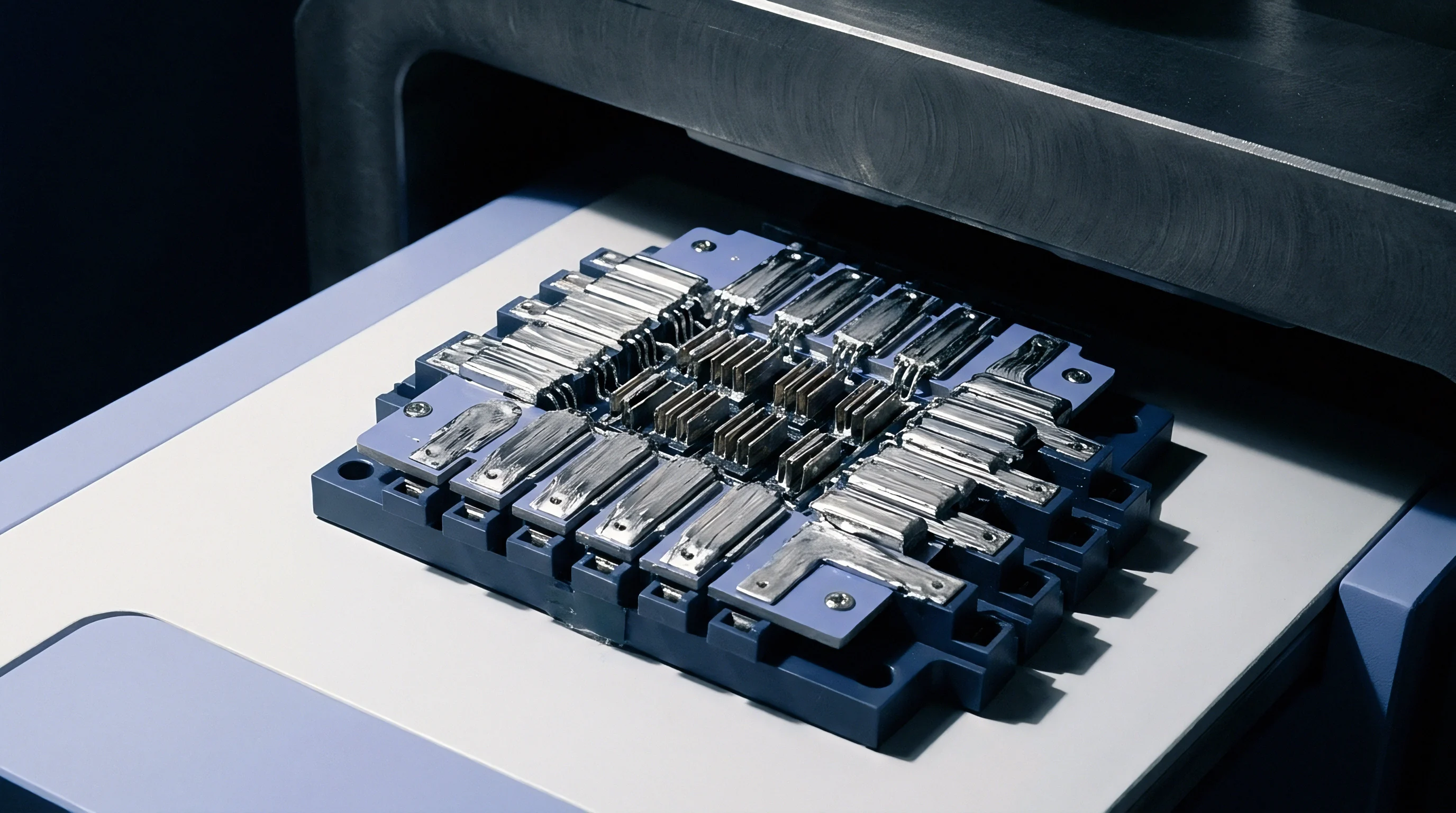

Trap
Sensor drift over prolonged deployment originates inside the microstructural architecture of protective coatings, adhesive sealants, and sensing films. Standard qualification regimes rely on classical Fickian diffusion equations, assuming penetrant transport rates depend strictly on concentration gradients and invariant diffusion coefficients. Field performance data from capacitive, optical, and piezoresistive transducers repeatedly invalidates that assumption.
Glassy polymers such as polyimides, epoxies, and benzocyclobutenes maintain non-equilibrium excess volume below their glass transition temperatures. This morphology divides penetrant molecules into two distinct thermodynamic populations: freely mobile solvent dissolved directly into the rubbery amorphous regions following Henry’s law, and immobilized molecules sequestered inside localized microvoids governed by Langmuir sorption kinetics.
The Langmuir population represents a mechanical and electrical trap. Molecules occupying these microvoids exert localized steric pressure against polymer chain segments without immediately contributing to macroscopic swelling. As sorption continues, the accumulation of trapped penetrant lowers the activation energy required for localized segmental rotation.
This structural relaxation permanently alters the mechanical compliance and the dielectric permittivity of the membrane. A sensor calibrated under the assumption of purely Fickian equilibrium registers an initial stabilization period followed by an unpredicted secondary baseline migration lasting hundreds of days.
Ignoring this dual-phase entrapment produces erroneous stability forecasts during initial design reviews. Laboratory qualification runs conducted over twenty-one days register only the fast Henry dissolution phase. When deployed into high-humidity service environments, the slower Langmuir filling mechanism continues long after the rapid sorption plateau has passed.
The trapped species induce long-term structural reorganization, driving offset drift that compromises accuracy claims before the scheduled service interval concludes.

Kinetics
Mathematical modeling of dual-phase behavior requires coupling classical concentration-driven flux with time-dependent polymer matrix relaxation. The Berens-Hopfenberg framework provides this structure by expressing total penetrant mass uptake as the sum of a Fickian diffusion component and a first-order relaxation process. The diffusion term accounts for rapid transport through the accessible inter-chain matrix, while the relaxation term governs the gradual creation and reconfiguration of microvoid capacity driven by osmotic swelling stresses.

Which Sorption Regimes Govern Multiyear Capacitive Drift?
The operational divergence between short-term qualification testing and multi-year field stability stems from the ratio of polymer relaxation time to the characteristic penetrant diffusion timescale, quantified through the diffusion Deborah number. When the Deborah number is exceptionally large, the polymer responds elastically, and transport appears Fickian over brief laboratory intervals. When the Deborah number approaches unity, penetrant diffusion occurs at the exact temporal scale as molecular relaxation, creating anomalous or non-Fickian transport signatures.
In glassy sensing films with thicknesses under twenty micrometers, the characteristic diffusion time across the layer requires mere seconds, whereas the mechanical relaxation of constrained crosslinked chains requires thousands of hours.
| Polymer Chemistry | Henry Coefficient (cm³ STP / cm³ atm) | Langmuir Capacity (cm³ STP / cm³ atm) | Diffusion Constant (cm² / s) | Matrix Relaxation Rate (1 / s) | Predicted 3 Year Zero Drift (% Span) |
|---|---|---|---|---|---|
| Aromatic Polyimide (Kapton type) | 1.42 | 8.65 | 3.2e-9 | 1.1e-7 | 1.85 |
| Cycloaliphatic Dielectric Epoxy | 0.88 | 5.12 | 8.4e-9 | 2.8e-7 | 2.40 |
| Crosslinked Benzocyclobutene | 0.45 | 2.30 | 1.5e-8 | 6.5e-8 | 0.72 |
| Novolac Phenolic Molding Compound | 2.10 | 14.80 | 1.1e-9 | 4.2e-8 | 4.15 |
The mathematical representation of total concentration combines Henry dissolution, characterized by solubility coefficient kD, and Langmuir hole filling, characterized by hole affinity constant b and maximum saturation capacity CH:
C = kD p + (CH b p) / (1 + b p)
Total uptake over time integrates this concentration profile against the relaxation parameter alpha, reflecting the slow rearrangement of polymer backbones under internal stress:
M(t) = MF + MR
MF defines the total mass absorbed through the rapid Fickian path, while MR designates the mass taken up through slow matrix relaxation across characteristic diffusion length L.
A 30-day sorption bench test captures less than twenty percent of the total relaxation capacity in high-density crosslinked aromatic polyimides.
The operational consequence of this dual-rate mechanism appears in long-term calibration tracking. Laboratory certificates issued after standard twenty-four-hour stabilization cycles capture only the MF term. Over subsequent months of continuous operation, the MR term asserts itself, forcing a sustained zero-point wander that cannot be eliminated through digital filtering or single-point field zeroing.
The rate constant alpha itself varies with plasticization, meaning that sustained exposure to elevated moisture levels permanently accelerates matrix reconfiguration rates, altering the sensor baseline permanently.
The exact coupling between the spatial distribution of trapped penetrant clusters and the localized glass transition depression remains an open scientific question in non-equilibrium thermodynamics.
Transducer
The transition from molecular uptake to electronic measurement error takes different mechanical paths depending on the physical transduction principle employed. Capacitive relative humidity transducers rely on the dielectric permittivity of the sensing film to establish output capacitance. Piezoresistive pressure transmitters employ polymer gels and potting compounds to isolate silicon diaphragm elements from harsh process media.
Optical waveguide chemical sensors track refractive index shifts across functionalized polymer cladding surfaces. Each category translates non-Fickian kinetics into output instability through distinct mechanical and electrical couplings.

What Environmental Exposures Drive Anomalous Penetrant Transport?
Thermal excursions combined with sustained relative humidity shifts maximize non-Fickian kinetics by depressing the effective glass transition temperature of the polymer. Water acts as an aggressive plasticizer within hydrophilic membranes. When internal moisture content reaches three weight percent, the glass transition of standard aromatic polyimides drops by twenty to forty degrees Celsius.
This reduction shifts the material from an elastic glassy regime into a viscoelastic transition zone where molecular relaxation rates accelerate by two orders of magnitude.
- Capacitive dielectric drift occurs when water molecules transitioning from Henry dissolution to Langmuir microvoid sites alter their rotational freedom, driving an uncalibrated positive baseline shift of up to five percent relative humidity over thirty-six months.
- Piezoresistive offset shifts develop when non-uniform swelling in protective epoxy encapsulants transfers asymmetric shear forces across silicon die bonds, generating zero-point errors exceeding zero point four percent of calibrated span per year.
- Optical phase distortion arises when penetrant clustering within Langmuir microvoids alters the local refractive index profile of waveguiding coatings, causing span attenuation and calibration curve rotation under continuous wet operation.
- Adhesive delamination mechanics initiate along high-stress substrate interfaces as viscoelastic relaxation alters interfacial peeling resistance, inducing erratic step-function signal shifts during thermal cycling.
Capacitive humidity sensors illustrate the severity of this shift. As water molecules enter the polymer network, free molecules orient with the alternating electrical field, producing an increase in bulk dielectric constant directly proportional to ambient vapor pressure. As molecules migrate into Langmuir sites, their hydrogen bonding network anchors them against the polymer backbone.
Their effective dipole moment drops, reducing their relative contribution to overall permittivity while simultaneously expanding the physical thickness of the film. The sensor output exhibits a dual-slope drift pattern: initial positive drift due to volumetric swelling, followed by negative sensitivity degradation as clustered water molecules lose their rotational mobility.
According to standard supplier explanations, field-returned transducers showing baseline wander merely sustained improper storage or brief chemical contamination exceeding operating limits.

Chamber
Validating non-Fickian dual-phase models demands rigorous environmental testing protocols capable of separating instantaneous Fickian diffusion from long-term viscoelastic relaxation. Conventional environmental qualification frequently relies on IEC 60068-2-78 damp heat steady-state exposures at 40 degrees Celsius and 93 percent relative humidity, or accelerated stress testing at 85 degrees Celsius and 85 percent relative humidity. While effective for detecting gross packaging flaws and corrosion boundaries, steady-state high-temperature exposures distort non-Fickian relaxation kinetics by driving the polymer through artificial glass transitions that never occur under intended field operating conditions.
Gravimetric Desorption Verification Protocols
Extracting accurate kinetic parameters requires dynamic multi-stage gravimetric vapor sorption analysis executed on free-standing polymer membranes under ISO/IEC 17025 accredited laboratory controls. Testing must evaluate both raw membrane stock and fully packaged sensor assemblies to isolate packaging constraints from intrinsic polymer physics. A defensible verification sequence employs calibrated microbalances maintaining mass resolutions of 0.1 micrograms inside sealed isothermal exposure chambers:
- Perform a 72-hour vacuum bakeout at 110 degrees Celsius and absolute pressure below 10 pascals to establish baseline dry polymer mass.
- Execute stepped relative humidity introductions from 10 percent to 80 percent in 10 percent increments, holding each stage until mass change drops below 0.001 percent per hour.
- Record the secondary relaxation slope over a minimum holding period of 500 hours at 50 percent relative humidity and 25 degrees Celsius to isolate matrix relaxation rate alpha.
- Conduct immediate isothermal desorption cycles down to zero percent relative humidity, recording the residual trapped mass fraction corresponding to Langmuir microvoid capacity.
- Subject identical sensor batches to symmetrical cyclic humidity square waves with periods ranging from 1 hour to 100 hours to confirm the Deborah number operational envelope.
| Model Architecture | Input Calibration Datasets Required | Computational Overhead per Sensor Node | Predicted Drift at 1,000 Hours (% Span) | Observed Bench Drift at 1,000 Hours (% Span) | Absolute Prediction Error (% Span) |
|---|---|---|---|---|---|
| Pure Fickian Diffusion | Single sorption curve (24 hour) | Minimal (Closed form analytical) | 0.08 | 0.94 | 0.86 |
| Dual-Mode Sorption (Equilibrium) | Three-point sorption isotherm | Low (Algebraic partition) | 0.35 | 0.94 | 0.59 |
| Berens-Hopfenberg Viscoelastic | Time-series sorption and desorption | Moderate (Coupled ODE) | 0.91 | 0.94 | 0.03 |
| Free Volume Molecular Dynamics | Full monomer force field database | Extreme (Multi-core cluster) | 0.96 | 0.94 | 0.02 |
The data reveals that pure Fickian assumptions underestimate real drift by an order of magnitude. The dual-mode equilibrium approach improves accuracy during early stages but fails to capture the ongoing relaxation contribution. The Berens-Hopfenberg kinetic formulation delivers predictive accuracy within 0.03 percent of calibrated span while maintaining computational overhead suitable for inclusion in embedded calibration firmware.
Verification protocols that skip multi-stage desorption tracking miss the residual microvoid fraction that drives lifetime baseline migration.
Accelerating testing without altering relaxation pathways requires keeping test temperatures strictly below the wet glass transition threshold of the specific formulation in use.


Yield
Deploying accurate dual-phase sorption kinetics models alters the financial framework of long-term sensor supply contracts. The commercial impact of transducer drift is rarely visible during incoming inspection. It manifests twenty-four to thirty-six months post-delivery through unscheduled recalibration cycles, warranty disputes, and unscheduled maintenance shutdowns across industrial monitoring fleets.
The Total Ownership Arithmetic of Unmodeled Drift
To quantify the financial exposure of inadequate kinetic modeling, consider an offshore continuous emission monitoring installation deploying 5,000 smart gas and humidity transmitters. Commercial specifications mandate a three-year calibration stability tolerance of plus or minus 1.0 percent of measurement span.
If procurement specifies sensors evaluated strictly against 30-day Fickian qualification tests, field drift exceeds tolerance boundaries within 14 months due to unmodeled Langmuir microvoid relaxation. The resulting operational costs accumulate across three primary mechanisms:
- Unscheduled field recalibration demands technician transit, offshore mobilization, and reference standard deployment costing an average of 420 dollars per sensor node annually.
- Premature membrane replacement results when field zeroing adjustments deplete onboard digital compensation DAC margins, requiring sensor cartridge disposal at 180 dollars per unit.
- Regulatory non-compliance fines and audit penalties triggered by drift-induced measurement excursions outside environmental permit limits, modeled at a baseline liability of 120,000 dollars per facility occurrence.
Across a five-year operating lifecycle, relying on simplistic Fickian qualification creates a documented cost expansion from an initial acquisition figure of 750,000 dollars to a fully loaded maintenance outlay exceeding 3,850,000 dollars. Incorporating non-Fickian dual-phase parameters directly into the purchasing technical specification increases unit acquisition costs by twenty-two percent to account for extended factory stabilization bakeouts and complex multi-point lot qualification. However, this upfront investment extends compliant recalibration intervals from twelve months to thirty-six months, eliminating two complete offshore service campaigns and preserving operational margins.
Under Section 8.4 of the standard instrument procurement agreement, failure to maintain stated three-year stability limits under normal operating humidity renders the supplier fully liable for all third-party recalibration and field deployment costs.