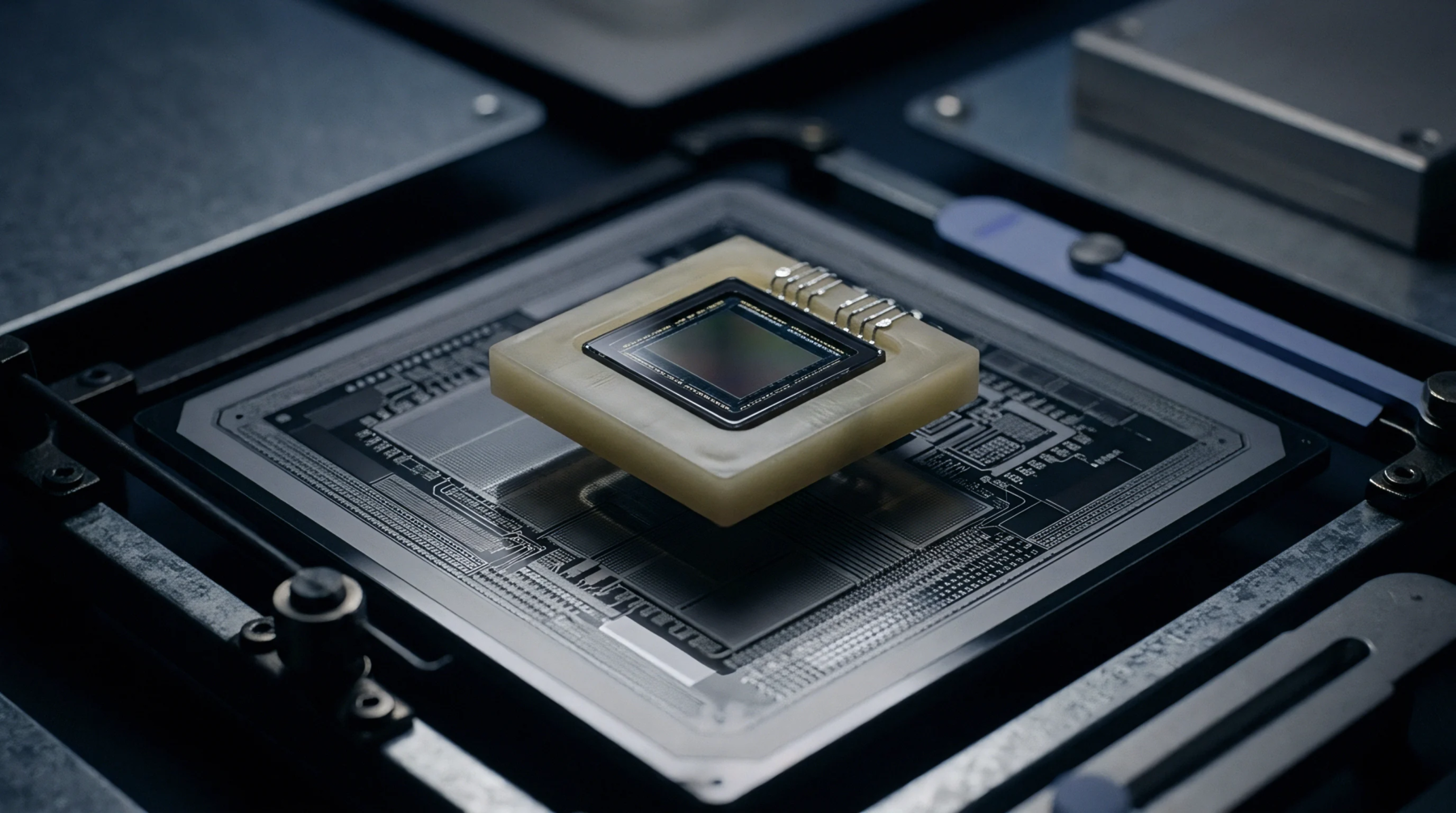
Insulating Polymer
High-performance polymer coatings provide electrical isolation and mechanical protection in semiconductor manufacturing. A polyimide dielectric is commonly used as a passivation layer on wafers due to its thermal stability and chemical resistance. This material prevents electrical breakdown between metal routing layers.
Dielectric Constant
Electrical performance of high-frequency circuits depends on the low permittivity of the insulating layers. A typical polyimide dielectric has a dielectric constant between three point zero and three point five, which minimizes capacitive coupling between adjacent metal lines. This low capacitance reduces signal propagation delays and prevents crosstalk in high-density packaging.
However, moisture absorption can increase this value, necessitating protective barriers in humid environments.
Curing Condition
Curing temperature and duration determine the final mechanical and chemical properties of the polymer layer. The polyimide dielectric must be cured at temperatures above three hundred degrees Celsius to achieve complete imidization. Incomplete curing leaves residual solvents and unreacted monomers, which can outgas during subsequent metallization steps.
This outgassing can cause voids or adhesion failures, compromising the reliability of the metal-to-polymer interface.
Mechanical Resilience
Stress buffering is a key function of this protective polymer layer during the packaging process. The cured polyimide dielectric is flexible enough to absorb the stresses caused by the mismatch in expansion coefficients between the silicon die and the mold compound. This flexibility prevents the propagation of microcracks through the underlying dielectric layers.
In addition, the high tensile strength of the polymer ensures that it can withstand the mechanical forces exerted during wafer sawing and die mounting. This resilience makes it suitable for use in advanced packaging applications where multi-die integration increases the overall mechanical stress.