
Thermal Expansion Mismatch Strain Mitigation in Reactive Sputtered Sensor Layering
Compositionally graded compliant interlayers and post-sputter thermal anneals eliminate residual thermal strain, preventing zero-drift in sputtered thin-film sensors.
Compositionally graded compliant interlayers and post-sputter thermal anneals eliminate residual thermal strain, preventing zero-drift in sputtered thin-film sensors.
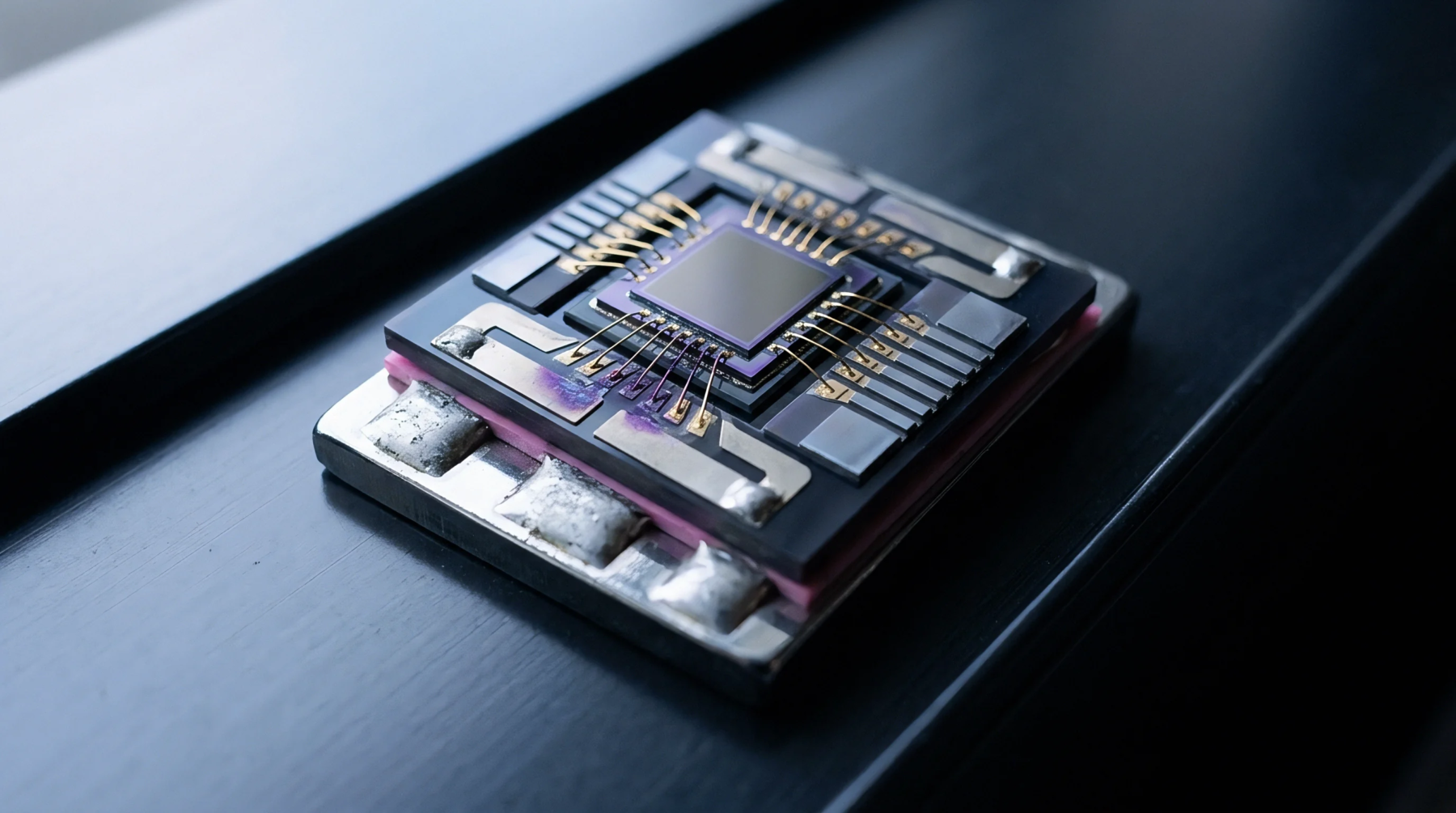
Anodic glass bonding strain is minimized by combining matched non-linear CTE glass selection, thin compliant interlayers, and controlled cool-down ramps.

Silicon substrate thermal expansion alters MEMS structural spacing and compliance, requiring isolated single-point anchors and 3rd-order ASIC polynomial correction.

Managing sputtered interlayer stress prevents sensor delamination and holds zero-point strain gauge drift below zero point five percent at nine hundred degrees Celsius.

Selecting low-modulus die attach adhesives with glass transition temperatures outside operating limits eliminates non-linear MEMS zero-g offset drift.
Expertise is a utility, not a secret. sentiention™ publishes its working knowledge as open reference: intelligence layer covering the materials it sources, the markets it enters, and the reference that serves both.