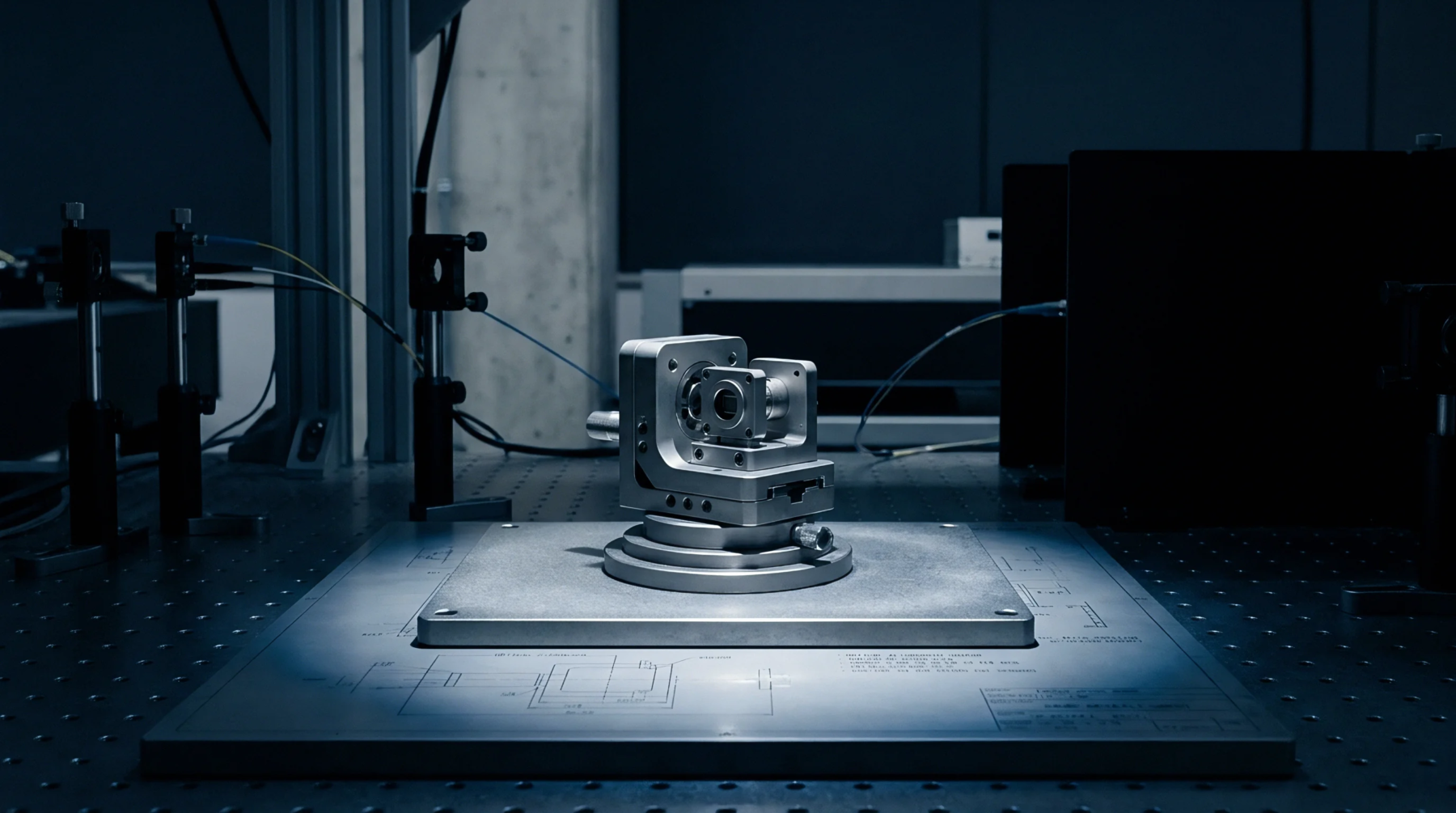
Mechanical Hysteresis
A time-dependent reduction in mechanical clamping force occurs within physical mounting structures that hold precision sensors in alignment. Material cold flow, fastener thread seating and gasket compression cause a gradual loss of retention force following initial installation assembly. In high-precision force and displacement sensing systems, fixture relaxation alters the mechanical zero point and introduces measurement offset drift.
The structural frame continues to deform micro-elastically until mechanical equilibrium establishes across all mating contact surfaces.
Strain Creep
Polymers and structural metals exhibit continuous microscopic deformation under sustained mechanical stress. When a sensing transducer is clamped into a rigid test fixture, fixture relaxation redistributes contact stresses away from localized high spots created during surface machining. This stress relief alters the mechanical pre-load applied to sensitive piezoelectric or strain gauge elements.
Precision load cell mountings experience measurable output drift during the first forty-eight hours following initial torque application. Fastener retorquing protocols mitigate initial pre-load loss, but long-term creep requires software compensation within data acquisition firmware.
Calibration Allowance
Metrological verification mandates a stabilization hold period between mechanical mounting and formal calibration execution. Test protocols record baseline drift rates at set time intervals to quantify the rate of fixture relaxation within the mounting system. Standard procedures require pre-conditioning through thermal cycling to accelerate structural stress relief before capturing zero-load reference values.
Calibration certificates remain valid only when the sensor remains mounted in the identical mechanical orientation under specified torque limits.
Thermal Settling
Differential thermal expansion between dissimilar fixture metals accelerates joint relaxation under operating temperature variations. Thermal cycling induced fixture relaxation causes persistent zero-point shifts in strain-based instruments. Torque retention degrades across thermal cycles.