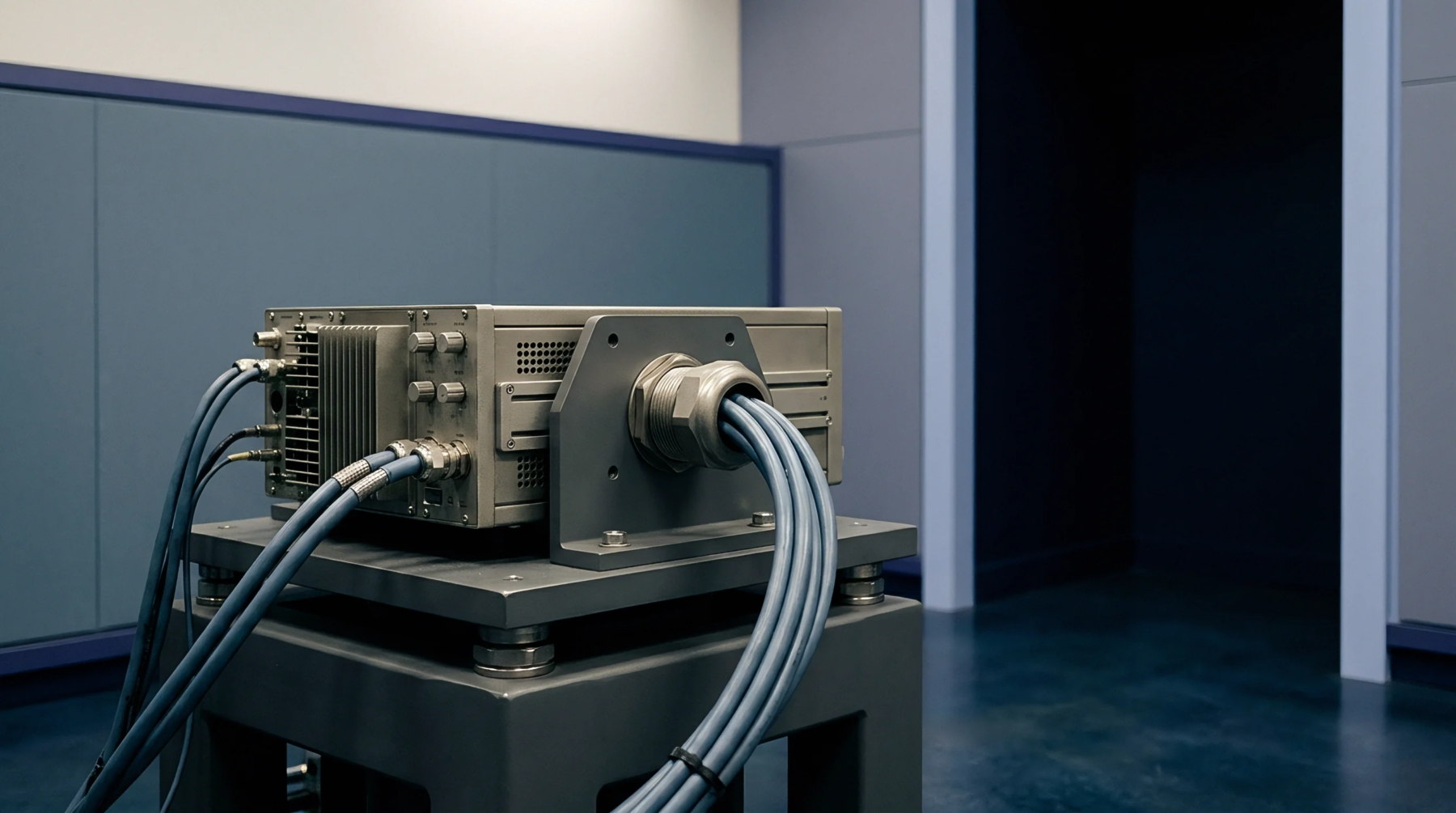
Kinetic Transduction
An electromechanical device converts physical motion and gravity into electrical signals that track linear acceleration. The accelerometer provides a voltage output proportional to the force exerted upon its internal seismic mass. These sensors rely on a proof mass suspended by a flexible spring mechanism to detect changes in velocity or orientation.
When the device moves, inertia forces the mass to displace relative to the casing, which creates a measurable variation in capacitance or resistance.
Signal Precision
Manufacturers quantify the performance of this hardware through bias stability and scale factor linearity tests. Calibration occurs by subjecting the unit to known gravitational vectors or controlled centrifugal force to establish a baseline. Any deviation from the reference signal represents noise or offset error caused by thermal expansion within the microscopic etched components.
Stability relies on the consistency of the internal suspension stiffness over the intended operating temperature range.
Integration Constraint
System designers must isolate the component from high frequency vibration and acoustic noise that corrupt the intended measurement of low frequency motion. Mounting surfaces require rigid attachment to ensure the housing remains stationary relative to the frame of reference. Improper installation introduces mechanical resonance that triggers false triggers or signal clipping.
Signal processing circuits frequently employ low pass filters to strip away unwanted interference before data conversion occurs.
Operational Variance
Environmental conditions dictate the useful lifespan and reliability of the internal sensing elements. Humidity ingress induces corrosion on conductive traces while extreme shock loads cause permanent deformation of the spring suspension. Periodic recalibration identifies drift that develops as mechanical fatigue accumulates within the internal structure.
Field performance stays within stated tolerances until the cumulative degradation exceeds the sensitivity of the output circuit.