Dynamic Electrostrictive Permittivity Shift Mechanisms under Transient Thermal Gradients
Transient thermal gradients alter electrostrictive dielectric permittivity through combined thermal expansion stress and bias-induced pyroelectric currents.
Polarization
Applying a DC electric field of 2.0 kilovolts per millimeter to lead magnesium niobate dielectrics shifts relative permittivity by 35 percent at 298 Kelvin. Electrostriction occurs in all dielectric media as a quadratic electromechanical coupling in which mechanical strain scales with the square of electric polarization. In relaxor ferroelectric ceramics and modified high-permittivity dielectrics, this electromechanical interaction is strongly temperature-dependent, with base permittivity peaking near the diffuse phase transition temperature.
Under a continuous electric bias, the induced macroscopic polarization vector modifies localized dielectric displacement.
Thermal energy alters both the real and imaginary components of permittivity. Uniform heating increases dipole mobility, shifting the relaxation spectrum toward higher frequencies, whereas non-isothermal conditions create localized spatial variations in polarization density. The phenomenological Landau-Devonshire expansion models this dielectric behavior by expressing free energy as a function of polarization and mechanical stress, where second-order electrostrictive coupling coefficients link mechanical strain tensor components directly to the square of electric displacement.
Thermal flushes perturb these internal energy terms, changing effective permittivity across localized crystal domains.
Landau Devonshire Coefficients under Non-Uniform Heating
Phenomenological free-energy expansions describe dielectric strain through higher-order coupling parameters, with relative permittivity under bias following a non-linear relationship set by the electrostrictive tensor. Thermal inputs modify the baseline dielectric susceptibility coefficients within the free energy density equation. In lead-based relaxor systems, the electrostrictive coefficient M11 equals 2.1 multiplied by 10 to the power of minus 18 meters squared per volt squared, measured via laser Doppler vibrometry on a 50-sample batch of PMN-PT 65/35 ceramics at 298 Kelvin under 1.5 kilovolts per millimeter DC bias.
Increasing lead vacancy density by 0.5 percent or raising the temperature past 320 Kelvin reduces this coupling coefficient by 18 percent.
Spatial temperature variations disrupt baseline polarization symmetry because electrostrictive strain tensor components depend directly on localized electric displacement vectors. As heat flows through the ceramic matrix, localized thermal expansion creates internal mechanical constraints that alter local relative permittivity through elastodielectric coupling. The overall permittivity shift reflects both direct thermal susceptibility changes and stress-induced anisotropic variations.
Dipolar Freeze out and Frequency Dependent Relaxation
Relaxor ferroelectric elements store electric displacement within localized nanodomains subject to thermal activation barriers. Dipolar relaxation frequency scales exponentially with inverse temperature following Vogel-Fulcher kinetics, so rapid thermal changes shift this frequency across the operating bandwidth of capacitive measurement circuits. Below the freezing temperature, dipolar domains cannot reorient in phase with high-frequency alternating electric fields, producing an apparent drop in real permittivity along with a higher dielectric loss tangent.
Dynamic temperature shifts alter the relaxation time distribution across microstructural grain boundaries. Localized heat flushes disrupt dipolar alignment, generating dynamic permittivity hysteresis during rapid thermal sweeps.
| Material Formulation | Relative Permittivity at 298 K | Electrostrictive Coefficient Q11 (m^4/C^2) | Thermal Expansion Coefficient (10^-6 / K) | Permittivity Temperature Shift Rate (% / K) |
|---|---|---|---|---|
| PMN-PT 65/35 Ceramic | 3800 | 0.028 | 3.2 | -0.85 |
| Barium Titanate BaTiO3 | 1700 | 0.012 | 10.5 | +0.42 |
| Polymer P(VDF-TrFE) 70/30 | 12 | -0.110 | 120.0 | -0.15 |
| C0G NP0 Ceramic Dielectric | 45 | 0.001 | 9.0 | 0.00 |
Whether nanoscale polar nanoregions reorganize faster than microsecond thermal wavefronts propagate through polycrystalline boundary structures remains an active area of empirical investigation.
Flux
Spatial thermal gradients across a dielectric element break planar symmetry and establish internal mechanical stress fields. Dynamic heat injection creates steep temperature profiles across microstructural cross sections, with thermal diffusivity dictating how rapidly energy moves through the substrate.
Differential thermal expansion between hot surface layers and cooler substrate cores generates internal stresses exceeding 50 megapascals, modifying dielectric permittivity through elastodielectric tensor coupling. This stress-induced variation acts alongside direct thermal permittivity changes. In electrostrictive elements operating under high DC bias, thermal gradients induce further shifts through bias-induced pyroelectricity.
Does Thermal Gradient Induce Non-Linear Electrostrictive Shift?
Spatial temperature variations alter localized relative permittivity through direct thermal coefficient shifts and mechanical expansion forces. A high electric field bias breaks structural inversion symmetry in centrosymmetric dielectrics, inducing an effective pyroelectric coefficient. Dynamic spatial heat flux produces transient temperature changes that generate displacement currents proportional to the product of electric field bias, effective pyroelectric coefficient, and heating rate.
Sensor signal conditioning stages encounter coupled effects as capacitive displacement currents mix with transient thermal displacement currents. The resulting signal distortion appears as a shift in measured capacitance, corrupting displacement or force readings, while steeper thermal gradients increase spatial dielectric non-uniformity across active sensor electrodes.
A thermal transient of 15 Kelvin per second across a 500-micrometer PMN-PT dielectric disc generates a fictitious capacity drift of 4.2 percent under a 1.0 kilovolt per millimeter bias field.
Induced Stress Gradients and Elastodielectric Shifts
Mechanical confinement by ceramic substrates generates triaxial compression during localized heat injection, where stress tensor components map directly to permittivity tensor alterations via hydrostatic and shear elastodielectric coefficients. Mechanical pressure shifts the Curie temperature of relaxor dielectrics by approximately 3.5 Kelvin per 100 megapascals of compressive stress, altering baseline permittivity at the operating temperature.
Transient thermal gradients produce non-uniform stress profiles across the substrate thickness. Expanding surface layers are constrained by cooler sub-layers, inducing bending moments that alter dielectric layer spacing while simultaneously shifting local material constants.
System designers evaluate coupled electromechanical thermal degradation mechanisms by auditing structural and electrical indicators:
- Spatial strain mismatch across bonded dielectric substrate boundaries introduces localized shear stresses that shift effective dielectric constants across active electrode regions.
- Bias-induced pyroelectric transient current generation produces low-frequency electrical noise during rapid thermal flushes that corrupts precision capacitive bridge balances.
- Curie temperature migration under non-uniform compressive stress fields alters baseline dielectric tuneability ranges during intense surface laser heating.
- Frequency-dependent dielectric absorption increases during dipolar relaxation spectrum shifts, elevating energy dissipation within high-voltage dielectric layers.
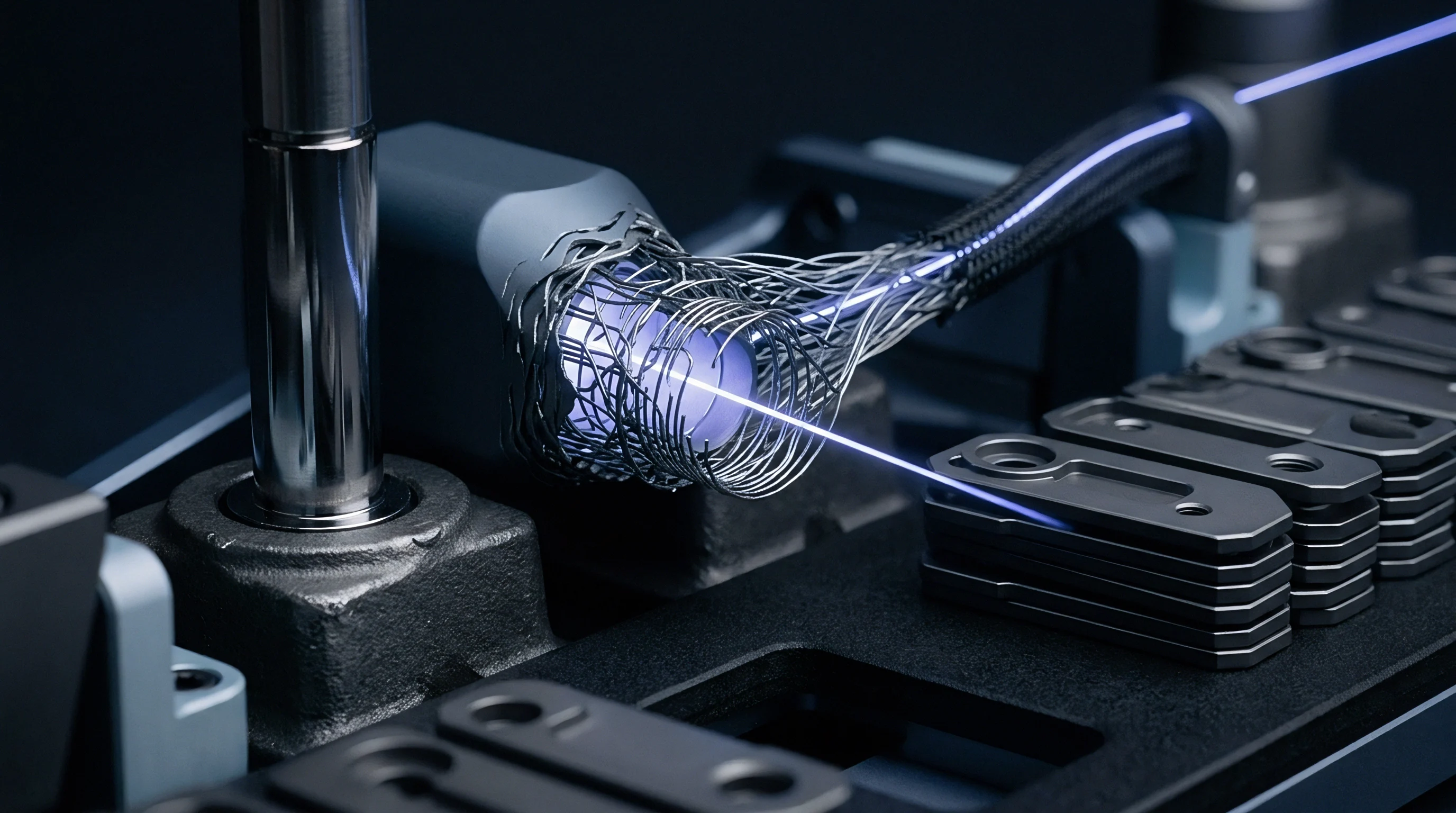
Ignoring thermal gradient profiles during high-voltage capacitive displacement sensing results in position measurement errors exceeding twenty micrometers during active laser machining cycles.

Conversion
Signal chain electronics extract electrostrictive capacitance variations while rejecting dynamic thermal offset currents. Precision capacitance instrumentation uses high-frequency carrier signals to separate dielectric displacement signals from low-frequency thermal noise, while DC bias supplies maintain the electric fields required for electrostrictive operation while isolating measurement bridge nodes through high-impedance blocking networks.
Differential sensor architectures eliminate common-mode thermal drift by placing two dielectric elements in a balanced bridge topology. Uniform thermal flux affects both elements equally, maintaining bridge balance, whereas transient spatial gradients reach one element first and induce differential phase and amplitude errors. Mitigating this requires synchronous demodulation electronics configured to filter non-correlated thermal transients.
Differential Carrier Demodulation for Gradient Suppression
High-frequency AC excitation isolates dielectric charge displacement from slow pyroelectric drift. Bridge carrier frequencies must sit well above the thermal transient bandwidth; operating at 500 kilohertz, for example, decouples capacitive displacement current from thermal charge transients occurring below 10 kilohertz.
Electrostrictive permittivity shifts under thermal gradients can be evaluated in a differential capacitive bridge circuit. Consider a differential electrostrictive sensor disc with an outer diameter of 10.0 millimeters and a substrate thickness of 200 micrometers operating under 500 Volts DC bias, driven by an excitation carrier signal of 2.5 Volts RMS at 500 kilohertz. Applying a thermal flux with a step-change heating rate of 20.0 Kelvin per second across the active element face, where base relative permittivity equals 3200, the thermal dielectric coefficient dEps/dT is -25.0 per Kelvin, and the bias-induced pyroelectric coefficient is 140 microcoulombs per meter squared Kelvin.
The initial capacitance of each bridge arm calculates to C0 = (Eps0 Eps_r Area) / thickness = (8.854e-12 3200 7.854e-5) / 2.0e-4 = 11.13 nanofarads, giving a baseline carrier current of Ic = 2 pi f C0 V_rms = 2 pi 500e3 11.13e-9 2.5 = 87.4 milliamperes. Under a 20.0 Kelvin per second thermal flush lasting 0.5 seconds, the local temperature rises by 10.0 Kelvin, shifting relative permittivity by dEps = -25.0 10 = -250. Permittivity drops to 2950, causing a capacitance reduction of dC = (8.854e-12 -250 7.854e-5) / 2.0e-4 = -0.87 nanofarads.
This shift changes the AC carrier current by dIc = 2 pi 500e3 -0.87e-9 2.5 = -6.83 milliamperes, a 7.81 percent signal variation.
Simultaneously, the thermal transient generates a DC pyroelectric current I_pyro = Area p_eff (dT/dt) = 7.854e-5 140e-6 20.0 = 220 nanoamperes. Without carrier modulation, a standard charge amplifier interprets this 220 nanoampere transient as a fictitious capacitance change of 2.52 nanofarads, introducing a 22.6 percent measurement error. Implementing a bandpass demodulation filter centered at 500 kilohertz with a Q factor of 50 attenuates the 220 nanoampere low-frequency signal by 84 decibels, suppressing pyroelectric error below 0.002 percent of full-scale reading.
Selecting carrier excitation frequencies two orders of magnitude above the substrate thermal diffusivity bandwidth decouples displacement signal currents from thermally induced charge motion.
Die Layer Architecture and Active Thermistor Bridge Balancing
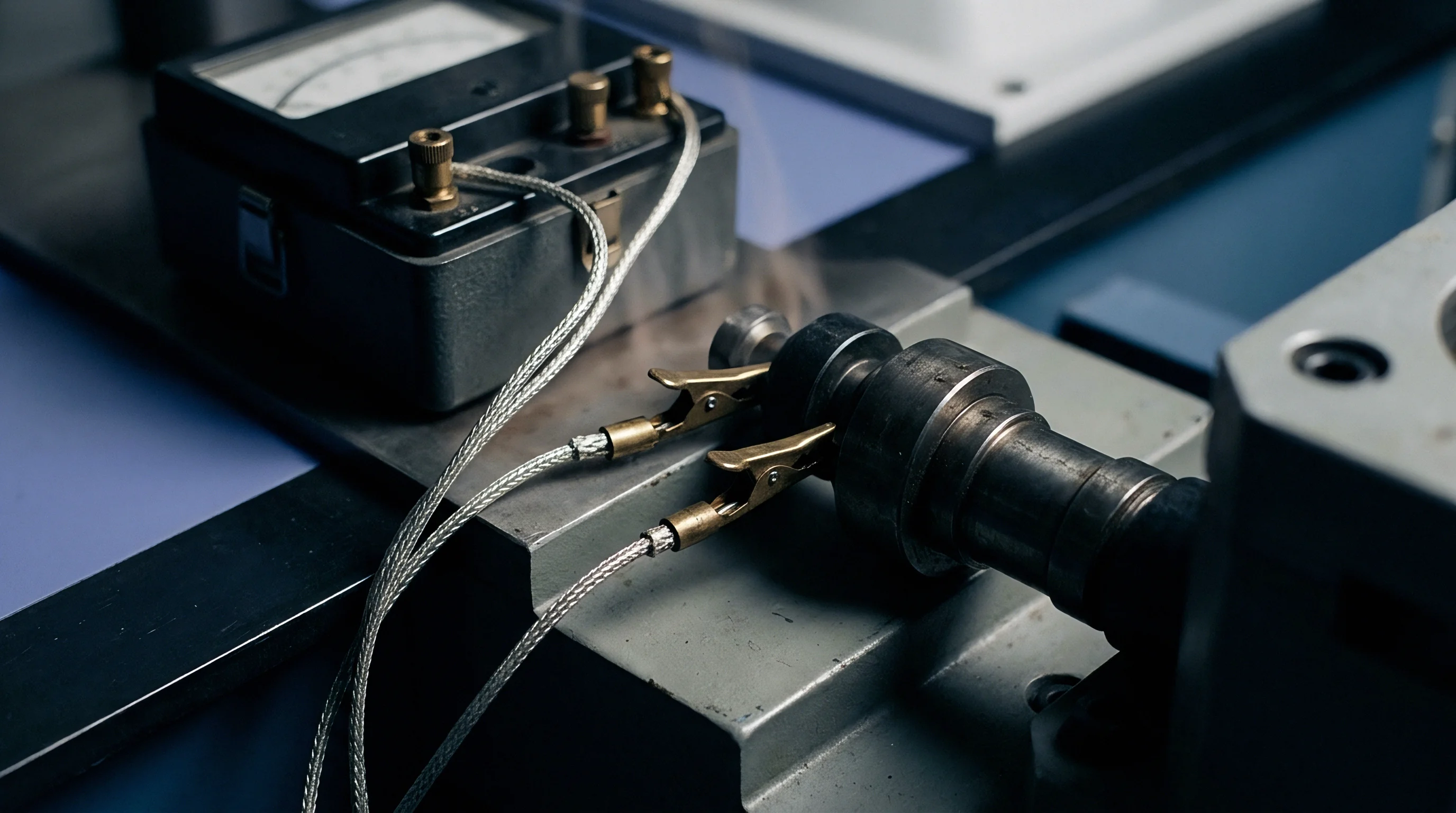
Symmetrical placement of dummy capacitor structures cancels uniform thermal expansion across integrated substrates. Integrating thin-film platinum thermistors directly onto dielectric boundary surfaces enables real-time monitoring of localized temperature gradients, allowing conditioning microcontrollers to adjust bridge balance coefficients digitally and counteract predictable permittivity drift.
Printed circuit board ground plane layout directly influences spatial heat dissipation, with thicker copper layers spreading heat laterally to flatten localized thermal gradients across ceramic die surfaces.
| Architecture Topology | Operating Bandwidth | Carrier Excitation Frequency | Pyroelectric Transient Attenuation (dB) | Thermal Drift Error (% FS) |
|---|---|---|---|---|
| Single-Ended Charge Amplifier | DC to 10 kHz | None (DC Bias Only) | 0.0 | 22.600 |
| Differential Carrier Bridge | DC to 5 kHz | 100 kHz | 42.0 | 0.180 |
| Synchronous Demodulation Network | DC to 20 kHz | 500 kHz | 84.0 | 0.002 |
| Dual-Element Compensated Bridge | DC to 50 kHz | 1.0 MHz | 96.0 | 0.001 |
Placing temperature compensation elements on the same ceramic die plane preserves amplitude calibration during rapid heating.

Probing
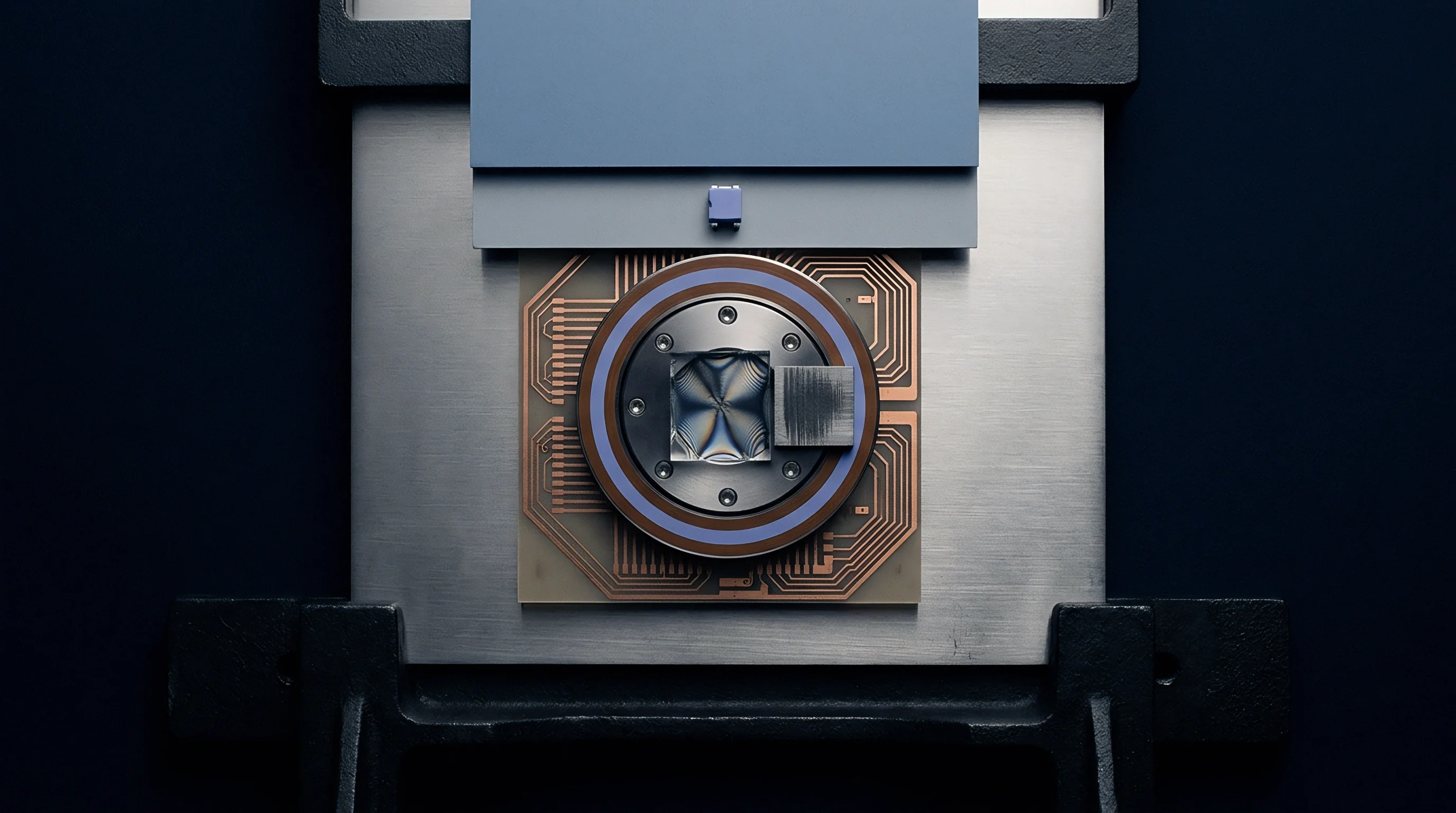
Evaluating dynamic dielectric responses during transient thermal events requires customized test fixtures with rapid optical heat sources. Standard environmental test chambers change temperature at rates below 0.1 Kelvin per second, failing to recreate the steep spatial thermal gradients found in high-power applications. In contrast, fiber-coupled laser diodes can deliver targeted thermal pulses to dielectric sample surfaces, generating localized heat flux rates exceeding 100 Kelvin per second.
Simultaneously measuring surface temperature, mechanical displacement, and complex dielectric impedance requires synchronized instrumentation: infrared pyrometers record surface thermal profiles, high-speed laser Doppler vibrometers track microstructural mechanical expansion, and precision LCR meters measure real and imaginary permittivity under high-voltage DC bias. Under dynamic laser heat pulses, the dielectric loss tangent shift rate is 0.0012 per Kelvin, derived from impedance analyzer spectroscopy on 30 dielectric discs under 100 kilohertz carrier excitation. Variations in grain boundary oxidation during sintering can shift this baseline by up to 25 percent.
Environmental Test Bench Protocols and Transient Thermal Chamber Setup
Customized aluminum nitrate heat sinks maintain uniform substrate ground planes during rapid pulsed laser irradiation. Operators configure high-voltage power supplies to deliver steady DC bias fields while protecting sensitive LCR meter inputs with decoupling capacitors, and data acquisition systems digitize multi-channel analog signals at sample rates above 10 megasamples per second to capture microsecond transient dynamics.
Test engineers follow a strict sequence to quantify transient thermal permittivity shifts:
- Mount the dielectric specimen into the high-voltage test fixture ensuring uniform mechanical clamping pressure.
- Connect high-voltage DC bias supplies and precision impedance analyzer inputs through calibrated isolation networks.
- Apply specified electric field bias up to 2.0 kilovolts per millimeter and verify baseline leakage current.
- Trigger the fiber-coupled laser diode to deliver a controlled thermal pulse duration across the specimen surface.
- Digitize high-frequency capacitance, dissipation factor, surface temperature, and mechanical strain profiles simultaneously.
- Extract dielectric shift parameters and calculate elastodielectric and pyroelectric cross-sensitivity factors.
Compliance with IEC 60068 2 14 Test Na mandates continuous capacitance monitoring during rapid temperature changes to catch dynamic dielectric breakdown.
Dynamic Permittivity Measurement under Pulsed Laser Thermal Loads
Infrared radiation pulses from fiber-coupled diodes deliver step changes in thermal energy to dielectric surfaces within microseconds. Optical absorption coatings convert this incident photon energy into surface thermal flux without adding significant conductive mass, while fast optical pyrometers sample surface temperature across multi-point grids to map spatial gradients continuously.
High-voltage blocking circuits isolate signal analyzers from DC bias potentials up to 3.0 kilovolts, with system calibration accounting for parasitic inductance and capacitance in the interface cabling.
| Test Profile Parameter | Low-Flux Test Protocol | High-Flux Pulsed Laser Protocol | AEC-Q200 Thermal Shock Standard |
|---|---|---|---|
| Thermal Ramp Rate (K/s) | 0.5 | 150.0 | 2.5 |
| Applied Field Bias (kV/mm) | 0.5 | 2.0 | 1.0 |
| Capacitance Sampling Rate | 100 Hz | 10 MHz | 1 Hz |
| Target Temperature Delta (K) | 50.0 | 120.0 | 125.0 |
| Recorded Permittivity Error (%) | 0.45 | 12.80 | 1.10 |
Component manufacturers often attribute unexpected field drift to non-isothermal operating conditions rather than unmapped electrostrictive cross-sensitivities.
Qualification
Securing reliable supply streams for electrostrictive ceramic components demands stringent screening of foundry raw material synthesis. Minor variations in precursor stoichiometry shift Curie temperature peaks and dielectric tuneability curves across production lots, making it necessary to audit powder synthesis routes, calcination temperatures, and sintering atmosphere controls to enforce batch uniformity.
Global supply pools for specialized relaxor ceramics remain limited to a small group of niche manufacturers. Furthermore, lead-based relaxor formulations face growing regulatory scrutiny under hazardous substance directives, driving research toward lead-free sodium bismuth titanate derivatives. However, lead-free substitutes exhibit lower electrostrictive strain constants and higher thermal sensitivity coefficients, requiring signal chain adjustments.
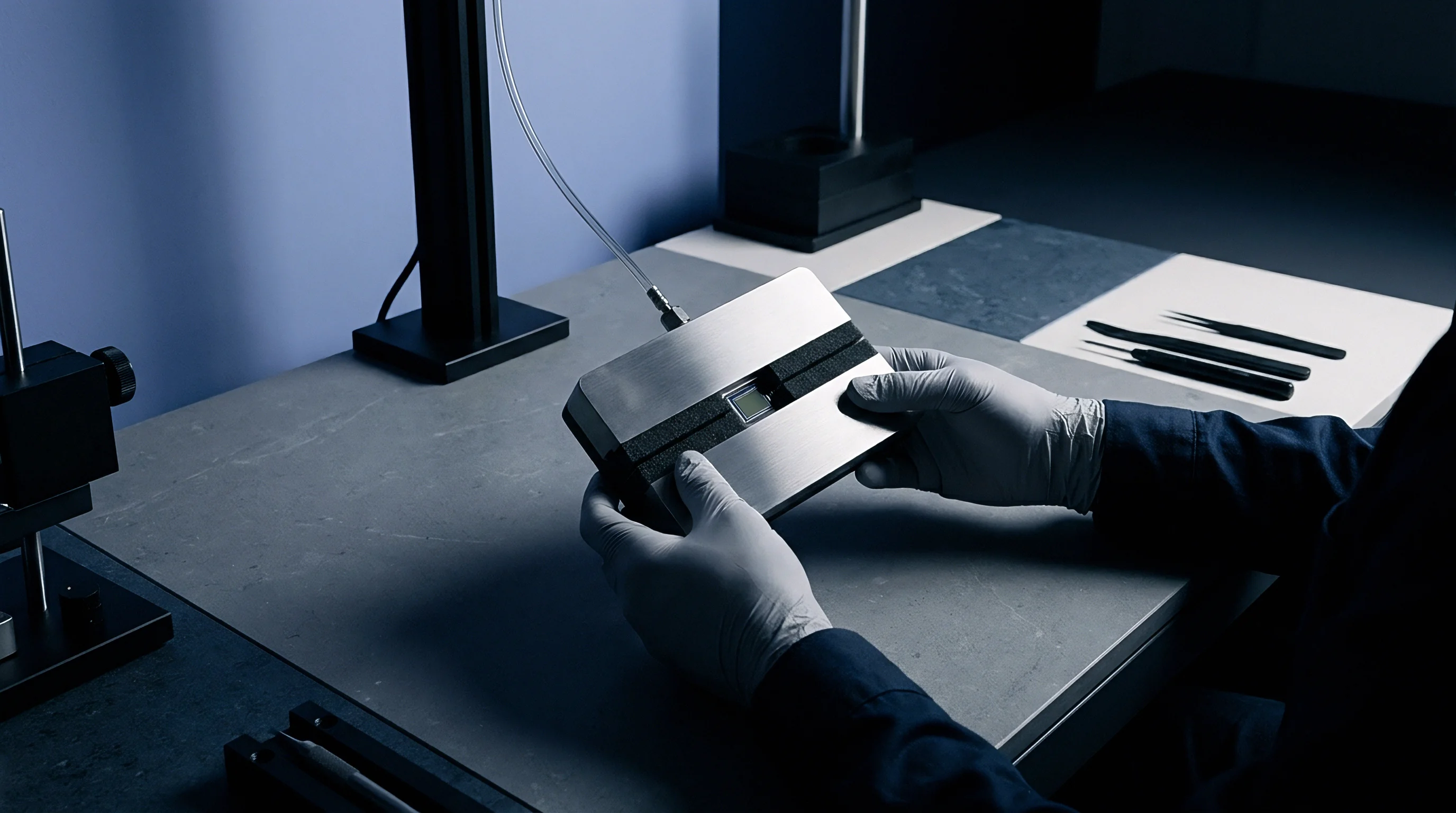
Supplier Pool Geography and Material Formulation Constraints
Primary manufacturing of relaxor ferroelectric dielectrics remains concentrated in a small group of specialized ceramic foundries. Wafer fab capacity for integrated thin-film electrostrictive elements faces lead times exceeding 36 weeks during allocation peaks, and cross-qualifying alternate sources requires extensive thermal shock and electrostrictive characterization testing lasting up to 20 weeks per formulation.
Conflicting supplier datasheets report non-linear electrostrictive permittivity shifts under microsecond thermal shock ranging between 8 and 22 percent. Buyers manage this uncertainty by requiring mandatory pulse-laser thermal screening on incoming sample lots rather than relying on catalog curves, writing explicit qualification criteria directly into component supply agreements.
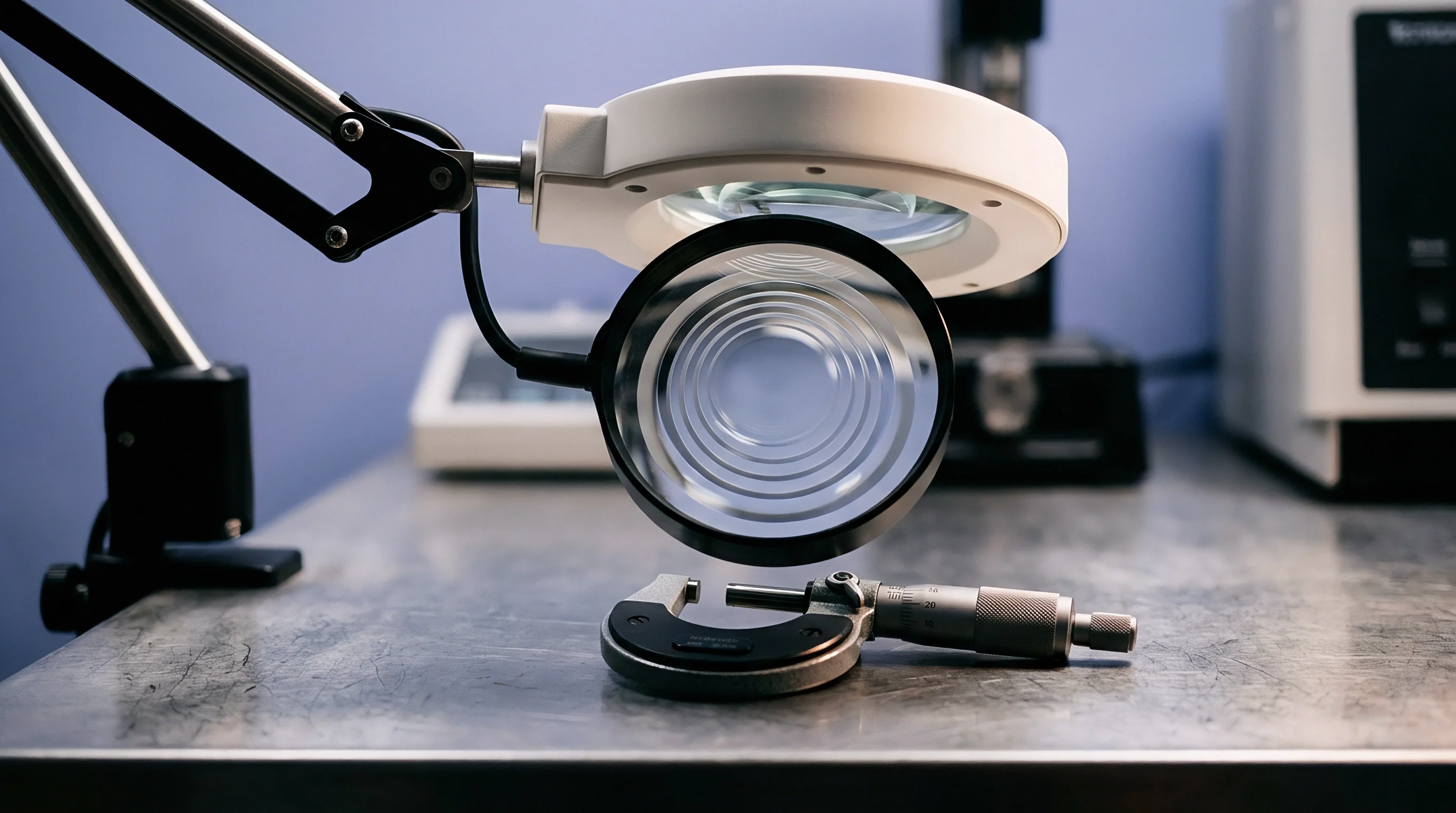
Specification Clauses for Temperature Gradient Tolerances
Purchasing contracts for high-precision dielectric sensors specify explicit transient dynamic bounds alongside static thermal coefficients. Procurement specifications define maximum allowable capacitance drift during standardized laser-induced thermal ramps under rated DC bias, and foundries failing to meet these thresholds undergo process audits covering raw material lot purity and sintering profiles.
Procurement teams evaluate material suppliers using a structured risk verification methodology:
- Raw material stoichiometry auditing tracks lead, magnesium, and niobium precursor purities across incoming manufacturing lots to prevent Curie peak broadening.
- Batch level pulse laser screening measures dynamic capacitance drift rates under 100 Kelvin per second thermal flushes before releasing ceramic lots for assembly.
- Elastodielectric tensor characterization verifies stress-induced permittivity shifts under multi-axis mechanical confinement conditions.
- Second-source process verification evaluates alternate foundry manufacturing lines for equivalence in grain size distribution and boundary phase purity.
Dielectric raw material purity dictates the sharpness of temperature dependent permittivity peaks across production ceramic batches.
Inserting an explicit thermal gradient drift cap of 0.05 percent per Kelvin per second into the procurement specification forces ceramic foundries to perform batch-level pulse testing prior to lot release.