Long Term Hydrophobic Coating Delamination Mechanisms in Industrial Optical Cavities Exposed to Acidic Vapor
Acid vapor accelerates siloxane anchor hydrolysis and capillary blister peel, requiring ALD barrier interlayers to preserve cavity ring-down finesse.
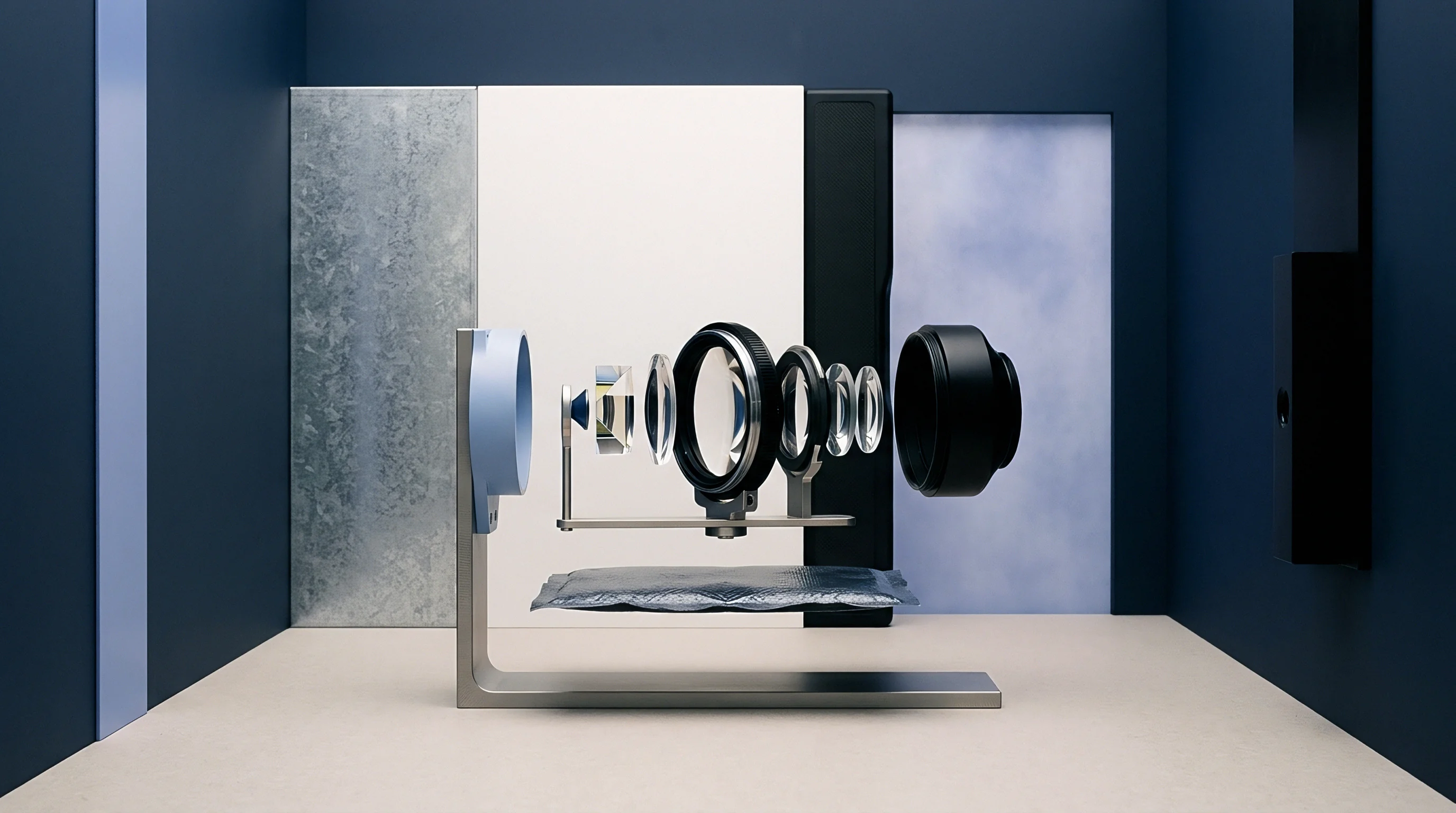

Bond
Fluoroalkylsilane monolayers deposited on fused silica optical flats rely on a condensation reaction with surface silanol groups, creating siloxane bridges across the dielectric surface. When process streams introduce wet acidic vapor, hydronium ions penetrate the fluorinated tail matrix. This aqueous hydronium initiates nucleophilic displacement at the silicon atom.
The reaction breaks the silicon-oxygen anchor, converting the covalent attachment into a detached silanol pair and an unanchored fluorosilane molecule. Mirror coatings operating inside cavity ring-down spectrometers monitoring industrial flue gases or wet chlorine scrubbers degrade rapidly under this chemical cleavage.
Anchor stability depends on surface preparation and precursor stoichiometry. A dense monolayer formed from 1H,1H,2H,2H-perfluorodecyltrichlorosilane exhibits an initial static water contact angle between 112 degrees and 115 degrees on high-purity synthetic quartz. Hydrochloric acid vapor at 50 parts per million with 80 percent relative humidity at 65 degrees Celsius reduces this angle to 88 degrees over 500 operating hours.
The acid vapor supplies catalytic protons that accelerate siloxane hydrolysis by a factor of 40 relative to dry neutral vapor environments.
Contact angle on 1H,1H,2H,2H-perfluorodecyltrichlorosilane declines from 114 degrees to 88 degrees after 500 hours in 50 parts per million hydrochloric acid vapor at 65 degrees Celsius.
Dielectric mirror stacks complicate this degradation path. High-reflectivity cavity mirrors alternate quarter-wave layers of tantala, hafnia, or titania with silica. The terminating outer layer governs silane attachment.
Terminating layers of silica offer surface silanol densities near 4.8 sites per square nanometer under wet chemical cleaning. Hafnia or tantala terminations yield metal-hydroxyl sites with different isoelectric points and weaker metal-oxygen-silicon coupling energies. Acidic condensation attacks tantala-oxygen-silicon bonds at elevated rates, lowering the activation energy for anchor unzipping.
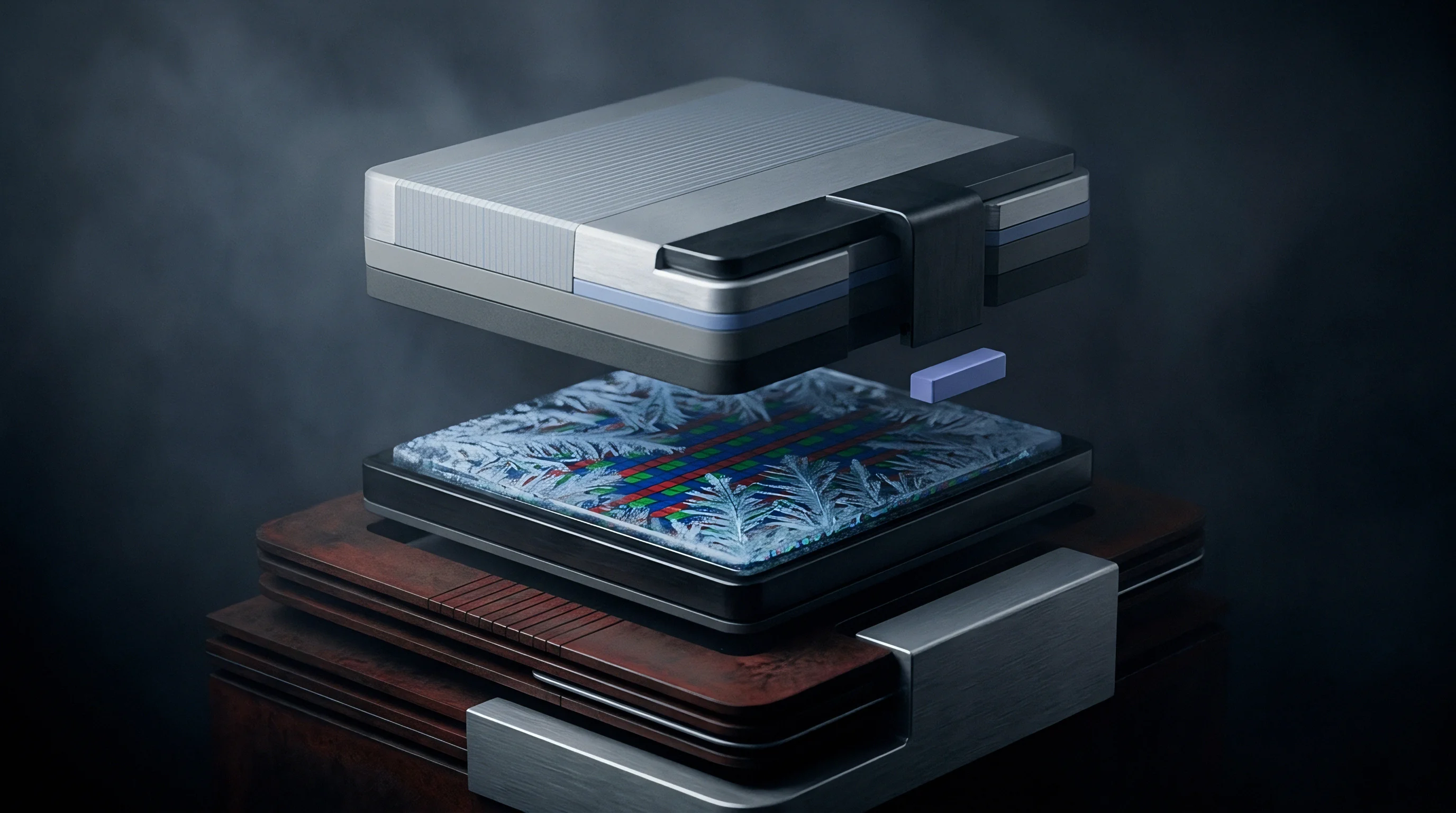
Hydrolysis Kinetics across Surface Chemistries
The rate of interfacial cleavage follows pseudo-first-order kinetics when moisture and acid concentrations remain in excess. Autocatalytic cleavage patterns emerge once early siloxane breakages liberate hydrophilic silanols on the quartz surface. These newly exposed silanol sites draw additional water molecules from the vapor phase via hydrogen bonding, forming localized aqueous reaction pockets directly beneath the fluorocarbon brush.
The surrounding fluorinated tails cannot displace these trapped aqueous droplets. The local hydronium concentration in these sub-monolayer pools often exceeds the bulk vapor concentration by two orders of magnitude.
The mechanical stress within the optical cavity accelerates this bond dissolution. Substrate clamping fixtures induce localized strains on the mirror periphery. Strained silicon-oxygen-silicon bonds exhibit lower bond dissociation barriers than relaxed bonds, concentrating initial detachment along the optical clear aperture boundaries.
| Coating Architecture | Substrate Termination | Vapor Composition | Initial Contact Angle | Final Contact Angle | Interfacial Cleavage Rate |
|---|---|---|---|---|---|
| Perfluorodecyltrichlorosilane SAM | Fused Silica (SiO2) | 50 ppm HCl, 85% RH | 114 deg | 82 deg | 1.8e-3 per hour |
| Perfluorooctyltriethoxysilane SAM | Fused Silica (SiO2) | 50 ppm HCl, 85% RH | 108 deg | 74 deg | 3.4e-3 per hour |
| Perfluorodecyltrichlorosilane SAM | Tantala (Ta2O5) | 50 ppm HCl, 85% RH | 105 deg | 68 deg | 5.1e-3 per hour |
| Amorphous Fluoropolymer (20 nm) | Fused Silica (SiO2) | 50 ppm HCl, 85% RH | 118 deg | 102 deg | 6.2e-4 per hour |
| Perfluorodecyltrichlorosilane SAM | Fused Silica (SiO2) | 20 ppm HF, 50% RH | 114 deg | 42 deg | 1.2e-1 per hour |
Optical coating vendors frequently explain early drift in cavity transmission as routine particulate accumulation removable by nitrogen purging.
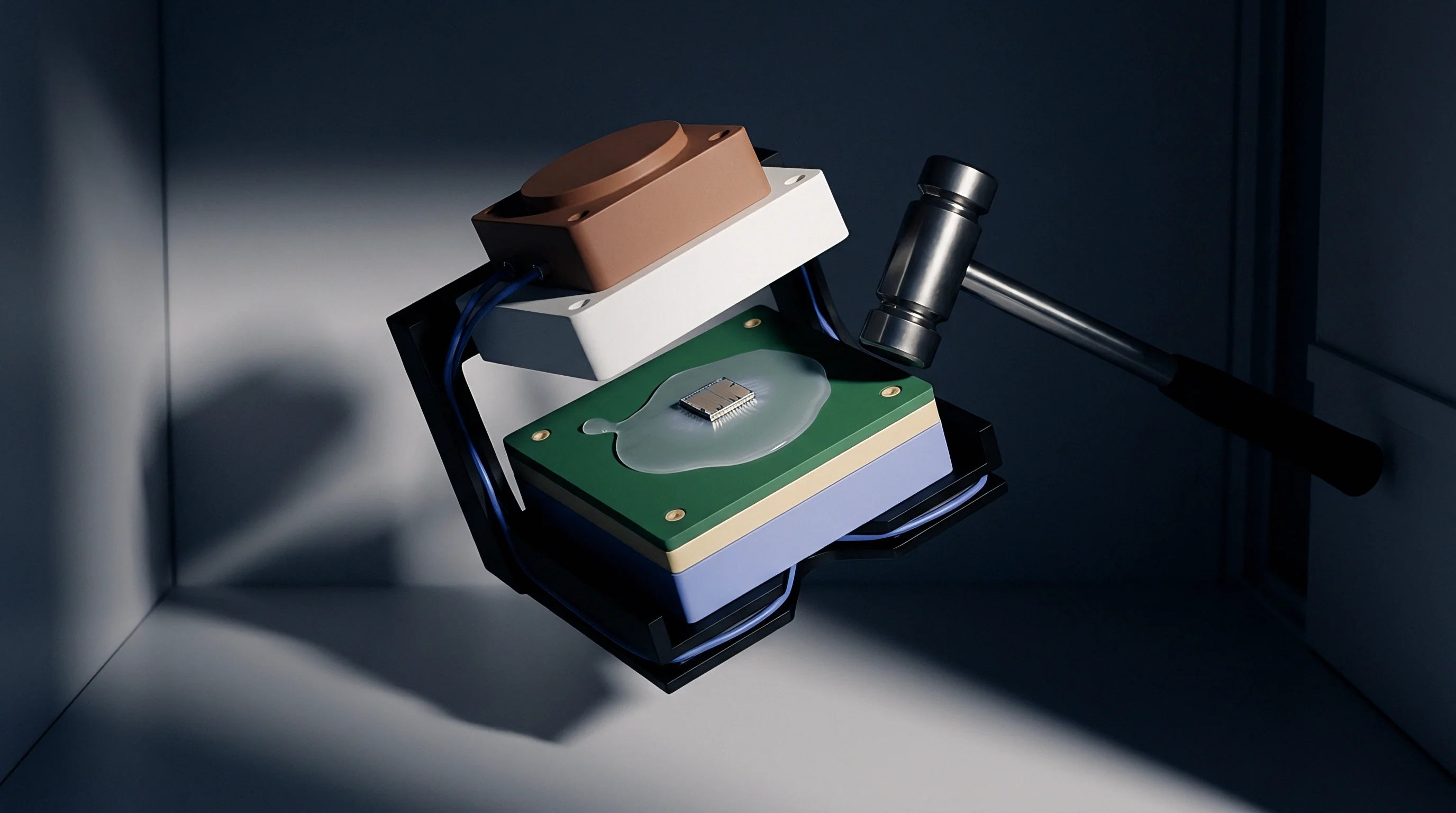

Pore
Defects within self-assembled films provide direct channels for acidic vapor migration. Even vapor-deposited monolayers contain structural pinholes, domain boundaries, and packing dislocations originating from substrate roughness. Fused silica surfaces polished to super-polish standards with root-mean-square roughness below 0.1 nanometers still present nanoscale terraces that disrupt silane self-assembly.
Acid molecules with kinetic diameters below 0.4 nanometers diffuse unhindered through these grain boundaries.
Gas transport through molecular defects operates in the Knudsen diffusion regime. The mean free path of the vapor molecules far exceeds the defect diameter, causing frequent wall collisions inside the microscopic pathways. Nitric, sulfurous, and hydrochloric acid vapors migrate through these void networks toward the mirror surface.
Once reaching the inorganic dielectric, the acid interacts with subsurface dangling bonds and micro-voids present in evaporated or sputtered optical thin films.
How Does Capillary Condensation Accelerate Substrate Attack?
Capillary condensation governs liquid phase formation within narrow structural recesses well below bulk saturation pressure. The Kelvin equation predicts that inside nanopores under two nanometers in diameter, acidic water vapor condenses into liquid at relative humidities down to 35 percent. Condensation transforms vapor-phase acid exposure into an aggressive liquid electrolyte immersion test at the microscopic scale.
Liquid hydrochloric or hydrofluoric acid confined within these nanopores attacks the underlying dielectric glass. Hydrofluoric acid vapor dissolves silicon dioxide directly by generating hexafluorosilicate anions, removing the solid foundation beneath the silane anchors. This dissolution eliminates the substrate mass supporting the coating.
The loss of underlying material causes the hydrophobic layer to collapse into the resulting etching pits, destroying surface planarity.
- Capillary condensation drives sub-saturation liquid phase transitions inside nanoscale cracks, concentrating dissolved acid ions against the primary interface.
- Substrate etching dissolves silica foundations through fluorinated anion formation, removing covalent anchoring points across the mirror face.
- Osmotic swelling forces vapor inward through concentration differentials between external process gases and stagnant interfacial salt pools.
- Pin-hole propagation expands initial nanometer dislocations into wide blister clusters that scatter circulating cavity beam power.
Coating suppliers cite pinhole densities below five defects per square centimeter under optical microscopy. Atomic force microscopy reveals nanovoid densities exceeding ten thousand defects per square millimeter on those identical production lots. Gas molecules exploit the smaller voids immediately.
Whether plasma pre-treatment can passivate nanoscale voids against sub-surface electrolyte accumulation remains unanswered across current published vacuum-deposition trials.
Loss
Ring-down decay time drops precipitously when coating delamination commences inside an industrial absorption spectrometer. In an optical cavity with mirror reflectivities exceeding 99.995 percent, the baseline empty-cavity photon lifetime ranges from 50 to 150 microseconds across a 50-centimeter path length. A single part-per-million addition of round-trip optical loss shortens this decay profile by several microseconds.
Delaminating silanes and blistering polymers introduce localized surface roughness that redirects circulating optical power away from the fundamental cavity mode.
Rayleigh and Mie scattering account for this performance degradation. Intact hydrophobic monolayers add less than 0.5 parts per million of absorption and scatter to a dielectric mirror surface. When acid vapor breaks interfacial anchors, the hydrophobic tails tilt and agglomerate into micellar clusters.
These clusters, measuring tens of nanometers in diameter, behave as point scatterers. As acid continues to collect beneath detached film regions, blisters expand to dimensions comparable to the measurement beam wavelength. The resulting Mie scattering ejects circulating photons from the cavity resonator.
Scattering loss increases from 0.8 to 42 parts per million when silane films blister under acidic exposure, dropping cavity ring-down times below ten microseconds.
Wavefront distortion compounds the scattering penalty. Delamination alters the phase profile of the reflected beam across the mirror face. Uneven film detachment creates non-uniform optical path lengths across the clear aperture, introducing wavefront aberrations that degrade mode matching into the photodetector.
The detector registers this mismatch as excessive baseline noise and reduced signal-to-noise ratios during trace gas concentration retrievals.
| Cavity Parameter | Nominal Baseline | Early Degradation (250 h) | Severe Delamination (750 h) | Operational Limit |
|---|---|---|---|---|
| Ring-Down Decay Time | 82.4 us | 54.1 us | 6.2 us | 20.0 us |
| Mirror Reflectivity | 99.9962% | 99.9942% | 99.9510% | 99.9850% |
| Cavity Finesse | 82,600 | 54,100 | 6,400 | 20,000 |
| Round-Trip Scatter Loss | 1.2 ppm | 5.8 ppm | 98.0 ppm | 15.0 ppm |
| Baseline Noise (RMS) | 0.08 ppb | 0.32 ppb | 4.10 ppb | 0.50 ppb |
Polarization stability degrades alongside the cavity finesse. Delaminated film fragments introduce localized optical birefringence under mechanical stress. Linearly polarized laser beams injected into the cavity experience polarization scrambling upon reflection at the damaged surfaces.
For cavity-enhanced absorption systems relying on polarization-sensitive detection schemes, this birefringence produces artificial absorption features that mimic the spectral signatures of target gas analytes.
Gas analyzers deployed in continuous emissions monitoring systems drop offline when cavity finesse decays past operational thresholds, forcing emergency sensor rebuilds and regulatory reporting penalties.
Peel
Mechanical separation of hydrophobic thin films progresses through shear stress concentrations at blister perimeters. When acid vapor condenses beneath the film via pinholes or edge boundaries, it creates a liquid film that generates hydrostatic and osmotic pressure. Osmotic pressure develops because non-volatile reaction byproducts, such as dissolved silica salts or metal chlorides, accumulate in the interfacial liquid.
This osmotic gradient draws more water vapor from the cavity volume through the hydrophobic coating, driving blister growth.
The blister dome experiences biaxial tensile stress, while the interfacial perimeter sustains pure shear and peeling stresses. The Griffith fracture criterion governs delamination propagation. Separation occurs when the mechanical strain energy release rate exceeds the interfacial fracture toughness of the coating-substrate bond.
For pristine silane monolayers on fused silica, interfacial fracture energy ranges from 1.5 to 2.8 Joules per square meter. Chemical hydrolysis drops this fracture energy below 0.3 Joules per square meter, enabling spontaneous mechanical peeling under minor thermal or pressure transients.
Where Do Interfacial Shear Stresses Initiate Blistering?
Interfacial shear peaks along mirror peripheries and near coating pinholes. Thermal cycling expands these shear zones due to thermal expansion mismatches between the organic coating and the inorganic glass. Synthetic fused silica exhibits a coefficient of thermal expansion near 0.5e-6 per Kelvin, whereas fluoropolymer films exhibit expansion coefficients between 50e-6 and 100e-6 per Kelvin.
Temperature fluctuations of 20 degrees Celsius inside industrial process analyzers generate interfacial shear stresses exceeding 12 megapascals.
In vacuum instrumentation chambers, ion pumps can accidentally sputter traces of titanium that land on optics during non-acidic operations. A similar thermal mismatch phenomenon damages those sputtered layers.
Cyclic pressure pulses aggravate peel mechanics. Industrial process cavities experience pressure shifts during purge cycles, filter backflushing, and sample gas switching. Rapid depressurization causes gas trapped in sub-film voids to expand violently.
The expanding pocket lifts the hydrolyzed coating from the glass, tearing the remaining intact siloxane anchors around the perimeter.
A rigorous inspection sequence separates mechanical delamination from surface contamination:
- Cavity disassembly isolates optical mirrors within a class 100 cleanroom bench without contacting coated optical apertures.
- Spectroscopic ellipsometry maps film thickness across the aperture to locate regions where layer thickness has collapsed.
- Differential interference contrast microscopy identifies blister domes, micro-cracks, and boundary delamination fringes along the mirror periphery.
- X-ray photoelectron spectroscopy determines whether fracture occurred within the silane film or directly at the glass interface through silicon and fluorine orbital signal analysis.
Fracture paths that leave no fluorine on the glass confirm chemical anchor cleavage rather than cohesive polymer failure.
Thin layers detach along the lowest energy boundary regardless of surface cleanliness.
Ledger
Passivation architectures and barrier interlayers require financial and optical trade-offs. Bare silane monolayers deposited directly onto quartz substrates provide the lowest initial fabrication cost but fail rapidly in continuous acid vapor monitoring. Atomic layer deposition of metal oxide interlayers between the mirror coating and the hydrophobic silane provides an engineered barrier against acid diffusion.
Thin films of alumina or hafnia deposited via atomic layer deposition seal underlying nanovoids, protecting the base glass from chemical attack.
An atomic layer barrier stack increases optical fabrication costs. Depositing a five-nanometer conformal titania or alumina barrier over a finished super-polished dielectric mirror requires high-precision chamber runs with tight precursor dosing controls. If the barrier layer introduces pinholes or thickness non-uniformities exceeding 0.2 nanometers, mirror scatter increases immediately, diminishing cavity performance before the optical assembly ever encounters industrial acid vapor.
| Barrier Technology | Optical Scatter Penalty | Lifespan in Acidic Vapor | Fabrication Cost Adder | Supply Base Availability |
|---|---|---|---|---|
| Direct Silane SAM (FDTS) | 0.2 to 0.5 ppm | 200 to 500 hours | Base reference cost | High (broad supplier base) |
| ALD Alumina + Silane SAM | 1.5 to 3.0 ppm | 2,000 to 4,500 hours | +180% to +240% | Moderate (specialized optics shops) |
| ALD Hafnia Barrier Layer | 2.0 to 4.5 ppm | 3,500 to 6,000 hours | +220% to +310% | Limited (aerospace coating vendors) |
| Fluoropolymer Topcoat (Cytop) | 5.0 to 12.0 ppm | 1,000 to 2,200 hours | +45% to +75% | Moderate (standard coating labs) |
| Sol-Gel Fluorosilica Composite | 3.5 to 8.0 ppm | 1,200 to 2,800 hours | +60% to +90% | Low (few qualified producers) |
A procurement specification must define allowable scatter drift and chemical resistance boundaries. Sourcing contracts that stipulate optical performance only at delivery transfer all chemical degradation risk to the equipment integrator. Qualifying an alternate optical coating vendor requires six to ten weeks of chamber testing in calibrated acid mixtures, alongside significant capital outlays for test gas handling and ring-down decay electronics.
Contractual terms covering environmental resilience determine commercial exposure when process cavities blind prematurely:
- Vapor exposure milestones tie warranty obligations to verified hours of exposure to defined concentrations of target acid vapors at maximum operating temperatures.
- Scatter loss ceilings restrict allowable mirror reflectivity decay to less than five parts per million over one full year of continuous operation.
- Adhesion failure thresholds mandate supplier absorption of cavity replacement costs whenever delamination occurs before the agreed operational lifetime.
- Precursor traceability audits compel coating vendors to provide lot-level batch verification of silane purity and chamber water content during chemical vapor deposition.
A purchase agreement inserting ISO 9211-4 acid resistance test standards shifts liability for delamination back to the optical coating supplier when mirrors fail prematurely in service.