Piezoresistive Zero Offset Drift under Coupled Hygrothermal Stress Relaxation
Hygrothermal stress relaxation in die-attach epoxies shifts piezoresistive zero offset by altering residual strain transferred to active MEMS bridge elements.

Die
Micromachined silicon pressure sensors generate signals through piezoresistors integrated into a flexible diaphragm, where strain alters carrier mobility and crystallographic band structure. Four piezoresistors arranged in a Wheatstone bridge convert this local strain into a differential output voltage. At zero pressure, balanced resistance across the four bridge arms produces no signal, but any asymmetry in the baseline strain field creates a residual voltage known as the zero offset.
Silicon piezoresistors are inherently strain-sensitive. While an isolated silicon crystal under static boundary conditions holds a stable baseline indefinitely, commercial MEMS devices must be mounted to package headers, ceramic substrates, or metallic housings using organic die-attach adhesives. These packaging joints directly transfer residual mounting stresses into the active silicon substrate.

Piezoresistive Coefficient Matrix and Residual Strain
Doped single-crystal silicon exhibits anisotropic piezoresistive behavior, with a tensor relating local stress fields to changes in resistivity. For p-type piezoresistors aligned along standard crystallographic directions in the silicon plane, longitudinal piezoresistive coefficients dominate output. Scaled by supply voltage, the differential output voltage follows a direct strain relationship:
V_out / V_in = G (epsilon_l – epsilon_t) + V_offset
Here G is the dimensionless gauge factor, epsilon_l is longitudinal strain, epsilon_t is transverse strain, and V_offset represents the initial residual imbalance. As packaging adhesives cure at elevated processing temperatures, thermal expansion mismatches between the silicon element, adhesive, and substrate carrier lock in substantial mechanical shear stress.
These packaging materials relax over time. Through shelf storage and operation, cured polymer adhesives undergo physical aging and volumetric reorganization. As stored mounting forces ease, the differential strain transferred to the piezoresistors shifts.
Even sub-microstrain variations across opposing arms of the Wheatstone bridge produce measurable zero-point drift without any applied pressure.
A residual strain shift of five microstrain across a high-sensitivity Wheatstone bridge generates a zero offset drift exceeding zero point two percent of full scale span.
Zero drift during tropical field deployment remains within standard atmospheric stability bounds when factory burn-in routines purge high-rate initial creep.
Moisture
Moisture ingress alters polymer structures through physical absorption and the disruption of hydrogen bonding within cured epoxy networks. Ambient relative humidity drives water vapor through packaging seals and silicone gel encapsulants via Fickian diffusion. As moisture accumulates in the die-attach matrix, polar hydroxyl groups on the polymer backbone attract water molecules, loosening the cross-linked network.
This absorption swells the epoxy and lowers its stiffness, while elevated temperature accelerates polymer chain mobility. The resulting plasticization depresses the glass transition temperature of cured structural adhesives, often lowering the effective softening point by fifteen to thirty degrees Celsius in high-humidity environments.
Coupled Hygrothermal Mechanics in Package Adhesives
Hygroscopic swelling introduces an isotropic strain that opposes the thermal contraction stress locked in during cure. Volumetric expansion follows a linear coefficient of hygroscopic swelling, combining thermal expansion, hygroscopic expansion, and viscoelastic creep into the total strain state of the die-attach adhesive:
epsilon_total = alpha Delta T + beta C + epsilon_viscoelastic
Where alpha is the coefficient of thermal expansion, Delta T is the temperature differential, beta is the coefficient of hygroscopic swelling, C is the moisture concentration within the polymer, and epsilon_viscoelastic accounts for time-dependent stress relaxation.
| Property Parameter | Dry Baseline State | Hygrothermal Saturated State | Measurement Unit |
|---|---|---|---|
| Glass Transition Temperature | 145 | 118 | Degrees Celsius |
| Elastic Modulus at 23 C | 8.5 | 6.2 | Gigapascals |
| Coefficient of Hygroscopic Swelling | 0.00 | Dry Baseline | 0.28 | Strain per Weight Percent |
| Equilibrium Water Concentration | 0.00 | 2.15 | Weight Percent |
| Stress Relaxation Rate Constant | 0.012 | 0.048 | Inverse Hours |
Simultaneous fluctuations in relative humidity and temperature subject the adhesive layer to repeated cycles of softening and swelling. Under high humidity, the lower elastic modulus relaxes the compressive stress holding the silicon die to its carrier. When humidity drops, moisture desorbs much slower than heat dissipates, setting up transient stress gradients across the die interface.
Unmatched hygroscopic expansion rates across die-attach interfaces induce structural tilt that directly destabilizes Wheatstone bridge electrical balance.
Coupled hygrothermal environmental exposure causes zero offset instability through several distinct mechanical and structural breakdown modes:
- Asymmetrical Polymer Swelling creates localized bending moments across the diaphragm when moisture enters non-uniformly along the bond line.
- Plasticization Induced Modulus Loss reduces restraint on the die, letting locked-in assembly strain release through localized viscoelastic slip.
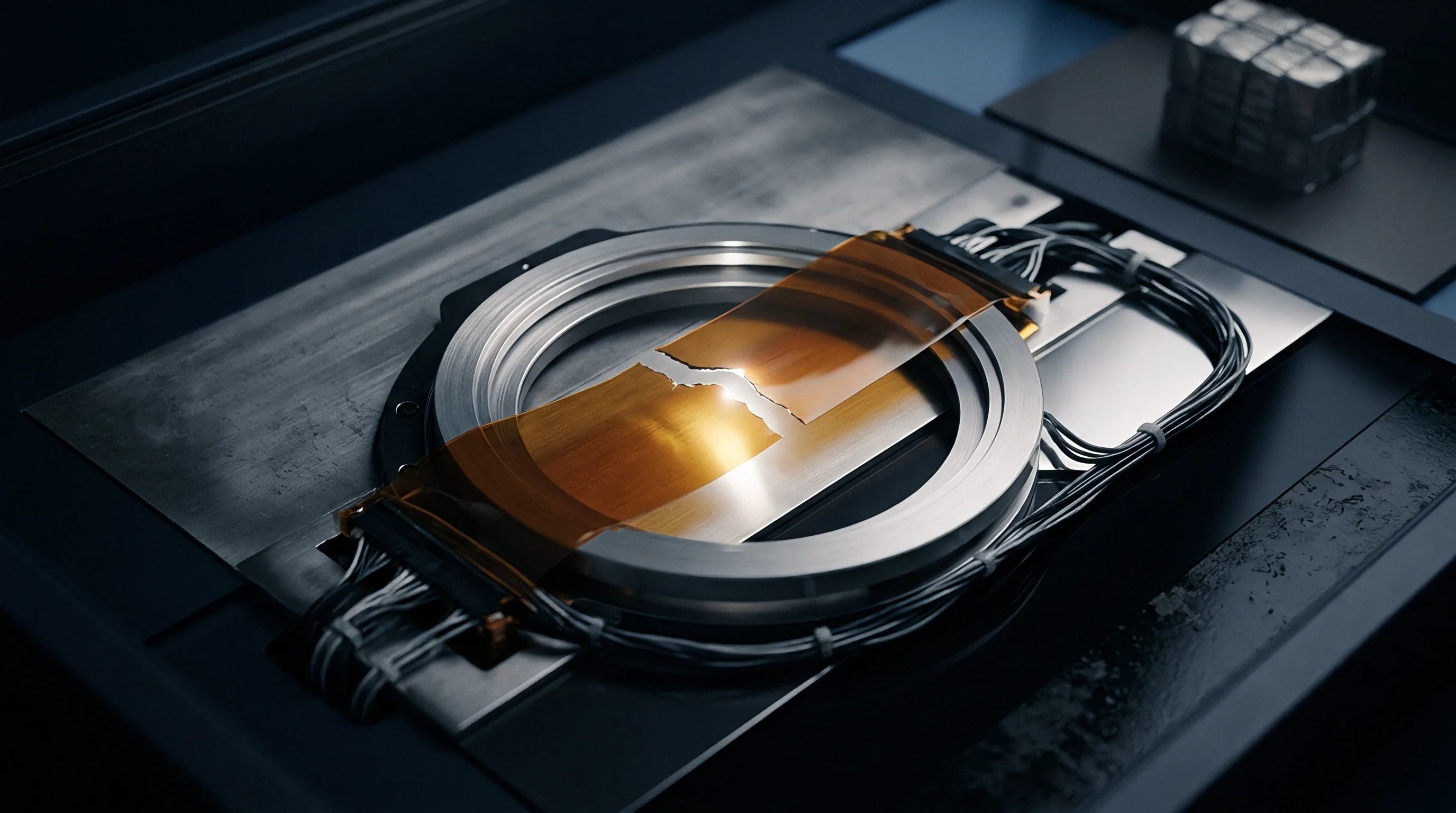
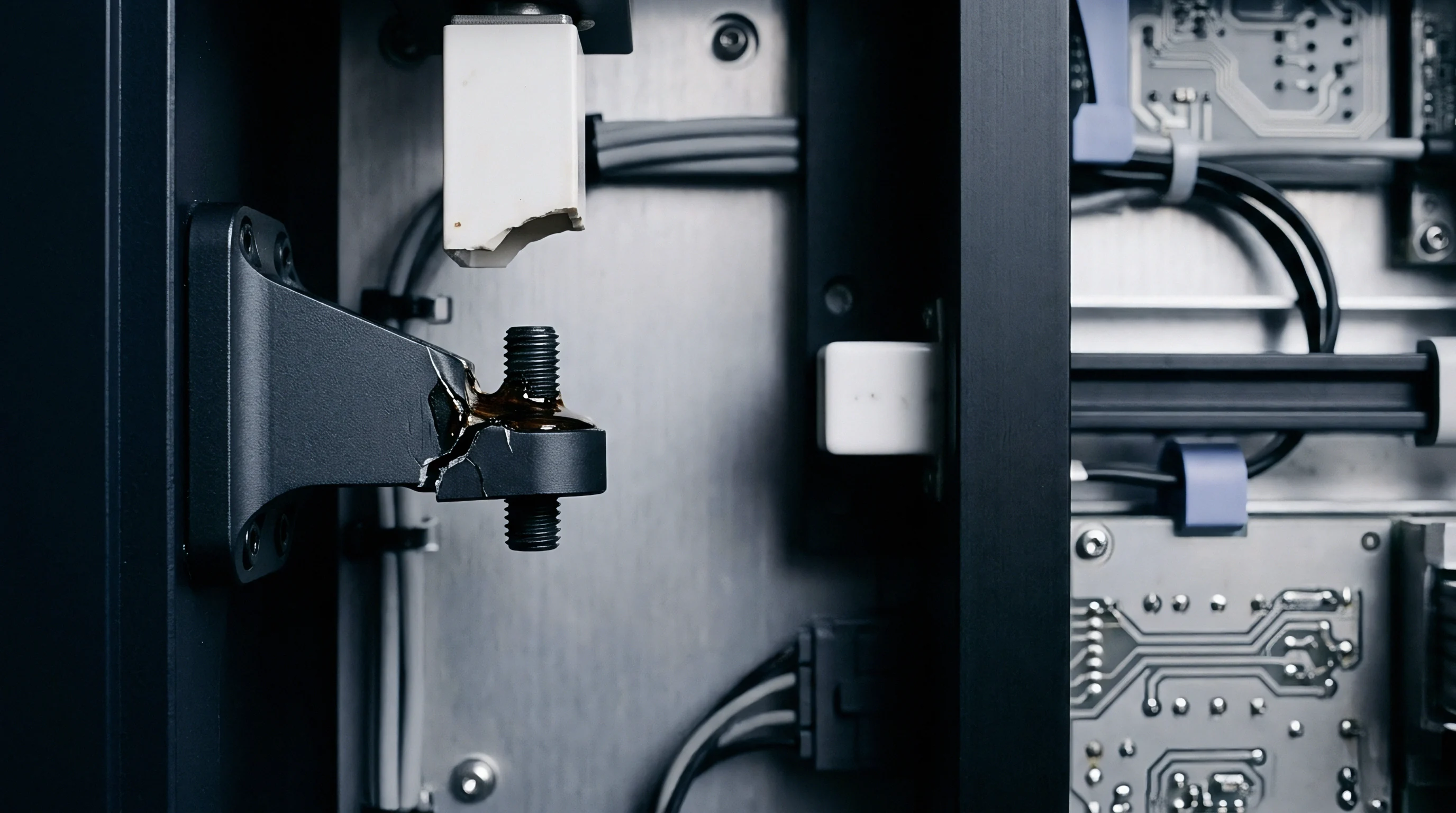
- Adhesive Interfacial Delamination degrades strain transfer at die corners, initiating micro-cracks that permanently shift mechanical reference baselines.
- Silicone Gel Swelling Stress exerts direct hydrostatic and shear forces on fine gold wire bonds and active piezoresistive traces when moisture gathers at interface boundaries.
Ignoring hygrothermal stress relaxation leads to systemic zero drift in field units, creating unrecoverable measurement bias that triggers warranty claims and invalidates three-year calibration guarantees.
Bench
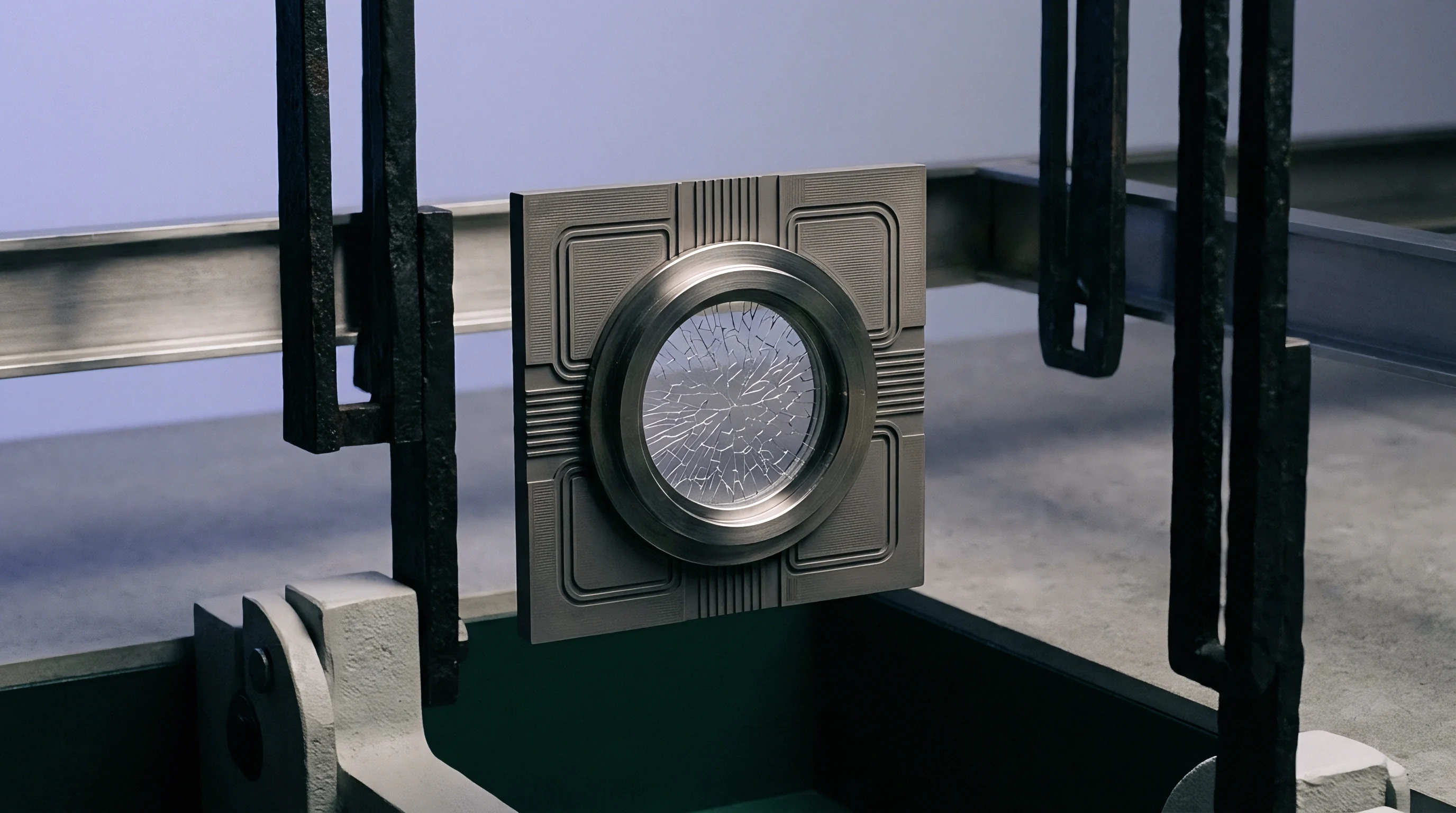
Measuring zero offset drift accurately requires strict environmental control and high-resolution instrumentation capable of isolating true zero shifts from changes in span sensitivity. Test chambers must hold dry-bulb temperature within zero point one degrees Celsius and relative humidity within one percent over multi-thousand-hour runs. Accelerating hygrothermal relaxation without triggering artificial failure modes depends on carefully chosen stress profiles.
Because zero drift distorts low-pressure measurements and thermal mismatches induce lasting strain, maintaining calibration intervals relies heavily on package stability. Isolating piezoresistive zero-point wander requires returning the sensor to static reference atmospheric conditions before and after exposure testing.
Environmental Test Conditions and Uncertainty Budgets
Accelerated reliability testing follows steady-state damp heat profiles such as those in IEC 60068-2-78. Exposing units to eighty-five degrees Celsius and eighty-five percent relative humidity for one thousand hours speeds up both water diffusion into package polymers and structural chain relaxation. Baseline measurements are taken at reference conditions of twenty-three degrees Celsius and fifty percent relative humidity after a fixed stabilization window.
| Source of Uncertainty | Standard Uncertainty Value | Probability Distribution | Sensitivity Coefficient | Uncertainty Contribution |
|---|---|---|---|---|
| Excitation Voltage Stability | 0.005 percent | Normal | 1.00 | 0.005 percent FSO |
| Chamber Temperature Variance | 0.08 degrees C | Rectangular | 0.015 percent FSO / C | 0.0012 percent FSO |
| Barometric Pressure Fluctuation | 0.02 kPa | Normal | 0.05 percent FSO / kPa | 0.0010 percent FSO |
| ADC Quantization and Noise | 1.2 microvolts | Normal | 0.002 percent FSO / uV | 0.0024 percent FSO |
| Thermal Stabilization Delay | 0.15 hours | Rectangular | 0.010 percent FSO / hr | 0.0015 percent FSO |
| Combined expanded uncertainty equals 0.012 percent Full Scale Output at coverage factor k equal to two. | ||||
Isolating pure zero drift requires stripping thermal hysteresis and barometric pressure fluctuations from the raw output data. A standardized test sequence separates genuine material stress relaxation from ambient environmental noise:
- Mount sensor units inside a barometrically compensated test fixture connected to a regulated reference pressure exhaust.
- Energize Wheatstone bridge excitation circuits using a precision low-noise voltage source verified against a primary Josephson junction reference standard.
- Record initial zero offset voltages at twenty-three degrees Celsius and fifty percent relative humidity after a four-hour thermal soak.
- Transfer fixtures into environmental chamber operating at eighty-five degrees Celsius and eighty-five percent relative humidity for designated exposure blocks.
- Remove units from stress chamber and place them in an environmental stabilization zone maintained at twenty-three degrees Celsius and fifty percent relative humidity for twenty-four hours.
- Measure final zero offset voltage under identical electrical and barometric parameters as initial baseline capture.
- Calculate net zero offset drift as the percentage difference in full scale output relative to pre-exposure baseline values.
ISO/IEC 17025 Clause 7.8.4 requires calibration certificates to record ambient temperature and relative humidity during zero point baseline capture, preventing uncompensated ambient shifts from masking true sensor relaxation.

Arithmetic
Quantifying stress relaxation over long operating lifetimes involves modeling the decay of initial mounting stress using stretched exponential functions. Cured epoxy adhesives under constant strain relieve stress through viscoelastic relaxation, following Kohlrausch-Williams-Watts behavior over time:
sigma(t) = sigma_initial exp( – (t / tau)^beta )
Here sigma_initial is the locked-in cure stress, tau is the characteristic relaxation time, beta is the stretched exponential shape parameter between zero and one, and t is elapsed time. Hygrothermal exposure shortens tau by accelerating molecular mobility within the polymer.

What Accelerates Stress Relaxation in Die Attach Adhesives?
Temperature and moisture act together to drive stress relaxation in die-attach polymers. Moisture lowers the activation energy while heat supplies kinetic energy to disrupt secondary bonds. Combining Eyring rate kinetics with Peck’s humidity model yields the total acceleration factor AF:
AF = exp( (E_a / k) (1 / T_use – 1 / T_stress) ) ( RH_stress / RH_use )^n
In this expression, E_a is the relaxation activation energy in electronvolts, k is Boltzmann’s constant, T_stress and T_use are absolute temperatures in Kelvin, the RH terms are fractional relative humidities, and n is the humidity exponent, typically between two and three.
Worked Zero Offset Drift Projection
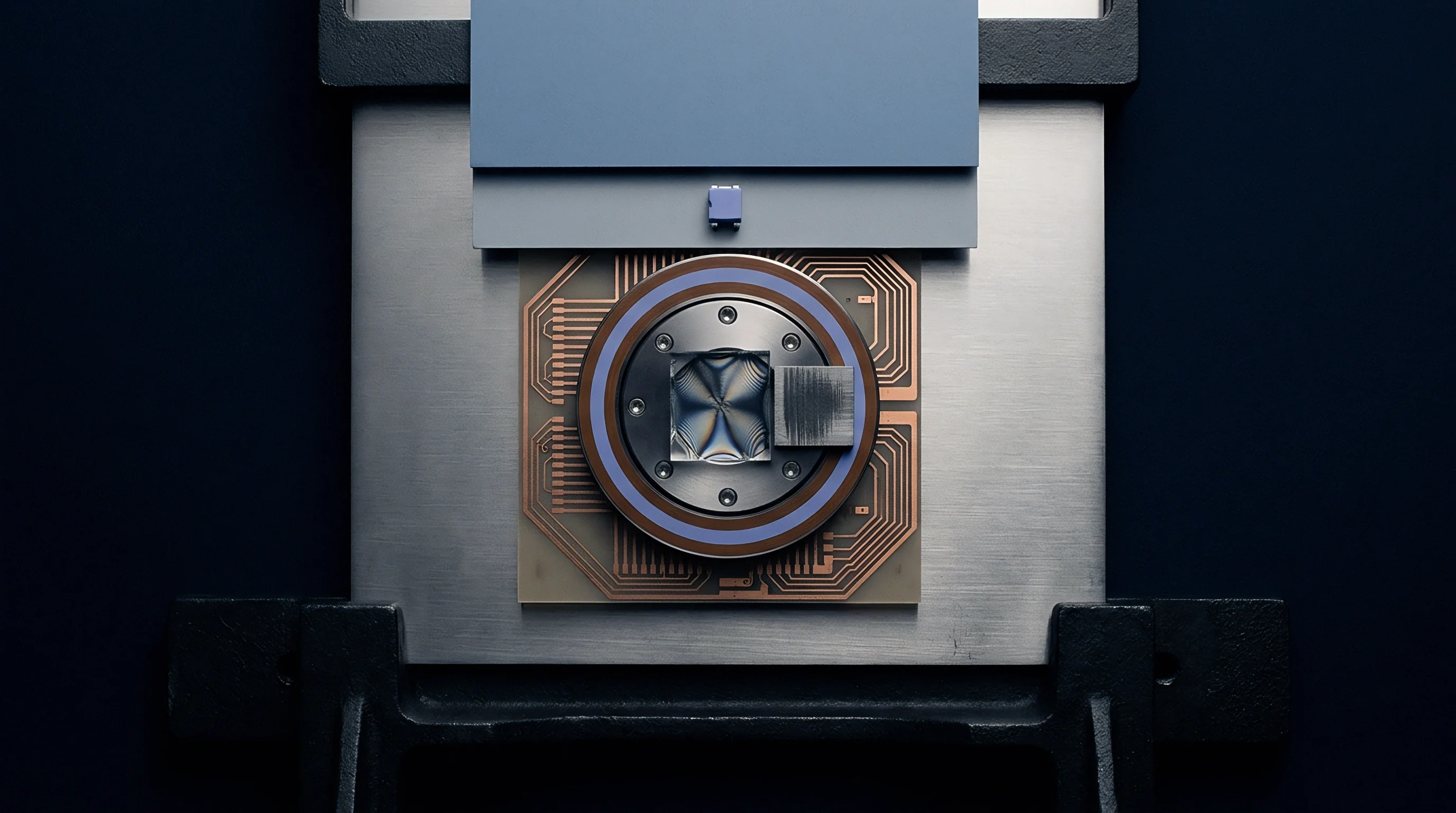
Consider a micromachined piezoresistive pressure sensor die bonded to a ceramic substrate with structural epoxy. Initial cure locks in a residual tensile stress sigma_initial of forty-five megapascals across the mounting boundary. The Wheatstone bridge has a gauge factor G of two point five, and the differential strain transfer ratio from substrate to active bridge arms is zero point zero eight.
Operating conditions are thirty-five degrees Celsius and sixty-five percent relative humidity, while qualification testing runs at eighty-five degrees Celsius and eighty-five percent relative humidity. Activation energy E_a is zero point seven five electronvolts, humidity exponent n is two point two, shape factor beta equals0 point four five, and baseline relaxation time tau at normal operating conditions is forty-five thousand hours.
Calculating acceleration factor AF between operation and bench test environments:
Thermal Term = exp( (0.75 / 8.617e-5) (1 / 308.15 – 1 / 358.15) )
Thermal Term = exp( 8703.7 0.0004533 ) = exp(3.945) = 51.68
Humidity Term = ( 0.85 / 0.65 )^2.2 = ( 1.3077 )^2.2 = 1.802
Total Acceleration Factor AF = 51.68 1.802 = 93.13
One thousand hours of bench testing at eighty-five degrees Celsius and eighty-five percent relative humidity corresponds to ninety-three thousand one hundred thirty hours in service ~ over ten years of continuous operation.
Calculating residual mounting stress after one thousand hours of accelerated test exposure:
Equivalent time t_eq = 1000 93.13 = 93130 hours
Normalized relaxation argument = 93130 / 45000 = 2.0695
Exponent term = (2.0695)^0.45 = 1.389
sigma(1000 hr) = 45 exp( -1.389 ) = 45 0.2493 = 11.22 MPa
The relaxed stress Delta sigma is 45 minus 11.22, or thirty-three point seven eight megapascals. Converting this stress loss to differential strain, assuming an adhesive elastic modulus E of seven gigapascals:
Delta epsilon_adhesive = Delta sigma / E = 33.78e6 / 7.0e9 = 4825 microstrain
Strain transferred across substrate to bridge piezoresistors:
Delta epsilon_bridge = 4825 0.08 = 386 microstrain
Calculating the bridge zero offset shift Delta V_offset as a percentage of full-scale output (% FSO), for a full-scale strain capacity of fifteen hundred microstrain:
Delta V_offset = ( Delta epsilon_bridge / epsilon_fullscale ) 100
Delta V_offset = ( 386 / 1500 ) 100 = 0.257 percent FSO
Because creep continues over time, this zero shift represents a permanent baseline offset drift caused strictly by hygrothermal stress relaxation in the die attach.
Exposure to eighty-five degrees Celsius and eighty-five percent relative humidity for one thousand hours degrades adhesive joint stress by seventy-five percent, shifting sensor zero point by zero point two five seven percent full scale output.
Establishing realistic zero-stability tolerances involves distinct trade-offs during component selection and qualification:
- Adhesive Selection Verification involves screening die-attach formulations to minimize glass transition temperature depression under moisture saturation.
- Thermal Profile Optimization uses extended high-temperature post-curing to maximize cross-linking density before baseline calibration.
- Encapsulation Barrier Choice relies on fluorosilicone or hydrophobic coatings to keep moisture away from structural bond lines.
- Bridge Topology Layout positions all Wheatstone bridge arms within uniform stress zones to balance local relaxation forces.
Whether moisture desorption during seasonal dry cycles can fully reverse plasticization-induced stress shifts remains an open question across high-density epoxy formulations.
Sourcing
Specifying piezoresistive sensors for mission-critical applications requires looking beyond room-temperature datasheet claims. A tight zero tolerance verified only at manufacture offers no protection against hygrothermal drift in actual field environments. Procurement specifications should require long-term drift limits backed by standardized stress test data.
Because digital trimming can mask strain and moisture saturation alters baseline stress, packaging architecture directly dictates long-term stability ~ eutectic bonding avoids polymer relaxation entirely, making architecture selection central to sourcing strategy.
| Packaging Architecture | Initial Unit Cost | Zero Drift Risk Level | Hygroscopic Susceptibility | Recommended Application Bounds |
|---|---|---|---|---|
| Organic Substrate with Epoxy Attach | Low | High | Severe Modulus Shift | HVAC, Commercial Appliances |
| Ceramic Header with Glass-Frit Mount | Moderate | Low | Impervious to Moisture | Industrial Process Control, Automotive |
| Silicon-on-Silicon Eutectic Bonded | High | Very Low | Zero Polymer Relaxation | Aerospace, Subsea Deepwater |
| Metal Header with Silicone Gel Fill | Moderate | Moderate | Gel Swelling Strain | Outdoor Hydraulics, Marine Engine Management |
High-reliability applications demand clear contractual stability clauses. Sourcing agreements should require pre-conditioning prior to final factory calibration trim. Combining elevated thermal soaking with high-humidity stabilization during burn-in purges early viscoelastic creep, delivering a stable baseline before installation.
Sensors built with expansion-matched glass-frit mounts consistently outperform epoxy-encapsulated designs whenever zero stability outweighs initial unit cost.