Decoupling Viscoelastic Diaphragm Creep from Packaging Outgassing in Sensor Drift
Decoupling diaphragm creep from package outgassing requires thermal vacuum bake-out to remove volatile mass transfer before testing mechanical stress relaxation.
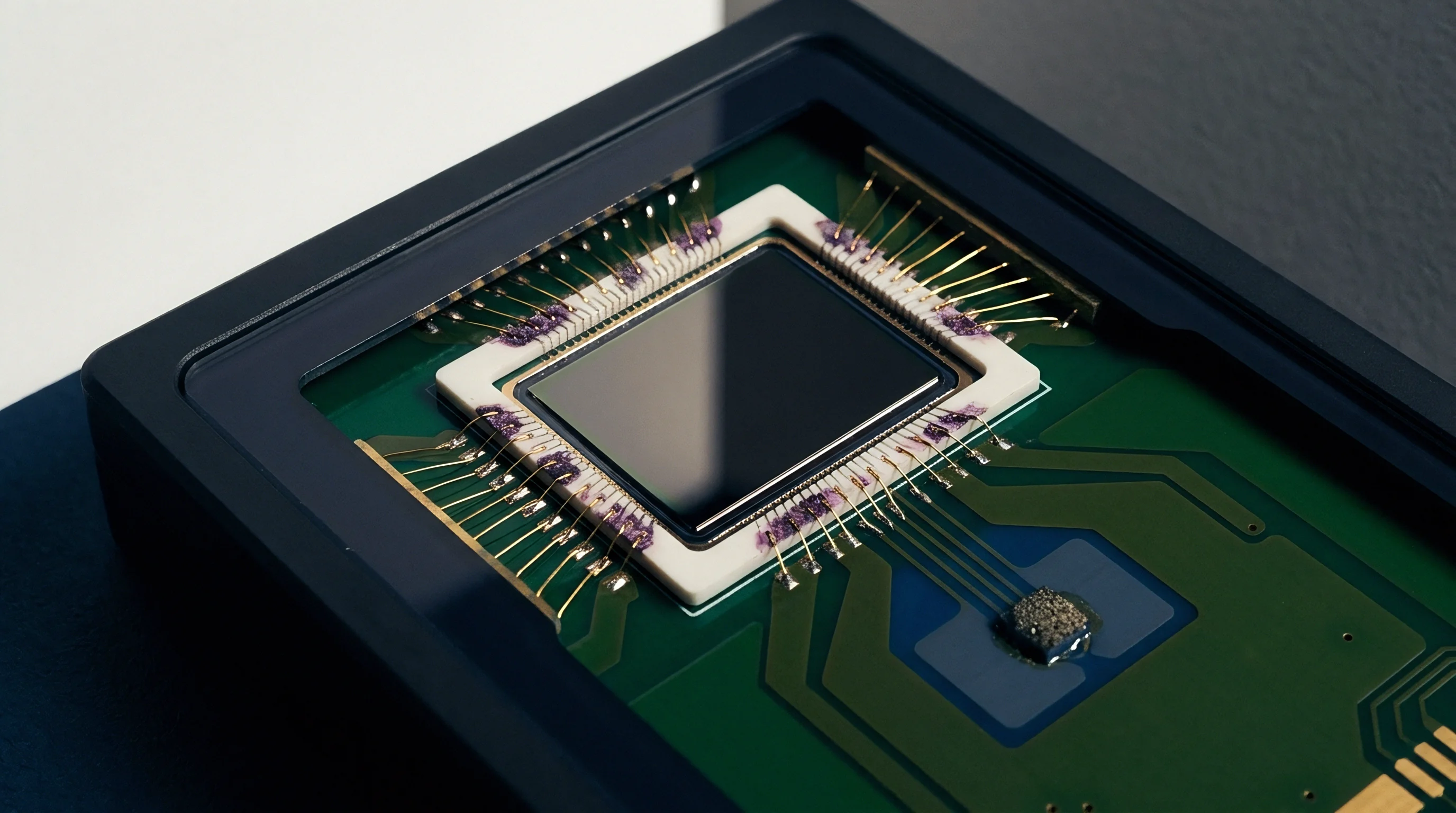

Mechanics

Viscoelastic Relaxation Profiles
Pressure sensors utilizing polymeric or adhesive-bonded micro-diaphragms experience long-term zero-point drift originating from two distinct physical sources. Elastomeric seals, silicon-gel potting compounds, and epoxy die-attach layers undergo delayed structural realignments under continuous mechanical stress. Physical strain applied to a synthetic diaphragm induces an immediate elastic response followed by time-dependent molecular rearrangement.
Structural relaxation occurs continuously over months, redistributing internal stress tensors across the sensor membrane.
Polymers relax under stress.
Mathematical modeling of this mechanical behavior relies on the standard linear solid model, incorporating parallel combinations of Maxwell models and Kelvin-Voigt elements. The time-dependent compliance function exhibits logarithmic or power-law decay, expressed as a function of operational temperature and applied static pressure differential. At room temperature, a micro-machined diaphragm with organic adhesive bonds shows an initial logarithmic relaxation phase spanning the first 200 hours of continuous operation.
The rate of mechanical strain decay gradually decreases, following an inverse time relationship.
| Mechanism | Primary Physical Driver | Time Dependence | Temperature Dependence | Reversibility Spectrum |
|---|---|---|---|---|
| Viscoelastic Creep | Internal strain tensor relaxation | Logarithmic or power law | Arrhenius behavior (0.6 to 0.9 eV) | Irreversible plastic deformation |
| Adhesive Shear Relaxation | Polymer chain segment mobility | Multi-exponential decay | Glass transition activation | Partially reversible upon unload |
| Organic Outgassing | Volatile species desorption | Fickian diffusion square root | Exponential vapor pressure rise | Irreversible mass depletion |
| Vapor Condensation | Adsorption on diaphragm face | Asymptotic saturation limit | Desorption equilibrium shift | Fully reversible via thermal bake |
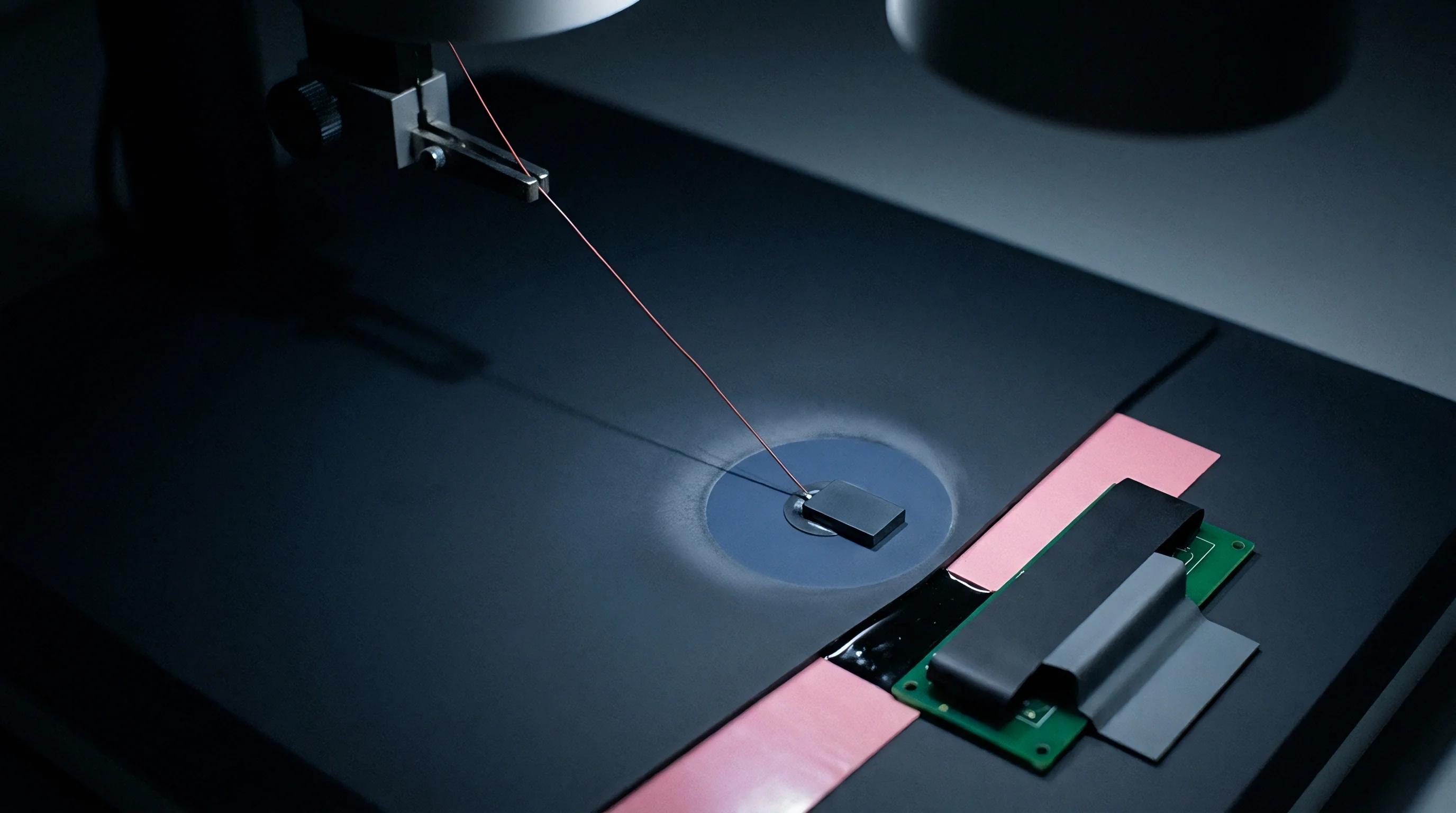
Polymer Matrix Stress Rearrangement
Micro-strain redistribution within die-attach epoxies shifts the neutral mechanical axis of a piezoresistive or capacitive diaphragm assembly. When cured at elevated temperatures, structural adhesives retain residual thermal stresses ranging from 5 to 25 megapascals due to coefficient of thermal expansion mismatches between silicon, glass, and metallic headers. Over extended operational periods, cross-linked epoxy chains slide past one another to relieve localized strain.
The mechanical zero-point of the diaphragm shifts in response, producing a continuous voltage drift in the sensor signal chain.
Silicon diaphragms exhibit minimal creep.
Sub-nanometer dimensional changes within the diaphragm geometry alter the output signal without any variation in applied fluid pressure. A piezoresistive Wheatstone bridge configured on a silicone micro-diaphragm experiences offset shifts exceeding 0.15 percent of full-scale output per annum solely from adhesive strain relaxation. Isolating this strain profile requires evaluating the sensor signal across constant environmental conditions where volatile transport remains suppressed.
0.15 percent full-scale offset shift occurs annually in silicone-bonded micro-diaphragms operating under continuous 3 bar line pressure at 25 degrees Celsius.
The extent to which physical polymer rearrangement interacts with chemical mass transfer to alter low-frequency noise floors remains unquantified under dynamic stress conditions.
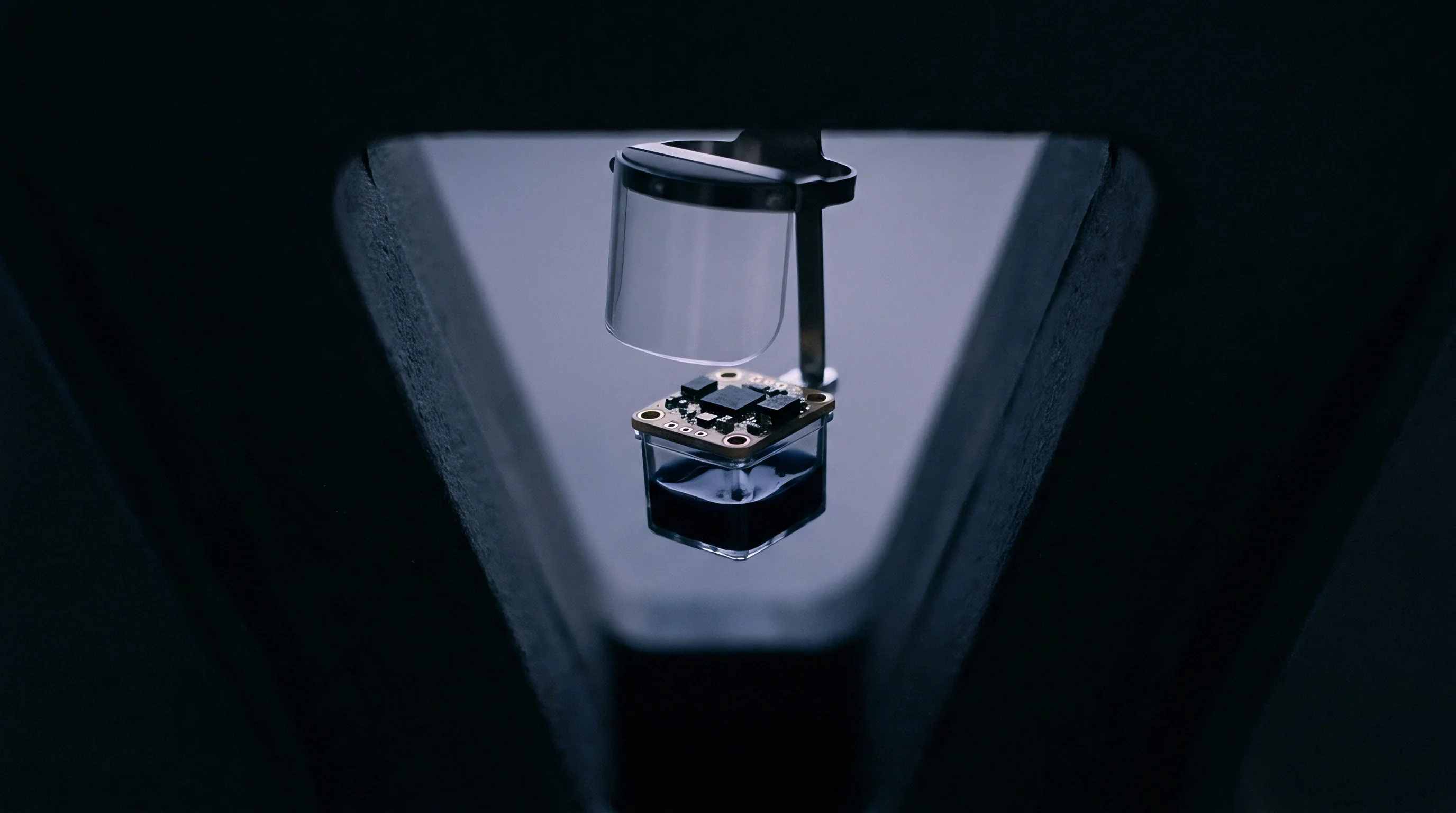

Vapor

Volatile Organic Compound Outgassing Kinetics
Organic materials inside sealed sensor housings continuously release volatile organic compounds into the internal package cavity. Solvents, unreacted monomers, plasticizers, and low-molecular-weight siloxanes desorb from epoxies, potting gels, and printed circuit board substrates. Mass loss rates follow Fickian diffusion models, driven by chemical concentration gradients between the bulk material and the internal void volume.
Outgassing rates decay exponentially.
Outgassed volatile species migrate through the cavity atmosphere and interact with the sensitive micro-diaphragm surface. Condensation of heavy hydrocarbon fractions or siloxane oligomers onto the active diaphragm face adds parasitic mass, changing the effective mass density and mechanical stiffness of the membrane. A mass accumulation of 1.2 nanograms per square millimeter on a micro-machined silicon diaphragm yields a measurable zero-point offset shift by changing localized resonant frequencies and static flexural resistance.

Chemical Mass Loading and Diaphragm Swell
Adsorption of volatile species onto polymeric diaphragm surfaces causes structural swelling alongside mass accumulation. Volatile molecules permeate the matrix of silicone or polyimide diaphragms, expanding the molecular lattice and inducing localized compressive stresses. Compressive surface stress forces the diaphragm to bow outward, mimicking a positive pressure input signal.
- Siloxane Deposition creates an irreversible inorganic silica layer under ambient moisture, causing continuous upward span drift across 1000 operational hours.
- Solvent Absorption expands the polymer matrix volume, producing immediate baseline zero shifts proportional to ambient vapor concentration inside the package.
- Plasticizer Migration reduces the elastic modulus of the diaphragm material, increasing pressure sensitivity over time and altering full-scale output slope.
- Moisture Co-Adsorption accelerates surface degradation, shifting the dielectric constant between capacitive sensing electrodes.
Mass loading shifts zero.
Disentangling chemical mass uptake from structural viscoelastic relaxation demands continuous monitoring under varied atmospheric parameters within the package micro-environment. Silicone potting compounds exposed to thermal cycles release low-molecular-weight cyclic siloxanes (D4 through D10 species) at rates exceeding 0.05 microgram per gram per hour at 85 degrees Celsius. The released siloxanes deposit onto optical, capacitive, or piezoresistive sensing surfaces, altering mechanical zero points and signal amplification gains.
Polymer swelling outgassing effects mirror mechanical stress relaxation during initial soak tests.
Proper material selection prevents outgassing failures.


Chamber

Environmental Thermal Soak Isolation Protocols
Testing facilities employ specialized environmental test enclosures to distinguish mechanical structural relaxation from volatile chemical transfer. Differentiating the two mechanisms relies on thermal soak protocols executed within vacuum chambers equipped with quartz crystal microbalances and gas chromatograph mass spectrometers. Placing unsealed sensor assemblies inside a controlled vacuum environment at 10 to the power of minus 6 Torr accelerates volatile outgassing while maintaining constant mechanical pressure across the diaphragm boundaries.
Vacuum bakes remove volatiles.
High-vacuum thermal exposure desorbs volatile organic compounds within 72 hours at 125 degrees Celsius, stabilizing the chemical mass of the assembly. Subsequent baseline stability testing conducted in an inert nitrogen atmosphere isolates pure viscoelastic mechanical creep. If a sensor continues to exhibit zero-point drift after exhaustive thermal vacuum bake-out, structural relaxation of the diaphragm or die-attach adhesive remains the sole active physical mechanism.
- Bake unsealed sensor assemblies inside a vacuum chamber at 125 degrees Celsius and 10 to the power of minus 6 Torr for 72 hours.
- Measure volatile species mass accumulation using a quartz crystal microbalance cooled to 25 degrees Celsius.
- Backfill the test chamber with ultra-high purity nitrogen gas to atmospheric pressure.
- Apply full-scale pressure steps using dry nitrogen while recording Wheatstone bridge zero offset stability across 168 hours.
- Calculate the logarithmic creep slope of the zero-offset baseline signal to establish the pure mechanical relaxation profile.
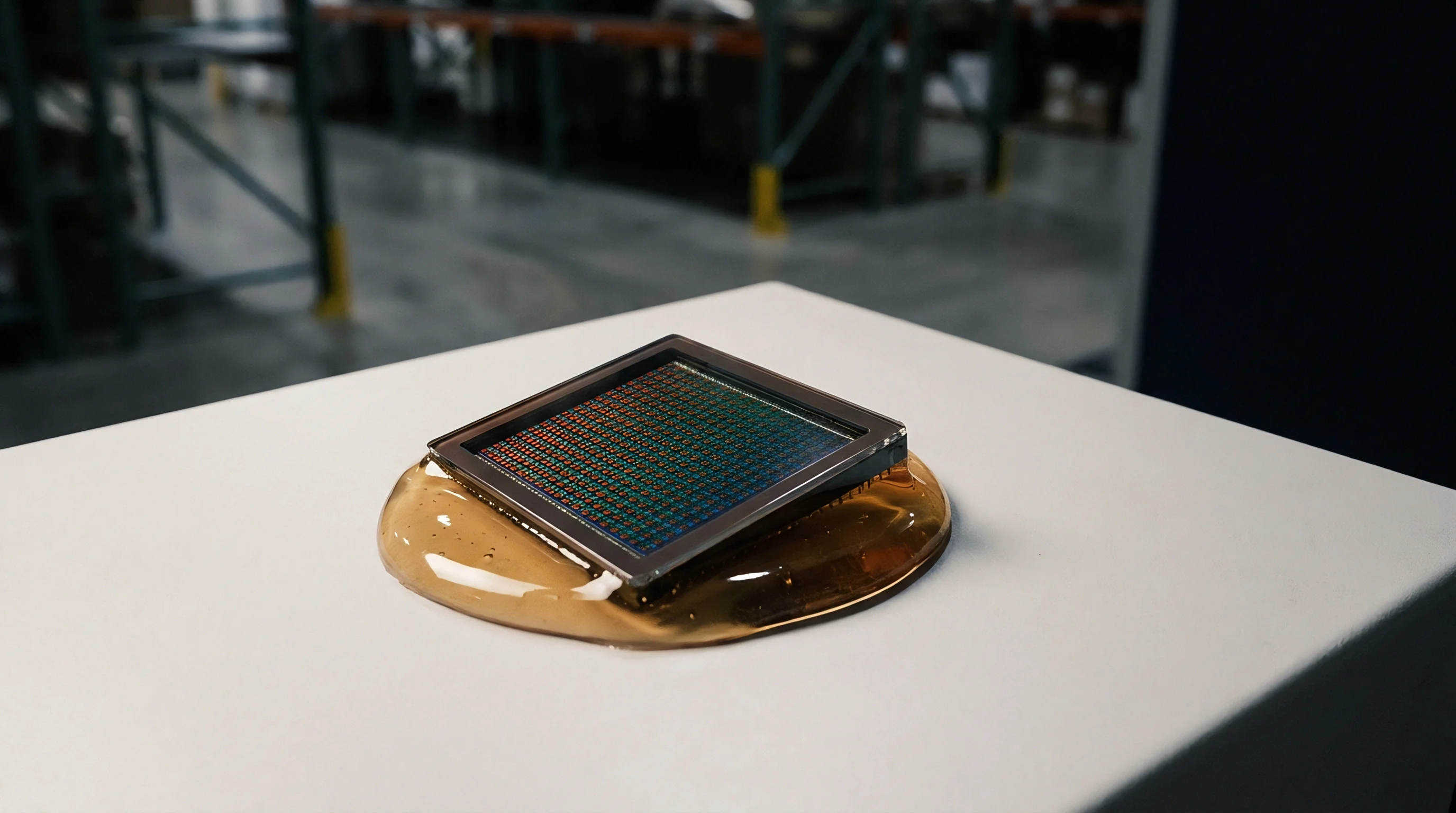
Outgassing Rate Measurements via Mass Spectrometry
Quantifying package outgassing rates requires precise residual gas analysis during thermal processing. Sealed sensor packages undergo hermeticity testing per MIL-STD-883, Method 1018, to determine internal moisture and volatile chemical concentrations. Volatile concentrations exceeding 5000 parts per million of water vapor or 1000 parts per million of total hydrocarbons induce rapid drift in open-cavity sensors.
| Outgassing Compound Class | Source Material | Condensation Point (1 atm) | Diaphragm Baseline Impact |
|---|---|---|---|
| Cyclic Siloxanes (D4-D6) | Silicone Gel Potting | 175 to 210 degrees C | Positive zero shift, span degradation |
| Aromatic Solvents (Toluene/Xylene) | Epoxy Die-Attach | 110 to 140 degrees C | Transient swell, reversible zero offset |
| Phthalate Esters | Cable PVC / Elastomers | 230 to 290 degrees C | Mass loading, stiffness reduction |
| Water Vapor | Substrate Moisture | 100 degrees C | Capacitance shift, surface oxidation |
Adhesive outgassing degrades span.
Characterizing the total outgassed mass per unit time enables engineers to calculate the exact threshold where chemical drift dominates mechanical drift. Standard test methods compliant with ASTM E595 require total mass loss below 1.0 percent and collected volatile condensable material below 0.10 percent for materials used inside sealed sensor cavities.
ASTM E595 compliance mandates total mass loss under 1.0 percent and collected volatile condensable material under 0.10 percent following 24-hour thermal vacuum exposure at 125 degrees Celsius.
Ignoring total mass loss limits under 1.0 percent results in field failures where chemical deposition shifts zero stability past allowable system calibration limits within six months of deployment.


Separation
Mathematical Deconvolution of Drift Signals
Decoupling viscoelastic creep from package outgassing requires mathematical processing of total drift time series data. Total drift voltage measured over time represents the superposition of a mechanical logarithmic decay function and a chemical square-root diffusion function. Parameter estimation algorithms fit the combined signal to two distinct physical equations using non-linear least-squares minimization.
Sensors wander without burn-in.
Mechanical viscoelastic creep follows a power-law expression where strain equals baseline offset plus coefficient A multiplied by time raised to power n, where n ranges from 0.1 to 0.35. Chemical outgassing and absorption follow a Fickian kinetic model where baseline shift equals coefficient B multiplied by the square root of time. Processing the raw signal through dual-exponential fit algorithms yields the individual magnitude coefficients A and B, isolating the percentage contribution of each failure mode.

How Do Temperature Step Changes Isolate Mass Gain?
Temperature step changes expose key kinetic differences between mechanical strain relaxation and mass desorption. Applying an instantaneous thermal step from 25 to 65 degrees Celsius alters mechanical creep rates according to the Arrhenius relationship, accelerating structural stress relaxation immediately. Chemical outgassing and absorption, however, display a distinct desorption spike followed by volatile redistribution across the cavity atmosphere, producing a transient non-monotonic signal peak.
- Temperature Step Response distinguishes instant viscoelastic modulus shifts from delayed chemical diffusion gradients.
- Pressure Cycling Modulation isolates mechanical diaphragm hysteresis without altering chemical concentration balances within the housing.
- Dual-Frequency Impedance Spectroscopy separates physical mass loading effects from electrical insulation degradation on capacitive elements.
Temperature accelerates diffusion.
Thermal modulation routines step the sensor temperature up and down while holding static pressure constant. The fast thermal response of the mechanical structure settles within seconds, whereas volatile desorption and re-absorption require tens of hours to reach a new equilibrium. Analyzing the time constants of the thermal step response permits clear mathematical separation of instantaneous elastic shifts, delayed viscoelastic creep, and long-term volatile transport.
A supplier will state that drift observed during the first month represents normal packaging stress relaxation that disappears after system zeroing in the field.

Economics

Pre-Bake Processing versus Sensor Yield
Removing volatile outgassing sources prior to package sealing demands extended vacuum bake-out operations during manufacturing. Implementing a 48-hour vacuum bake step at 150 degrees Celsius adds process time, energy consumption, and inventory holding costs to the assembly line. Equipment capitalization for high-vacuum batch ovens increases production costs per sensor unit by 0.45 to 1.20 USD depending on batch volumes.
Yield drops as bake times rise.
Exceeding recommended thermal exposure limits during pre-bake processes induces thermal degradation of internal circuit elements and ASIC wire bonds. Production lines balancing high-yield targets against long-term stability limits must optimize bake-out durations. Skimping on bake cycles reduces manufacturing cost by 8 percent while increasing two-year field return rates by more than 14 percent due to zero-point calibration wander.
| Bake-Out Regime | Time and Temperature | Added Unit Cost | Assembly Yield | 3-Year Zero Drift |
|---|---|---|---|---|
| Standard Ambient Drying | 4 hours at 60 degrees C (1 atm) | 0.00 USD | 99.4 percent | Plus or minus 1.25 percent FS |
| Thermal Oven Bake | 12 hours at 100 degrees C (1 atm) | 0.22 USD | 98.8 percent | Plus or minus 0.65 percent FS |
| Vacuum Thermal Bake | 24 hours at 125 degrees C (10-3 Torr) | 0.68 USD | 97.9 percent | Plus or minus 0.25 percent FS |
| Extended Vacuum Bake | 72 hours at 150 degrees C (10-6 Torr) | 1.45 USD | 94.2 percent | Plus or minus 0.08 percent FS |

Tolerance Specifications for Long-Term Field Stability
Procurement specifications must establish explicit long-term stability tolerances that account for both mechanical creep and chemical outgassing. Standard datasheets frequently quote initial accuracy at 25 degrees Celsius immediately following factory calibration, concealing multi-year drift performance under field conditions. A tight initial accuracy rating of plus or minus 0.1 percent full-scale output becomes meaningless if annual zero drift expands the total error envelope to plus or minus 1.5 percent over three years.
Zero drift causes field returns.
Writing precise procurement documentation forces suppliers to certify drift performance under defined burn-in and operating conditions. Specifying maximum allowable zero drift over 1000 operational hours under full-scale pressure and thermal stress guarantees that the supplier executes necessary pre-bake processes and stress-relief burn-in routines before shipping hardware.
Initial factory calibration accuracy claims exclude time-dependent viscoelastic relaxation and outgassing mass loading effects occurring over extended field deployments.
Compliance with ISO 10012 measurement management standards requires sensor procurement contracts to specify maximum allowable zero drift limits inclusive of thermal hysteresis, 1000-hour mechanical creep, and package outgassing over the full operational temperature envelope.