Traceable Calibration Methods for Long Term Zero Offset Stabilization under Dynamic Humidity Cycles
Dynamic humidity cycling induces hygroscopic package stress shifting zero offsets, demanding traceable multi-point calibration and preconditioning.

Sorption
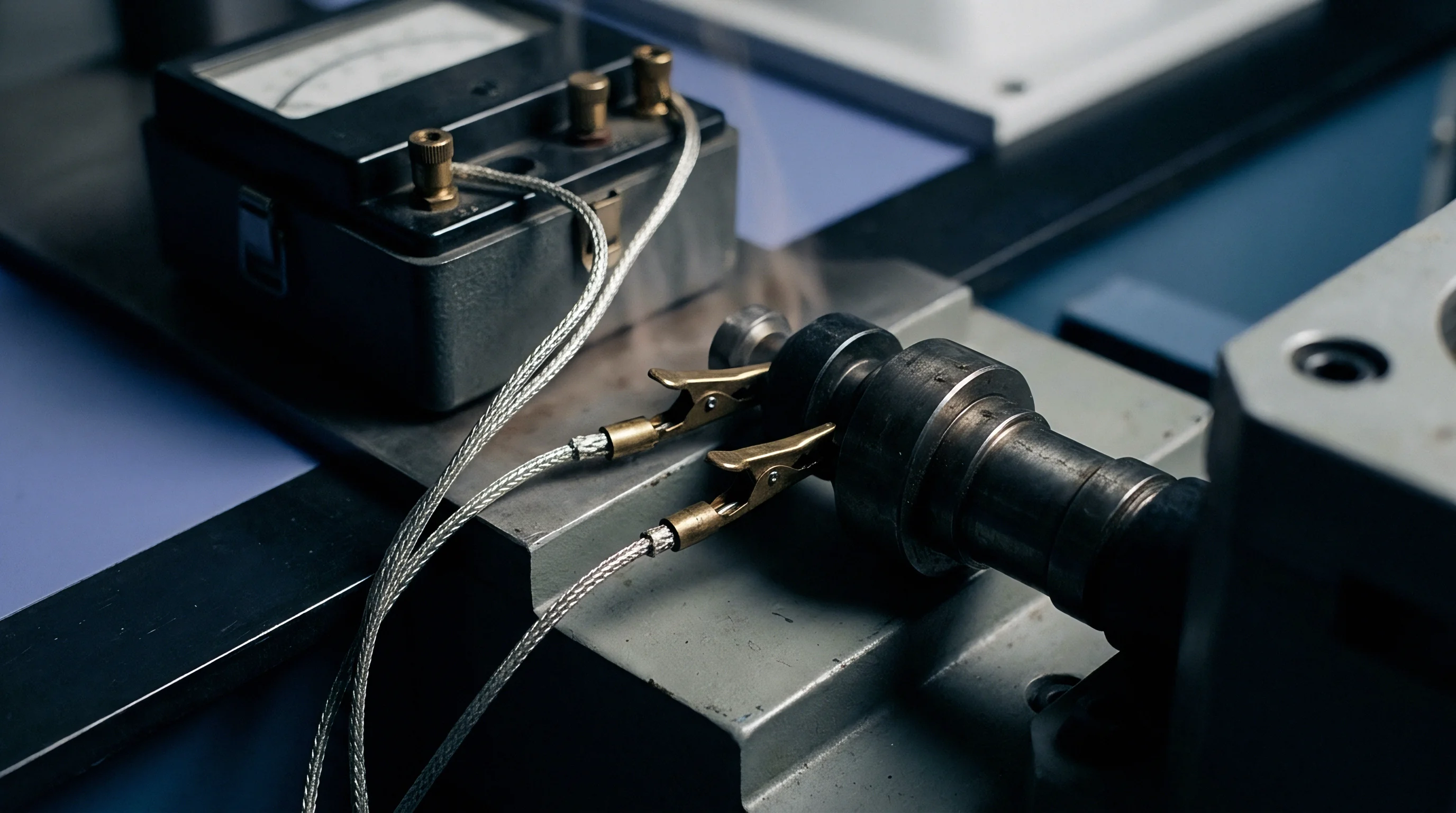
Moisture ingress into solid-state sensor packages alters mechanical stress fields across piezoresistive and capacitive sensing elements. Water vapor permeates polymeric mold compounds, die attach adhesives, and conformal coatings over predictable diffusion timelines. As polar water molecules establish hydrogen bonds within polymer networks, the packaging material expands through hygroscopic swelling.
This dimensional change exerts localized triaxial stress directly onto the micromachined silicon die surface. Piezoresistive bridge circuits translate this mechanical strain into electrical baseline displacement indistinguishable from physical input measurands.
Water molecules penetrate polymer packaging rapidly. Fickian diffusion governs the initial uptake rate, characterized by the diffusion coefficient of the encapsulation resin and ambient moisture concentration gradients. Non-Fickian relaxation occurs as water clusters form within micro-voids, creating plasticization effects that depress the polymer glass transition temperature.
Over extended operational intervals under fluctuating relative humidity, this dual-mode uptake generates baseline shifts that resist standard single-point zero adjustments performed in dry gas environments.
Baseline offset drift under fluctuating moisture profiles correlates with packaging volume change rather than intrinsic silicon element aging.
Capacitive sensing elements experience an additional direct electrical degradation path. Ingressed water exhibits a relative permittivity near eighty at room temperature, contrasting sharply with silicon dioxide and polymer dielectric constants between two and four. Moisture accumulation along fringe-field boundaries or within interdigitated trace geometries shifts baseline capacitance upward.
A published nominal drift figure of 0.12 percent full-scale output per year rests on static one-thousand-hour testing under steady eighty-five percent relative humidity at eighty-five degrees Celsius across thirty ceramic-packaged units conducted in 2021. Dynamic cycling between ten percent and ninety percent relative humidity increases this drift to 0.45 percent full-scale output because hygroscopic fatigue opens secondary moisture ingress pathways along the leadframe interface.
The factory applications team typically insists that ambient moisture equilibrates symmetrically across field deployments and produces zero net drift over seasonal intervals.


Vent
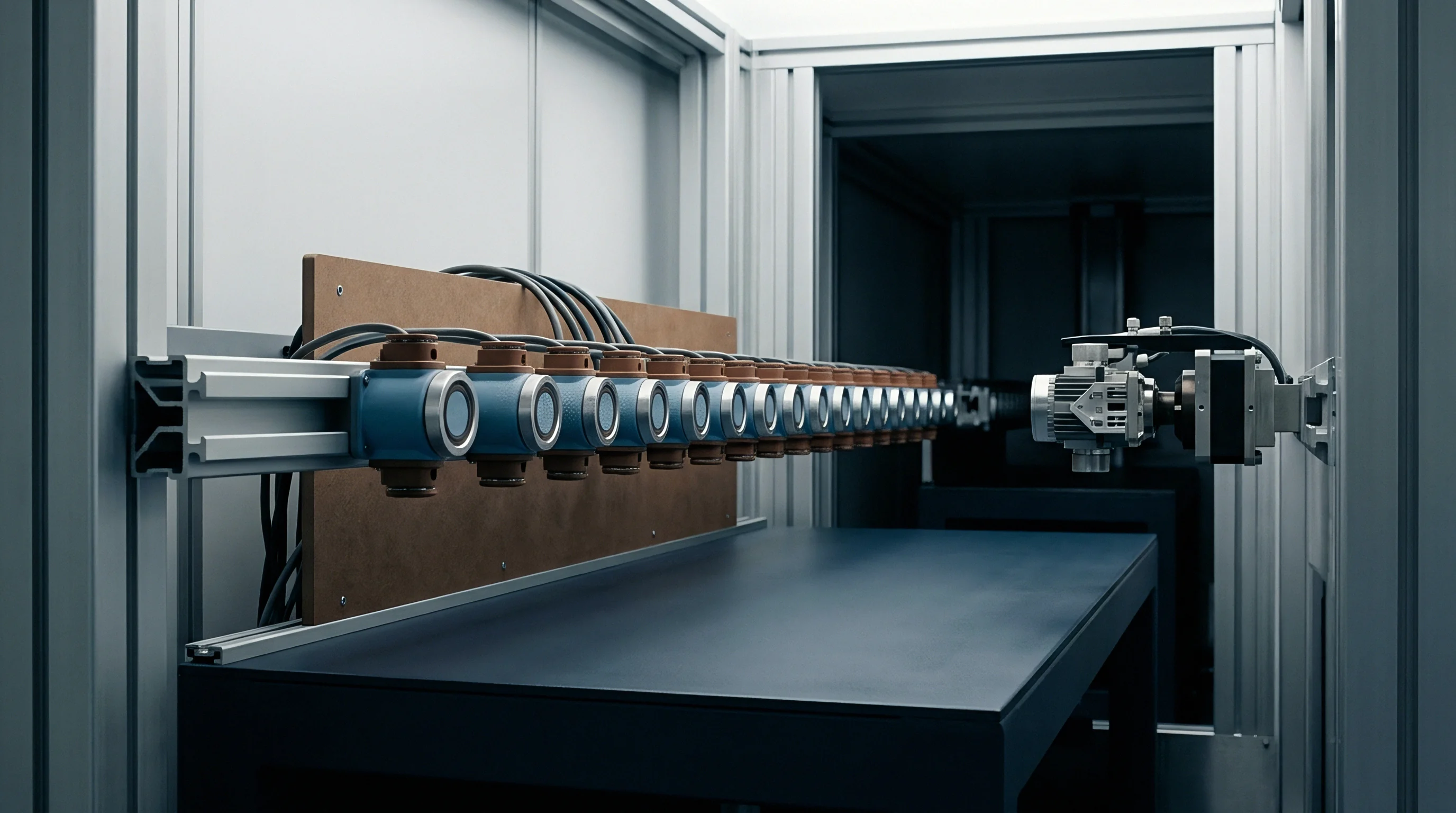
Packaging architectures determine whether water vapor reaches internal die interfaces through permeation or direct gaseous transport. Solid potting materials rely entirely on bulk material diffusion barriers, whereas vented environmental enclosures incorporate permeable membranes to balance barometric differentials while mitigating liquid water entry. Hydrophobic polytetrafluoroethylene membranes offer pore dimensions small enough to exclude liquid water droplets while permitting water vapor transport.
Gaseous moisture equilibrates through these porous barriers within minutes, exposing internal sensing substrates to ambient humidity swings far faster than potted assemblies experience.
Why Do Packaging Stresses Cause Baseline Shift?
Moisture absorption changes mold compound mass. The resultant volumetric strain transfers through the die attach layer directly into the active semiconductor bridge. When hygroscopic expansion coefficients between the silicon substrate, copper leadframe, and epoxy encapsulant disagree, bending moments distort the diaphragm or beam structure.
Piezoresistive coefficients vary with crystallographic orientation, causing asymmetrical resistance deviations across the four arms of a Wheatstone bridge. Silicon strain gauges record microstrain.
Internal material interfaces generate distinct baseline destabilization pathways during environmental cycling:
- Hygroscopic resin expansion drives asymmetric compressive forces across the active diaphragm plane.
- Die attach swelling alters substrate tilt angles relative to internal reference cavities.
- Bond wire encapsulation stress induces micro-galvanic impedance changes across gold-aluminum metallurgical interfaces.
- Leadframe delamination permits moisture pooling that modifies stray parasitic capacitance to ground.
Gaseous transport through protective membrane vents stabilizes internal barometric pressure while accelerating ambient moisture equilibrium.
Capacitive structures drift during sorption. Datasheets frequently quote a baseline recovery time of forty-eight hours following a ninety percent relative humidity moisture excursion, yet published literature lacks empirical verification for units aged beyond eighteen months. Under this uncertainty, the buyer specifies a one-hundred-twenty-hour stabilization window in incoming qualification contracts and prices the inventory buffer accordingly.
Selecting unvented hermetic packages with hygroscopic internal adhesive pastes leads to mechanical micro-cracking and bridge balance loss during rapid environmental excursions.

Hysteresis
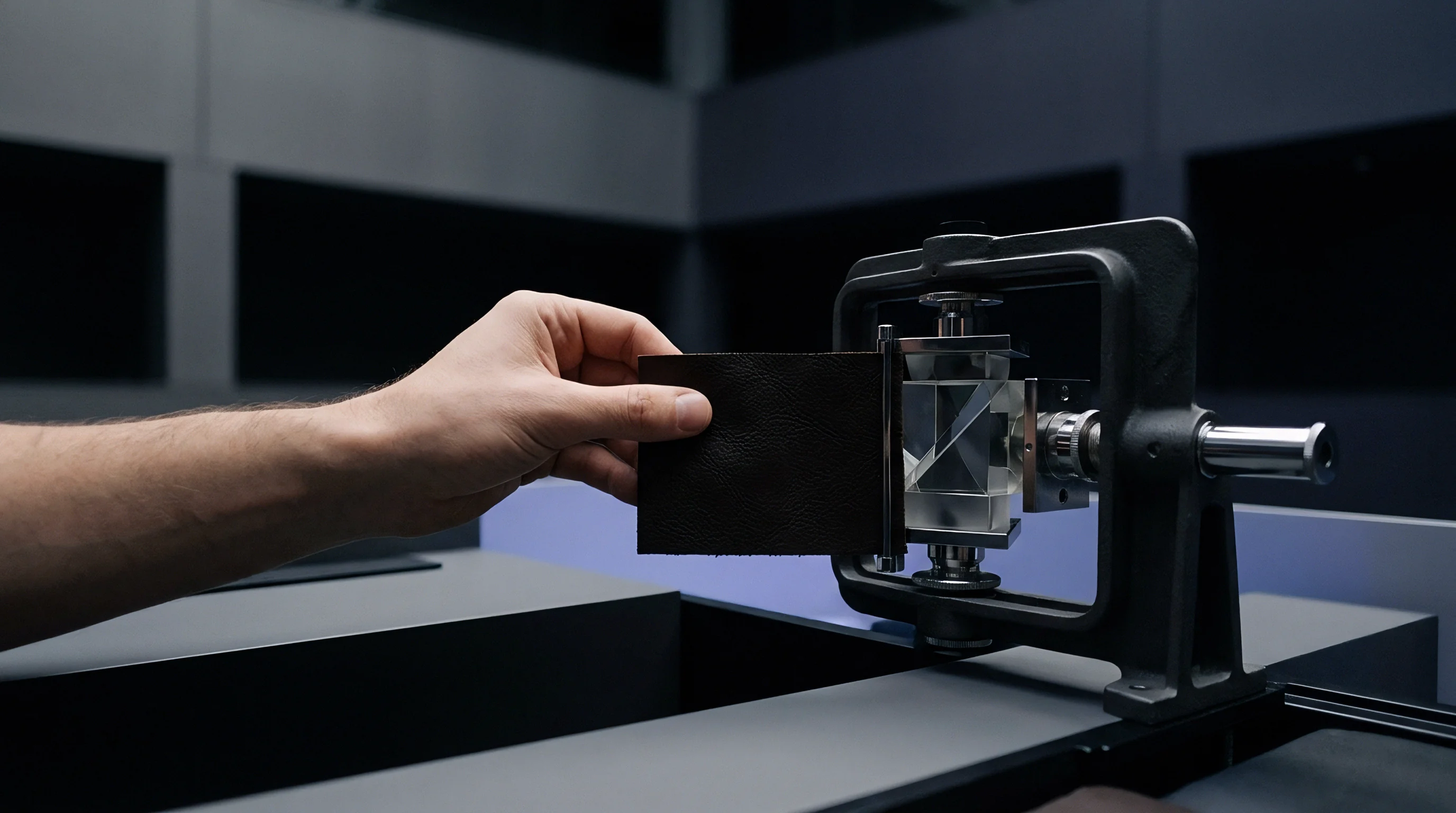
Cyclic exposure to fluctuating relative humidity exposes asymmetric sorption and desorption isotherms within sensor packaging polymers. Sorption curves follow Brunauer-Emmett-Teller type II isotherms where multi-layer water condensation proceeds slowly across progressive relative humidity increments. Desorption follows a distinct physical pathway.
Capillary condensation within the polymer matrix retards moisture release during dry-down phases, producing persistent elevated baseline readings long after ambient relative humidity drops. This path dependency prevents simple linear mathematical compensation based on instantaneous external humidity measurements.

Should Preconditioning Precede Periodic Calibration Trimming?
Polymer glass transition temperatures shift downward. Moisture retained from prior environmental exposures acts as an internal plasticizer, lowering the mechanical modulus of encapsulation resins. Executing zero trims without driving the assembly to a defined reference moisture state locks historical environmental memory into the calibration coefficient ledger.
Effective calibration sequences require a controlled thermal-dry cycle at elevated temperature to establish a reproducible baseline zero reference state before gathering verification data.
Equilibrium takes dozens of hours. The duration required to achieve steady-state mechanical stress varies by package volume, geometry, and base resin formulation. Standard calibration cycles running sixty-minute dwell times per humidity setpoint record transient non-equilibrium states, producing apparent hysteresis loops that reflect diffusion kinetics rather than true thermodynamic endpoints.
| Package Construction | Moisture Absorption Mass Fraction | Zero Drift After 50 Cycles | Desorption Lag Time | Mechanical Stress Coupling |
|---|---|---|---|---|
| FR4 Substrate With Epoxy Glob-Top | 1.85 percent | 1.42 percent FSO | 72 hours | Severe asymmetric planar shear |
| Transfer Molded Epoxy Novolac | 0.62 percent | 0.58 percent FSO | 48 hours | Moderate uniform compressive stress |
| Direct-Bond Ceramic With Silicone Fill | 0.15 percent | 0.18 percent FSO | 12 hours | Low localized decoupling |
| Hermetic Kovar Can With Glass Seal | 0.01 percent | 0.03 percent FSO | 0.5 hours | Negligible boundary strain |
Epoxy swelling deflects the die surface. The magnitude of this deflection scales with package aspect ratio and filler loading percentages. Silica micro-fillers decrease bulk moisture expansion coefficients, yet moisture accumulation along filler-resin interfaces creates localized stress risers adjacent to wire bonds.
Metrologists remain divided on whether secondary plasticization effects in mold compounds ever reach complete thermodynamic equilibrium under continuous field cycles.

Transfer
Traceability for environmental calibrations originates in primary chilled mirror hygrometers maintaining direct linkage to national metrology institutes. Calibration laboratories generate controlled humidity environments using dual-pressure or dual-temperature generator systems that blend saturated and dry air streams under precise mass flow control. Transfer standards deployed inside test enclosures measure both relative humidity and ambient gas temperature, ensuring reference uncertainty remains bounded within tight operational tolerances.
Maintaining a four-to-one test uncertainty ratio over operational humidity spans requires dedicated reference monitoring directly adjacent to the test manifold.
Execution of a traceable dynamic humidity calibration requires precise coordination of environmental parameters and dwell periods:
- Bake the sensor assembly at fifty degrees Celsius in dry nitrogen for twenty-four hours to desorb ambient moisture.
- Stabilize the test enclosure at twenty-five degrees Celsius and ten percent relative humidity until chilled mirror reference dew point readings vary less than 0.05 degrees Celsius over thirty minutes.
- Record raw zero offset voltages across twenty consecutive readings to establish the baseline dry reference value.
- Ramp enclosure humidity to fifty percent relative humidity at a controlled rate of one percent relative humidity per minute.
- Hold the enclosure at fifty percent relative humidity for four hours to permit packaging stress relaxation before logging intermediate zero offsets.
- Increase humidity to ninety percent relative humidity at the identical ramp rate and maintain conditions for six hours to verify saturated zero stability.
- Decrease enclosure humidity to ten percent relative humidity and log post-cycling zero offsets after a twelve-hour desorption soak.
Chamber air speed alters boundary layer resistance. High air velocities accelerate surface evaporation during humidity transitions, inducing localized surface cooling that skews temperature compensation circuits inside the device under test. Primary chilled mirror instruments track dew point.
Low velocities expand the stagnant boundary layer, artificially prolonging the time required for the sensor membrane to match chamber conditions.
Traceability requires calibration laboratories to quantify and report environmental stabilization dwell times on issued calibration certificates.
Condensation creates conductive leakage paths. Operating near saturation limits carries risk of micro-condensation on pin headers and board traces, producing apparent zero offset jumps caused by microampere leakage currents. Clause 6.5.2 of ISO/IEC 17025 compels laboratories to incorporate calibration system saturation latencies into the reported measurement uncertainty, expanding published guardbands.

Budget
Evaluating zero offset stability under cyclic humidity conditions demands combining independent uncertainty components per JCGM 100 guidance. Contributions divide into environmental reference generation errors, chamber spatial inhomogeneities, sensor packaging hysteresis, and instrumentation acquisition noise. Every budget item requires explicit classification under Type A statistical evaluation or Type B distributional assumptions.
Assume a lot of piezoresistive pressure transmitters evaluated across a cyclic humidity profile spanning 15 percent relative humidity to 85 percent relative humidity at 25 degrees Celsius. The primary humidity generator exhibits an expanded uncertainty of 0.5 percent relative humidity. Reference dew point uncertainty of 0.08 degrees Celsius rests on a dual-pressure generator operated at 0.5 standard liters per minute with annual chilled mirror cross-checks.
Flow rate fluctuations above 2.0 standard liters per minute expand this uncertainty to 0.25 degrees Celsius. The test chamber exhibits spatial temperature gradients of 0.15 degrees Celsius across the twelve-position test fixture, generating an effective relative humidity gradient of 0.82 percent relative humidity. Device packaging sorption hysteresis accounts for a baseline deviation of 0.35 percent full-scale output based on three complete cycles.
Voltmeter digitizing uncertainty contributes 0.02 percent full-scale output.
| Uncertainty Component | Evaluation Type | Distribution | Standard Uncertainty | Sensitivity Coefficient | Uncertainty Contribution |
|---|---|---|---|---|---|
| Reference Humidity Generator | Type B | Normal (k=2) | 0.25 percent RH | 0.008 FSO / percent RH | 0.0020 percent FSO |
| Chamber Spatial Uniformity | Type B | Rectangular | 0.47 percent RH | 0.008 FSO / percent RH | 0.0038 percent FSO |
| Sensor Sorption Hysteresis | Type A | Normal (k=1) | 0.12 percent FSO | 1.000 | 0.1200 percent FSO |
| Chamber Temperature Stability | Type B | Rectangular | 0.06 degrees C | 0.015 FSO / degrees C | 0.0009 percent FSO |
| Digital Acquisition Noise | Type A | Normal (k=1) | 0.01 percent FSO | 1.000 | 0.0100 percent FSO |
| Post-Cycling Baseline Drift | Type A | Normal (k=1) | 0.08 percent FSO | 1.000 | 0.0800 percent FSO |
| Combined standard uncertainty equals 0.1444 percent FSO; expanded uncertainty at ninety-five percent coverage (k=2) equals 0.2888 percent FSO. | |||||
Thermal stability dictates dew point precision. Packaging hysteresis represents eighty-three percent of the total combined variance, establishing that sensor material properties dominate test chamber limitations during cyclic testing.
Key uncertainty contributions arise from repeatable physical parameters:
- Chamber spatial gradients establish systematic relative humidity variations across different mounting positions.
- Sorption kinetics lag introduces apparent non-repeatability during incomplete dwell periods.
- Temperature sensor self-heating distorts relative humidity calculations by altering local saturation vapor pressure figures.
Expanded measurement uncertainty under dynamic moisture cycling reaches 0.29 percent full-scale output at ninety-five percent confidence limits.
Sorption curves show marked asymmetry. Field aging alters membrane elasticity. Dry nitrogen flushes restore the baseline.
Rapid humidity transitions produce transient thermal gradients that dwarf steady-state sensor electrical noise until thermal and moisture equilibrium coincide.

Settlement
Procurement specifications govern the commercial boundary between acceptable baseline drift and actionable warranty defects. Standard catalog datasheets omit dynamic cycling drift values, quoting only static unpowered storage drift in dry air. When industrial or automotive sensor deployments expose hardware to diurnal humidity swings, uncompensated packaging stress drives field baseline offsets outside system tolerances within months.
Engineering teams managing supply agreements write explicit cycling acceptance thresholds directly into technical exhibits.
Baking components before installation eliminates historical moisture without addressing operational drift. Automotive engine control modules rely on automated runtime zero-referencing algorithms to cancel mechanical baseline offsets during key-on events. Industrial process transmitters monitoring continuous processes lack key-on opportunities, requiring hardware-level stability achieved through low-stress packaging resins, ceramic substrates, and compliant silicone die attach adhesives.
Silicon gel chemistry within semiconductor packaging reflects broader resin supply chain constraints, where shifts in siloxane cross-linker purity alter moisture permeation rates across production lots.
Procurement teams that establish explicit drift allowances across repeated humidity exposures isolate factory assembly defects from inevitable material aging.