Orthogonal Extremum
Normal deformation components measured along specific material axes where all shear strain components vanish define the extreme normal deformations within a stressed body. Test engineers track principal strain during structural qualification to determine the absolute maximum tensile and compressive deformations acting on loaded geometries. These invariant values establish whether a mechanical component operates within its linear elastic envelope or approaches plastic yielding and fracture.
Rosette Calculation
Multiaxial strain states resolved by electrical resistance or optical strain rosettes convert raw directional readings into principal strain values through transformation matrices. The calculation extracts maximum and minimum normal strains together with their physical angular orientations relative to the rosette reference axis. In a standard rectangular three-element rosette, measuring normal strains along zero, forty-five, and ninety degrees allows explicit computation of both in-plane principal components and the principal angle.
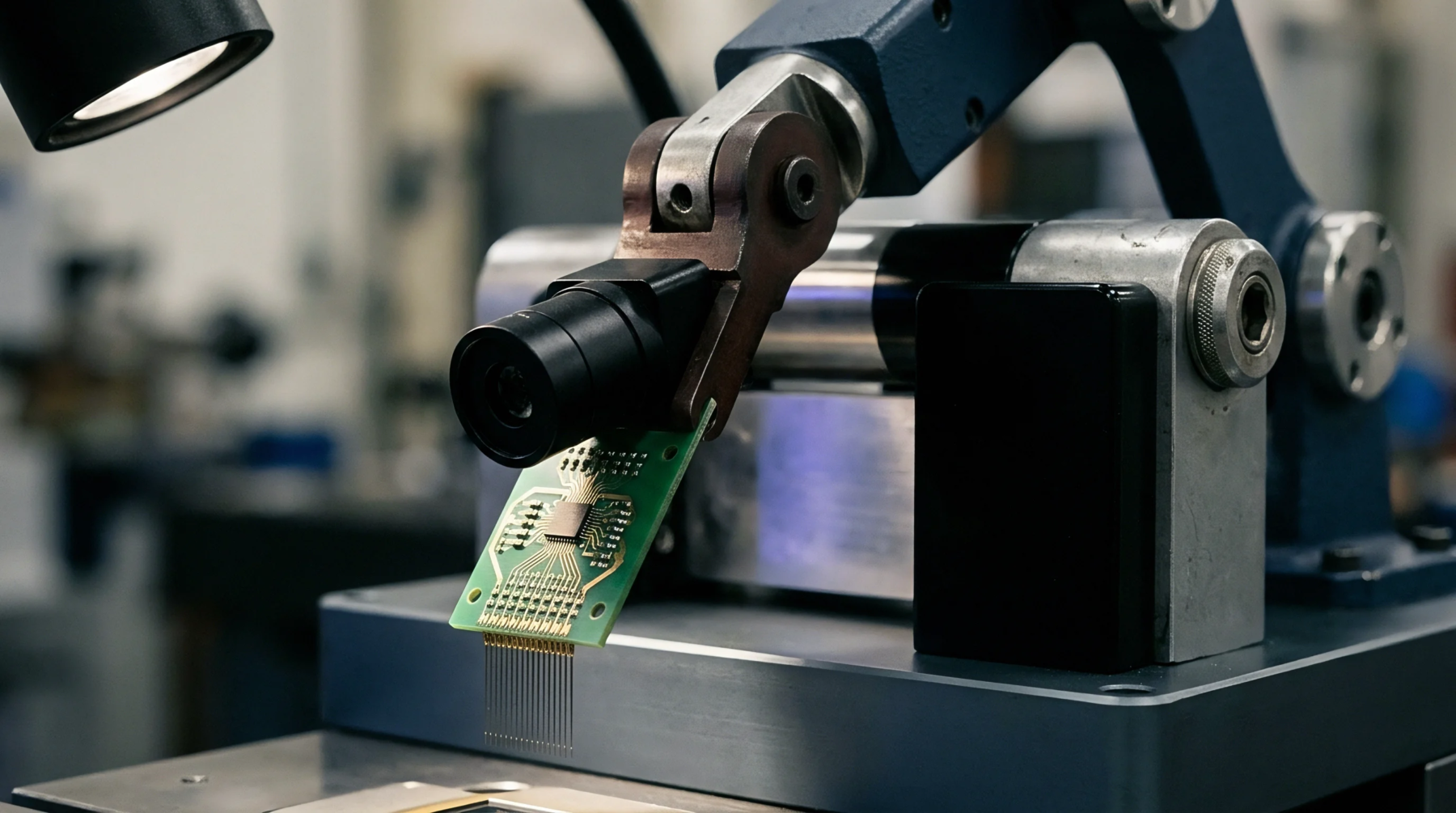
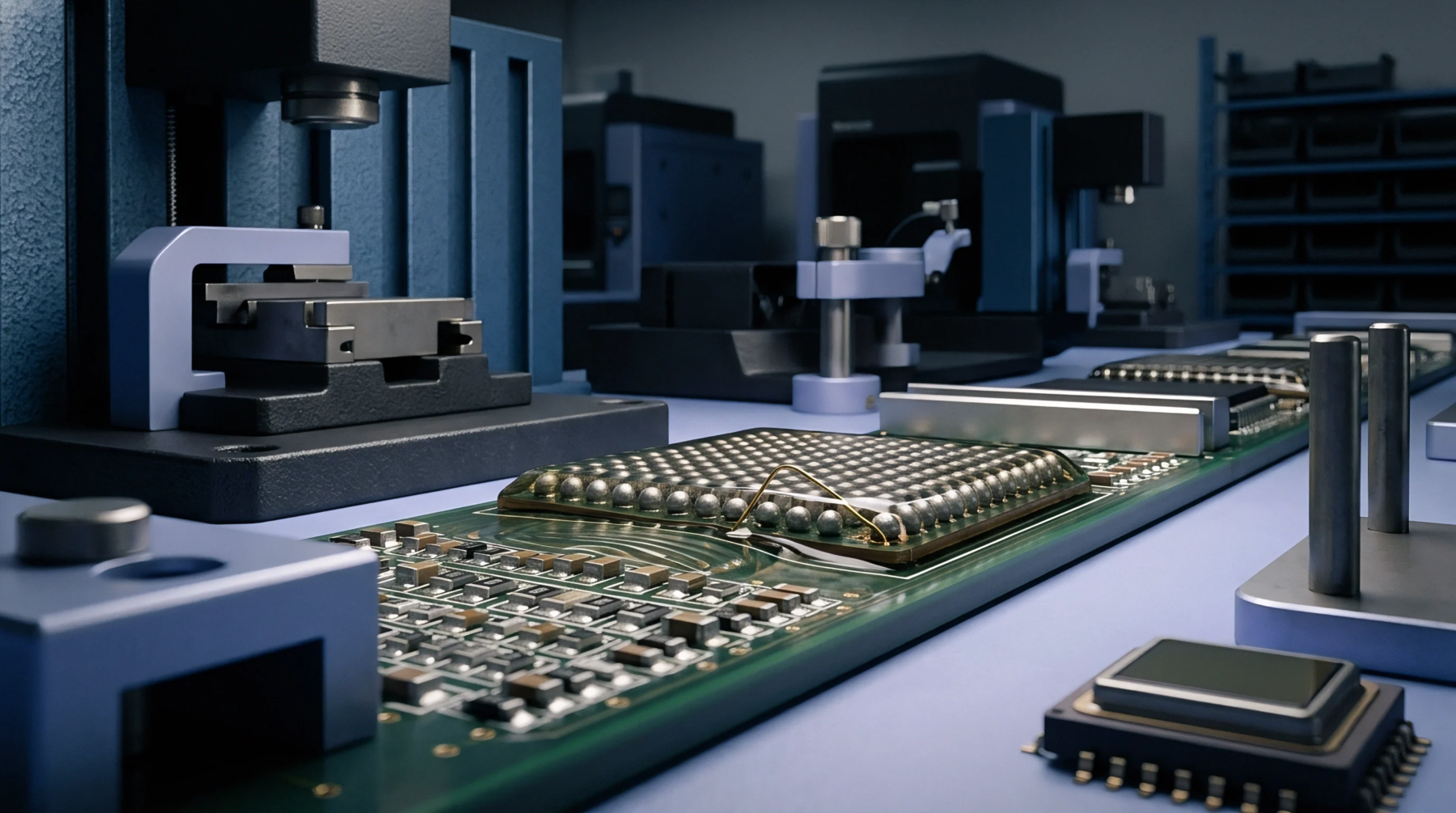
Printed circuit board testing protocols mandate tracking the maximum principal component to verify that mechanical handling, depaneling, and shock testing do not exceed brittle solder fracture limits.
Directional Bias
Physical components subjected to complex multiaxial loading rarely experience peak deformation aligned with manufacturing geometric axes. Resolving the principal strain identifies the critical orientation along which microcracks, crazing, or delamination will initiate. Sourcing engineers qualify structural adhesives and composite laminates by verifying that tensile limits along the weak material axis do not coincide with maximum principal directions.
Finite element models validate their boundary conditions by comparing predicted principal vectors against empirical strain gauge telemetry.
Tensor Boundary
Mathematical definitions of these extremum values depend upon the continuity of the displacement field within homogenous continuum mechanics. Across fractured interfaces, material voids, or localized grain boundaries, the concept of a unified continuous strain tensor breaks down. The metric applies to surface measurements in planar stress conditions, meaning out-of-plane strains must be calculated using material elastic constants rather than measured directly with surface sensors.
Principal strain states provide geometric descriptions of deformation without accounting for material-specific yield thresholds until paired with failure criteria.