Predicting Copper Wire Bond Intermetallic Embrittlement inside Molded Packages under Decadal Nitrogen Storage
Decadal nitrogen storage fails to prevent copper-aluminum bond embrittlement if mold compound halogens drive low-activation outgassing corrosion.

Diffusion
Phase Growth Mechanism at Ambient Storage Temperatures
Solid-state mass transport across the interface between a copper wire bond and an aluminum pad metallization continues even when IC packages sit in unheated storage cabinets. At room temperatures ranging from 20 to 30 degrees Celsius, copper and aluminum atoms slowly exchange positions, generating a layered structure of intermetallic compounds. The thermodynamic driving force favors the sequential formation of aluminum-rich phases like CuAl2 and CuAu-type structures before transitioning into copper-rich phases such as Cu9Al4 and Cu3Al2.
While high-temperature testing at 150 degrees Celsius accelerates these transformations over hundreds of hours, ambient decadal storage allows phase transformation to occur under low thermal activation energy paths that bypass classic high-temperature steady states.
Lattice mismatch between the parent metals and the growing intermetallic crystal structures generates localized stress fields. Copper diffuses into the aluminum pad substantially faster than aluminum diffuses back into the copper ball, a imbalance known as the Kirkendall effect. This differential flux leaves behind nanometer-scale vacancies on the copper side of the interface.
Over a ten to twenty-year storage window, these vacancies coalesce into continuous micro-void chains along the bond periphery, reducing the physical contact area and setting up planar fracture paths prior to any mechanical load being applied.
Planar micro-voiding along the bond interface develops under zero thermal gradient conditions when Kirkendall vacancy fluxes accumulate over extended timeframes.
Micro-Outgassing Kinetics in Nitrogen Purged Enclosures
Storing molded surface-mount packages inside continuous dry nitrogen cabinets eliminates external moisture and oxygen ingress. It does not freeze the internal chemical activity within the mold compound matrix. Encapsulation resins retain trace amounts of unreacted monomers, photoinitiators, moisture absorbed during assembly floor exposure, and organo-chlorine flame retardants or sulfur-bearing catalyst residues.
Dry nitrogen purge creates a steep partial-pressure gradient between the package bulk and the cabinet atmosphere, drawing volatile compounds out of the resin outer surface while driving internal moisture and halogen species toward the hermetically shielded die cavity.
| Intermetallic Phase | Crystal Structure | Formation Temperature Threshold (°C) | Hardness (GPa) | Volumetric Change Ratio (%) |
|---|---|---|---|---|
| CuAl2 (Theta) | Tetragonal | 120 | 5.8 ± 0.3 | -4.2 |
| CuAl (Eta-2) | Monoclinic | 150 | 7.1 ± 0.4 | -2.1 |
| Cu9Al4 (Gamma-2) | Cubic | 175 | 8.9 ± 0.5 | -6.8 |
| Cu3Al2 (Epsilon-2) | Cubic | 200 | 9.4 ± 0.6 | -7.3 |
Trapped moisture within the micro-cavities around the wire ball neck acts as an electrolyte medium for mobile ionic species. Halogens, specifically chlorine ions released from epoxy backbone synthesis residues, dissolve into this residual liquid film. Chlorine attacks the protective native aluminum oxide layer, forming aluminum chloride complexes that hydrolyze back into free hydrochloric acid and aluminum hydroxide.
This catalytic cycle continuously consumes the aluminum metallization beneath the bond ball without expending the chlorine ions. Decadal nitrogen storage leaves this corrosion engine running uninterrupted in the dark, driven entirely by internal resin outgassing.
Whether micro-voiding or localized halogen-driven corrosion governs the ultimate strength of the intermetallic layer over a twenty-year horizon remains a subject of ongoing microstructural research.
Resin
Epoxy Mold Compound Flame Retardants and Halogen Content
Encapsulation formulations designed for high-reliability semiconductor packaging rely on complex polymeric mixtures containing silica fillers, epoxy resins, hardeners, catalysts, and flame retardants. Standard commercial resins historical rely on brominated epoxy compounds paired with antimony trioxide to meet UL 94-V0 flammability ratings. Under prolonged ambient storage, these halogenated additives undergo slow thermal decomposition, releasing free bromide and chloride ions into the bulk polymer matrix.
Modern green mold compounds eliminate brominated compounds in favor of metal hydroxide or phosphorus-based flame retardants, reducing total ionic halogen content below 900 parts per million for chlorine and fluorine combined.
Extracted ion chemistry determines the baseline aggressiveness of the resin toward bare copper wire bonds. Mold compounds exhibiting an extracted pH below 5.0 or above 8.5 accelerate the breakdown of the passivating oxide layer on copper wire. High-purity resin formulations maintain an extract pH between 6.2 and 7.2 while restricting extractable chloride ions to fewer than 5 parts per million and sulfate ions to fewer than 2 parts per million.
Sourcing engineers specify low-ion green mold compounds when procurement contracts demand shelf-life guarantees exceeding seven years.
IPC J-STD-033 controls dry packaging storage conditions, but compliance with its baking schedules fails to arrest internal halogen-assisted bond degradation when mold compound ionic content exceeds ten parts per million.
Palladium Coating Protection Mechanisms against Chlorine Corrosion
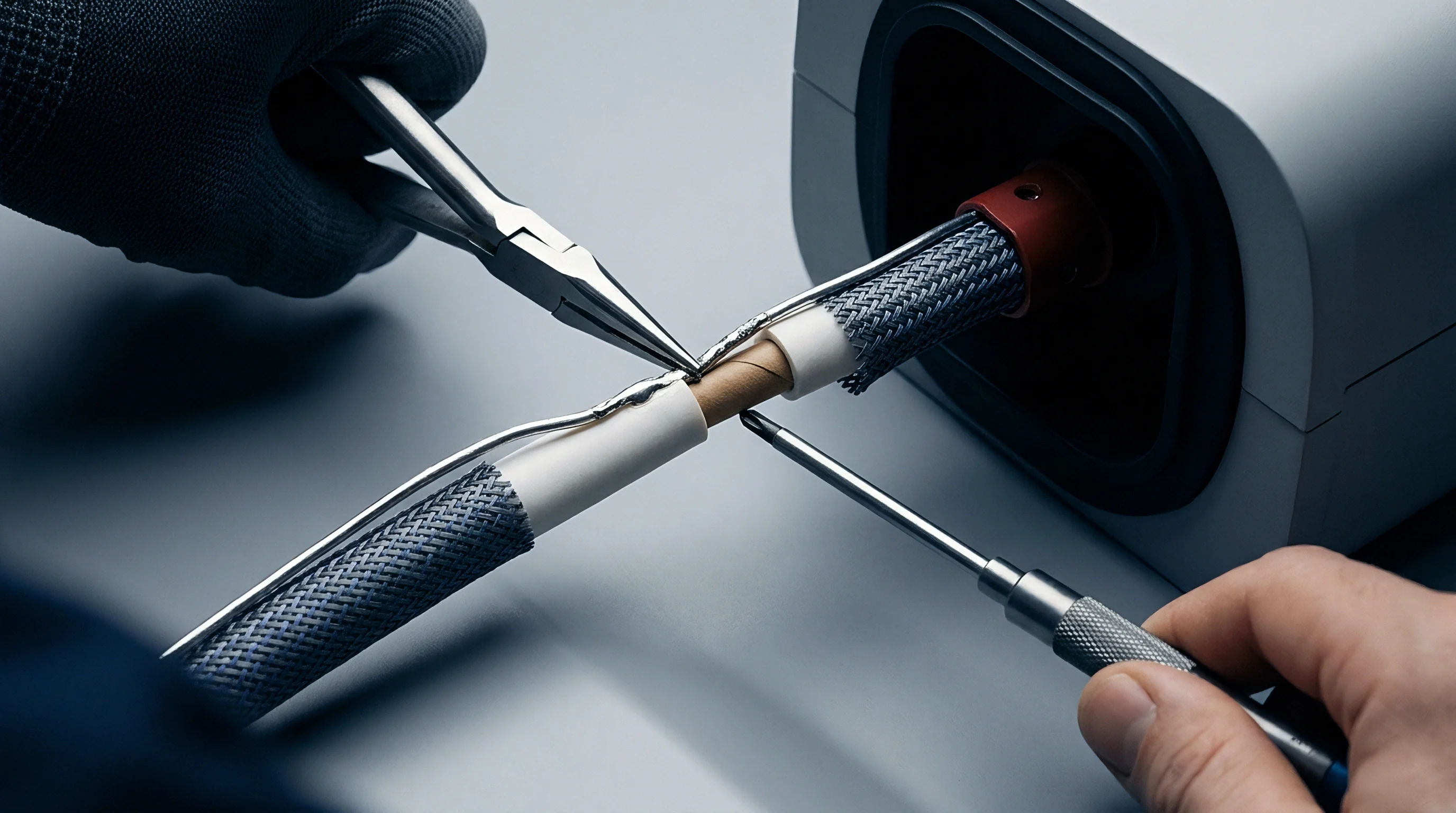
Bare copper wire bond reliability degrades rapidly in the presence of trace chlorine outgassing, prompting package foundries to substitute palladium-coated copper wire. The palladium layer, applied at a thickness of 20 to 50 nanometers over high-purity copper core wire, acts as a noble barrier during the electronic flame-off ball formation process. During free air ball formation, palladium redistributes along the outer surface of the molten sphere, creating a protective palladium-rich shell that concentrates at the perimeter of the finished bond ball where mold compound outgassing meets the bond interface.
- Halogen-Assisted Pitting micro-cracks form along the perimeter of bare copper ball bonds as free chlorine ions hydrolyze aluminum metallization under internal outgassing pressure.
- Decoupled Ball Neck Fracture flexural fatigue at the narrow transition zone above the bond ball occurs when grain growth weakens un-alloyed copper wire stock during extended ambient aging.
- Phase-Boundary Voiding void networks coalesce along the interface between Cu9Al4 intermetallic layers and the copper matrix, driven by vacancy concentration gradients.
- Interphase Corrosion Oxidation trace oxygen trapped in resin micro-voids converts copper-rich intermetallic phases into brittle copper oxides, causing bond lifting under minor shock loads.
Palladium concentration at the ball neck interface reduces the rate of aluminum dissolution by shifting the corrosion potential of the bond. A high-quality palladium layer maintains interfacial shear strength over extended shelf periods, whereas poorly centered or ultra-thin palladium coatings suffer from micro-discontinuities that allow chlorine ions to bypass the noble layer. The procurement dossier requires explicit verification of wire coating thickness and concentricity metrics to ensure uniform defense against internal outgassing.
| Resin Generation | Extractable Cl⁻ (ppm) | Extractable SO₄²⁻ (ppm) | Extract pH Range | Ten-Year Shear Retention (%) |
|---|---|---|---|---|
| Legacy Brominated (UL 94-V0) | 25.0 to 60.0 | 10.0 to 20.0 | 4.5 to 5.5 | 45 ± 8 |
| Standard Green EMC | 5.0 to 12.0 | 2.0 to 5.0 | 5.5 to 6.5 | 78 ± 5 |
| High-Purity Low-Ion EMC | 0.5 to 2.0 | 0.1 to 0.5 | 6.2 to 7.2 | 94 ± 2 |
A simple operational guideline holds that specifying green mold compounds with single-digit ppm halogen counts offers reliable protection for copper bond integrity.
Kinetics
What Invalidates Standard High Temperature Operating Life Extrapolations?
Extrapolating long-term component shelf life from short-term high-temperature exposure relies on the classical Arrhenius equation, assuming a constant activation energy across all thermal regimes. High-temperature storage tests conducted at 150 to 175 degrees Celsius typically report activation energies between 0.8 and 1.0 electron-volts for copper-aluminum intermetallic phase growth. Under these elevated thermal conditions, vacancy diffusion through the bulk crystal lattice dominates phase transformation rates.
Reliability engineers using these thermal acceleration factors project decadal stability at ambient storage temperatures with massive margin.
Lower thermal regimes between 20 and 50 degrees Celsius shift the dominant degradation mechanism from bulk lattice diffusion to grain boundary diffusion and halogen-assisted chemical hydrolysis. The effective activation energy drops from 0.9 electron-volts down to 0.45 or 0.55 electron-volts under ambient storage conditions. High-temperature testing completely masks the chlorine corrosion mechanism because high heat rapidly drives volatile moisture and unreacted halogens out of the thin resin package before they can form concentrated aqueous acid channels at the bond interface.
Predicting decadal performance based solely on 150-degree qualification trials results in underestimating bond embrittlement rates by up to two orders of magnitude.
- Extract a sample lot of thirty molded packages from the incoming production line for baseline destructive physical analysis.
- Measure initial wire bond shear force and record failure modes, verifying that one hundred percent of wire pulls result in neck break rather than ball lift.
- Subject the test group to biased highly accelerated stress testing at 110 degrees Celsius and 85 percent relative humidity for 264 hours.
- Cross-section ten aged bonds and perform field-emission scanning electron microscopy to map intermetallic layer thickness and void distribution.
- Calculate the low-temperature activation energy by fitting shear strength loss rates across three thermal test points at 85, 110, and 130 degrees Celsius.
Worked Activation Energy Shift and Service Life Calculations
To quantify the impact of changing activation energy on storage life predictions, consider a package qualified for a 20-year target life at an ambient storage temperature of 25 degrees Celsius (298 Kelvin). Standard acceleration modeling assumes a single activation energy of 0.90 electron-volts derived from 150-degree Celsius (423 Kelvin) stress testing.
| Storage Temperature (°C) | Assumed Activation Energy (eV) | Acceleration Factor relative to 150°C | Projected Equivalent 150°C Hours for 20 Years |
|---|---|---|---|
| 25 | 0.90 (Lattice Diffusion) | 12,450 | 14.0 hours |
| 25 | 0.65 (Grain Boundary) | 1,120 | 156.5 hours |
| 25 | 0.45 (Halogen Assisted) | 142 | 1,232.0 hours |
When chlorine-assisted micro-corrosion lowers the operative activation energy to 0.45 electron-volts, the actual acceleration factor between 150 degrees Celsius and 25 degrees Celsius plummets from 12,450 down to 142. A component that survives 1,000 hours of 150-degree high-temperature storage testing appears to validate over two centuries of ambient shelf life under the 0.90 electron-volt model. Under the realistic 0.45 electron-volt low-temperature mechanism, that same 1,000-hour test proves less than 16 years of safe storage inside a dry nitrogen cabinet.
A high-temperature storage test duration of 1,000 hours at 150 degrees Celsius equates to less than 16 years of room-temperature shelf life when low-activation corrosion mechanisms control bond degradation.
Misinterpreting high-temperature acceleration factors causes procurement teams to accept standard commercial packages for multi-decade strategic reserves, only to experience silent bond lifting and open-circuit failures when parts are retrieved for deployment.

Shear
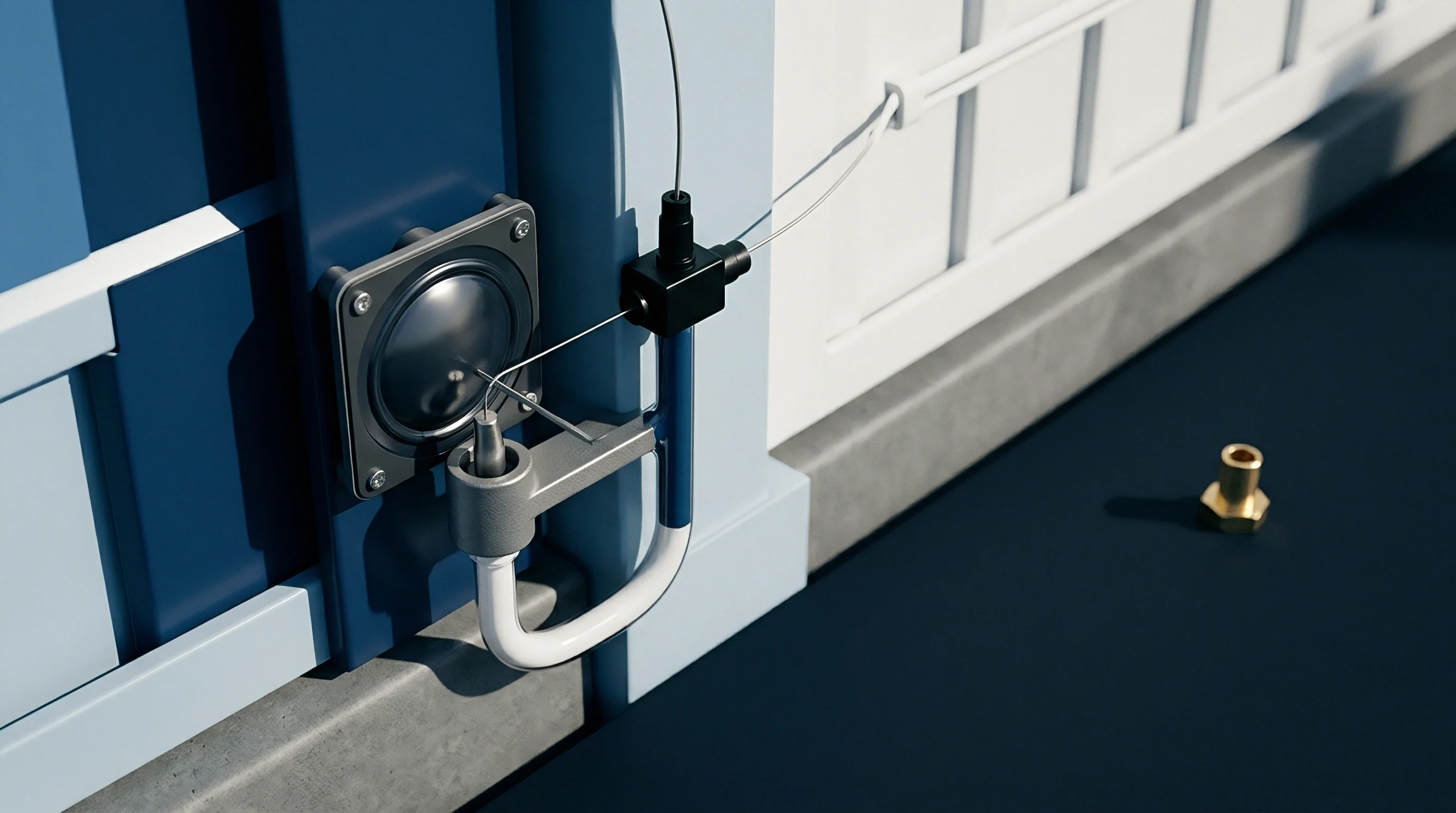
Mechanical Wire Bond Shear Retention after Storage
Mechanical shear testing provides the primary quantitative metric for assessing bond interface integrity over time. A micro-shear stylus engages the bonded copper ball at a height of 3 to 5 micrometers above the aluminum pad surface, applying a lateral force until interfacial separation or ball deformation occurs. Standard acceptance criteria under AEC-Q100 or MIL-STD-883 Method 2011 require a minimum initial shear strength of 15 grams-force for a 20-micrometer diameter copper wire bond, alongside a normalized shear strength exceeding 4.0 grams-force per mil-squared of contact area.
As intermetallic compounds grow and micro-voiding develops during storage, failure modes transition from ductile ball shear to brittle interfacial lifting. In ductile failure, the shear tool pushes through the bulk copper ball, leaving behind remnants of copper and intermetallic material across the aluminum pad. Brittle lifting occurs when the tool pops the entire ball cleanly off the pad at low force thresholds, exposing a shiny, un-bonded intermetallic or bare substrate surface.
Packages exhibiting more than a 20 percent drop in shear strength after simulated ambient aging fail long-term reliability qualification.
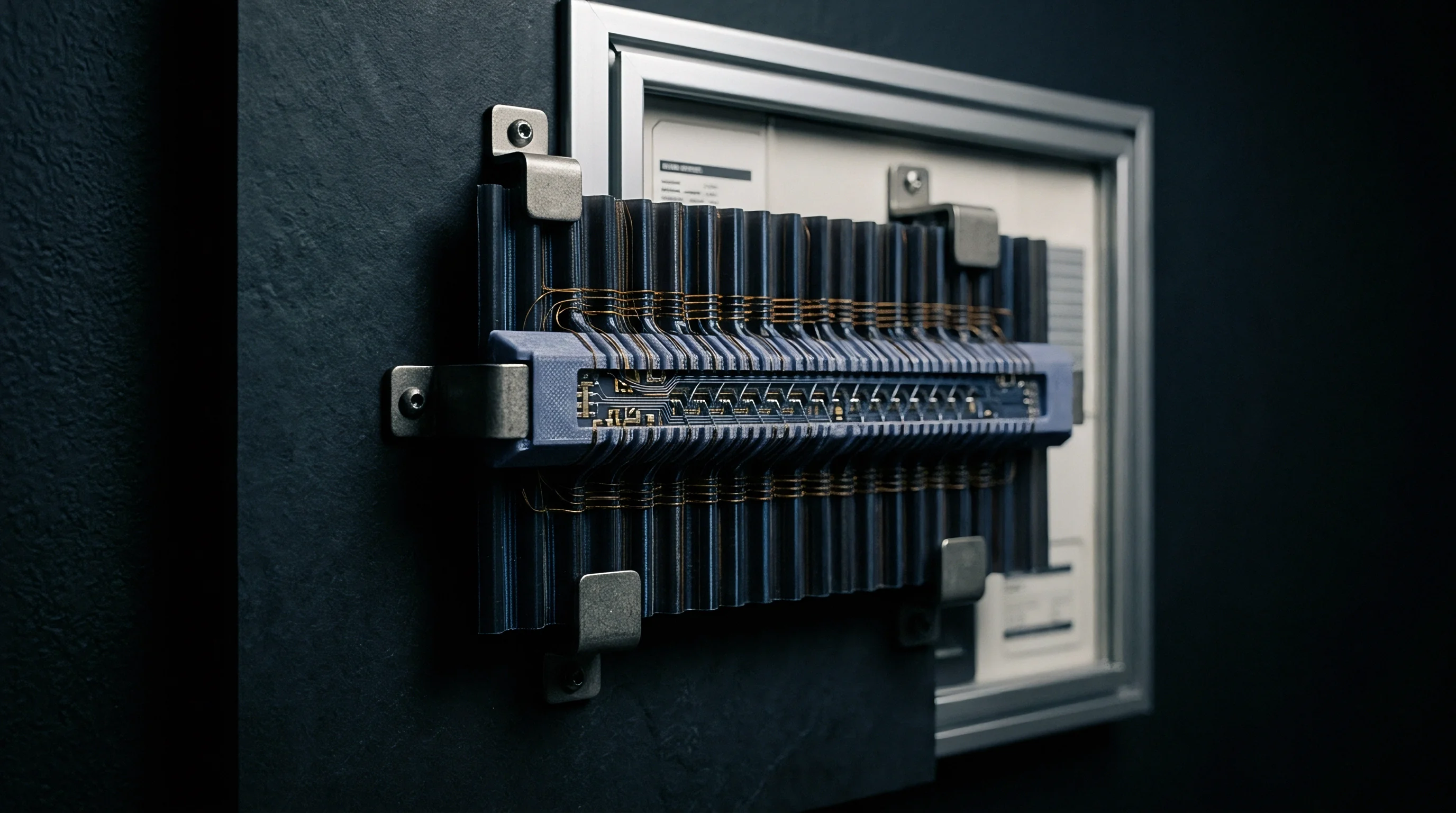
Interfacial Micro-Voiding and Crack Propagation Pathways
Cross-sectional analysis of aged wire bonds reveals that structural degradation concentrates along distinct crystallographic planes within the intermetallic stack-up. The interface between the Cu9Al4 phase and the surrounding copper matrix experiences the highest density of mechanical mismatch stress. Micro-cracks initiate at the outer periphery of the bond ball, where mold compound outgassing directly contacts the metallic junction.
These peripheral cracks propagate inward along the void-riddled Kirkendall line, progressively reducing the effective load-bearing area of the bond.
| Wire Metallurgy | Diameter (µm) | Initial Shear Strength (grams-force) | 10-Year Aged Shear Strength (grams-force) | Dominant Failure Mode Post-Storage |
|---|---|---|---|---|
| Bare Copper (99.99%) | 20.0 | 22.5 ± 1.5 | 11.2 ± 3.1 | Interfacial Ball Lifting |
| Palladium-Coated Copper | 20.0 | 24.0 ± 1.2 | 21.8 ± 1.0 | Ductile Ball Deformation |
| Gold-Coated Copper | 20.0 | 23.1 ± 1.4 | 17.5 ± 2.2 | Mixed Mode Failure |
| Copper-Silver Alloy | 18.0 | 19.8 ± 1.1 | 14.1 ± 1.8 | Perimeter Crack Shear |
Board flexure and thermal expansion stresses encountered during eventual circuit assembly amplify the micro-structural damage accumulated during storage. A bond ball weakened by decadal intermetallic embrittlement can detach under standard SMT reflow profiles or minor mechanical shock during handling. Packaging engineers mitigate this risk by specifying larger initial ball bond diameters and enforcing strict limits on bond pad deformation during the ultrasonic thermosonic bonding process.
Suppliers often claim that compliant package mold compounds buffer external stresses sufficiently to prevent bond lifting, ignoring the reality that internal micro-voiding destroys the metallic bond interface independently of external mechanical loads.
Spec
Procurement Specification Clauses for Long-Term Storage Packages
Sourcing electronic components intended for ten to thirty-year reserve storage requires drafting explicit procurement specifications that go beyond standard commercial datasheets. Standard distributor inventory controls guarantee product functionality for standard assembly cycles but do not account for internal resin outgassing kinetics. Sourcing contracts must stipulate maximum ionic contaminant thresholds, raw material lot traceabilities, and specific wire bond metallurgies prior to issuing purchase orders.
A comprehensive procurement dossier mandates vendor compliance with rigorous material characterization protocols. Suppliers must provide certified test reports for each resin lot, confirming that ionic halogen content remains below published thresholds and that mold compound formulations carry no recycled resin content. Procurement clauses should explicitly mandate palladium-coated copper wire with a minimum guaranteed palladium layer thickness of 30 nanometers for all copper-bonded microcontrollers and custom application-specific integrated circuits entering strategic reserves.
Decadal Storage Cost Mechanics and Qualification Dossiers
Choosing high-reliability packaging options adds upfront component cost while drastically lowering total cost of ownership over a decadal maintenance cycle. Bare copper wire in standard brominated resin represents the lowest initial purchase price, but carries a substantial probability of field failure upon deployment from storage. Upgrading to palladium-coated copper wire inside ultra-low-halogen mold compound increases unit component cost by 8 to 15 percent, while specialized lot-level qualification testing adds upfront engineering fees.
| Package Configuration | Initial Unit Cost Premium (%) | Incoming Qualification NDE Overhead ($) | Nitrogen Cabinet Storage Cost / Decade ($) | Projected 20-Year Lot Survival Rate (%) |
|---|---|---|---|---|
| Commercial Bare Cu + Standard EMC | Baseline (0%) | $250 | $120 | 62.5% |
| Industrial PCC Wire + Green EMC | +8.5% | $450 | $120 | 94.8% |
| High-Rel PCC Wire + Low-Ion EMC | +14.2% | $850 | $120 | 99.4% |
The procurement contract must incorporate a mandatory clause requiring suppliers to archive raw wafer lot samples and provide thermal acceleration test data using low-temperature stress steps (85°C/85%RH and 110°C HAST) for every production lot destined for decadal storage reserves.