Viscoelastic Stress Coupling in Sensor Packaging under Transients
Transient thermal ramps induce viscoelastic relaxation in packaging polymers, shifting sensor zero-offset baselines until mechanical equilibrium is reached.
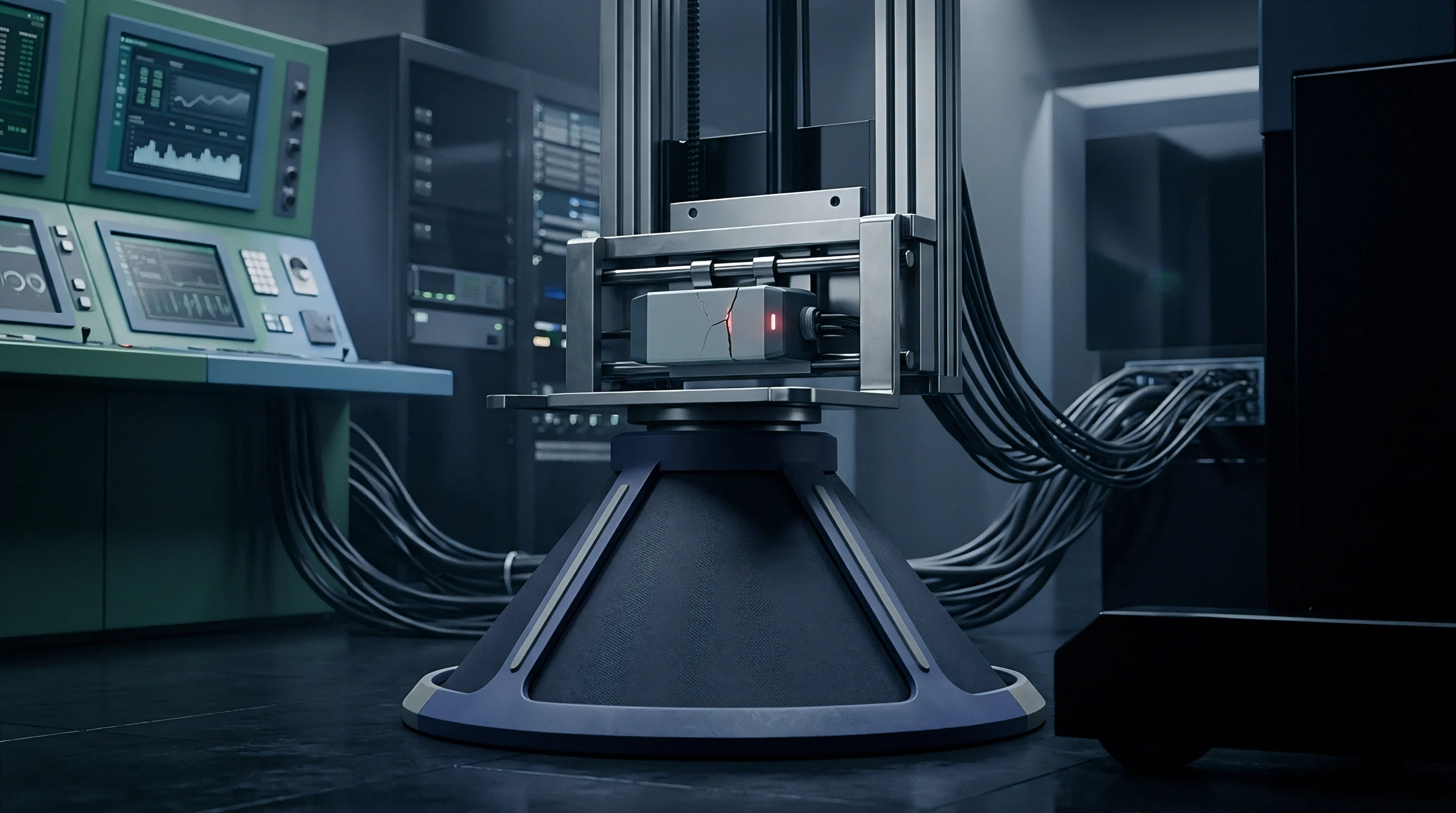
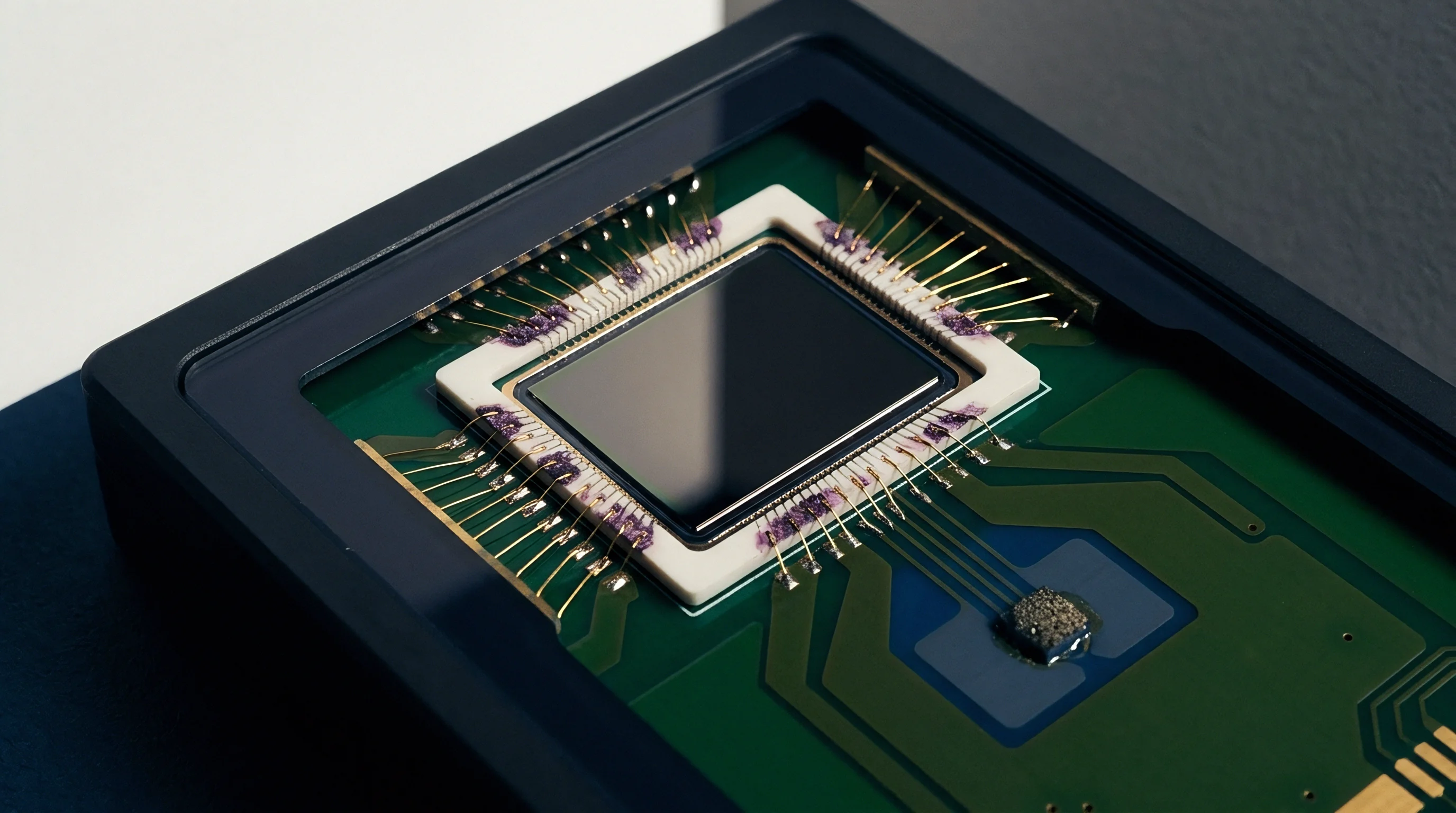
Strain
Mechanical mismatch between silicon micro-dies and surrounding polymeric encapsulants generates localized stress fields during thermal ramps. When an encapsulated sensor undergoes rapid temperature shifts, difference in thermal expansion coefficients produces immediate shear strains at the material interface. Silicon carries a coefficient of thermal expansion near 2.6 ppm per degree Celsius, whereas structural epoxy resins exhibit coefficients between 15 and 60 ppm per degree Celsius.
Polymeric bonds yield under load. Initial elastic stress peaks immediately following a thermal transition, after which the polymer matrix undergoes time-dependent molecular rearrangement. This viscoelastic relaxation causes the internal stress state to decay along logarithmic or multi-exponential trajectories, shifting parasitic mechanical forces delivered to the micro-machined sensing element over periods ranging from milliseconds to several days.
The total stress response in a potted or encapsulated transducer combines an instantaneous elastic modulus with a time-dependent relaxation modulus. Under an applied step strain, the timed stress decay follows constitutive models such as the Kohlrausch-Williams-Watts function. Temperature accelerates molecular mobility, compressing the relaxation timescale according to time-temperature superposition principles.
Operating conditions near or through the glass transition region trigger severe modulus changes, altering the mechanical coupling ratio between housing and die by orders of magnitude.
Polymeric Matrix Relaxation Dynamics
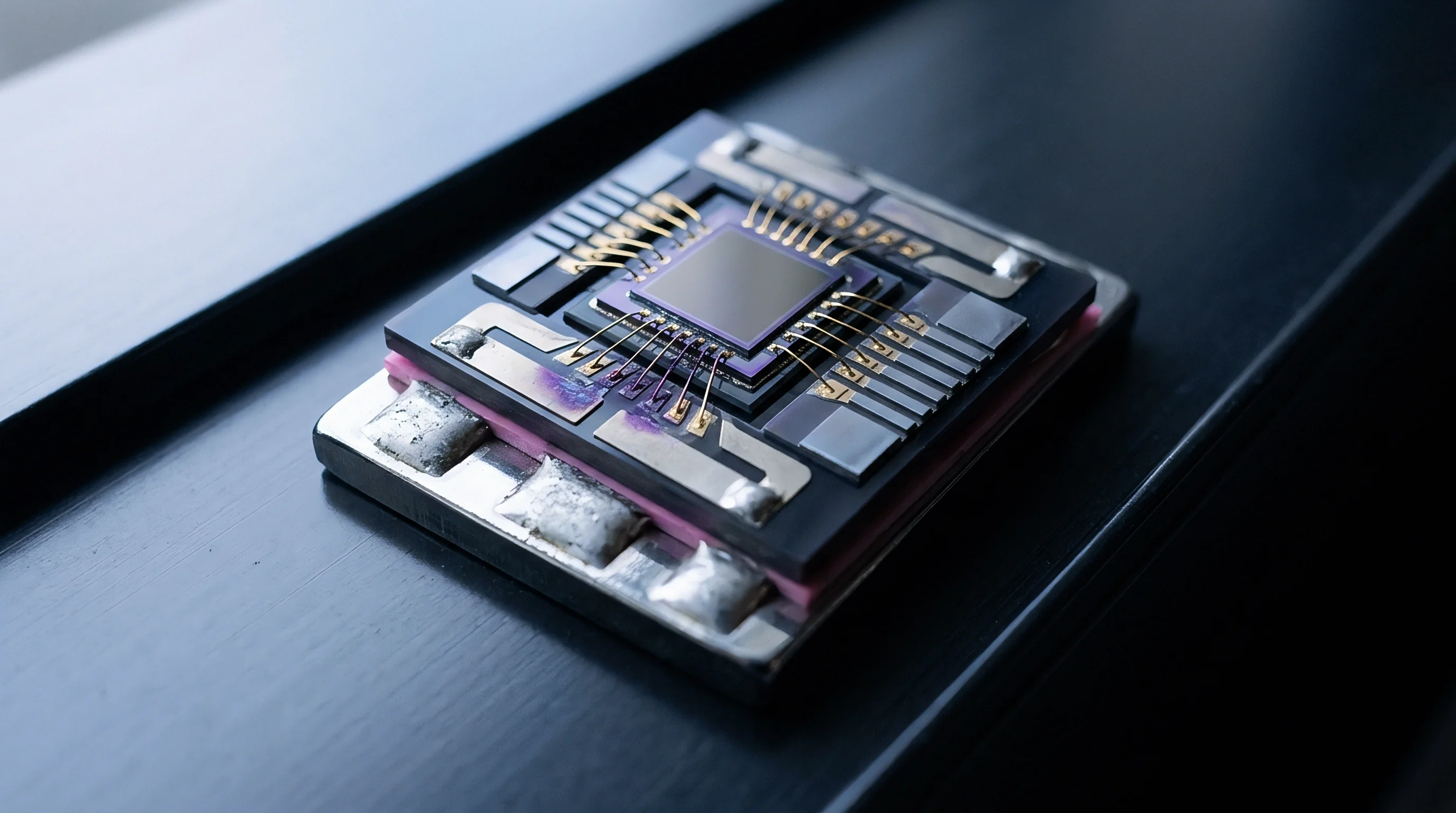
Direct physical contact between structural adhesives and sensor substrates forces instantaneous shear load transfer upon temperature change. Thermal transients drive structural mismatch. The instantaneous shear stress concentration focuses primarily at the corners of rectangular die bonds.
Over time, polymer chain uncoiling dissipates mechanical strain energy into heat, causing the shear stress at die corners to diffuse inward toward the active sensing region. Piezoresistive silicon elements exhibit high strain sensitivity through the piezoresistive effect, translating local package relaxation into a drifting differential bridge voltage.
Silicon expansion differs from epoxy. In capacitive pressure sensors, parasitic deflection of the substrate changes the resting gap between reference and sensing diaphragms. The viscoelastic decay profile translates directly into output signal drift that continues long after the sensor core reaches thermal equilibrium with its surrounding ambient medium.
- Transient Zero-Point Offset Drift causes signal output baseline shifts during thermal ramps.
- Hysteresis Band Expansion broadens baseline deviation when thermal direction reverses before strain equilibrium.
- Spurious Low-Frequency Noise generates low-frequency output fluctuations in piezoresistive bridge signals.
- Long-Term Scale Factor Shift degrades full-scale calibration accuracy over thousands of operational thermal cycles.
Glass Transition Thermal Shifts
Epoxy formulations undergo drastic modulus drops exceeding two orders of magnitude across their transition window. Below the glass transition temperature, the material behaves as a rigid glassy solid, transferring maximal thermal expansion mismatch force to the die. Above this transition, the polymer transforms into a compliant rubbery state, significantly attenuating mechanical strain transfer.
When operating environments sweep across this boundary, the viscoelastic relaxation spectrum shifts rapidly, altering both the magnitude and the relaxation time constants of package-induced stresses.
| Material System | Glass Transition Temp (°C) | Storage Modulus Below Tg (GPa) | Storage Modulus Above Tg (MPa) | Relaxation Time Constant at 25°C (s) |
|---|---|---|---|---|
| Rigid Anhydride Epoxy | 145 | 18.5 | 450 | 14200 |
| Low-Stress Cycloaliphatic Epoxy | 95 | 8.2 | 120 | 3800 |
| Die-Attach Silicone Gel | -55 | 0.005 | 1.2 | 12 |
| Fluorosilicone Encapsulant | -65 | 0.012 | 2.8 | 45 |
| Data obtained via dynamic mechanical analysis at 1 Hz loading frequency; time constants extracted from single-exponential stress decay fits at 25°C. | ||||
A temperature step of 50 degrees Celsius induces an initial parasitic shear stress of 14.2 megapascals in rigid epoxy die-attach layers, decaying to 3.8 megapascals over a 120-minute window at room temperature.
Stress relaxes along exponential decay curves. Differential scanning calorimetry and dynamic mechanical analysis confirm that structural adhesives with high glass transition points store substantial thermal stress during high-temperature post-cure cooling. This residual strain field releases gradually over weeks at room temperature, introducing baseline instability that mimics sensor aging.
Ignoring time-dependent shear decay during thermal design cycles causes precision instruments to fail zero-point repeatability audits in production chambers.
Dissipation
Transducer conditioning electronics interpret time-varying structural stresses as genuine physical signal changes. High-resolution analog front ends, including 24-bit delta-sigma analog-to-digital converters, record millivolt-level bridge offsets driven by packaging stress decay. Temperature steps shift the baseline.
Because the physical strain relaxes over a extended time horizon, the resulting electronic offset drift creates low-frequency residual error that cannot be eliminated by standard static temperature compensation tables.
Static calibration procedures apply fixed correction factors based on steady-state temperature readings from on-die diodes or thermistors. Thermal transients disrupt this mechanism because thermal equalization occurs orders of magnitude faster than viscoelastic strain dissipation. The temperature sensor reports thermal stability while the structural package continues to deform, producing an apparent phase lag between temperature input and sensor baseline offset.
Signal Chain Offset Tracking
Analog front ends register output shifts that mirror the exponential decaying profile of the package material. Analog front ends track decay curves. When a sensor module experiences a fast ambient temperature ramp, the active sensing core quickly reaches thermal parity with its enclosure.
The polymer die-attach adhesive remains in a non-equilibrium stress state, slowly decaying toward its baseline volume. The instrumentation amplifier amplifies this mechanical relaxation voltage, presenting a time-varying drift to host digitizers.
High-gain amplification stages exacerbate susceptibility to transient viscoelastic drift. If an instrumentation amplifier operates with a closed-loop gain of 500, a viscoelastic stress shift producing a tiny 10-microvolt bridge imbalance manifests as a 5-millivolt drift at the converter input. Soft gels isolate mechanical forces.
- Thermal Phase Lag Error arises when temperature sensors settle faster than mechanical strain fields inside encapsulants.
- Quantization Noise Saturation occurs when high-gain instrumentation amplifiers attempt to track wide viscoelastic baseline wander.
- Polynomial Compensation Failure manifests because static temperature lookup tables cannot predict time-dependent stress trajectories.
Nonlinear Settling in Analog Output
Standard thermal compensation firmware assumes instantaneous mechanical equilibrium across the transducer assembly. Glass transition shifts material modulus. Firmware compensation faces timing limits.
Real-world applications subjected to continuous thermal fluctuations exhibit complex, path-dependent offset trajectories. The historical thermal profile dictates the instantaneous stress state, turning offset compensation into a dynamic modeling challenge rather than a simple algebraic mapping.
Thermal compensation algorithms calibrated under static equilibrium fail to eliminate transient viscoelastic drift during rapid temperature changes.
Digital signal processors running zero-point tracking routines risk misinterpreting long-term viscoelastic relaxation as actual process variable changes. In pressure monitoring applications, slow relaxation of a gel encapsulant over several hours resembles a gradual system pressure change, triggering false alerts inside industrial process control loops.
Whether active thermal gradient measurement on the micro-die can fully decouple viscoelastic relaxation states remains a subject of ongoing bench evaluation.
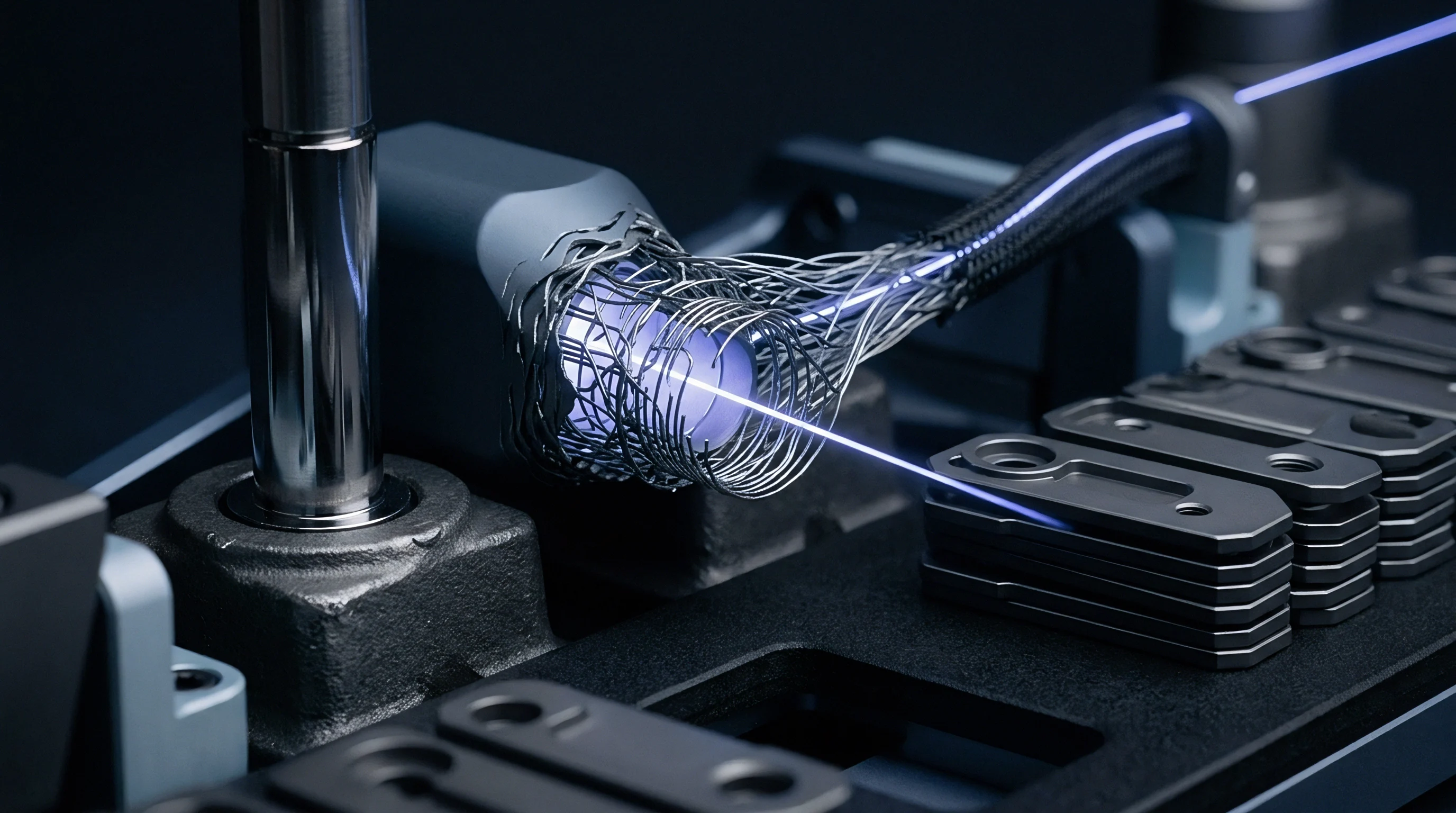
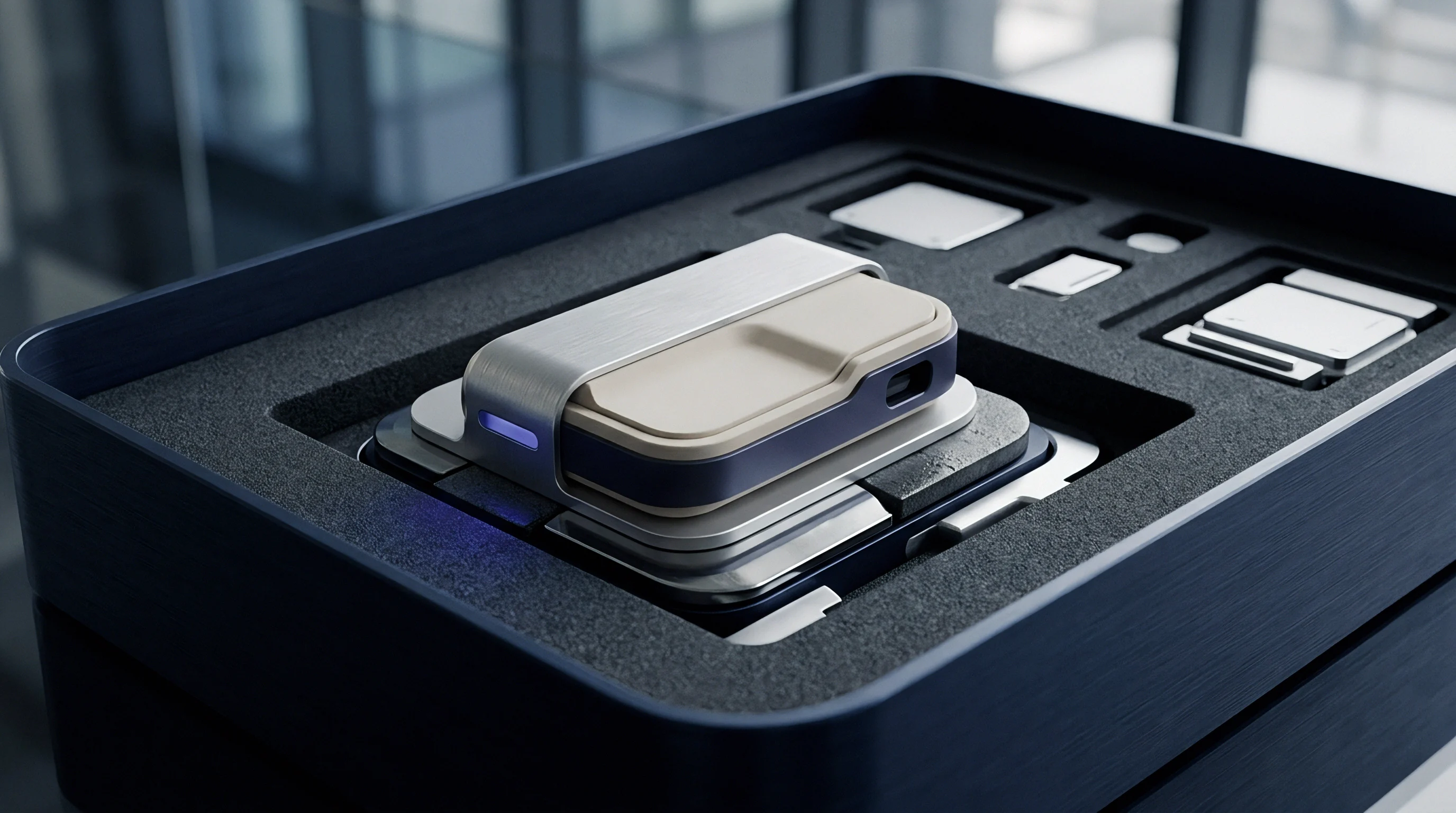
Package
Structural isolation techniques decouple sensitive micro-machined elements from external housing distortion. Packaging choices dictate how environmental temperature transients convert into package-induced mechanical strain. Direct encapsulation via rigid epoxy transfer molding subjects the micro-die to severe multi-axial compression.
Floating die architectures using compliant silicone gel fills or elevated substrate pedestals mitigate strain transfer by allowing the outer shell to expand independently of the inner transducer element.
Die-attach geometry fundamentally modifies stress path transmission. Continuous adhesive coverage under the sensor die transmits planar shear stress directly across the entire silicon back surface. Patterned dot-matrix adhesive deposition or central island bonding isolates the sensitive center region of piezoresistive diaphragms, restricting mechanical force transfer to non-critical perimeter zones.
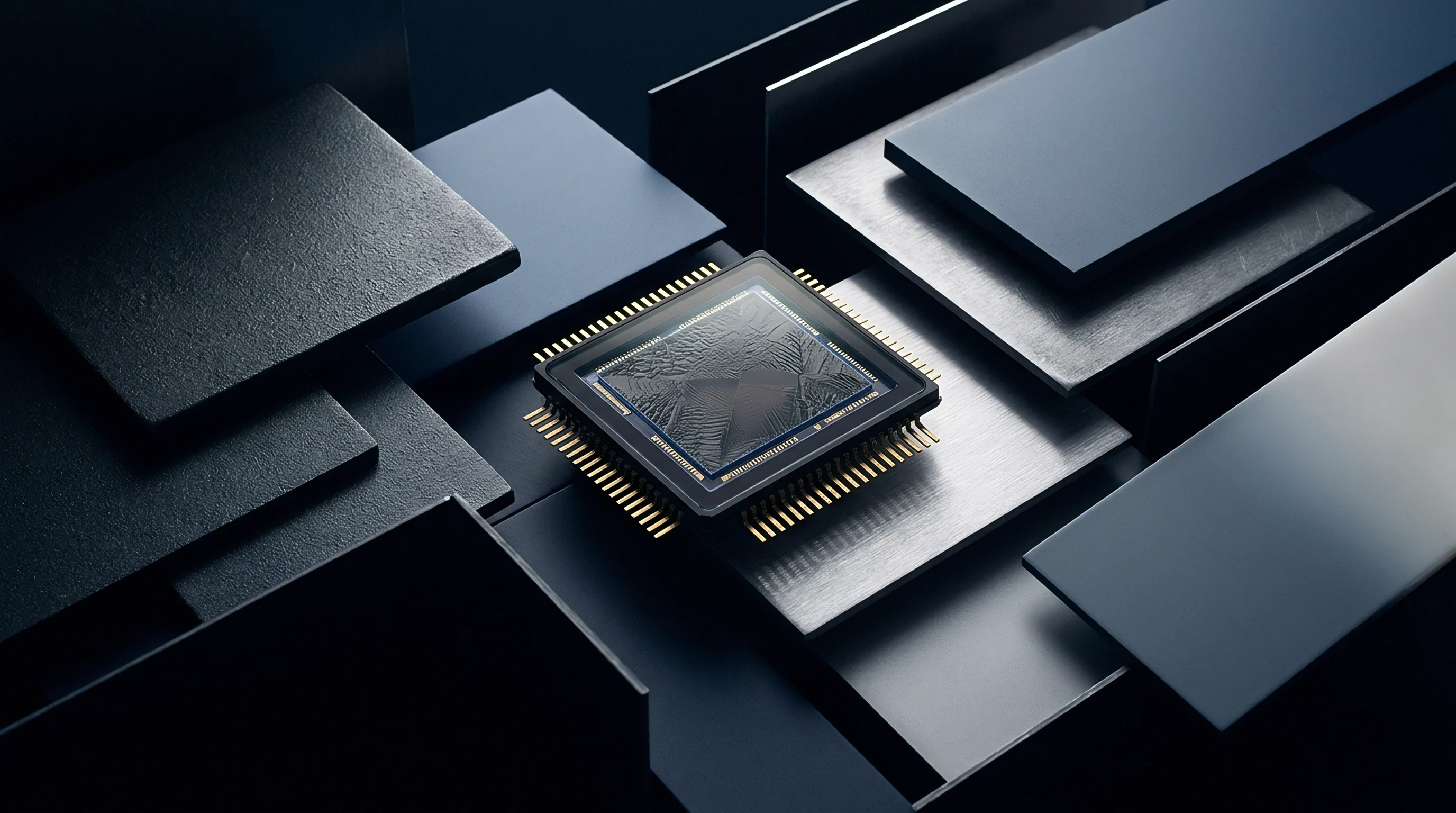
Encapsulation Geometry and Compliance
Glob-top formulations with low glass transition temperatures reduce mechanical coupling to piezoresistive diaphragms. Polymer suppliers maintain strict formulas. Selecting gel encapsulants with storage moduli under 10 megapascals prevents structural loads from reaching the active micro-machined surface.
Silicone gels retain high compliance across wide thermal operating bands, maintaining low stress coupling from negative 50 to 180 degrees Celsius.
Compliant gel potting introduces alternative environmental risks. Liquid gel interfaces absorb moisture, swelling over long exposures and altering local hydrostatic pressure on exposed diaphragm surfaces. Fluorosilicone alternatives balance low mechanical modulus with improved chemical and moisture resistance.
| Enclosure Architecture | Transient Strain Transfer Ratio (%) | Zero Drift Coefficient (ppm/°C-min) | Assembly Process Complexity | Relative Unit Cost Multiplier |
|---|---|---|---|---|
| Direct Transfer Molded Epoxy | 88 | 45.0 | Low | 1.0 |
| Glob-Top Cavity Fill | 35 | 12.5 | Moderate | 1.3 |
| Silicone Gel Potted Cavity | 3 | 0.8 | Moderate | 1.5 |
| Glass Pedestal Decoupled LCC | 1 | 0.2 | High | 2.4 |
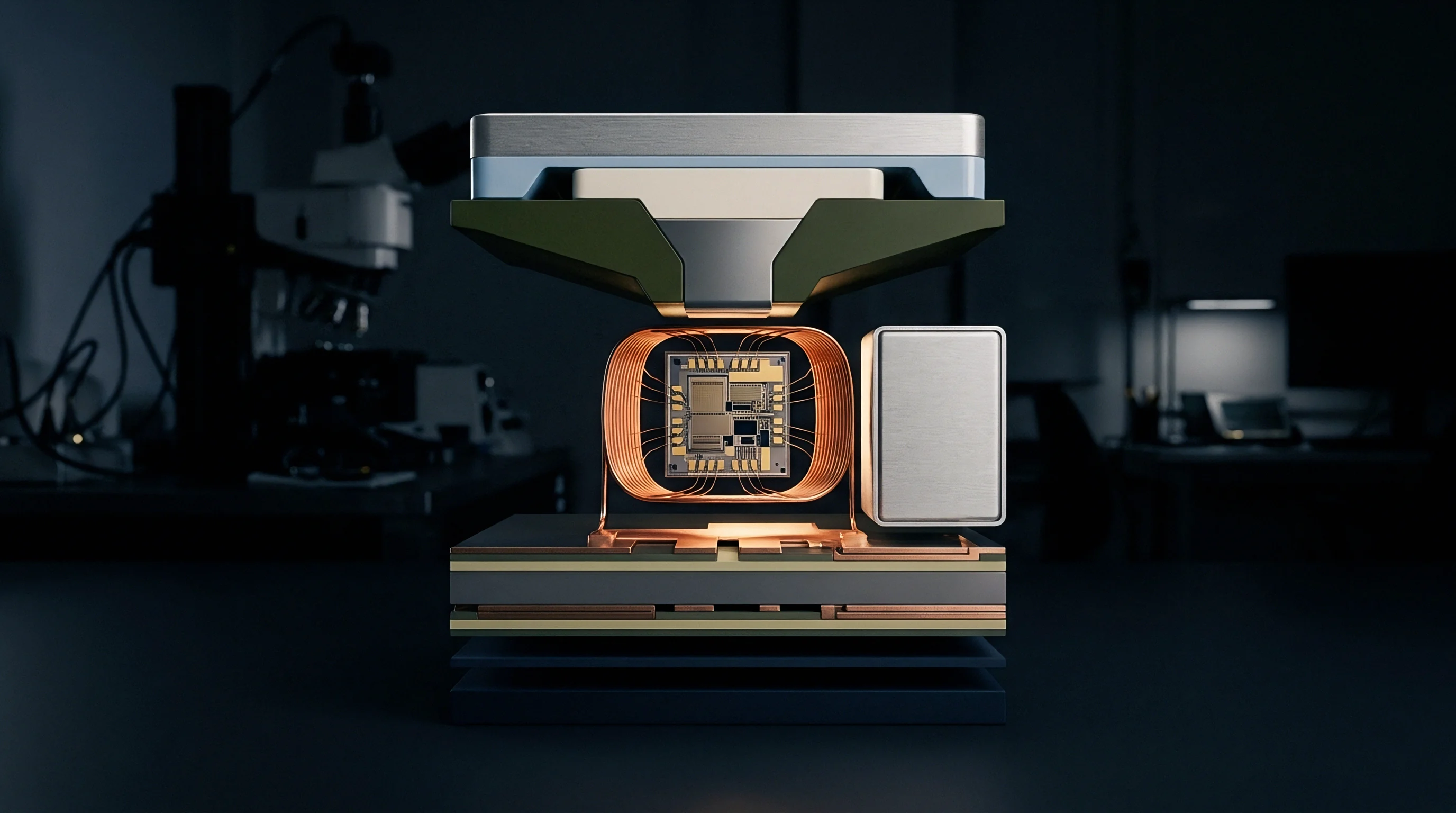
Pedestal Isolation Architecture
Mounting micro-machined silicon dies upon elevated glass or silicon pedestals lengthens the stress diffusion path from substrate headers. Borosilicate glass pedestals provide an intermediate coefficient of thermal expansion matching silicon, shielding the sensing die from the larger expansion mismatches of metallic or printed circuit board carriers. Wafer thinning reduces mechanical coupling.
Compliance with AEC-Q103-002 grade zero thermal shock parameters requires sensor enclosures to endure 1000 cycles from negative 40 to 150 degrees Celsius without delamination exceeding five percent of die-attach surface area.
Substrate pedestal bonding requires precise control over adhesive fillet height. Excessive adhesive squeeze-out forming a direct bridge between the silicon die edge and the carrier package bypasses the isolation pedestal entirely, reinstating severe viscoelastic stress coupling during thermal transients.
Adhesive suppliers frequently attribute transient zero-point shifts to improper customer curing profiles rather than inherent polymer relaxation dynamics.

Verification
Environmental testing chambers subject sensor assemblies to steep thermal steps while continuous data acquisition logs microvolt-level offsets. Quantification of viscoelastic stress coupling requires separating pure thermal sensitivity from time-dependent mechanical relaxation. Fast liquid-to-liquid thermal shock systems generate temperature ramp rates exceeding 100 degrees Celsius per minute, forcing instantaneous thermal step inputs into the packaging assembly while minimizing measurement lag.
Digital image correlation and micro-Raman spectroscopy validate strain redistribution models experimentally. Micro-Raman spectroscopy measures localized lattice deformation within silicon by observing spectral frequency shifts of characteristic optical phonon modes. Mapping these shifts across a silicon surface during a thermal shock cycle yields real-time spatial strain distributions within the active transducer element.

Thermal Transient Test Protocols
Environmental chambers capable of ramp rates exceeding twenty degrees Celsius per minute isolate transient stress coupling from steady-state temperature coefficients. Transient thermal shocks alter signal stability. Thermal shock testing per IEC 60068-2-14 test NA subjects test samples to rapid transfers between hot and cold temperature zones.
Logging sensor output at high sample rates throughout the stabilization window reveals the precise amplitude and relaxation time constant of package-induced drift.
Data processing algorithms fit the post-transient output curve to multi-exponential decay equations. The extracted time constants identify specific relaxation mechanisms within the polymer matrix, providing targeted engineering data for material selection and cure process optimization.
Worked Transient Error Budget
Consider a piezoresistive MEMS pressure transducer operating over a full-scale range of 100 kilopascals with a full-scale span output of 100 millivolts. Assume a thermal step change of 30 degrees Celsius applied over 30 seconds. The uncompensated static thermal offset coefficient of the silicon die equals 0.05 millivolts per degree Celsius, yielding a steady-state thermal offset shift of 1.5 millivolts.
Assume the viscoelastic strain coupling adds an initial peak transient offset shift of 0.60 millivolts, decaying with a characteristic relaxation time constant of 450 seconds. At the moment thermal equilibrium of the silicon core is achieved, the total output offset reaches 2.10 millivolts, representing a 2.10 percent full-scale error. Calibration certificates require transient data.
After 450 seconds, the transient viscoelastic error component decays to 36.8 percent of its initial value, contributing 0.221 millivolts. The total output offset drops to 1.721 millivolts. After 1350 seconds, corresponding to three time constants, the viscoelastic error component decays to 0.03 millivolts, bringing the total offset down to 1.53 millivolts.
This calculation demonstrates that static temperature compensation alone leaves a 0.60 percent full-scale error during the initial thermal transient period.
- Mount the transducer inside a dual-zone liquid-to-liquid thermal shock test chamber.
- Establish a stable baseline output reading at reference room temperature for sixty minutes.
- Execute a twenty degree Celsius thermal step change within thirty seconds.
- Log full-scale signal output at a sample rate of one hundred hertz for four hours.
- Extract viscoelastic relaxation time constants by fitting signal decay curves to dual-exponential models.
Continuous micro-Raman spectroscopy across micro-machined silicon diaphragms maps local stress concentration shifts during polymer curing and thermal cycling.
Bench measurement setups must eliminate parasitic cable strain and fixture deformation during thermal shock testing. Mechanical force imparted by stiff coaxial cables expanding inside environmental chambers can ruin high-precision transient zero-drift measurements.
Section 4.3 of ISO 16063-11 mandates that vibration transducer calibration certificates report temperature transient cross-sensitivity values in units of equivalent acceleration per degree Celsius.
Selection
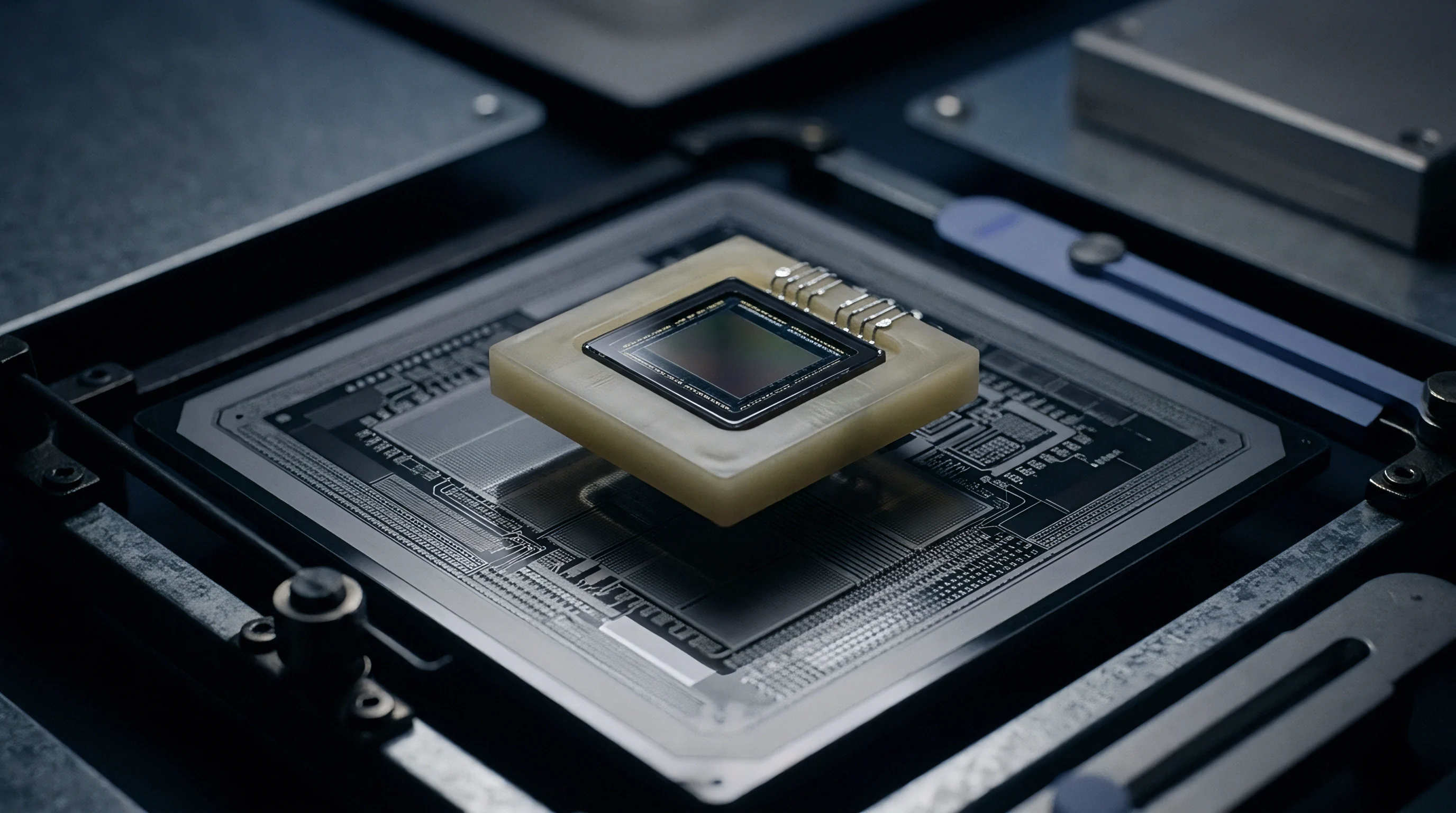
Sourcing teams balance component unit costs against the extended qualification schedules mandated by low-stress packaging materials. Selecting polymer formulations for sensor packaging connects physical material characteristics to vendor supply chain stability. Specialty die-attach adhesives and optical-grade silicone encapsulants represent low-volume, high-specification chemical products with concentrated global manufacturing bases.
Qualifying alternative polymer suppliers requires extensive thermal shock and temperature-humidity-bias testing. A single packaging resin qualification cycle consumes between 16 and 24 weeks of chamber time, carrying engineering validation costs ranging from 45,000 to 80,000 USD per packaging configuration. Secondary sourcing prevents line stoppages.
Supplier Pool Architecture and Risk
Specialized polymer formulations for stress-decoupled packaging rely on a concentrated group of chemical manufacturers. Chemical formulation changes, raw material supply disruptions, or batch-to-batch viscosity variations directly alter stress coupling behaviors. Sourcing contracts must mandate raw material lot traceability and minimum two-year change notification windows for chemical constituent modifications.
Automotive-grade applications governed by AEC-Q100 and AEC-Q103 specifications require zero-defect manufacturing controls. Dye penetrant testing reveals sub-surface delamination. Packaging sub-contractors must demonstrate automated acoustic microscopy inspection capabilities to audit voiding levels in low-stress die-attach layers.
Commercial Qualification Economics
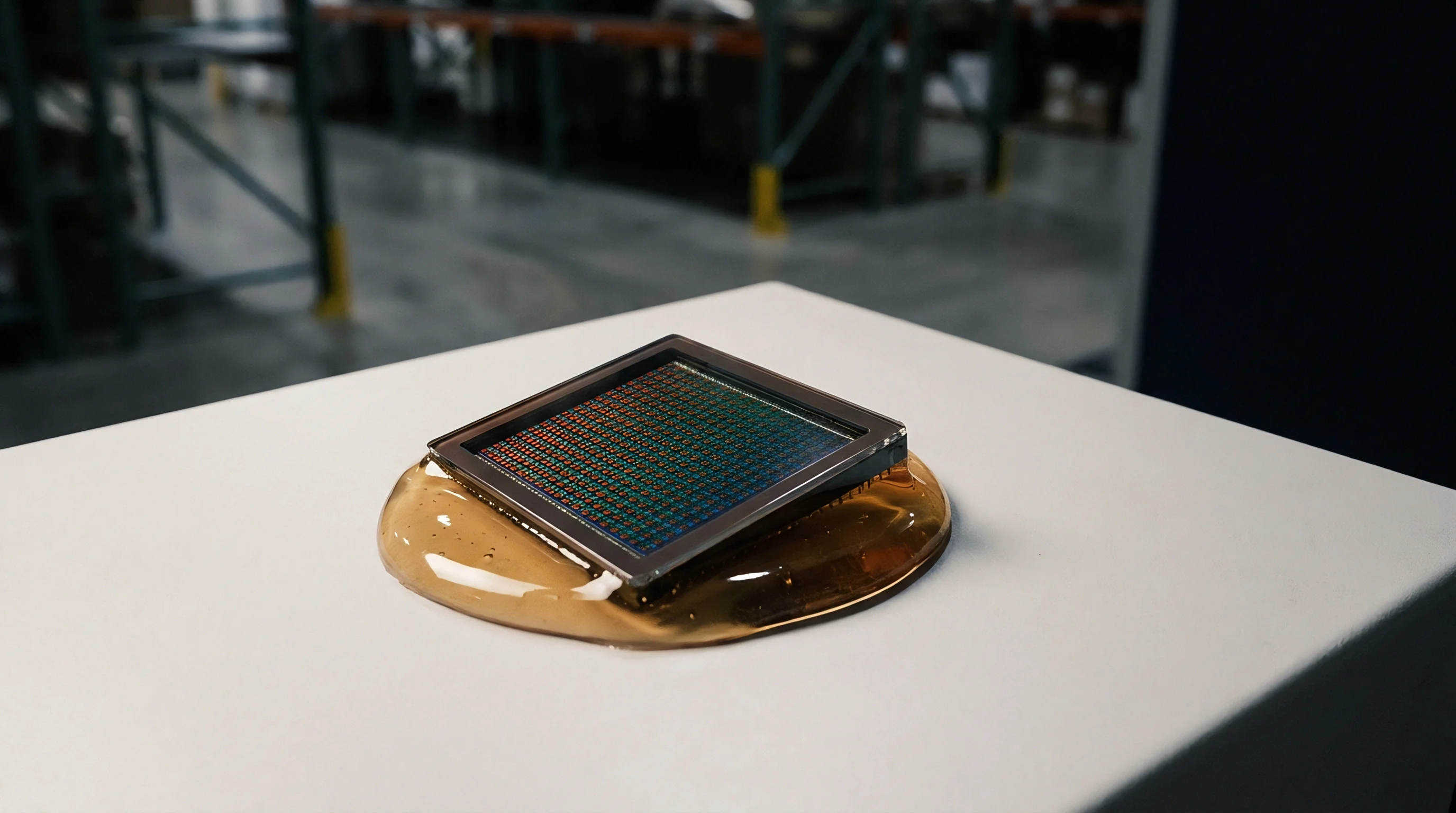
Re-qualifying a secondary adhesive source for an established sensor module demands extensive environmental chamber exposure. Sourcing low-modulus silicone gels instead of standard microelectronic epoxies increases direct bill-of-materials cost by 0.15 to 0.45 USD per unit. This piece-part price premium is offset by avoiding field failure costs associated with thermal drift complaints in high-reliability applications.
| Polymer Class | Lead Chemical Suppliers | Supply Concentration Risk | Standard Lead Time (Weeks) | Re-Qualification Duration (Weeks) |
|---|---|---|---|---|
| High-Tg Anhydride Epoxy | Henkel, Namics, Shin-Etsu | Moderate | 8 to 12 | 16 |
| Low-Stress Silicone Gel | Dow, Shin-Etsu, Wacker | Moderate | 10 to 14 | 20 |
| Fluorosilicone Encapsulant | Dow, Momentive | High | 14 to 20 | 24 |
| Eutectic AuSi Preforms | Tanaka, Materion | Low | 6 to 10 | 12 |
Contractual agreements with packaging foundries must incorporate strict shelf-life monitoring for premixed frozen adhesives. Thawing history, storage temperature excursions below negative 40 degrees Celsius, and working pot-life control dictate final polymer cross-link density, directly governing the resulting viscoelastic relaxation time constants in finished sensor assemblies.
Sourcing a single-source encapsulant resin to save initial unit cost guarantees production lines stall when chemical suppliers alter raw material formulations.