Relaxation Function
Non-exponential decay dynamics describing physical property equilibration in disordered solid materials characterize structural relaxation over extended temporal windows. The mathematical formulation known as the Kohlrausch-Williams-Watts model models physical aging and strain recovery using a stretched exponential function with a stretching exponent between zero and one. Incorporating a dynamic parameter accounts for the distribution of activation energies found in amorphous sensor substrates.
This model ceases applying when structural relaxation transitions into steady-state viscous flow or linear kinetic regimes.
Kinetic Model
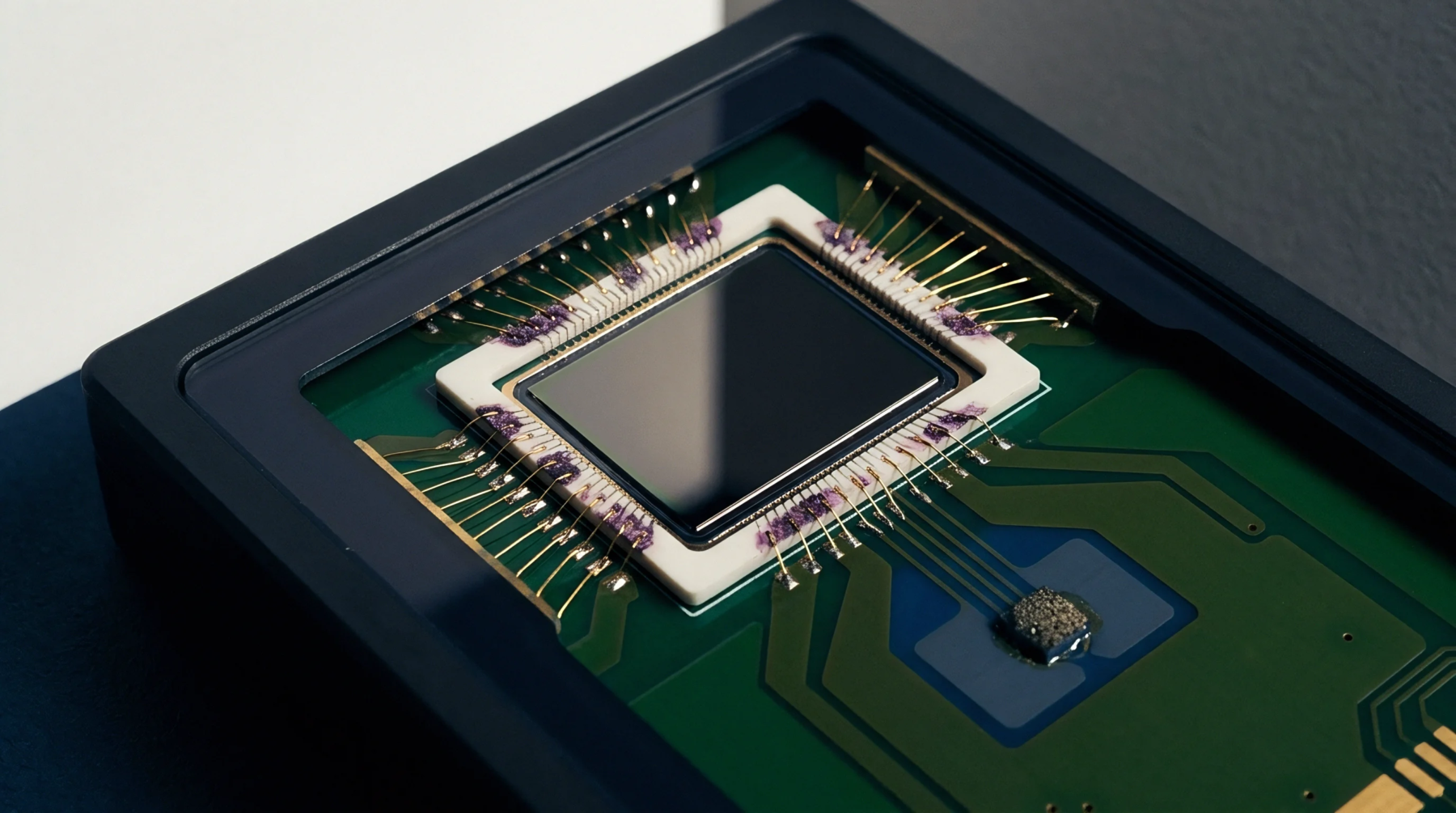
Non-linear curve fitting extracts characteristic relaxation times and stretching exponents from empirical time-series impedance or displacement data. Time-dependent output drift in capacitive MEMS sensors following thermal shock follows this logarithmic decay profile. Temperature fluctuations during long-term stability testing distort the extracted relaxation spectrum by shifting baseline response times.
High acquisition rates during initial relaxation phases capture rapid transient movements before slow exponential tails dominate.
Metrological Drift
Long-term sensor calibration relies on modeling baseline creep to maintain measurement accuracy over multi-year deployment cycles. Strain gauge zero-point drift originating from polymer adhesive relaxation follows fractional exponential trends over thousands of operational hours. Reference calibrators monitor reference artifacts alongside tested transducers to separate instrument drift from physical sensor aging.
Calibration laboratories adjust compensation algorithms based on empirical model constants derived during initial qualification.
Fitting Boundary
Optimization algorithms require adequate temporal range coverage to prevent parameter correlation between the characteristic time constant and the stretching exponent. Truncated data sets lead to erroneous parameter estimation and invalid long-term drift predictions.