Piezoresistive Tensor Sensitivity Shifts Driven by Substrate Thermal Diffusion Fields
Substrate thermal diffusion fields distort piezoresistive sensitivity tensors via localized expansion stresses, requiring centrosymmetric bridge layouts.


Coupling
Piezoresistive pressure sensors and strain gauge bridges fabricated on monocrystalline silicon rely on piezoresistive tensor components pi-11, pi-12, and pi-44 to convert mechanical stress into electrical resistivity changes. Silicon exhibits anisotropic thermal conductivity. When thermal diffusion fields propagate across the bulk silicon substrate, these fields induce two simultaneous perturbations: a direct temperature coefficient of resistance shift and a secondary thermal stress field arising from local thermal expansion mismatch between the silicon die, the die-attach material, and the lead frame.
Piezoresistive coefficients vary with doping.
In p-type silicon piezoresistors oriented along the direction on a (100) wafer plane, the longitudinal piezoresistive coefficient pi-l equates approximately to half of pi-44, assuming pi-11 and pi-12 remain minor contributors. At room temperature with a boron doping concentration of 10 to the power of 18 per cubic centimeter, pi-44 achieves a nominal value of 138 times 10 to the power of minus 11 square meters per newton. As temperature rises, carrier screening and intervalley scattering diminish the magnitude of pi-44, typically reducing sensitivity by 0.15 percent to 0.25 percent per Kelvin across the range of minus 40 degrees Celsius to 125 degrees Celsius.
Transverse thermal variations generate spurious shear stresses across isolated resistor axes.
The interaction between the piezoresistive tensor and non-uniform thermal fields follows a generalized constitutive relation where resistivity changes depend on both the local stress state and the local temperature elevation:
- Longitudinal Piezoresistive Coefficient governs fractional resistivity change parallel to applied uniaxial stress, exhibiting strong negative temperature dependence above 200 Kelvin.
- Transverse Piezoresistive Coefficient couples perpendicular stress components into the current path, introducing cross-axis sensitivity when thermal strain acts multi-axially across the membrane.
- Shear Piezoresistive Coefficient controls resistance variations induced by torsional or off-axis packaging shear, generating bridge imbalances when thermal flux enters asymmetrically.
Transducers register local strain directly. When heat diffuses through a silicon diaphragm, the spatial gradient creates a continuous variation in the piezoresistive tensor elements themselves. A bridge arm positioned near a heat source experiences both a lower mechanical gauge factor and a shifted baseline resistance relative to an identical arm located five hundred micrometers away.
Resistor placement governs thermal vulnerability.

Flux
Transient substrate thermal diffusion fields obey the classical parabolic heat conduction equation, where thermal diffusivity dictates the velocity of the thermal wavefront through the bulk silicon and underlying structural carriers. Heat spreads unevenly across silicon. Monocrystalline silicon features a thermal diffusivity near 80 square millimeters per second at 300 Kelvin, while typical epoxy die-attach adhesives exhibit values three orders of magnitude lower, around 0.1 to 0.3 square millimeters per second.
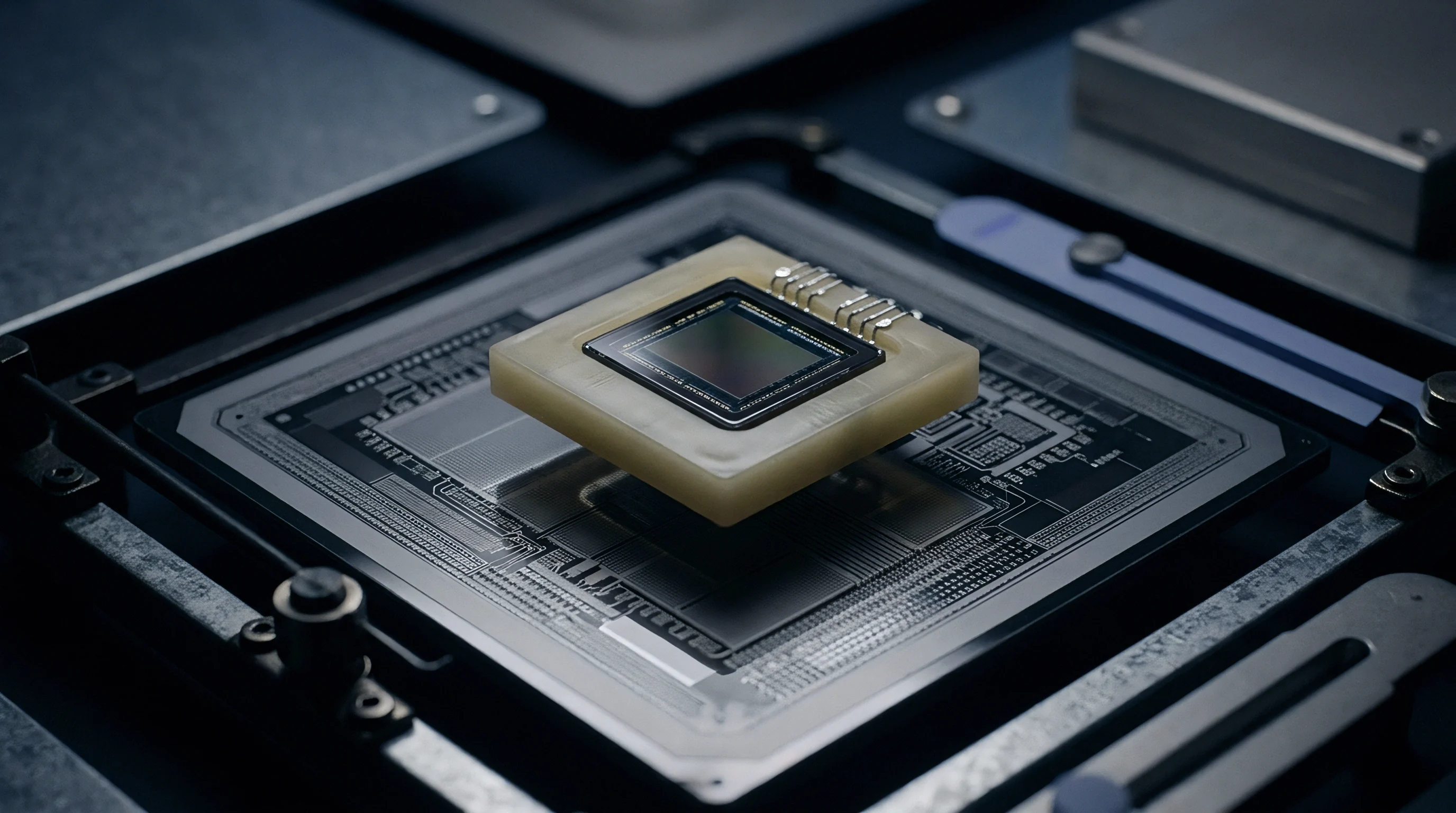
Consider an encapsulated silicon pressure transducer exposed to an external step-change in environmental media temperature from 25 degrees Celsius to 85 degrees Celsius. The sudden thermal flux penetrates through the metal diaphragm or gel seal, transferring heat across the silicon substrate toward the ceramic substrate or printed circuit carrier. Because the thermal boundary resistance at the die-attach interface impedes instantaneous heat extraction, an internal thermal diffusion field develops across the die thickness and across the planar coordinates of the chip.
Transient step inputs create differential bridge errors exceeding four percent of span under active fluid convective currents.
The spatial distribution of temperature T(x, y, z, t) generates an associated field of thermal strains via the thermal expansion coefficient of silicon, which sits near 2.6 times 10 to the power of minus 6 per Kelvin. Shear stresses alter resistivity tensors. When thermal diffusion fields remain non-uniform, internal mechanical constraints prevent free expansion, generating localized compressive and tensile stress fields that alter the piezoresistive tensor components across each distinct bridge leg.
| Substrate Material | Diffusivity (mm2/s) | Conductivity (W/m-K) | CTE (ppm/K) | Drift (ppm/K-s) |
|---|---|---|---|---|
| Monocrystalline Silicon (100) | 88.0 | 148.0 | 2.6 | 14.2 |
| Silicon Carbide (4H-SiC) | 145.0 | 370.0 | 4.2 | 8.6 |
| Alumina Ceramic (96% Al2O3) | 7.2 | 24.0 | 7.1 | 42.5 |
| Epoxy Die Attach (Ag-filled) | 0.8 | 2.5 | 35.0 | 185.0 |
| Direct Bonded Copper (DBC) | 45.0 | 180.0 | 6.8 | 62.1 |
Package boundaries dictate thermal boundaries. In a diaphragm measuring 1.2 millimeters square with a membrane thickness of 15 micrometers, a lateral thermal difference of two degrees Celsius across the active membrane area induces a localized differential thermal expansion stress of several megapascals. Heat flux drives mechanical deflection.
Because the four arms of a standard Wheatstone bridge occupy distinct spatial positions, this uneven stress field generates a differential offset voltage indistinguishable from an applied pressure signal. The signal chain downstream records an apparent pressure swing even in the complete absence of applied mechanical fluid pressure.
A fundamental ambiguity remains regarding whether high-frequency temperature oscillations within turbulent fluid boundaries can ever be decoupled from primary transducer pressure signals without external dual-sensor array architectures.

Gradient
Substrate warping follows temperature curves. Dynamic gradients defeat steady calibration. During normal operation, heat dissipation from internal ASIC regulation circuitry or external convective boundaries generates steady-state and dynamic thermal gradients across the sensor die.
In a typical mixed-signal pressure transmitter where the sensor die sits ten millimeters from a linear voltage regulator dissipating 300 milliwatts, substrate conduction establishes a steady temperature gradient across the sensor carrier on the order of 0.05 degrees Celsius per millimeter.

Is Thermal Hysteresis Isolable at System Run?
Thermal hysteresis observed during continuous system thermal cycles frequently stems from viscoelastic relaxation within the adhesive die attach interacting directly with transient thermal diffusion profiles. As temperature cycles between operational limits, the rate of temperature change dictates the instantaneous thermal gradient magnitude across the piezoresistor geometry. Wire bonds introduce localized heat.
- Initial Thermal Influx Phase produces rapid surface heating across the silicon top passivated layers, establishing an axial temperature gradient across the die thickness that peaks within twenty milliseconds.
- Substrate Diffusion Equilibrium Phase redistributes thermal energy into the carrier substrate over a three-second window, shifting the dominant mechanical stress from axial bending to planar shear.
- Viscoelastic Stress Relaxation Phase allows polymeric adhesives to flow slowly over hundreds of seconds, altering the baseline mechanical prestress and shifting the piezoresistive sensitivity matrix permanently.
Asymmetric heating corrupts span balances. The mathematical formulation of the fractional resistance change in the presence of a thermal diffusion field incorporates spatial coordinates directly. Let each piezoresistor arm possess a length L and width W. The total resistance change of arm i integrates the local piezoresistive tensor contracted with the local mechanical stress tensor along with the baseline thermal coefficient of resistance alpha-T:
R_i(T, sigma) = R_0 (1 + alpha_T Delta_T(r_i) + pi_l(T(r_i)) sigma_l(r_i) + pi_t(T(r_i)) sigma_t(r_i))
When the temperature field Delta_T differs between arm 1 and arm 3, or between arm 2 and arm 4, the bridge balance voltage degrades directly. In precision instruments requiring 0.05 percent full-scale total error bands, a gradient of 0.02 degrees Celsius between opposing arms consumes the entire allowable error budget. Overlooking transient thermal diffusion vectors leads to persistent drift failures during environmental screening that force costly mechanical re-engineering of the sensor enclosure.
Calibration
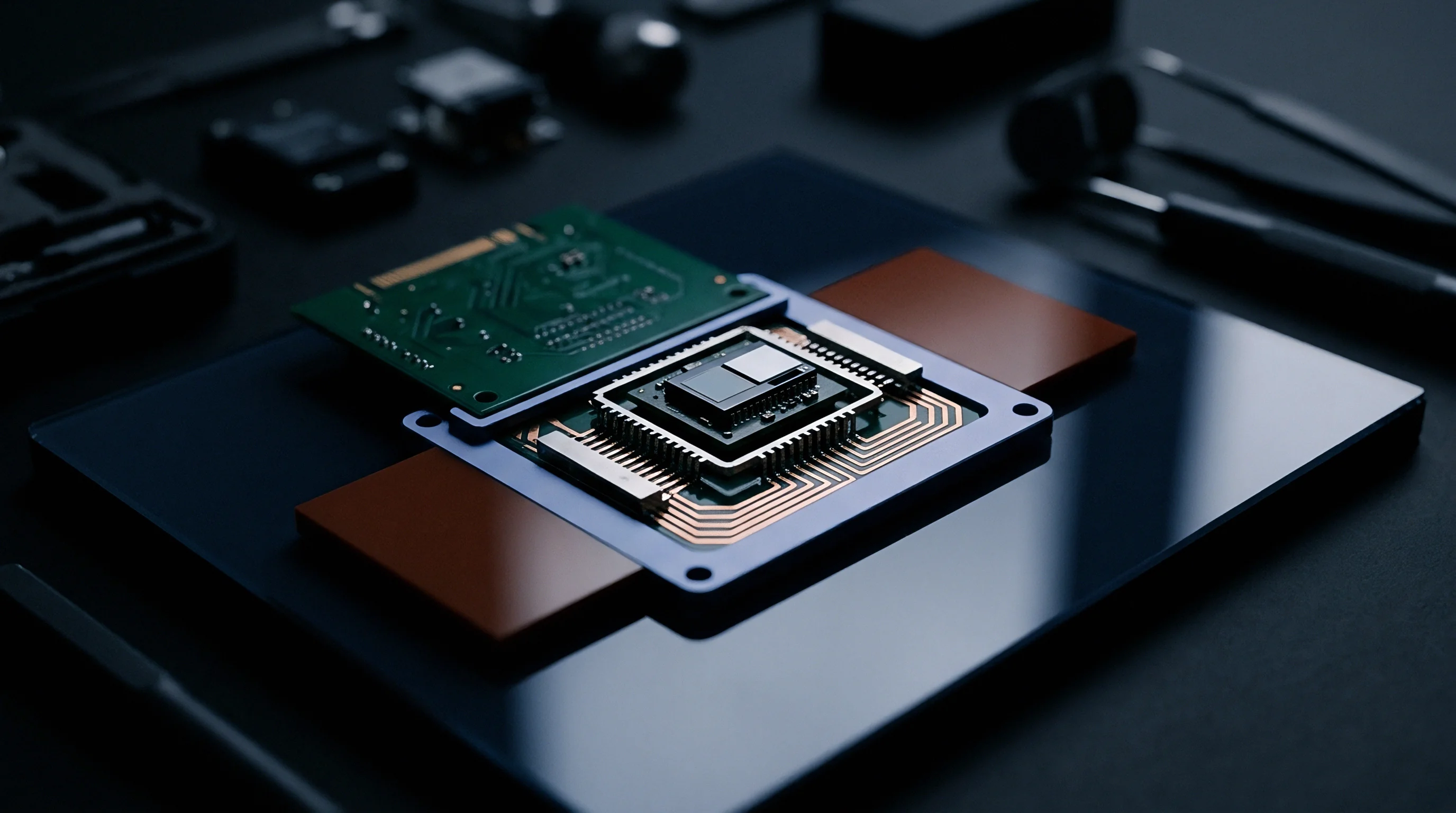
Static temperature calibration algorithms assume that the temperature measured by an integrated diode or RTD accurately reflects the temperature of all four piezoresistive elements. System designers rarely budget gradients. In real industrial environments featuring fast thermal transients, this assumption breaks down completely.
Standard third-order polynomial compensation models fail when the rate of temperature change dT/dt exceeds 0.5 degrees Celsius per second, because thermal diffusion introduces phase lags between the compensation thermometer and the piezoresistors.
Static thermal calibration tables fail completely when boundary diffusion gradients introduce spatial phase lags across active bridge arms.
Consider an implementation testing two distinct compensation regimes across a harsh industrial transducer operating over a temperature excursion from minus 20 degrees Celsius to 85 degrees Celsius with a ramp rate of 2.0 degrees Celsius per minute. Testing evaluates the residual span and offset errors when subjected to uniform heating versus directional radiative heating focused on one side of the package body.
| Calibration Strategy | Thermal Input Mode | Max Offset Error (% FS) | Sensitivity Drift (% FS) | Settling Lag (s) |
|---|---|---|---|---|
| Single On-Chip Diode Polynomial | Uniform Soak | 0.08 | 0.12 | 1.2 |
| Single On-Chip Diode Polynomial | Directional 5 W/cm2 | 1.85 | 2.40 | 45.0 |
| Dual-Sensor Differential Matrix | Uniform Soak | 0.04 | 0.06 | 0.8 |
| Dual-Sensor Differential Matrix | Directional 5 W/cm2 | 0.22 | 0.31 | 3.5 |
| Dynamic Kalman State Observer | Directional 5 W/cm2 | 0.09 | 0.14 | 1.1 |
Dynamic compensation architectures deploy multi-point thermal sensing across the die perimeter to reconstruct the internal diffusion field. By sampling temperature at two opposing die edges and feeding these values into a real-time thermal diffusion estimator running on the signal-conditioning ASIC, firmware computes the instantaneous stress vector induced by the substrate gradient. This algorithmic correction restores performance during thermal shock events, maintaining precision without requiring bulky external thermal dampeners.
Component vendors routinely claim that their internal factory calibration compensates for all thermal effects across the specified operating temperature range, omitting the caveat that their automated test handlers only verify parts under static isothermal immersion conditions.
Layout
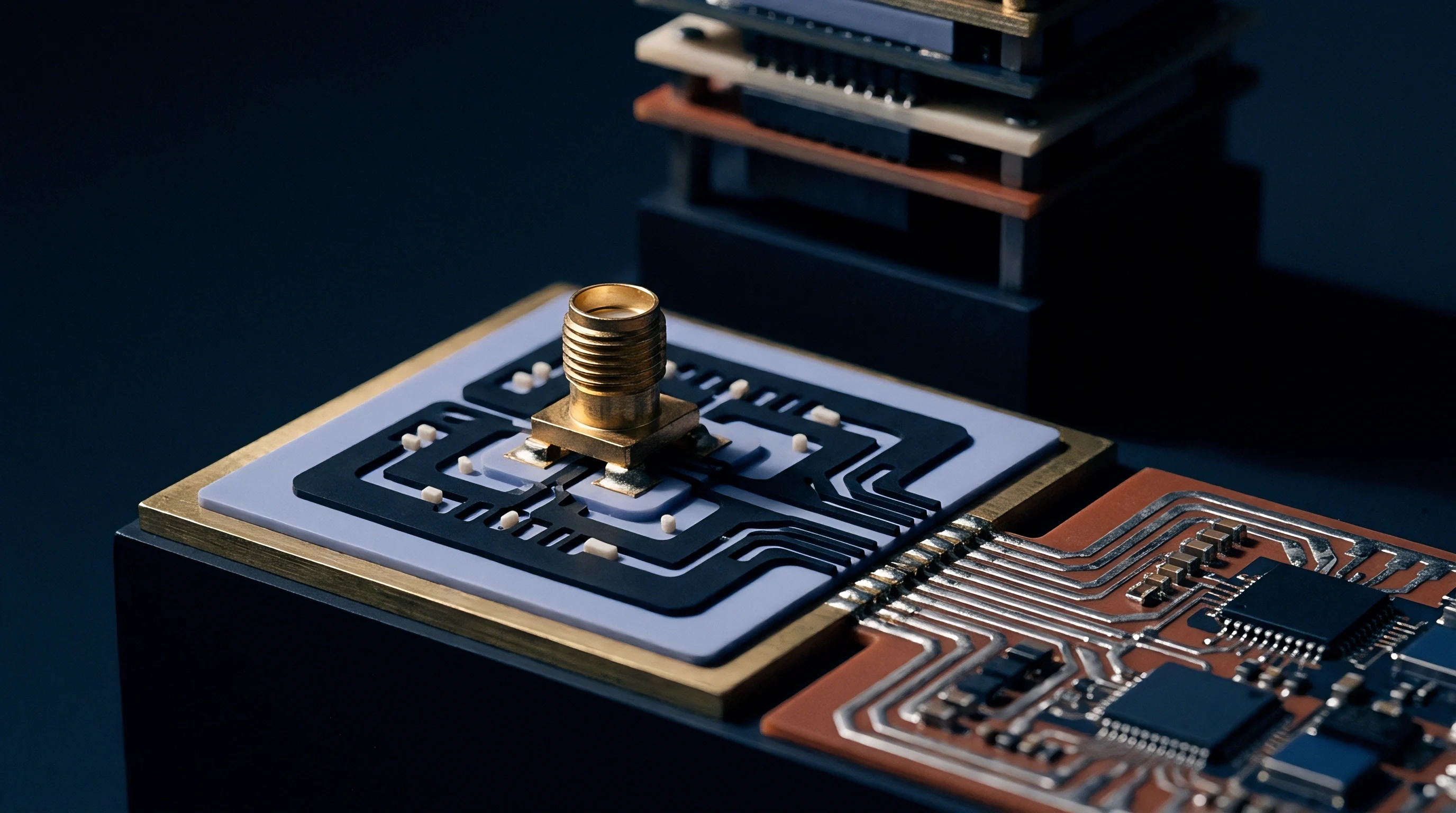
Mitigating substrate thermal diffusion shifts demands strict attention to silicon floorplanning and package thermomechanical design. Solder reflow leaves permanent prestress. Piezoresistors arranged in standard open-loop layouts suffer high susceptibility to lateral temperature slopes.
Centrosymmetric, cross-quad layout topologies cancel first-order spatial gradients by splitting each bridge resistor into two equal series or parallel segments placed symmetrically across the geometric center of the diaphragm.
Thermomechanical packaging symmetry preserves sensor accuracy far more effectively than software filtering algorithms.
Sourcing engineers specifying piezoresistive pressure transmitters for automotive or aerospace installations must account for the mechanical isolation scheme used within the sensor cell. Fluid-filled headers containing silicone oil introduce convective heat transfer loops inside the capsule, generating localized thermal hot spots on the die face when external warm media contacts the isolating stainless steel diaphragm. Direct-media silicon devices using backside etching isolate the electrical resistors from the process fluid, reducing direct convective thermal shock to the active top-side circuitry.
- Substrate Material Selection dictates the propagation speed of thermal disturbance fields, where high-conductivity materials equalize gradients rapidly while insulating carriers trap localized thermal peaks.
- Symmetrical Die-Attach Geometry prevents uneven mechanical constraint during thermal expansion, ensuring that stress fields propagate uniformly without introducing spurious shear components into the sensing tensor.
- Thermal Decoupling Trenches etched via deep reactive ion etching around the active sensing diaphragm interrupt lateral heat conduction paths, attenuating the amplitude of externally driven substrate diffusion fields by up to twelve decibels.
Under formal procurement specifications, invoking the environmental test procedures defined in IEC 60068-2-14 Clause 8 for rapid change of temperature with ten-second transfer times enforces strict verification of the sensor’s transient diffusion response before batch release.