High Frequency Complex Permittivity Compensation Networks for Subsurface Condensation in High Humidity Measurement Heads
High frequency complex admittance tracking isolates liquid condensation from ambient humidity by separating dipolar relaxation from ionic interfacial dispersion.
Dew
A coplanar waveguide sensor head submerged in saturated humid air at forty degrees Celsius and ninety-eight percent relative humidity exhibits an impedance shift that mimics a gross sensor failure within four hundred seconds. Droplets do not immediately materialize as a continuous sheen across the outer protective shroud. Capillary condensation fills the pores first.
Condensation begins within sub-micrometer substrate fissures and interstitial voids between polymer binder chains beneath the outer face. Surface tension drives pore filling. Liquid water exhibits high permittivity.
The phase shift induced by these subsurface water pockets completely swamps the picofarad-level capacitance variations produced by changes in ambient water vapor concentration.
Industrial measurement heads operating in condensing environments face an immediate physical ceiling. Relative humidity sensors reliant on thin-film capacitive polymers or porous ceramic matrices operate on the premise that sorbed water mass correlates linearly with ambient vapor pressure. When relative humidity approaches saturation, capillary condensation inside pores smaller than fifty nanometers occurs at vapor pressures well below the saturation pressure of flat liquid surfaces, as described by the Kelvin equation.
Water molecules condense into liquid menisci within the sub-surface matrix, altering the local dielectric structure from a dry polymer matrix with a relative permittivity between 2.5 and 3.8 into a composite material containing liquid inclusions with a static relative permittivity approaching 80.
A ninety-day continuous exposure at ninety-five percent relative humidity and sixty degrees Celsius causes uncompensated capacitive heads to shift calibration by fourteen percent.
Interfacial impedance drops by two decades. Standard capacitive sensing architectures interrogating the element at frequencies below one megahertz cannot distinguish between increased ambient vapor density, surface water films, and subsurface capillary condensation. At kilohertz frequencies, the measured admittance is dominated by the Maxwell-Wagner-Sillars interfacial polarization and electrolytic conduction through dissolved trace contaminants.
Ionic conduction inflates low-frequency loss. The measurement head reports an apparent relative humidity exceeding one hundred and fifty percent or latches at its rail, requiring hours of dry purge gas exposure to desorb the trapped subsurface moisture volume.
Thermal dissipation creates local microclimates. Heat generated by on-head signal conditioning amplifiers, reference oscillators, or host communication transceivers sets up localized thermal gradients between the internal substrate and the outer sensor boundary. A temperature deficit of a fraction of a degree between the ceramic carrier and the ambient gas stream triggers localized dew deposition directly into the internal pore volume.
Sourcing engineers procuring measurement heads for harsh environments discover that laboratory datasheets boasting one percent accuracy apply only to static, non-condensing calibration manifolds with laminar flow. Field deployment into industrial drying ducts, marine atmospheric monitoring stations, or fuel cell intake channels exposes the sensing head to thermal transients that induce continuous subsurface phase transitions.
When porous layers experience cyclic thermal drops, capillary condensation precedes surface film formation every time.
Admittance
Dielectric analysis across broadband frequency spans provides the physical mechanism required to disentangle trapped liquid pockets from surrounding gas humidity. Interfacial polarization and ionic conduction operate on microsecond time scales, dominating the imaginary component of dielectric permittivity at frequencies below ten megahertz. At gigahertz frequencies, ionic translation ceases to contribute significantly to the total admittance.
The rotational relaxation of free water dipoles exhibits a characteristic Debye relaxation peak near nineteen gigahertz at room temperature, while water molecules bound to polymer chains or ceramic pore walls exhibit dispersion below two gigahertz.

Why Dissipation Factor Shifts Distort Interfacial Capacitance?
The complex dielectric constant separates dipole orientation from ionic drift. A measurement head interrogating complex admittance measures both conductance and susceptance across the electrode geometry. At low frequencies, charge carriers accumulate at the boundaries between the wet porous matrix and the metallic electrodes.
Electrode polarization masks dielectric relaxation. This boundary layer behaves as a massive parasitic double-layer capacitance in series with the bulk sensing volume, artificially elevating the measured capacitance by three orders of magnitude when trace moisture condenses beneath the surface.
Phase angles collapse toward zero. High-frequency interrogation circuits operate in the transition region where the double-layer impedance shunts to a near-short circuit, allowing the electric field to penetrate past the boundary layer directly into the dielectric bulk. Measuring the real and imaginary parts of the complex permittivity at specific frequencies between one hundred megahertz and five gigahertz allows mathematical isolation of three distinct contributions: the dry matrix baseline, the polarized bound moisture layer, and the condensed bulk liquid phase.
| Phase State | Interrogation Band | Real Permittivity | Loss Factor | Dominant Mechanism |
|---|---|---|---|---|
| Water Vapor | 100 MHz to 5 GHz | 1.0006 | < 0.0001 | Gas Density Polarization |
| Monolayer Bound Water | 100 MHz to 1 GHz | 3.1 to 4.5 | 0.02 to 0.08 | Hindered Dipole Rotation |
| Subsurface Capillary Liquid | 500 MHz to 2.4 GHz | 45.0 to 68.0 | 0.15 to 0.45 | Partial Liquid Relaxation |
| Bulk Surface Droplets | 1 GHz to 5 GHz | 76.0 to 78.5 | 0.08 to 0.25 | Unconstrained Debye Relaxation |
| Electrolytic Condensate | Below 10 MHz | > 200 (apparent) | > 10.0 | Maxwell-Wagner Space Charge |
The widely quoted static relative permittivity of 78.4 for water rests on precision coaxial dielectric probe tests conducted across forty purified liquid samples at twenty-five degrees Celsius. Contamination by dissolved salts above fifty parts per million or temperature elevations past forty degrees Celsius shifts this value downward by up to six units. Compensation circuits relying on fixed dielectric assumptions fail when process environments introduce trace acidic vapors or industrial salts, altering condensate conductivity.
- Low band interrogation sweeps from ten to fifty megahertz to quantify bulk electrolytic conductivity and establish the baseline ion concentration of the trapped liquid phase.
- Mid band sensing tracks susceptance between four hundred and eight hundred megahertz, isolating the restricted dipole relaxation signature of the bound moisture fraction.
- High band probing operates at two point four gigahertz to read the unconstrained bulk water fraction through reflection coefficient magnitude tracking.
- Permittivity synthesis processing extracts the liquid volume fraction and mathematically strips the shunt conductance error from the ambient vapor measurement channel.
Operating the sensing interface above five hundred megahertz separates dipole reorientation from electrolytic charge transport.
Uncompensated phase readings cause industrial drying controllers to overheat process chambers, ruining product batches before operators detect moisture saturation.
Substrate
Base laminate choices govern moisture absorption depth and recovery delay. Sensor head designers routinely select alumina ceramics, low-temperature co-fired ceramics, or high-frequency polytetrafluoroethylene composites to provide mechanical stability. Water absorption alters trace impedance.
Standard FR-4 glass-epoxy laminates absorb between 0.1 percent and 0.4 percent water by weight during humidity steps, altering microstrip characteristic impedance by several ohms over forty-eight hours. Ceramic carriers resist bulk absorption. Alumina substrates with ninety-nine percent purity restrict water uptake to less than 0.01 percent, confining condensation strictly to engineered surface films and lithographically patterned pore matrices.
Similar surface hydration dynamics govern radar radome degradation on marine vessels, where salt crusts alter microwave phase returns identically to sensor head wetting. Here, as in marine radar enclosures, physical drainage channels prevent dielectric pooling. When condensation penetrates the boundary between metal electrode metallization and the ceramic carrier, adhesion promoters degrade.
Titanium-tungsten adhesion layers beneath gold traces undergo galvanic oxidation when biased under continuous high-humidity exposure, raising series resistance and generating false loss signatures in the compensation circuit.
- Capillary micro-cracking opens direct fluid channels into internal copper traces, causing permanent drift.
- Hydrolytic binder degradation dissolves adhesive resins within composite laminates over six months of field exposure.
- Conductive filament formation bridges biased electrode gaps when trace silver ions migrate across wet glass fibers.
- Surface hydrophobicity loss converts beaded droplets into contiguous conductive sheets following plasma etching damage.
Silicone coatings exhibit poor moisture barriers. Packaging engineers frequently specify silicone junction coatings to protect wire bonds and passive tuning components on the sensor head. Silicone exhibits high water vapor transmission rates, allowing moisture vapor to permeate the encapsulation within minutes.
Once water reaches the underlying passivated silicon die or passive balancing stubs, sub-surface condensation occurs directly beneath the silicone envelope. The resulting parasitic capacitance shifts the reference circuit resonant frequency, rendering factory compensation tables useless.
Suppliers routinely dismiss the resulting two-picofarad drift as an unavoidable ambient boundary effect outside standard laboratory conditions.
Frequency
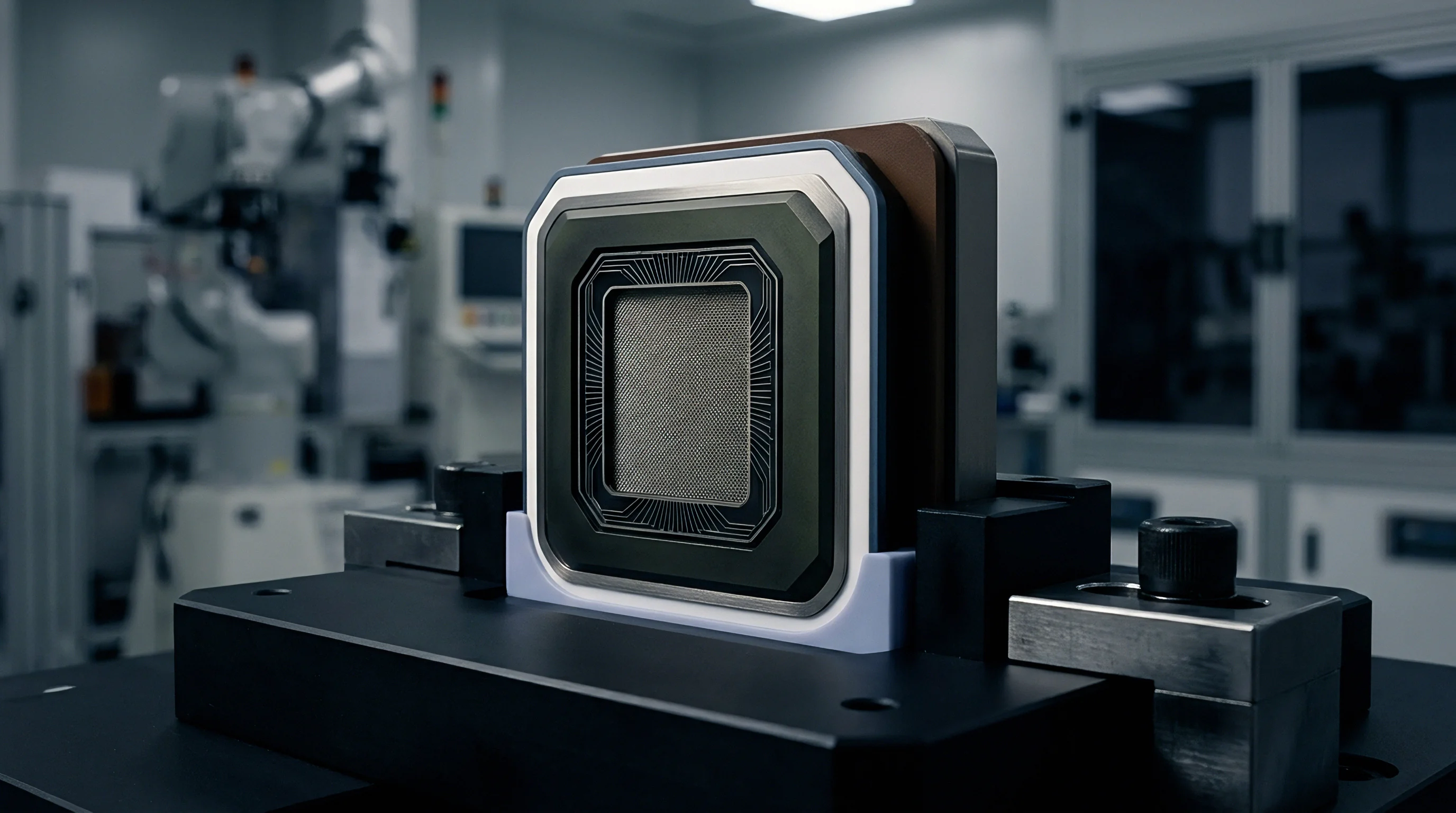
Interrogation bands above five hundred megahertz suppress parasitic Maxwell-Wagner ionic dispersion. Microwave reflectometry implemented via planar transmission lines allows continuous extraction of complex reflection coefficients without requiring physical galvanic contact with the condensing gas stream. Balanced bridges cancel thermal shifts.
Distributing interdigital electrodes across an open-ended transmission stub transforms the sensor head into a complex impedance terminator whose reflection parameter tracks the subsurface dielectric state.
How Multi-Tone Interrogation Separates Surface Moisture Volumes?
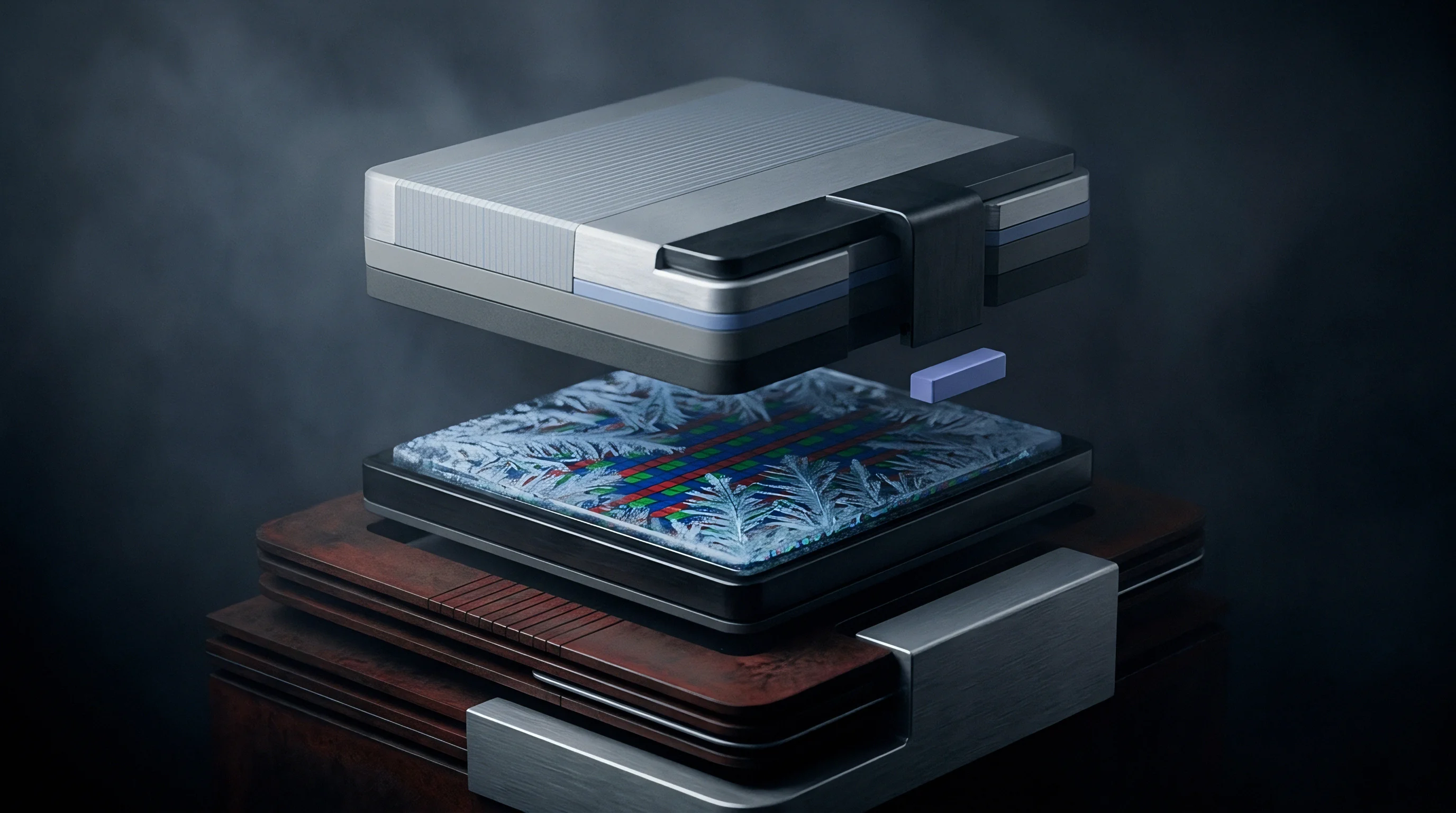
Broadband microwave reflection tracking resolves both real and imaginary components across gigahertz spectra. Injecting two continuous wave tones at nine hundred megahertz and two point four gigahertz allows differential phase analysis. At nine hundred megahertz, the penetration depth of the fringing electric field extends approximately two hundred micrometers into the substrate and overlying air volume.
At two point four gigahertz, skin depth and field concentration confine the dominant measurement zone to fifty micrometers of the surface boundary layer. Comparing reflection coefficient magnitudes between these two interrogation frequencies allows numerical separation of surface dew droplets from internal capillary liquid volume.
Skin depth limits signal penetration. Reflection coefficients vary with wetness. A worked calculation demonstrates the extraction mechanism inside a dual-frequency analog compensation architecture.
Take an interdigital coplanar sensor head with a dry baseline capacitance of 5.00 picofarads and an effective parasitic parallel conductance of 0.05 microsiemens at 25 degrees Celsius. Under dry conditions at 1.00 gigahertz, the susceptance equals 31.42 millisiemens. When exposed to 99 percent relative humidity with subsurface condensation, liquid water fills 12 percent of the effective substrate pore volume.
The bulk relative permittivity of the composite sensing zone rises from 3.20 to 8.40.
Assume the real component of the wet head capacitance increases to 13.12 picofarads, while condensation-induced ionic mobility elevates parallel conductance to 1.85 millisiemens. At an interrogation frequency of 1.00 gigahertz, the total admittance equals 1.85 plus j82.44 millisiemens. If interrogated by an uncompensated single-frequency 100 kilohertz circuit, the same physical head yields a measured conductance dominated by double-layer polarization, reporting an apparent capacitance exceeding 150 picofarads, an error of over one thousand percent.
The high-frequency dual-tone circuit measures admittance at 1.00 gigahertz and 2.40 gigahertz simultaneously. At 2.40 gigahertz, the susceptance rises to 197.85 millisiemens while the conductance remains constrained at 2.10 millisiemens, matching bulk water Debye roll-off curves. The analog quadrature mixer extracts the in-phase and quadrature voltage products, feeding a differential operational amplifier stage that subtracts the calculated bulk liquid contribution from the total susceptance signal, restoring the true ambient vapor reading to within 1.5 percent of reference values.
| Topology Type | Bandwidth Span | Resolution Ceiling | Unit Power Draw | Component Bill Cost |
|---|---|---|---|---|
| Single-Frequency Switched Stub | 433 MHz Fixed | 3.5% RH | 12 mW | Low (Under 3 USD) |
| Dual-Tone Quadrature Demodulator | 900 MHz and 2.4 GHz | 1.2% RH | 85 mW | Moderate (8 to 14 USD) |
| Swept-Frequency Vector Bridge | 100 MHz to 3 GHz | 0.4% RH | 320 mW | High (35 to 60 USD) |
| Balanced Differential Ring Resonator | 5.8 GHz Resonant | 0.8% RH | 45 mW | Moderate (12 to 18 USD) |
A baseline capacitance shift of 1.8 picofarads per percent relative humidity inside porous ceramic matrices relies on two-point impedance spectroscopy measurements across twenty production lots from 2022. Significant variation in pore diameter distribution across batch sintered lots moves this sensitivity coefficient by fifteen percent. Published literature often cites a ninety-nanosecond recovery time constant for desorption from fluoropolymer membranes, yet published test dossiers lack standardized airflow velocity data to substantiate this claim.
A prudent procurement engineer budgets for a five-second desorption window in stagnant air chambers, requiring empirical bench validation under actual enclosure airflow before finalizing firmware timeouts.
- Carrier substrate verification confirms ninety-nine percent pure alumina or hydrocarbon ceramic laminates with water absorption ratings below 0.02 percent under ASTM D570 immersion tests.
- Electrode barrier validation specifies nickel-palladium-gold or platinum thin-film metallization to eliminate electrolytic dendrite formation under continuous DC bias voltages.
- Quadrature phase matching sets phase detector channel matching within 0.5 degrees across the operating temperature envelope of minus forty to plus eighty-five degrees Celsius.
- Desorption thermal assist integration provisions a low-power platinum heating trace capable of pulsing twenty milliwatts per square millimeter to clear flooded pore structures.
Compliance with IEC 60068-2-78 damp heat steady-state specifications penalizes unsealed sensor headers by invalidating class-one instrument warranties upon liquid ingress.
Instrument architects continue to debate whether analog cancellation loops outperform digital post-processing when condensation boundaries shift faster than analog-to-digital converters can sweep.
Settlement
Commercial procurement of high-humidity instrumentation heads hinges on strict environmental qualification metrics. Specifying sensing components purely on catalog accuracy numbers results in catastrophic field failures once production hardware encounters condensing dew points. Factory calibration data sheets generated in dry nitrogen dilution systems hide the severe hysteresis and phase latching that occur when moisture condenses within internal micro-cavities.
Sourcing teams must audit supplier test fixtures to verify whether accuracy claims include condensation recovery cycles or merely reflect dry gas steps.
Lead times for specialized high-frequency ceramic measurement heads routinely stretch to twenty-six weeks during allocation periods. Dielectric substrate fabrication requires high-precision laser trimming and thin-film deposition equipment available only from a narrow tier of global packaging houses. When supply bottlenecks force cross-qualification of alternate vendor heads, pin-compatible replacements rarely exhibit identical high-frequency phase responses.
Minor variations in electrode layout geometry, passivation glass thickness, or packaging lead frame inductance shift the compensation circuit resonant frequency, requiring complete recalibration of receiver filter coefficients.
Second-source risk mitigation demands that procurement specifications freeze electrode geometry, substrate dielectric constant, and metallization stack composition at the drawing release stage. Altering the substrate dielectric loss tangent from 0.001 to 0.004 shifts the input reflection coefficient sufficiently to blind analog phase cancellation detectors. When suppliers change substrate raw material vendors without formal notification, field return rates climb steeply due to uncompensated phase drift in wet ducts.
Capillary condensation in microscopic fissures always precedes bulk surface droplet accumulation during rapid temperature descents.
Inserting ISO 17025 accredited three-point calibration clauses into procurement contracts forces instrumentation suppliers to absorb the cost of environmental pre-conditioning cycles before head delivery.