Quantifying Moisture Diffusion in Silicone Pressure Sensor Gels
Silicone gel moisture diffusion follows Fickian kinetics where absorbed water exerts bulk swelling stress, causing predictable piezoresistive zero-point drift.


Permeation
Mass transfer across soft siloxane barriers follows physical laws of vapor transport. Silicone pressure sensor encapsulants protect delicate micro-electro-mechanical silicon dies from harsh media, yet their organic structure remains permeable to atmospheric moisture. Water molecules in gaseous form infiltrate the open polymer structure, dissolving into the gel bulk and moving toward the sensitive silicon diaphragm.
Moisture flux follows concentration gradients.

Fickian Transport Dynamics in Siloxane Networks
Vapor molecules move through the polymer matrix driven strictly by chemical potential gradients. In non-polar elastomeric materials such as polydimethylsiloxane, moisture transport obeys classic Fickian diffusion equations. Fick’s first law governs steady-state mass flux through the gel thickness:
J = -D (dC / dx)
The variable J defines mass flux per unit area, D represents the diffusion coefficient in square centimeters per second, and dC/dx describes the concentration gradient across gel depth x. Water vapor moves rapidly. Under transient conditions before mass saturation occurs, Fick’s second law predicts localized concentration changes over elapsed exposure time:
dC / dt = D (d²C / dx²)
Diffusion kinetics depend heavily on ambient operating temperature. Thermal agitation increases macro-molecular chain mobility, expanding transient gaps between polymer segments. Temperature dependency fits an Arrhenius relationship:
D(T) = D₀ exp(-Eₐ / (R T))
The pre-exponential factor D₀ defines baseline molecular velocity, Eₐ represents activation energy for moisture transport, R equals the universal gas constant, and T measures absolute temperature in Kelvin. For standard two-part addition-cure dimethyl silicone gels, activation energy Eₐ typically ranges between 25 and 35 kilojoules per mole. Rising thermal energy accelerates vapor infiltration exponentially.

Solubility and Diffusion Parameters
Concentration levels inside the elastomer scale linearly with external partial pressure according to Henry’s law. Permeation coefficient P defines overall moisture transmission rate as the direct mathematical product of diffusion coefficient D and solubility coefficient S:
P = D S
Solubility coefficient S specifies equilibrium water vapor mass absorbed per unit volume of gel per unit of vapor pressure. Hydrophobic siloxanes exhibit low absolute water solubility compared to hydrophilic polymers, yet their loose cross-linked network creates elevated diffusion coefficients. Water vapor permeation rates remain high despite low mass absorption values.
Water vapor permeability in standard polydimethylsiloxane gel reaches 4.2 × 10^-8 cm²/(s·Pa) at 85 °C and 85 percent relative humidity.
Evaluating candidate encapsulants requires comparing diffusion and solubility parameters across candidate chemistries. Substitution of methyl side groups with fluorinated or phenyl complexes modifies network free volume and polar interaction energy.
| Gel Chemistry Class | Test Temp (°C) | Diffusion Coeff D (cm²/s) | Solubility Coeff S (g/cm³·Pa) | Permeability P (g/cm·s·Pa) |
|---|---|---|---|---|
| Standard PDMS Gel | 23 | 1.2 × 10⁻⁵ | 1.8 × 10⁻⁷ | 2.16 × 10⁻¹² |
| Standard PDMS Gel | 85 | 8.5 × 10⁻⁵ | 4.9 × 10⁻⁷ | 4.17 × 10⁻¹¹ |
| Fluorosilicone Gel | 23 | 4.1 × 10⁻⁶ | 1.1 × 10⁻⁷ | 4.51 × 10⁻¹³ |
| Fluorosilicone Gel | 85 | 3.2 × 10⁻⁵ | 3.3 × 10⁻⁷ | 1.06 × 10⁻¹¹ |
| High-Phenyl Silicone Gel | 23 | 2.8 × 10⁻⁶ | 1.4 × 10⁻⁷ | 3.92 × 10⁻¹³ |
| High-Phenyl Silicone Gel | 85 | 2.1 × 10⁻⁵ | 3.8 × 10⁻⁷ | 7.98 × 10⁻¹¹ |
Fluorosilicone gels demonstrate lower diffusion values relative to standard dimethyl formulations due to polar steric hindrance introduced by trifluoropropyl side groups. Phenyl-substituted networks restrict polymer chain rotation, lowering vapor velocity across low thermal operating regimes. Gel chemistry Selection dictates long-term moisture barrier efficacy.
Silicone gel vendors state that hydrophobic siloxane backbones repel liquid water, omitting the rapid transport of water vapor through the polymer mesh.


Pore
Internal spatial gaps between cross-linked polymer chains determine the volume available for vapor accumulation. Gel formulations balance low elastic modulus against structural stability. Low cross-link density creates an open siloxane lattice containing microscopic voids where water molecules collect.
Physical structural spaces permit molecular migration.
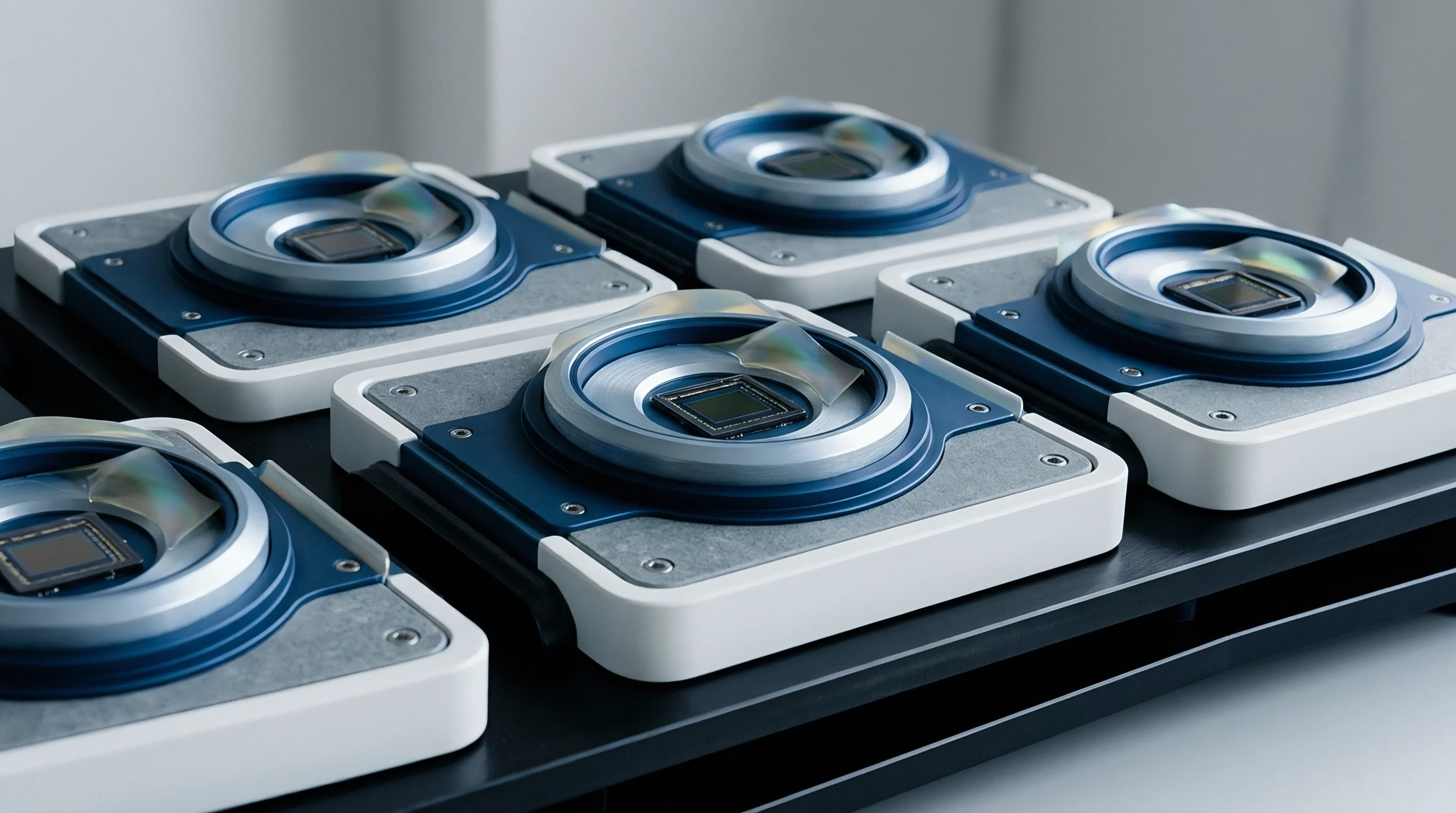
Polymer Matrix Stoichiometry and Free Volume
Cross-linking density directly governs the elastic resistance to localized swelling. Platinum-catalyzed addition-cure silicones rely on reaction between vinyl-functionalized siloxane polymers and hydride-functionalized siloxane cross-linkers. The molar ratio of silicon-hydride (Si-H) groups to silicon-vinyl (Si-Vi) groups controls network formation.
Excess vinyl groups leave unreacted polymer chains that increase matrix free volume. Excess hydride groups remain reactive, undergoing hydrolysis when exposed to absorbed water molecules.
Stoichiometric imbalances shift mechanical hardness and water absorption capacity. Low gel hardness yields low mechanical stress transmission to the sensor die under pressure, but exposes the structure to higher moisture sorption capacity. High cross-link density restricts free volume, lowering moisture equilibrium uptake while elevating gel shear modulus.
Polymer elasticity trades directly against vapor isolation performance.

Unreacted Species and Water Cluster Nucleation
Residual platinum catalysts and unreacted hydride side chains attract moisture molecules into localized pockets. Absorbed water molecules initially exist as isolated monomeric species within siloxane free volume pockets. As local moisture concentration increases, hydrogen bonding draws water molecules together to form liquid-like clusters.
Stoichiometric imbalance favoring unreacted hydride groups accelerates volumetric gel expansion under saturated vapor exposure.
Water cluster growth generates localized hydrostatic pressures within the gel matrix. Hydrolytic degradation mechanisms degrade encapsulant integrity over extended operational lifetimes under humid conditions.
- Silanol Condensation Hydroxyl group bonding releases free water within the cross-linked matrix.
- Hydrolytic Scission Moisture splits weak polymer backbone bonds under sustained thermal exposure.
- Osmotic Swelling Ionic impurities draw trapped moisture into high-pressure microscopic pockets.
- Interfacial Delamination Vapor condensation along die surfaces detaches gel from silicon passivations.
Polymer chains expand outward. When moisture cluster formation occurs near the silicon die surface, localized osmotic pressure forces encapsulant detachment. Interfacial moisture voids alter stress transmission pathways, unbalancing piezoresistive Wheatstone bridge circuits.
Lowering free volume density through higher cross-link ratios reduces moisture accumulation without altering bulk modulus.


Piezoresistance
Silicon strain gauge elements translate mechanical deformation into electrical voltage output shifts. Piezoresistive pressure sensors utilize doped silicon resistors diffused directly into a micromachined flexible diaphragm. Encapsulating gel coats the top diaphragm surface, transferring applied media pressure directly to the silicon structure.
Absorbed moisture changes physical gel dimensions, generating unwanted mechanical strain fields across active piezoresistors.
Which Environmental Conditions Accelerate Piezoresistive Offset Wandering?
Elevated temperature combined with high vapor concentration drives maximum volumetric extension within encapsulating media. Moisture ingress alters gel density, causing isotropic volumetric expansion. Gel boundary confinement inside rigid metal or ceramic sensor housings transforms isotropic expansion into directional normal and shear stresses applied across the thin silicon diaphragm.
Stress fields alter piezoresistive resistance values via the piezoresistive effect. Zero-point voltage output wanders independent of applied external pressure. Thermal cycling under humid conditions induces severe zero offset hysteresis.
Gel volumetric strain varies non-linearly with moisture adsorption and desorption cycles, unbalancing baseline calibration parameters.

Worked Strain Translation Model
Calculating mechanical stress requires linking polymer volumetric expansion to diaphragm surface strain. Assume a square silicon MEMS pressure sensor diaphragm measuring 1.5 millimeters per side with a uniform thickness of 20 micrometers. A soft silicone gel coating fills the housing cavity above the die to a depth of 500 micrometers.
The gel exhibits a dry shear modulus of 5 kilopascals, corresponding to a Young’s modulus E_gel of 15 kilopascals assuming an incompressible Poisson’s ratio ν close to 0.499. Gel volumetric moisture expansion coefficient β_v equals 3.0 × 10⁻⁴ per weight percent water absorbed.
Exposing the assembly to 85 °C and 85 percent relative humidity for 1,000 hours results in a total moisture uptake of 0.20 percent by weight at equilibrium saturation. Linear strain ε_gel resulting from unconstrained moisture swelling scales as:
ε_gel = (1 / 3) β_v (ΔC)
ε_gel = (1 / 3) (3.0 × 10⁻⁴ / wt%) (0.20 wt%) = 2.0 × 10⁻⁵ m/m
Gel confinement within rigid housing sidewalls forces vertical expansion, producing normal compressive stress σ_z applied to the diaphragm surface. Bounded mechanical modulus E_confined accounts for lateral constraint:
E_confined = E_gel (1 – ν) / ((1 + ν) (1 – 2ν))
For Poisson’s ratio ν = 0.495, E_confined evaluates to 150 E_gel, yielding 2.25 megapascals. Compressive normal stress σ_z applied directly to the diaphragm surface equals:
σ_z = E_confined ε_gel = 2.25 × 10⁶ Pa 2.0 × 10⁻⁵ = 45 Pa
Mechanical stress transfers into the thin silicon membrane, producing localized longitudinal and transverse strains across Wheatstone bridge resistors. Strain alters resistor values. Piezoresistive coefficient π₄₄ for p-type silicon strain gauges on a (100) crystal plane equals 138.1 × 10⁻¹¹ square meters per newton.
The resulting fractional bridge offset shift ΔV_out / V_in evaluates to:
ΔV_out / V_in = (1 / 2) π₄₄ σ_diaphragm = 0.5 (138.1 × 10⁻¹¹ Pa⁻¹) (450 Pa) = 3.107 × 10⁻7 V/V
For a sensor with full-scale output sensitivity of 10 millivolts per volt per bar, this moisture-induced strain generates an offset wander equivalent to 0.031 millibar. Swelling forces displace silicon. Higher gel modulus values or thicker gel fill layers scale this offset error up to several millibars, exceeding narrow tolerance bands.
Compliance with IEC 60749-26 requires baseline drift verification following continuous high-humidity bias stress.
- Diaphragm Thickness Sensitivity Thinner silicon diaphragms experience greater mechanical deflection under gel swelling pressure.
- Modulus Hardening Thermal aging elevates gel elastic modulus, amplifying mechanical stress transfer.
- Asymmetrical Gel Dispensing Non-uniform encapsulant thickness creates uneven shear forces across piezoresistor arms.
- Interfacial Moisture Trapping Water accumulation at the die surface generates localized pressure points.
Uncalculated gel expansion generates offset wander exceeding full-scale accuracy bounds, triggering invalid telemetry alerts across industrial monitoring fields.

Bench
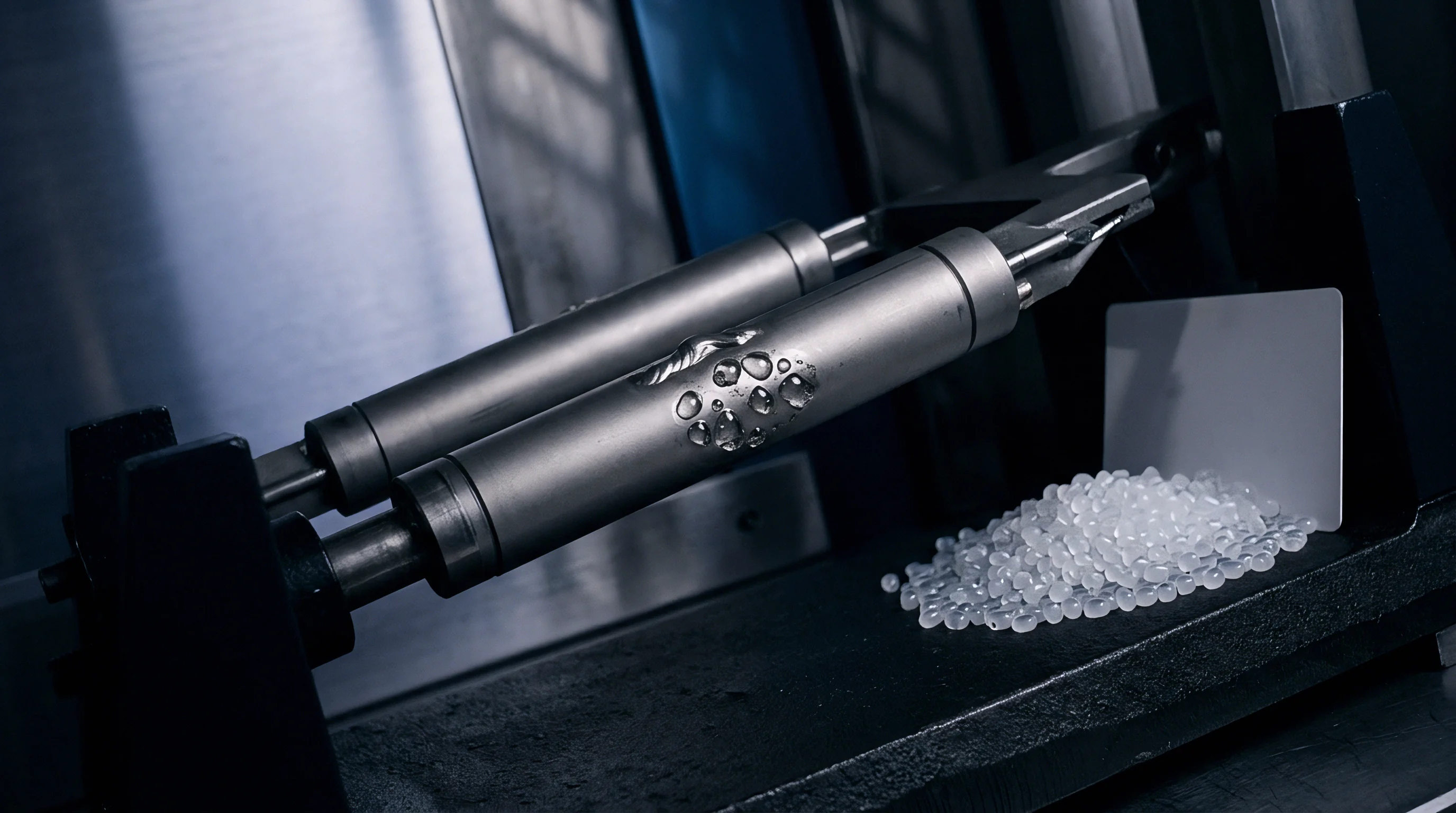
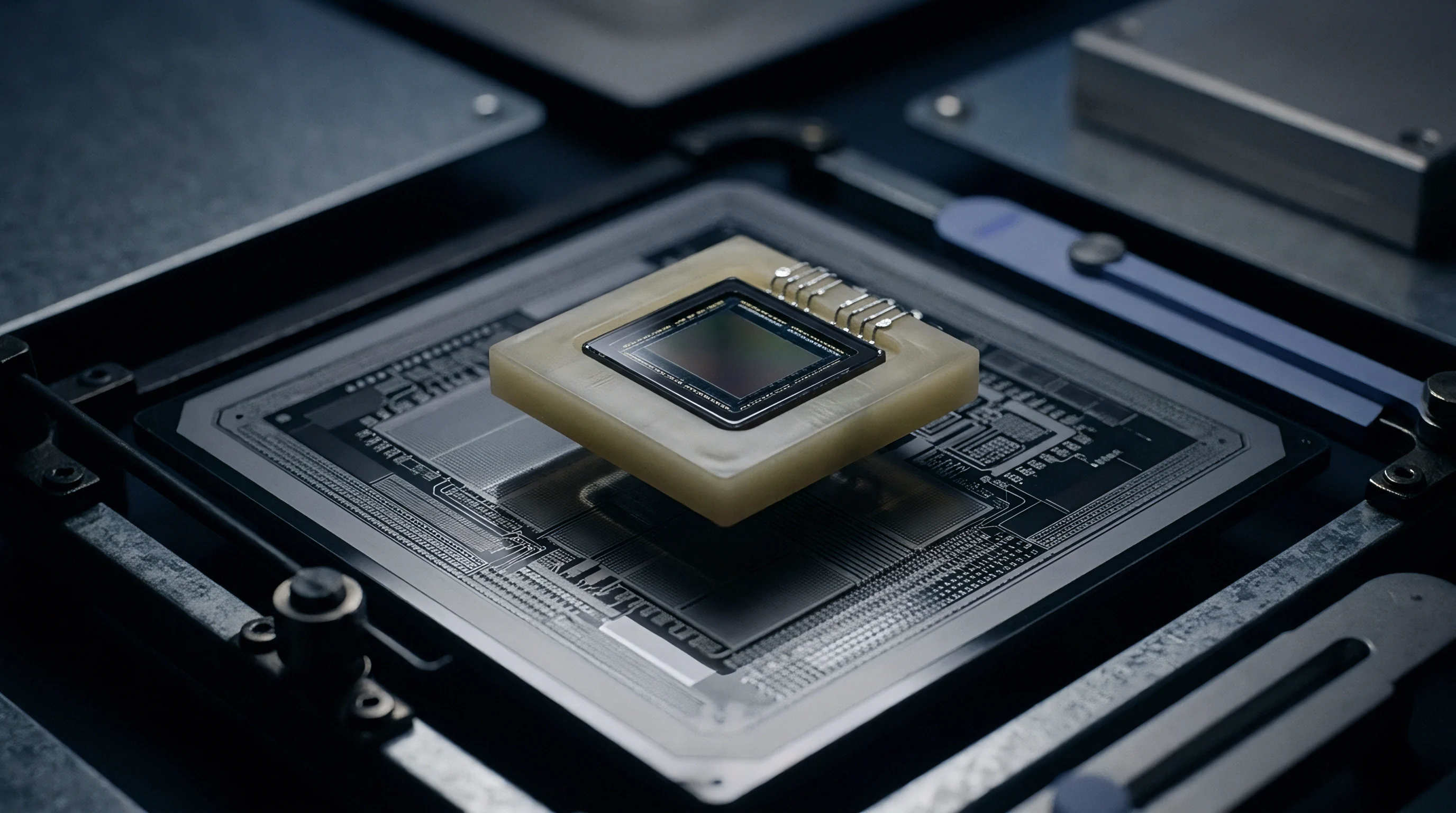
Analytical equipment isolates mass changes from external thermal fluctuations during quantitative evaluations. Accurate quantification of moisture diffusion dynamics in silicone gels requires specialized metrology instrumentation. Standard analytical techniques measure total mass sorption, chemical bond modifications, and electrical impedance changes across controlled temperature and vapor steps.
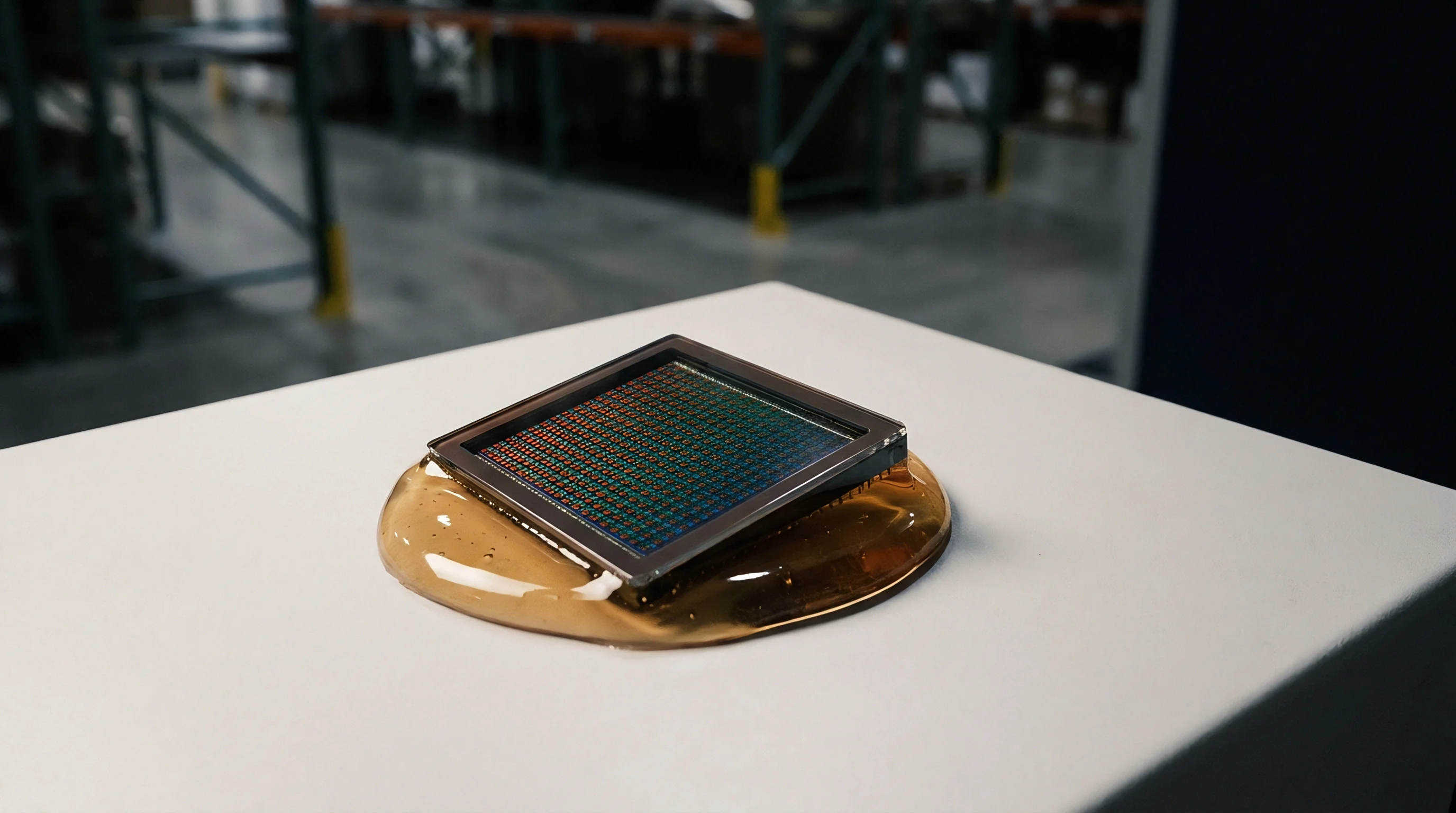
Direct Moisture Measurement Protocols
Gravimetric balances measure microgram mass increases as samples absorb vapor in controlled gas streams. Dynamic Vapor Sorption (DVS) serves as the primary benchmark technique for establishing diffusion parameters. A micro-balance suspended inside a thermally sealed chamber monitors mass variations down to 0.1 micrograms while automated mass flow controllers regulate relative humidity.
Coulometric Karl Fischer Titration determines exact total water mass within gel samples through chemical oxidation of sulfur dioxide by iodine. Heating gel samples inside a sealed oven tube drives off absorbed water into a dry carrier gas stream routed into the titration cell. Titration isolates physically adsorbed water from chemically bound hydroxyl groups.
Accelerated Environmental Qualification Protocols
Chamber exposure routines subject sensor assemblies to severe temperature and vapor pressure gradients. Standard accelerated life testing relies on steady-state damp heat conditioning defined in IEC 60068-2-78 (85 °C / 85% RH) and Highly Accelerated Stress Testing (HAST) defined in JESD22-A110 (110 °C to 130 °C under pressurized vapor).
- Prepare gel samples with uniform 1.0 mm layer thickness on passivated substrate disks.
- Condition test coupons at 105 °C under absolute vacuum for 24 hours to establish initial baseline weight.
- Expose prepared specimens to step-wise humidity increments inside a calibrated microbalance chamber.
- Record continuous mass gain until mass stability confirms thermodynamic equilibrium.
- Perform coulometric titration to quantify chemical water fraction versus physically absorbed molecules.
Test conditions alter equilibrium rates. Extrapolating diffusion coefficients from high-temperature HAST routines to field operating conditions demands verification of Arrhenius slope consistency to avoid structural phase changes.
Gravimetric mass stabilization during moisture sorption testing requires temperature control within two hundredths of a degree Celsius.
| Measurement Technique | Measured Parameter | Resolution Limit | Primary Advantage | Primary Limitation |
|---|---|---|---|---|
| Dynamic Vapor Sorption | Mass change vs RH | 0.1 µg | Continuous diffusion rate kinetics | Long test duration to equilibrium |
| Karl Fischer Titration | Absolute water mass | 1.0 µg H₂O | Specific to water molecules | Destructive destructive sample heating |
| FTIR Spectroscopy | Silanol bond density | 0.01 Abs units | Detects hydrolytic chemical degradation | Qualitative without calibration matrix |
| Impedance Spectroscopy | Dielectric constant shift | 10 fF | Non-destructive in-situ sensor monitoring | Sensitive to ionic impurity interference |
Clause 6.2 of ISO/IEC 17025 mandates that calibration laboratory environmental monitoring records declare uncertainty contributions arising from ambient relative humidity variations.


Recalibration
Field adjustment intervals depend on predictable zero drift limits established during thermal and moisture aging qualification tests. Moisture diffusion into sensor encapsulants alters initial zero offset voltage and full-scale span values over extended deployment durations. Compensation strategies balance digital sensor signal corrections against physical gel specification bounds.

Long-Term Offset Compensation and Field Recalibration Costs
Digital sensor signal processors execute mathematical correction routines based on stored environmental sensitivity tables. Dual-element transducers integrated with onboard relative humidity and temperature sensors apply dynamic offset subtraction algorithms based on calibrated gel diffusion coefficients. Polynomial compensation curves map temperature and humidity exposure histories to predict localized gel swelling stress.
Drift errors compound over time. Uncorrected offset shifts skew output calibration curves, forcing scheduled manual bench re-calibration procedures. Field re-calibration routines require pulling sensors from service, mounting them on pressure generation reference standards, and re-writing zero offset flash registers.
| Application Tier | Accuracy Class (% FS) | Gel Type Specified | Expected 5-Yr Drift (mbar) | Recalibration Interval | Service Cost per Unit ($) |
|---|---|---|---|---|---|
| HVAC Air Duct Pressure | 1.0 % FS | Standard PDMS Gel | ± 2.5 mbar | 12 Months | $ 85.00 |
| Automotive MAP Sensor | 0.5 % FS | Fluorosilicone Gel | ± 1.2 mbar | Unserviced (Life) | $ 0.00 (Warranty Risk) |
| Subsea Process Control | 0.05 % FS | High-Phenyl Gel + Vacuum Barrier | ± 0.08 mbar | 36 Months | $ 2,400.00 |

Lot Acceptance Thresholds for Encapsulant Integrity
Receiving inspection procedures screen incoming raw gel batches to eliminate inconsistent diffusion profiles. Quality assurance dossiers specify mandatory batch acceptance criteria covering viscosity, cone penetration depth, outgassing mass loss, and moisture sorption limits.
Cone penetration depth verifies cross-linking completeness. Outgassing tests per ASTM E595 isolate volatile low-molecular-weight siloxanes that accelerate moisture absorption. Establishing rigid raw material thresholds prevents field drift failures across production lots.
The question remains whether sub-nanometer inorganic barrier coatings applied directly to silicon diaphragms can completely decouple gel moisture swelling from sensor piezoresistors without degrading pressure transmittal response times.