Diffusion Limited Oxidation Effects on Polyimide Sensor Diaphragm Modulus Drift
Diffusion limited oxidation stiffens outer polyimide layers non-uniformly, shifting diaphragm flexural rigidity and causing pressure sensitivity drift over time.


Skin
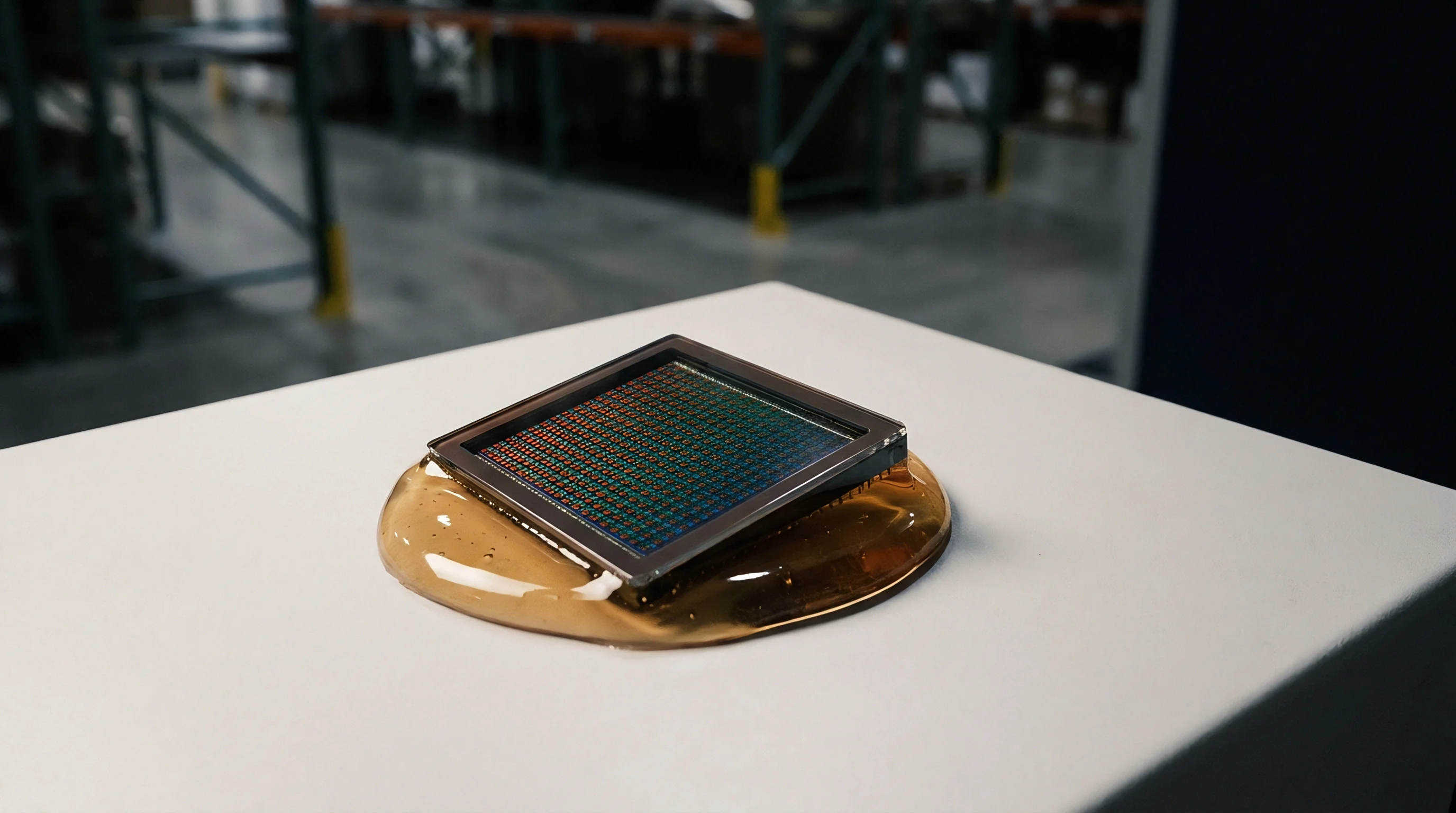
Aromatic polyimide films subjected to high operating temperatures encounter rapid chemical modification when oxygen penetrates the material surface. In thin-film sensor diaphragms, ambient oxygen reacts with the polymer backbone at temperatures ranging from 180°C to 260°C. This chemical reaction consumes dissolved oxygen within the outer micrometer layers faster than gas molecules diffuse into the core material. As a result, degradation concentrates near the gas-exposed boundary, creating a dual-region mechanical profile consisting of a stiff, degraded outer shell and a pristine core.
Thermo-Oxidative Mechanisms in Polyimide Structures
Atmospheric oxygen reacts with polymer chains at temperatures above 180°C. In pyromellitic dianhydride-oxydianiline (PMDA-ODA) polyimide, thermal oxidation initiates via radical attack on the ether bridge and imide rings. Surface oxidation generates carbonyl, hydroxyl, and carboxyl groups while breaking secondary hydrogen bonds. The balance between chain cross-linking and chain scission dictates the local elastic response.
Early-stage oxidation promotes cross-linking, which packs polymer chains densely and increases localized Young’s modulus. Prolonged thermal exposure causes chain scission, producing micro-cavities and structural embrittlement that eventually reduces material stiffness.
Diffusivity dictates oxygen penetration depth. At 200°C, the oxygen diffusion coefficient in PMDA-ODA measures approximately 1.2 × 10⁻¹² cm2/s. Reaction kinetics at this temperature consume oxygen at rates exceeding transport speed through the polymer matrix.
The dimensionless Thiele modulus governs the depth profile, establishing a steep spatial gradient of chemical conversion from the outer boundary down to the unreacted center.
At 220°C in dry air, oxygen concentration drops below five percent of surface saturation within 4.2 micrometers of depth in PMDA-ODA polyimide.
Cross-Linking versus Scission Dynamics
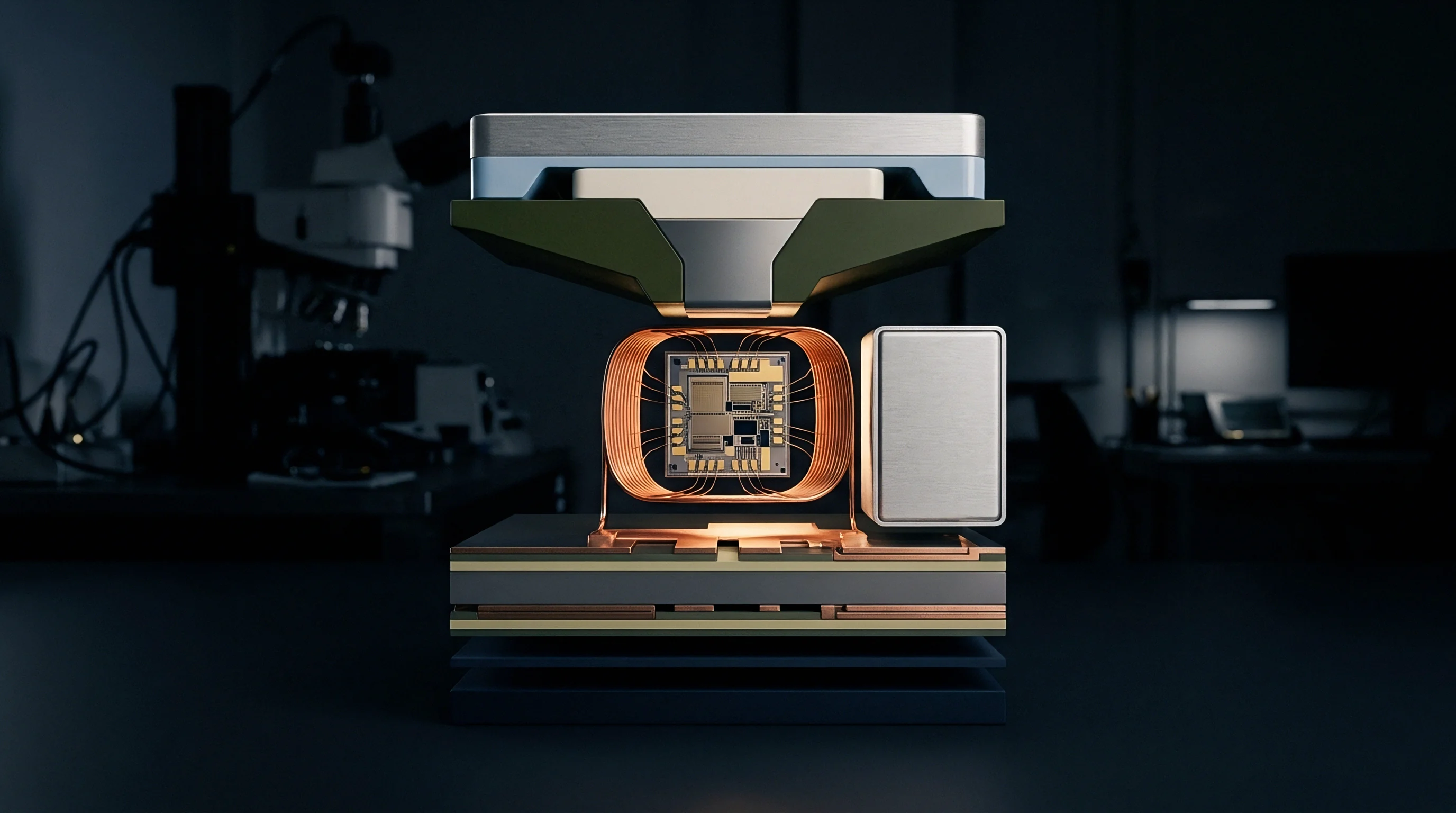
Initial reaction phases feature free radical attack on aromatic rings and imide functional groups. Biphenyltetracarboxylic dianhydride-p-phenylenediamine (BPDA-PDA) exhibits higher packing density than PMDA-ODA, reducing gas permeation rates and slowing oxidation progress. BPDA-PDA maintains a lower baseline oxygen diffusion coefficient of 4.5 × 10⁻¹³ cm2/s at 200°C, extending structural integrity under thermal stress.
Modulus drift shifts predictably as oxidation converts surface material into a cross-linked skin layer. The elastic modulus of unaged PMDA-ODA equals 3.2 GPa at room temperature. Following 500 hours of atmospheric aging at 230°C, nanoindentation measurements indicate outer skin modulus rises to 5.4 GPa, while material 10 micrometers below the surface retains its baseline 3.2 GPa value.
Oxygen diffuses slowly. Surface molecules cross-link. Mechanical properties diverge across the cross-section.
| Polyimide Type | Aging Temp (°C) | Exposure Time (h) | Skin Thickness (µm) | Surface Modulus (GPa) | Core Modulus (GPa) |
|---|---|---|---|---|---|
| PMDA-ODA | 200 | 250 | 2.1 | 4.1 | 3.2 |
| PMDA-ODA | 200 | 1000 | 3.8 | 4.9 | 3.2 |
| PMDA-ODA | 240 | 250 | 5.2 | 5.6 | 3.3 |
| BPDA-PDA | 200 | 1000 | 1.4 | 3.9 | 3.7 |
| BPDA-PDA | 240 | 250 | 2.8 | 4.8 | 3.7 |
Component manufacturers frequently claim thermal stability based on nitrogen bake trials, asserting that diaphragm mechanical properties remain unchanged after high-temperature storage. This assertion ignores atmospheric oxygen ingress during real-world service, misrepresenting true long-term drift under operational conditions.
Gradient
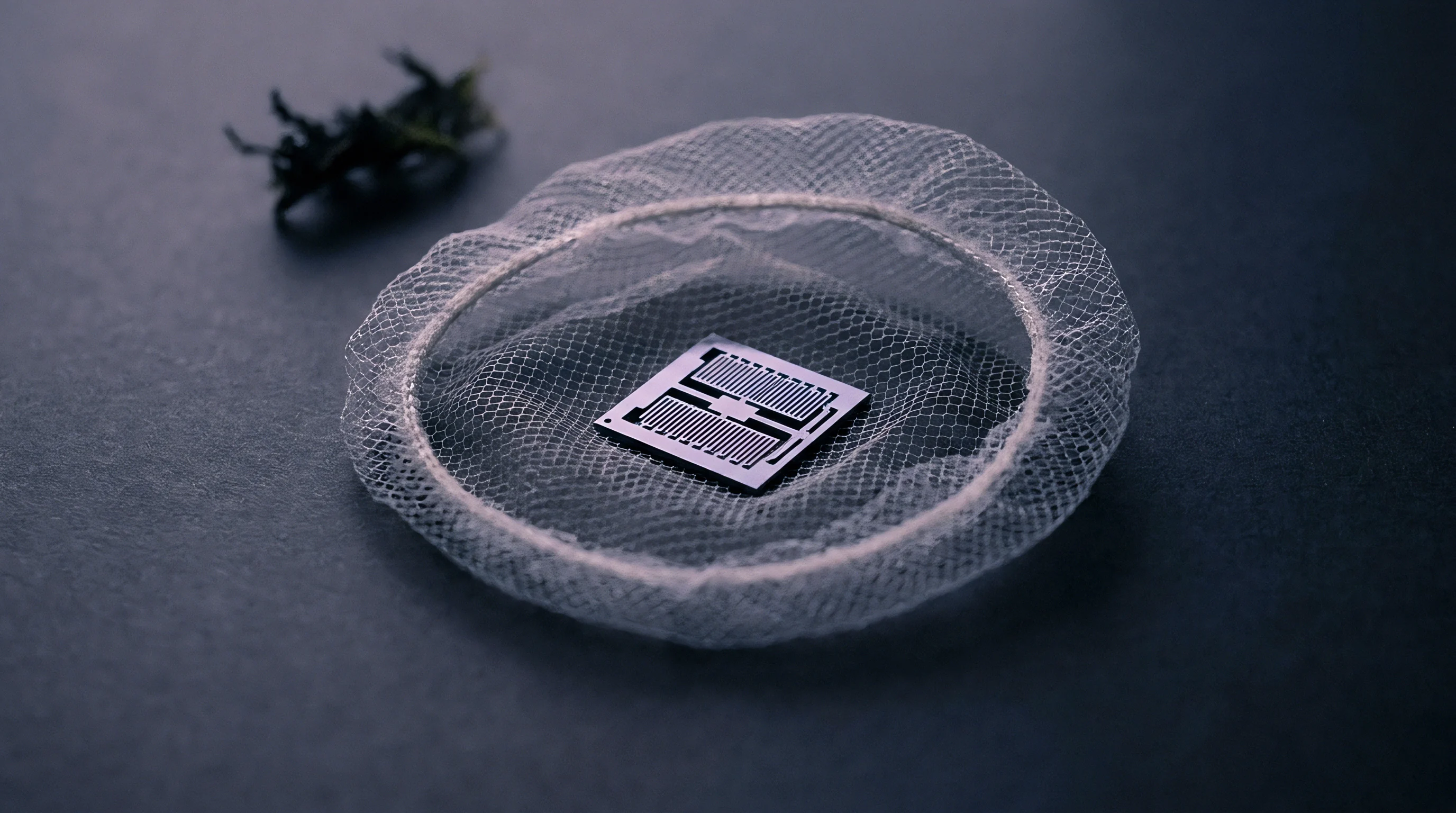
Thickness-dependent oxygen transport creates distinct mechanical zones throughout the depth of a polymer membrane. Evaluating pressure diaphragm deflection under small-deflection plate theory requires integrating the elastic modulus profile across the total film thickness. A uniform material assumption yields gross calculation errors when surface stiffness diverges from core properties under diffusion-limited oxidation.
Flexural Rigidity Re-Calculation for Non-Uniform Modulus
Standard plate deflection theory assumes constant elastic properties through the plate thickness. Elastic flexural rigidity D for an isotropic, homogeneous plate of thickness h, Poisson’s ratio ν, and Young’s modulus E relies on the standard equation:
D = (E · h3) /
Under diffusion-limited oxidation, Young’s modulus varies as a function of depth z measured from the diaphragm mid-plane. The generalized flexural rigidity equation for a symmetrical two-sided oxidized diaphragm incorporates depth-dependent modulus E(z):
D = ∫–h/2h/2 dz
Because the distance term z is squared inside the integral, modulus changes near the diaphragm outer surfaces (where z approaches ±h/2) exert a dominant impact on flexural rigidity. Small increases in skin modulus alter overall bending resistance far more than equivalent modulus shifts near the neutral axis.

Worked Calculation: Sensitivity Shift in a 25-Micrometer Diaphragm
Consider a circular capacitive pressure sensor diaphragm with radius a = 1.5 mm and baseline thickness h = 25 µm. The original material is pristine PMDA-ODA polyimide with uniform modulus E0 = 3.2 GPa and Poisson’s ratio ν = 0.34. Center deflection w0 under applied pressure P follows the plate formula:
w0 = (P · a4) / (64 · D0)
Baseline flexural rigidity D0 evaluates to:
D0 = / = 4.707 × 10⁻⁶ N·m
Assume thermal exposure at 230°C produces an oxidized skin layer of thickness ts = 3.0 µm on both top and bottom surfaces, raising skin modulus to Es = 5.0 GPa while the 19 µm core retains Ec = 3.2 GPa. Assuming constant Poisson’s ratio ν = 0.34 across all zones, the effective flexural rigidity Daged is calculated by splitting the integral across core and skin regions:
Daged = ·
Integrating yields the core contribution Icore and skin contribution Iskin:
Icore = Ec · = 3.2 × 109 · (2.857 × 10-16) = 9.145 × 10⁻⁷ N·m
Iskin = Es · = 5.0 × 109 · (3.680 × 10-16) = 1.840 × 10⁻⁶ N·m
Daged = · = 2.261 · (2.7545 × 10-6) = 6.229 × 10⁻⁶ N·m
The flexural rigidity expands from 4.707 × 10⁻⁶ N·m to 6.229 × 10⁻⁶ N·m, representing a 32.3% increase in bending stiffness. Since pressure sensitivity S scales inversely with D, diaphragm sensitivity drops by 24.4% relative to its initial calibrated value. Stiffness shifts sensitivity.
Flexural rigidity increases. Sensor output drops under identical pressure loading.
Whether dynamic mechanical analysis can resolve localized modulus gradients without destructive nanoindentation cross-sectioning remains unproven across commercial production lots.

Drift
Measurement accuracy in thin-film pressure transducers degrades as internal stress profiles evolve under continuous ambient heating. Diffusion-limited oxidation acts as a time-dependent mechanical aging process. As oxygen penetrates deeper into the polyimide matrix, the expanding cross-linked layer permanently shifts the sensor zero-point offset and span sensitivity calibration curves.

Is Pressure Sensitivity Wander Predictable over Time?
Long-term thermal aging experiments yield non-linear change curves in sensor output calibration. Pressure sensitivity wander tracks the parabolic growth of the oxidation skin during early operational phases before transitioning into a linear kinetic decay regime. Capacitive MEMS sensors suffer full-scale output drift as diaphragm compliance declines.
Piezoresistive structures experience simultaneous changes in residual film stress, shifting zero-pressure bridge balance.
Thinner diaphragms suffer disproportionate sensitivity shifts compared to thicker membranes. In a 12.5 µm polyimide diaphragm, a 3 µm oxidized skin layer on each surface consumes nearly 50% of the total membrane thickness. In a 50 µm diaphragm, an identical 3 µm skin represents only 12% of the material profile.
Consequently, miniature low-pressure sensors exhibit far higher drift rates under high-temperature oxidative environments.
Diaphragm deflection sensitivity tracks flexural stiffness inversely, so oxidation on outer surfaces alters calibration far faster than oxidation deep within the polymer core.

Thermal Excursion Memory and Hysteresis
Cooling an oxidized sensor back to room temperature freezes structural cross-links in place. The coefficient of thermal expansion (CTE) of pristine PMDA-ODA polyimide measures approximately 20 × 10-6 /K, whereas the oxidized skin layer exhibits a lower CTE of approximately 12 × 10-6 /K due to its higher cross-link density. This CTE mismatch generates high residual compressive stress in the skin during cooling cycles.
Thermal cycling induces mechanical hysteresis. Deflection-pressure response curves recorded during heating cycles fail to match cooling paths. Residual stress shifts zero output.
Heat accelerates oxidation. Depth profiles vary. Repeated thermal excursions aggravate internal micro-cracking within the embrittled surface layers, leading to sudden irrecoverable span shifts.
| Diaphragm Thickness (µm) | Sensor Type | Initial Span (mV/V or pF) | 100h FSO Drift (%) | 1000h FSO Drift (%) | 1000h Zero Offset Drift (% FSO) |
|---|---|---|---|---|---|
| 12.5 | Capacitive | 12.4 pF | -6.2% | -21.8% | +4.5% |
| 25.0 | Capacitive | 8.1 pF | -2.1% | -8.7% | +1.8% |
| 50.0 | Capacitive | 3.5 pF | -0.5% | -2.3% | +0.4% |
| 12.5 | Piezoresistive | 45.0 mV/V | -5.8% | -19.4% | +6.1% |
| 25.0 | Piezoresistive | 32.0 mV/V | -1.8% | -7.9% | +2.2% |
Ignoring diffusion-limited oxidation rates when setting service intervals causes sensor calibration errors to exceed specified limits, triggering unplanned maintenance downtime and invalidating process control warranties.

Barrier
Thin inorganic coatings deposited on polymer diaphragms slow ambient oxygen penetration into the bulk substrate. Surface passivation restricts gas diffusion, preserving the baseline elastic modulus of the polyimide matrix. Selecting appropriate passivation materials requires balancing gas impermeability against added structural stiffness.
Atomic Layer Deposition Passivation Performance
Vapor-phase growth of aluminum oxide creates dense amorphous films with low gas permeability. Atomic Layer Deposition (ALD) produces conformal thin films free of pinholes at thicknesses below 50 nanometers. An ALD coating of 20 nm Al2O3 reduces oxygen transmission rates through polyimide by more than two orders of magnitude at 200°C. Other candidate materials include silicon nitride (SiNx), titanium dioxide (TiO2), and silicon dioxide (SiO2).
Passivation layers introduce trade-offs. Oxide films possess high elastic moduli ranging from 140 GPa to 300 GPa. Depositing even a thin inorganic layer directly increases baseline diaphragm bending stiffness.
Alumina inhibits oxygen. Passivation lowers permeability. Delamination breaks protection.
Optimization balances chemical barrier performance against mechanical loading.
Compliance with ISO 16750-4 environmental testing requires sensor verification after continuous thermal soak without credit for unsealed nitrogen reference atmospheres.
Defect propagation limits long-term barrier performance on flexible polymer substrates. Mechanical stress under pressure cycling damages brittle ceramic films. The following list details primary failure mechanisms observed in thin-film ceramic barriers on polyimide diaphragms:
- Pinhole Defect Expansion Localized gas penetration occurs through sub-micron voids during film deposition, focusing oxidation into concentrated pits beneath the barrier layer.
- Interfacial Delamination Shear Cyclic mechanical deflection generates interfacial shear stress, peeling ceramic coatings away from the flexible organic polyimide surface.
- Thermal Mismatch Cracking Divergent thermal expansion coefficients between ceramic oxides and polyimide substrates generate tensile fracture networks during thermal cycling.
- Moisture-Induced Degradation High ambient humidity hydrolyzes aluminum oxide barrier layers into porous hydroxide species, eliminating oxygen resistance over extended field service.
Barrier layer thickness choices balance oxygen suppression against added bending stiffness, because an overly thick oxide skin alters baseline pressure deflection as severely as thermal degradation itself.


Screening
Isolating reaction-diffusion aging from viscoelastic stress relaxation demands multi-instrument laboratory verification. Conventional thermal testing in static air fails to separate volumetric polymer relaxation from oxidative modulus drift. Validating diaphragm performance requires characterization protocols that measure localized surface stiffness gradients directly.

Nanoindentation Cross-Sectional Profiling
Polished cross-sections of aged membranes reveal localized mechanical variation under depth-sensing indentation instruments. Nanoindentation applies sub-millinewton loads using Berkovich diamond tips to map elastic modulus across the film thickness at 500-nanometer spatial increments. Continuous stiffness measurement mode isolates outer skin cross-linking from unreacted core material.
Dynamic Mechanical Analysis (DMA) complements localized indentation by measuring macroscopic storage modulus and loss modulus across operating temperature bands. Comparing DMA spectra collected in air atmospheres against identical runs conducted under pure nitrogen gas isolates oxidative chemical conversion from physical aging phenomena.

Atmospheric versus Inert Accelerated Thermal Aging
Conducting thermal endurance tests inside pure nitrogen gas removes oxidative degradation pathways completely. Benchmarks comparing nitrogen aging against atmospheric air exposures establish the precise contribution of diffusion-limited oxidation to overall modulus drift. Dual-environment screening prevents misattributing thermo-oxidative skin hardening to thermal creep.
Quality assurance procedures employ specific sequential steps to verify polyimide diaphragm lot stability before sensor deployment:
- Extract representative polyimide diaphragm test coupons from incoming raw material lots.
- Measure baseline thickness and initial storage modulus using dynamic mechanical analysis under inert nitrogen gas.
- Expose test coupons to accelerated thermal aging at 220°C in an atmospheric air chamber for 500 hours.
- Mount aged coupons in a cross-sectioning fixture and polish edge profiles to a 50-nanometer diamond finish.
- Execute nanoindentation grid arrays across the profile depth to construct localized modulus mapping curves.
- Calculate flexural rigidity shifts and reject polymer lots exceeding five percent projected stiffness drift over operating lifespan.
| Test Method | Target Parameter | Equipment Resolution | Standard Uncertainty (k=2) | Environmental Control |
|---|---|---|---|---|
| Nanoindentation | Depth-Resolved Modulus | 0.01 µN / 0.2 nm | ± 4.2% | 23°C ± 0.5°C, dry air |
| Dynamic Mechanical Analysis | Bulk Storage Modulus | 0.0001 N / 1 nm | ± 2.5% | -150°C to 400°C, N2/Air |
| TGA-FTIR Spectrometry | Oxidation Mass Loss / Gas Analysis | 0.1 µg | ± 1.8% | Synthetic Air, 5°C/min ramp |
| X-Ray Photoelectron Spectroscopy | Surface Oxygen Atomic Ratio | 0.1 eV energy resolution | ± 3.1% | Ultra-high vacuum (<10-8 Pa) |
| Coverage factor k=2 corresponds to an approximate 95% confidence level for all stated measurement uncertainties. | ||||
Standard procurement clause IEC 60770-1 Annex B specifies drift evaluation under maximum ambient oxygen partial pressure, shifting testing responsibility from end-user field benches back to original component manufacturers.


Clause
Procurement documents for high-temperature MEMS pressure sensors carry financial exposure tied directly to long-term stability specifications. Component failures resulting from unpredicted zero drift or sensitivity decay incur substantial replacement labor costs, plant downtime, and warranty liability. Specifying unpassivated polyimide diaphragms without accounting for oxidative modulus drift compromises sensor accuracy classes over multi-year service windows.

Total Cost of Ownership in High-Temperature Sensing
Initial component purchase price constitutes a minor fraction of overall operating expenditures in high-temperature process monitoring. Unpassivated polyimide sensors priced low at acquisition often generate high recalibration overhead. Field returns accumulate.
Field re-calibration requires specialized pressure standards, technician labor, and process shutdown windows.
Unpassivated polyimide diaphragms exposed to air above two hundred degrees Celsius require shorter calibration intervals than passivated sensors, doubling operating costs over five years.
Sourcing practices must evaluate long-term financial risks when selecting polyimide diaphragm sensors for high-temperature atmospheric duties:
- Recalibration Labor Overhead Frequent technician intervention required to re-zero drifting unpassivated sensors inflates field maintenance budgets over operating lifespans.
- Fleet Replacement Yield Impact Accelerated material embrittlement from surface chain scission causes catastrophic diaphragm rupture, demanding unplanned sensor hardware replacements.
- Warranty Liability Exposure Out-of-tolerance drift events in process control loops compromise end-product quality, exposing sensor vendors to commercial damages under performance guarantees.
Specifying atomic layer deposition passivation adds roughly 15% to initial unit manufacturing costs. This upfront expenditure eliminates ambient oxygen ingress, holding modulus drift within ±0.5% over 5,000 operational hours at 200°C. Extended calibration intervals reduce total ownership costs by 40% across a five-year equipment lifecycle. Procurement contracts incorporating explicit diffusion-limited oxidation stability criteria protect buyers against premature accuracy degradation in demanding thermal environments.