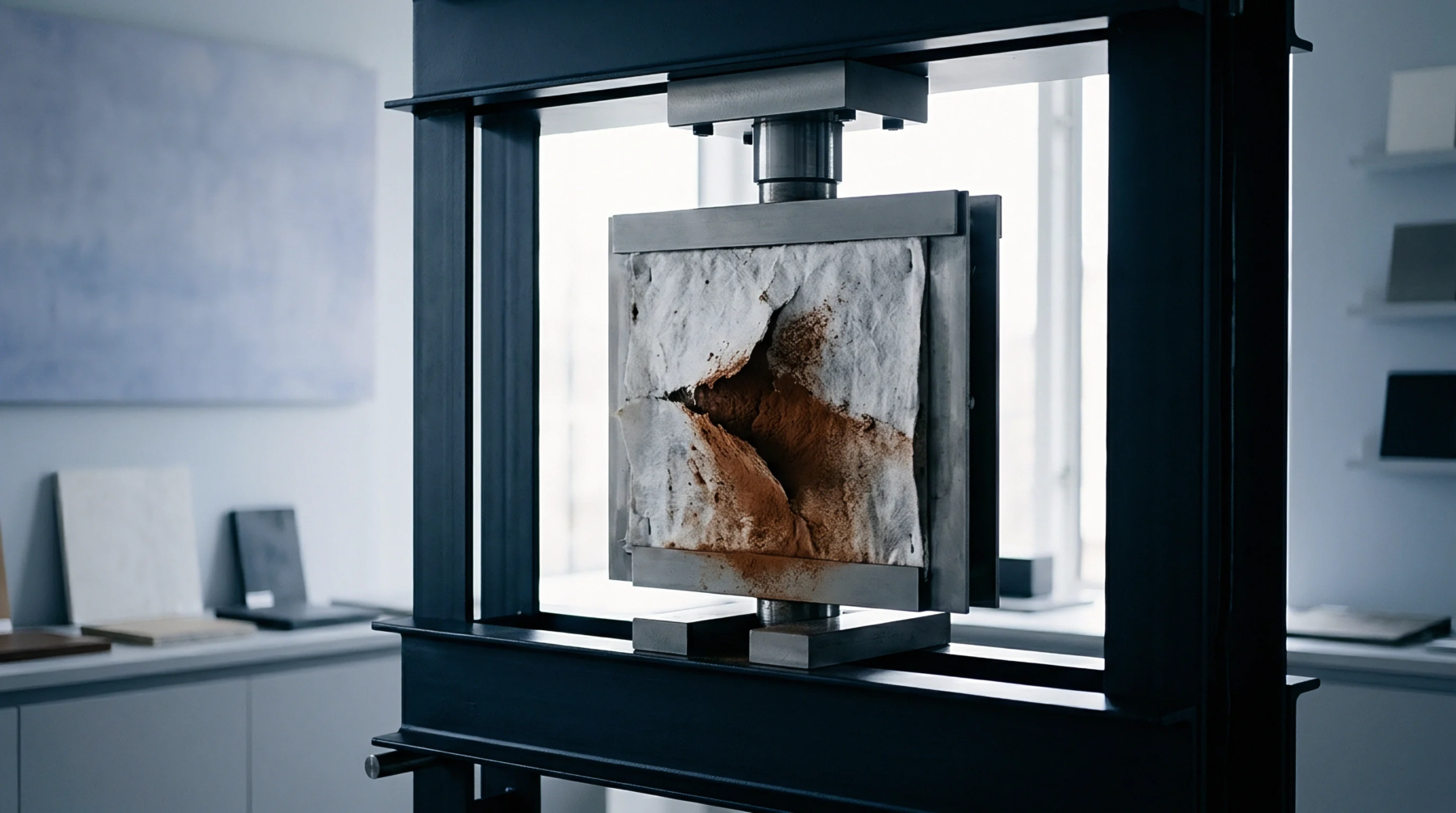
Interfacial Stress
Internal mechanical stress develops across bonded multi-material interfaces when adjacent components exhibit differing rates of thermal expansion under temperature change. Thermally induced interfacial load generates thermal expansion mismatch stress within sensor bondlines, ceramic coatings and composite structures during thermal cycling. Differential expansion rates between metallic substrates and ceramic matrices create high shear and normal stresses at the attachment plane.
Stress magnitude scales with the difference in thermal expansion coefficients, temperature excursion amplitude and elastic modulus of the constituents. Severe mismatch causes installation delamination, microcracking and sensor zero-drift.
Stress Distribution
Peak shear stresses concentrate near the geometric edges and terminations of the bonded sensor installation. Finite element analyses show that interfacial normal stresses switch from compressive to tensile modes depending on the heating or cooling phase. Thick adhesive bondlines increase compliance but amplify edge shear stress concentrations under steep thermal gradients.
Intermediate functional grading layers provide gradual thermal expansion transitions that reduce peak interfacial stress. Elastic-plastic deformation in metallic shims relieves interfacial loads at the expense of permanent zero shifts.
Failure Mechanism
Cyclic thermal loading drives progressive microcrack growth through brittle ceramic cements and dielectric isolation films. Shear failure along the substrate interface leads to partial sensor detachment and degraded mechanical strain transfer. Delamination reduces heat dissipation, causing localized overheating and premature sensor grid failure.
Compressive overstressing during cooling induces buckling and spallation of thin film sensor coatings. Microstructural grain growth at high temperatures alters the constituent expansion coefficients and changes the internal stress state over time.
Design Criterion
Material selection for high-temperature sensor assemblies requires matching thermal expansion coefficients across substrate, adhesive and sensing elements. Pre-stressing techniques and optimized edge chamfering reduce interfacial stress concentrations in structural installations. High-temperature testing protocols quantify bondline shear strength across the entire operating temperature spectrum.
Analytical stress models define maximum allowable heating and cooling rates to prevent thermal shock failure. Installation qualification rejects sensor attachments that exhibit interfacial cracking during initial thermal screening cycles.