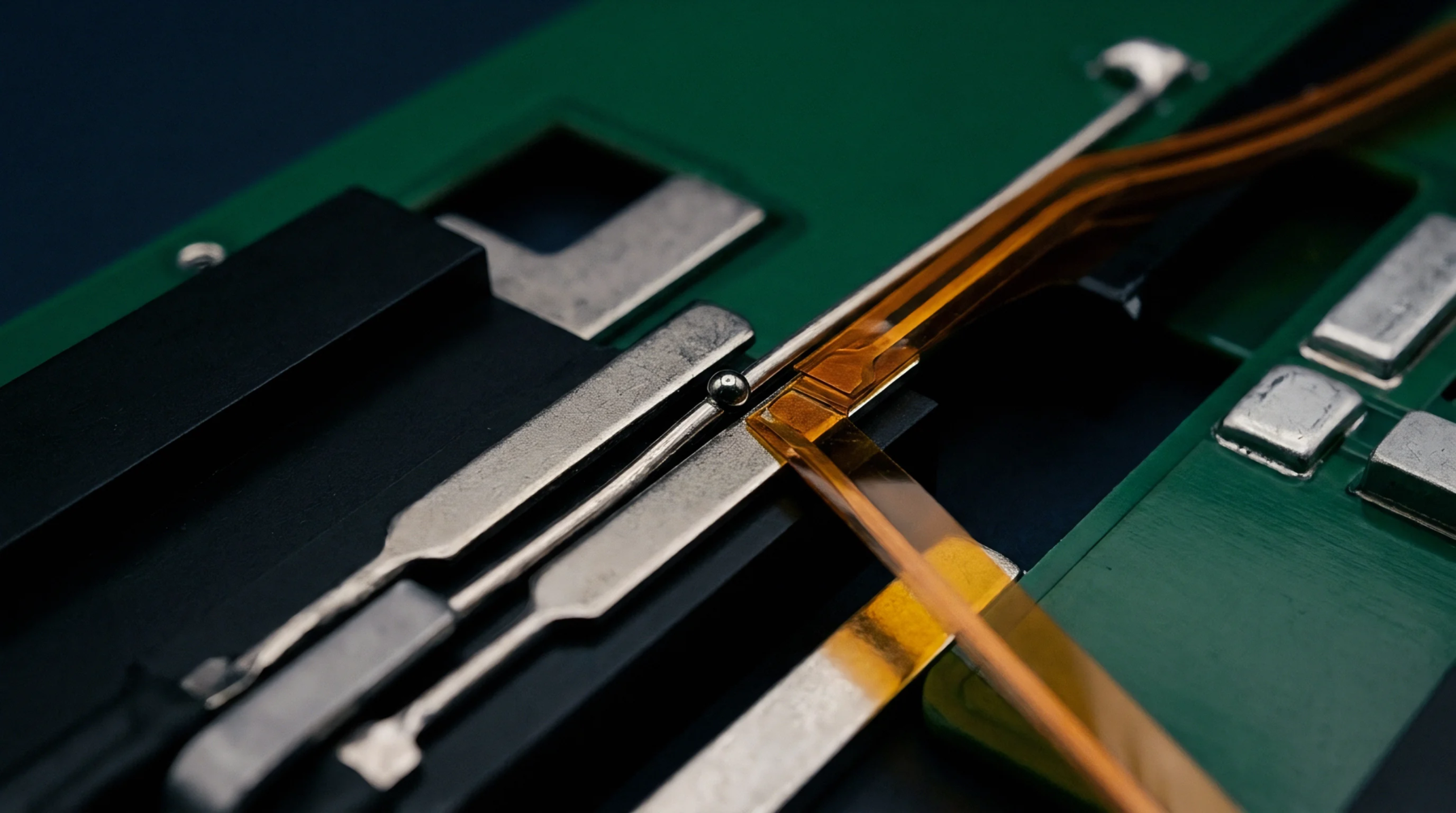
Multiaxial Transduction
Sensor arrays combine multiple strain-sensitive elements on a single substrate to resolve complex strain fields on a material surface. A strain gauge rosette utilizes three independent grids oriented at specific angles, usually 45 or 60 degrees, to measure strain along different vectors simultaneously. This configuration allows engineers to compute the magnitude and direction of the principal strains, as well as the maximum shear strain at the sensor location.
It is essential when the orientation of the principal stresses is unknown beforehand.
Stress Computation
Mathematical transformation equations convert the three separate resistance change measurements into orthogonal strain components. When utilizing a strain gauge rosette, the software calculates the orientation angle of the principal strains relative to the reference axis of the gauge. This calculation assumes that the strain field is uniform across the small area covered by the three grids, which may not hold true near sharp structural transitions.
Adhesive Selection
Installation of these sensors requires thin, uniform glue lines to transfer strain from the substrate to the foil grids. Epoxies or cyanoacrylates are selected based on the operating temperature and test duration.
Calibration Verification
Shunt calibration verifies the signal conditioning gain by simulating a known strain through a high-value resistor connected in parallel with one arm of the bridge circuit. This step ensures system accuracy.