Interfacial Stress
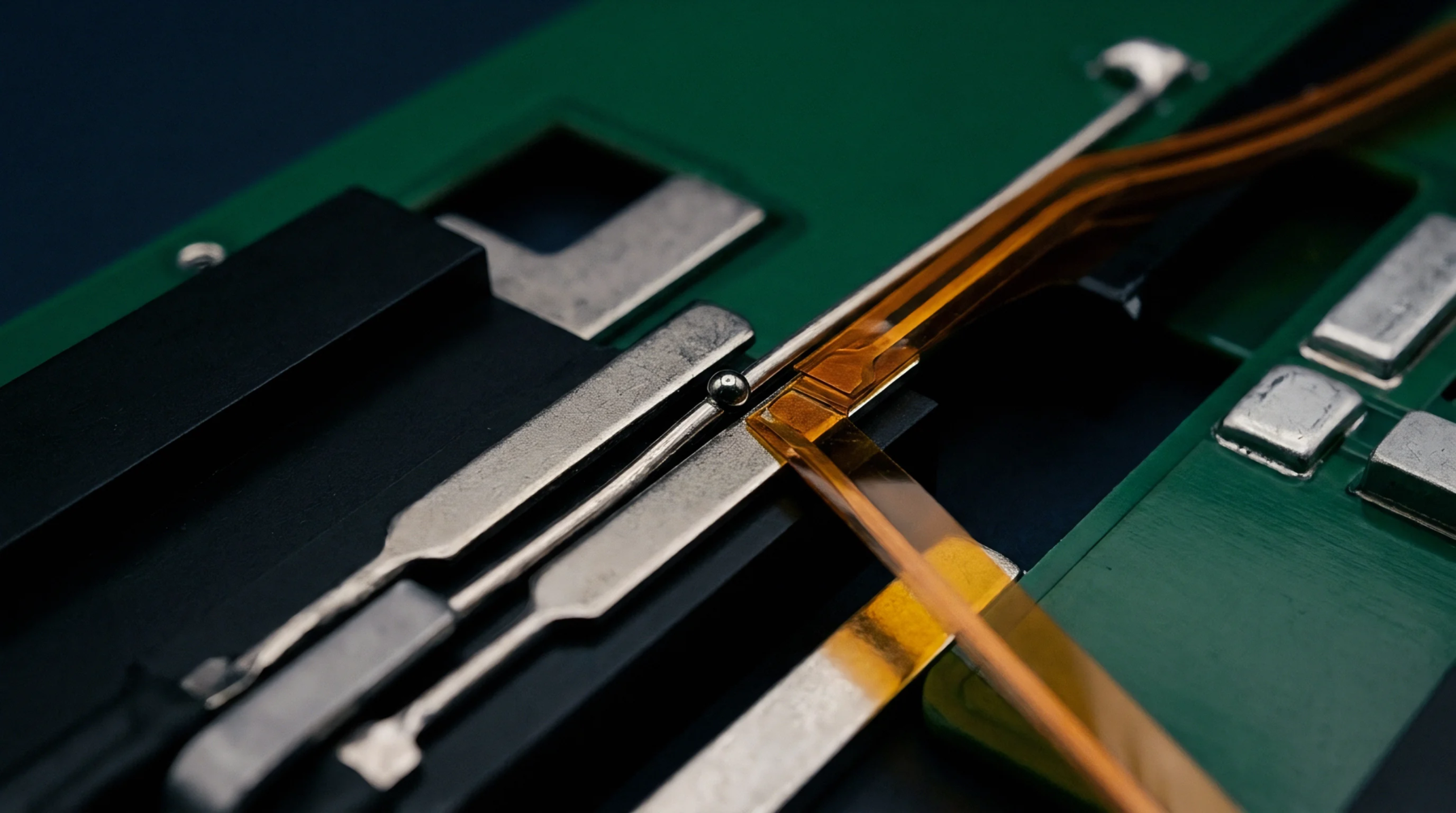
Mechanical forces act parallel to the surface of a printed circuit board or semiconductor substrate, threatening the adhesive bonds between layers. This substrate shear often arises during board handling or from unequal thermal expansion of bonded materials. The resulting stress concentrated along the laminate interface can cause delamination or microcracking within the dielectric layers.
Measurement of this stress determines the limit of mechanical durability for high-density assemblies.
Testing Protocol
Standard test fixtures apply a lateral load to a mounted component using a motorized tool head to measure the force required to shear the solder joint or the substrate itself. When evaluating substrate shear, the test speed and tool height are tightly controlled to ensure repeatability between different batches of assemblies. This testing detects weak interfacial bonding or brittle intermetallic compound layers that might otherwise go unnoticed during normal visual inspection.
Stress Mitigation
Adhesion promoters and optimized surface finishes on the copper foils prevent premature failure by increasing the mechanical interlocking between the epoxy and the metal.
Instrument Calibration
Shear testing machines use traceable load cells to record force values, which are verified using certified calibration weights. This step prevents tool wear or sensor drift from skewing the results.