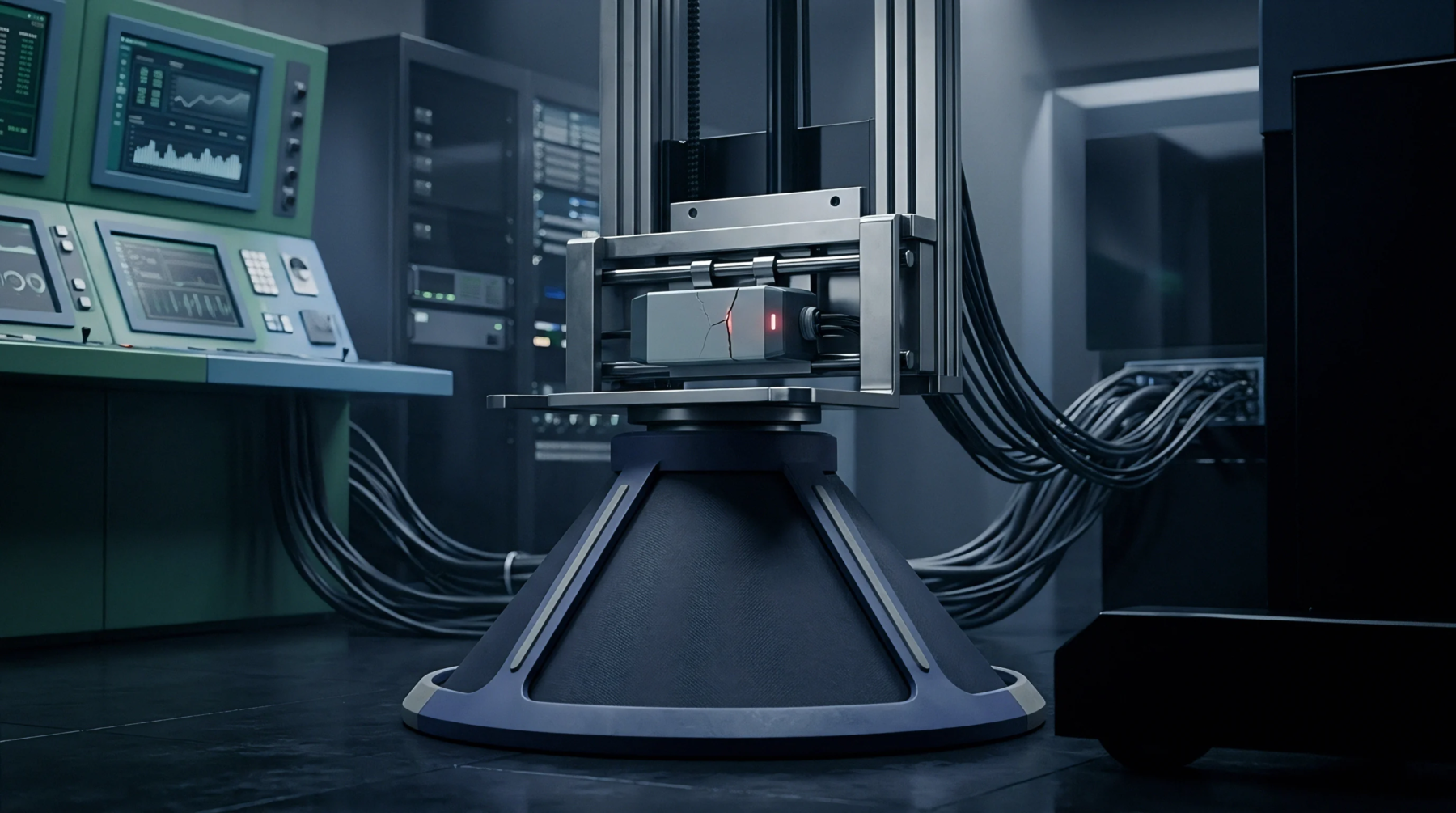
Structural Decoupling
Intermediate mounting columns positioned between sensitive sensor silicon and outer package headers prevent package distortion from warping delicate transducer membranes. In precision MEMS pressure transducer packaging, pedestal stress isolation utilizes a borosilicate glass or silicon stand-off pillar to lift the functional diaphragm away from the package carrier. Solder reflow and housing clamp loads deform outer package housings during assembly and field installation.
Inserting a rigid vertical column absorbs these lateral bending strains, keeping the functional piezoresistive or capacitive die unstressed.
Mismatch Buffer
Temperature swings trigger severe differential expansion when silicon dies rest upon metallic headers such as Kovar or copper alloys. Implementing pedestal stress isolation provides an intermediate material layer with an intermediate thermal expansion coefficient, dampening thermal strain before it propagates into active gauge regions. Glass pedestals bonded via anodic techniques establish a stable thermal gradient that attenuates zero-shift drift across operating temperature extremes.
Anchor Stability
Mechanical shock and continuous vibration excite natural structural frequencies within raised die assemblies. The height and cross-sectional footprint of the mounting pedestal establish structural stiffness, determining natural frequencies along lateral axes. A tall, narrow column achieves superior stress isolation but lowers natural frequencies, increasing vulnerability to dynamic fracture under vibration testing.
Sourcing engineers balance dimensional ratios to maintain vibration modes above target operational bandwidths while preserving required mechanical strain attenuation. Die attach voids under the pedestal base introduce asymmetric compliance, which degrades the isolation ratio and generates tilt errors during thermal cycling.
Qualification Assessment
Packaging qualification measures baseline offset voltage shifts before and after bolt-down torque testing on sensor housings. Effective pedestal stress isolation suppresses offset deviations below one tenth of a percent of full scale span under severe housing clamping forces.