Physical Footprint
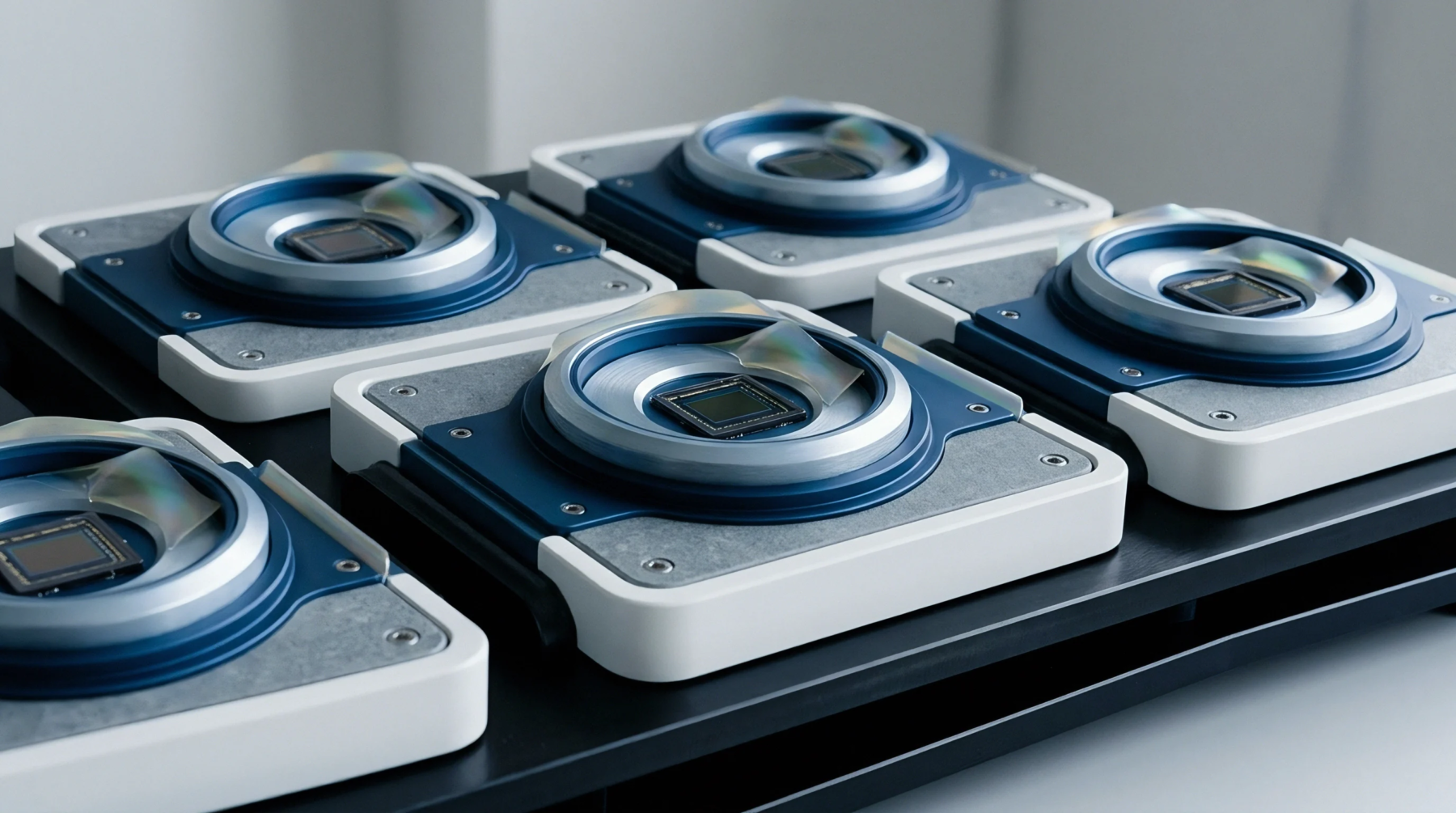
Precision component housing is a standardized spatial housing designed to secure miniature sensing elements while isolating external thermal expansion gradients from active contact areas. The LGA-12 package provides twelve discrete land grid array termination pads arranged beneath a ceramic substrate to establish low-resistance electrical paths for high-density sensor modules. Metrological performance depends on the planarity of these underside metal contacts relative to the mounting socket surface.
Board warb yields contact resistance variations across the twelve terminals, which distorts low-level millivolt signals generated by internal transducers. Thermal conductivity through the substrate material transfers assembly heat directly to the sensing membrane, introducing zero-point offset errors during rapid ambient temperature swings. Mechanical tolerances govern pad coplanarity within micrometres to prevent open circuits under vibrational stress.
Thermal Drift
Contact resistance instability inside the housing alters signal transmission linearity during prolonged high-temperature exposure. Semiconductor manufacturers establish maximum allowable junction temperatures for the assembly, beyond which silicone die degradation compromises calibration integrity. Reference testing measures output voltage shift against a controlled thermal ramp to quantify hysteresis errors after cooling cycles.
Solder joint fatigue develops when thermal expansion coefficients diverge between the ceramic carrier and the host printed circuit board. Stress relief relies on optimizing solder paste volume during surface mount reflow procedures to absorb mechanical shear forces.
Electrical Calibration
Parasitic capacitance between adjacent solder pads introduces high-frequency crosstalk that degrades signal-to-noise ratios in sensitive measurement channels. Calibration protocols require measuring leakage currents across the contact array under standard laboratory humidity conditions to verify insulation resistance. Ground shielding layers integrated within the substrate reduce electromagnetic interference coupling into the internal sensor circuitry.
Automated test equipment verifies continuity across all twelve connection points before the sensor module receives final factory certification.
Boundary Conditions
Assembly failure occurs when mechanical clamping forces exceed the fracture threshold of the internal ceramic substrate. Environmental sealing protects the wire bonds inside the housing from moisture ingress, which causes electrochemical migration between closely spaced landing pads. Qualification testing subjects the mounted component to salt spray exposure and mechanical shock to verify housing integrity under severe operational constraints.
Long-term metrological reliability depends entirely on maintaining stable contact pressure across the array throughout the intended service life.