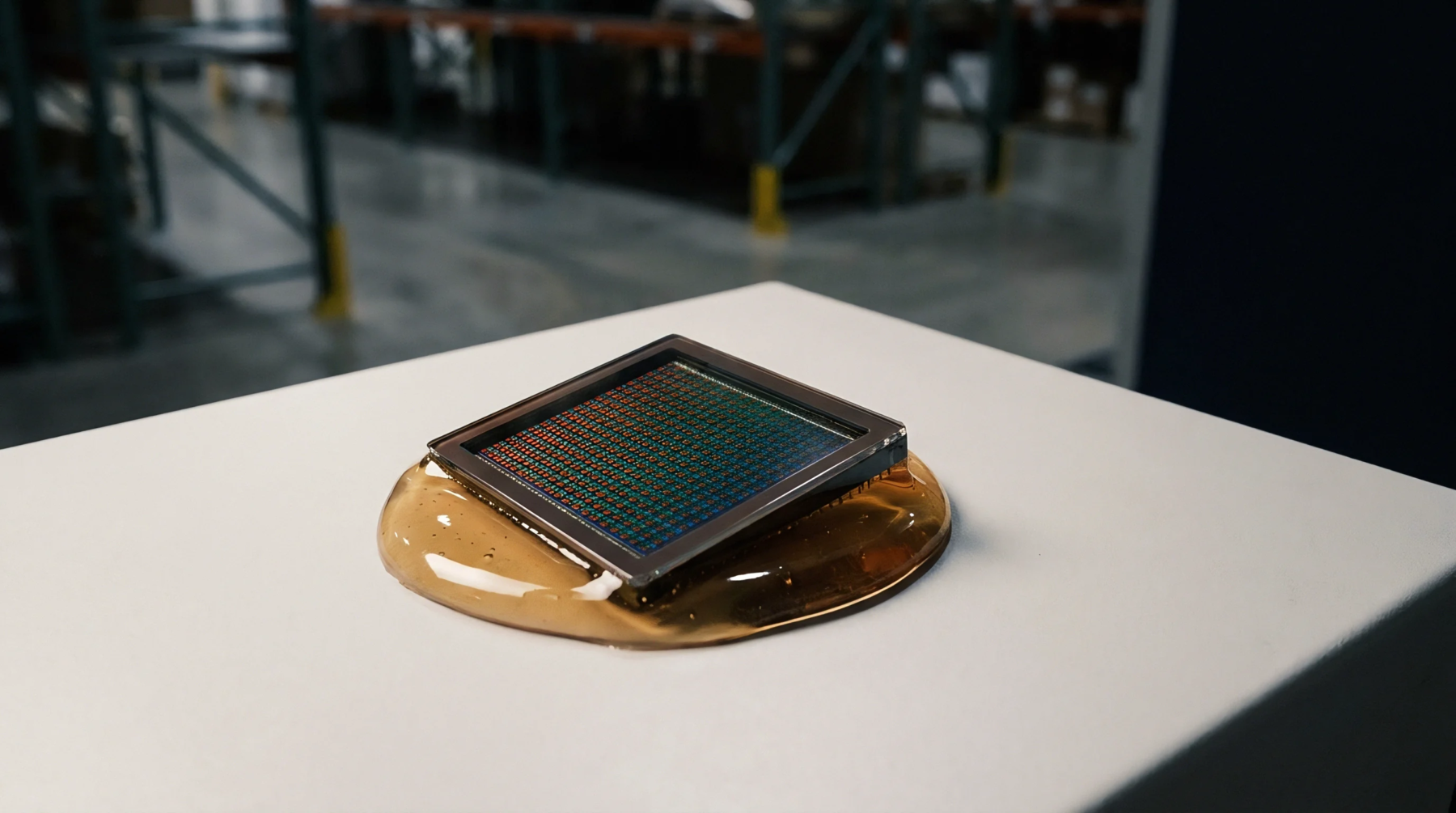
Isolation Pillar
Rigid support members decouple sensitive transducers from the mechanical stresses inherent in a device package. A glass pedestal mount provides a high impedance path for strain by placing a glass column between the sensor die and the ceramic base.
Material Compatibility
Selection of the glass type depends on matching its expansion properties to those of the silicon sensor. Borosilicate glass is frequently utilized because it maintains dimensional stability across a wide temperature range.
Stress Mitigation
Packaging loads from the external environment can cause the floor of a ceramic housing to warp or twist. The glass pedestal mount elevates the sensing element above these deformations, ensuring that only the intended acceleration or pressure reaches the active transducer. This isolation prevents the package from acting as a secondary spring that would otherwise corrupt the sensor data.
By concentrating the attachment point in a small area, the mount reduces the surface area available for strain transmission. Mechanical damping also improves because the pedestal acts as a filter for high frequency noise transmitted through the circuit board.
Qualification Procedure
Testing the pedestal integrity involves centrifuge loading and thermal shock to ensure the bond remains secure. Precise alignment during the die attach process prevents the pedestal from tilting, which would introduce cross axis sensitivity. Standard verification includes inspecting the fillet of the adhesive at the base of the glass column.