Interface Shear
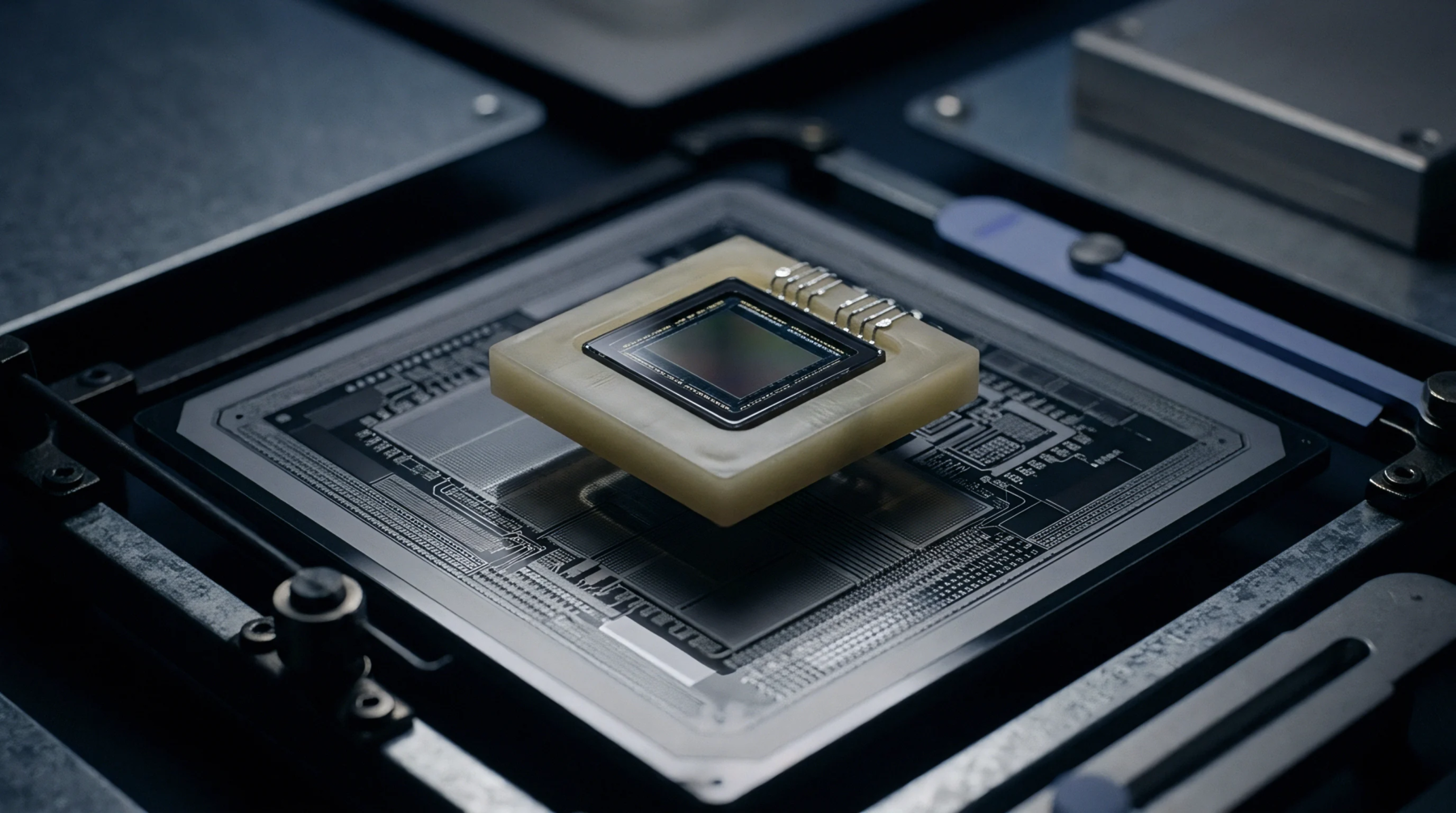
Lateral force transmitted across an adhesive layer measures the mechanical resistance of a bonded semiconductor silicon die to horizontal displacement. Quantification of die attach shear stress is performed using standardized mechanical push testing equipment to ensure package durability. Differing thermal expansion coefficients between silicon chips and copper leadframes create shear forces during temperature transitions.
High shear stress leads to epoxy delamination or die cracking, which degrades sensor performance. Testing protocols establish minimum shear strength thresholds prior to high volume assembly release.
Bond Failure
Silicon die displacement under load indicates insufficient epoxy curing or substrate contamination. Epoxy dispensing parameters govern bond line thickness and fillet height around the chip perimeter. Process engineers monitor shear strength values to catch dispensing anomalies before structural failures occur.
Continuous thermal cycling accelerates fatigue along the adhesive boundary, lowering overall mechanical yield.
Thermal Mismatch
Temperature changes induce differential expansion across the chip and substrate interface, raising internal shear stress. High thermal expansion epoxy formulations absorb stress but reduce thermal conductivity between components. Silicon sensors rely on stable mechanical mounting to maintain zero-offset stability over broad temperature ranges.
Assembly lines verify thermal stress resilience by subjecting sample batches to accelerated thermal shocks.
Package Integrity
Mechanical integrity audits verify that die attach materials retain sufficient adhesion under extreme vibrational stress. Qualification testing requires physical shear destruction of sample packages to map force curves until bond separation occurs. Standardized acceptance thresholds vary according to die dimensions and intended operating environments.
Complete bond integrity prevents micro-displacements that introduce operational offset errors into delicate sensor readouts.