Sub-Micron Coating Homogeneity Limits in Ultra-Thin Buffer Polarization-Maintained Optical Fiber Spools
Buffer eccentricity below 0.3 microns prevents thermal stress asymmetries from degrading polarization extinction ratios in compact gyroscope spools.
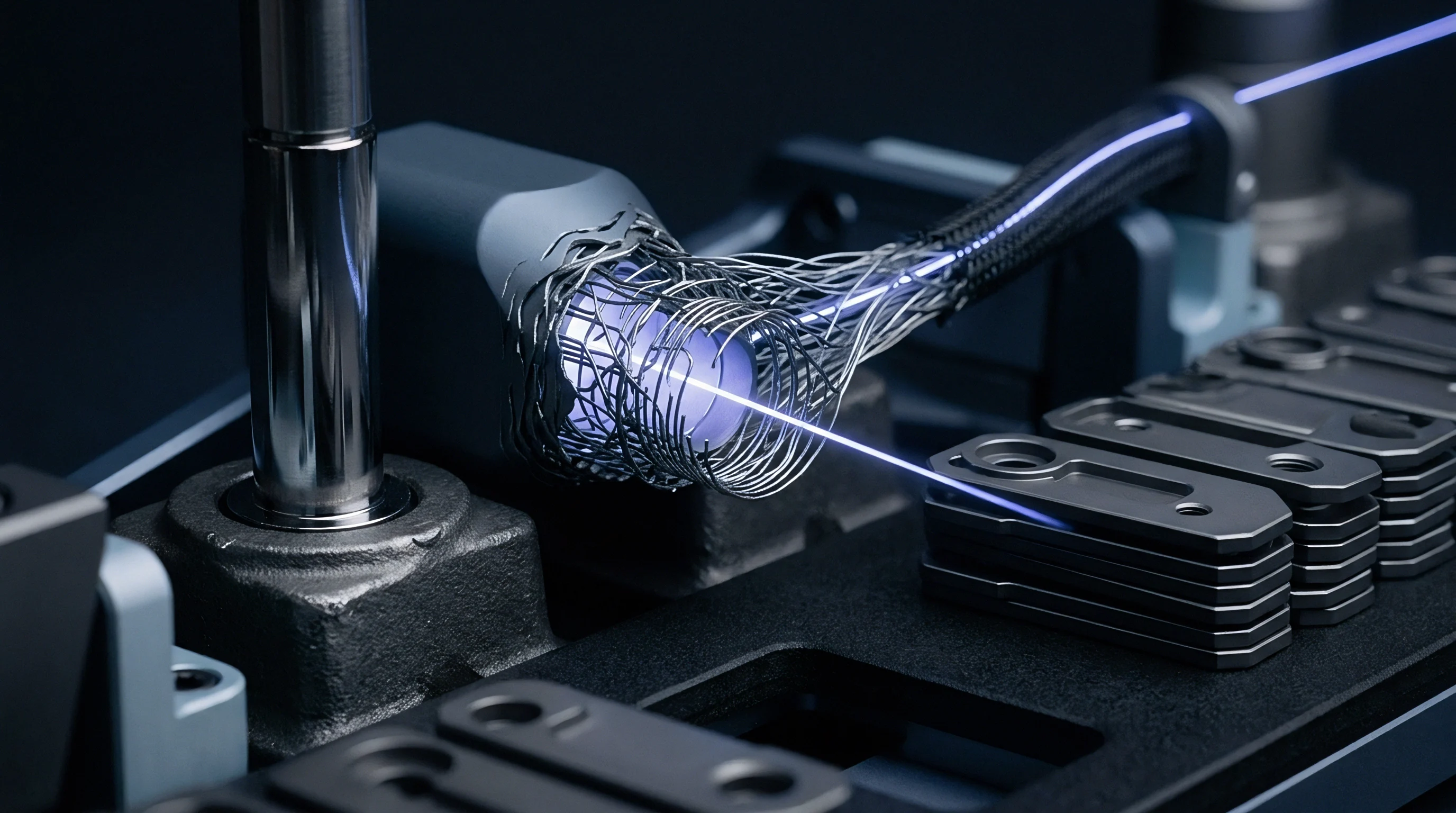
Eccentricity
Sub-micron variations in buffer jacket thickness produce anisotropic radial clamping forces along tightly wound sensor coils. When an optical fiber’s outer coating strays from concentric alignment with the glass core by more than three hundred nanometers, compression across the mechanical boundary breaks down into asymmetric shear. In miniature navigation coils where eight-layer to forty-layer windings squeeze turns together, this lateral imbalance alters the internal refractive index through the elasto-optic tensor.
Navigation instruments demand spatial volumes below thirty cubic centimeters, forcing coil winders to use fibers with eighty-micron cladding diameters and coated profiles below one hundred thirty microns. Trimming away protective polymer bulk removes the mechanical dampening margin that conventional two-hundred-fifty-micron communication fibers rely on. Because the coating serves as the direct contact interface between successive winding layers, any geometric runout along the outer polymer perimeter transmits irregular line loads into the optical waveguiding structure.
Coating concentricity error exceeding 0.4 microns raises polarization cross-talk by 3 dB across a temperature range of -40 to +85 degrees Celsius.
Polymeric buffer resins expand under heat at nearly one hundred times the rate of fused silica. Pure silica expands at roughly five times ten to the negative seventh power per Kelvin, whereas standard crosslinked UV acrylates expand at five times ten to the negative fifth power to one times ten to the negative fourth power per Kelvin. When ambient temperatures swing between minus forty degrees Celsius and positive eighty-five degrees Celsius, these mismatched expansion rates generate substantial hydrostatic stress within the buffer layer.
A uniform coating distributes radial pressure evenly around the cladding circumference, preserving isotropic stress profiles that leave core birefringence unperturbed.
Unequal buffer wall thickness breaks this balance. As the fiber cools, the thicker side of the polymer jacket contracts with greater total inward force, creating an orthogonal stress vector perpendicular to the fiber axis. This transverse perturbation induces parasitic birefringence, coupling energy between the slow and fast polarization transmission axes and degrading the sensor coil’s polarization extinction ratio.
- Thermal radial contraction differential produces non-axisymmetric transverse pressure fields across the cladding boundary when temperatures drop toward minus forty degrees Celsius.
- Localized microbending attenuation escalates sharply at points where adjacent coil turns pinch thin coating sectors against rigid spool flanges.
- Elasto-optic phase mismatch shifts the nominal propagation constant along the primary stress axes, producing uncalibrated angle random walk in interferometric sensors.
- Extrusion die misalignment creates continuous structural ovality extending through kilometer-scale production lengths.
Winding machines apply controlled lay patterns where individual fiber turns cross at fixed mechanical angles. Under winding tensions between ten and twenty grams of force, contact points between crossed rounds experience point loads exceeding thirty megapascals. If a crossover lands on a sub-micron coating dip, the silica cladding directly absorbs that peak load without polymeric dampening.
Micro-deformations then scatter optical power from the guided fundamental mode into lossy cladding modes, driving up microbending attenuation across the sensor coil.
High drawing speeds prevent real-time die centering adjustments during rapid thermal fluctuations, which forces draw towers to operate with wider cross-sectional margins.

Sheath
Dual-layer UV curable acrylates decouple external mechanical contact from the silica boundary using graded elasticity. The coating places a low-modulus primary buffer next to the glass and a high-modulus secondary jacket on the outside. In ultra-thin PM fibers with an eighty-micron cladding and a one-hundred-ten-micron outer diameter, both polymer layers together measure fifteen microns thick radially.
Tight concentricity controls require each layer to stay within five hundred nanometers of nominal geometry across multi-kilometer draw runs.
The inner elastomer maintains an elastic stiffness below one megapascal across standard operating temperatures. This compliant cushion acts as a mechanical low-pass filter, absorbing contact stress before point perturbations reach the glass. The outer jacket has an elastic modulus between five hundred and one thousand two hundred megapascals to resist abrasion and distribute tensile loads.
If drawing instabilities push the primary layer off center, the stiff secondary resin contacts the glass directly along one quadrant, transmitting spool winding pinches into the optical guiding region without dampening.
| Fiber Classification | Cladding Diameter (µm) | Coating Diameter (µm) | Primary Modulus (MPa) | Secondary Modulus (MPa) | Concentricity Limit (µm) |
|---|---|---|---|---|---|
| Standard Telecommunication PM | 125.0 ± 1.0 | 245.0 ± 5.0 | 0.8 ± 0.2 | 900 ± 150 | ≤ 1.50 |
| Reduced-Diameter Tactical PM | 80.0 ± 0.8 | 135.0 ± 3.0 | 0.7 ± 0.2 | 850 ± 120 | ≤ 0.80 |
| Ultra-Thin Precision PM | 80.0 ± 0.5 | 100.0 ± 2.0 | 0.5 ± 0.1 | 1100 ± 100 | ≤ 0.35 |
| Miniature Inertial PM | 60.0 ± 0.5 | 85.0 ± 1.5 | 0.4 ± 0.1 | 1150 ± 100 | ≤ 0.25 |
Table 1 outlines the dimensional criteria, coating thicknesses, and baseline tolerances that separate standard telecommunication spans from gyroscopic sensor coils. As fiber cross-sections shrink, mechanical margins narrow sharply. For an eighty-micron fiber jacketed to one hundred microns, a concentricity error of zero point four microns takes up four percent of the total buffer thickness, creating localized shear zones during spool packing.
During thermal soaking, non-axisymmetric thermal stresses displace the fiber core from its geometric position within the coil pack.
Radial geometric symmetry dictates environmental thermal stability far more effectively than buffer tensile strength.
Resins contract as they polymerize, with commercial urethane and polyether acrylates shrinking between six and eleven percent during ultraviolet curing. If a die applies an uneven liquid film around the silica filament, the resin shrinks unevenly across the circumference. The thicker side undergoes greater total volumetric shrinkage, pulling the partially cured strand toward the heavier deposit and locking residual mechanical stress into the glass-polymer interface.
A soft inner jacket preserves optical stability only when external compression remains distributed without localized pinches.
Birefringence
Polarization maintenance relies on anisotropic stress rods flanking the core to create an optical path difference between orthogonal propagation modes. In Panda or bow-tie PM fibers, boron-doped glass regions contract faster than the surrounding silica as the fiber cools after drawing, creating permanent tensile stress along the slow axis. The resulting modal birefringence yields a beat length between one and three millimeters at fifteen-fifty nanometer wavelengths, preventing energy from coupling into the orthogonal fast axis under mild environmental disturbances.
Does Coating Asymmetry Induce Polarization Drift?
During thermal excursions, an uneven polymer layer compresses the principal optical axes unequally. Total birefringence combines internal intentional stress with external pressure from the jacket. If coating thickness varies azimuthally, the external stress tensor introduces off-diagonal components relative to the core’s reference frame, rotating the principal optical axes away from the stress rods.
As extinction ratios degrade during cold soaking, energy transfers continuously from the primary polarization mode into the cross-polarization mode, generating optical phase drift.
Tightly wound inner spool layers experience three times the radial contact pressure of outer wraps.
In gyroscope coils, this energy transfer directly sets the h-parameter, which measures polarization cross-talk holding capacity per unit length. An ideal PM fiber keeps its h-parameter below one times ten to the negative fifth power per meter. Under thermal cycling, a localized coating asymmetry of half a micron increases the local h-parameter by two orders of magnitude.
As the sensor spool warms and cools, interference between the primary signal and cross-coupled light creates parasitic phase shifts that mimic physical angular rotation.
Stress Birefringence Distortions under Quadrupole Packing
Precision winders use symmetric quadrupole lay patterns to cancel axial temperature gradients by pairing turns from opposite spool ends throughout the matrix. Uneven coating profiles undermine this compensation. If layer twelve carries an average coating thickness five hundred nanometers greater than layer thirteen, contact between rounds becomes irregular, leaving small air voids inside the spool matrix.
- Tension application on the pay-off flyer establishes baseline mechanical strain within the silica core before contact with the coil hub.
- Radial seating against foundation layers forces the non-uniform buffer jacket into mechanical compliance, generating lateral contact flats along softer quadrants.
- Adhesive potting delivery fills interstitial spaces between fiber turns with low-viscosity silicone or epoxy matrices.
- Curing contraction in the potting adhesive grips uneven coating surfaces with non-uniform shear stress, distorting the core index profile.
- Environmental thermal cycling exercises the differential thermal expansion coefficients of the glass, buffer, and matrix adhesive, driving irreversible polarization bias drift.
Consider a five-hundred-meter optical coil wound with eighty-micron clad fiber jacketed to one hundred microns. Quadrupole winding creates roughly forty layers, building radial pressure at the innermost turn to twenty megapascals under the cumulative tension of the outer wraps. If buffer thickness varies by zero point three microns azimuthally, that load projects an asymmetric transverse stress of zero point eight megapascals onto the cladding.
Given silica’s photoelastic coefficient of three point four times ten to the negative twelfth square meters per newton, that stress shifts modal birefringence by two point seven times ten to the negative sixth power, altering optical phase behavior as temperatures change.
Uncontrolled coating variations cause severe bias instability across operating temperatures, forcing manufacturers to discard finished navigation instruments after final calibration.

Metrology
In-line gauges measure fiber dimensions along orthogonal axes using high-speed laser scan micrometers. Operating at scanning frequencies between one and five kilohertz, these optical instruments register shadow edges at the outer polymer boundary as the strand leaves curing tubes at two to fifteen meters per second. The system calculates coating diameter and non-concentricity in real time by comparing the geometric center of the silica shadow against the outer polymer profile.
Where Do Dual Coating Systems Fail?
Primary acrylate layers slip relative to secondary layers when interfacial adhesion energy drops below ten joules per square meter. In dual-die wet-on-wet setups, primary and secondary prepolymer resins enter the liquid application cup simultaneously without intermediate curing. Liquid shear dynamics at the interface can yield asymmetric inner wall thicknesses even when the secondary jacket appears perfectly circular on the outside.
Laser scan micrometers reading only the outer shadow perimeter miss this internal layer eccentricity, as fluidic recirculation cells inside the primary die tip frequently push the inner layer off center without altering overall outer diameter.
| Measurement Instrumentation | Measured Feature | Measurement Resolution (nm) | Acquisition Rate (Hz) | Environmental Limitation |
|---|---|---|---|---|
| Dual-Axis Laser Shadowgraph | Outer Coating Diameter | ± 50 | 2500 | Blind to internal layer concentricity |
| Low-Coherence Interferometer | Primary Layer Thickness | ± 20 | 100 | Sensitive to draw line vibration |
| High-Speed Transverse Camera | Cladding Non-Concentricity | ± 40 | 500 | Refractive index matching fluid required |
| Confocal Spectral Profilometer | Radial Buffer Uniformity | ± 15 | 10 | Limited to bench coupon inspection |
| Optical Coherence Domain Reflectometer | Distributed Polarization Coupling | ± 10 | 1 | Post-draw spool evaluation only |
| Values reflect calibrated laboratory benches operating at 20 degrees Celsius using 1310 nm and 1550 nm illumination sources. | ||||
Off-line verification combines automated microscope image analysis of fiber end-faces with distributed polarization coupling diagnostics. Technicians cleave specimens and mount them beneath automated stages fitted with fifty-times magnification telecentric objectives. Algorithms fit high-order ellipses to the glass cladding perimeter, primary polymer boundary, and outer secondary jacket, establishing spatial displacement between the centroids of each material layer.

High-Speed Interferometric Shadowgraphy Limits
Optical diffraction around fiber edges caps transverse edge detection resolution at roughly seventy nanometers under steady illumination. At high draw speeds, line vibration and air currents make the strand wobble laterally across the measurement zone. This movement defocuses the image and blurs the boundary between light and shadow.
While processing algorithms average consecutive scans over hundreds of milliseconds to smooth out high-frequency noise, that averaging masks short-period thickness variations occurring over sub-meter lengths.
- Interferometric axial resolution limits obscure sub-micron delaminations between the silica substrate and primary acrylate film.
- Diffractive edge blurring expands measurement uncertainty on fibers with coating diameters below one hundred microns.
- Refractive index temperature dependence within prepolymer fluids alters apparent diameter readings when drawing chamber temperatures fluctuate.
- Rotational spin masking hides periodic geometric eccentricities whenever drawing capstans apply spin to suppress polarization mode dispersion.
Procurement specifications referencing Telcordia GR-20-CORE cross-sectional geometric bounds penalize batch deliveries showing non-uniform curing profiles.
Optical coherence domain reflectometry evaluates finished spools nondestructively by mapping distributed polarization cross-talk along their length. The instrument launches broadband white light into one polarization axis and measures cross-coupled signals with an interferometric delay line. Spatially resolved cross-talk peaks pinpoint where coating variations or mechanical pinches cause local mode coupling.
A peak exceeding minus forty-five decibels over a five-centimeter segment marks a structural coating defect that will drive gyro drift under thermal stress.
Requiring IEC 60793-1-21 Method A in procurement contracts obligates mills to report four-axis concentricity error distributions, replacing single-point gauge averages on quality certificates.
Yield
Drawing speeds above ten meters per second create aerodynamic turbulence inside the cooling tube and coating cups. Ambient air pulled into the cup entrance forms an unstable gas meniscus that disrupts fluid flow around the entering silica filament. As this meniscus wobbles, pressure inside the coating die fluctuates, producing sub-micron runout along the cured fiber.
Holding the prepolymer reservoir within plus or minus zero point five degrees Celsius prevents localized viscosity channels from pushing the fiber off center at the exit orifice.
Tungsten carbide and diamond dies wear over time from silica dust particles suspended in prepolymer fluids. As thousands of kilometers of bare glass pass through sizing dies, microscopic wear grooves form along the land sector of the orifice, disrupting the symmetrical shear flow of liquid resin. A wear scar as shallow as two hundred nanometers imprints a continuous ridge along the applied coating, creating an asymmetric stress line that degrades the fiber’s extinction ratio across thermal ramps.
Procurement specifications that filter spool stock by sub-micron concentricity thresholds carry steep price premiums. Standard tactical-grade PM fiber with a concentricity tolerance of zero point eight microns yields between seventy-five and eighty-five percent of pulled preform volume. Tightening that threshold to zero point three five microns drops tower yield below thirty-five percent.
Fiber mills absorb heavy scrap costs during die alignment, discarding kilometers of glass before aerodynamic conditions stabilize the strand in the center of the die.
Whether ultrasonic fluid agitation can stabilize wet coating symmetry at draw speeds above twenty meters per second without introducing micro-bubbles into the resin remains an open question.