Quantifying Moisture Diffusion and Viscoelastic Drift in Capacitive MEMS Transducers
Quantifying moisture diffusion and viscoelastic drift requires separating reversible dielectric changes from irreversible polymer structural relaxation.

Permittivity
Capacitive displacement sensors exhibit baseline instability when environmental water vapor penetrates dielectric films inside the transducer geometry. The fundamental equation for parallel-plate capacitance links capacitance directly to dielectric permittivity, electrode overlap area, and distance between electrodes. Standard air has a relative permittivity close to 1.0, whereas liquid water possesses a relative permittivity of approximately 80.1 at 20 degrees Celsius.
When atmospheric moisture infiltrates the micro-gap or diffuses into organic passivations like polyimide or benzocyclobutene, the effective dielectric constant of the gap changes drastically.
Hygroscopic absorption inside packaging polymers alters both dielectric behavior and structural dimensions. Absorbed water causes physical volumetric expansion in polymeric layers, introducing hygro-mechanical stress into thin silicon suspensions. This swelling action forces micro-machined plates closer together or further apart, shifting the unforced baseline capacitance without any physical acceleration or pressure input.
Precise signal evaluation requires decoupling dielectric changes from stress-induced physical gap deformation.
Water absorption inside organic dielectrics elevates relative permittivity from 2.8 to 80.1, driving zero-point baseline shifts up to 12 percent over 1000 hours at 85 percent relative humidity.
Dielectric Permeation and Polymeric Swelling
Molecules of atmospheric vapor migrate through protective encapsulation layers over time. Polyimide passivations, commonly used as structural stress buffers or inter-metal dielectrics, absorb up to 3.0 percent water by weight at room temperature saturation. As water fills free volume pockets in the polymer, the localized relative permittivity climbs linearly with moisture concentration.
The volumetric swell coefficient of polyimide ranges between 30 and 60 ppm per percent relative humidity. The resulting mechanical expansion bends structural anchors, imposing unexpected parasitic forces onto sensitive capacitive combs.
Sensing elements operating in humid environments experience two simultaneous capacitance shift mechanisms. Moisture inside the gap increases overall dielectric permittivity, which raises capacitance. Physical swelling of the anchor dielectric increases gap spacing, which decreases capacitance.
Depending on transducer geometry, these two vectors can partially cancel each other out or compound into catastrophic signal drift. Engineers isolate these vectors through bake-out routines and differential electrode layouts.
Capacitive Sensitivity to Water Molecules
Changes in zero-offset readings occur when polar fluid molecules lodge inside air gaps or sensing layers. Polar molecules align with applied AC sensing fields, creating frequency-dependent dispersion effects. At low excitation frequencies below 100 kHz, water dipoles fully align with the signal field, producing maximum capacitance elevation.
At frequencies above 10 MHz, dipole orientation lag reduces the effective permittivity contribution. Circuit designers must select carrier frequencies that mitigate dipole orientation kinetics.
- Dielectric Permittivity Drift occurs when moisture diffuses into structural polyimide layers, continuously elevating effective permittivity and shifting baseline output.
- Hygro-Mechanical Anchor Swelling forces substrate displacement, changing plate separation distance through physical expansion of polymer pads.
- Dipole Dispersion Lag introduces phase delay into the capacitive bridge, increasing signal dissipation factors at frequencies below 500 kHz.
- Surface Condensation Pinning generates localized liquid bridges across micro-features, causing sharp discontinuities in sensor response curves.
Neglecting moisture-induced dielectric shifts leads to permanent field failures where firmware calibration algorithms interpret environmental moisture as legitimate physical measurand changes.

Gap
Physical displacement between micro-machined electrodes changes under sustained mechanical strain. Capacitive MEMS devices rely on precise sub-micron gaps, often ranging between 1.0 and 3.0 micrometers, to maintain designed sensitivity and range. Structural materials such as electroplated nickel, organic adhesives, and silicon dielectrics exhibit viscoelastic behavior under constant mechanical stress or electrostatic load.
Over extended operational cycles, materials slowly yield, causing permanent baseline offset changes independent of humidity levels.
Time-dependent deformation under stress alters electrode spacing continuously. When a constant electrostatic bias voltage acts across sensing electrodes, sustained electrostatic attraction pulls the flexible proof mass toward the stationary electrode. Polymeric suspensions or adhesive dielectrics flow viscoelastically under this static attraction force, causing the gap to narrow over months of operation.
This gap reduction increases baseline zero-voltage capacitance and alters scale factor sensitivity.
Polymeric Anchor Creep and Structural Relaxation
Sustained bias voltages exert electrostatic forces across flexible suspension beams. Polymeric dielectrics like die-attach epoxies and polyimide anchor pads suffer slow molecular chain slippage under prolonged mechanical load. This molecular rearrangement relaxes internal stress, preventing full recovery of the original gap dimension when electrical bias is removed.
Viscoelastic drift accumulates non-linearly, accelerating at elevated ambient temperatures according to time-temperature superposition principles.
Silicon itself displays minimal dislocation movement at temperatures below 400 degrees Celsius, yet surface passivation coatings, metallic metallization layers, and package adhesives introduce notable viscoelastic drift. Aluminum-silicon interconnect traces undergo plastic micro-yielding under thermal cycling, shifting structural stress states. Electroplated nickel structural layers in heavy-duty accelerometers exhibit stress relaxation rates reaching several parts per million per week at 85 degrees Celsius.
Viscoelastic strain accumulation in polymer dielectrics scales logarithmically with continuous mechanical stress under constant operating temperature.
Viscoelastic Time Constants in Silicon Structures
Mechanical stress fields within passivation layers diminish over extended operating intervals. Maxwell and Kelvin-Voigt mechanical models capture these relaxation dynamics through networks of springs and dashpots. Standard single-exponential relaxation models fail to represent real MEMS behavior across wide time windows, requiring stretched exponential functions to model broad relaxation spectrums.
Relaxation time constants range from milliseconds for immediate elastic response to thousands of hours for long-term structural settling.
| Material Layer | Glass Transition Temp (°C) | Relaxation Modulus (GPa) | Characteristic Time (Hours) | Long-Term Drift Rate (ppm/1000h) |
|---|---|---|---|---|
| Polyimide Passivation | 350 | 3.2 | 140 | 450 |
| Benzocyclobutene (BCB) | 350 | 2.9 | 310 | 120 |
| Die-Attach Epoxy | 120 | 1.5 | 45 | 1800 |
| Electroplated Nickel | N/A | 180.0 | 1200 | 85 |
Component manufacturers frequently state that long-term baseline offset changes stem exclusively from physical mounting stresses rather than intrinsic structural material relaxation within the die package.

Diffusivity
Mass transport kinetics govern how rapidly moisture reaches equilibrium within internal cavities. Diffusion processes through organic encapsulation and sensor packaging obey fundamental mass transport relations driven by vapor pressure gradients. Environmental humidity changes do not impact sensor readings instantaneously.
Transient delay times exist as water molecules migrate through plastic packaging compounds, die-attach adhesives, and gel coatings before reaching sensitive capacitive electrodes.
Temperature strongly modulates diffusion velocity. Arrhenius relationships define the temperature dependence of diffusion coefficients in packaging polymers. Higher ambient operating temperatures increase molecular chain mobility, accelerating moisture ingress and shortening the time required to reach saturation.
Designing reliable capacitive transducers demands detailed mapping of diffusion coefficients across the entire specified thermal operating window.
Fickian Sorption in Package Materials
Standard absorption behavior follows temperature-dependent mass transfer rates through uniform polymers. Fickian diffusion models assume constant diffusion coefficients where moisture uptake correlates directly with the square root of exposure time during initial saturation stages. The total mass of absorbed water approaches a finite equilibrium value determined by ambient relative humidity and the Henry law solubility coefficient of the specific polymer matrix.
Calculations for one-dimensional Fickian transport utilize the diffusion equation where time-dependent concentration profiles depend on polymer layer thickness. Thin passivation coatings reach equilibrium within hours, whereas thick gel potting materials require hundreds of hours to reach steady-state moisture levels. Engineers calculate delay times using layer thickness squared divided by diffusivity.
Fickian moisture transport through polyimide encapsulation reaches 90 percent saturation within 72 hours at 60 degrees Celsius and 80 percent relative humidity.
Non Fickian Anomalies and Interface Trapping
Deviations from standard classical absorption emerge when polar molecules gather along metal-polyimide boundaries. Non-Fickian or anomalous diffusion occurs when the rate of moisture diffusion matches or exceeds the rate of polymer chain relaxation. Moisture clusters form within nano-voids inside the dielectric film, creating localized regions with high dielectric constants that alter local electrical field distributions.
| Polymeric Dielectric Material | Diffusion Coefficient (cm²/s at 25°C) | Activation Energy (eV) | Permittivity Change per % RH | Equilibrium Water Uptake (wt%) |
|---|---|---|---|---|
| Polyimide (PI-2611) | 1.2 x 10^-9 | 0.38 | 0.0035 | 1.3 |
| Benzocyclobutene (BCB 4024) | 5.5 x 10^-8 | 0.28 | 0.0008 | 0.15 |
| Liquid Crystal Polymer (LCP) | 3.0 x 10^-11 | 0.46 | 0.0002 | 0.04 |
| Epoxy Molding Compound | 4.2 x 10^-9 | 0.41 | 0.0022 | 0.45 |
Thick encapsulation layers always delay environmental moisture arrival at sensitive internal structures.
Modeling
Predictive mathematical equations allow engineers to separate environmental shift from structural deformation. Capacitive sensor drift stems from two distinct physical phenomena occurring simultaneously: moisture diffusion into dielectric layers and viscoelastic relaxation of mechanical supports. Isolating these two contributions requires mathematical models capable of handling superimposed time-dependent processes operating over vastly different timescales.
Mathematical modeling begins by expressing total baseline capacitance shift as a multi-variable function of ambient relative humidity, ambient temperature, electrostatic stress history, and operating duration. By combining Fickian diffusion equations with Kohlrausch stretched exponential functions, analytical frameworks predict output shifts under varying field conditions without requiring multi-year real-time bench tests.

Mathematical Separation of Dual Drift Vectors
Analytical decoupling relies on distinct temporal signatures produced by fluid ingress versus mechanical strain. Moisture diffusion manifests as a reversible, humidity-dependent shift characterized by temperature-activated time constants ranging from hours to days. Viscoelastic creep produces an irreversible or extremely slow-recovering shift that accumulates monotonically under constant stress, following logarithmic or power-law kinetics over months.
Consider a capacitive MEMS pressure sensor with an initial air gap of 1.5 micrometers, an initial polyimide dielectric thickness of 0.5 micrometers, and a nominal baseline capacitance of 2.0 picofarads. The absolute permittivity of free space equals 8.854 x 10^-12 farads per meter. Dry polyimide has a relative permittivity of 2.9, while absorbed moisture increases polyimide permittivity according to a linear coefficient of 0.0035 per percent relative humidity.
Simultaneously, polyimide swelling increases dielectric thickness by 40 ppm per percent relative humidity.
Assume an environmental shift from 10 percent relative humidity to 85 percent relative humidity at 25 degrees Celsius. The change in relative humidity equals 75 percent. The updated polyimide permittivity equals 2.9 plus 75 multiplied by 0.0035, giving 3.1625.
The mechanical thickness shift equals 0.5 micrometers multiplied by 75 and 40 x 10^-6, adding 0.0015 micrometers to the dielectric layer. The combined effect elevates baseline capacitance by 0.084 picofarads, representing a 4.2 percent zero-point offset shift.
When the identical sensor experiences a constant 5-volt DC bias across its electrodes, electrostatic attraction generates a continuous stress of 150 kilopascals on the polyimide support anchors. Under this sustained stress, the polyimide undergoes viscoelastic relaxation with a characteristic time constant of 180 hours and a stretching exponent of 0.45. After 1000 hours of continuous bias, viscoelastic creep compresses the anchor gap by 0.018 micrometers, adding an additional 0.024 picofarads to baseline capacitance.
The analytical model overlays both equations to yield total expected signal drift over time.
Kohlrausch Exponential Drift Characterization
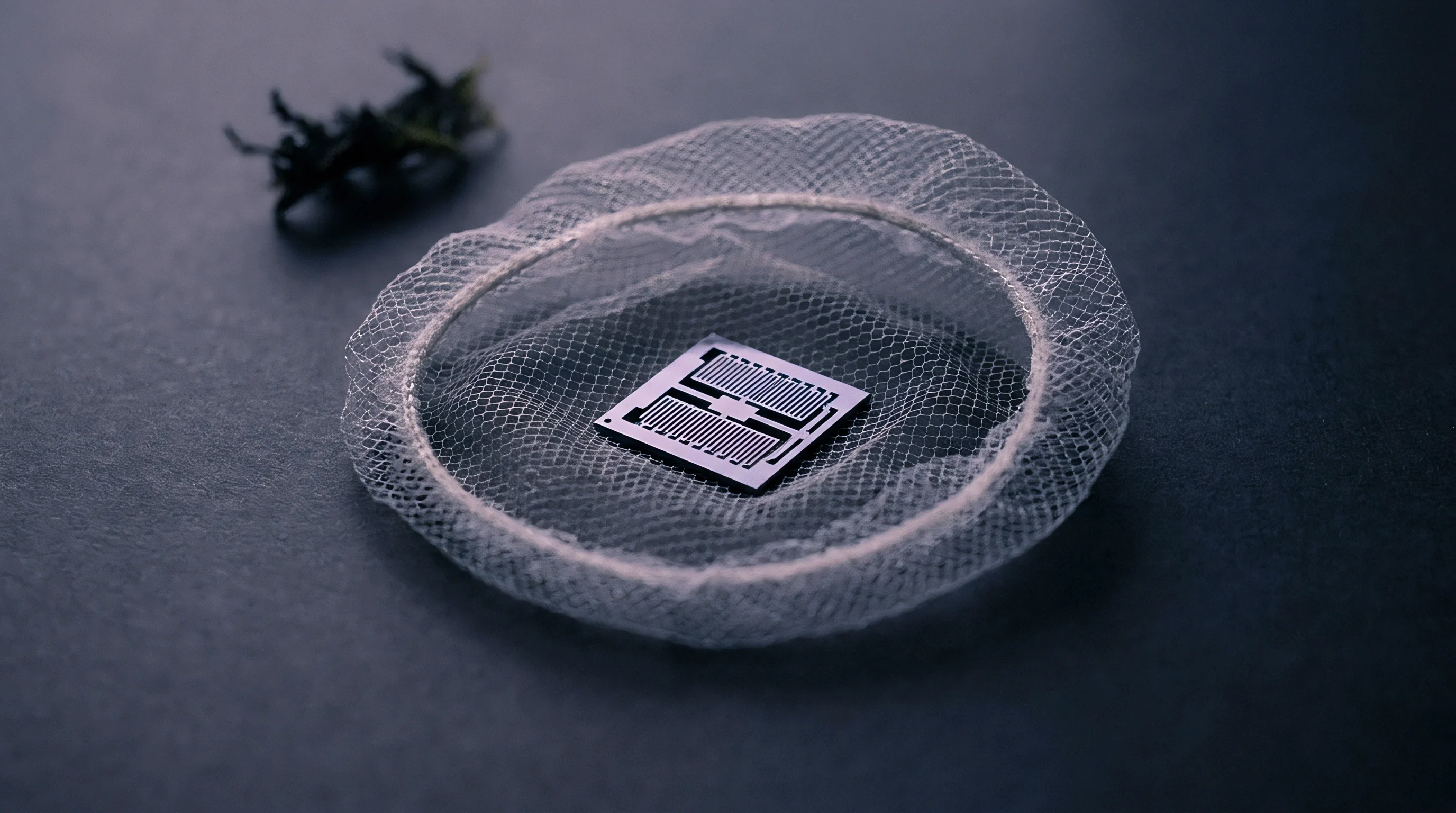
Time-dependent material relaxation follows a stretched logarithmic curve across extended operating lifetimes. The Kohlrausch-Williams-Watts formula expresses viscoelastic relaxation through a modified exponential function containing a stretched time ratio exponent between zero and one. Fitting experimental drift data to this equation yields physical parameter values for instant elastic response, long-term equilibrium modulus, and relaxation spectrum distribution.
Can Environmental Bias Distinguish Moisture from Creep?
Bench evaluations combining elevated thermal stress with dry nitrogen atmosphere isolate mechanical relaxation. Testing sensors inside a sealed chamber flooded with pure dry nitrogen eliminates moisture diffusion entirely, causing relative humidity to drop to zero. Any remaining baseline drift observed under these conditions originates exclusively from viscoelastic creep or thermal stress relaxation within structural components.
- Mount six test samples inside an environmental chamber equipped with precise temperature and humidity controls plus dry nitrogen purge lines.
- Apply designed nominal operating bias voltages across electrode terminals while recording baseline capacitance values at 25 degrees Celsius and 10 percent relative humidity.
- Purge chamber with dry nitrogen gas until relative humidity drops below 0.5 percent while maintaining temperature at 85 degrees Celsius for 200 hours.
- Record baseline output continuously to capture pure viscoelastic creep kinetics without moisture interference.
- Introduce 85 percent relative humidity at 85 degrees Celsius while maintaining constant bias voltage for an additional 200 hours to superimpose moisture diffusion dynamics.
- Purge chamber back to dry nitrogen at 25 degrees Celsius to bake out absorbed water, leaving only permanent viscoelastic strain set.
Unresolved questions persist regarding whether sub-nanometer localized moisture clustering at silicon-oxide interfaces initiates localized chemical bond breakage that permanently alters viscoelastic relaxation rates.
Qualification
Environmental testing regimes isolate long-term sensor degradation before high-volume manufacturing approval. Validating capacitive MEMS transducers for industrial and automotive applications demands rigorous accelerated life testing protocols. These test procedures force moisture saturation and accelerate viscoelastic creep using thermal and mechanical stress, verifying that baseline drift remains within system error budgets over ten to twenty-year operational lifetimes.
Standards bodies establish exact criteria for environmental screening. Highly Accelerated Stress Testing subjects devices to elevated temperatures up to 130 degrees Celsius and relative humidity levels reaching 85 percent under pressurized conditions. Temperature Humidity Bias testing combines 85 degrees Celsius and 85 percent relative humidity with maximum electrical operating bias for 1000 hours, revealing both moisture equilibrium behavior and field-assisted degradation modes.
Accelerated Humidity and Bias Protocols
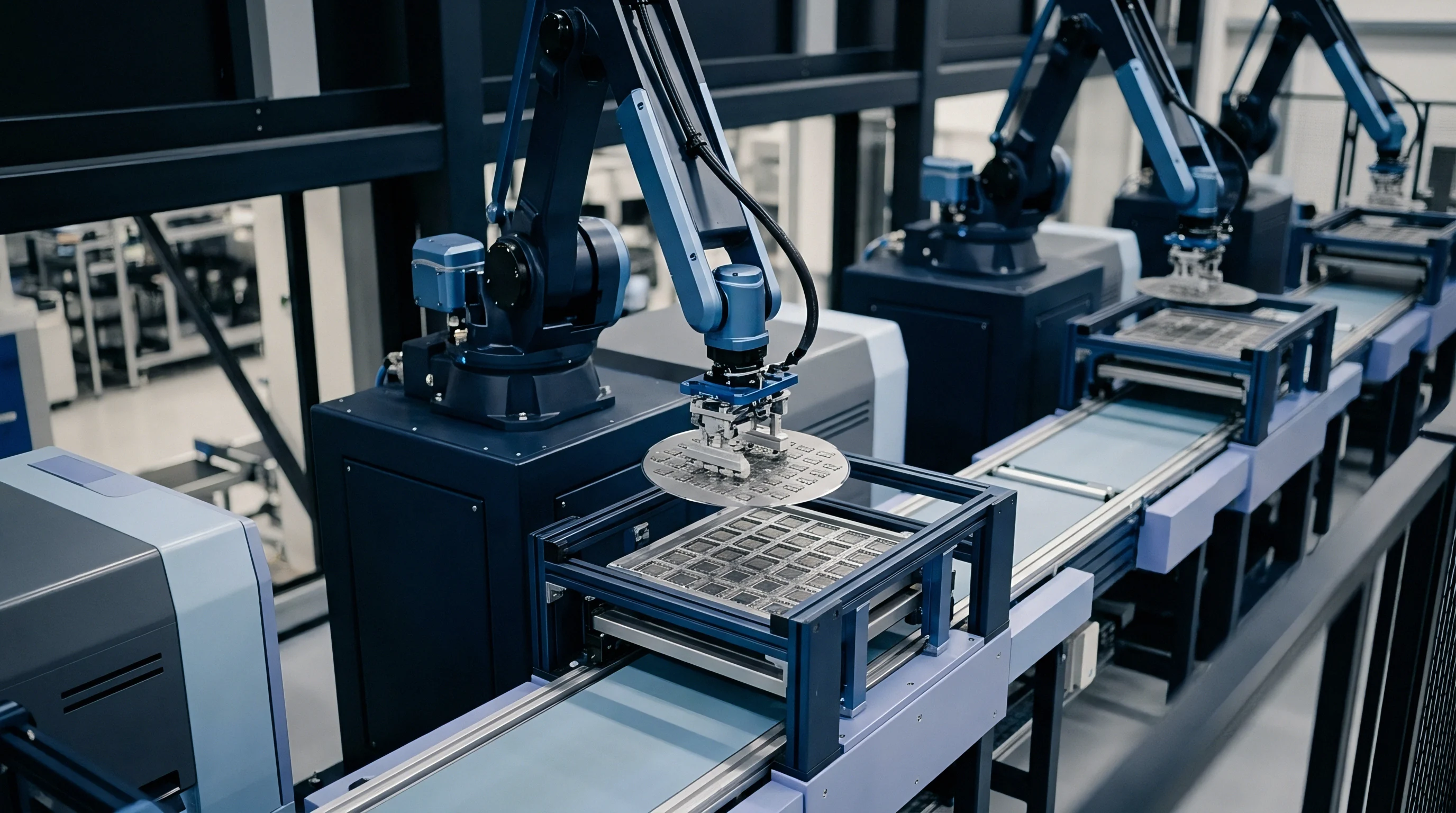
Stress testing inside environmental chambers forces rapid vapor saturation to expose baseline shifts. Acceleration factors for moisture diffusion depend on relative humidity ratios and thermal activation energy defined by Peck law models. Combining elevated temperature with continuous electrical bias exposes corrosion mechanisms, ionic migration across wet dielectrics, and accelerated viscoelastic relaxation in structural adhesives.
Automotive sensor qualifications demand compliance with AEC-Q103 protocols specifically tailored for MEMS components. These standards require continuous baseline capacitance tracking during environmental exposure rather than simple pre-test and post-test spot checks. In-situ monitoring captures transient peak drift during moisture absorption phases that standard end-point testing misses completely.
Environmental Screening and Acceptance Criteria
Pass-fail thresholds enforce strict drift tolerances across target operating conditions. Screening procedures eliminate manufacturing lots exhibiting abnormal viscoelastic relaxation or delamination along dielectric interfaces. Acceptable baseline drift limits typically range between 0.25 percent and 1.0 percent of full-scale output after 1000 hours of continuous stress testing.
| Standard Designation | Test Condition | Duration | Target Drift Mechanism | Baseline Acceptance Limit |
|---|---|---|---|---|
| JESD22-A101 | 85°C / 85% RH / Nominal Bias | 1000 Hours | Moisture Diffusion & Permittivity Shift | |
| JESD22-A110 (HAST) | 130°C / 85% RH / Pressurized | 96 Hours | Accelerated Ingress & Interfacial Corrosion | |
| AEC-Q103-002 | -40°C to 125°C Thermal Cycling | 1000 Cycles | Viscoelastic Creep & Thermal Mismatch Stress | |
| IEC 60068-2-78 | 40°C / 93% RH / No Bias | 21 Days | Steady-State Hygroscopic Swelling |
IEC 60068-2-78 mandates continuous exposure to 40 degrees Celsius and 93 percent relative humidity for 21 days without electrical breakdown or baseline zero offset exceeding 1.5 percent of full scale.
Acceptance documentation for incoming sensing components must include certified environmental test reports covering the following technical verification items:
- In-Situ Baseline Drift Curves detailing continuous output readings taken at 15-minute intervals throughout 1000-hour temperature-humidity-bias testing.
- Bake-Out Recovery Metrics quantifying residual unrecoverable offset remaining after 24 hours of dry thermal baking at 125 degrees Celsius.
- Activation Energy Calculations documenting experimental diffusion activation energy figures derived from multi-temperature sorption trials.
- Viscoelastic Relaxation Coefficients verifying extracted Kohlrausch parameters used in firm-level drift compensation algorithms.
According to AEC-Q103-002 Clause 4.3.2, zero-point output drift exceeding 0.5 percent of full-scale range after 500 hours of temperature-humidity-bias exposure mandates immediate lot containment and root-cause failure analysis before production shipment release.