Viscoelastic Epoxy Creep Driving Zero Point Thermal Hysteresis in Shunts
Viscoelastic epoxy relaxation locks residual strain into shunt elements after thermal excursions, shifting zero-point resistance and corrupting current readings.

Bond
Differential thermal expansion between metallic resistive alloys and surrounding polymer matrices generates interfacial shear stresses during thermal transitions. Precision current sensing shunts rely on stable mechanical environments to preserve sub-milliohm calibration values. When an assembly incorporates encapsulation resins, structural adhesives, or transfer-molded epoxy cases, the polymer adheres directly to the resistive foil or electron-beam welded manganin block.
Temperature excursions alter the dimensions of both materials at differing rates. Copper-manganese-nickel alloys expand at rates between fourteen and nineteen parts per million per Kelvin. Epoxies below their glass transition temperature expand at thirty to sixty parts per million per Kelvin.
Above that transition threshold, resin expansion rates frequently exceed one hundred and twenty parts per million per Kelvin.
The baseline drifts. Thermal expansion mismatches force the rigid adhesive boundary to transmit shear forces directly into the resistive lattice. Because crystalline metallic resistance elements possess finite piezoresistive gauge factors, external mechanical strain alters electrical resistivity.
Rigid curing schedules create an initial zero-strain reference at the polymer glass transition or post-cure temperature, typically between one hundred and thirty and one hundred and seventy degrees Celsius. Cooling the assembly to ambient factory conditions locks the metallic strip into continuous triaxial compression.
Direct shear coupling across an adhesive boundary converts volumetric shrinkage into permanent resistive distortion.
Interfacial integrity dictates how much force reaches the sensing alloy. High-adhesion formulations containing silane coupling agents maximize load transfer across the copper-epoxy boundary. Incomplete adhesion causes localized delamination, creating erratic stress gradients across the potential-sensing Kelvin terminals.
These localized micro-strains generate unequal resistance deviations across the sensor geometry.

Mechanical Shear Coupling at the Matrix Interface
Copper-manganese-nickel resistive elements experience localized forces whenever ambient temperatures depart from the curing equilibrium. The shear stress distribution along the bonded length follows classical shear-lag formulations, where maximum stress concentrates at the geometric edges of the foil and decays toward the center. Thick adhesive bondlines spread this force across larger volumes, whereas thin bondlines below thirty micrometers concentrate mechanical stresses directly adjacent to the sensing plane.
When crosslink density varies throughout the resin bulk, stress distribution across the foil becomes non-uniform.
Mechanical coupling efficiency depends on several interfacial variables:
- Interfacial shear modulus governs the immediate transmission of polymer volumetric expansion into the metallic resistive foil.
- Bondline thickness uniformity determines whether compressive forces distribute symmetrically across both voltage pick-off points. Variations exceeding five micrometers produce measurable baseline imbalances.
- Substrate surface roughness enhances mechanical interlocking between the cured thermoset and the rolled alloy strip, preventing localized slip during thermal shock.
- Fillet geometry dictates the concentration of peeling stresses at the terminal terminations where the alloy joins copper busbars.

Thermomechanical Mismatch across Transition Points
Manganin exhibits a linear expansion coefficient near seventeen parts per million per Kelvin, whereas standard unfilled potting resins expand at rates exceeding fifty parts per million. Introducing fused silica micro-fillers lowers the resin expansion rate toward twenty-four parts per million, narrowing the differential. Thermal expansion coefficients do not remain constant across wide operational envelopes.
As the operating temperature approaches the polymer glass transition point, the resin matrix transitions from a glassy state into a rubbery state.
Polymer chains gain rotational freedom in this rubbery phase. The sudden drop in storage modulus reduces the immediate clamping force exerted on the shunt, altering the electrical resistance profile. When the temperature drops rapidly back into the glassy regime, the polymer chains freeze into non-equilibrium conformations, locking altered strain states into the sensing element.
When confronted with zero-point offsets following thermal screening, resin vendors routinely claim that prolonged post-curing schedules at elevated temperatures eliminate residual contraction stresses.

Decay
Polymeric encapsulation materials do not behave as ideal Hookean solids under prolonged mechanical load. They exhibit viscoelasticity, combining elastic energy storage with viscous energy dissipation. When a temperature excursion strains the encapsulated shunt, the polymer initially generates a proportional counter-stress.
Holding the assembly at an elevated dwell temperature causes the polymer chains to slide and disentangle, allowing the internal stress to relax over time. Epoxy relaxes under load.
Thermal equilibrium brings no stability. Even when the environmental chamber maintains a flat seventy degrees Celsius for forty-eight hours, the internal mechanical stress inside the potting compound continues to drop along a logarithmic decay curve. When the chamber returns to twenty-five degrees Celsius, the polymer contracts along an altered path.
The relaxed polymer chains cannot immediately snap back to their original positions, leaving a net residual tensile or compressive strain on the resistive alloy. The resistance shifts permanently.
Epoxy matrices held at 85 °C shed 42 percent of their induced mechanical shear stress within twelve hours of dwell time.
What Accelerates Viscoelastic Creep under Thermal Swings?
Operating temperatures approaching the glass transition point unlock molecular mobility within crosslinked thermosets. The activation energy required for polymer segment rotation drops significantly in this region, speeding up the relaxation process. Water absorption lowers the effective glass transition temperature through plasticization.
Atmospheric moisture ingress over several months of service softens the matrix, accelerating mechanical stress decay at lower operational temperatures than certified during dry factory testing.
Sustained thermal gradients accelerate molecular reconfiguration. High current pulses generate localized joule heating inside the metallic shunt while the exterior packaging remains cool. This internal heat source drives steep thermal gradients across the adhesive layer, inducing localized viscoelastic creep in the innermost resin layers while the outer shell remains rigid.
When the current pulse terminates, the cooling alloy encounters an altered mechanical boundary, shifting the zero-current voltage drop.

Stretched Exponential Relaxation Models
The dissipation of internal stress over time follows non-linear pathways characterized by the Kohlrausch-Williams-Watts formulation. The relaxation function scales with time raised to a fractional exponent between zero and one. In highly crosslinked aromatic amine-cured systems, this fractional exponent sits near zero-point-four-five at eighty-five degrees Celsius.
Polymer chains disentangle slowly. The resulting decay spans multiple temporal decades, meaning that stresses continue to redistribute weeks after a thermal excursion concludes.
| Material Designation | Glass Transition (Tg, °C) | CTE Below Tg (ppm/K) | Storage Modulus at 25 °C (GPa) | Stress Relaxation Half-Life at 85 °C (Hours) |
|---|---|---|---|---|
| Unfilled Bisphenol-A Epoxy | 115 | 62 | 3.2 | 4.2 |
| Silica-Filled Anhydride Epoxy (65% Wt) | 145 | 26 | 8.7 | 18.5 |
| High-Tg Cycloaliphatic Resin | 175 | 38 | 4.5 | 86.0 |
| Standard Manganin Foil (86Cu-12Mn-2Ni) | Not Applicable | 17 | 125.0 | Infinite (Pure Elastic) |
| Zeranin Element (Cu-Mn-Sn Alloy) | Not Applicable | 16 | 130.0 | Infinite (Pure Elastic) |
Mechanical stress dissipation within the potting directly controls the duration of electrical baseline recovery. Assemblies held at eighty-five degrees Celsius for one hundred hours stabilize mechanically at that specific condition. Once returned to room temperature, the frozen-in structural changes force the metallic element into tension, altering the zero-ampere potential output until ambient thermal energy permits the polymer to slowly cold-flow back toward initial dimensions.
Whether filler particle orientation during injection molding alters the directional relaxation rates of the resin matrix across multiple thermal cycles remains an active topic of investigation.

Shift
Elastoresistive coefficients govern the translation of residual mechanical distortion into electrical variation. The Bridgman constant for resistive alloys defines the fractional resistance shift per unit of applied triaxial stress. Manganin exhibits a hydrostatic pressure coefficient of approximately minus two-point-three times ten to the negative six per megapascal.
Tensile stresses increase resistance, whereas compressive stresses depress it. When residual viscoelastic stress lingers after cooling, the shunt exhibits an altered baseline resistance at zero amperes.
Elastic models predict zero hysteresis. Classical component datasheets present temperature coefficients of resistance as single-valued, parabolic curves centered near room temperature. These formulas assume the resistance value depends strictly on instantaneous temperature.
In an encapsulated part, the actual resistance depends on thermal history and elapsed dwell times. Thermal cycling compounds the deviation. The zero point traces an open hysteresis loop across temperature sweeps, drifting several micro-ohms away from the factory calibrated value.
A thermal compensation table calibrated during continuous temperature ramps records elastic resistance while ignoring viscoelastic history.
Piezoresistive Transduction in Manganin Elements
Volumetric compression alters the mean free path of conduction electrons within the metallic lattice. In electron-beam welded shunts where a manganin strip sits between heavy copper terminals, geometric constraints prevent uniform expansion. The surrounding cured resin exerts transverse clamping forces that alter the cross-sectional area and specific resistivity simultaneously.
Manganin yields high piezoresistive sensitivity. When longitudinal stress differs from transverse stress, the anisotropic elastoresistance creates resistance imbalances across the voltage sense pins.
The resulting baseline offset stays uncorrected. Micro-strain shifts of fifty parts per million within the alloy generate fractional resistance changes of eighty parts per million when multiplied by the alloy gauge factor. In a fifty-micro-ohm current shunt rated for one thousand amperes, an eighty part-per-million deviation represents an absolute resistance error of four nano-ohms.
While seemingly negligible in gross power distribution, this shift introduces substantial systematic errors into sub-millivolt signal paths.

Cumulative Coulomb Counting Errors in Energy Storage
Current integration algorithms rely on stable zero-ampere sensor outputs to track battery state accurately. In automotive battery management systems, an analog front-end reads the voltage across a low-side shunt resistor continuously. The microcontroller assumes any detected voltage represents legitimate charge entering or exiting the pack.
A persistent viscoelastic zero-point offset appears to the software as continuous leakage or charging current, integrating unceasingly into the calculated state of charge.
A worked engineering scenario demonstrates the financial and operational scale of this failure mode:
- Initial baseline shift occurs following an extended thermal excursion to sixty-five degrees Celsius during fast charging, followed by cold parking at minus ten degrees Celsius. The residual viscoelastic stress in a rigid silica-filled potting resin induces a thirty-five part-per-million zero-point hysteresis on a one-hundred-micro-ohm shunt element.
- False voltage offset generation develops across the Kelvin terminals at zero actual current. Multiplying one hundred micro-ohms by thirty-five parts per million produces a resistance offset of three-point-five nano-ohms. Across an analog sensing window, thermoelectric and packaging stress gradients generate an uncompensated zero-current voltage error of two-point-five microvolts.
- Apparent current integration calculates a false DC current flow. Dividing two-point-five microvolts by the nominal one-hundred-micro-ohm resistance yields a continuous phantom current of twenty-five milliamperes registered by the battery management processor.
- State of charge corruption accumulates over prolonged vehicle standby. Over seven hundred and twenty hours of storage, twenty-five milliamperes integrates to eighteen ampere-hours of cumulative drift. In a two-hundred-ampere-hour traction battery, this represents an unrecoverable nine percent error in reported capacity, forcing premature cell shutdown or risking overcharging during slow replenishment.
| Packaging Architecture | Peak Zero Offset After 85 °C Dwell (ppm) | Relaxation Time to Baseline at 25 °C (Hours) | Equivalent Zero-Current Error (mA at 100 µΩ) | 30-Day Integrated Ah Drift (200 Ah Pack) |
|---|---|---|---|---|
| Bare Open-Frame Manganin Strip | < 3 | < 0.1 | 1.5 | 1.1 Ah |
| Silicone Gel Buffered in Plastic Shell | 8 | 1.5 | 4.2 | 3.0 Ah |
| Direct Silica-Filled Epoxy Transfer Mold | 68 | 340.0 | 38.0 | 27.4 Ah |
| Unfilled Polyurethane Potting Compound | 112 | 18.0 | 72.0 | 51.8 Ah |
Coulomb counting accumulates this error. The piezoresistive response remains active throughout the vehicle service life, shifting with each seasonal swing. Field drift outpaces the margin.
Field failures resulting from uncorrected zero drift trigger warranty replacements, premature pack shutdowns, and severe commercial liability across high-voltage distribution programs.

Test
Standardized environmental assessments frequently fail to expose time-dependent sensor distortion. Standard qualification profiles run continuous temperature ramps that reverse before viscoelastic relaxation can complete. The sensor appears compliant because short dwelling windows mask long-term molecular rearrangement.
Incoming inspection misses this decay. Verifying long-term zero stability requires specialized dwell sequencing designed to allow full mechanical stress relaxation.
Laboratory equipment must separate pure thermal coefficients from viscoelastic drift. Thermal chambers equipped with low-noise instrumentation amplifiers monitor the zero-current voltage drop while applying controlled thermal profiles. Measuring resistance across four terminals requires continuous nanovolt monitoring using automated polarity reversal to cancel out parasitic thermoelectric voltages generated across dissimilar metal boundaries.
The measurement apparatus isolates mechanical strain effects by comparing potted samples against unencapsulated control elements from the same metallurgical melt.
Isothermal Dwell Profiles for Stress Separation
Thermal chambers programmed with rapid ramp rates mask viscoelastic relaxation behind instantaneous thermal coefficients. Uncovering the hysteresis loop requires stepping the temperature to the upper specification limit, holding that state until resistance stabilization occurs, and stepping downward through identical intervals. The protocol isolates elastic resistance changes from time-dependent polymer flow by observing the change in resistance while holding the temperature fixed to within zero-point-zero-five degrees Celsius.
A rigorous verification sequence executes the following operations:
- Stabilize the unpowered shunt at twenty-five degrees Celsius for sixteen hours to establish the baseline zero-strain resistance value using a calibrated current source and eight-and-a-half digit nanovoltmeter.
- Ramp the chamber to eighty-five degrees Celsius at a controlled rate of one degree Celsius per minute to avoid dynamic thermal lag between the external package and internal resistive alloy.
- Dwell at eighty-five degrees Celsius for ninety-six consecutive hours, recording the time-dependent resistance drift as the potting resin undergoes viscoelastic stress relaxation.
- Return the chamber to twenty-five degrees Celsius at one degree Celsius per minute, immediately logging the post-thermal resistance value.
- Maintain the twenty-five degree condition for one hundred and twenty hours to track the logarithmic recovery rate of the zero point, quantifying the permanent residual strain offset.

Verification Gaps in Automotive Qualification Schedules
AEC-Q200 stress sequences specify twenty-minute cycle dwells that prove too brief for polymeric chain migration. Components pass these accelerated evaluations because the polymer remains largely within its elastic response window during rapid cycling. In actual automotive applications, vehicles sit parked in sub-zero environments for weeks, or operate under heavy load across desert highways for consecutive days.
These long exposure periods allow complete viscoelastic relaxation, revealing large zero-point hysteresis errors that standard short-cycle qualification data never exposed.
Calibration certificates recording two-point trims at factory ambient conditions provide zero assurance against viscoelastic zero wander. The traceability chain dissolves once the component encounters long thermal holds in the field. Inserting an eighty-hour isothermal dwell requirement into the delivery specification under IEC 60068-2-14 prevents suppliers from masking viscoelastic creep behind rapid temperature cycling data.
Remedy
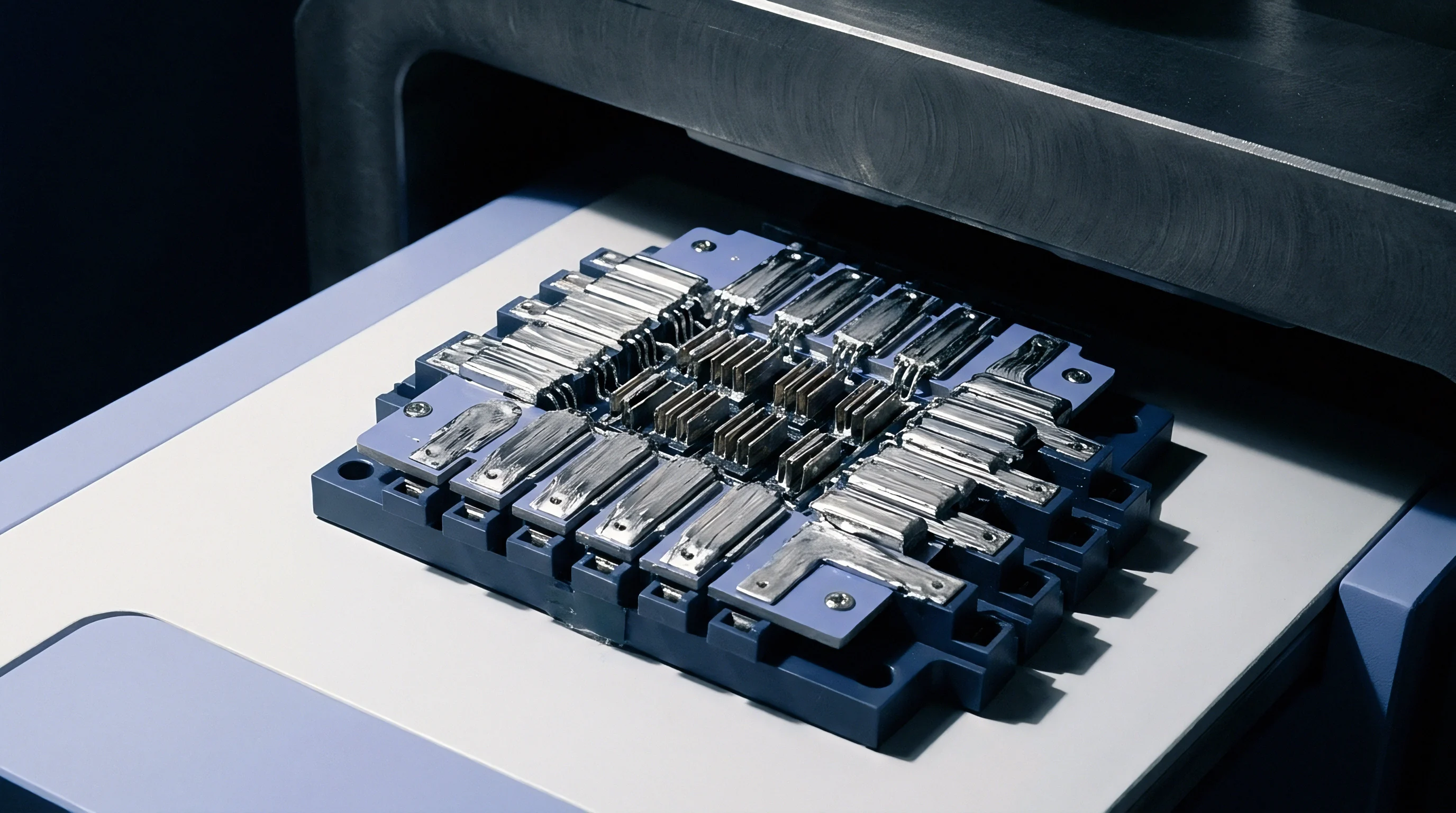
Mitigating zero-point drift depends on decoupling the resistive alloy from polymer volumetric deformation. When mechanical stress cannot reach the sensing metal, viscoelastic creep in the package cannot alter electrical characteristics. Structural redesign eliminates the rigid adhesive bridge, substituting compliant materials or free-floating mechanical mounts that accommodate expansion mismatches without transmitting shear forces into the active sensing area.
Open-frame architectures eliminate encapsulants entirely. Welded busbar shunts mounted on ceramic standoffs expose the bare metallic element to circulating air or dielectric coolant. While this design provides superior zero stability, it sacrifices environmental protection against moisture, dust, and corrosive automotive contaminants.
Sealed designs require soft intermediary barriers that isolate the foil from rigid outer housings.
Procurement agreements referencing IEC 60115-1 without an explicit post-thermal dwell window permit suppliers to deliver drifting assemblies as compliant stock.
Which Design Choices Eliminate Packaging Induced Hysteresis?
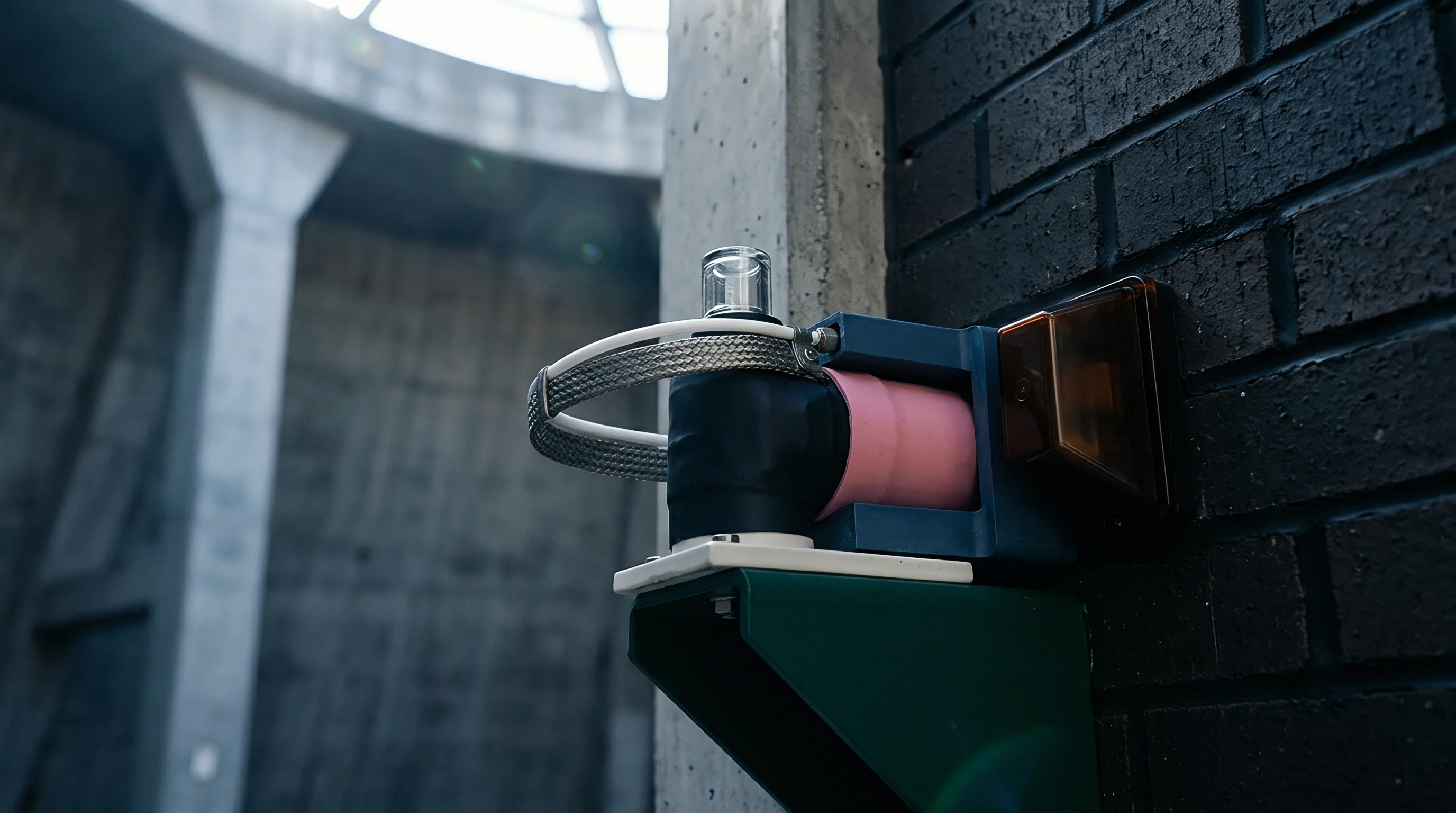
Compliant silastic coatings placed over the sensing element absorb volumetric changes before stresses reach the metal. Applying a controlled layer of soft silicone gel with a shore hardness below Shore A twenty-five creates a mechanical buffer. The outer epoxy shell bonds to the perimeter of the terminal lugs, while the sensitive manganin section floats within the non-rigid gel reservoir.
Silicones decouple the mechanical interface. The expansion and relaxation of the exterior casing dissipate harmlessly within the flexible buffer zone.
Modifying epoxy resin chemistry provides a parallel mitigation route. Formulating resins with high glass transition temperatures above one hundred and sixty degrees Celsius keeps the material firmly in its glassy state across automotive operating ranges. Increasing the filler content with spherical fused silica nanoparticles brings the bulk resin thermal expansion coefficient down to match copper and manganin.
These highly filled systems exhibit significantly longer relaxation time constants, suppressing the rate of high-temperature creep during normal vehicle mission profiles.

Sourcing Specifications for Low Hysteresis Enclosures
Procurement documents demand explicit glass transition boundaries and post-mold curing parameters. Sourcing engineers eliminate vague catalog compliance statements by requiring suppliers to submit dynamic mechanical analysis traces showing storage modulus and loss tangent from minus forty to one hundred and fifty degrees Celsius. These physical traces reveal exactly where the potting material will soften and initiate viscoelastic drift.
The warranty reserve vanishes. Supplier selection balances the landed unit price of encapsulated sensors against the long-term field liabilities of battery pack returns. An unbuffered molded shunt costs thirty percent less than an isolated, silicone-buffered hybrid assembly.
That upfront saving is wiped out the moment uncorrected zero wander causes a fleet of utility vehicles to miscalculate battery reserve capacity, forcing costly software patches and field recalibrations. Selecting potting materials with high mechanical compliance preserves sensor zero stability far more effectively than attempting to model polymer creep in downstream software.