Resolving Long-Term Piezoresistive Zero Stability Limits across Polymer-Metal Interfaces under Humid Environments
Polymer-metal piezoresistive zero stability requires barrier coatings and covalent silane coupling to suppress hygroscopic substrate strain and interface oxidation.
Swell
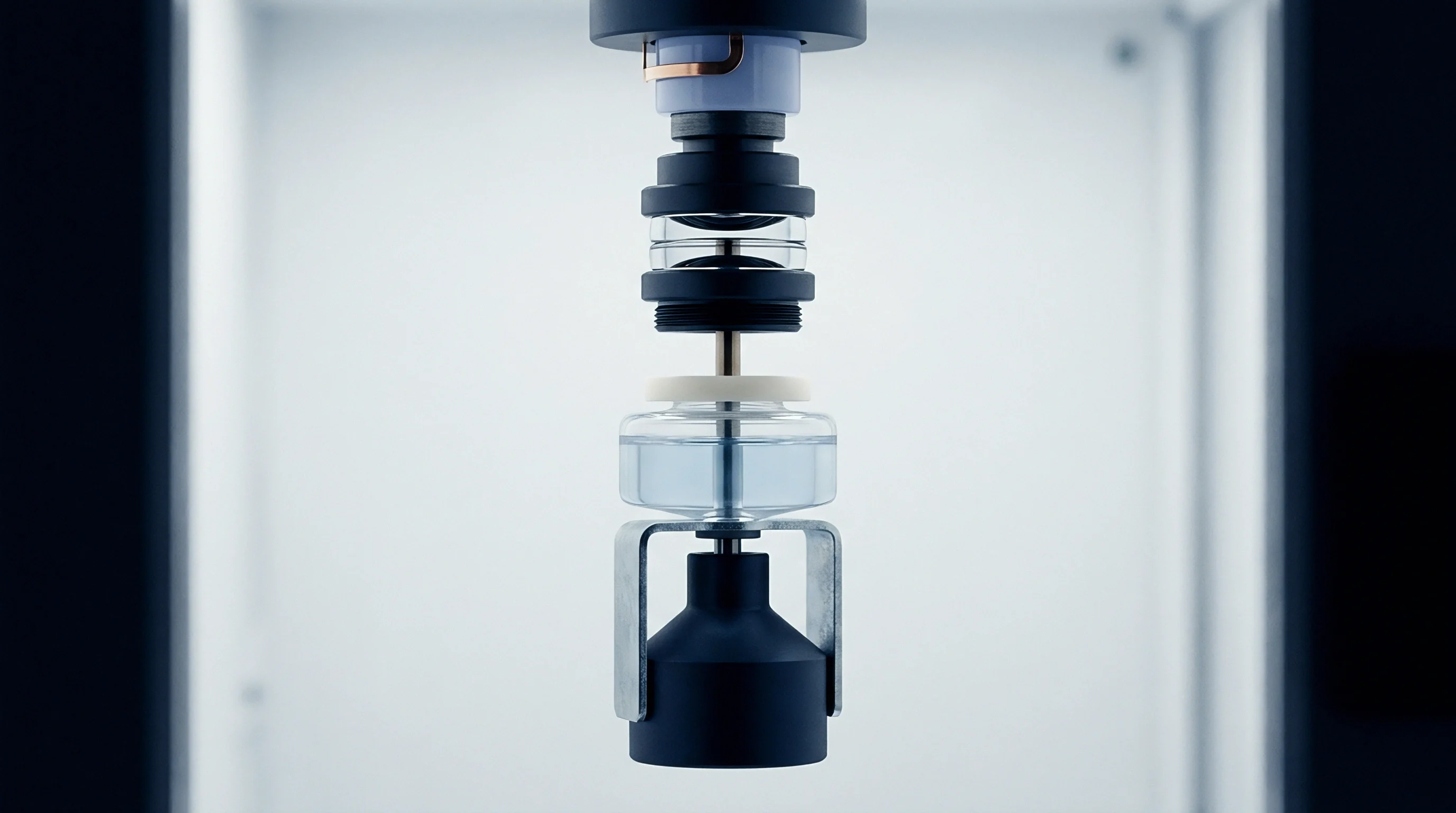
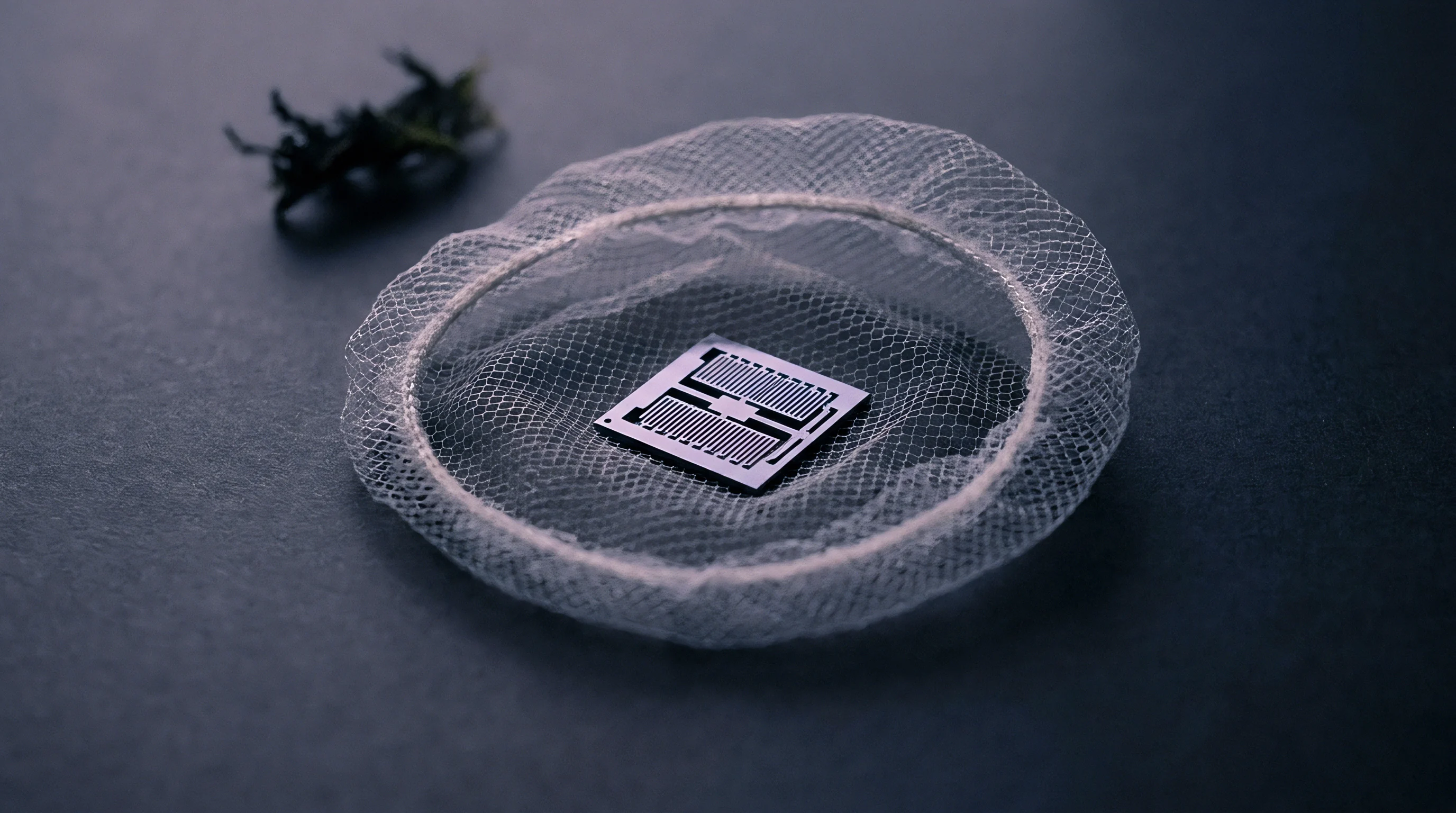
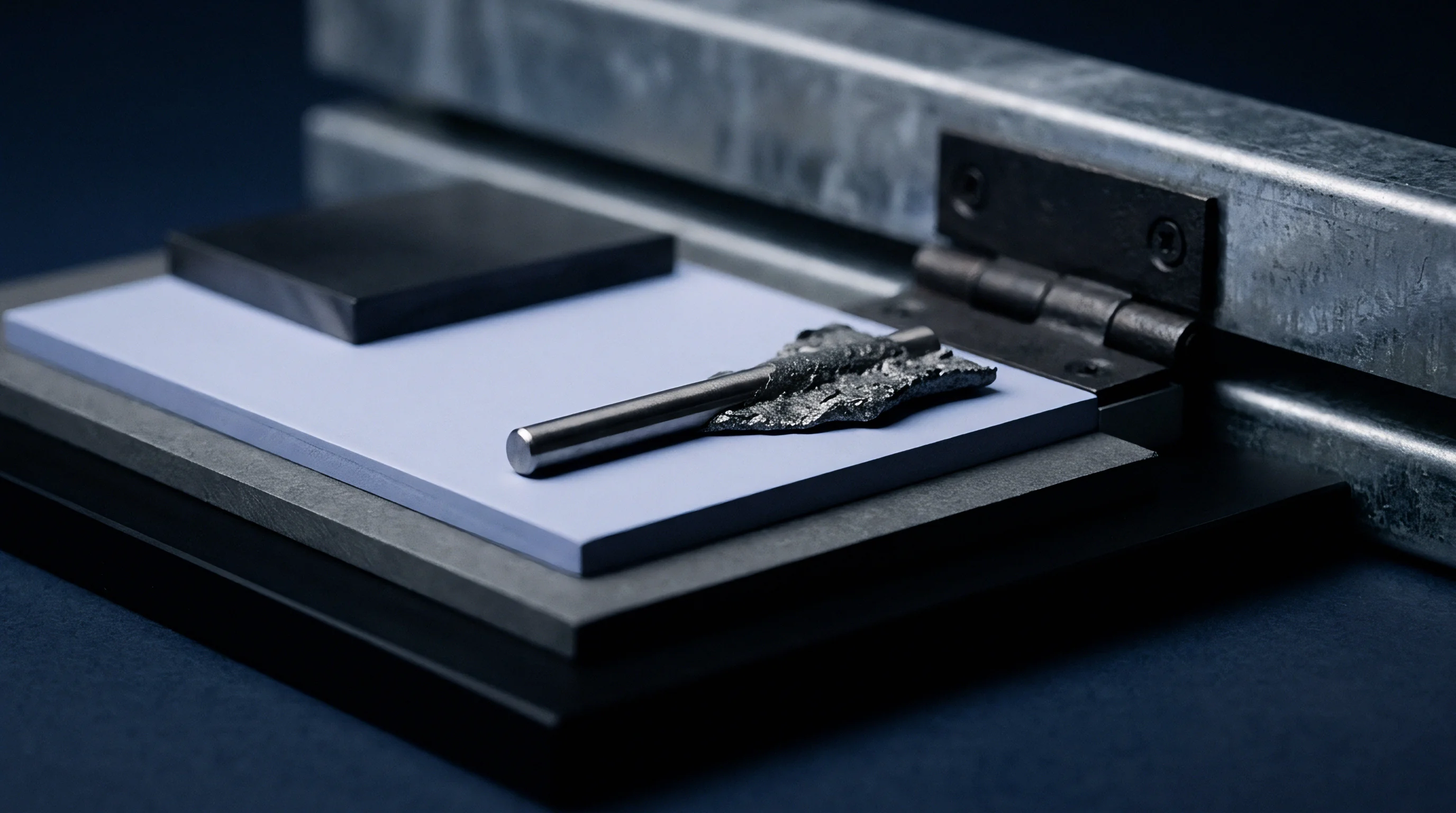
Polymer substrates in piezoresistive transducers continuously absorb atmospheric moisture until reaching thermodynamic equilibrium with the surrounding relative humidity. This uptake alters the density and mechanical dimensions of organic backing films, producing localized expansion directly beneath thin-film gauge elements. When moisture diffuses into flexible polyimide, epoxy, or elastomeric carriers, the bulk material expands isotropically or anisotropically depending on polymer chain orientation.
Strain from this volumetric growth couples into bonded or sputtered metal resistance grids, registering as apparent mechanical force even under zero applied load.
Hygro-Mechanical Strain Coupling at the Substrate
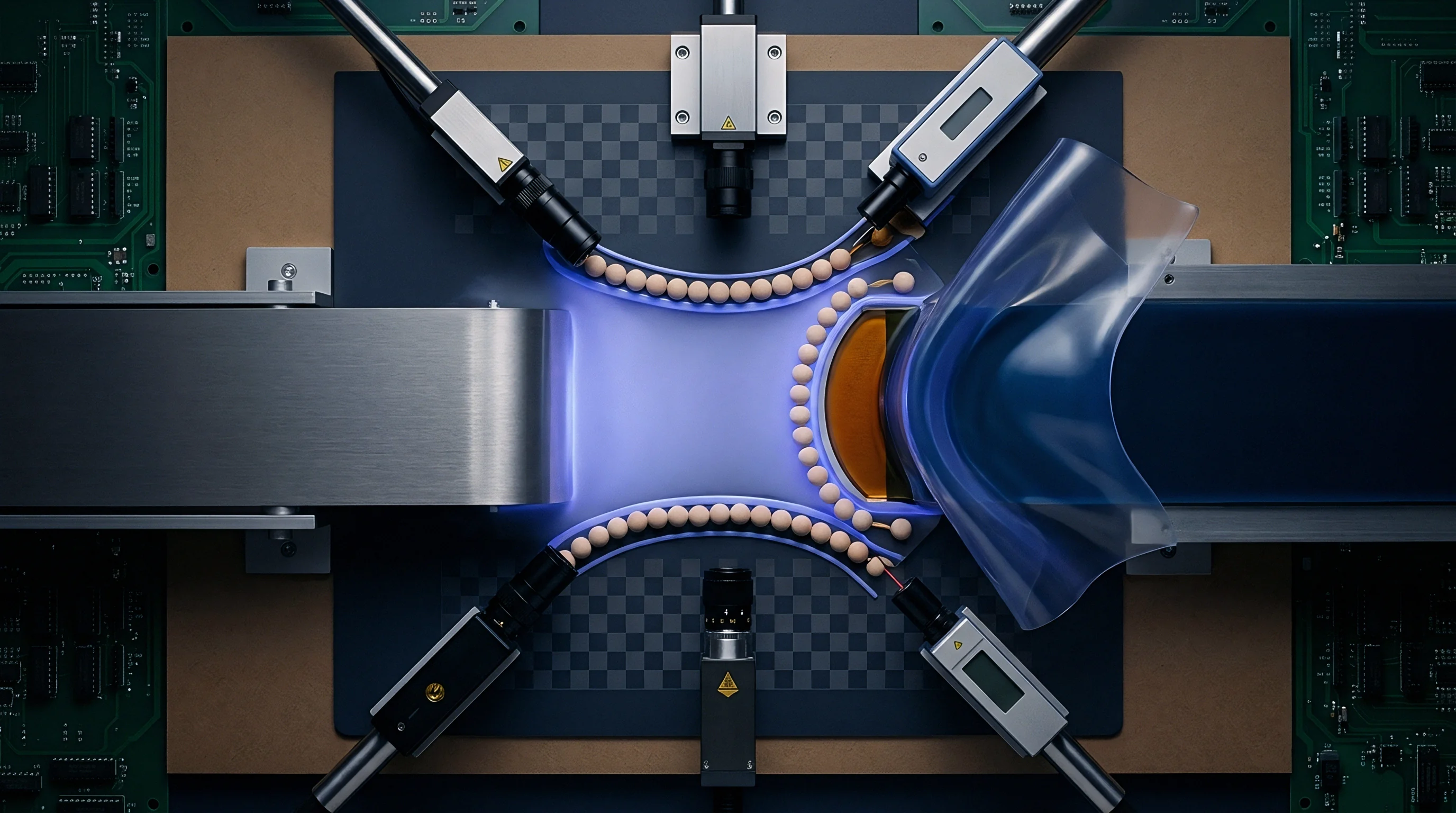
Volumetric expansion within organic carrier layers imparts parasitic mechanical forces directly to thin metal resistor traces. Fickian diffusion governs water vapor transport through the polymer matrix, where the concentration gradient C(x,t) evolves with exposure duration and ambient vapor pressure. As water molecules occupy free volume in the matrix, hygroscopic expansion creates parasitic tensile strain in the overlying metallization, driving a positive or negative baseline zero shift (Δ R0 / R0) determined by the gauge factor of the metal alloy.
Moisture uptake directly shifts baseline bridge resistance.
- Matrix Lattice Dilation Water molecules occupy interstitial sites within the polymer network, forcing polymer chains apart and generating localized tensile stress along adjacent thin-film metallization.
- Differential Coefficient Mismatch Inelastic volumetric growth in the organic layer conflicts with the rigid elastic modulus of sputtered chromium or platinum tracks, inducing residual zero-point offset.
- Moisture Absorption Hysteresis Desorption trajectories fail to mirror absorption paths during relative humidity cycles, leaving permanent residual strain at the sensing grid.
- Plasticization of Adhesive Layers Water molecules weaken intermolecular hydrogen bonds inside epoxy adhesives, lowering shear modulus and shifting the mechanical load transfer ratio onto the piezoresistor.
Substrate swelling transfers mechanical strain directly into the conductive grid.
Sputtered platinum-on-polyimide strain elements exhibit a baseline zero drift up to 0.45 percent full scale when relative humidity steps from 20 percent to 85 percent at 45 degrees Celsius.
Thicker polymer backings absorb a larger total mass of water, extending baseline stabilization times well after ambient relative humidity has leveled off.
Interface
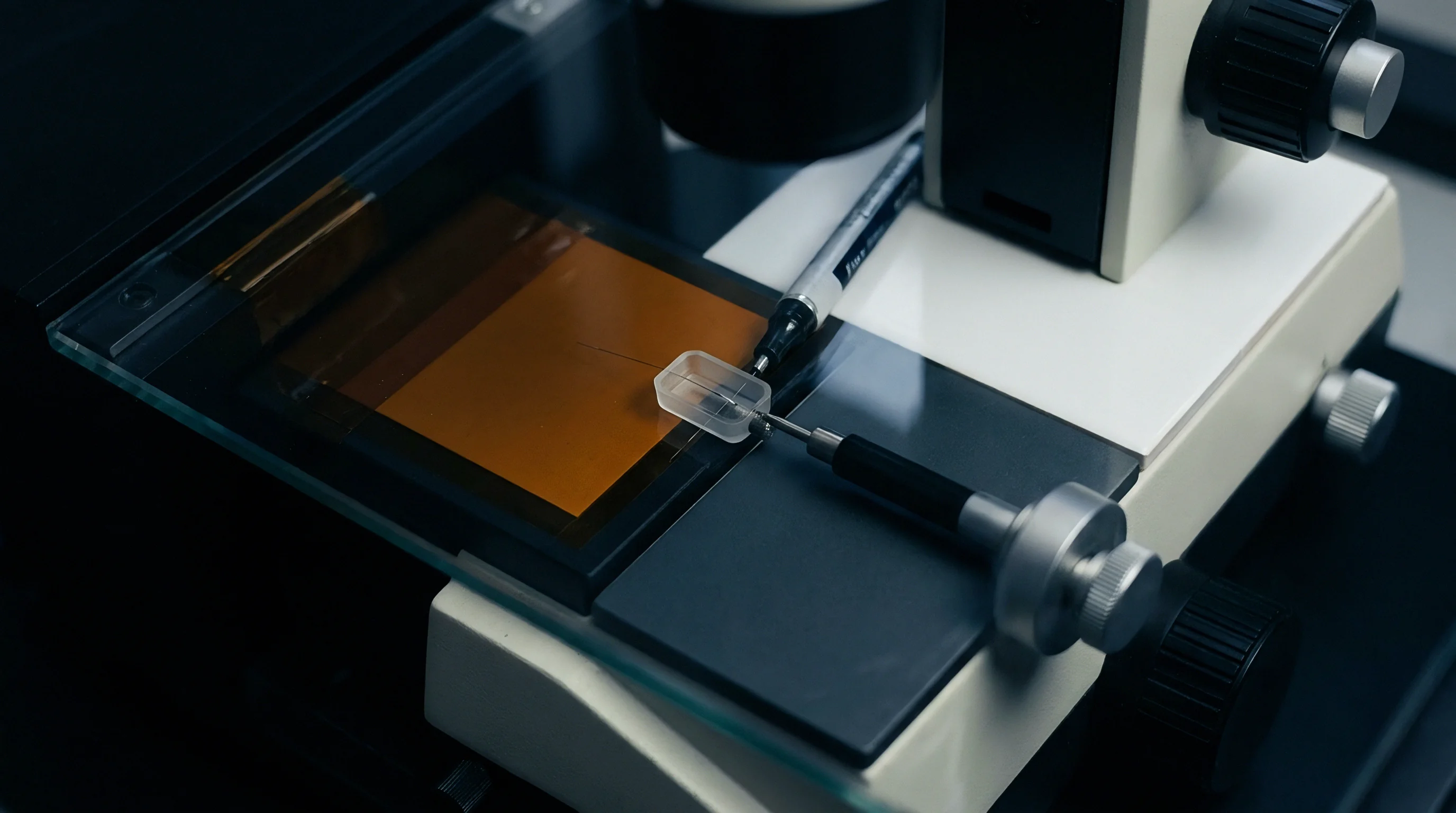
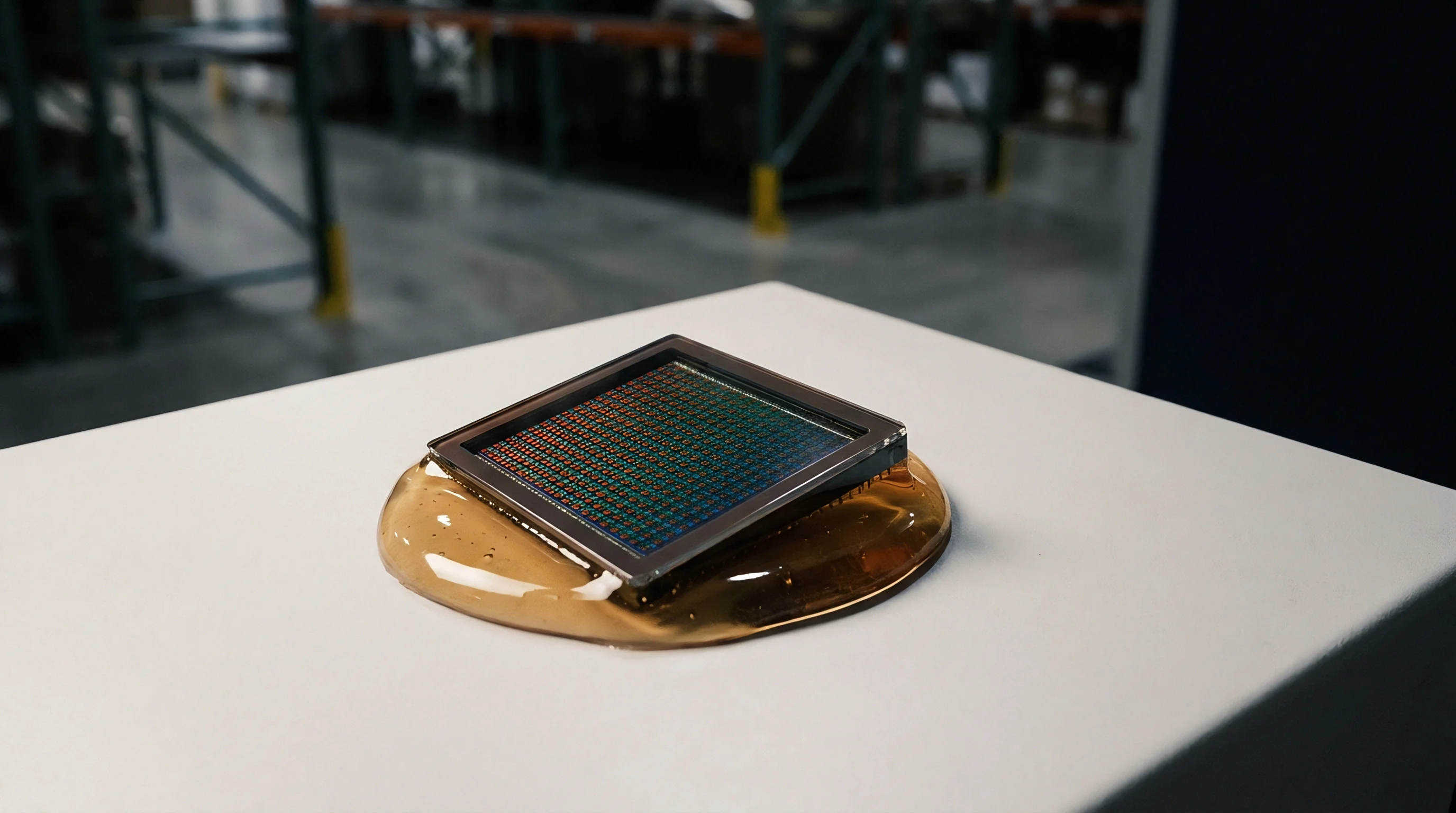
Interfaces between metallic conductors and organic substrates represent primary pathways for environmental degradation. Moisture migrating through the bulk polymer collects along the micro-structural boundary between the dielectric layer and the conductive thin film. High local moisture concentrations at this boundary trigger chemical, electrical, and mechanical breakdown mechanisms that destabilize nominal bridge resistance.
Oxidation Dynamics of Adhesion Layers
Chromium and titanium tie layers react readily with ingressing water vapor, converting solid metal films into non-conductive oxides. Adhesion layers sputtered between polyimide backings and gold or platinum piezoresistors typically measure only 10 to 50 nanometers in thickness. Galvanic reactions accelerated by trapped moisture convert elemental chromium to chromium hydroxide and chromium oxide, progressively raising trace resistance and causing irreversible positive zero drift.
| Substrate Material | Moisture Absorption Rate (%) | Hygroscopic Expansion Coefficient (ppm/%RH) | Interfacial Shear Decay (%) | Baseline Drift Rate (%FS/1000h) |
|---|---|---|---|---|
| Polyimide (PI) | 2.85 | 28.5 | 34.2 | 0.38 |
| Epoxy Glass (FR4) | 0.35 | 12.0 | 18.5 | 0.12 |
| Polyetheretherketone (PEEK) | 0.15 | 8.2 | 9.1 | 0.05 |
| Polydimethylsiloxane (PDMS) | 0.08 | 4.5 | 42.0 | 0.62 |
Charge Trapping and Electrochemical Migration
Electric fields across piezoresistive Wheatstone bridges drive accumulated water molecules toward dielectric interfaces. Dissolved ionic impurities in the polymer matrix migrate along these potential gradients and pool at thin-film step edges. The resulting trapped charges distort local electrostatic fields, shifting effective carrier density within semi-metallic or piezoresistive silicon-polymer structures.
Under continuous excitation, metal ions dissolve from biased traces and grow dendrites across contact gaps, degrading isolation resistance and creating parasitic shunts.
Moisture accumulation eventually degrades the interfacial adhesive bond.
Oxide growth progressively alters dimensions across the contact pads.
Accumulated ions at the boundary shift the effective bridge bias.
Clause 6.3 of IEC 60068 2 78 mandates damp heat testing without electrical bias, which hides ionic migration zero shifts that occur during powered field operations.
Baseline zero offset drift is frequently attributed to ambient temperature fluctuations rather than long-term moisture ingress into sub-surface metallization layers.

Verification
Distinguishing reversible moisture swelling from permanent bond degradation requires disciplined environmental profiling. Standard ambient testing cannot separate transient volumetric expansion from irreversible chemical oxidation at metal contacts. Stepped humidity cycles coupled with controlled thermal bake-outs isolate recoverable zero shifts from permanent baseline offsets.
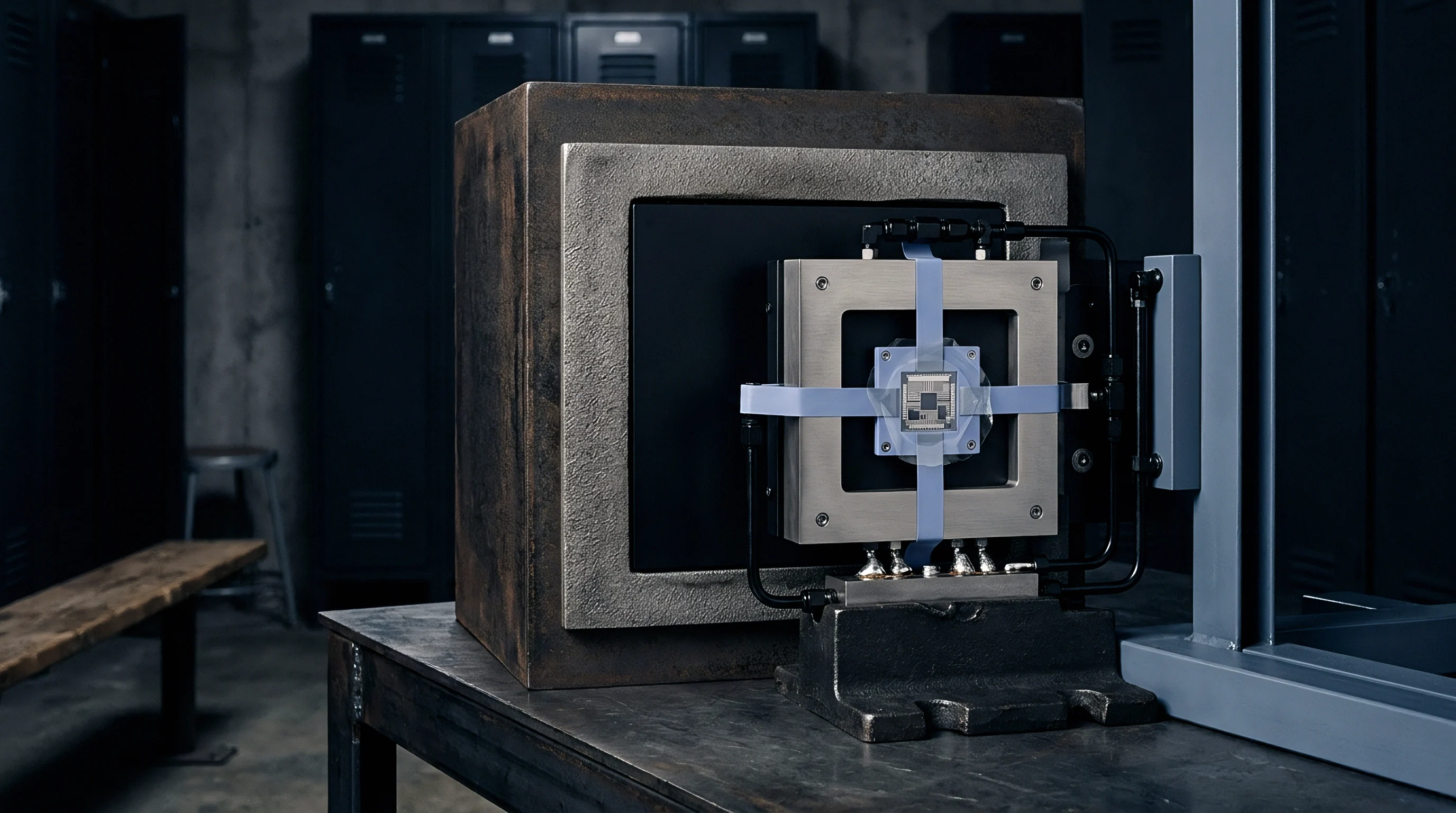
Can Accelerated Humidity Testing Predict Multiyear Baseline Drift?
Standard soak tests at elevated temperature and humidity compress months of operating exposure into laboratory timeframes. Exposing piezoresistive assemblies to 85 degrees Celsius and 85 percent relative humidity accelerates moisture ingress into organic matrices in line with Arrhenius rate behavior. This combined exposure drives hydrolytic bond cleavage, yielding empirical data to project multiyear zero stability under humid field conditions.
Elevated operating temperatures accelerate moisture ingress through the backing.
Conventional thermal bake-outs often mask underlying absorption hysteresis.
- Stabilize the sensor assembly in a dry nitrogen environment at 25 degrees Celsius for 48 hours to register the true dry reference zero resistance.
- Increase ambient humidity to 85 percent relative humidity at 25 degrees Celsius while holding continuous bias voltage, logging bridge output every six minutes.
- Elevate chamber temperature to 85 degrees Celsius at 85 percent relative humidity for 500 consecutive hours to accelerate hydrolytic bond degradation.
- Return the test chamber to 25 degrees Celsius and 20 percent relative humidity, recording recovery output across a 72 hour stabilization window.
- Subject the sensor package to a 105 degree Celsius bake-out for 24 hours to drive off all absorbed water, yielding the unrecoverable permanent zero shift.
A dry recovery cycle isolates permanent degradation from temporary swelling.
Whether transient interfacial charge trapping fully dissipates after extended high-temperature bake-out cycles remains an open question among sensor metrologists.
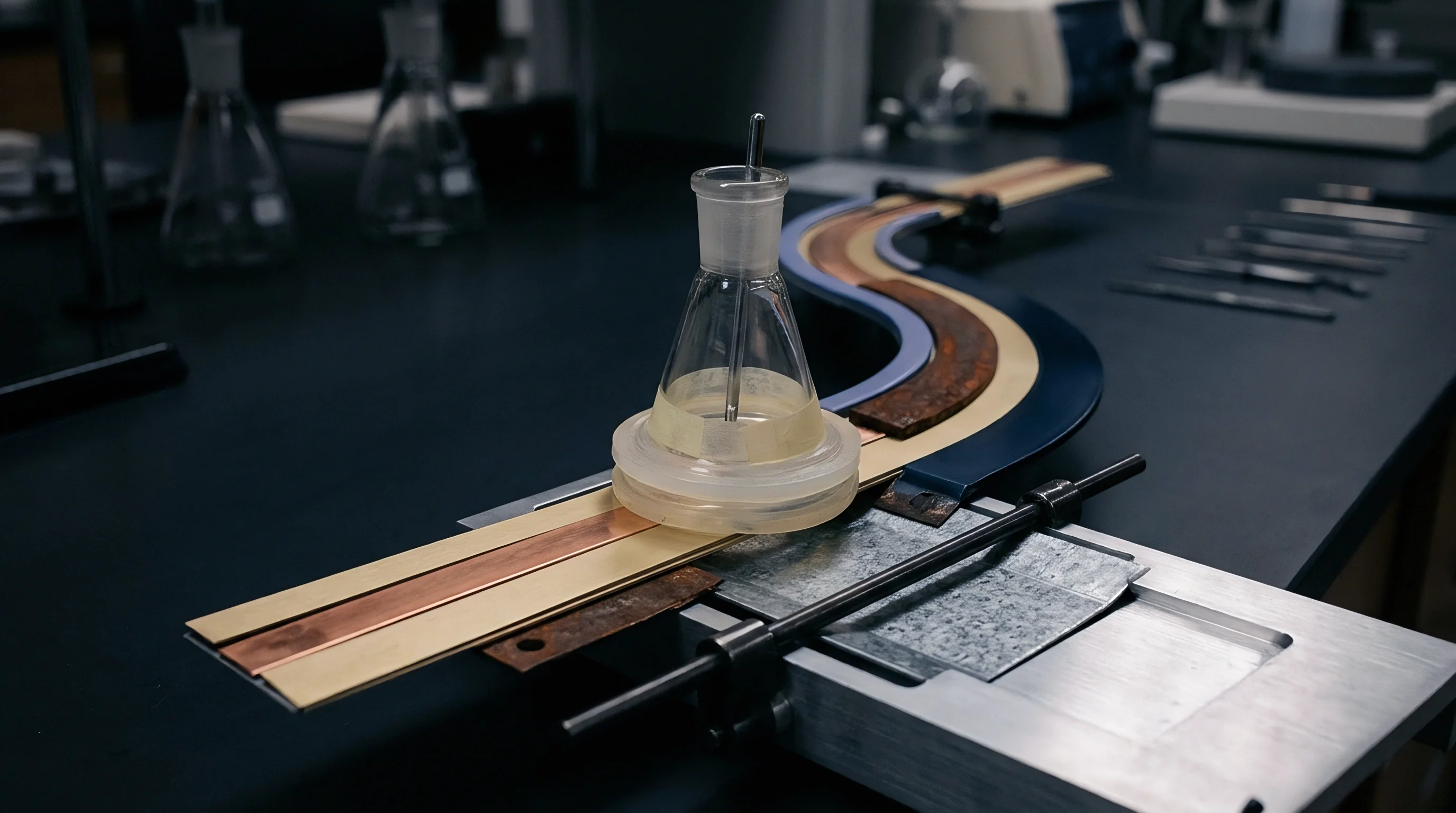
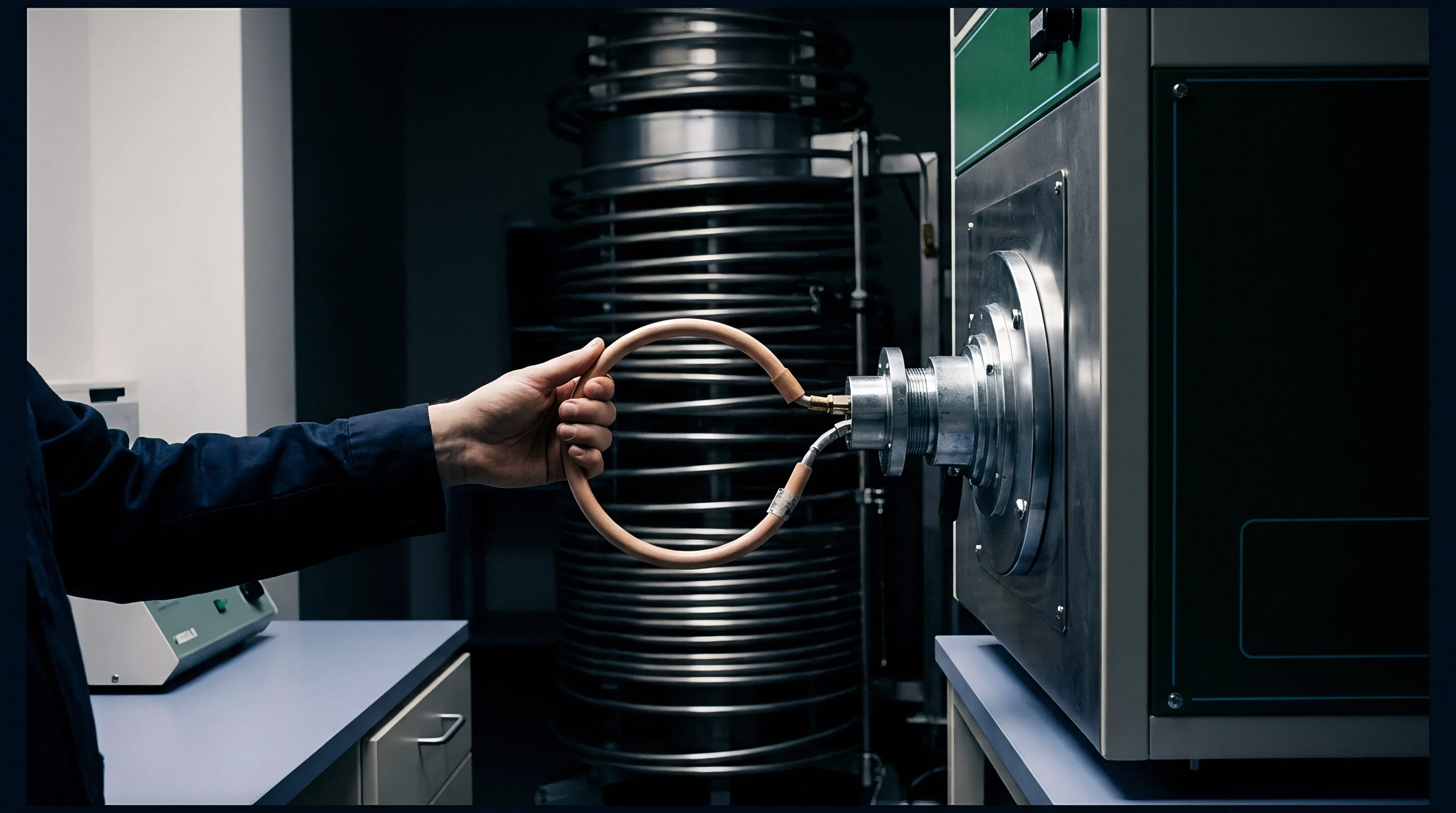
Budget
Calculating measurement uncertainty demands rigorous separation of individual environmental zero offset contributors. Standard bridge formulations treat zero drift as a single lumped parameter, obscuring interactions between ambient humidity and structural thermal expansion. A thorough metrological assessment builds an uncertainty budget that incorporates distinct sensitivity coefficients for relative humidity, operating temperature, and contact degradation.
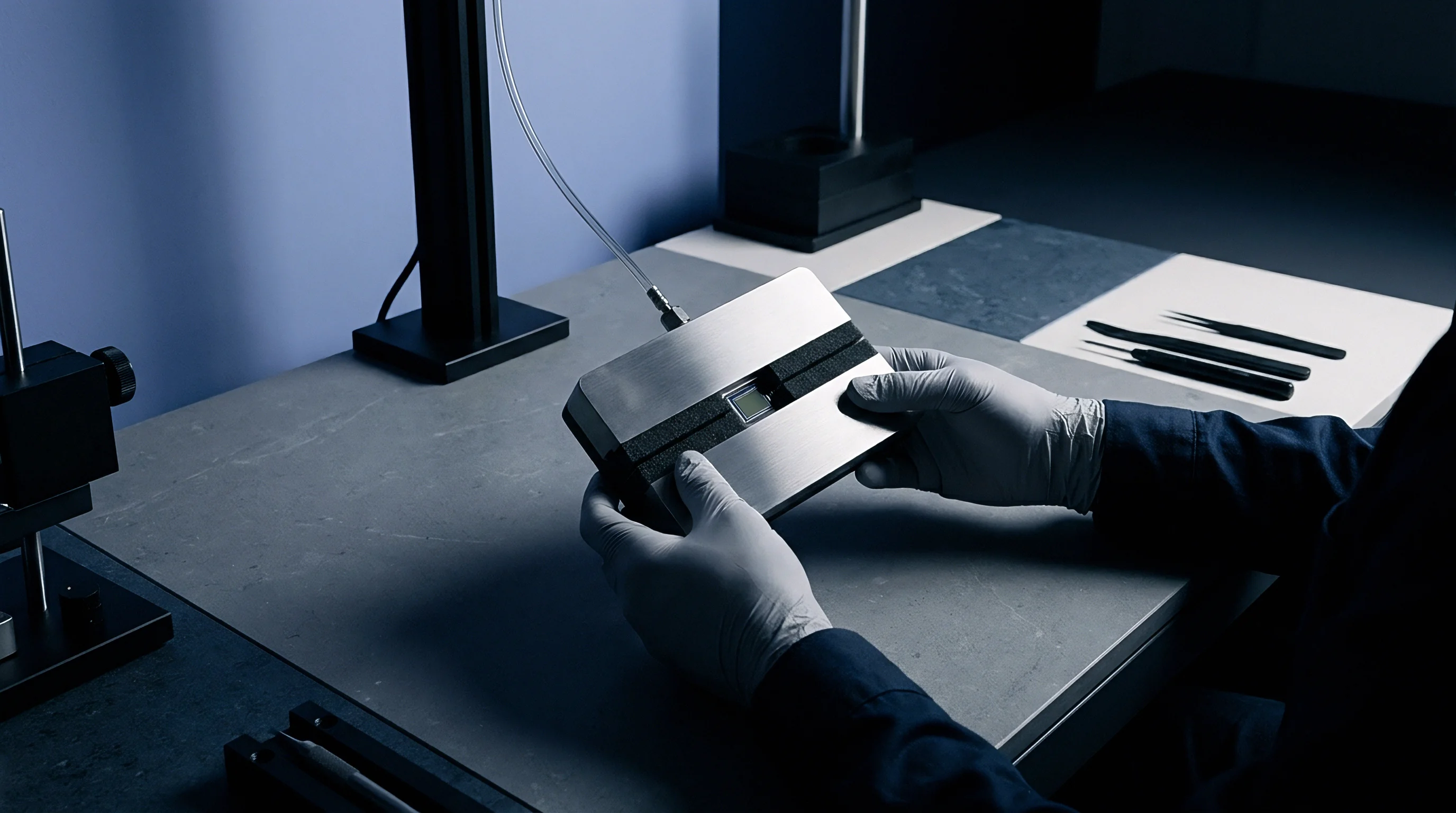
Quantifying Combined Standard Uncertainty for Baseline Drift
Error propagation models combine thermal expansion, hygroscopic swelling, and contact resistance variation into a unified coverage interval. Sensitivity coefficients derived from partial derivatives of the bridge equation scale each environmental contributor. Evaluating these terms under expanded coverage factors (k = 2) establishes the realistic operational tolerance band for the element across its service life.
| Component Source | Error Type | Probability Distribution | Standard Uncertainty (%FS) | Sensitivity Coefficient | Contribution (%FS) |
|---|---|---|---|---|---|
| Hygroscopic Matrix Swelling | Type B | Rectangular | 0.180 | 1.20 | 0.216 |
| Adhesion Layer Oxidation | Type B | Normal | 0.090 | 1.00 | 0.090 |
| Temperature-Humidity Coupling | Type A | Normal | 0.065 | 1.50 | 0.098 |
| Bridge Resistor Mismatch | Type B | Rectangular | 0.040 | 1.00 | 0.040 |
| Contact Resistance Wander | Type A | Normal | 0.030 | 0.85 | 0.026 |
Consider a 1000 ohm thin-film nickel-chromium piezoresistive element deposited on a polyimide diaphragm. The active gauge factor measures 2.1. The substrate material exhibits a hygroscopic expansion coefficient of 25 ppm/%RH.
If ambient relative humidity increases by 60 percent RH during seasonal operational shifts, the parasitic mechanical strain induced in the polymer equals 1500 με. The resulting resistance change calculates as 3.15 Ω, generating a baseline zero offset error of 0.315 percent full scale independent of external load.
Hygroscopic drift introduces persistent offsets into raw sensor measurements.
Polymer-metal sensor bridges operated above the glass transition temperature of the adhesive layer lose zero stability long before moisture saturation reaches equilibrium.
Overlooking hygroscopic zero drift in industrial transmitters introduces systematic measurement bias, resulting in tank overfills and premature recalibration rejections.

Mitigation
Maintaining long-term zero stability requires physical encapsulation barriers alongside chemical stabilization at the interface. Surface protection design focuses on blocking moisture access to metal films while buffering strain transfer from hygroscopic polymer swelling. Dual-barrier packaging architectures isolate active bridge regions from water vapor while preserving mechanical compliance.

Encapsulation Barrier Selection and Passivation
Thin vapor-deposited polymers and atomic layer ceramic coatings arrest moisture before it reaches active sensor surfaces. Applying hydrophobic films across exposed piezoresistive grids blocks liquid water and lowers vapor diffusion rates by orders of magnitude. The selected coating governs device hysteresis, response dynamics, and long-term zero drift under demanding operating conditions.
| Coating Material | Deposition Method | Water Vapor Transmission Rate (g/m²/day) | Baseline Drift Reduction (%) | Unit Cost Adder (USD) |
|---|---|---|---|---|
| Parylene C (15 µm) | Vapor Deposition | 0.0800 | 82 | 3.40 |
| Fluoropolymer Cytop (2 µm) | Spin Coating | 0.4500 | 64 | 1.15 |
| Atomic Layer Al2O3/TiO2 (50 nm) | Atomic Layer Deposition | 0.0001 | 96 | 8.50 |
| Silicone Gel Encapsulation (1 mm) | Dispensing | 2.1000 | 28 | 0.40 |

Chemical Surface Coupling and Stress Relief
Organosilane primers form covalent bonds across metal oxide films and organic polymer matrices, reducing moisture-induced debonding. Applying chemical coupling agents to metallic surfaces before deposition creates moisture-resistant siloxane linkages that resist hydrolytic cleavage. Laser-machined strain isolation geometries divert matrix expansion stresses away from active piezoresistive zones, decoupling substrate swelling from signal output.
Effective surface passivation seals primary pathways against moisture ingress.
- Silane Coupling Primer Application of amino-functional silane compounds onto oxidized metal tracks establishes water-resistant covalent siloxane linkages before adhesive laying.
- Stress-Relief Relief Grooves Laser-milled isolation slots cut through the polymer substrate absorb volumetric expansion strain before forces reach the active resistor bridge.
- Atomic Nanolaminate Capping Deposition of alternating aluminum oxide and titanium oxide nanolayers creates a pinhole-free diffusion barrier over micro-machined sensing features.
- Symmetric Dual-Grid Layout Structuring dummy resistance grids on un-strained polymer zones cancels out isotropic hygroscopic swelling shifts through bridge differential math.
Sputtered ceramic barrier films beneath metal contact pads block lateral water diffusion across the active sensing element.
Optimizing barrier layer thickness requires balancing moisture diffusion impedance against mechanical dampening, as excessively thick ceramic coatings stiffen sensitive polymer diaphragms and reduce overall piezoresistive sensitivity.

Contract
Procurement dossiers translate metrological drift limits into enforceable commercial terms. Technical datasheets routinely state accuracy specifications derived exclusively in 25 degree Celsius dry laboratory environments. Procurement teams draft environmental qualification terms that require suppliers to guarantee zero stability under sustained humidity and operating bias.
Structuring Datasheet Zero Drift Guarantees
Standard commercial guarantees often limit baseline drift limits to dry ambient bench conditions, transferring field failure risks downstream. Sourcing specifications establish explicit drift thresholds across defined relative humidity ranges, operating temperatures, and powered durations. Contractual terms incorporate lot rejection penalties when sample units fail accelerated damp heat verification testing.
Uncontrolled baseline drift undermines long-term production yields.
- Damp Heat Drift Specification Standardized procurement agreements define maximum allowable zero drift in percent full scale across 1000 hours at 85 percent relative humidity.
- Bake-Out Recovery Limit Sourcing terms cap the unrecoverable permanent zero offset remaining after a full 24 hour dry thermal recovery cycle.
- Traceable Batch Environmental Test Reports Suppliers submit lot-level Damp Heat Steady State test records executed under accredited laboratory scopes before shipment approval.
- Warranty Recalibration Remedy Acceptance agreements mandate supplier coverage of calibration and field service costs if zero drift exceeds two times the annual tolerance limit within 24 months.
Standard warranty terms frequently elapse before humidity-driven failures manifest.
Incorporating section 4.2 of ISO 10012 into procurement contracts legally obligates sensor vendors to supply long-term environmental zero drift evidence, replacing unverified datasheet claims with traceable calibration data.