Resolving Covariance Propagation in Multichannel Dynamic Calibration Systems for Sensor Sourcing Qualification
Resolving dynamic calibration covariance requires tracking cross-channel spectral correlations to prevent accepting multi-axis sensors that breach true tolerances.


Flaw
Multichannel dynamic calibration systems determine frequency-dependent sensitivity, phase delay, and cross-axis rejection for high-bandwidth sensing arrays. Factory qualification campaigns for multi-axis inertial measurement units, multi-component piezoelectric force balances, and acoustic arrays routinely treat calibration channels as statistically isolated measurement loops. That assumption corrupts acceptance decisions at the procurement dock.
Dynamic stimulus generation introduces shared physical disturbances across channels. An electrodynamic multi-shaker platform driving a triaxial accelerometer fixture imparts structural rocking modes, base-strain deformation, and thermal dissipation through mechanical stingers. When calibration technicians extract dynamic sensitivity matrices via single-channel discrete Fourier transforms, cross-spectral energy is relegated to uncharacterized measurement noise.
This clerical convenience discards the off-diagonal covariance terms that govern multi-axis vector uncertainty.
Ignoring off-diagonal covariance terms underestimates compound vector measurement uncertainty by up to forty percent during dynamic multi-axis qualification trials.
Sensor sourcing contracts specify operational tolerances across broad frequency envelopes, such as plus or minus 1.5% amplitude flatness and plus or minus 1.0 degree phase alignment from 10 Hz to 5 kHz. When an acceptance protocol processes qualification data without cross-channel dynamic covariance, the receiving team accepts out-of-specification lots. Sourcing engineers face elevated field-return rates for guidance units or structural monitoring systems that nominally cleared factory acceptance testing.
Resolving cross-channel dynamic covariance demands tracking phase-correlated uncertainties through the calibration processing chain.
The root problem sits within multichannel dynamic signal processing architectures. Standard single-input single-output processing treats dynamic sensitivity as a scalar transfer function across discrete frequency bins. Dynamic calibration of coupled sensors constitutes a fully populated complex transfer matrix equation: Y(ω) equals H(ω) multiplied by X(ω) plus E(ω).
Here, Y(ω) denotes the measured output vector, X(ω) represents the primary reference input vector, H(ω) embodies the dynamic sensitivity matrix, and E(ω) captures complex residual errors. Propagating uncertainty according to JCGM 100:2008 requires tracking the full multivariate input covariance matrix across real and imaginary components at every frequency increment.
Procurement teams encounter vendor calibration dossiers containing high-order dynamic transfer functions without cross-channel uncertainty representations. Vendor documentation often recites single-axis expanded uncertainties calculated under static or single-frequency conditions. When multi-axis operating conditions stimulate structural cross-talk and quadrature motion, compound vector uncertainty balloons beyond procurement boundaries.
Qualification protocols must mandate the full multivariate dynamic covariance structure to verify baseline tolerance conformance.
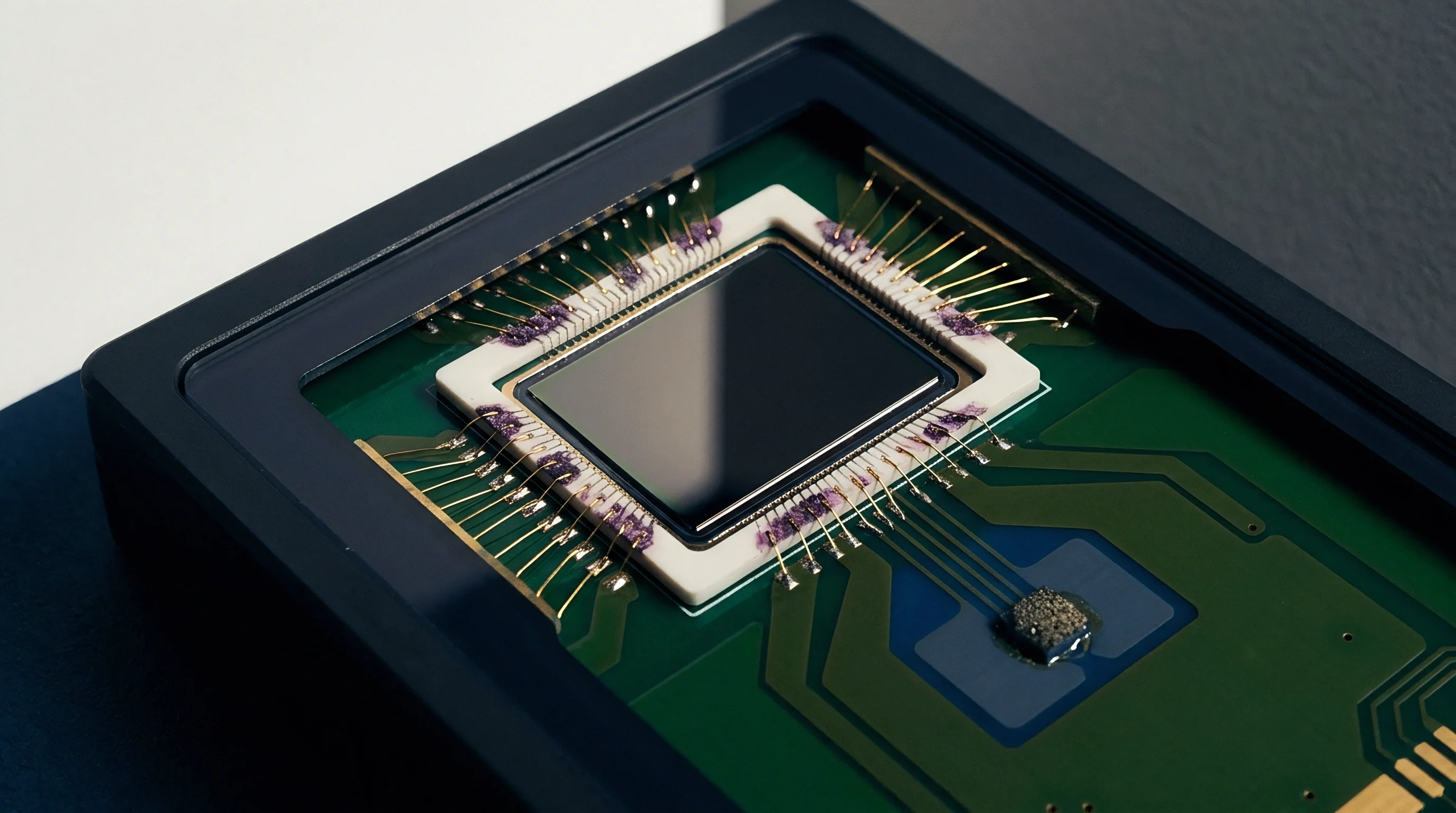
Transit
Traceability chains for dynamic multichannel calibration run from primary physical references through signal conditioning hardware to matrix reduction algorithms. Each transformation step reshapes both the nominal dynamic sensitivity values and the cross-channel uncertainty dispersion. Breaking this chain produces systematic compliance disputes between suppliers and quality engineering divisions.
Dynamic reference inputs rely on primary standards such as laser Doppler vibrometers for motion, dynamic pressure transfer transducers calibrated against shock tubes, or reference hydrophones. Laser vibrometers measure reference motion with expanded uncertainties of 0.5% in amplitude and 0.5 degrees in phase up to 10 kHz, under a coverage factor of k equals 2. When reference signals pass through transimpedance amplifiers, anti-aliasing filters, and multi-channel analog-to-digital converters, instrumentation inter-channel skew introduces correlated phase shifts.
A 20-nanosecond inter-channel clock skew produces a 0.072-degree systematic phase error at 10 kHz, generating spurious off-diagonal covariance terms between parallel data streams.
Digital signal processing introduces mathematical correlations across frequency bins and spatial measurement axes. Calculating dynamic cross-spectral density matrices via the Welch averaged periodogram method smooths spectral variance while inducing spectral leakage across adjoining frequency bins. Windowing functions such as Hann or Flat-Top windows distort the underlying noise covariance structure by linearly weighting raw time-domain records.
The dynamic covariance propagation sequence follows five discrete transformation stages across the measurement acquisition chain:
- Primary Reference Signal Conditioning converts raw photodiode currents or piezoelectric charges into conditioned voltage records while injecting thermal noise and gain drift across parallel channels.
- Synchronous Analog-to-Digital Conversion quantizes multichannel analog voltages simultaneously, where multiplexing delays or converter non-linearities introduce deterministic cross-talk and phase offsets.
- Discrete Fourier Transformation transforms windowed time-series records into complex frequency spectra, mapping time-domain errors into cross-correlated real and imaginary components.
- Transfer Function Estimation divides cross-spectral output densities by auto-spectral input densities using H1, H2, or Hv estimators, altering residual error distributions through non-linear division.
- Spatial Transformation Alignment rotates orthogonal measurement coordinates into the mechanical mounting frame via coordinate transformation matrices, projecting single-channel variance into fully coupled off-diagonal covariance terms.
Skipping the tracking of error propagation through these five stages invalidates the declared uncertainty budget. Sourcing qualifications require suppliers to submit the analytical or numerical Jacobian matrices describing each transformation step. Without these matrices, verifying whether an instrument met dynamic specifications at final test remains impossible.
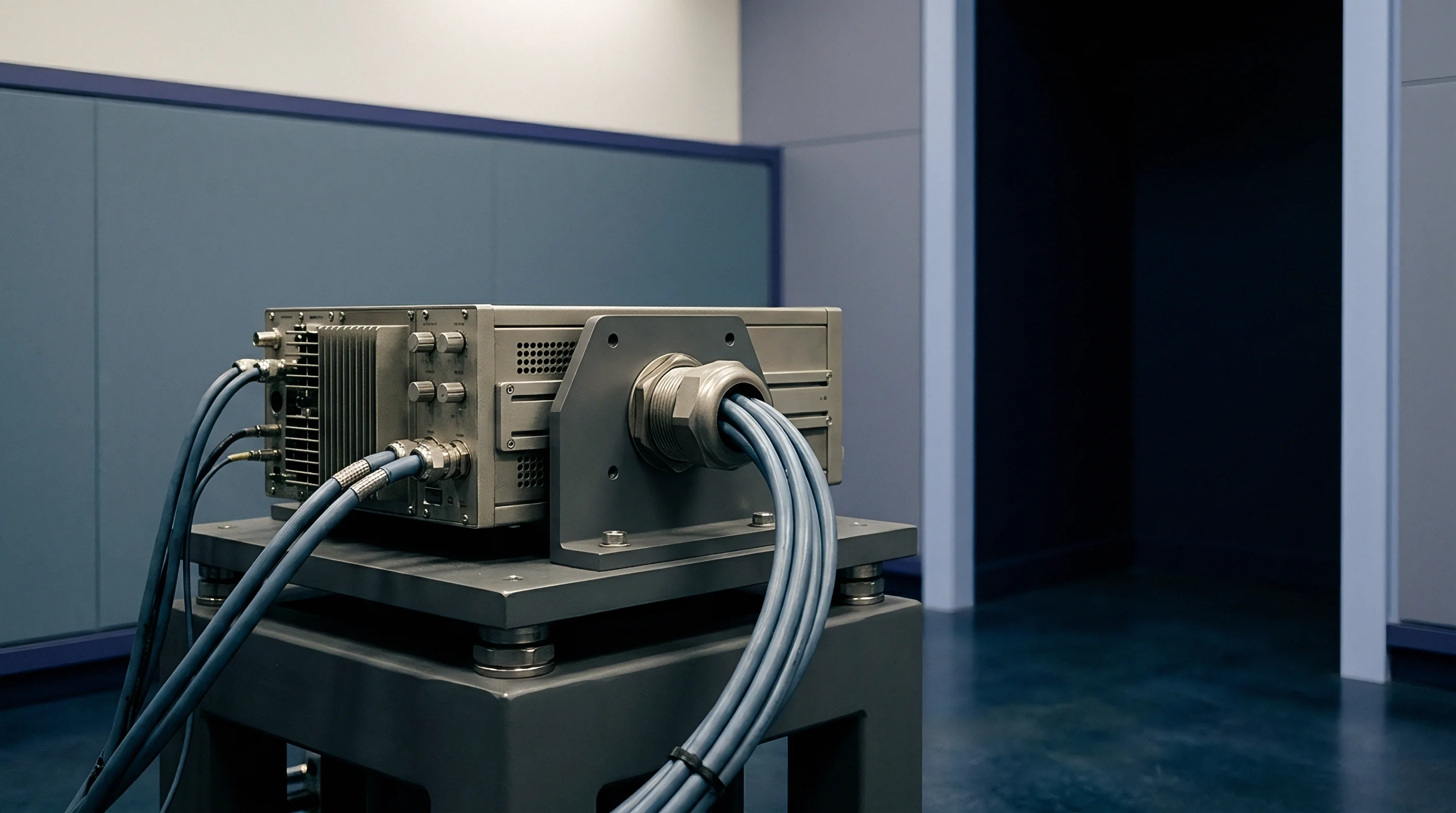

Spline
Suppliers employ parametric modeling algorithms to represent dynamic sensitivity continuously across wide frequency spectra. Continuous rational fraction polynomials, state-space representations, or autoregressive moving-average models replace massive arrays of discrete frequency points. These parameterizations alter how uncertainty propagates through sourcing evaluation pipelines.
Parametric Fitting Distortions
Model parameter estimation methods, including iterative least-squares and maximum likelihood estimation, fit complex poles and zeros to raw transfer function data. Fitting dynamic calibration data with high-order rational transfer functions risks severe numerical instability. When an algorithm overfits noisy high-frequency data, the variance of pole-zero locations increases sharply.
Cross-covariance between estimated transfer function coefficients links low-frequency gain directly to high-frequency phase damping parameters.
When quality engineers evaluate a sensor lot against an acceptance mask, they evaluate the parametric model at specified frequencies. Calculating the evaluated sensitivity variance requires the complete parameter covariance matrix. Sourcing dossiers that specify model coefficients without the accompanying parameter covariance matrix prevent independent verification of operational compliance.
| Processing Stage | Input Variance Parameter | Cross-Channel Covariance Source | Impact Factor On Uncertainty |
|---|---|---|---|
| Signal Conditioning | Voltage Gain Uncertainty (0.15%) | Power Supply Rail Ripple | 1.12 to 1.25 |
| Time Digitization | Quantization Noise (16-bit to 24-bit) | Sampling Clock Phase Jitter | 1.05 to 1.18 |
| Spectral Estimation | Welch Averaging Variance (N=64) | Window Function Spectral Overlap | 1.30 to 1.65 |
| Transfer Fitting | Pole-Zero Coefficient Variance | Parameter Gradient Cross-Coupling | 1.45 to 2.10 |
| Coordinate Rotation | Mechanical Alignment Tolerance (0.1 deg) | Geometric Projection Cross-Talk | 1.20 to 1.85 |
| Test conditions: 10 Hz to 10 kHz sweep, 24-bit acquisition at 102.4 kS/s, Hann windowing with 50 percent overlap. | |||
Parametric smoothing compresses data files for vendor archiving. That compression discards local structural resonance perturbations that appear only across specific multi-axis dynamic loads. Sourcing qualification mandates that suppliers provide raw non-parametric dynamic frequency response matrices alongside any fitted parametric splines.
Are Single-Channel Approximations Ever Metrologically Defensible?
Suppliers justify single-channel calibration architectures by demonstrating low static mechanical cross-axis sensitivity, often quoting cross-talk below 1.0%. This static mechanical metric does not govern dynamic operation. Dynamic cross-axis sensitivity routinely surges to 15% or 20% near high-frequency mechanical resonances or fixture mounting flexures.
The assumption of statistical independence between measurement channels fails wherever structural resonance, acoustic transmission, or electrical grounding paths link parallel sensor channels.
A calibration framework must isolate cross-channel covariance explicitly. Multi-input multi-output dynamic algorithms process full matrix cross-spectral densities, yielding true complex-valued covariance matrices for dynamic sensitivity. Sourcing specifications should forbid unilateral channel separation unless the supplier demonstrates cross-channel dynamic coherence below 0.01 across the entire operational passband.
Rig
Validating multichannel dynamic calibration systems requires examining the mechanical and electrical test apparatus. The dynamic test rig constitutes an electro-opto-mechanical computing engine whose physical behavior limits attainable uncertainty. Imperfections in rig dynamics project directly into cross-channel calibration errors.
Multi-axis electrodynamic shakers and hydraulic actuators suffer from lateral motion distortion, rotational rocking modes, and structural compliance. An actuator commanding pure vertical motion along a defined Z-axis inevitably produces parasite motions along the orthogonal X and Y axes. If the reference measurement system monitors single-axis excitation alone, cross-axis motions transfer into apparent sensor errors.
Multi-axis dynamic characterization demands tracking simultaneous reference vectors using triaxial laser Doppler vibrometry or clustered primary reference transducers.
Primary dynamic calibration procedures according to ISO 16063-11 require measuring unwanted transverse and rocking motion to ensure systematic errors remain within traceable thresholds.
Thermal gradients across multi-channel fixtures introduce another correlation vector. Electrodynamic voice coils dissipate substantial heat during broadband random or swept-sine testing, elevating test fixture temperatures by 15 to 30 degrees Celsius over a two-hour qualification run. Piezoelectric and piezoresistive sensors exhibit temperature coefficients of sensitivity ranging from 0.02% to 0.2% per degree Celsius.
Uneven thermal conduction through aluminum mounting blocks induces differential thermal drift across channels, driving zero-point drift and phase shifts that masquerade as dynamic transfer errors.
Common mechanical and electrical qualification failures trace to distinct root causes within dynamic calibration benches:
- Fixture Mechanical Resonance creates localized dynamic amplification at frequencies where the test fixture flexes, breaking rigid-body assumptions and generating extreme cross-axis covariance spikes.
- Ground Loop Induction drives common-mode line-frequency current through multichannel signal cable shields, creating correlated 50 Hz or 60 Hz hum across otherwise isolated channels.
- Reference Transducer Aging manifests as progressive dynamic de-calibration, where undetected physical sensitivity loss in the reference standards systematically biases every qualified product batch.
- Cross-Axis Phase Distortion emerges from uneven torque distribution across mounting screws, tilting sensor dies relative to the dynamic excitation vector.
Fixing these mechanical anomalies requires continuous structural health monitoring of the calibration fixture itself. Triaxial reference monitors must verify that parasite transverse motions remain at least 26 dB below primary excitation levels across the qualification band. If transverse parasite motion breaches this boundary, mathematical covariance correction models break down, requiring test abort and mechanical realignment.


Audit
Procuring high-reliability multi-channel sensor arrays requires rigorous verification of vendor calibration claims. Quality assurance divisions cannot rely on standard summary calibration sheets. Factory audits must dissect the mathematical engines and operational hardware suppliers use to qualify production lots.

Verification of Multivariate Uncertainty Statements
Auditors must trace the supplier’s calculation pipeline from analog time-series digitization to final covariance output matrices. A compliant calibration certificate lists dynamic sensitivity magnitude, phase angle, corresponding variance terms, and cross-channel correlation coefficients for each qualified frequency decade. If the supplier provides only a scalar uncertainty percentage, the audit team must issue a technical non-conformance.
A rigorous qualification audit examines the software implementation of uncertainty propagation algorithms. Suppliers often rely on automated commercial calibration software packages that silently drop covariance terms to minimize matrix inversion compute cycles. Software validation procedures must include synthetic test vectors with intentionally introduced cross-channel correlations to verify that the analytical processing code reproduces verified JCGM 100:2008 covariance propagation.
| Audit Domain | Standard / Clause Reference | Mandatory Technical Artifact | Rejection Boundary |
|---|---|---|---|
| Dynamic Traceability | ISO/IEC 17025:2017 Cl. 6.5 | Primary Optical Calibration Reports | Unbroken chain missing phase reference |
| Multi-Axis Motion | ISO 16063-21:2003 | Transverse Motion Verification Data | Parasite dynamic motion exceeding 10% |
| Covariance Modeling | JCGM 100:2008 Sec. 5.2 | Complex Off-Diagonal Covariance Matrices | Assumption of zero correlation between axes |
| Environmental Control | IEC 60068-2-1 / 2-2 | Continuous Thermal Fixture Logs | Fixture gradient exceeding 2.0 deg C |
| Quantization Error | IEEE Std 1057-2017 | ADC Effective Number of Bits Report | ENOB lower than 18.5 bits at 10 kHz |
Field data confirms that sensor batches qualified under uncoupled single-channel regimes experience failure rates three times higher during system-level dynamic integration tests. These failures occur because compound operational environments stimulate complex dynamic modes never characterized during factory screening. Requiring verified covariance dossiers shifts the burden of proof back to the component manufacturer, protecting downstream integration budgets.

Worked Dynamic Sensitivity Uncertainty Construction
Consider a dynamic triaxial accelerometer qualified on a multi-shaker test bench at 2.5 kHz. Assume a nominal sensitivity of 10.00 mV/g across all three orthogonal axes (X, Y, Z). The primary reference system measures acceleration via laser vibrometry with an expanded uncertainty of 0.6% (k equals 2).
The multi-axis fixture imparts a parasite cross-axis acceleration vector equal to 5.0% of the primary axis amplitude, with an alignment angle uncertainty of 0.2 degrees.
The single-channel scalar uncertainty evaluation calculates standard uncertainty by root-sum-squaring individual uncorrelated contributions: reference uncertainty of 0.030 mV/g, signal conditioning uncertainty of 0.015 mV/g, and digitizer uncertainty of 0.008 mV/g. This yields an apparent combined standard uncertainty of 0.034 mV/g, or 0.34% of nominal output. The vendor quotes an expanded uncertainty of 0.68% (k equals 2) and signs off the component as meeting a 1.0% purchase tolerance.
The rigorous multivariate formulation includes the cross-channel covariance terms generated by the dynamic parasite motion and the shared reference laser clock. The cross-covariance between the X and Y channels reaches 0.00045 (mV/g) squared, and between X and Z reaches 0.00038 (mV/g) squared. When calculating the combined uncertainty of a resolved spatial acceleration vector, these off-diagonal terms enter the quadratic matrix expansion: u_vector squared equals the gradient vector multiplied by the covariance matrix multiplied by the transposed gradient vector.
Evaluating this complete matrix equation increases the true combined vector standard uncertainty to 0.058 mV/g. The true expanded uncertainty reaches 1.16% (k equals 2). The sensor array actually breaches the 1.0% procurement tolerance band.
The single-channel calculation masked an out-of-tolerance sensor as compliant, directly threatening downstream structural flight control safety margins.

Hedge
Eliminating dynamic covariance blindness requires enforceable commercial contract mechanisms. Sourcing agreements must explicitly bridge the gap between abstract metrological standards and financial remedies. When procurement teams treat dynamic calibration as a routine testing line item, suppliers optimize for testing speed rather than rigorous measurement physics.
Dynamic qualification specifications must incorporate formal acceptance clauses requiring deliverable digital calibration records. Contracts should mandate delivery of standardized digital calibration certificates containing full frequency-domain complex covariance matrices. Machine-readable formats allow incoming inspection systems to run automated validation algorithms, comparing received covariance matrices against contractual boundary limits before inventory acceptance.
Procurement agreements that fail to define dynamic correlation limits allow suppliers to legally tender components with untested off-diagonal uncertainty terms.
Contractual terms should establish clear testing protocols for batch acceptance sampling. Applying MIL-STD-105E or ISO 2859-1 zero-acceptance-number sampling plans to dynamic calibration qualification demands strict pass-fail rules. A single unit failing multivariate tolerance checks triggers immediate rejection of the entire manufacturing lot, forcing suppliers to invest in rigorous dynamic test benches.
Suppliers frequently present commercial objections to rigorous dynamic covariance qualification requirements:
- Testing Overhead Surcharges appear on quotation sheets as substantial price premiums, with vendors claiming multi-axis dynamic characterization doubles or triples per-unit test duration.
- Standard Industry Practice Claims assert that single-axis dynamic testing satisfies international baseline standards, labeling full covariance matrices an experimental academic requirement.
- Proprietary Algorithm Defenses refuse delivery of internal calibration data processing matrices, citing intellectual property protection over parameter estimation code.
- Throughput Constraint Warnings threaten extended production lead times if receiving protocols enforce multi-axis dynamic screening on incoming batches.
Procurement negotiators neutralize these objections by writing standardized testing requirements into the initial request for quotation. Specifying ISO/IEC 17025 accredited multi-axis dynamic procedures prevents suppliers from introducing late testing surcharges. When suppliers understand that dynamic qualification integrity governs batch acceptance and payment milestones, their engineering divisions configure dynamic rigs correctly from production launch.
Long-term maintenance agreements for dynamic sensor arrays must incorporate periodic re-qualification clauses. Sensors exposed to harsh mechanical shock, thermal cycling, and structural vibration undergo internal mechanical degradation. Micro-electro-mechanical system beam micro-cracks or piezoelectric crystal de-poling degrade cross-axis rejection capabilities over time.
Annual or bi-annual re-qualification protocols must re-verify the full dynamic covariance matrix to ensure aging sensors continue operating inside their initial design tolerances.
If the supplier asserts that their production test fixtures undergo automated daily verification using reference artifact standards, ask to inspect the historical cross-channel drift tracking logs for those artifact fixtures.