Modeling Packaging Induced Strain Relaxation across High Temperature Transducer Assemblies
Modeling packaging strain relaxation reveals how thermal creep in braze joints shifts transducer zero-point calibration during continuous high-temperature use.
Mechanics
Certificate records from ambient calibration runs show tight zero-point agreement across production lots. Standard calibration protocols capture initial room-temperature offsets with high repeatability. Once transducer assemblies enter high-temperature environments above 300 degrees Celsius, those room-temperature offset numbers cease to predict operational output.
Differing rates of thermal expansion between sensing elements and structural enclosures create severe internal stress gradients during manufacturing cool-down cycles. The thermal stress remains. This residual packaging strain does not stay static over time.

Thermal Expansion Disparity
Solid-state pressure and force elements rely on rigid materials such as single-crystal sapphire, silicon carbide, or silicon-on-insulator structures. Housing assemblies utilize nickel-chromium alloys, stainless steel grades, or low-expansion iron-nickel materials. Coefficients of thermal expansion across these bonded interfaces vary by a factor of three or four.
High temperature transducer assemblies joined at 800 degrees Celsius accumulate substantial thermal contraction mismatch as they cool down to ambient room state. Substrate joints lock this differential displacement into place as built-in mechanical strain.

Viscoelastic Shear Dynamics
Operational exposure to elevated temperatures unlocks internal relaxation pathways within joining layers. Metal braze preforms, conductive glass frits, and high-temperature active filler materials undergo microstructural changes when exposed to sustained thermal loads. Thermal expansion rates vary widely.
At temperatures exceeding half the melting point of the joining alloy, elastic strain converts into permanent plastic strain over extended operating hours. This load transfer relieves localized shear stress within the braze line. Shear stresses relax exponentially.
As the packaging joint relaxes, the strain state imposed on the active sensing element shifts, producing systematic drift in the transducer zero-point calibration baseline.
Initial precision hides future instability. Structural boundary conditions surrounding piezoresistive resistors or capacitive diaphragms alter their geometric configuration as the joint yields. Tensile strain built into a diaphragm during high-temperature brazing decays continuously during the first five hundred hours of high-temperature service.
The resulting signal shift mimics an applied pressure or force input, introducing unrecoverable offset errors into measurement channels. Unmodeled creep ruins measurement accuracy. Designing reliable high-temperature measurement systems mandates explicit modeling of this time-dependent relaxation behavior across every interface layer in the structural stack.
Slower cooling schedules during package fabrication reduce residual strain accumulation and yield more stable zero-point baseline outputs over prolonged high-temperature service.

Viscoplasticity
Time-dependent material deformation at high operational temperatures requires constitutive mathematical descriptions that go beyond simple elastic or plastic formulations. Unified creep models merge rate-dependent plastic flow and stress relaxation into single numerical frameworks. Finite element simulations incorporate these equations to track microstructural strain redistribution across transducer packages during extended thermal exposure.
Accurate modeling depends on material parameters derived from empirical high-temperature stress-rupture and pure shear relaxation bench testing.
Constitutive Stress Relaxation Equations
Secondary steady-state creep in high-temperature joining alloys follows power-law relationships or hyperbolic sine formulations. The Garofalo hyperbolic sine model represents strain rate behavior across low and high stress regimes:
dε/dt = A · n · exp(-Q / (R · T))
In this expression, dε/dt represents the steady-state creep strain rate, σ represents the equivalent shear stress within the joint, A is a structural material constant, α is the stress multiplier, n is the creep exponent, Q represents the activation energy for microstructural diffusion, R represents the universal gas constant, and T is absolute temperature in Kelvin. Gold-germanium and silver-copper-titanium active braze alloys exhibit rapid increases in strain relaxation rates when operating temperatures approach 400 degrees Celsius.
Anand Parameter Extraction
Simulating rate-dependent plastic deformation under cyclic thermal conditions utilizes the Anand viscoplastic constitutive model. This model replaces traditional yield criteria with an internal deformation resistance state variable. Nine distinct parameters characterize the material response: initial deformation resistance, activation energy, pre-exponential factor, stress multiplier, strain rate sensitivity exponent, hardening modulus, saturation coefficient, and strain-rate sensitivity parameters.
Gold alloys creep rapidly. Extracting these parameters requires non-isothermal tensile strain and stress-relaxation testing performed across the full projected operating temperature range of the assembly.
| Joining Alloy Grade | Max Temp (°C) | Activation Energy Q (kJ/mol) | Stress Exponent n | Primary Relaxation Mechanism |
|---|---|---|---|---|
| Au-12Ge Braze Preform | 350 | 108.5 | 4.2 | Dislocation Climb Creep |
| Ag-28Cu-2Ti Active Braze | 550 | 142.0 | 3.8 | Grain Boundary Sliding |
| High-Temp Glass Frit Seal | 450 | 210.3 | 1.9 | Viscous Structural Flow |
| Au-20Sn Eutectic Bond | 260 | 84.2 | 5.1 | Matrix Diffusion Creep |
Numerical solvers integrate these constitutive equations across thousands of time steps to compute total accumulated inelastic strain within transducer joint interlayers. Model outputs calculate local shear relaxation and map the resulting strain field changes directly onto the active strain-gage element location. Failure to account for viscoplastic flow parameters leads to numerical predictions that underestimate actual field calibration drift by orders of magnitude.
Vendors frequently attribute unexpected offset shifts to external mounting distortion rather than admitting their internal braze preforms undergo microstructural stress relaxation at rated operating temperatures.


Joint
Structural interfaces within high-temperature sensor assemblies transmit mechanical loads while maintaining hermetic isolation. Physical dimensions of braze preforms, glass interlayers, and ceramic substrate mounts dictate the magnitude of strain transferred to the sensing element. Packaging engineers must optimize joint geometry to minimize localized stress concentration points while providing mechanical compliance for differential thermal growth.
Interface Geometry and Stress Concentrators
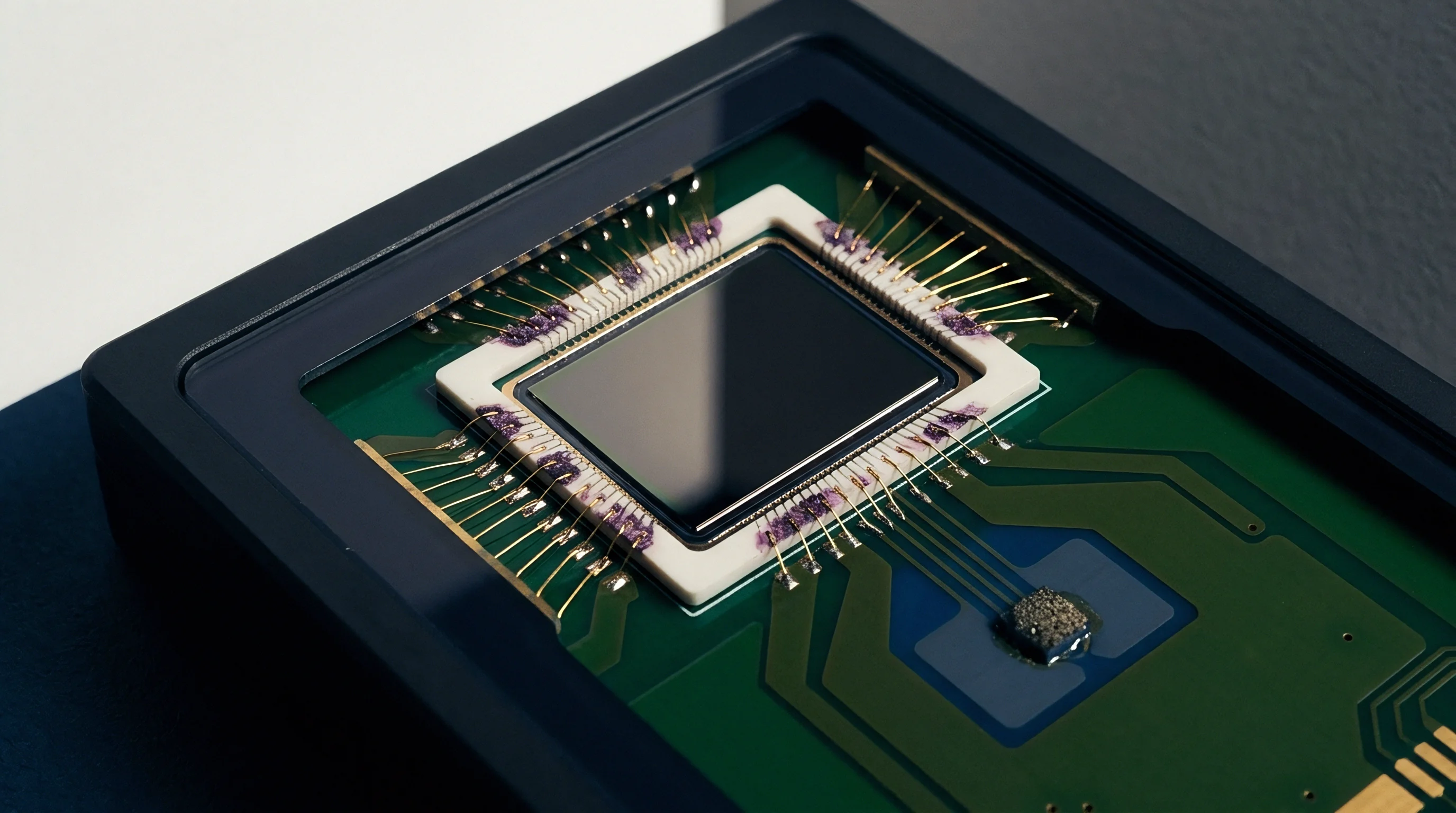
Sharp corners and abrupt cross-sectional step changes along packaging bond lines accelerate localized strain relaxation. High shear stresses concentrate near outer perimeter edges of planar substrate joints. As perimeter regions relax under thermal load, internal stress redistribution forces shear strain toward the center of the sensing diaphragm.
This centerward progression creates non-linear zero-point calibration shifts over time. Circular bond layouts with graded fillet radii distribute relaxation forces evenly, reducing localized zero-drift rates.
Material Selection Boundaries
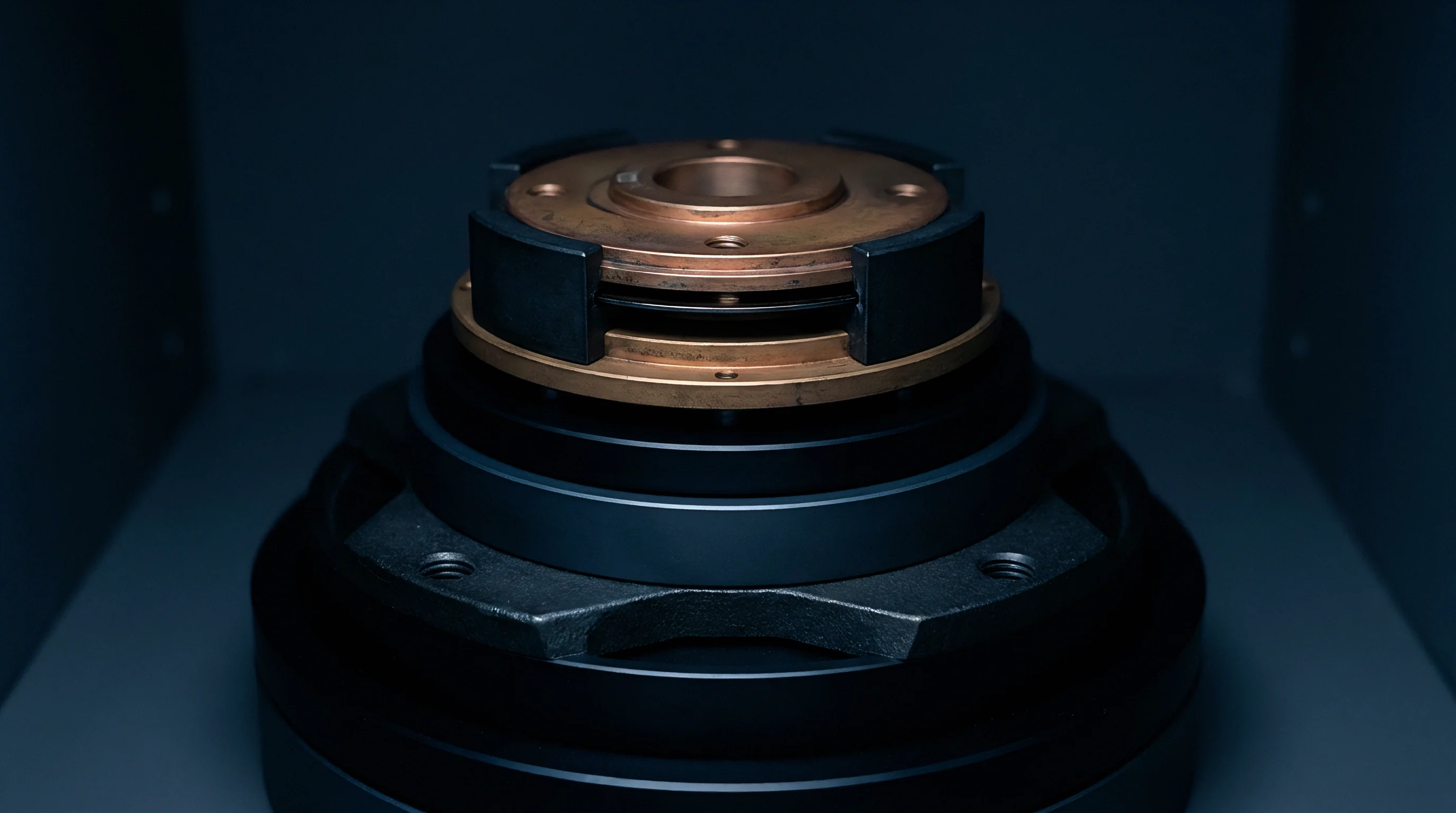
Matching thermal expansion properties across every structural layer minimizes driving forces for high-temperature creep. Ceramic headers composed of alumina or silicon nitride offer closer CTE alignment to sapphire sensors than austenitic stainless steels. Interposing intermediate buffer washers made from low-expansion alloys absorbs shear strain before it reaches sensitive sensor structures.
- Planar Braze Preforms ~ Rigid shear transfer leads to sharp stress gradients along perimeter edges.
- Glass Frit Interlayers ~ Brittle stress response with minimal plastic yield, causing abrupt cracking under cyclic thermal excursions.
- Active Metal Alloys ~ Titanium-doped filler materials form intermediate reaction layers that alter local creep activation energies over long thermal soaks.
- Decoupled Flexural Headers ~ Machined compliance loops isolate sensing elements from outer housing deformation at the expense of overall assembly length.
High-temperature gold-germanium braze bonds lose up to forty percent of initial shear stress after five hundred hours at three hundred degrees Celsius.
Brittle seals fracture under load. Interface integrity depends on controlling intermetallic compound growth at joint boundaries during high-temperature assembly processes. Excessive formation of brittle intermetallic phases accelerates micro-cracking during strain relaxation, altering the baseline mechanical stiffness of the package.
Stable joint performance requires strict control over brazing thermal profiles, peak dwell durations, and atmospheric composition during manufacturing.
Selecting a joining alloy solely for its melting point without evaluating creep relaxation rates causes unrecoverable zero-point drift that invalidates calibration records within the first operational quarter.

Drift
Quantifying transducer output stability requires translating calculated joint strain relaxation into equivalent electrical signal variation. Piezoresistive sensor elements convert mechanical strain into electrical resistance changes via their material gauge factor. When packaging joints relax, the change in residual strain Δεpkg alters the baseline un-bridged sensor resistance, generating zero-point voltage drift.
Mathematical models connect finite element viscoplastic calculations directly to electrical circuit drift equations.

Microvolt Conversion Modeling
Calculated relaxation strain fields are integrated across the active area of Wheatstone bridge strain elements. The total zero-point voltage drift ΔVzero relative to excitation voltage Vin follows the structural bridge relationship:
ΔVzero / Vin = (Kgauge / 4) · (Δεpkg,1 – Δεpkg,2 + Δεpkg,3 – Δεpkg,4)
In this equation, Kgauge represents the semiconductor or thin-film gauge factor, and Δεpkg,i represents the net packaging relaxation strain projected along the primary axis of each respective bridge resistor i. Calibrations shift during thermal soak. Differential strain relaxation across individual bridge arms creates bridge unbalance, producing net baseline signal drift even under zero applied pressure conditions.

Long-Term Soak Sensitivity
Simulating thermal exposure profiles across 1,000 to 10,000 hours shows that zero-point offset drift follows logarithmic decay curves over time. Early operating hours exhibit rapid relaxation rates as high peak stresses drive initial viscoplastic flow. As internal stresses decay, creep strain rates decrease toward steady-state values.
Zero drift accumulates over time.
| Thermal Exposure Temp (°C) | Soak Duration (Hours) | Package Strain Relaxation (microstrain) | Zero-Point Shift (% Full Scale Output) | Compliance Status |
|---|---|---|---|---|
| 300 | 100 | 45 | 0.18 | Pass |
| 300 | 1,000 | 120 | 0.48 | Pass |
| 300 | 5,000 | 210 | 0.84 | Conditional |
| 450 | 100 | 180 | 0.72 | Pass |
| 450 | 1,000 | 460 | 1.84 | Fail |
| 450 | 5,000 | 890 | 3.56 | Fail |
Executing high-temperature thermal soak verification follows precise laboratory steps to capture baseline relaxation characteristics under controlled conditions:
- Mount the uncalibrated sensor package inside a clean thermal chamber at ambient room pressure.
- Elevate temperature at five degrees Celsius per minute to maximum rated limit while logging baseline bridge voltage.
- Hold target temperature for two hundred hours while continuous high-rate acquisition records thermal relaxation kinetics.
- Cool to ambient conditions at one degree Celsius per minute to determine net unrecoverable offset displacement.
ISO 10012 drift boundaries demand immediate sensor retirement when zero-point deviation exceeds half the specified full-scale output tolerance.
Data logging reveals structural relaxation. Long-term soak sensitivity analysis provides the numerical basis for establishing realistic calibration re-verification intervals for field deployments. Transducers operating at temperatures above 400 degrees Celsius require scheduled offset recalibrations to correct for ongoing viscoplastic relaxation within internal package joints.
Metrologists continue to debate whether post-relaxation strain states remain stable after extended high-temperature thermal exposure or if secondary creep mechanisms initiate structural degradation in the sensing diaphragm.

Qualification
Verifying transducer packaging stability requires structured test protocols that separate reversible thermal shifts from permanent joint strain relaxation. Laboratory evaluation must subject sensor assemblies to environmental profiles that accelerate creep mechanisms without introducing artificial failure modes. Formal acceptance testing verifies that packaging design choices deliver stated measurement accuracy across extended operating lifetimes.

Accelerated Thermal Aging
Stabilization burn-in protocols expose assembled transducers to controlled thermal soaks prior to final factory calibration trim. Pre-conditioning removes transient strain. Exposing packages to temperatures twenty to thirty degrees Celsius above peak operational ratings accelerates primary creep relaxation within braze and glass lines.
Early strain relaxation occurs during burn-in rather than after field deployment. Post-burn-in assemblies exhibit lower drift rates during subsequent operating cycles.
Zero-Stabilization Bake Calibration
Measuring net zero-point drift before and after thermal aging bakes provides direct quantitative evidence of packaging joint stability. ISO/IEC 17025 accredited laboratories perform thermal hysteresis and zero-stability evaluations using high-precision reference pressure controllers and temperature-controlled oil or sand baths. Calibration certificates state offset drift figures along with explicit coverage factors and environmental test boundaries.
- Pre-Trim Stabilization Thermal Soak ~ Bake cycles executed twenty degrees Celsius above maximum operational temperature drive out early-stage strain relaxation before zero-point adjustment.
- Thermal Hysteresis Screening ~ Cyclic testing across minimum and maximum temperature limits confirms that residual packaging stresses follow closed, repeatable loops.
- Iso-Thermal Zero Drift Logging ~ Continuous output monitoring for one hundred hours at peak thermal operating limits measures steady-state strain relaxation rates.
- Post-Soak Span Verification ~ Full-scale output measurements taken before and after thermal aging verify that gauge sensitivity factors remain unaltered by joint stress relaxation.
Pre-conditioning bakes performed above peak operating temperature accelerate creep relaxation and stabilize zero-point output prior to final calibration trim.
Field verification prevents undetected errors. Quality assurance auditing mandates that production lots undergo sample-based accelerated aging testing to detect variations in braze preform metallurgy or glass frit firing profiles. Lots failing zero-drift limits undergo secondary stabilization bakes or face rejection before shipping to end users.
Adherence to IEC 60068-2-2 test procedure B mandates documented dwell times at peak operating temperature, forcing suppliers to furnish raw stability data rather than calculated drift projections.
Procurement
Sourcing high-temperature transducer assemblies requires evaluating total cost of ownership rather than comparing upfront purchase prices alone. Low-cost packaging designs utilizing standard silver braze preforms often suffer from high creep relaxation rates, forcing frequent field recalibrations and early sensor replacements. Advanced strain-isolated package architectures cost more initially but maintain zero-point calibration stability over years of continuous high-temperature service.

Package Architecture Cost Drivers
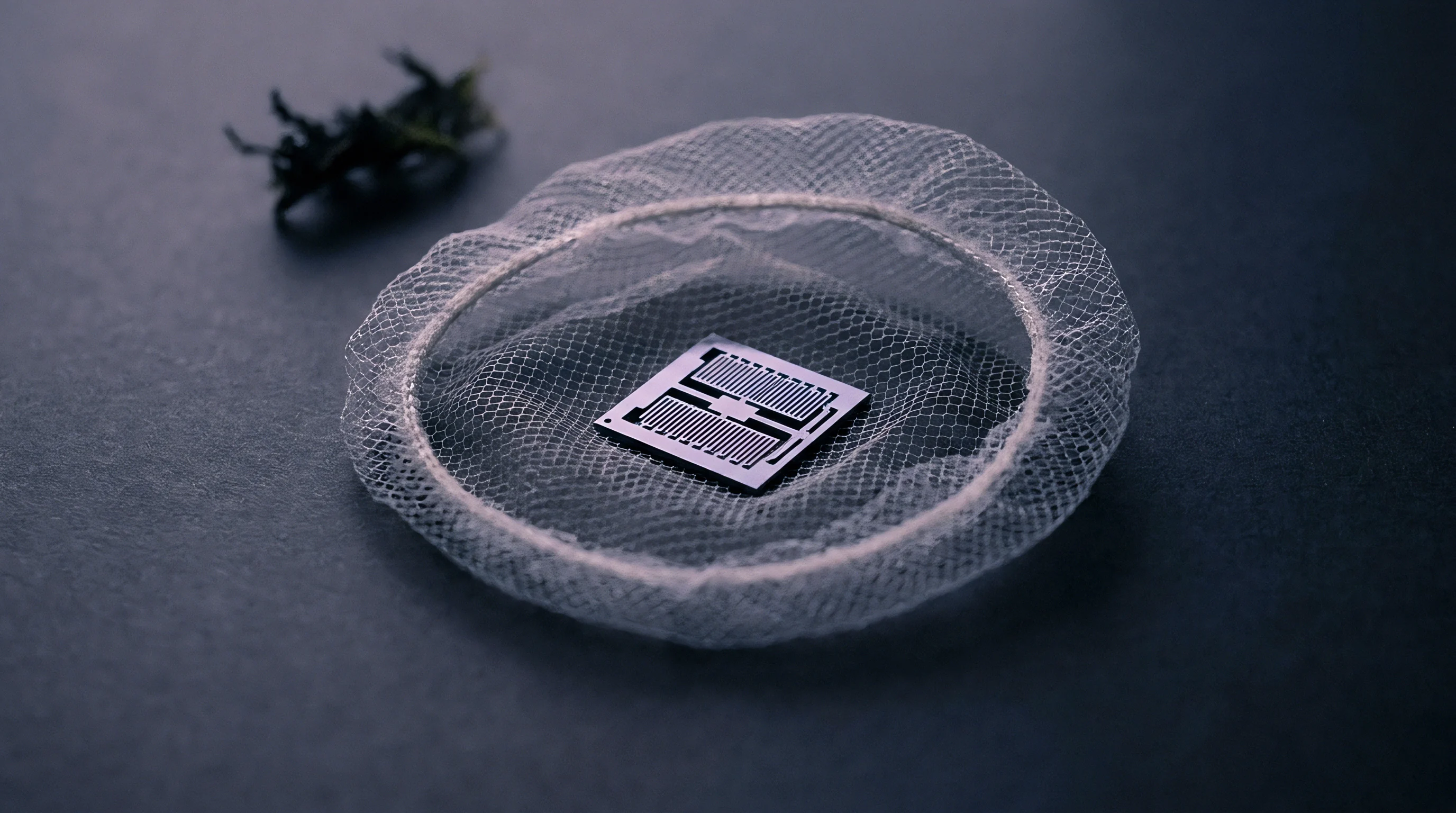
Manufacturing strain-decoupled sensor packages involves complex machining operations, specialized low-expansion alloys, and multi-stage active brazing processes. Vacuum furnace processing schedules for stress-relieved assemblies take significantly longer than standard batch brazing runs. Yield rates for high-temperature glass-sealed headers remain lower than standard epoxy-sealed commercial housings.
These manufacturing complexities increase initial procurement costs for stabilized high-temperature transducers.
Re-Calibration Schedule Economics
Field maintenance costs scale directly with sensor drift rates. Transducers exhibiting high packaging strain relaxation require semi-annual removal, laboratory recalibration, and re-installation. Operational downtime and calibration service fees quickly surpass the original purchase price of the sensor assembly.
Packaging choices dictate long-term drift.
| Package Architecture Type | Initial Cost ($) | 1,000-Hour Zero Drift (% FSO) | Re-Calibration Interval | Five-Year Landed Cost ($) |
|---|---|---|---|---|
| Direct-Brazed Standard Housing | 450 | 1.85 | 6 Months | 4,950 |
| Glass-Frit Isolated Mount | 850 | 0.65 | 12 Months | 3,250 |
| Active-Decoupled Flexural Header | 1,650 | 0.15 | 36 Months | 2,850 |
| Sapphire Micro-Header Assembly | 2,400 | 0.08 | 60 Months | 2,900 |
| Landed cost calculations include initial unit purchase, scheduled ISO 17025 laboratory recalibration fees, mounting gasket replacements, and technician labor across sixty months of operation. | ||||
Low-creep active packaging architectures cost more upfront but eliminate recurring laboratory re-calibration expenses over five years of continuous service.
Procurement specifications must explicitly define allowable long-term zero-drift limits alongside initial accuracy tolerances. Contracting terms should require suppliers to supply formal thermal soak test data and material compliance certificates for all load-bearing joint interlayers. Technical audits of supplier manufacturing processes verify that stabilization bakes and cooling protocols match approved engineering documentation.
Purchasing teams that evaluate transducer quotes strictly on initial unit price systematically absorb higher long-term operational costs when unmodeled strain relaxation forces semi-annual field re-calibrations.