Estimating Moisture Ingress in Polymer Sensor Encapsulants
Polymer encapsulant moisture ingress causes sensor drift via dielectric shifts and swelling stress; accurate estimation requires gravimetric diffusivity modeling.


Swell
Water molecules migrate into polymer encapsulation materials through molecular voids within the polymer network. Solid-state sensors deployed in high-humidity or submersed environments depend on thermosetting epoxies, silicones, polyurethanes, or fluoropolymers to isolate sensitive electronic structures from moisture contamination. Environmental water vapor diffuses into these protective matrices, causing gradual changes in bulk material properties that alter mechanical stresses on underlying silicon dies and wire bonds.
In volumetric terms, absorbed liquid creates measurable dimensional expansion. Polymer chains separate as water molecules form hydrogen bonds with polar functional groups inside the polymer matrix. This volume growth generates internal mechanical stress at the interface between the encapsulant and rigid substrates like ceramic substrates, silicon dies, or printed circuit boards.
Shear stress at these material boundaries often exceeds ten megapascals during thermal cycling, leading to delamination, micro-cracking, and direct trace corrosion.
Absorbed water expands epoxy encapsulation matrices by approximately 0.02 percent for every 0.1 percent increase in gravimetric moisture content.
Physical changes to the encapsulating polymer occur across several distinct molecular regimes during prolonged environmental contact:
- Plasticization of the polymer matrix reduces the glass transition temperature by as much as fifteen degrees Celsius under saturated field conditions, softening the structural enclosure.
- Hydrolytic degradation of matrix bonds cleaves ester or ether links in susceptible polyurethane formulations, permanently weakening mechanical integrity over multi-year service lives.
- Hygroscopic stress concentration builds at sharp die edges, driving local delamination that creates fast-path capillary channels for standing water.
- Differential expansion gradients arise when surface layers reach moisture saturation while the inner core remains dry, inducing internal bending moments across thin-film sensing elements.
Ignoring matrix expansion when calculating package stress distributions leads directly to unpredicted sensor offset shifts and interfacial separation during temperature excursions.

Sorption
Transport of ambient water vapor into solid polymer encapsulants follows characteristic thermodynamic absorption processes. Modeling moisture accumulation relies on concentration gradients and material-specific transport properties. Fickian diffusion models describe linear mass uptake behavior during initial environmental exposure, where the mass of absorbed water increases in direct proportion to the square root of time until concentration equilibrium is established.
Non-Fickian transport emerges when polymer relaxation rates match or lag the rate of water diffusion. In glassy polymers below their glass transition temperature, dual-mode sorption models account for water existing in two distinct thermodynamic populations: free molecules occupying residual free volume micro-cavities, and bound molecules attached to polar sites on the polymer chain backbone. Henry’s Law dictates the concentration of free dissolved species, while Langmuir isotherms govern the population of trapped molecules occupying micro-voids.
| Polymer Encapsulant Class | Diffusivity D at 25°C (cm²/s) | Diffusivity D at 85°C (cm²/s) | Saturation Limit C_sat (wt %) | Activation Energy E_a (kJ/mol) |
|---|---|---|---|---|
| Anhydride-Cured Epoxy Molding Compound | 1.2 × 10⁻⁹ | 4.5 × 10⁻⁸ | 0.35 | 42.1 |
| Two-Component Polyurethane Potting Compound | 8.5 × 10⁻⁹ | 1.1 × 10⁻⁷ | 1.20 | 35.4 |
| Addition-Cured Silicone Gel | 2.4 × 10⁻⁶ | 1.8 × 10⁻⁵ | 0.12 | 18.2 |
| Fluorosilicone Encapsulant | 6.1 × 10⁻⁷ | 5.2 × 10⁻⁶ | 0.08 | 22.6 |
Determining diffusivity over a wide temperature band uses the Arrhenius equation. Temperature accelerates molecular motion, expanding free volume and lowering the energy barrier for water molecules to jump between polymer voids. The diffusivity coefficient D varies as a function of absolute temperature T according to:
D(T) = D_0 × exp(-E_a / (R × T))
Where D_0 represents the pre-exponential diffusion factor, E_a is the activation energy for diffusion in kilojoules per mole, and R is the universal gas constant. Silicone matrices show high diffusivity coefficients alongside low total saturation limits, reaching saturation within days while allowing rapid moisture transport to the sensor die surface. Epoxy molding compounds exhibit diffusion coefficients three orders of magnitude lower, yet absorb significantly higher absolute water mass over extended periods.
ISO 62 mandates sample dimensions of 50 millimeter diameter and 3 millimeter thickness to yield repeatable gravimetric uptake measurements.
How do dual-mode Langmuir sorption kinetics alter long-term moisture profiles in thick potting layers exposed to fluctuating ambient humidity?
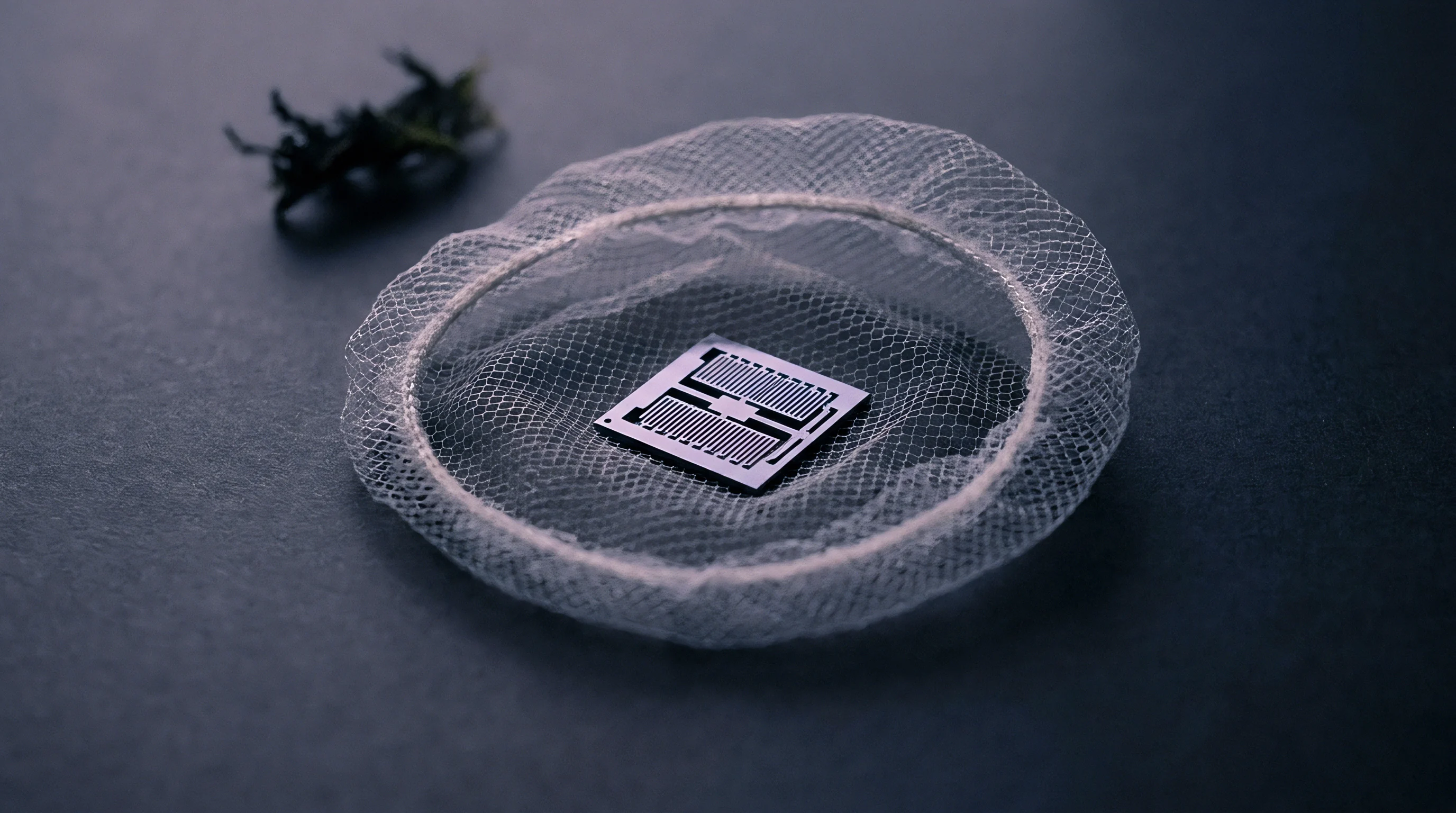
Shift
Measurement errors in capacitive, piezoresistive, and resistive transducers scale directly with moisture accumulation inside protective polymer shells. Water possesses a high relative static permittivity of approximately 80 at room temperature, compared to a relative permittivity between 3.0 and 4.5 for dry encapsulating polymers. As water molecules displace air voids and alter matrix polarization, the bulk dielectric constant of the encapsulant increases substantially.
In capacitive pressure and humidity sensing structures, changes in encapsulant dielectric constant introduce stray parasitic capacitances parallel to the primary sensing element. This parasitic capacitance alters the zero-point calibration and alters the full-scale span sensitivity. Piezoresistive silicon strain gauges experience signal drift through mechanical stress generated by matrix swelling, distorting the Wheatstone bridge output voltage without any change in applied physical pressure.
| Sensor Architecture | Primary Ingress Mechanism | Electrical Parameter Impacted | Observed Drift Behavior |
|---|---|---|---|
| Piezoresistive Pressure Die | Hygroscopic matrix expansion | Wheatstone bridge balance | Zero offset wander up to 3.5% full scale |
| MEMS Capacitive Accelerometer | Dielectric constant modification | Parasitic trace capacitance | Sensitivity scale factor reduction |
| High-Impedance pH Electrode Probe | Ionic contaminant leaching | Bulk insulation resistance | Baseline noise expansion and leakage bias |
| Thin-Film Platinum RTD Element | Dendrite growth across traces | Shunt path resistance | Negative resistance offset and signal dropout |
Electrical insulation resistance drops by several orders of magnitude when moisture reaches the package lead frame or substrate traces. Liquid water dissolves residual ionic contaminants, such as chloride, sodium, or trace catalyst residues left from polymer synthesis. These mobilized ions create conductive leakage paths across high-impedance signal lines.
Shunt resistance between adjacent traces drops from gigohms down to megaohms or kilohms, causing catastrophic calibration failure in low-current transducer circuits.
High relative permittivity of water causes measurable stray capacitance changes in potted sensor electronics prior to physical metal corrosion.
Zero-point drift tracks total mass uptake while span sensitivity drift scales with the spatial moisture gradient across the active sensor element.
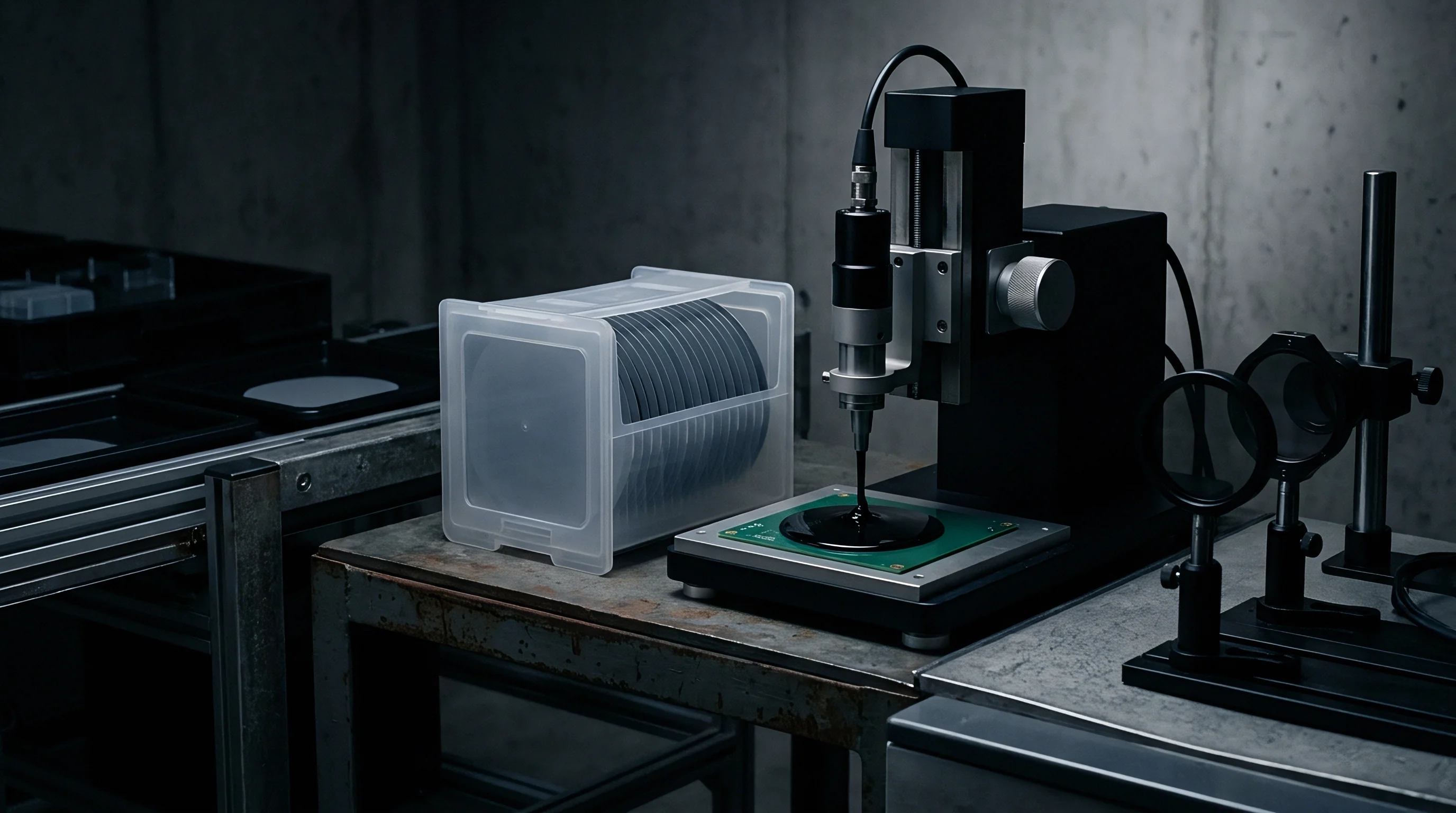
Probe
Accurate parameter extraction requires gravimetric testing and analytical measurement protocols performed on clean polymer specimens. Dynamic Vapor Sorption instruments quantify water sorption isotherms with microgram mass resolution. Standardized test methods isolate diffusion constants and saturation limits under tightly regulated vapor pressures and temperatures.
Extracting the diffusion coefficient D from gravimetric uptake data relies on an analytical sequence derived from Fick’s Second Law for a thin planar sheet:
- Dry the polymer test specimen in a vacuum oven at 60°C until mass change falls below 0.001 percent over 24 hours.
- Record the dry baseline mass M_0 using an analytical balance with 10 microgram precision.
- Place the sample into a controlled environmental test chamber set to specified relative humidity and temperature setpoints.
- Extract the sample at pre-determined time intervals t, blot surface condensation with lint-free wipes, and weigh to record mass M_t.
- Plot normalized mass uptake M_t divided by saturation mass M_sat against the square root of time divided by sample thickness.
- Calculate diffusivity from the linear slope of the initial uptake curve where mass ratio values remain below 0.6.
Karl Fischer titration per ISO 15512 provides chemical quantification of total water content, distinguishing surface-adsorbed water from internally absorbed water. Thermal vaporization units drive off bound water at temperatures up to 200°C, carrying the vapor via dry nitrogen carrier gas into an electrolytic titration cell. This technique measures low moisture levels down to 0.005 percent mass concentration in small encapsulant coupons where gravimetric resolution proves insufficient.
ISO/IEC 17025 clause 7.8.2 requires calibration reports to state environmental test cell relative humidity within a tolerance band of plus or minus two percent.

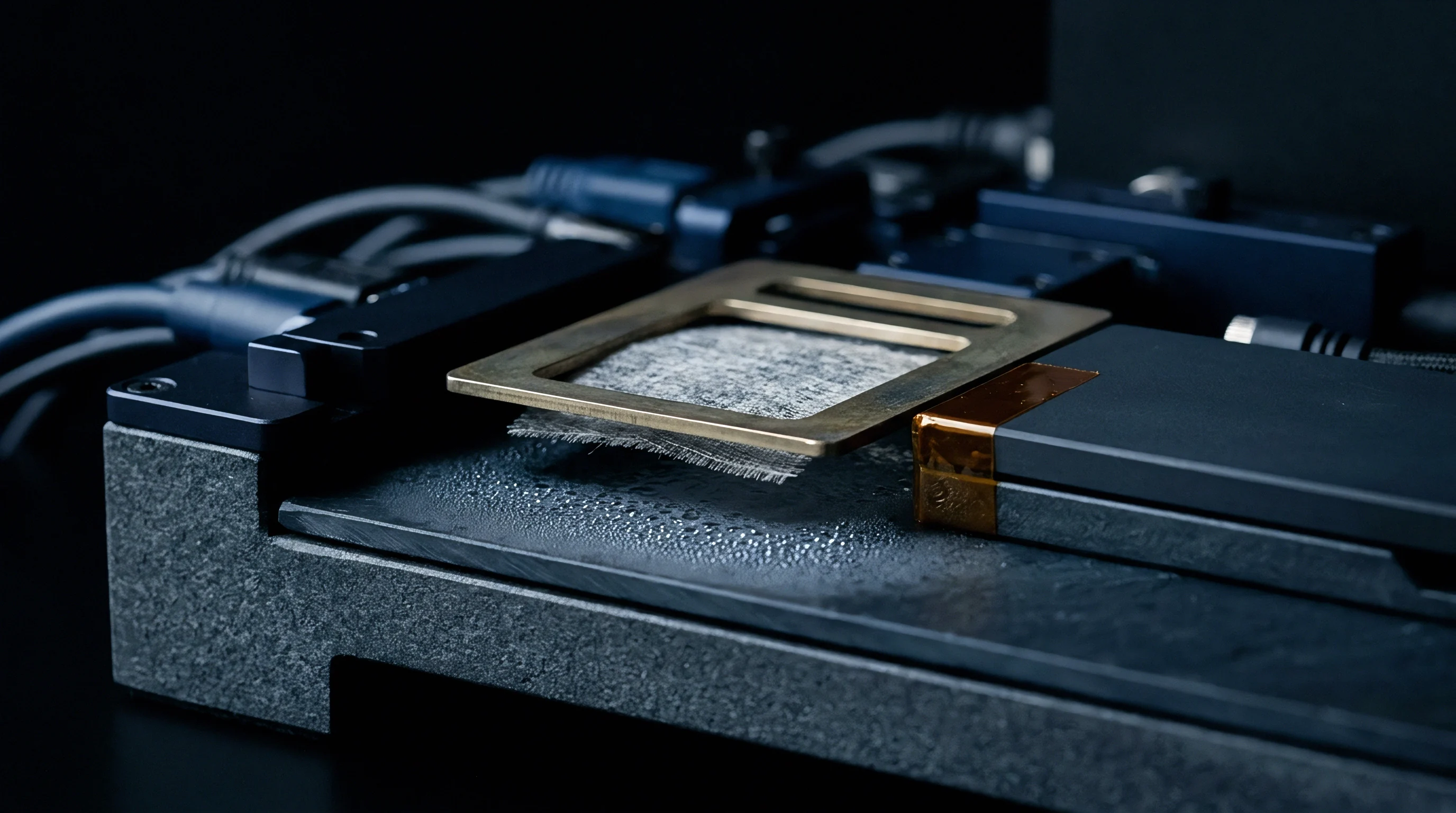
Exposure
Testing polymer encapsulants under accelerated lab conditions compresses years of ambient field usage into weeks of stress testing. Highly Accelerated Temperature and Humidity Stress Testing subjects encapsulated sensors to unsaturated steam conditions, typically at 110°C, 120°C, or 130°C and 85 percent relative humidity. Traditional Temperature Humidity Bias testing operates at 85°C and 85 percent relative humidity under electrical power bias.
Extrapolating field lifetime from accelerated test data uses thermal-humidity acceleration models like the Peck model. The acceleration factor AF relates test conditions to field operating conditions:
AF = (RH_test / RH_field)ⁿ × exp((E_a / k) × (1 / T_field – 1 / T_test))
Where RH represents relative humidity, n is an empirical humidity exponent between 2.0 and 3.0, E_a is activation energy in electron-volts, k is Boltzmann’s constant, and T is temperature in Kelvin. Applying an incorrect activation energy or humidity exponent miscalculates expected field survival rates by orders of magnitude.
Why Do Accelerated Thermal Humidity Tests Overestimate Real World Lifetime?
High temperatures applied during accelerated testing can alter the fundamental physical degradation mechanisms seen in temperate field operating environments:
- Glass transition crossing alters diffusivity slope, inducing non-Fickian relaxation behavior that does not occur at lower service temperatures.
- Thermal degradation of adhesion promoters destroys interfacial bond integrity prematurely, artificially accelerating delamination rates.
- Vapor pressure saturation divergence forces moisture into void spaces that remain dry under ambient ambient vapor pressure conditions.
- Differential thermal expansion stresses exceed material yield points during 130°C HAST cycles, introducing micro-cracks absent in normal service.
Polymer suppliers often defend unexpected field drift by claiming test conditions exceeded standard datasheet operating limits.
Appraisal
Choosing an encapsulant chemistry involves balancing raw material cost against long-term sensor calibration stability. High-performance low-permeability polymers increase initial bill of materials costs but extend re-calibration intervals and reduce field failure rates. Lowering moisture-induced drift demands tight material specifications that increase landed unit prices.
A worked comparative cost appraisal illustrates the economic trade-off between standard epoxy molding compounds and fluorosilicone potting for an industrial pressure sensor deployed in a submersed marine environment over a five-year service lifecycle. The sensor assembly contains a capacitive die sensitive to stray capacitance shifts above 0.05 picofarads.
Assume a production volume of 10,000 units. Standard anhydride-cured epoxy costs $0.45 per unit in material, but exhibits a diffusivity of 4.5 × 10⁻⁸ cm²/s at elevated temperatures and a saturation limit of 0.35 weight percent. Low-diffusivity fluorosilicone costs $2.80 per unit in material, possessing a diffusivity of 5.2 × 10⁻⁶ cm²/s alongside a low saturation limit of 0.08 weight percent.
Under marine submersion, sensors encapsulated in standard epoxy reach critical moisture threshold levels at the die surface within 14 months, requiring field re-calibration service visits costing $120 per unit. Fluorosilicone potting delays critical die-level saturation past 60 months by maintaining low equilibrium water mass, eliminating mid-life field calibration procedures entirely.
Specifying encapsulants by initial purchase price ignores total cost of ownership driven by sensor calibration wander. Incorporating moisture transport parameter limits directly into RFQ documentation protects quality leads from supplier material formulation changes. Purchasing agreements must pin down maximum allowable diffusivity values and saturation limits verified by independent lot acceptance testing.