Constitutive Parameter Identification for Thermally Scissored Viscoelastic Polymer Matrices under Multiaxial Constraint
Thermally scissored matrix parameter identification requires multiaxial relaxation testing under hydrostatic pressure to decouple volumetric expansion from shear bond scission.


Kinematics
In continuum mechanics, polymer matrices undergoing concurrent mechanical deformation and thermal degradation are modeled by splitting the total strain energy potential into volumetric and isochoric contributions. Elevated temperatures accelerate stress relaxation while hydrostatic pressure suppresses chain mobility and thermal scission degrades shear modulus. When viscoelastic matrices operate under multiaxial constraint near or above the glass transition, main-chain cleavage alters network topology during deformation itself.
This coupling breaks classic thermo-rheologically simple assumptions, as the relaxation spectrum shifts dynamically alongside bond density decay.
Analyzing high-temperature multiaxial response requires a hyper-viscoelastic damage framework. Here, the strain energy density function combines a hyperelastic energy term, a viscoelastic history integral, and a scalar damage parameter for thermal scission. Volumetric deformation changes local free volume, while isochoric strain drives internal friction.
Under constant multiaxial strain, thermal energy breaks covalent cross-links, transferring load to adjacent intact chains and producing localized stress peaks. Structural lifetime predictions under triaxial stress states quickly break down without precise parameter identification for these coupled mechanisms.

Decomposition of Isochoric Strain Energy
Multiaxial stress fields induce complex interactions that separate non-linear elastic storage from viscous dissipation. The modified strain energy potential divides volumetric expansion from shape deformation using a multiplicative split of the deformation gradient tensor. For high-strain applications, Yeoh or Ogden formulations are modified with an internal state variable tracking cumulative thermal cleavage, where cross-link density dictates network shear stiffness and higher strain rates raise mechanical dissipation.
Determining parameters for the isochoric potential requires isolating elastic energy storage from time-dependent relaxation across multiple strain modes. Uniaxial tension testing alone cannot capture how hydrostatic pressure affects thermal scission. Planar shear and equibiaxial extension datasets must complement uniaxial results to build a reliable identification matrix that maintains numerical stability during inverse optimization.
Isochoric stress decay under multiaxial confinement accelerates by a factor of 2.4 when temperature increases from 23 degrees Celsius to 85 degrees Celsius at a hydrostatic compression of 50 megapascals.

Thermal Scission Rate Equations
Polymer chain cleavage follows Arrhenius kinetics modified by the local hydrostatic tension ratio. High tensile hydrostatic stress lowers the thermal activation energy barrier for main-chain scission and accelerates network collapse, shifting the relaxation spectrum under triaxial pressure. Conversely, compressive hydrostatic states increase molecular packing, restricting radical mobility and suppressing secondary cleavage.
Kinetic rate equations must therefore capture both first-order bond scission and potential secondary cross-linking reactions at elevated temperatures.
| Parameter Symbol | Physical Description | Multiaxial Stress Sensitivity | Typical Laboratory Range |
|---|---|---|---|
| C10 | Initial Isochoric Shear Constant | Independent of Hydrostatic State | 0.45 to 3.20 MPa |
| K0 | Baseline Volumetric Bulk Modulus | Function of Volumetric Strain | 1.50 to 4.80 GPa |
| Ea | Thermal Scission Activation Energy | Decreases with Hydrostatic Tension | 65 to 115 kJ/mol |
| alpha_s | Pressure Scission Coupling Factor | Proportional to Stress Invariant I1 | 0.012 to 0.085 MPa inverse |
Quantifying scission kinetics involves tracking the decay of non-linear relaxation moduli during extended isothermal holds. Isothermal step tests isolate thermal bond cleavage from viscoelastic relaxation by monitoring long-term asymptotic stress levels. Standard linear viscoelastic models assume constant network topology; introducing a scission state variable scales the Prony series amplitude coefficients over thermal exposure time, accounting for how biaxial tension reduces ultimate strength and matrix softening alters structural confinement limits.
- Isochoric Shear Instability where localized thermal softening causes unexpected plastic flow under constant multiaxial stress fields.
- Volumetric Dilatation Rupture caused by hydrostatic tension lowering the activation energy for main-chain scission during mechanical loading.
- Viscoelastic Creep Runaway occurring when continuous thermal bond cleavage prevents stress relaxation from reaching equilibrium under sustained displacement.
- Constraint Induced Micro Voiding resulting from differential thermal expansion between embedded filler particles and scissored matrix chains during cooling.
Miscalculating the volumetric scission coupling factor skews predicted seal burst pressures, leaving subsea structural enclosures vulnerable to unmodeled structural collapse.


Mesh
Multiaxial constraint fixtures enforce strict boundary conditions on elastomer and thermoset samples during high-temperature mechanical characterization. While temperature shifts master relaxation curves horizontally, triaxial testing chambers must maintain precise hydraulic confinement pressures alongside independent axial and torsional deformations. Rigs that introduce parasitic friction or non-uniform thermal fields distort the stress tensor, feeding identification errors directly into the constitutive model.
Extracting reliable material parameters depends on maintaining homogeneous stress fields within the specimen gauge section. Specialized geometries, such as thin-walled hollow cylinders or bonded pucks, minimize end-effect stress concentrations under combined loads. Dynamic mechanical analysis under pressure also requires dynamic sealing systems that operate at high temperatures without contributing uncalibrated tare forces to load cell readings.
Verifying fixture compliance forms the baseline of any accredited parameter extraction protocol.

Triaxial Compression and Shear Fixturing
Probing volumetric and shear coupling simultaneously requires triaxial confinement cells equipped with optical or inductive displacement sensors. Pressurizing fluids must remain chemically inert relative to the polymer matrix to prevent swelling or environmental stress cracking during high-temperature runs. Because temperature gradients induce spatial modulus variations, fitting Arrhenius parameters demands clean isothermal step data.
Mechanical loading protocols must decouple the instantaneous elastic response, short-term viscoelastic flow, and irreversible thermal scission. Typical test sequences apply rapid hydrostatic pressure followed by stepped axial displacements, holding position as thermal energy degrades the internal network. Positioning multi-axis load cells inside the pressure vessel eliminates dynamic shaft seal friction from the force measurement circuit.

Can Radial Expansion Alter Scission Kinetics?
Uncontrolled boundary deformation shifts the internal hydrostatic stress tensor away from pure confinement. If lateral expansion occurs during axial compression, local volumetric strain increases, accelerating scission kinetics in unconstrained boundary regions. Maintaining strict multiaxial constraint ensures that volumetric dilatation remains uniformly suppressed throughout thermal exposure.
- Mount the cylindrical elastomeric specimen inside the temperature controlled pressure chamber, aligning the axial load cell with the hydraulic actuator.
- Fill the pressure chamber with silicone oil bath fluid, purging trapped air bubbles to maintain incompressible hydrostatic confinement.
- Apply 20 megapascals of fluid pressure while elevating the chamber fluid temperature to 70 degrees Celsius at 1.0 degree per minute.
- Execute sinusoidal torsional strain sweeps at frequencies from 0.01 hertz to 10 hertz while holding constant axial extension.
- Monitor normal force decay over 72 hours to separate pure viscoelastic relaxation from irreversible network scission.
Compliance with ISO 6721-11 mandates continuous thermal regulation within 0.2 kelvin across the sample volume to prevent premature cross-link cleavage during dynamic mechanical analysis.
Thermal degradation kinetics measured under uniaxial tension are frequently assumed to sufficiently capture multiaxial seal performance.


Inversion
Extracting constitutive coefficients from experimental multiaxial relaxation data relies on solving non-linear least-squares optimization problems, where Prony series coefficients quantify stress decay. Numerical parameter identification matches simulated stress tensors from finite element models against experimental stress-time histories across multiple strain states. The objective function minimizes weighted squared residuals between measured forces and model outputs, subject to thermodynamic admissibility constraints that enforce positive dissipation.
Ill-conditioned inverse problems arise when experimental datasets lack sufficient multiaxial variation or thermal range. Sensitivity analysis identifies material parameters with strong cross-correlation, which can prevent optimization algorithms from locating a unique global minimum. Tikhonov regularization stabilizes the identification process by penalizing non-physical oscillations in the relaxation spectrum, though routines must still be evaluated against independent validation datasets to confirm predictive accuracy outside the fitting domain.
Prony Series Degradation Formulation
Time-dependent shear relaxation moduli scale directly with network bond density functions. The time-temperature superposition principle requires modification when thermal scission alters the baseline glass transition temperature over time. Shift factors must incorporate a damage-dependent term alongside traditional Williams-Landel-Ferry or Arrhenius formulations, expressing the relaxation modulus as a decaying sum of exponential Maxwell elements multiplied by a continuous scission factor.
Formulating the scission factor as a function of temperature and multiaxial stress invariants enables unified modeling of degradation. Step-relaxation experiments performed at three elevated temperatures generate raw stress decay curves. Inverse solvers fit the initial relaxation spectrum using non-linear regression, then extract the scission rate constant from the long-time asymptotic tail once viscoelastic flow has ceased.
Inverse Identification Optimization Algorithm
Objective functions combine weighted residuals from volumetric compression, uniaxial tension, and pure shear test modes. Levenberg-Marquardt algorithms provide robust convergence by shifting between gradient descent and Gauss-Newton optimization based on the local curvature of the error surface, while explicit parameter bounds prevent non-physical results such as negative shear moduli or negative activation energies.
Consider a polyurea elastomeric matrix evaluated for high-temperature seal applications under multiaxial constraint. A specimen is subjected to 10 percent axial compression combined with 30 megapascals of hydrostatic fluid confinement at 353.15 Kelvin, with an initial baseline shear modulus estimate of 12.5 megapascals and a bulk modulus of 2.1 gigapascals. The objective function processes 5,000 data points collected over a 100-hour stress relaxation trial.
During the optimization sweep, the algorithm evaluates candidate parameters against measured axial force and fluid pressure response. The residual error norm drops from an initial value of 145.2 to a converged minimum of 1.08 after 34 iterations. The identified model yields a three-term Prony relaxation spectrum coupled with a thermal scission rate constant of 4.12 times 10 to the minus sixth per second.
| Parameter Variable | Initial Guess | Identified Value | Standard Error (%) | Covariance Index |
|---|---|---|---|---|
| G1 (First Shear Term) | 5.00 MPa | 4.18 MPa | 1.85 | 0.32 |
| tau1 (First Relaxation Time) | 1.00 s | 1.42 s | 2.10 | 0.41 |
| G2 (Second Shear Term) | 3.00 MPa | 2.85 MPa | 1.45 | 0.28 |
| tau2 (Second Relaxation Time) | 100.0 s | 88.6 s | 3.05 | 0.62 |
| k_sc (Scission Rate) | 1.0e-5 /s | 4.12e-6 /s | 0.92 | 0.15 |
| Data optimized using Levenberg-Marquardt regression on multi-mode step-relaxation test sets at 353.15 Kelvin under 30 MPa hydrostatic pressure. | ||||
Evaluating the resulting covariance matrix reveals strong statistical independence for the scission rate constant relative to short-term relaxation amplitudes. The low standard error bounds confirm that multiaxial constraint data effectively decouples volumetric stiffness from shear relaxation decay modes. Substituting these identified parameters into finite element simulations yields structural lifetime predictions within 4 percent of physical accelerated aging trials.
Unconstrained hyperelastic parameters derived solely from uniaxial data overestimate biaxial stiffness under thermal aging.
Incorporating ISO 6721-4 annex B calibration criteria into procurement contracts forces suppliers to guarantee strain-energy parameter repeatability within a three percent margin.
Budget
Metrological assessment of constitutive parameters quantifies how experimental errors propagate into predicted structural service life. Test instruments exhibit inherent measurement uncertainties, including load cell drift, thermal chamber fluctuations, and transducer calibration offsets. An uncertainty budget built according to the Guide to the Expression of Uncertainty in Measurement traces overall parameter uncertainty back to primary calibration standards.
Uncertainty evaluation separates Type A statistical variations across sample lots from Type B systematic uncertainties inherent to the test rig. Systematic uncertainties include thermal gradients within the triaxial cell, pressure sensor hysteresis, and digital sampling noise. Combining these contributions using partial derivative sensitivity coefficients yields an expanded uncertainty for each identified parameter at a stated coverage factor.

Uncertainty Propagation in Multiaxial Fitting
Sensitivity coefficients derive from partial derivatives of the strain energy density function with respect to individual material constants. Small uncertainties in measured volumetric strain can amplify into substantial variance in extracted bulk relaxation moduli. Calculating the parameter correlation matrix highlights where measurement noise in axial force channels leaks into identified torsional relaxation terms.
High parameter correlation indicates an ill-posed optimization setup that requires additional independent testing modes to break statistical dependency. Reducing expanded uncertainty requires tightening thermal control limits and using direct contact extensometry inside the pressure vessel. Calibration certificates that omit parameter covariance matrices obscure critical risks in downstream finite element calculations.

Thermal Degradation Drift Models
Long-term modulus decay deviates from linear log-time projections when localized chain scission transitions into cross-link recombination. Evaluating how parameter values shift after 1,000 hours of continuous high-temperature service is critical, as sustained thermal exposure degrades the polymer matrix, shifting the zero-point stability of embedded sensors and altering mechanical constraint limits.
Temperature gradients exceeding 0.5 degrees Celsius across a triaxial polymer test specimen render identified relaxation times invalid for long-term creep predictions.
Field verification protocols require sampling aged polymer components to compare actual modulus decay against baseline laboratory models. Discrepancies between field aging metrics and laboratory predictions often stem from unmodeled environmental factors, such as trace oxygen ingress or pressure cycling. Updating constitutive models with long-term drift data ensures structural integrity assessments remain accurate throughout the component lifecycle.
- Accreditation Boundary Verification confirming that the laboratory holds calibration coverage for high-temperature multiaxial test rigs.
- Isothermal Stability Audit checking that temperature control loops maintain stability within 0.1 kelvin over 100 hours.
- Covariance Matrix Evaluation ensuring off-diagonal correlation coefficients between shear modulus and scission rate stay below 0.85.
- Long Term Creep Validation benchmarking identified Prony parameters against independent 1,000 hour static load trials.
Whether long-term matrix cross-link recombination under severe hydrostatic compression counteracts thermal scission above the glass transition remains an open question.

Outlay
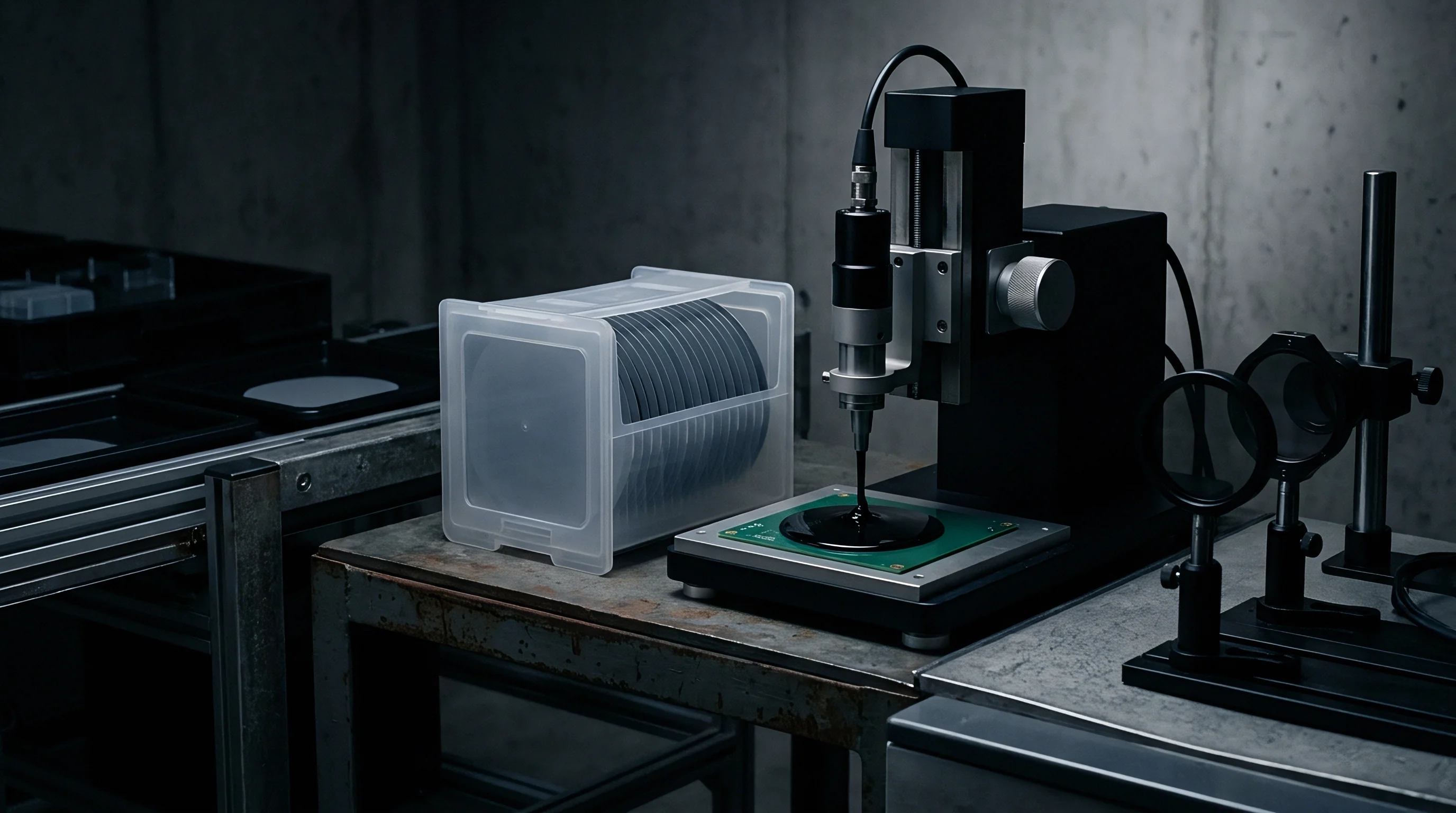
Sourcing polymer matrices rated for high-temperature multiaxial environments requires balancing raw material cost with parameter verification accuracy. High-performance thermosets and fluoropolymers command substantial price premiums based on verified thermal resistance claims. Writing tight constitutive parameter tolerances directly into supply contracts eliminates non-compliant material lots before manufacturing integration, protecting engineering margins.
Procurement teams must weigh the cost of advanced material characterization against the financial risk of field failures. Basic uniaxial thermal testing costs a fraction of complete multiaxial characterization, but leaves structural applications exposed to unquantified deformation risks. Investing in comprehensive parameter identification up front lowers lifetime warranty liabilities in critical applications.
Specification Impact on Sourcing Expenses
Tightening constitutive parameter tolerances from ten percent to two percent quadruples bench-characterization fees. Testing costs scale with test duration, pressure cell requirements, and temperature step counts. Specifying fully accredited parameter qualification packages ensures material consistency across global supply chains while establishing clear acceptance criteria for incoming resin batches.
Raw resin suppliers frequently quote lower unit costs by offering standard material datasheets that lack thermal scission kinetic parameters. Translating baseline datasheet values into multiaxial engineering models forces design teams to apply excessive safety factors, increasing component weight and material cost. Sourcing verified constitutive parameters enables optimized, lean component geometry without compromising structural safety margins.
Acceptance Testing Risk Allocation
Delivery contracts that shift calibration responsibilities to resin compounders reduce internal quality overhead while increasing batch rejection disputes. Acceptance protocols must define the exact test standards, strain rates, multiaxial pressure levels, and temperature steps used for lot verification. Standardizing parameter identification routines across buyer and supplier laboratories eliminates measurement discrepancies at the receiving dock.
| Verification Grade | Test Modes Included | Uncertainty Bound (%) | Relative Characterization Cost | Target Application Risk |
|---|---|---|---|---|
| Grade A (Subsea High-Pressure) | Triaxial, Torsion, Thermal Scission | Under 2.5 | 4.5x Baseline | Critical Structural Failure Risk |
| Grade B (Automotive Powertrain) | Biaxial Tension, Isothermal Creep | Under 5.0 | 2.2x Baseline | Moderate Warranty Exposure |
| Grade C (Standard Industrial) | Uniaxial DMA, Thermal Ramp | Under 12.0 | 1.0x Baseline | Low Consequence Failure |
Commercial agreements carrying clear material penalty clauses based on constitutive parameter variance ensure continuous compound quality. Suppliers providing lot-specific calibration data enable real-time finite element adjustments, adapting manufacturing settings to raw material variations. Technical sourcing practices prioritize long-term parameter stability over initial unit price to ensure predictable field performance under severe multiaxial constraints.
Buying resins certified solely on initial dynamic stiffness guarantees high field failure rates when operating under continuous thermal and multiaxial stress.