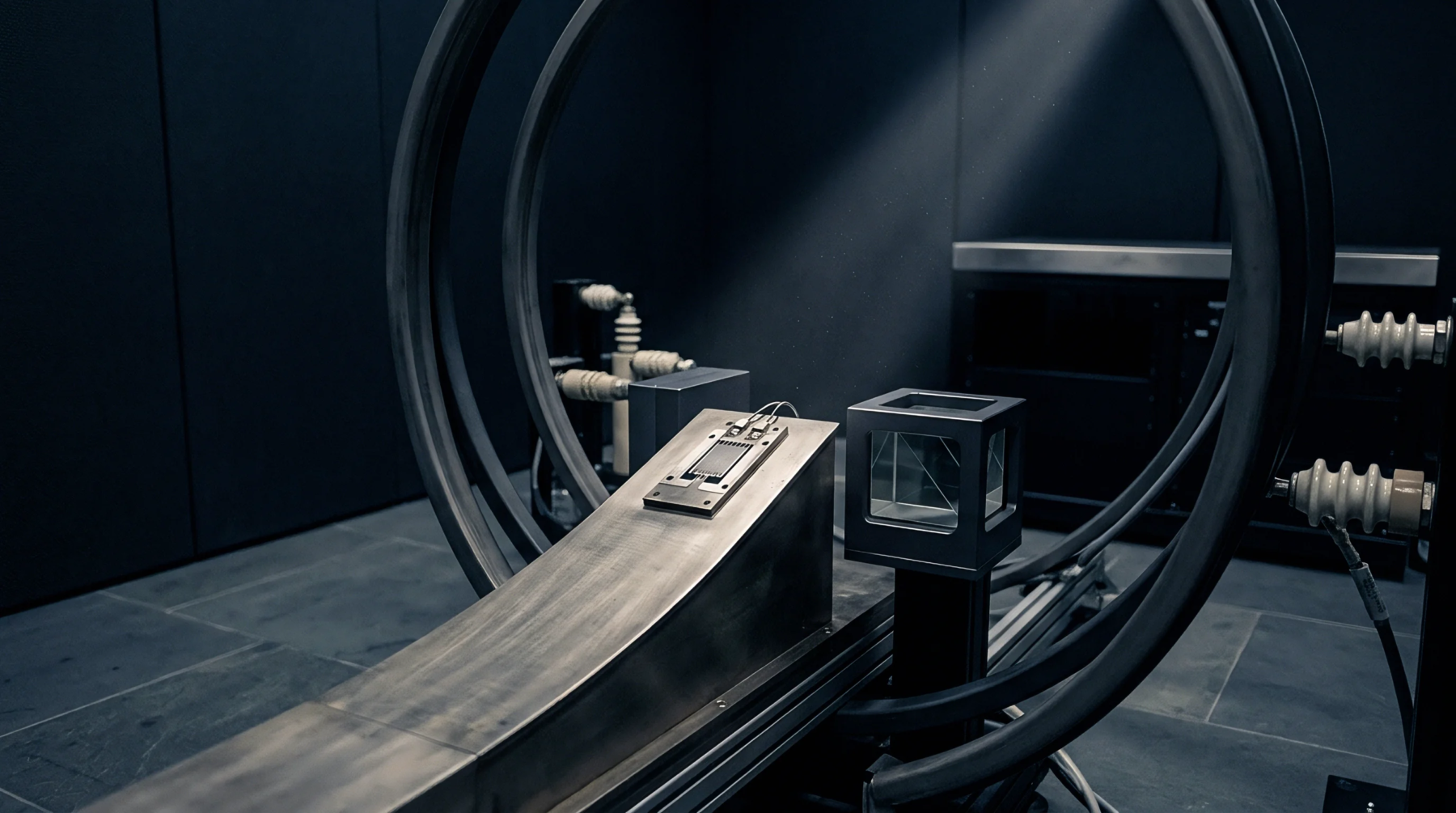
Physical Quantity
Physical quantity describes the force per unit area exerted by a fluid at rest due to the force of gravity. In marine metrology, hydrostatic pressure is the primary metric used to calculate sensor depth in the water column. It increases linearly with depth, governed by the density of the overlying water and the local gravitational acceleration.
Transducer Performance
Silicon piezoresistive and quartz crystal sensors convert the mechanical force into an electrical or frequency signal. Exposure to extreme pressure levels can induce mechanical hysteresis and zero-point drift in the transducer. These structural changes require regular calibration to ensure that deep-sea measurements remain within their specified accuracy limits.
Calibration Curve
The relationship between applied pressure and sensor output is mapped using high-precision deadweight testers. This calibration curve accounts for both non-linear sensor behaviour and temperature-dependent sensitivity variations. In the field, dynamic temperature changes can distort the pressure reading if the sensor has not reached thermal equilibrium.
Depth Determination
Converting the measured pressure to true depth requires a mathematical model that integrates seawater density and the variation of gravity with latitude. The standard algorithm accounts for the compressibility of water under immense pressure. Without these corrections, depth estimates would exhibit cumulative errors of several meters at the bottom of deep ocean trenches, rendering the data unsuitable for precise profiling.
This makes the accuracy of pressure measurements a fundamental requirement for all oceanographic studies and mapping operations.