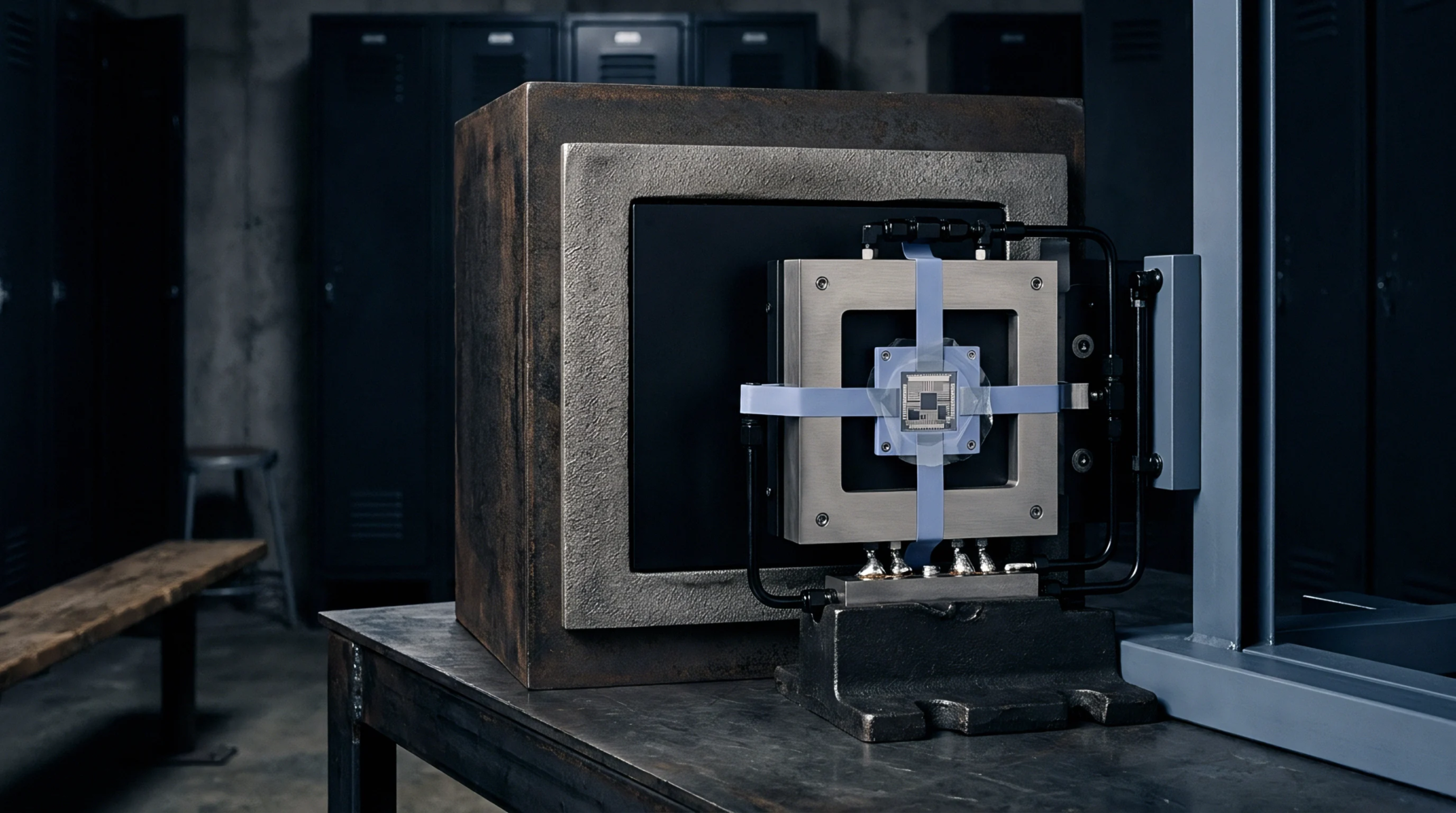
Thermal Procedure
Thermal analysis of polymers involves measuring their mechanical properties while systematically changing the temperature of the sample environment. This procedure, referred to as a temperature sweep, is the standard method for identifying the glass transition and other secondary transitions of viscoelastic materials. By recording the storage modulus, loss modulus, and loss factor during the sweep, the material profile can be mapped across its glassy, transition, and rubbery states.
Experimental Protocol
The experiment is executed on a dynamic mechanical analyzer by heating or cooling the sample at a constant rate, typically between one and five degrees Celsius per minute, while applying a sinusoidal strain at a fixed frequency. Rapid heating must be avoided to prevent thermal gradients within the specimen, where the exterior of the sample is warmer than the core. These thermal gradients can shift the observed transition temperatures and broaden the transition peaks, leading to inaccurate material specifications.
Modern instruments utilize forced-convection ovens and liquid nitrogen cooling to ensure uniform heat transfer throughout the test chamber, which helps to maintain thermal equilibrium within the specimen.
Instrument Calibration
Temperature calibration of the analyzer is achieved by measuring the melting points of high-purity metal standards or the known transition temperatures of reference polymer specimens. The temperature sensor must be positioned as close to the sample as possible to minimize the discrepancy between the measured temperature and the actual sample temperature. Scheduled calibration checks are necessary to correct for drift in the thermocouple or platinum resistance thermometer used in the instrument.
Measurement Barrier
A major limitation of the test is the potential for sample slippage or excessive deformation when the polymer passes through its glass transition. As the material softens by several orders of magnitude, the clamping force must be adjusted automatically to prevent either crushing the soft specimen or allowing it to slide within the grips. This dynamic adjustment is necessary for securing reliable data through the entire transition region.