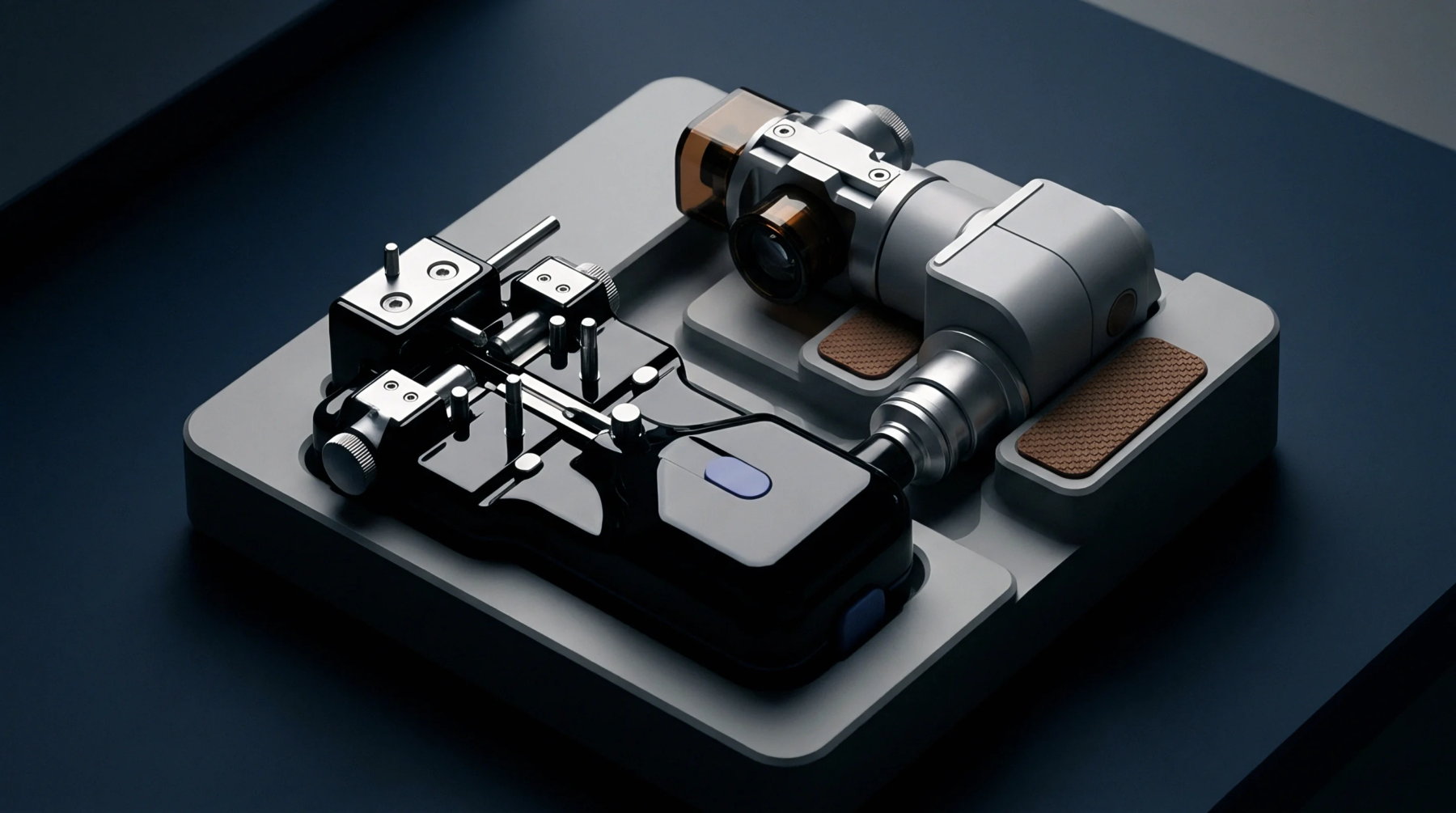
Component Transfer
Automated deposition of unhoused electronic components onto screen-printed solder paste deposits locates device terminations accurately over printed land patterns prior to reflow heating. Manufacturing lines depend on surface-mount placement to position hundreds of thousands of discrete resistors, multi-lead flat packs, and area-array packages onto circuit panels every hour. Gantry-driven vacuum nozzles pick components from feeder tapes, translate across machine coordinates, and lower devices onto tacky paste reserves under controlled downward force.
The process terminates once the vacuum seal releases the seated package, handing board stability over to solder paste rheological tackiness and thermal reflow processing.
Positional Accuracy
Machine positioning systems combine optical encoders, linear motors, and laser feedback loops to align parts within tight lateral and rotational tolerances. Calibration standards require verification against optical reference artifacts, mapping placement repeatability within fifteen micrometers true position and zero-point-one angular degrees. Vision algorithms capture fiducial marks on boards alongside component lead configurations to compute real-time dynamic corrections for thermal expansion and mechanical skew.
Laser height sensors inspect the printed circuit board surface profile prior to component drop, preventing excessive nozzle travel that squashes solder paste into bridge defects.
Placement Force
Dynamic downward pressure applied by pick-and-place nozzles must establish intimate contact between component leads and solder paste without displacing wet flux deposits. Excessive seating force squeezes solder paste balls beyond land pattern borders, leading to solder bridging, micro-beading, and spatter during subsequent reflow oven heating. Insufficient force leaves component leads resting lightly on paste crowns, causing parts to shift or fall off during conveyor transfer between line stations.
Force-displacement sensors integrated into high-accuracy placement heads calibrate nozzle impact velocity, ensuring fragile ceramic chip packages seat without developing hidden micro-cracks under impact shock.
Nozzle Alignment
Nozzle tip selection governs pickup stability and vacuum seal maintenance across various package footprints and component masses. Rubber cups, ceramic sleeves, and carbide tips wear out over continuous production cycles, causing rotational misalignment, part drops, and off-axis seating during surface-mount placement operations. Machine vision cameras verify nozzle tip geometry and orifice cleanliness during scheduled purge routines to detect clogging or mechanical chipping.
Solder paste adhesion maintains part coordinates across conveyor transfers, but placement accuracy determines whether surface tension forces can self-center lead arrays successfully during solder liquefaction.