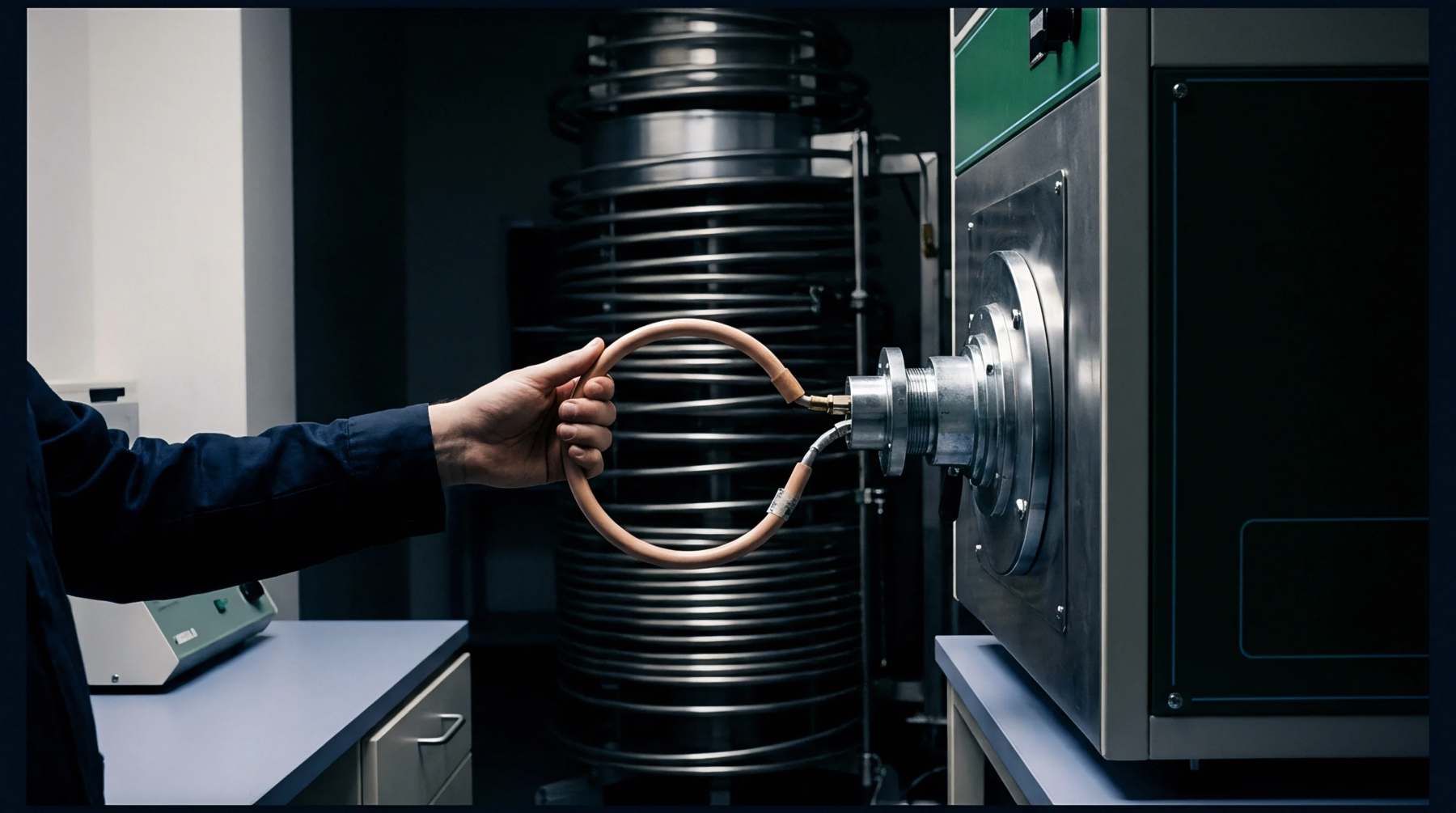
Optical Shift
Slow monotonic change in the ratio of phase velocity in vacuum relative to a transparent medium identifies optical variance over extended operating cycles. In optical sensing assemblies and precision polymer lenses, refractive index drift shifts calibration curves, alters beam alignment, and modifies waveguide transmission constants. Underlying causes include physical aging of amorphous optical polymers, subtle densification under continuous ultraviolet illumination, and the diffusion of ambient water molecules into the bulk optical matrix.
The boundary of this property variation excludes instantaneous index fluctuations driven by reversible thermo-optic coefficients, isolating permanent or long-term baseline drift from transient thermal cycling effects.
Environmental Perturbation
Metric verification of transparent media utilizes critical angle refractometers, multi-wavelength spectroscopic ellipsometers, or prism couplers. During refractive index drift, the instrument records a permanent offset in refractive values at reference wavelengths, such as the sodium D line. Physical aging contracts the free volume within plastic lenses, yielding a higher mass density that systematically increases the refractive index according to the Lorentz-Lorenz relationship.
Moisture sorption exerts a conflicting effect, because absorbed water introduces an index contribution that varies with external relative humidity. Metrology chambers must regulate relative humidity within two percent and temperature within zero point one degree Celsius to isolate structural matrix drift from environmental noise.
Component Screening
Procurement specifications for polymer optical waveguides, lenses, and transparent sensor windows demand strict limits on allowable index drift over time. Sourcing specifications mandate that suppliers evaluate optical materials under accelerated environmental aging chambers held at elevated temperature and humidity. When raw resin batches contain variable stabilizer additives or unreacted monomer residues, refractive index stability degrades, generating focus shifts in optical distance sensors.
Purchasing contracts require optical resin suppliers to certify initial index tolerance within four decimal places and long-term stability across defined operating lifetimes. Receiving departments screen incoming optical lots using V-block refractometers to verify refractive stability prior to lens assembly.
Metrology Standard
Qualification protocols place completed optical sensor heads into environmental stress chambers for multi-hundred-hour endurance assessments. Optical spectrum analyzers measure center-wavelength shifts in fiber Bragg gratings or integrated optical filters to identify internal index migration. Calibration procedures compare sensor beam divergence and focal length against factory baseline records to detect drift early.
If index shifts exceed the sensor system error budget, design teams must switch to more stable fluoropolymer chemistries or integrate reference channels that compensate for matrix variations. Strict monitoring of refractive stability ensures that optical analytical instruments deliver repeatable spectroscopic data across years of continuous industrial field monitoring.