Structural Limit
Deformation describes the localized displacement of a substrate plane when mechanical stress forces the laminate material to deviate from its flat equilibrium state. Printed circuit board deflection occurs during thermal expansion in reflow ovens or through improper mounting force at physical anchor points. High curvature ratios create risk for internal copper layer fractures and solder joint fatigue.
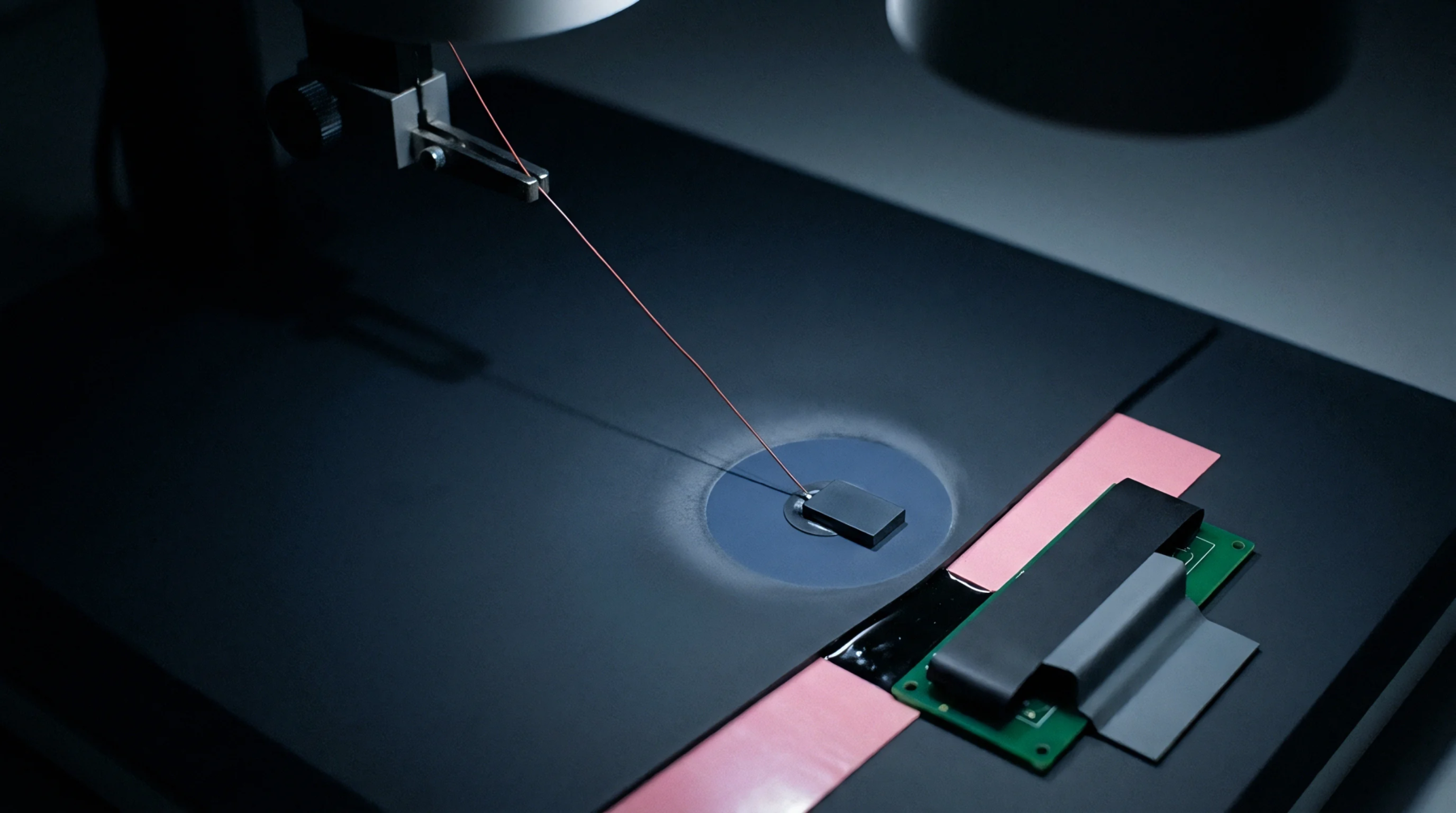
Verification requires laser displacement sensors to measure the deviation from the geometric horizon under controlled load conditions.
Mechanical Threshold
Strain limits depend on the glass transition temperature of the dielectric substrate combined with the specific weave of the glass fabric. Rigid assemblies tolerate less movement than flexible substrates before microscopic cracks appear in the conductive traces. Engineers define the maximum allowable sag as a percentage of the board diagonal length to maintain structural integrity across wide thermal cycles.
Excessive bending shifts the stress concentration toward the ceramic packages mounted on the board surface.
Boundary Condition
Support fixtures mitigate unintended bending by providing uniform contact across the surface area during assembly processes. Improper standoff positioning creates localized nodes where high force concentrates and initiates warping. Variations in thermal coefficient of expansion between copper circuitry and epoxy resin drive internal tension during the heating phase of the manufacturing cycle.
Proper jig spacing distributes mechanical loads to ensure the surface remains within acceptable flatness tolerances for automated optical inspection systems.
Geometric Calibration
Standards set the allowable deviation for bare boards compared to populated assemblies to account for component mass distribution. Measurement systems capture the height profile relative to a vacuum table or a fixed reference plane to confirm the mounting surface meets flatness requirements. Operators adjust the clamping force of automated test equipment to prevent contact pressure from inducing secondary deformation during electrical connectivity checks.
The elastic modulus of the base material dictates the permanent recovery of the structure after the removal of external force.